210E Industrial Reclaied Water Authorizations

Fast-Track Wastewater Permitting That Protects Your Pro Forma

Traditional discharge permits kill deals. County denials. Public hearings. Environmental opposition. Your financing window closes while you wait.

Modern Engineering Solutions eliminates all of it with 210E authorization.

✓ 4–10 week approvals
✓ Zero public hearing exposure
✓ State authority that bypasses county veto
✓ Save 21+ months and $500K–$1.8M in carrying costs

We’ll contact qualified projects within few working hours!
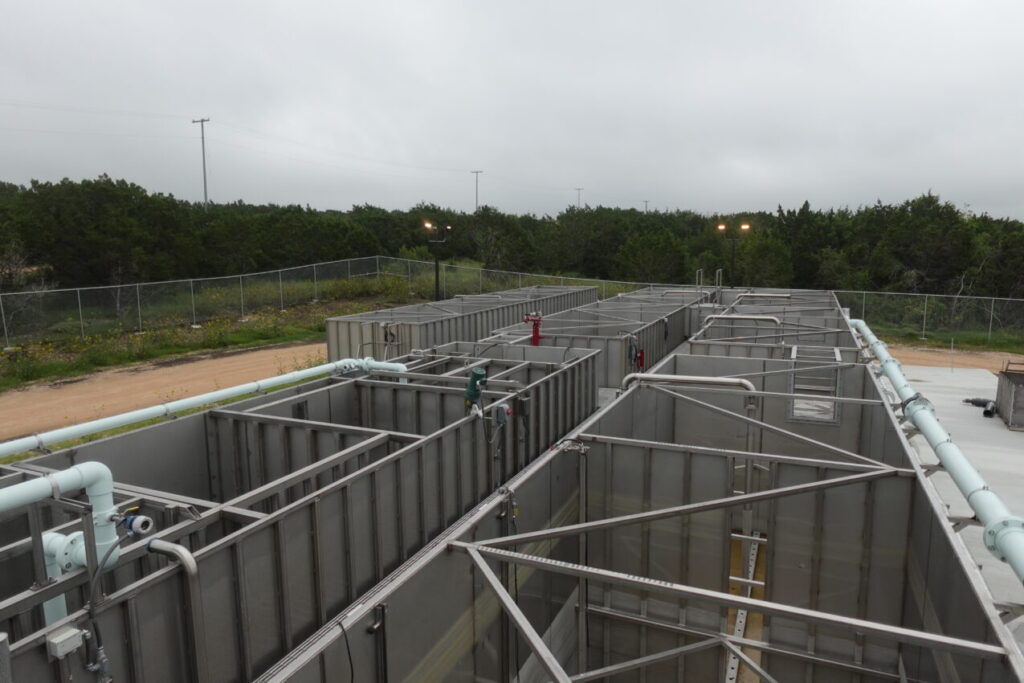
River Valley Wastewater Treatment Plant – Martindale, TX

When Projects Need 210E Authorization

Texas developers contact us when traditional discharge permits threaten deal timelines, financing windows, and project economics.

Common triggers:

  • County septic permit denials blocking wastewater disposal options
  • 24–36 month discharge permit timelines killing absorption schedules and pre-sales
  • Public hearing exposure creating unpredictable opposition from environmental groups
  • Surface water discharge permits facing contentious referral processes
  • Mixed-use projects with industrial components but no clear permitting path
  • Financing windows requiring immediate permit certainty, not 2+ year uncertainty

Early 210E feasibility analysis helps developers avoid deal-killing permit delays, unpredictable public opposition, and expensive plan changes mid-project.

Why Choose Us

How We Help Developers Move Faster

We focus on industrial component qualification, viable reuse strategies, and TCEQ submittals that close in 4–10 weeks instead of 24–36 months.

Industrial Component Qualification

We evaluate your project’s industrial wastewater streams early so you understand what qualifies under 30 TAC §210.53(b)(2), what doesn’t, and what timeline is realistic before significant capital is committed. Data center cooling towers, concrete batch plants, or light manufacturing operations analyzed against TCEQ approval patterns and project phasing constraints.

Complete 210E Applications

Our engineering packages meet TCEQ requirements under 30 TAC Chapter 210, Subchapter E the first time. Water balance studies per §309.20, waste stream characterization, and viable reuse documentation structured to survive technical review without major revisions. We know what reviewers in Austin expect because we’ve secured authorizations ranging from 5,000 gpd to 2.0 MGD.

Predictable Timelines

We design with your financing windows and absorption schedules as constraints. Traditional TPDES discharge permits take 24–36 months and face unpredictable public opposition. Our 210E industrial reclaimed water authorizations under 30 TAC Chapter 210, Subchapter E close in 4–10 weeks during TCEQ’s busiest periods—eliminating public hearing exposure and county veto risk entirely.

Permitting Services for Development Projects

We support developers with 210E authorization services that protect financing windows and eliminate 24–36 month discharge permit delays.

Designed for Texas Conditions

Texas wastewater developers face unique permitting challenges, including:

  • County septic denials in Williamson County due to platting issues and site constraints
  • San Marcos area discharge permits facing 30+ month timelines from environmental opposition
  • Edwards Aquifer recharge zone requirements under 30 TAC §210.4(d)
  • San Marcos River and watershed advocacy group scrutiny in Hays and Caldwell Counties
  • Third-party referral processes extending traditional discharge permits to 30+ months
  • Varying county jurisdictions creating unpredictable approval timelines
 

We understand TCEQ Chapter 210, Subchapter E authorization processes and regional permitting dynamics. Our 210E applications eliminate county veto authority through state-level TCEQ authorization, bypassing the contentious public hearing processes that extend discharge permits to 30+ months in regions like San Marcos. Projects approved in 4 weeks (Bradley Business Park, River Valley), 6 weeks (Taylor), and 10 weeks (Gateway) during TCEQ’s busiest periods.

Who Should Consider 210E

210E authorizations are ideal for mixed-use developments that include both domestic and industrial wastewater streams. The key requirement is that your project must include an industrial component, even a relatively small one compared to overall development scale.

Common Project Types

The Industrial Component Requirement

The ‘industrial component’ must be present but does not need to represent a specific percentage of your total project or wastewater flow. Under 30 TAC §210.53(b)(2), projects containing any amount of domestic wastewater commingled with industrial wastewater qualify for 210E Level II authorization. TCEQ has approved projects where industrial flows represent as little as 10% of total volume.

Common Industrial Components

  • Data center cooling tower blowdown and equipment wash water
  • Concrete batch plant wash water and truck washout
  • Power generation or natural gas facility process water
  • Food processing or manufacturing wash water
  • Light industrial or warehouse facility operations


Developer Translation

You don’t need a massive industrial tenant or heavy manufacturing to qualify. A relatively small concrete batch plant, data center cooling operation, or light industrial component can unlock 210E eligibility for your entire mixed-use project, even if 90% of your flows come from residential and commercial sources.

Reuse Requirements

The treated wastewater must be beneficially reused rather than discharged to surface waters. Typical reuse applications include:

Agricultural Irrigation
Sod farms, tree farms, pastures (approximately 2,000 gallons per day per acre application rate)

Landscape Irrigation
Golf courses, common areas, rights-of-way, and restricted-access landscaping

Industrial Reuse
Cooling tower makeup, concrete mixing, dust suppression, and fire suppression

Storage Reservoir
Properly sized impoundments based on comprehensive water balance analysis per 30 TAC §309.20, using worst-case 25-year precipitation data

The permit requires maintaining daily operational logs and monthly effluent quality monitoring, but does not include phasing requirements or minimum industrial flow mandates. If reuse users discontinue service, the permit becomes invalid unless alternative reuse is arranged or a traditional discharge permit is obtained.

Successful Projects

Gateway Water Reclamation Facility

Challenge Overcome: A traditional 1.0 MGD discharge permit in the San Marcos area would have faced significant opposition from environmental groups concerned about impacts to the San Marcos River and Edwards Aquifer recharge zone. Public hearings and third-party referral processes typically extend discharge permits to 30+ months in this region. The 210E authorization completely avoided the contentious discharge permit process by implementing a zero-discharge system. Even with the larger flow volume requiring more detailed technical review, TCEQ approved the authorization in just 10 weeks—21 months faster than a discharge permit. The project’s data center component provided clear industrial justification, while the large-scale on-site irrigation capacity eliminated any surface water discharge concerns.

Location: San Marcos, Hays County, Texas
Authorization Number: 2E-0000365
Time to Permit: 10 weeks
Time Saved vs. Discharge Permit: ~21 months
Project Type: Large-scale mixed-use development combining data center operations, commercial facilities, and supporting infrastructure

Wastewater Profile:

  • Design flow: 1,000,000 gallons per day (1.0 MGD)
  • Waste streams: Domestic wastewater, data center cooling systems, equipment cleaning, humidification processes, truck washout, stormwater runoff


Reuse Strategy:

  • On-site irrigation for extensive campus landscaping and common areas
  • Fire protection for data center and commercial buildings (self-contained on-site reuse)

River Valley Water Reclamation Facility

Challenge Overcome: Discharge permits in Caldwell County near the San Marcos River watershed face intense scrutiny from regional water authorities and environmental advocacy groups. Public hearings attended by Modern Engineering Solutions staff for neighboring discharge permit applications revealed highly contentious 30+ month permitting timelines. The 210E pathway bypassed this opposition entirely, securing approval in just 4 weeks by demonstrating beneficial agricultural reuse. The project’s 2.0 MGD scale, one of the largest 210E authorizations issued to date for MES, proves that flow volume does not limit 210E applicability when industrial components and viable reuse plans are present. The off-site reuse agreement with Circle G Livestock provides long-term disposal certainty while supporting local agricultural operations.

Location: Martindale, Caldwell County, Texas
Authorization Number: 2E-0000348
Time to Permit: 4 weeks
Time Saved vs. Discharge Permit: ~23 months
Project Type: Master-planned mixed-use development combining residential subdivisions, data center operations, and concrete batch plant facilities

Wastewater Profile:

  • Design flow: 2,000,000 gallons per day (2.0 MGD)
  • Waste stream composition: Municipal wastewater: 1,794,000 gpd (89.7%), Data center wastewater: 120,000 gpd (6.0%), Concrete batch plant: 600 gpd (0.03%)


Reuse Strategy:

  • Off-site agricultural irrigation to Circle G Livestock tree farm and sod production
  • 53 acre-foot storage reservoir designed per 30 TAC §309.20 using 25-year worst-case precipitation data

Bradley Business Park Water Reclamation Facility

Challenge Overcome: Williamson County denied septic permit approval due to platting issues and site constraints that made conventional on-site wastewater treatment infeasible. The 210E authorization bypassed county jurisdiction entirely, allowing the project to proceed under state-level TCEQ oversight with a zero-discharge reclaimed water system. The 4-week approval timeline enabled the developer to maintain construction schedules and avoid costly project delays.

Location: Taylor, Williamson County, Texas
Authorization Number: 2E-0000369
Time to Permit: 4 weeks
Time Saved vs. Discharge Permit: ~23 months
Project Type: Mixed-use business park combining industrial operations with commercial/office facilities

Wastewater Profile:

  • Design flow: 6,700 gallons per day
  • Waste streams: Domestic wastewater, cooling systems, equipment cleaning, facility maintenance


Reuse Strategy:

  • On-site irrigation for business park landscaping
  • Fire protection system (self-contained on-site reuse)

Taylor Water Reclamation Facility

Challenge Overcome: Williamson County denied the septic permit due to concerns about industrial wastewater constituents and site-specific geological limitations. Traditional on-site disposal was not viable, and a discharge permit would have faced lengthy review and potential opposition. The 210E pathway provided a clean industrial reclaimed water solution in 6 weeks, allowing the facility to commence operations on schedule. The self-contained on-site reuse eliminates any off-site discharge concerns and provides complete operational control.

Location: Taylor, Williamson County, Texas
Authorization Number: 2E-0000358
Time to Permit: 6 weeks
Time Saved vs. Discharge Permit: ~22 months
Project Type: Industrial-only facility with process wastewater and equipment cleaning operations

Wastewater Profile:

  • Design flow: 5,000 gallons per day
  • Waste streams: Domestic wastewater, process wastewater, industrial washwater


Reuse Strategy:

  • On-site landscape irrigation
  • Fire protection system (self-contained on-site reuse)

Frequently Asked Questions

Yes. Under 30 TAC §210.56(a)(3), producers of industrial reclaimed water ‘are not required to treat industrial water or hold a permit for treatment and disposal.’ The 210E authorization IS your wastewater treatment facility permit. It provides complete authority to construct and operate a treatment facility processing both industrial and domestic wastewater streams. TCEQ staff explicitly confirmed that ‘you have to have a valid authorization before you could start construction’ and that the 210E serves as both construction and operating authorization. There is no separate wastewater treatment facility permit needed from TCEQ for industrial reclaimed water facilities.

No, not for initial operations. The 210E permit authorizes treatment and beneficial reuse without discharge. However, many developers pursue a traditional discharge permit as a backup option after their 210E is operational. This provides a secondary disposal method if industrial users leave or reuse capacity becomes insufficient. The 210E allows you to bypass the lengthy discharge permit process for initial operations while maintaining the option to obtain one later if circumstances change.

No specific percentage is required. Under 30 TAC §210.53(b)(2), any project where ‘industrial wastewater contains any amount of domestic wastewater’ qualifies for Level II authorization. TCEQ has approved 210E authorizations where industrial flows represent as little as 10% of total volume. For example, a 2 MGD facility might include 120,000 gpd from a data center, 600 gpd from a concrete batch plant, and 1.88 million gpd from residential/commercial sources. What matters is that an industrial component exists, not that it dominates the project. Per §210.56(d), TCEQ’s focus is on monitoring treated effluent quality (pH and total organic carbon), not the proportion of waste sources.

TCEQ requires no specific phasing or construction sequence. While the industrial component must exist to maintain permit validity, there are no mandated build-out timelines or minimum flow thresholds. The key compliance requirement is maintaining daily operational logs showing what wastewater is being treated and monitoring effluent quality. Projects can phase development as market conditions dictate without jeopardizing the permit.

Depends on your flows and reuse methods. For agricultural irrigation (the most common approach), budget approximately 2,000 gallons per day per acre for grass and tree crops in Central Texas. A 300,000 gpd facility would therefore require roughly 150 acres of irrigation area, plus a properly sized storage reservoir designed per 30 TAC §309.20 water balance requirements. Alternative reuse methods (cooling towers, concrete mixing, industrial processes) can significantly reduce land requirements but must be specifically arranged with industrial off-takers.


The permit becomes invalid unless alternative arrangements are made. Reuse users are specifically listed on the 210E authorization, and their exit terminates the permit’s validity for that portion of flow. This is why many developers either: (1) own the reuse land themselves, (2) secure long-term reuse agreements with strong contractual protections, or (3) pursue a backup discharge permit after initial operations begin. The most conservative approach is treating the 210E as a fast-track solution that buys time to complete a traditional discharge permit under less urgent circumstances.


Timeline: Modern Engineering Solutions has successfully obtained 210E approvals in 4–10 weeks during TCEQ’s busiest periods, with typical timelines of 2–3 months from complete application submission to approval. This compares to 24–36 months (or more) for traditional discharge permits. The application requires a complete water balance study per 30 TAC §309.20, site characterization, waste stream analysis per §210.53, and reuse plan documentation.

Engineering costs for a well-prepared 210E application typically range from $15,000–$35,000 depending on project complexity. TCEQ’s application fee is $100 per §210.60.


No, this is Texas-specific. The 210E authorization exists under Texas Administrative Code Chapter 210, Subchapter E and is administered by TCEQ. Other states have varying industrial reclaimed water regulations, but none offer the same streamlined pathway that Texas provides. The 210E represents a unique regulatory advantage for Texas development projects.

Per 30 TAC §210.56(d) and §210.57, the permit requires:

  • Daily operational logs
  • Monthly effluent quality sampling (pH 6.0–9.0, total organic carbon ≤55 mg/L)
  • Certified operator on staff
  • Five-year recordkeeping

Storage reservoirs must meet liner requirements under §210.23 depending on location (stricter standards apply within Edwards Aquifer recharge zones per §210.4(d)).

Developer Translation: Compliance requirements are straightforward and significantly less burdensome than traditional TPDES discharge permits. Daily logs and monthly sampling are required, but there’s no mandated phasing, no minimum industrial flow thresholds, and no ongoing public hearing exposure.

Ready to Protect Your Timeline and Pro Forma?

If your project includes any industrial component (data centers, concrete batch plants, light manufacturing, power generation, or food processing), the 210E pathway could save you 21+ months and $500K–$1.8M in avoided carrying costs.

Our Typical Engagement

  1. 30-minute feasibility call to assess your project fit (no charge)
  2. Preliminary analysis: industrial component qualification, reuse strategy, and timeline/cost estimate
  3. Full 210E application preparation and TCEQ coordination

Don’t let 24+ months of permit uncertainty kill your deal. Let’s talk about whether the 210E pathway makes sense for your project.

Talk to an Engineer

If your Texas development includes any industrial component, data centers, concrete batch plants, light manufacturing, power generation, or food processing, 210E authorization could save you 21+ months and $500K–$1.8M in avoided carrying costs.

Contact us for a no-charge 30-minute feasibility call to assess industrial component qualification, reuse strategy options, timeline estimates, and whether the 210E pathway protects your financing windows and exit strategy.

Don’t let 24+ months of permit uncertainty kill your deal.