Quick Answer:
Wastewater recycling, called beneficial reuse in TCEQ language, means treating effluent and putting it to productive use instead of discharging it to a creek or river. Discharge permits in Texas now take 24 to 36 months. Reuse-based authorizations can close in weeks. Choosing the right reuse strategy for your site is not a sustainability decision. It is a schedule and cost decision.
The Cost of Defaulting to a Discharge Permit
Most Texas commercial developers default to a TCEQ discharge permit without evaluating the alternatives. That default is getting more expensive. TCEQ discharge permit timelines have stretched from an average of 12 months to 24 to 36 months across most Texas jurisdictions, driven by staffing constraints, watershed protections, and public opposition near sensitive water bodies.
For a commercial developer carrying land, that timeline translates directly into financing exposure. On a mid-size development, carrying costs run $50,000 to $200,000 per month. A developer in Montgomery County was eight months into those costs on a 130,000 GPD project when TCEQ signaled another 12 months of wait. Redesigning for beneficial reuse eliminated the permit dependency and started construction on schedule.
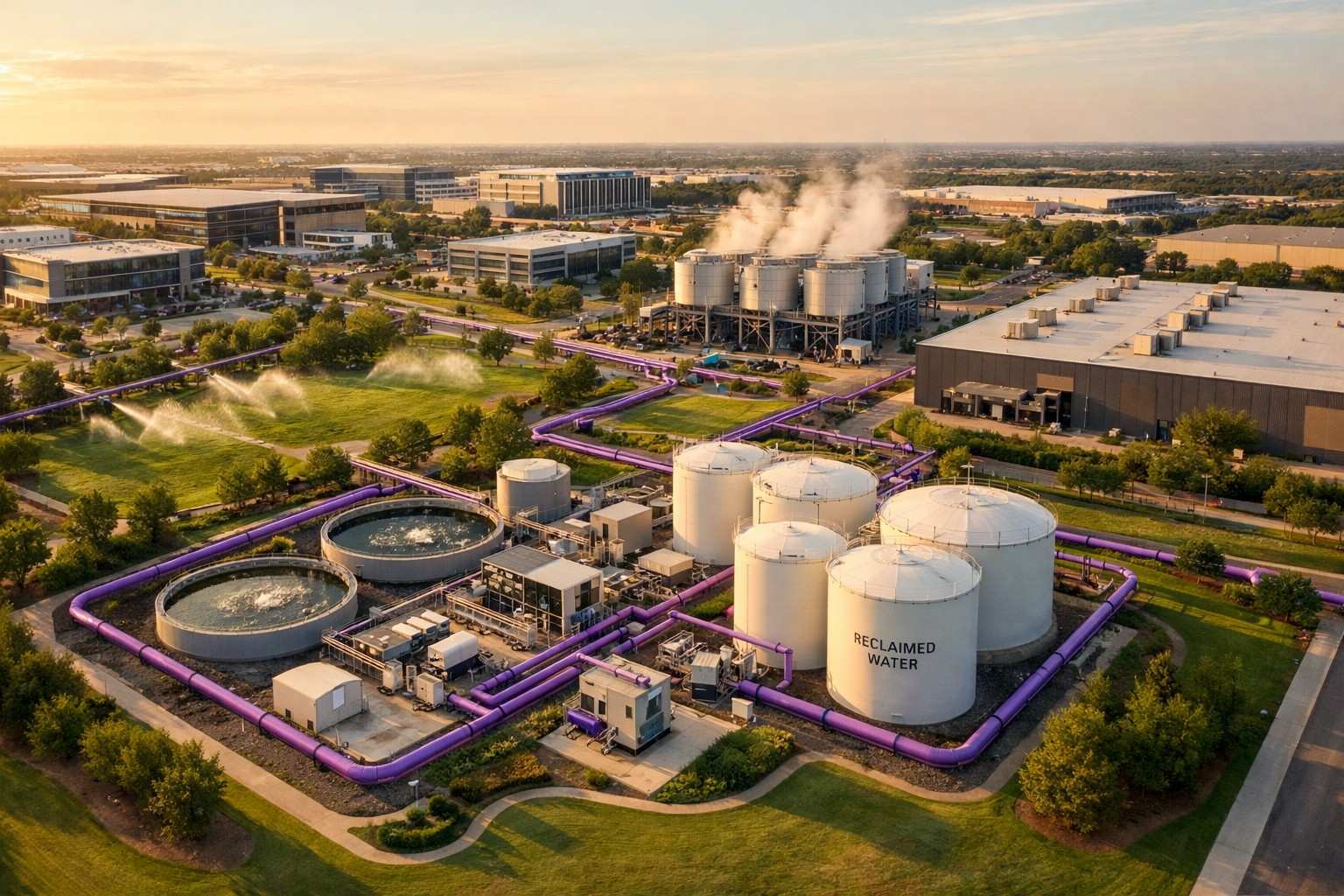
The infrastructure that solved his permitting problem now supplies treated water to other users in the corridor. The disposal cost became an operational asset.
How Reuse Permits Move Faster Than Discharge Permits
The timeline advantage of reuse-based permitting comes from what TCEQ does not have to review. When treated effluent goes to land or an industrial end user instead of a stream, there is no receiving water dilution analysis, no anti-degradation review, no downstream aquatic impact assessment, and in most cases no public hearing process.
Removing those steps is what compresses the timeline. The engineering rigor remains. A complete, technically accurate submittal is still required. But the review scope is narrower, and narrower scope means fewer revision cycles and a shorter path to an issued permit.
Matching the Right Authorization to Your Project
TCEQ issues several reuse-based authorizations. Which one applies to your project depends on your wastewater composition, site conditions, and available end users.
TLAP: Land Application for Disposal
A Texas Land Application Permit authorizes treated effluent to be applied to land through surface irrigation or subsurface systems. The permittee owns or leases the application site. Review focuses on groundwater protection, soil hydraulic capacity, and setback compliance. It fits rural and semi-rural commercial developments with available acreage and compatible soils.
210E: The Fast-Track Option for Mixed-Use Projects
The 210E Industrial Reclaimed Water Authorization applies when the wastewater stream includes any industrial component alongside domestic flows. The industrial portion does not need to dominate. A data center cooling operation, concrete batch plant, or light manufacturing tenant can qualify a predominantly commercial project for 210E eligibility. MES has obtained 210E approvals in four to ten weeks during TCEQ’s peak review periods, compared to 24 to 36 months for a discharge permit on the same site.
Chapter 210: Reclaimed Water for Productive End Use
Chapter 210 authorizations cover reuse for landscape irrigation, cooling tower makeup, and industrial process supply. Unlike a TLAP, the permittee does not need to control the application land. The reuse user may hold the land. This makes it more flexible for projects where treated water serves tenants, common areas, or nearby commercial operations.
What to Sort Out Before Committing to a Strategy
Industrial wastewater composition. Even a small industrial component can unlock the 210E pathway for a project that is mostly domestic in wastewater volume. Identify what is on-site before ruling out the faster option.
End user proximity. Agricultural operations, golf courses, industrial facilities, and construction operations near your site are potential reuse off-takers. Their proximity affects which authorization is viable and whether a revenue arrangement pencils.
Site conditions for land application. TLAP viability depends on soil type, available acreage, and setback distances. Sandy loam profiles in central Texas work well. Caliche and tight urban sites face real constraints.
Schedule alignment. Reuse authorizations move faster, but they still have minimum review timelines. Know how much lead time you have before signing contracts that assume a schedule the permit cannot support.
Is wastewater strategy on your due diligence checklist before site acquisition, or does it come up after the deal is signed?
Frequently Asked Questions
Can my commercial project qualify for a 210E if most of the wastewater is domestic?
Yes, if any industrial component exists. Under 30 TAC 210.53(b)(2), any project where industrial wastewater contains any amount of domestic wastewater qualifies. TCEQ has approved 210E authorizations where industrial flows represented as little as ten percent of total volume.
What happens if my reuse end user stops accepting treated water?
The authorization for that portion of flow becomes invalid unless alternative reuse is arranged. This is why many developers own the reuse land themselves, secure long-term agreements with end users, or pursue a backup discharge permit once the reuse system is operational and the original timeline pressure is resolved.
When should wastewater reuse strategy be evaluated in the development process?
During due diligence, before site acquisition. The reuse pathway your project qualifies for affects acquisition pricing, financing structure, and construction timeline. A site that supports a 210E carries a different risk profile than one limited to a 24-month discharge permit process. That distinction should inform the deal, not follow it.
Evaluating Wastewater Options for Your Texas Commercial Development?
Modern Engineering Solutions helps Texas commercial developers identify the fastest, most cost-effective wastewater permitting path before capital is committed to a strategy that may not fit the site or the schedule.
We specialize in:
- 210E Industrial Reclaimed Water Authorization preparation and TCEQ coordination
- Texas Land Application Permit (TLAP) design and permitting
- Chapter 210 reclaimed water feasibility and authorization
- Wastewater reuse strategy and end-user coordination
- Treatment plant design for commercial and mixed-use developments
Modern Engineering Solutions | McKinney, Texas
(214) 833-6748 | mod-eng.com
Share via: