
Stormwater Discharge Permitting for Industrial Facilities: TPDES Industrial Stormwater Permits Explained
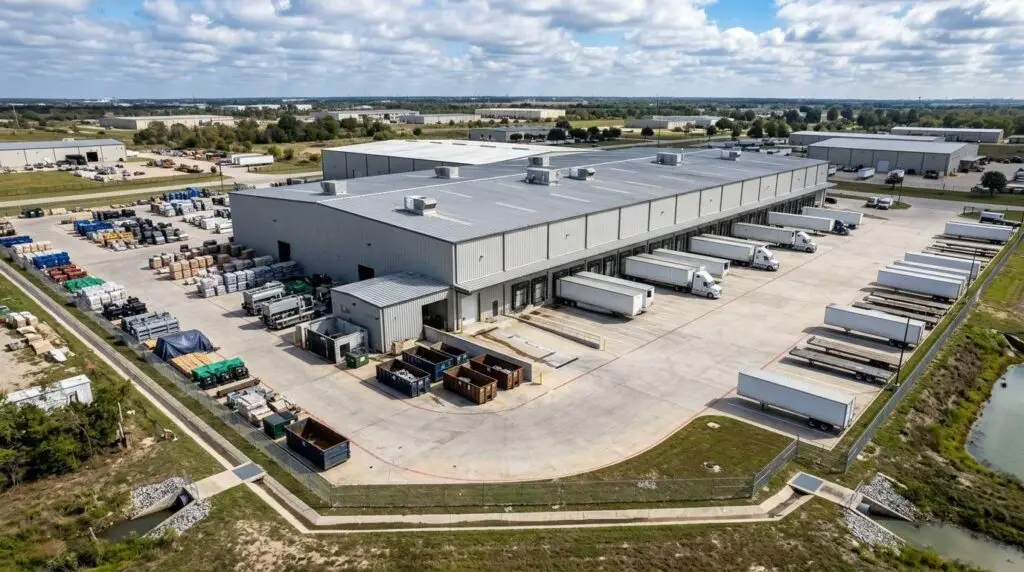
An industrial facility that has never applied for a stormwater permit is not necessarily in compliance. It may simply not have been inspected yet. When stormwater contacts exposed industrial materials, equipment, process areas, or waste handling zones and then runs off the site, that discharge is regulated under the Texas Pollutant Discharge Elimination System regardless of whether anyone at the facility knows it.
How TCEQ Sets Effluent Limits: Understanding Receiving Water Quality Standards and Permit Conditions
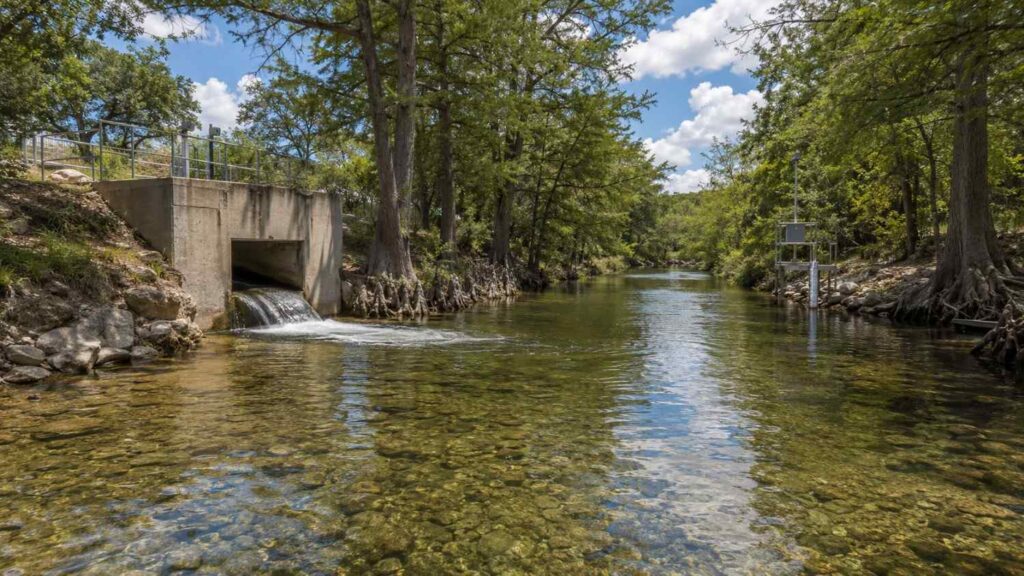
The effluent limits in your TPDES permit are not arbitrary. Every number in that permit reflects a calculation tied to the quality of the stream, lake, or creek receiving your discharge, the designated uses assigned to that water body, and the cumulative load that water body can absorb before it fails to meet state water quality standards. If you are designing a treatment plant without understanding why those limits exist, you are designing blind.
Industrial vs. Municipal Discharge Permits in Texas: Different Standards, Monitoring, and Compliance
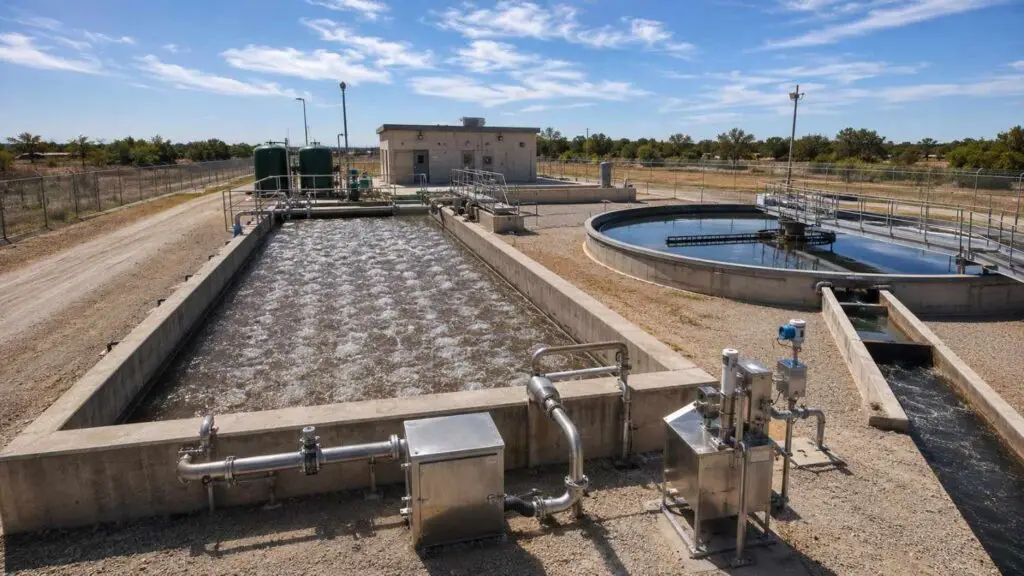
A developer who assumes that any wastewater discharge in Texas follows the same permitting path as a municipal treatment plant will eventually learn otherwise at significant cost. Industrial and municipal TPDES permits share the same regulatory umbrella, but they operate under different standards, different monitoring frameworks, and different compliance expectations. Confusing the two at the start of a project creates problems that are expensive to undo.
Permit Modification vs. Renewal vs. Amendment: When You Need to Change Your Discharge Permit
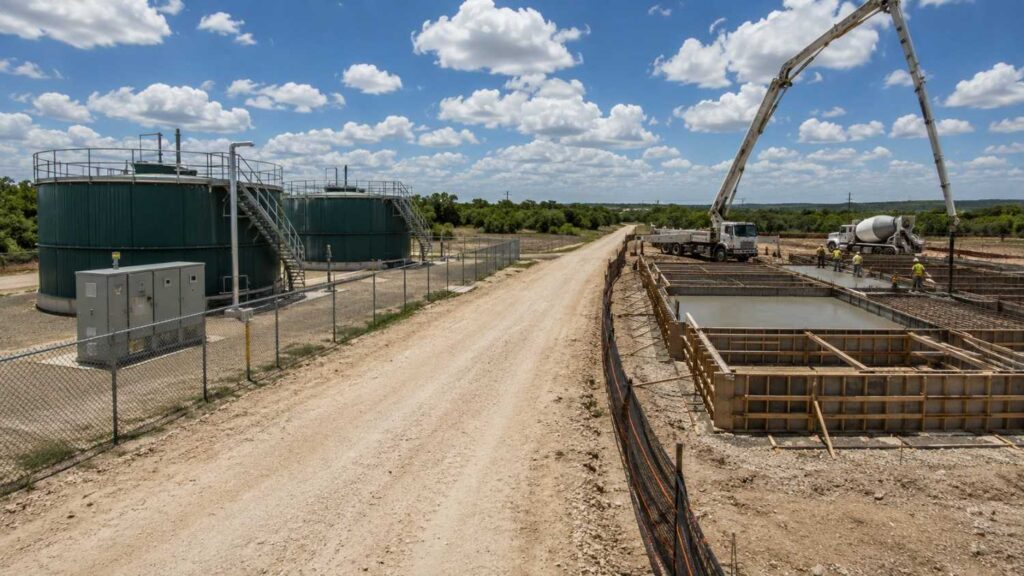
The permit sitting in your file drawer has an expiration date, a set of conditions, and a flow authorization that may no longer match what your facility actually needs. When that gap opens up between what your permit says and what your operation requires, the question is not whether you need to act. The question is which type of permit action applies and how much time you have before that gap becomes a compliance problem.
Biosolids Land Application from Private Wastewater Treatment Facilities in Texas
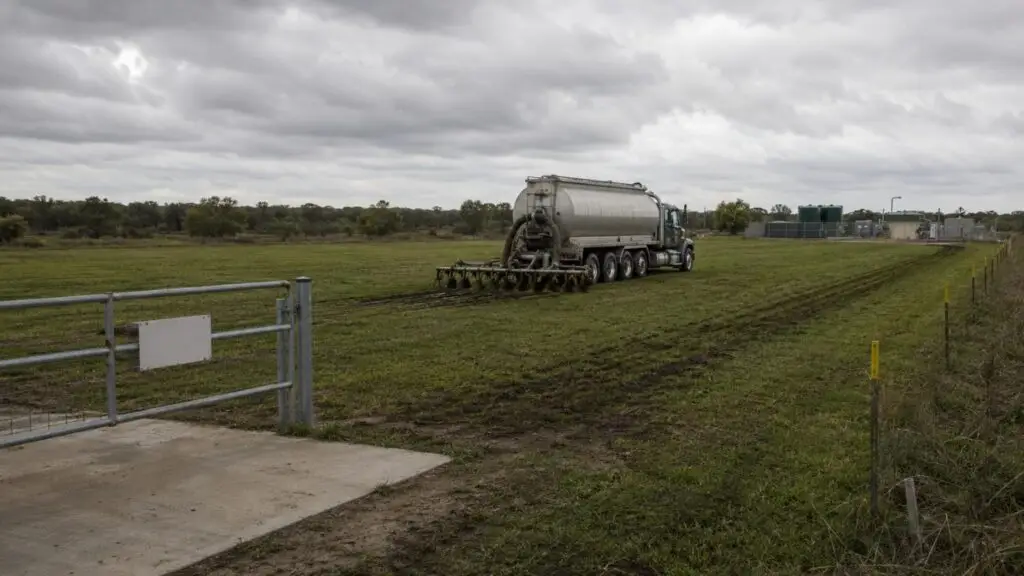
Most developers who build a private wastewater treatment plant spend their engineering budget on the TPDES permit, the treatment train design, and the TLAP or 210E authorization for effluent disposal. Almost none of them spend equal attention on what happens to the sludge. That oversight does not stay invisible for long. The first time a certified operator calls to report that the sludge holding tank is full and there is no permitted disposal pathway in place, the project has a compliance problem that should have been solved before the plant went online.
Municipal TPDES Individual Permits: What Texas Cities and Utility Providers Need to Know
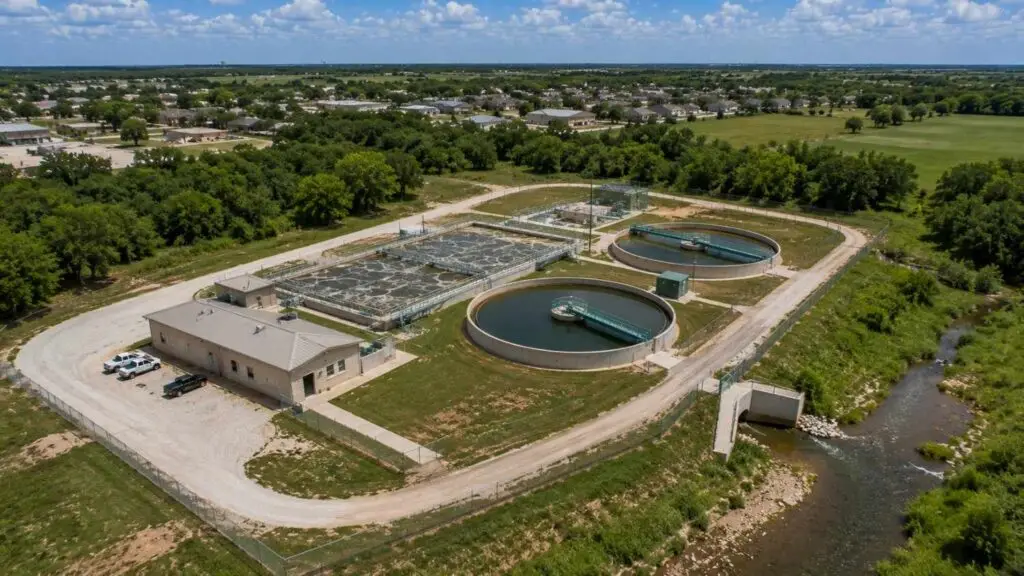
Every Texas city and utility district that operates a wastewater treatment plant and discharges treated effluent to a creek, river, or other surface water is operating under a TPDES individual permit. That permit is not simply a piece of paper from TCEQ confirming the plant exists. It is the document that sets every operational parameter the plant must meet, every sample that must be taken, every report that must be filed, and every capital decision that has to happen before the permit allows the community to grow.
Hydrostatic Test Water: What Texas Developers and Contractors Need to Know Before Discharge
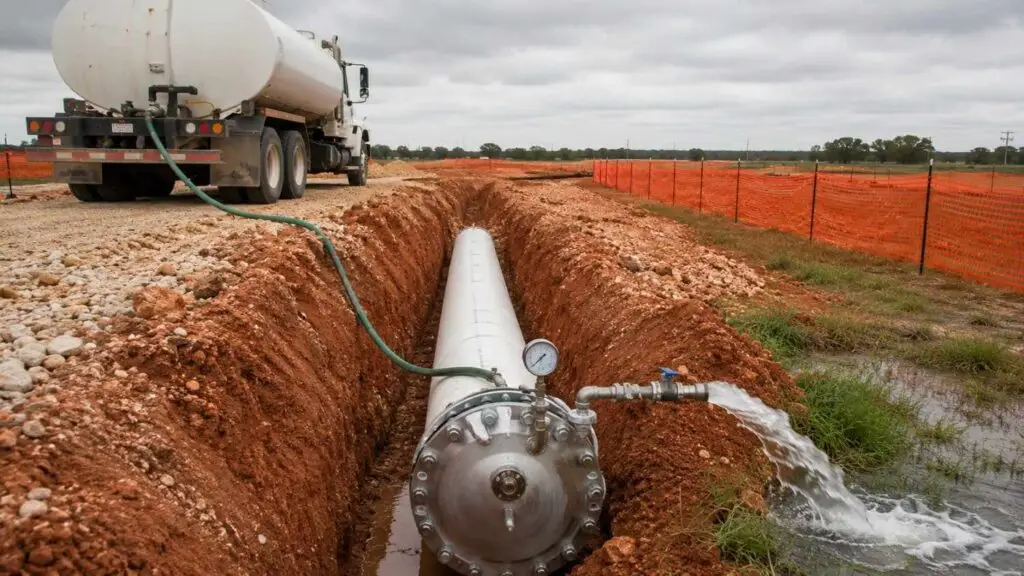
The water that filled your pipeline during pressure testing does not have the same regulatory status as rain falling off a roof. Before it leaves the site, someone needs to have answered the question of where it is going and under what authorization it is being discharged. Most project teams that discover this question on the day of testing are discovering it too late.
Private Wastewater Treatment Plants in Texas: When Developers Need Their Own TPDES Permit
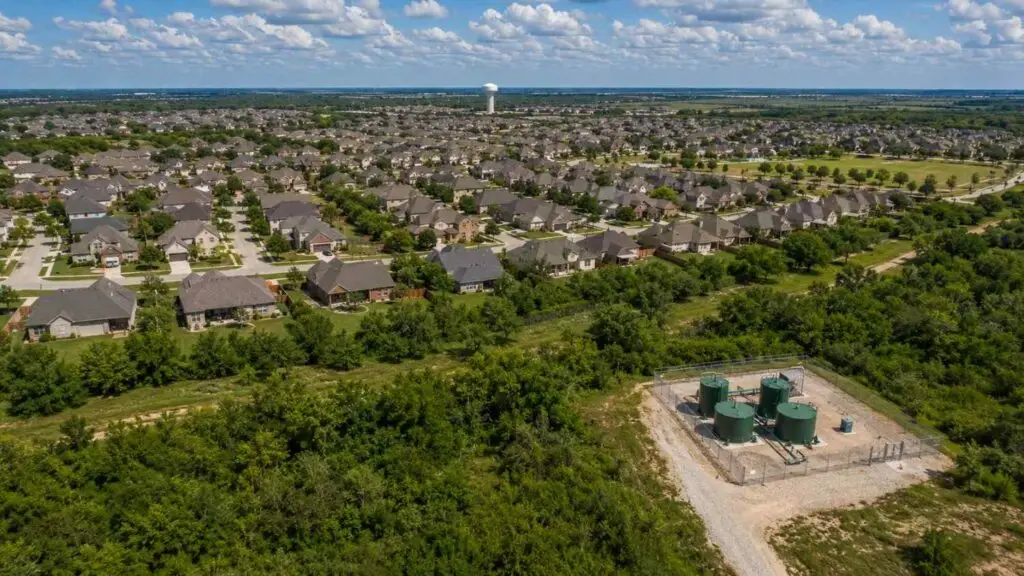
Texas has over 771 active domestic wastewater permits for privately owned treatment systems. That number exists because Texas keeps growing into land that municipal sewer systems have not reached, cannot serve at reasonable cost, or simply do not have capacity to accept. When public sewer is not a realistic option, private wastewater treatment is not unusual. It is how Texas development gets done.
Texas Wastewater Pretreatment Permits: What Industrial Facilities Discharging to a POTW Must Know
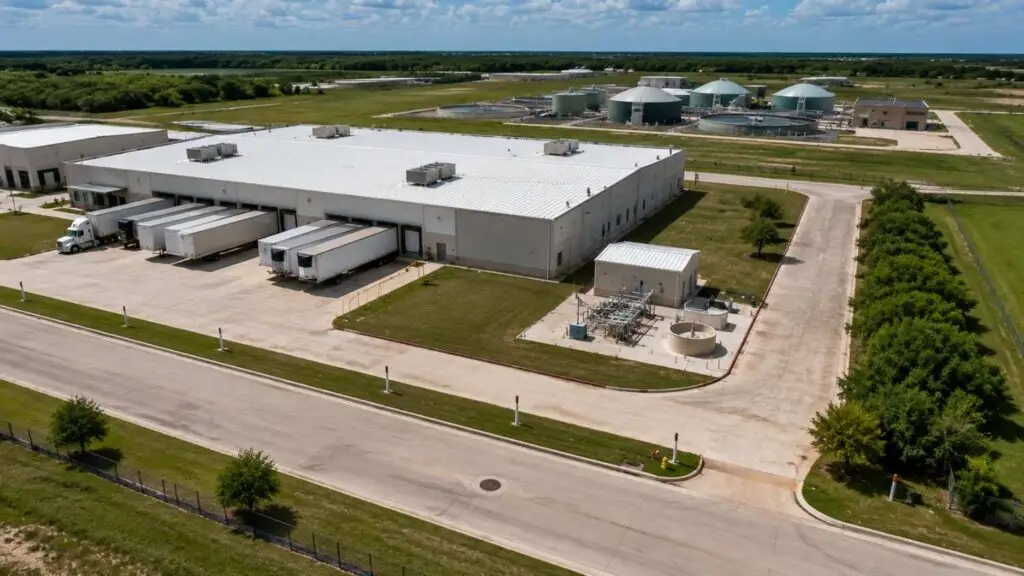
Signing a lease near city sewer service and assuming the wastewater problem is solved is one of the most common and most expensive mistakes industrial facilities and food processors make in Texas. The city connection resolves the physical routing of the wastewater. It does not automatically resolve what the wastewater contains, what the city will accept, or what the facility must do before anything reaches the city’s collection system.
Texas Land Application Permits Explained: Spray Irrigation, Subsurface Drip, and Evaporation Ponds
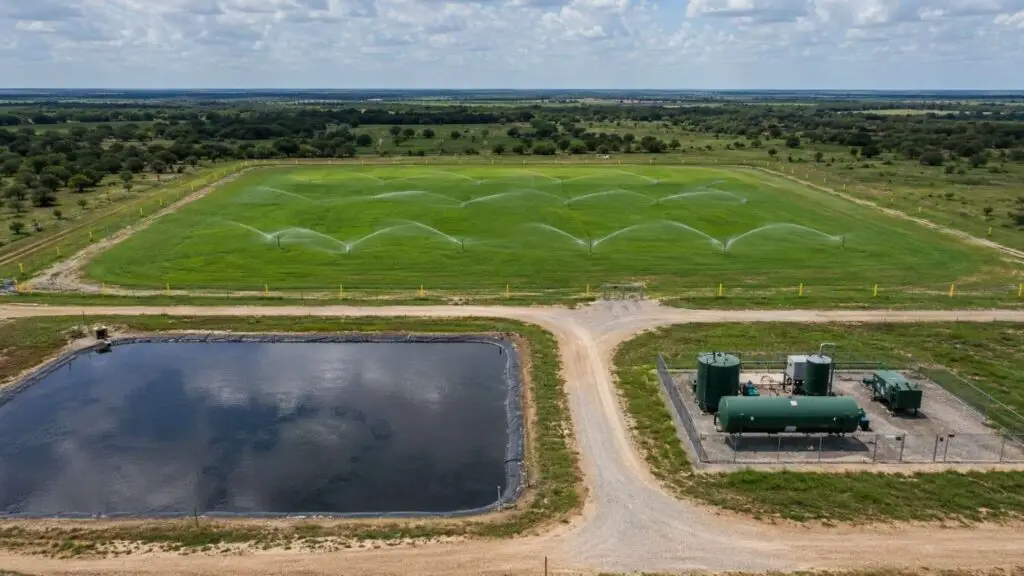
Not every Texas site has a creek nearby. Not every project can support a receiving water analysis. And not every developer wants to spend 24 to 36 months in TCEQ’s discharge permit queue. A Texas Land Application Permit offers a different path: one that keeps treated effluent on the land, avoids surface water discharge, and bypasses the receiving water review that drives discharge permit timelines. But TLAP is not a single solution. It is a family of methods, each with specific site requirements, engineering constraints, and operational realities that must be matched to the project before engineering begins.
Sewage Sludge and Biosolids Land Application Permits in Texas: Rules, Fees, and Common Mistakes
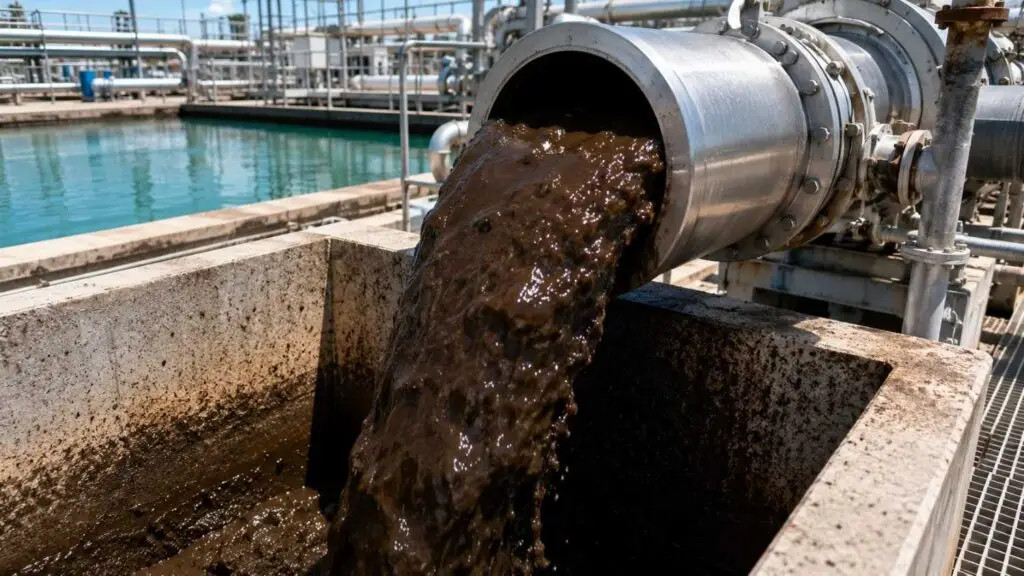
Most municipal wastewater treatment plant operators in Texas have a solid handle on their discharge limits, effluent sampling schedules, and monthly reporting to TCEQ. The part of the compliance picture that consistently has gaps is the back end of the treatment process: what happens to the sludge after it leaves the digester, where the biosolids go, who tracks the application records, and whether the permit authorizing all of it is current and complete.
Texas Chapter 210 Reclaimed Water Permits: Type I vs. Type II and When You Need One
Texas is running out of water. Not next century. Now.
Aquifers supplying Dallas, San Antonio, and hundreds of smaller communities are being drawn down faster than they recharge. State population projections show millions of new residents arriving over the next two decades, and the infrastructure to serve them is already strained.
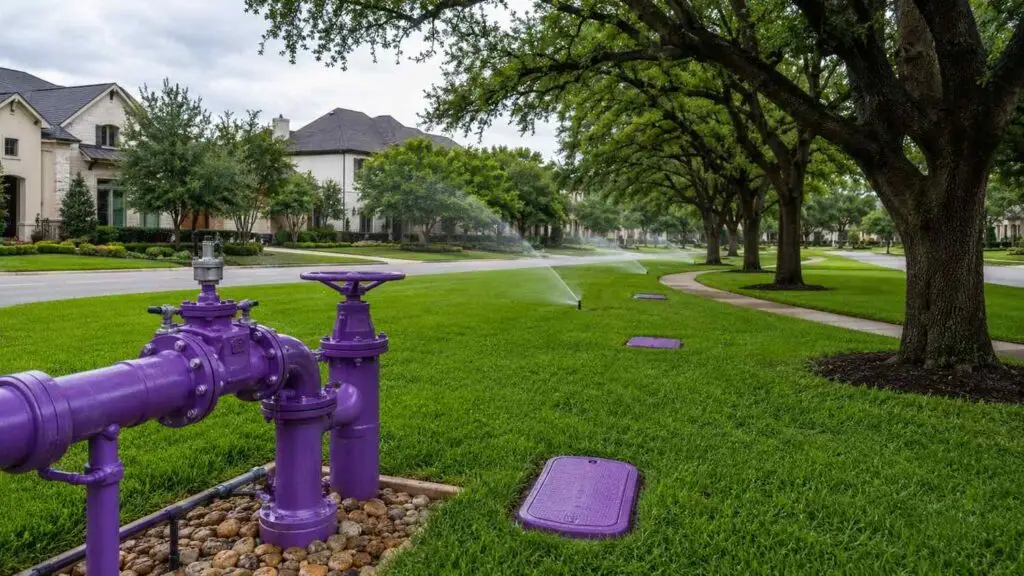
One solution has been on the books since 1997. Under 30 TAC Chapter 210, Texas authorizes the treatment and beneficial reuse of domestic and municipal wastewater for non-potable applications including residential irrigation, golf course maintenance, dust control, and industrial cooling. It is one of the most practical tools available to developers, municipalities, and utilities navigating Texas water scarcity, and one of the most overlooked.
The framework splits permitted uses into two categories: Type I and Type II. The category your project falls into determines your treatment standards, your operational restrictions, and whether your TCEQ application moves quickly or stalls. Here is what you need to know.
Construction General Permit TXR150000: What Texas Developers Need to Know Before Moving Dirt
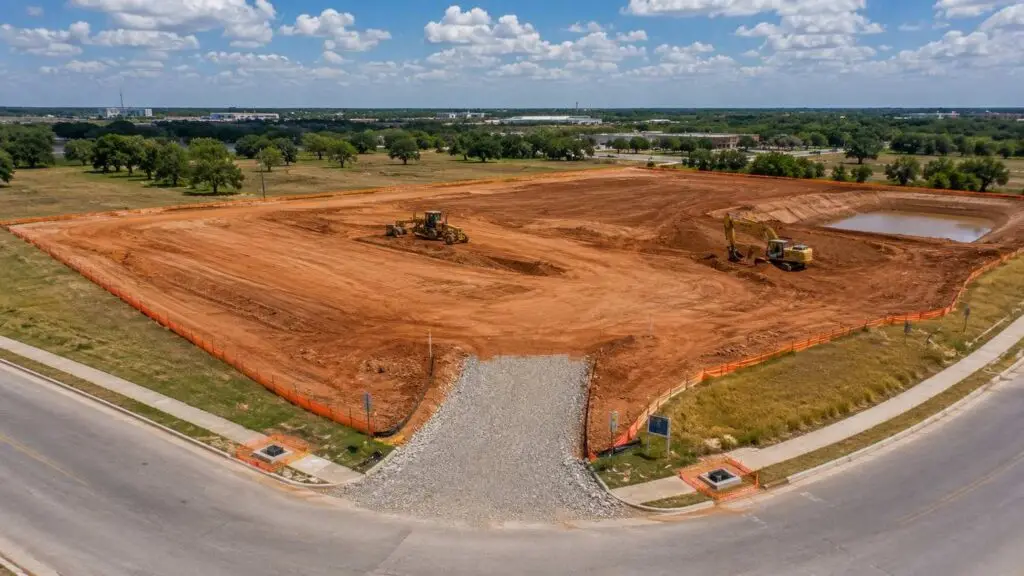
Most Texas developers know they need a building permit before construction starts. Many do not realize they also need stormwater construction permit coverage before a single acre of dirt is disturbed. Moving dirt without that coverage is a TCEQ violation. It is also preventable.
Industrial TPDES vs. TLAP: Which Wastewater Permit Path Fits Your Texas Facility?
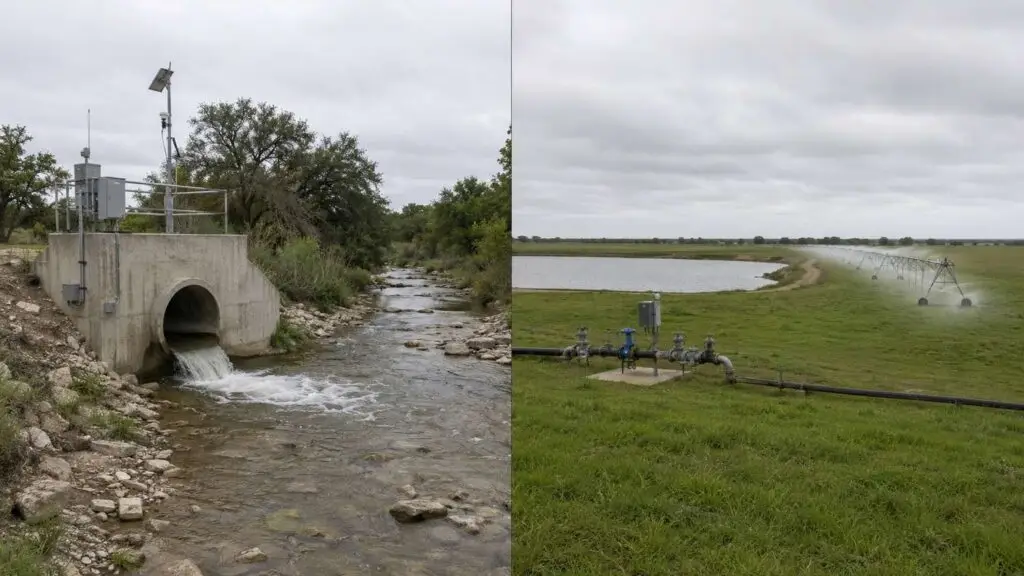
The permit path your industrial facility chooses for wastewater disposal is not a procedural decision. It determines the treatment system you build, the land you need, the compliance obligations you carry for the life of the facility, and how long it takes before you can operate. Getting it right before investing in equipment or site work saves time, money, and the frustration of discovering you chose the wrong path after the engineering is already complete.
Chapter 210 Reclaimed Water: What Texas Developers Need to Know About Water Reuse
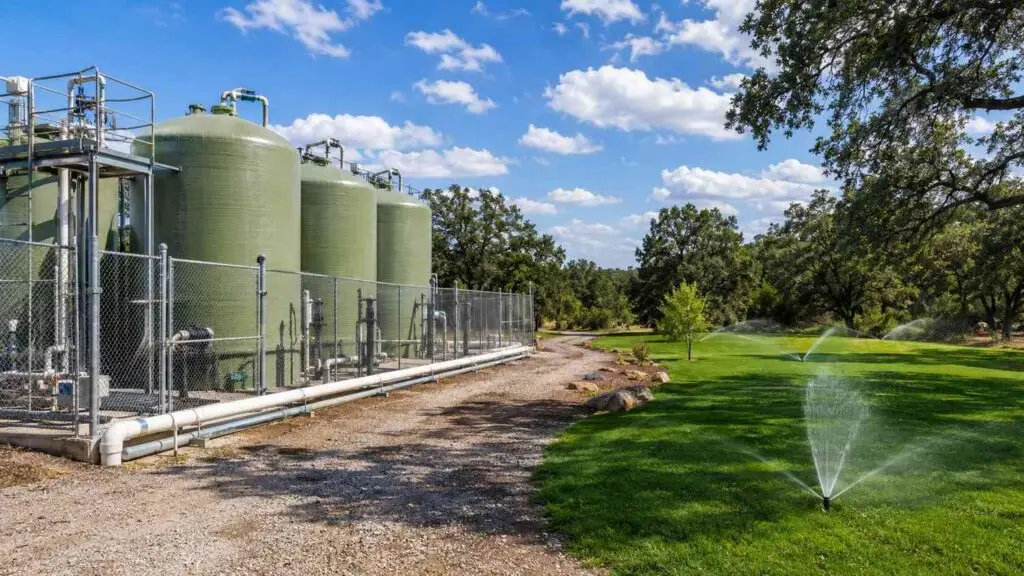
Water reuse in Texas is not a future trend. It is an active regulatory pathway that is already determining whether development projects move forward, what they cost to build, and how long they take to permit. Understanding what Chapter 210 reclaimed water actually requires before site plans, utility layouts, and amenity areas are locked in is one of the most practical things a Texas developer can do for their project.
Phase II MS4 Permits: What Small Texas Cities and Public Entities Need to Know
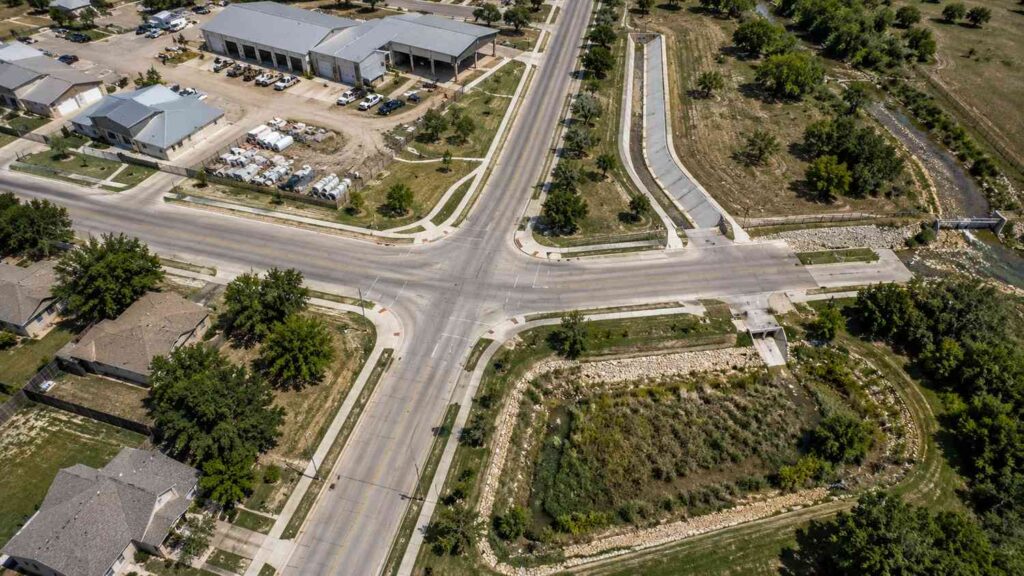
Most small Texas cities and public entities that hold a Phase II MS4 permit got it years ago, filed the initial paperwork, and moved on. Then the permit renewal cycle arrives, the annual report is due, and someone on staff is trying to reconstruct two years of stormwater program activity from a folder that does not have much in it. That is not a compliance program. It is a documentation problem that becomes an enforcement risk.
How to Read a TCEQ Effluent Limit Table: What the Numbers Actually Mean for Your Development
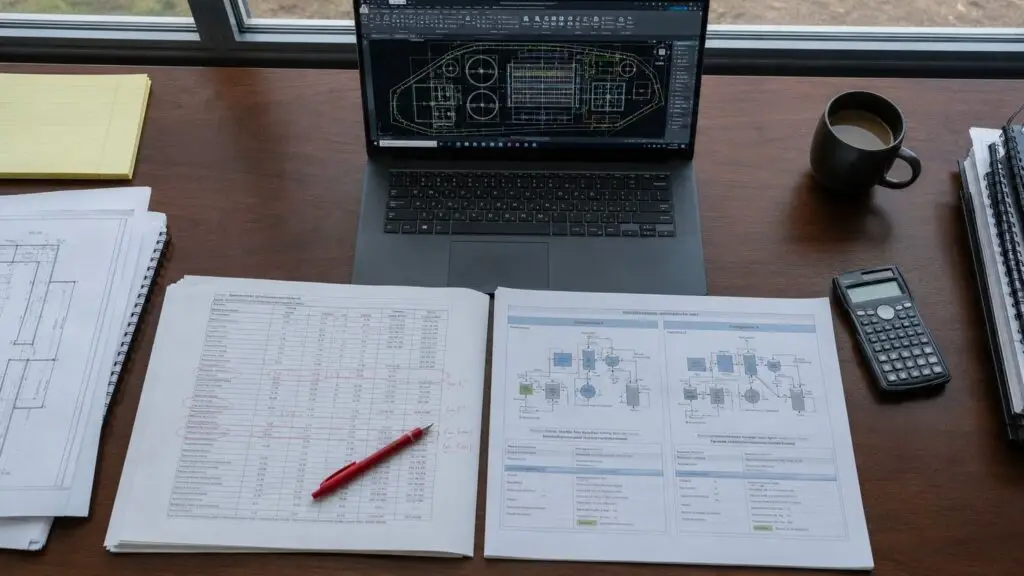
When a Texas developer receives a draft TCEQ wastewater permit, the effluent limit table is usually the part nobody reads carefully enough. That is a mistake. Every number in that table is a design specification, an operating obligation, and a long-term cost driver.
What Happens to Your 210E Permit When Your Industrial Tenant Leaves?
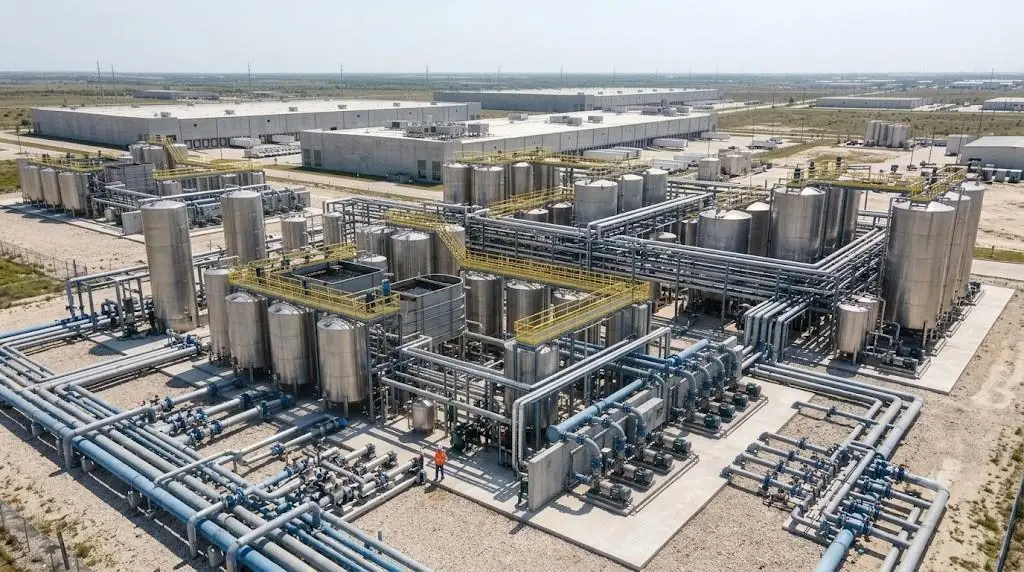
It is a question most developers do not ask until they are facing it. The industrial tenant who helped qualify the 210E authorization is leaving. The data center is shutting down. The concrete batch plant is relocating. Now what?
How Mixed-Use Developments Qualify for 210E Even When 90% of Their Flow Is Residential
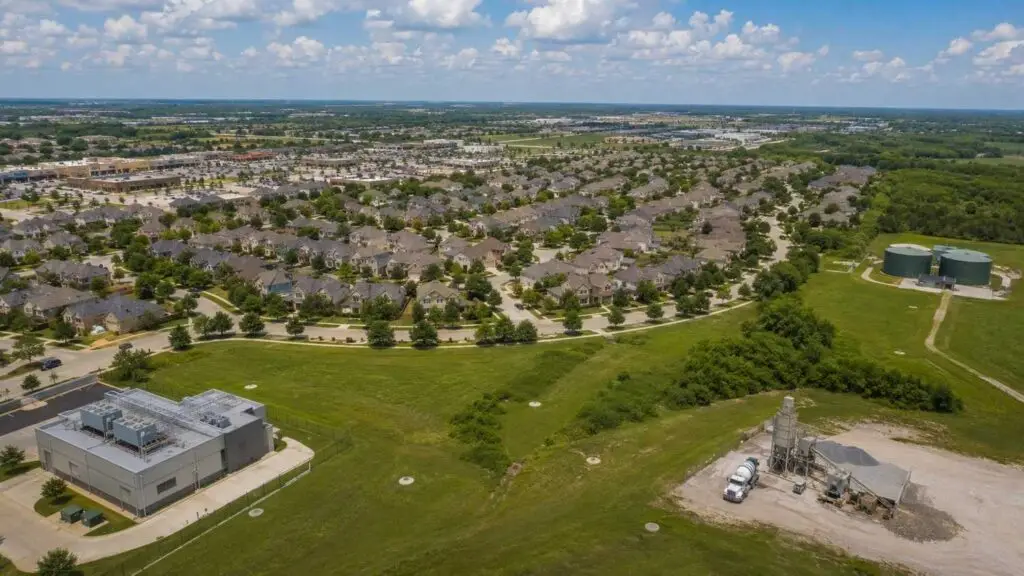
The most common reason developers assume they do not qualify for a 210E authorization is the one that is least supported by the regulation: they believe their project is not industrial enough. It almost always is.
Why Your Texas Development Needs a Wastewater Engineer Before the Architect Signs Off
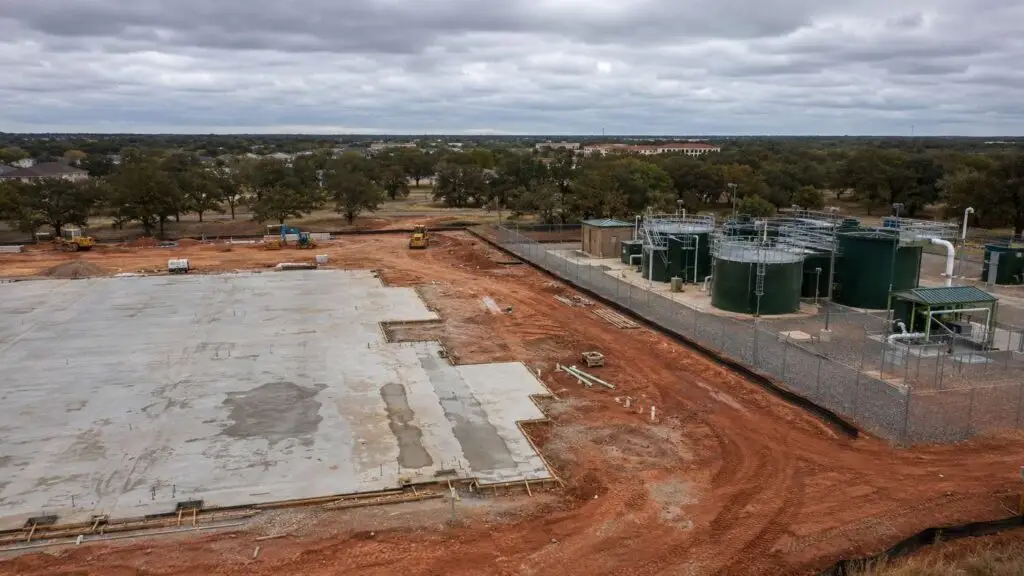
By the time an architect delivers a signed site plan, the decisions that determine your wastewater permitting pathway have already been made. Most of them were made wrong.
How to Evaluate Wastewater Utility Options Before You Close on Land (Connect, Build, or Wait)
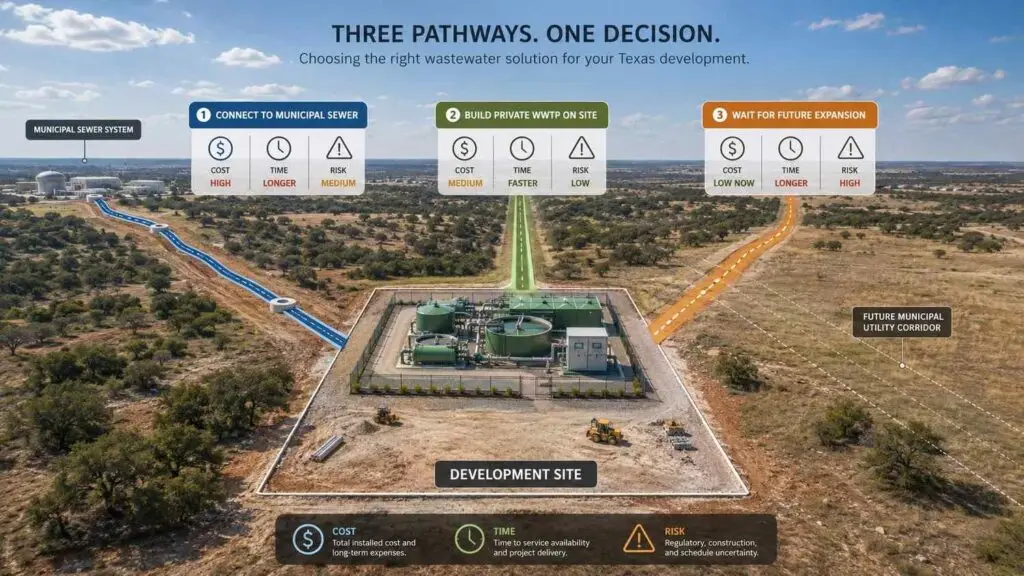
The wastewater utility question is the one most developers get to last. It should be the first question answered before a purchase agreement is signed.
Why Your Site Civil Engineer Isn’t the Right Person to Lead TCEQ Permitting

This is not a criticism of site civil engineers. They are skilled professionals doing exactly what they were trained to do. The problem is that TCEQ wastewater permitting is not what they were trained to do, and on Texas development projects, routing that work through the wrong firm consistently produces the same outcome: deficiency notices, redesigns, and months of lost time.
How to Size a Wastewater Storage Reservoir for a Texas Reuse Project
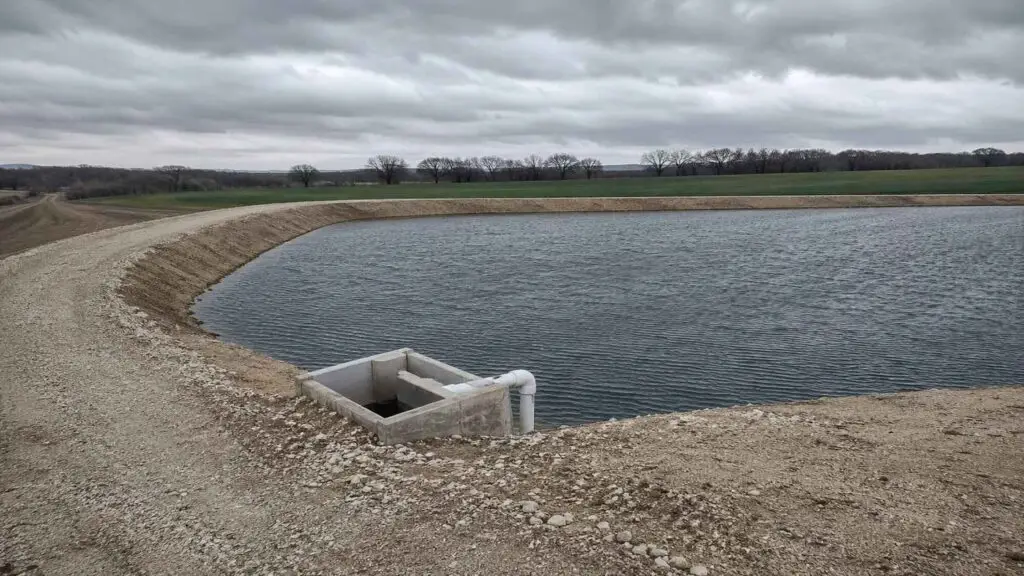
The storage reservoir on a Texas reuse project is not a nice-to-have. It is what keeps the facility in compliance during the months when the reuse site cannot accept all the effluent being produced. Size it wrong and the permit will not be approved. Size it right and the facility operates without a compliance gap through any seasonal condition the site will experience.
Ongoing Compliance After Permit Approval: What a Developer-Operator Needs to Track
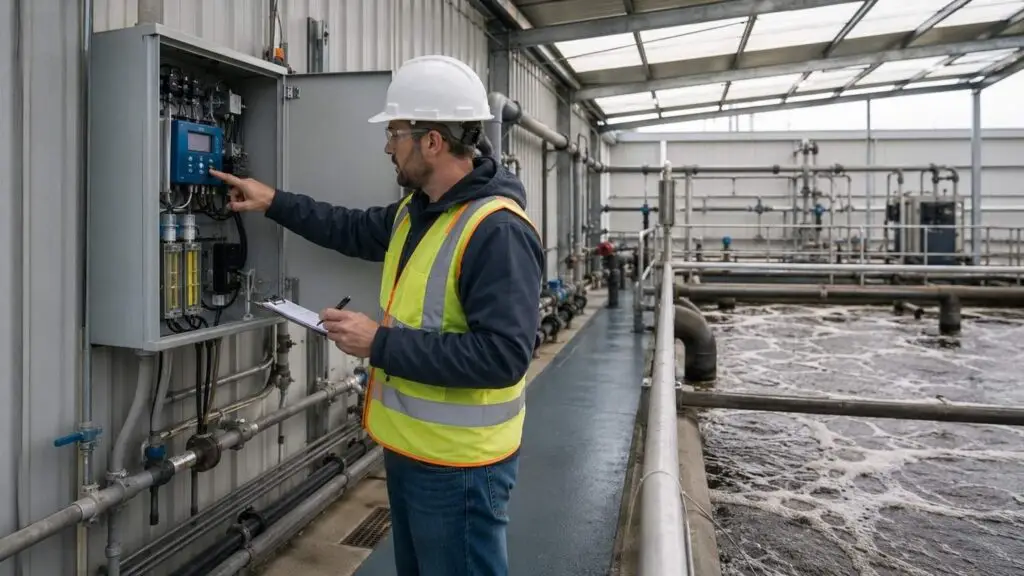
Getting the permit is the milestone most developers focus on. But the permit is not the end of the regulatory obligation: it is the beginning of it. If you now own and operate a private wastewater treatment facility in Texas, here is what that actually requires.
What a Utility Feasibility Study Actually Tells You, and When to Get One
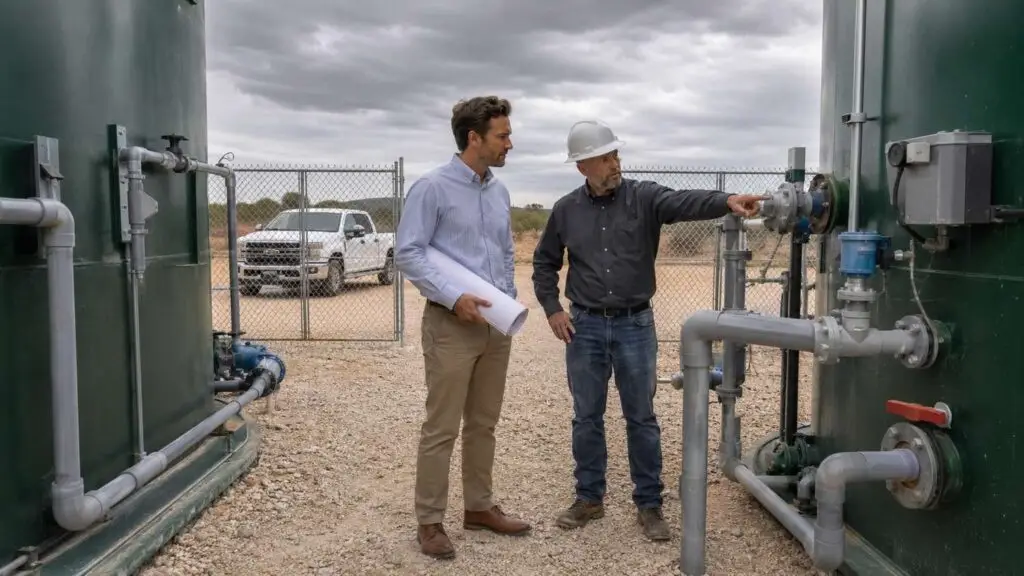
If you are reviewing site viability for a development acquisition and the utility section says “TBD,” you do not have a pro forma. You have an assumption with a price tag attached to it.
Getting a Discharge Permit as a Backup After Your 210E Is Operational
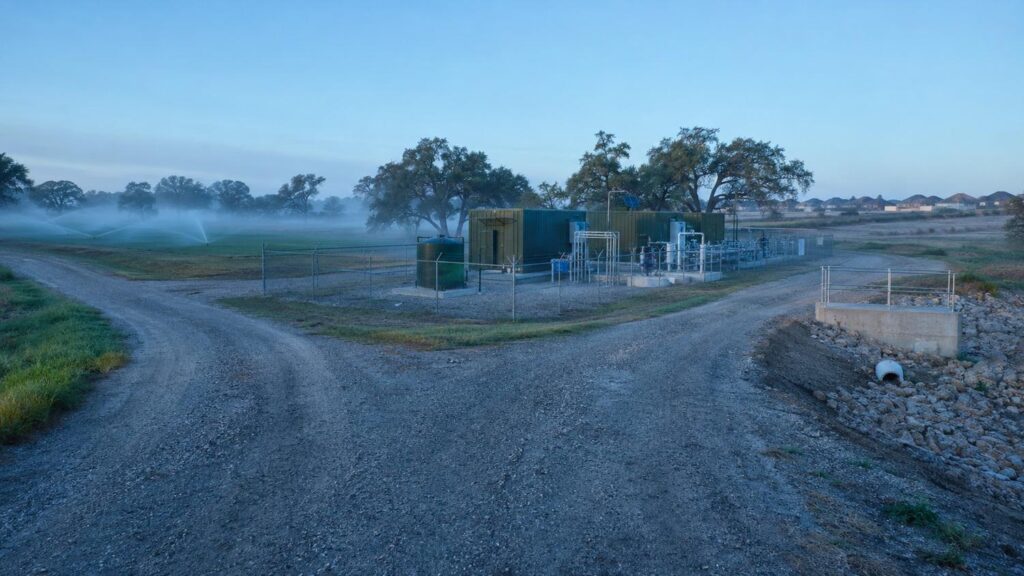
A 210E authorization gets your development operational in weeks instead of years. A backup discharge permit keeps it operational if the reuse arrangement changes. Running both is not redundancy for its own sake: it is a rational risk management strategy.
How Wastewater Infrastructure Affects Your Pro Forma: What Developers Often Miss
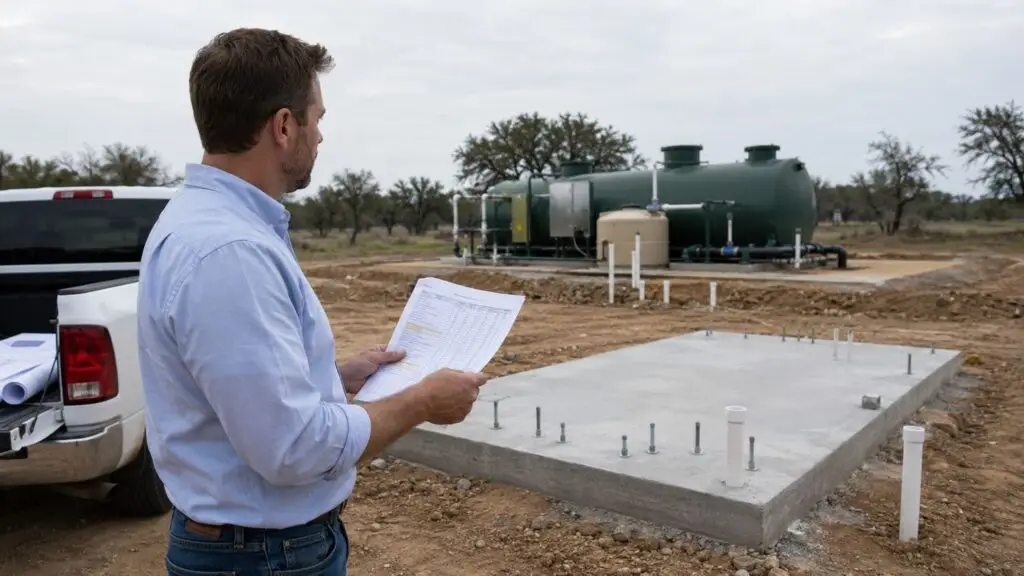
Wastewater infrastructure is not a regulatory line item. It is a financial variable. The developers who treat it as the former consistently find it showing up as a problem in the latter.
Package WWTP vs. Custom-Designed Plant: Which One Fits Your Project?
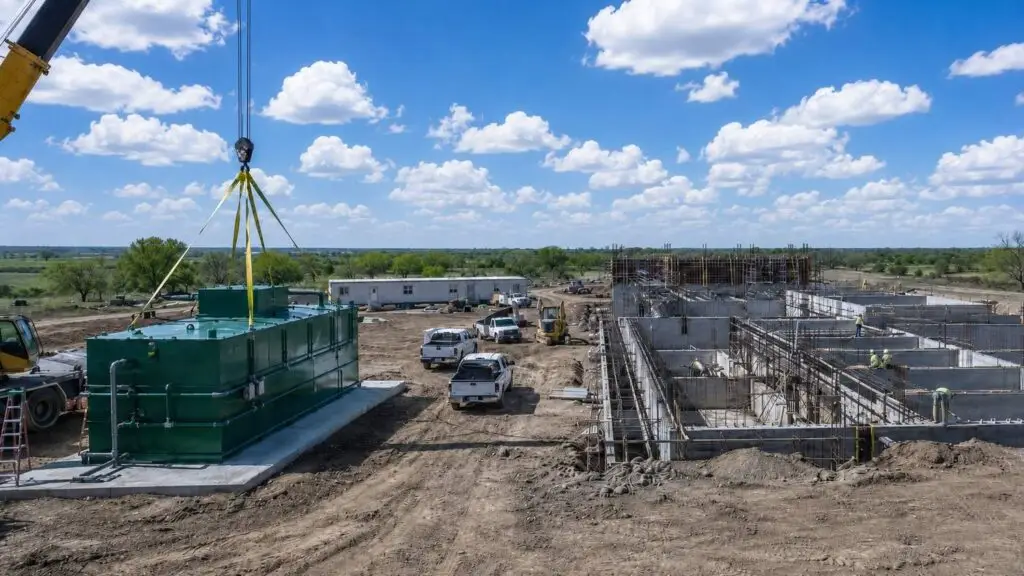
The question is not which option is better. The question is which option matches your project’s flow volume, discharge requirements, site constraints, budget, and timeline. Getting the answer wrong costs money on construction day and creates problems on permit day.
Your Three Wastewater Disposal Options in Texas: Discharge, Reuse, or Land Application
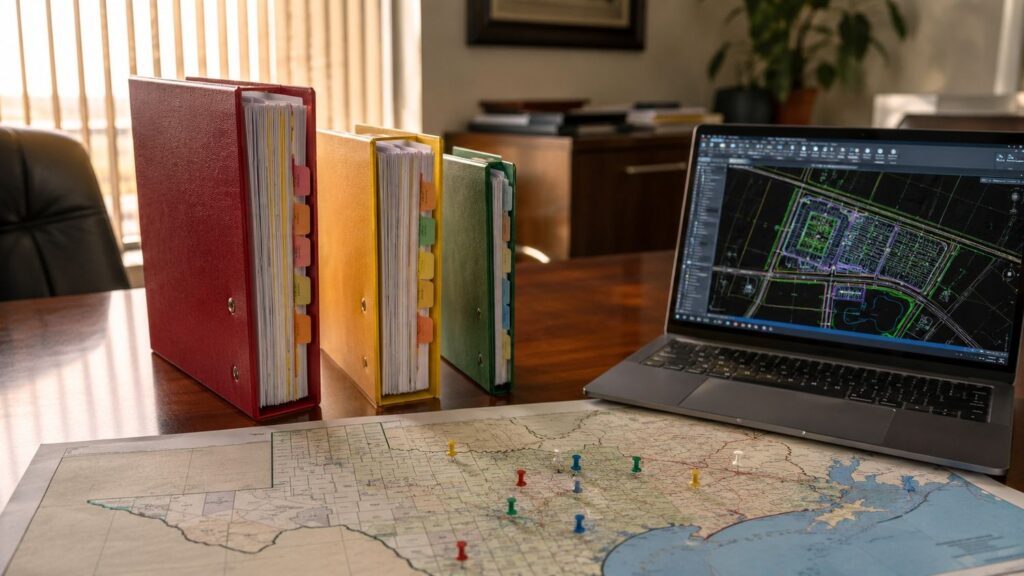
Every private wastewater treatment plant in Texas produces treated effluent that has to go somewhere. Where it goes and through which regulatory pathway determines your project timeline, your land requirements, and how much carrying cost exposure sits on your pro forma before construction starts.
210E vs. TPDES Discharge Permit: A Side-by-Side Comparison for Developers
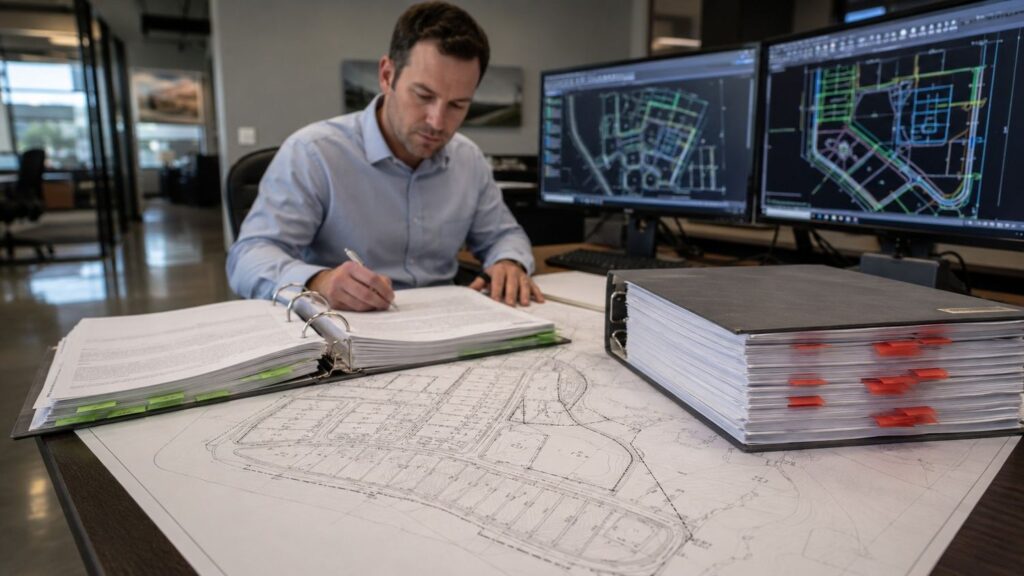
Most Texas developers ask the same question when they learn about the 210E authorization: why isn’t this what every qualifying project uses? The answer is that most engineers default to what they know. This article gives you the comparison to make the decision yourself.
Permit-by-Rule vs. Standard Permit: When Each Path Applies to Your Development
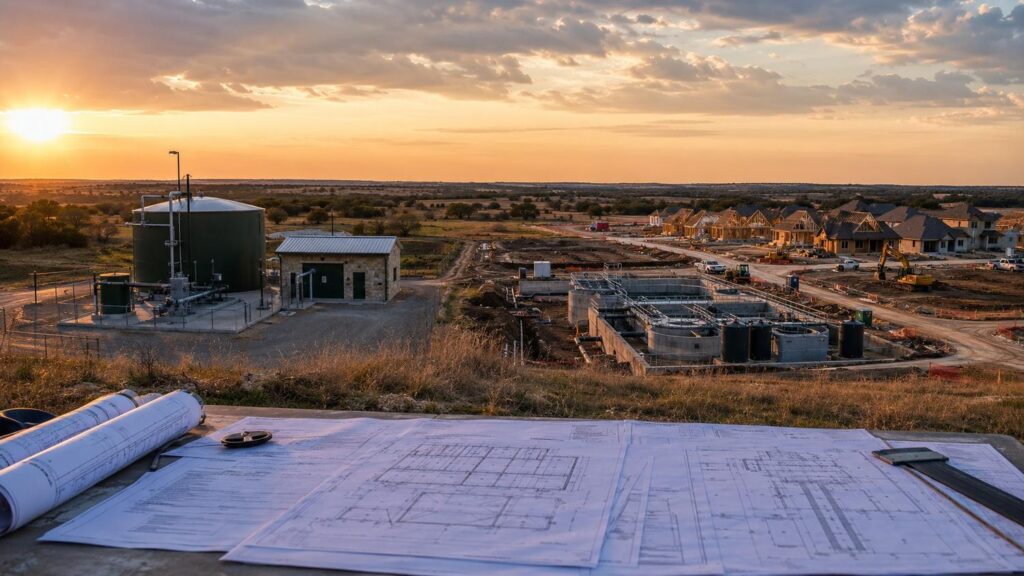
Before you engage a water and wastewater engineer for a Texas development project, it helps to understand which permitting pathway your project likely falls into. The difference between a permit-by-rule and a standard TCEQ permit is not a minor procedural distinction, it determines your timeline, your regulatory obligations, and in some cases whether construction can start before TCEQ issues any formal authorization at all.
How to Work With TCEQ Reviewers: What Slows Approvals and What Speeds Them Up
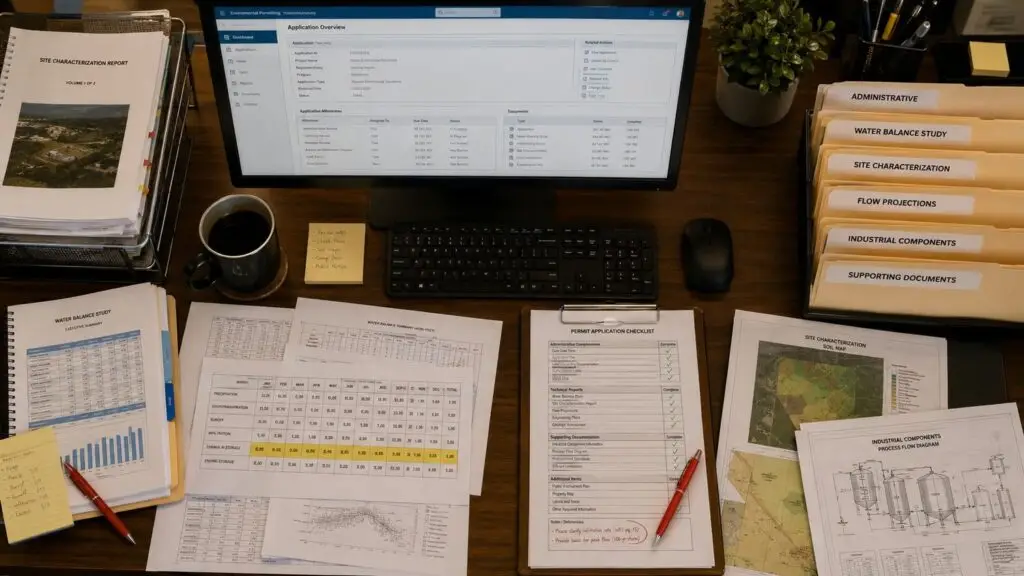
TCEQ reviewers are not the reason most permit applications take 24 months. Incomplete submittals are. Understanding what reviewers actually evaluate, and what triggers a deficiency notice, is the difference between a 4-week approval and an 18-month revision cycle.
Water Balance Studies Under 30 TAC §309.20: What They Require and Who Prepares Them
Every reuse-based wastewater permit in Texas depends on one engineering analysis to hold together: the water balance study. Get it right and the permit moves. Get it wrong and you will be answering TCEQ deficiency notices for months while your project carries costs it was never designed to absorb.
What Engineers Submit to TCEQ and Why Your Application Gets Rejected
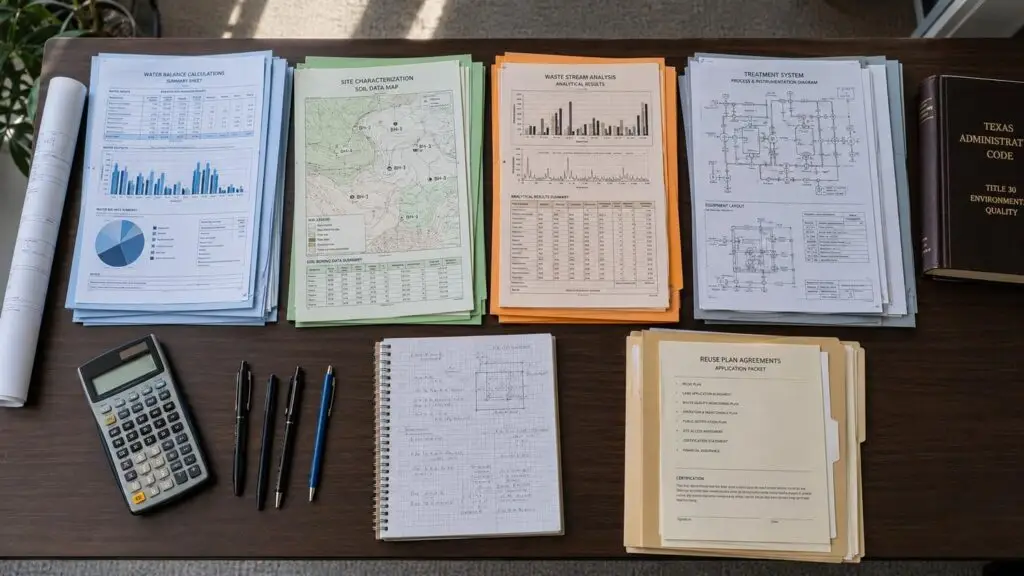
If your TCEQ wastewater permit application has been sitting in review for three months without an approval, the most likely explanation is not TCEQ’s workload. It is an incomplete submittal. Here is what a complete application actually contains and where most of them fall short.
Flow Rate Projections: How to Size a Wastewater Treatment Plant for Your Development Without Over-Building
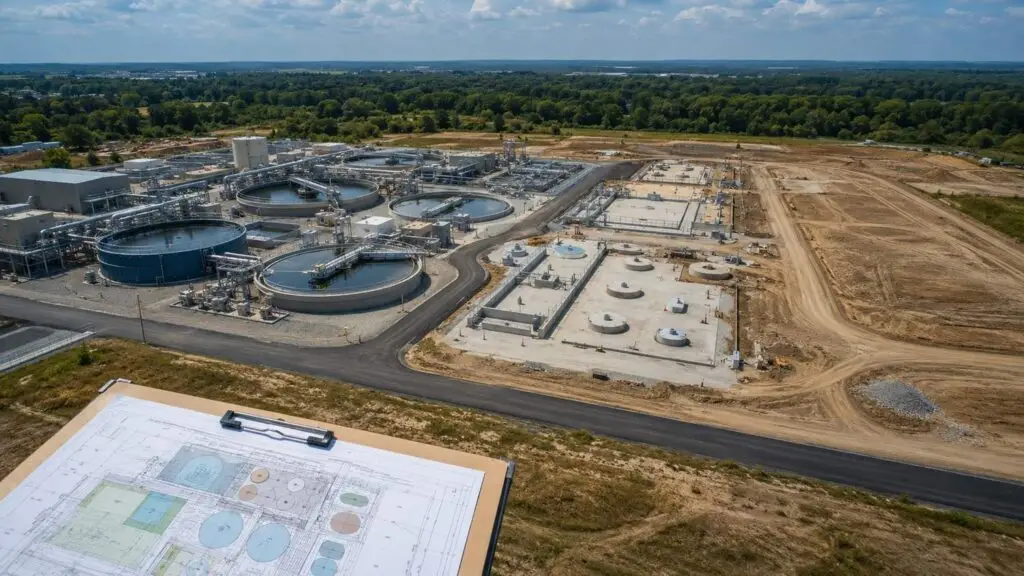
The single number that determines how much your wastewater treatment plant costs to build, permit, and operate is design flow. Get it wrong in either direction and you pay for it either in excess capital committed to capacity you do not need yet, or in compliance failures you cannot recover from without expensive redesign.
How Carrying Costs Are Killing Texas Development Projects (And the Permit Strategy That Fixes It)
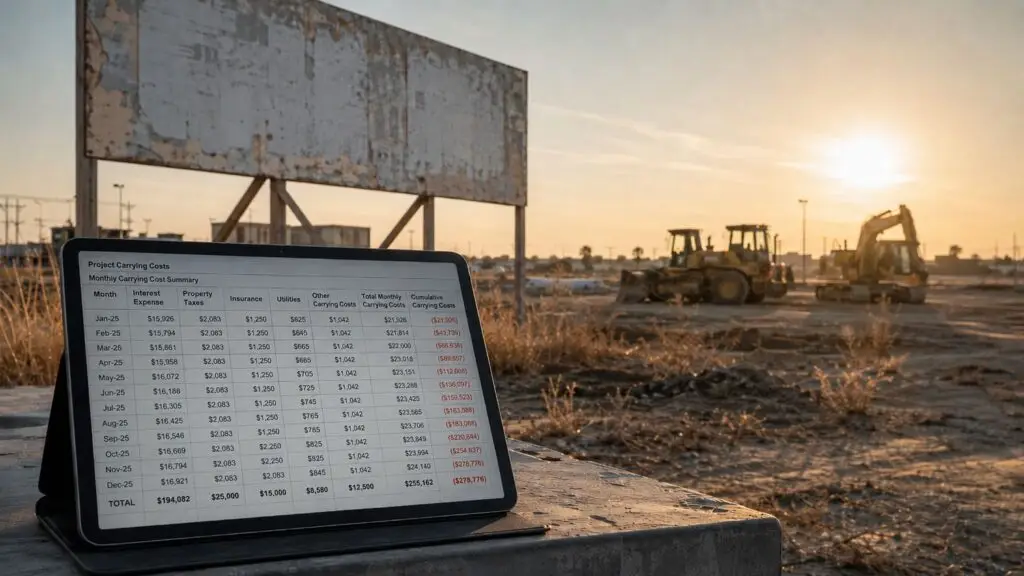
Every month your wastewater permit sits in TCEQ’s queue is a month your pro forma is bleeding. Here is what that actually costs and the permit strategy that eliminates the dependency entirely.
Building a Private WWTP in Texas: What Developers Need to Know Before They Commit
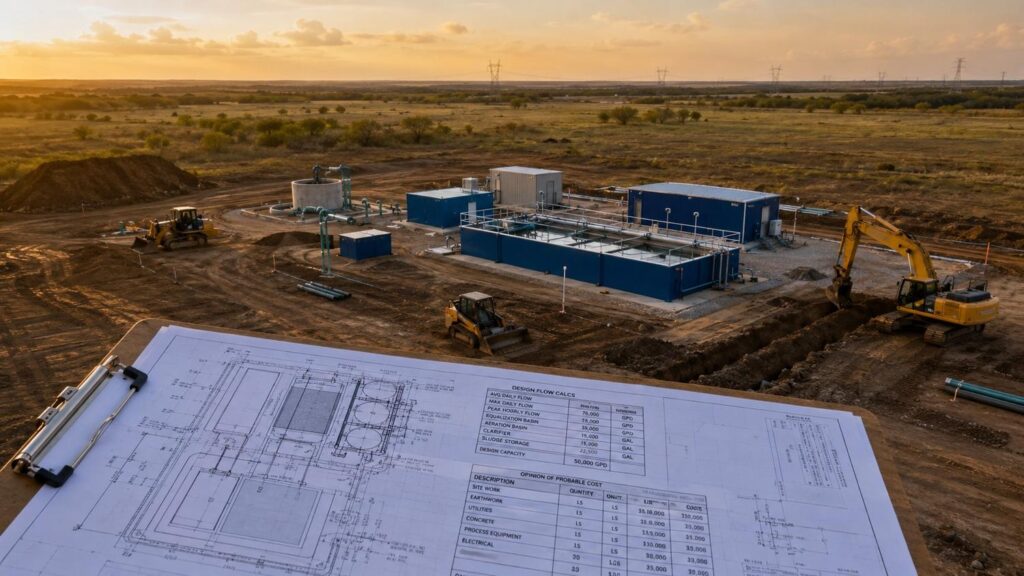
If your Texas development site cannot connect to municipal sewer, a private wastewater treatment plant may be your only path to breaking ground. Here is what that decision actually involves before you hire an engineer.
What Is a 210E Authorization and How Can It Save Your Texas Development Project?
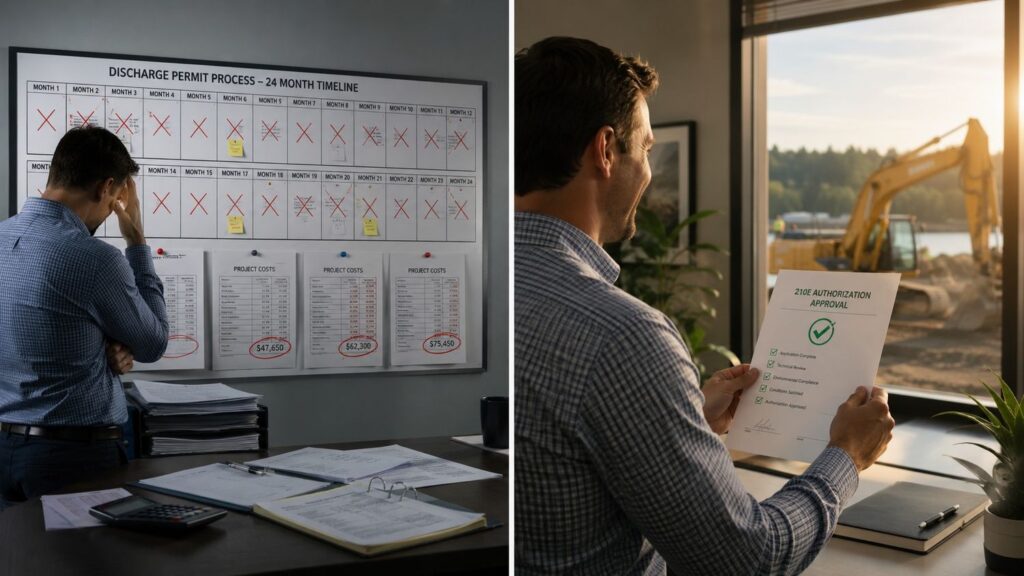
Most Texas developers waiting 24 months for a TCEQ discharge permit don’t know a faster pathway exists. If your project includes any industrial component, you may already qualify.
Wastewater Recycling for Commercial Developments: What Texas Developers Need to Know
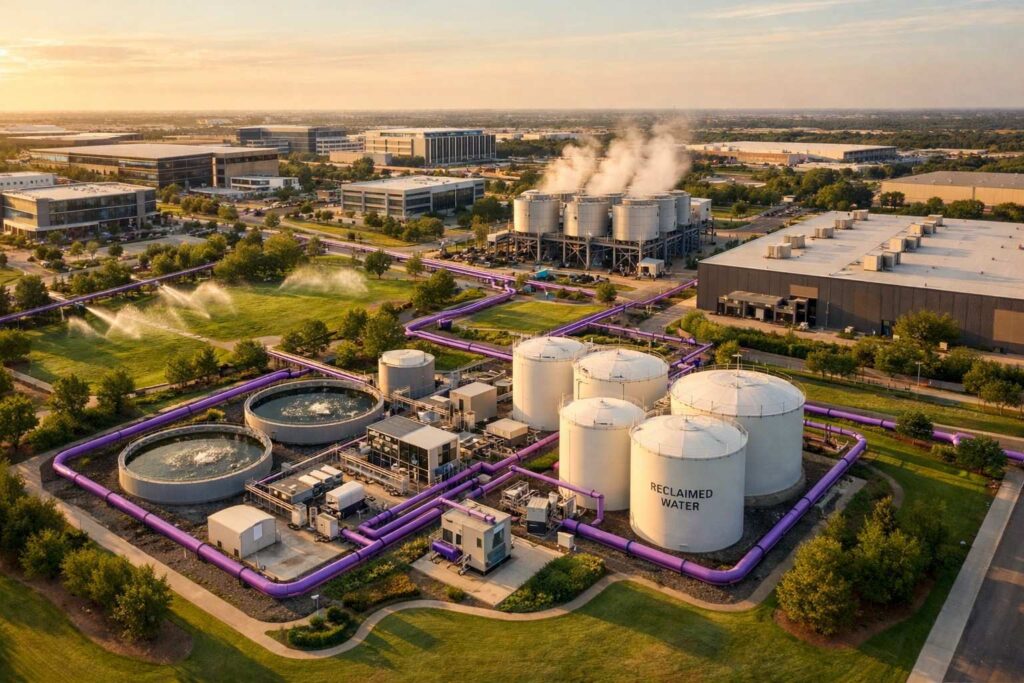
Treated wastewater is not waste. For Texas commercial developers who understand the regulatory landscape, it is a permitting asset and sometimes a revenue one.
Land Application Permits in Texas: A Faster Path to Wastewater Approval for Developers
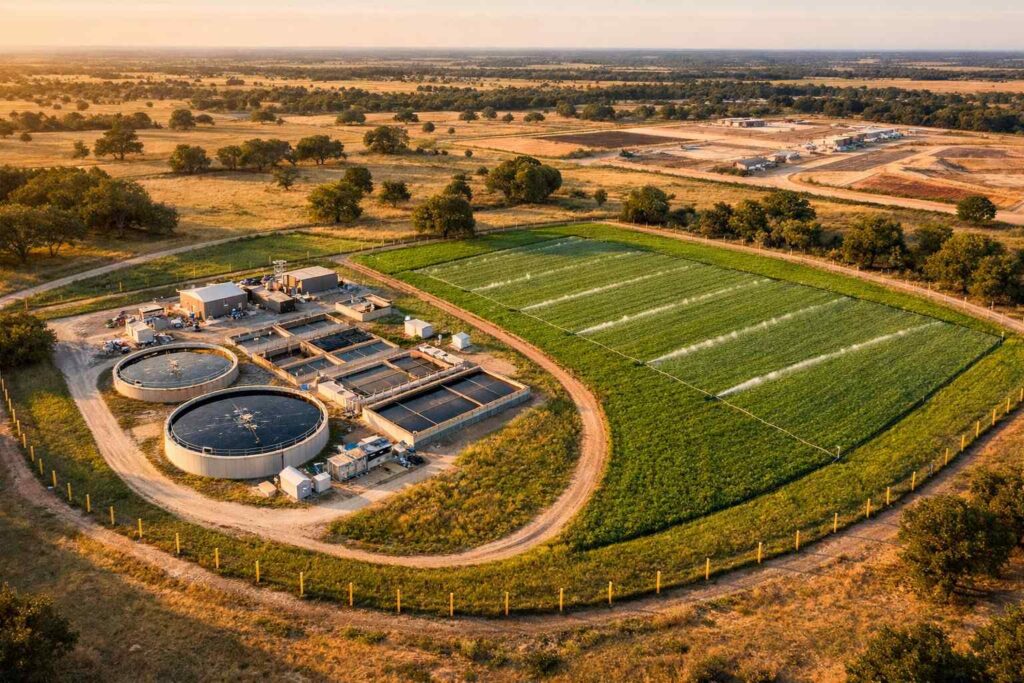
Private developers in Texas have a permitting option that avoids surface water discharge entirely. Here is what TCEQ evaluates for a TLAP, how long the process takes, and whether your site qualifies.
Why Speed Is a Design Constraint: How Modern Engineering Firms Deliver Infrastructure Faster

Traditional firms are organized around billing time. Modern firms are organized around delivering outcomes. That difference shows up as weeks, sometimes months, on every project.
When the Math Doesn’t Move: Water Pressure, Affordable Housing, and the Infrastructure Gap Nobody Wants to Pay For
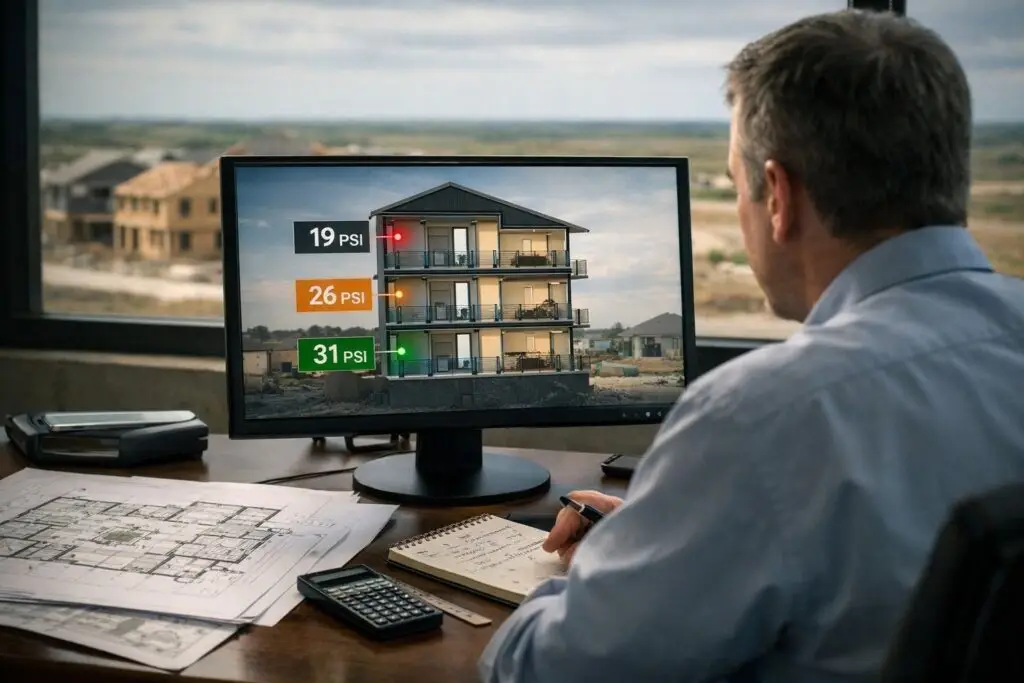
Texas needs $154 billion to fix its water infrastructure but committed only $20 billion. With 186 billion gallons lost annually and pipes dating to the 1890s, developers face serious project risks from aging municipal systems.
Approved Plans Aren’t Always Optimized Plans. The Difference Can Cost $1.5 Million

Texas needs $154 billion to fix its water infrastructure but committed only $20 billion. With 186 billion gallons lost annually and pipes dating to the 1890s, developers face serious project risks from aging municipal systems.
The Cheapest Engineering Decision on Your Texas Pro Forma Isn’t the Low Bid

Texas needs $154 billion to fix its water infrastructure but committed only $20 billion. With 186 billion gallons lost annually and pipes dating to the 1890s, developers face serious project risks from aging municipal systems.
A TCEQ Redesign Isn’t Just a Delay. It’s a Compounding Loss
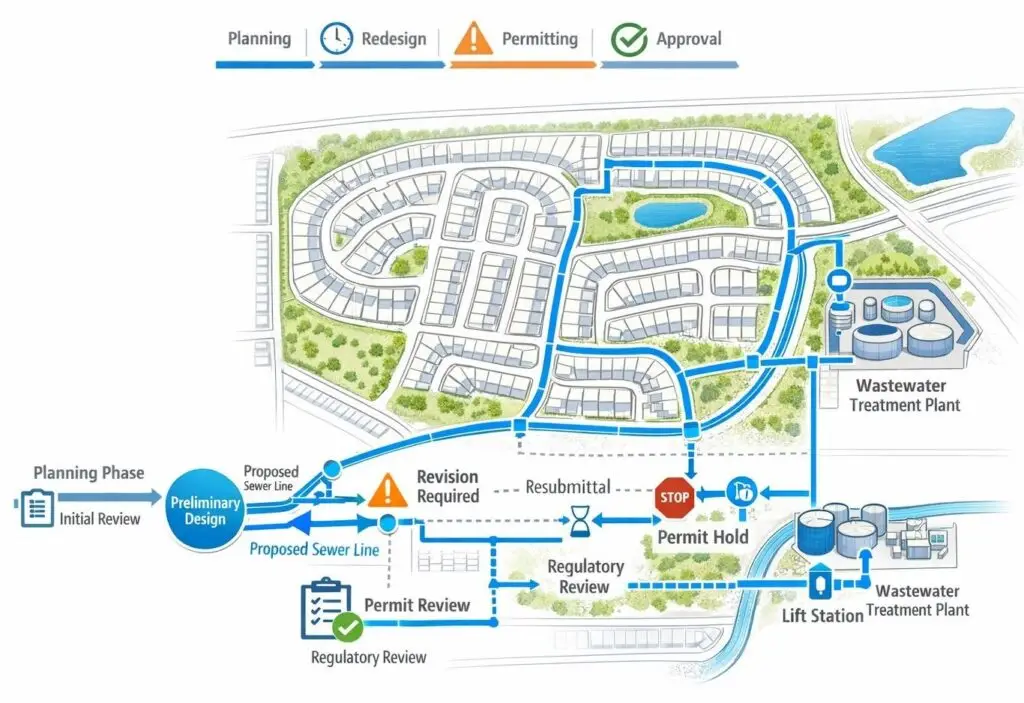
Texas needs $154 billion to fix its water infrastructure but committed only $20 billion. With 186 billion gallons lost annually and pipes dating to the 1890s, developers face serious project risks from aging municipal systems.
Texas Water Infrastructure Crisis: $134 Billion Funding Gap
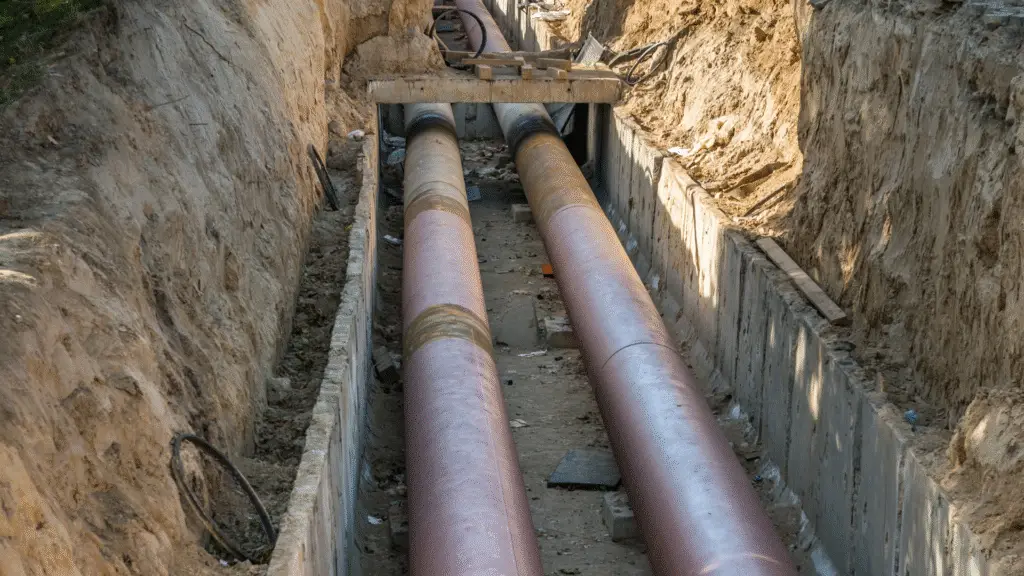
Texas needs $154 billion to fix its water infrastructure but committed only $20 billion. With 186 billion gallons lost annually and pipes dating to the 1890s, developers face serious project risks from aging municipal systems.
MUD Formation Costs Texas Developers $2.7M Before Breaking Ground: Faster Wastewater Alternatives Exist
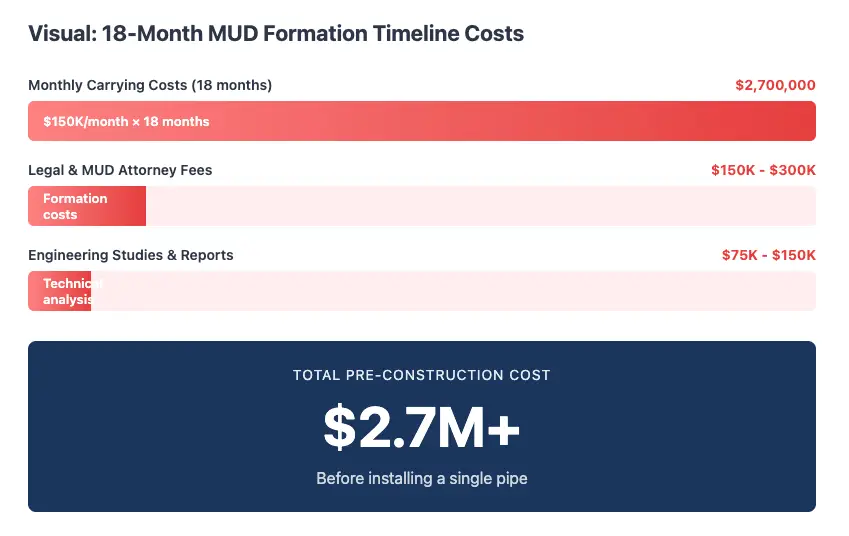
Municipal Utility District formation consumes 18-24 months and significant capital before developers install a single pipe. For Texas development projects in extraterritorial jurisdiction areas requiring wastewater infrastructure, the traditional MUD pathway creates timeline risk that increasingly threatens project viability.
How to Access $2 Billion in Senate Bill 7 Funding for Texas Water Reuse Projects

Senate Bill 7 (SB7) makes $2 billion available for Texas water reuse and new water supply projects over the next 22 years.
How to Cut TCEQ Wastewater Permit Timeline from 12 Months to 6-8 Weeks Using Reuse Authorization

Most Texas developers accept 12-month TCEQ permitting timelines as unavoidable, building substantial carrying costs into every project pro forma. The reality: this timeline is not a regulatory requirement. Strategic permit selection, particularly reuse authorizations instead of traditional discharge permits, can reduce approval timelines to 6-8 weeks.
Land Application Permits for Treated Wastewater: A Texas Developer’s Guide
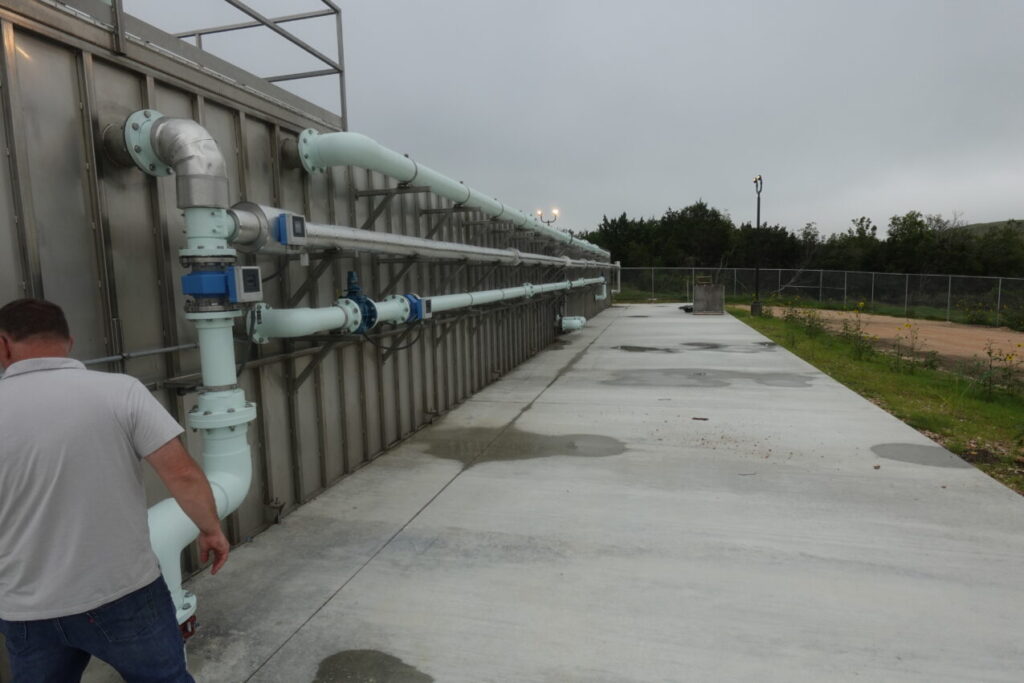
When your development project needs wastewater treatment but traditional discharge options are not available or practical, land application permits offer a proven alternative. For developers and engineering firms working in Texas, understanding when and how to pursue land application permits through TCEQ can save months of permitting time and open doors to projects that might otherwise stall.