
Blog
Texas Water Infrastructure Crisis: $134 Billion Funding Gap
Texas water infrastructure funding covers a slice of a $154 billion need, so here is what TWDB funds for pipe repair now and when Prop 4 money arrives.
Texas water infrastructure funding covers a small slice of the need. Texas 2036 put the bill at about $154 billion, and Proposition 4 dedicated up to $20 billion over 20 years, which leaves the $134 billion gap. For pipe rehabilitation today, the money runs through the Texas Water Development Board (TWDB): a one-time grant round, oversubscribed more than six times, and yearly revolving fund loans.
How big is the Texas water infrastructure funding gap?
At least $134 billion, and probably more. That is $154 billion of need minus the $20 billion voters dedicated in November 2025.
Texas 2036's water infrastructure funding analysis builds the $154 billion from three pieces:
- About $59 billion in state financial assistance for water supply projects in the 2022 State Water Plan, adjusted for inflation.
- About $74 billion over 20 years to repair and rehabilitate drinking water systems, from EPA's needs survey.
- Just over $21 billion to fix aging wastewater systems.
Two of the three pieces are repair, where water mains and sewer lines sit.
The total has also aged. TWDB adopted the 2027 State Water Plan on July 23, 2026, and The Bond Buyer reported its price tag at about $174 billion over 50 years, more than double the 2022 plan's $80 billion. The $59 billion supply piece came from that older, smaller plan, so treat the $134 billion gap as a floor.
What Texas government funding is available for pipe rehabilitation right now?
Two TWDB channels are in play: a one-time grant round now under review, and the State Revolving Funds, which open each December.
The one-time round is TWDB's Water Supply and Infrastructure Grants (WSIG), funded by House Bill 500 in 2025. TWDB's WSIG FAQ sets the rules that matter for pipe work:
- It is a 100% grant with no local match.
- Only political subdivisions can apply: cities, counties, districts and similar public entities. Water supply corporations and investor-owned utilities cannot.
- Water main replacement is eligible. Repairs qualify only when they address water loss, resolve a TCEQ violation or add supply. Routine operation and maintenance does not.
- Wastewater projects are not eligible.
- All project work must be finished by January 31, 2031.
Applications closed July 30, 2026. TWDB's September 2026 WSIG intake summary lists 676 on-time applications asking for about $6.9 billion from a round of roughly $1 billion. The list includes asbestos-cement and cast iron main replacements, meter programs and water loss projects.
The Drinking Water State Revolving Fund finances projects that correct deficiencies, including water loss, or upgrade and replace water systems, for public and private community water systems. The Clean Water State Revolving Fund covers wastewater collection systems for cities, counties, districts and river authorities. Both offer below-market loans, with 0% loans and principal forgiveness on a limited basis. Solicitation runs from December to March, and a Project Information Form filed by the deadline gets you invited to apply.
When will Proposition 4 money reach a pipe project?
Around fall 2029 at the earliest. Proposition 4 feeds the Texas Water Fund, which makes no loans or grants itself; the money moves through TWDB programs.
Under TWDB's Proposition 4 FAQ, House Joint Resolution 7 sends the first $1 billion of state sales and use tax revenue above $46.5 billion into the Texas Water Fund each fiscal year, from September 1, 2027 through August 31, 2047. Voters approved it on November 4, 2025, with over 70% of the vote, KXAN reported. Each year still needs an appropriation and collections above that line, or nothing transfers.
TWDB's timeline: appropriations in the 2027 session, a first transfer in summer 2028, and money in its programs around fall 2029.
Two rules shape where it goes. TWDB must send at least half of the dedicated money to the New Water Supply for Texas Fund or to SWIFT. And Senate Bill 7 (2025) added projects to rehabilitate or replace deficient or deteriorating infrastructure to the fund's priorities, next to the existing water loss mitigation priority. Repair projects mostly compete for the rest.
How much water are Texas pipes losing?
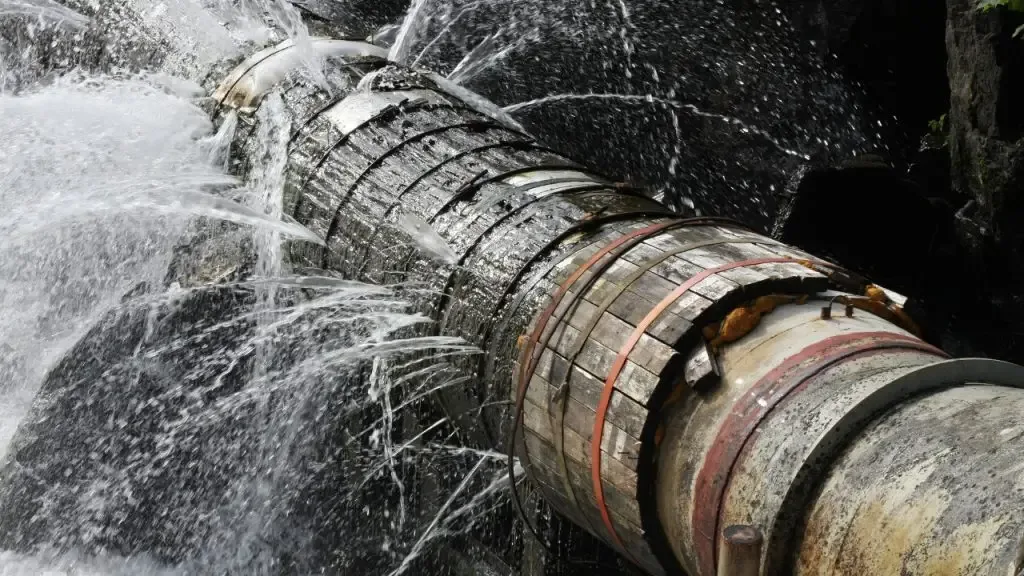
About 13% of what Texas utilities produce. They lost 158 billion gallons to leaks in 2023, according to TWDB data in the same KXAN report, the latest statewide year then available online.
In the Texas Tribune's review of 2023 water loss audits, Houston reported losing 31.8 billion gallons, up 30% from the year before. San Antonio reported 19.5 billion, Dallas 17.6 billion and Austin 7.1 billion. Houston Public Works tied its jump to the June 2022 to December 2023 drought. Clay soils dry and shrink in drought, which stresses older water lines.
The Texas Comptroller's water report counts more than 165,000 miles of water distribution pipe statewide, and boil water notices rose from 1,993 in 2018 to 3,143 in 2022.
Why does your water loss audit decide whether you get funded?
Because TWDB ties its money to it. Loss above TWDB's threshold means part of its assistance for a water supply project goes to fixing it.
Under Texas Water Code §16.0121, retail public utilities file water loss audits with TWDB. TWDB's water loss program sets the schedule: every year for systems with more than 3,300 connections or a financial obligation to TWDB, every five years for smaller systems, due May 1.
31 TAC §358.6(e) sets real loss limits of less than 30 gallons per connection per day for utilities with 32 or more connections per mile, and less than 57 for less dense systems. Under §358.6(f), a utility at or above its threshold must use a portion of TWDB financial assistance for a water supply project to mitigate water loss, unless the Board waives it. WSIG allowed no water loss waivers and required a validated 2025 audit before Board consideration.
A detailed water loss analysis also makes your case: it separates leakage from meter and accounting error, so the money goes to the mains that are actually failing.
What does the funding gap mean for developers?
Expect the utility's pipe money to go to failing mains, compliance and supply first. Extensions for new growth wait their turn.
WSIG repair work had to cut water loss, fix a TCEQ violation or add supply, and only public entities could apply. So plan to fund an off-site extension yourself or wait on the utility's capital plan.
Before you close, read the utility's latest water loss audit, its capital improvement plan and any pending TWDB application for the lines that would serve you. A site feasibility study puts those answers next to your schedule.
Is your pipe project ready for the next funding round?
It is ready when every answer below is yes. Each no is a gap to close before December.
- Is your most recent water loss audit filed with TWDB on time?
- Is your real loss below your §358.6 threshold, or is the project aimed at bringing it down?
- Is your water conservation plan current and adopted?
- Does the project description tie each pipe segment to water loss, a TCEQ violation or capacity, in plain words?
- Are design, easements, environmental coordination and any TCEQ approvals done, or scheduled before closing?
- Is a Project Information Form for DWSRF (water lines) or CWSRF (sewer lines) on your calendar for the December to March window?
Questions for utility and municipal teams to ask their engineer: Which mains drive most of our real loss? What can we design now so the project is ready when money opens?
This is general education on Texas programs as of October 2026, not funding advice for a specific utility. Rules and deadlines change with each Intended Use Plan and legislative session, so check TWDB's current documents before you apply.
Frequently asked questions
Can WSIG grants pay for sewer pipe rehabilitation?
No. WSIG excludes wastewater projects. For sewer collection lines, look at the Clean Water State Revolving Fund.
Who designs a TWDB-funded water line replacement?
Your engineer prepares the plans, specifications and design report; a contractor builds it after bidding. Both need the program rules up front: WSIG bid and contract documents had to carry U.S. iron and steel requirements.
I'm the public works director for a Texas town of about 8,000 people, our cast iron mains break every summer, and we missed the WSIG deadline. Where should we look next?
The Drinking Water State Revolving Fund. File a Project Information Form in the December to March window. Before then, get your water loss audit and conservation plan current and scope the project around the mains that drive your real loss. Ask about principal forgiveness, which is limited.
I'm a developer under contract on a tract inside a Texas city with an old water system. How do I find out whether its pipes can serve my project before I close?
Ask the utility for a written service commitment, and have an engineer check the lines that would serve you against your demand and fire flow. If the mains you need sit on a pending funding application, ask when construction starts.
Related resources
- Capital Improvement Planning for Small Municipalities
- Aging Infrastructure and Regulatory Changes in Small Water Systems
- Water Line Replacement in Dallas: How Developers Navigate Aging Trinity River Authority Infrastructure
- Making the Most of the Economically Distressed Areas Program (EDAP) for Your Rural Water and Sewer System
Need a pipe project ready before the next funding window?
MES designs water and sewer line replacements and prepares the engineering a funding application needs, from water loss analysis to plans and specifications.
Modern Engineering Solutions, McKinney, Texas, with offices in Golden, Colorado and San Jose, California. (214) 833-6748.
Keep reading
More to read.
Talk to an engineer
Tell us about your project.
An engineer reads it
Not a salesperson. Someone who can tell you whether the pathway is real.
You get a first answer
Your options, the agencies involved and the questions that decide cost and schedule.
You decide
No commitment to have the first call.
Prefer the phone? (214) 833-6748