Quick Answer
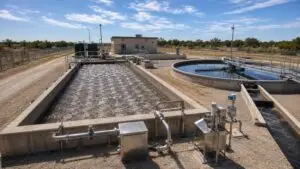
A private wastewater treatment plant (WWTP) in Texas typically costs $18 to $20 per gallon of design capacity to construct. A 130,000 GPD facility runs $2.3 million to $2.6 million in construction before engineering and permitting. TCEQ discharge permits take 12 to 24 months. Reuse-based alternatives, 210E authorizations and land application permits, compress that to 4 to 18 weeks for qualifying projects. Before committing, three questions need answers: what is the right size, what is the right permitting pathway, and what does it cost to operate. This article covers all three.
When a Private WWTP Becomes the Only Option
Most Texas developers want to connect to a municipal system and move on. That preference is rational. Municipal connections transfer operational responsibility to the utility and keep the developer out of the water business.
The problem is that municipal sewer is not available everywhere developers are building. In unincorporated Texas counties, ETJ tracts, and rural industrial sites, the nearest treatment plant is often miles away. Force main extensions can run $4 million or more.
When connection cost exceeds private system cost, or when the public system has no available capacity, a private WWTP becomes the practical answer. For a 40,000 GPD industrial facility in unincorporated Ellis County, comparing all three options, force main to city ($4 million), package WWTP with discharge permit ($2.5 million), irrigation discharge system ($1.8 million), is what the feasibility evaluation produces. Committing to a private WWTP without running that comparison first is one of the most common and expensive mistakes developers make.
How to Size the Plant
Sizing starts with one number: design flow in gallons per day. Residential subdivisions typically generate 100 to 150 GPD per bedroom. Commercial and industrial flows vary significantly by use type.
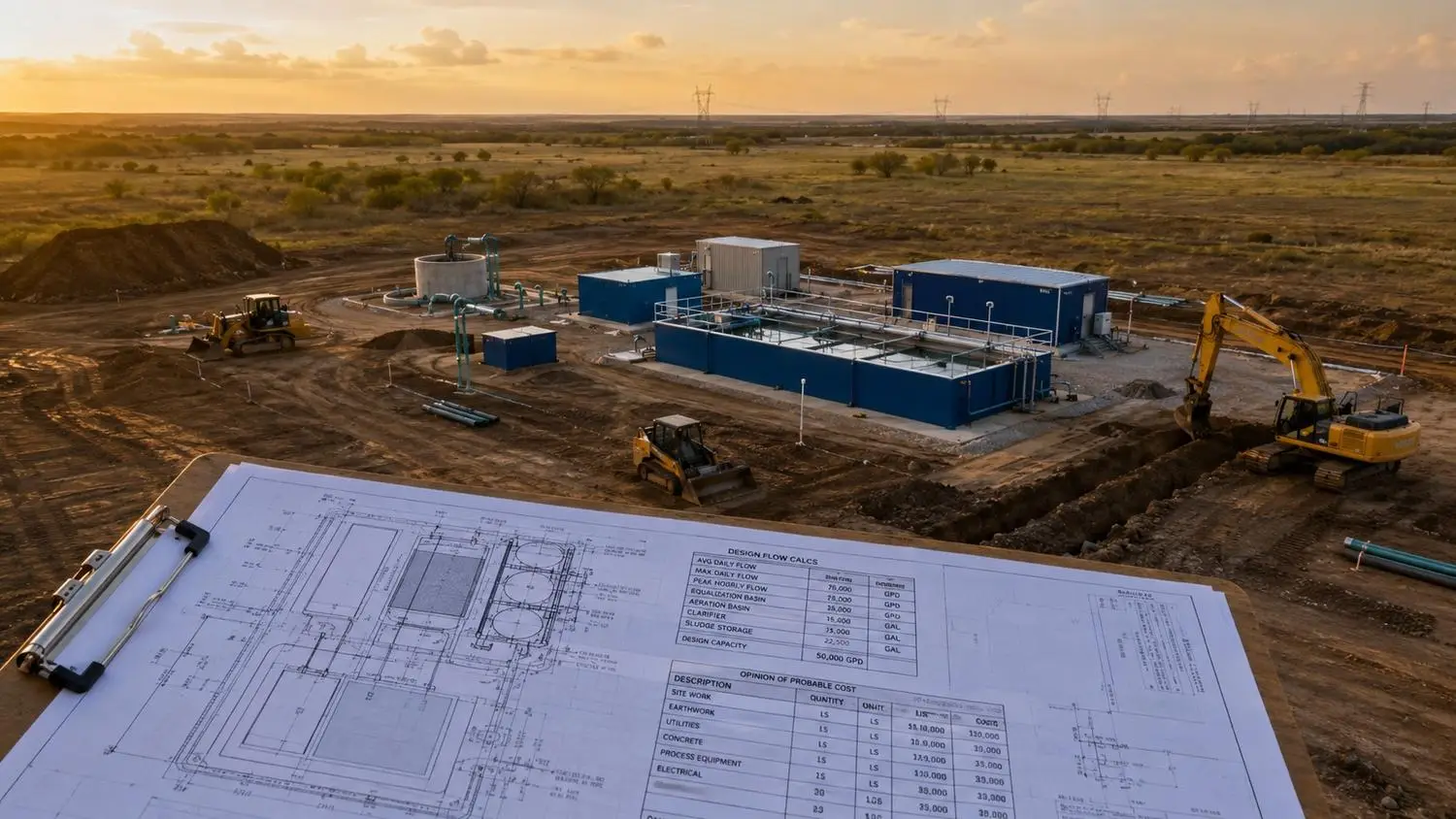
The most common sizing error is designing to current demand rather than phased buildout. A development that will ultimately generate 500,000 GPD does not need that capacity on day one. Phased treatment capacity, designed for ultimate flow but constructed in stages, reduces upfront capital and keeps the plant operating efficiently at actual loads.
TCEQ reviews design flow calculations during permit review. Applications with unsupported flow projections draw technical questions that add months to the timeline. Right-sizing before submittal protects the project schedule.
The TCEQ Permitting Pathway
The right permit type depends on where treated effluent goes.
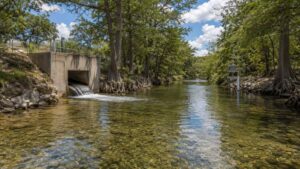
A TPDES discharge permit is required for discharge to a creek, river, or named tributary. Current timelines run 12 to 24 months for standard domestic applications and longer in restricted watersheds.
A Texas Land Application Permit (TLAP) authorizes land application of treated effluent for beneficial reuse. TLAP avoids receiving water analysis, which compresses the timeline to 10 to 18 months on qualifying sites. TCEQ requires applications at least 330 days before your planned operational date.
A 210E Industrial Reclaimed Water Authorization is available when the project includes any industrial wastewater component. Per 30 TAC §210.56(a)(3), it serves as both construction and operating authorization with no public hearing required. MES has secured 210E approvals in 4 to 10 weeks for Texas developments from 5,000 GPD to 2.0 MGD. For qualifying projects, this is the fastest path available.
What It Actually Costs to Build and Operate
Construction runs $18 to $20 per gallon of design capacity. Engineering, permitting, and site civil work add 15% to 25% on top.
Operations cost is what most developers underestimate. A certified operator is required by TCEQ for any permitted facility. Monthly operations and maintenance for a 100,000 GPD plant typically runs $8,000 to $15,000 per month depending on effluent standards and biosolids disposal. That number is ongoing for the life of the development and belongs in the pro forma before the infrastructure decision is made.
Frequently Asked Questions
How much does a private WWTP cost to build in Texas?
$18 to $20 per gallon of design capacity. A 130,000 GPD facility costs $2.3 to $2.6 million in construction. Engineering, permitting, and site civil work add 15% to 25% on top.
What TCEQ permit is required?
It depends on effluent disposal. Discharge to surface water requires a TPDES permit (12 to 24 months). Land application requires a TLAP (10 to 18 months). Projects with an industrial component may qualify for a 210E authorization (4 to 10 weeks).
What does it cost to operate?
Monthly O&M for a 100,000 GPD facility runs $8,000 to $15,000 per month. A certified operator is required by TCEQ for any permitted facility.
Should I build a private WWTP or extend to municipal sewer?
Run the feasibility comparison first. Distance, available capacity, and long-term operational appetite all factor into that decision. The answer is different on every site.
Can the plant be expanded as the development grows?
Yes. Phased design is the standard approach designed for ultimate flow, built in stages that match actual demand.
Evaluating a Private WWTP for Your Texas Development?
Modern Engineering Solutions works with Texas developers to evaluate wastewater infrastructure options, size treatment systems correctly, and navigate TCEQ permitting faster than the standard process allows.
We specialize in:
- Wastewater infrastructure feasibility analysis during land due diligence
- Package WWTP sizing, process selection, and construction-ready design
- TCEQ permitting strategy TPDES, TLAP, and 210E pathway evaluation
- Phased treatment capacity planning for master-planned developments
- Operations cost analysis and certified operator coordination
- Water and wastewater feasibility reports for pro forma and lender underwriting