
Your Three Wastewater Disposal Options in Texas: Discharge, Reuse, or Land Application
Every private wastewater treatment plant in Texas produces treated effluent that has to go somewhere. Where it goes and through which regulatory pathway determines your project timeline, your land requirements, and how much carrying cost exposure sits on your pro forma before construction starts.
210E vs. TPDES Discharge Permit: A Side-by-Side Comparison for Developers
Most Texas developers ask the same question when they learn about the 210E authorization: why isn’t this what every qualifying project uses? The answer is that most engineers default to what they know. This article gives you the comparison to make the decision yourself.
Permit-by-Rule vs. Standard Permit: When Each Path Applies to Your Development
Before you engage a water and wastewater engineer for a Texas development project, it helps to understand which permitting pathway your project likely falls into. The difference between a permit-by-rule and a standard TCEQ permit is not a minor procedural distinction, it determines your timeline, your regulatory obligations, and in some cases whether construction can start before TCEQ issues any formal authorization at all.
How to Work With TCEQ Reviewers: What Slows Approvals and What Speeds Them Up
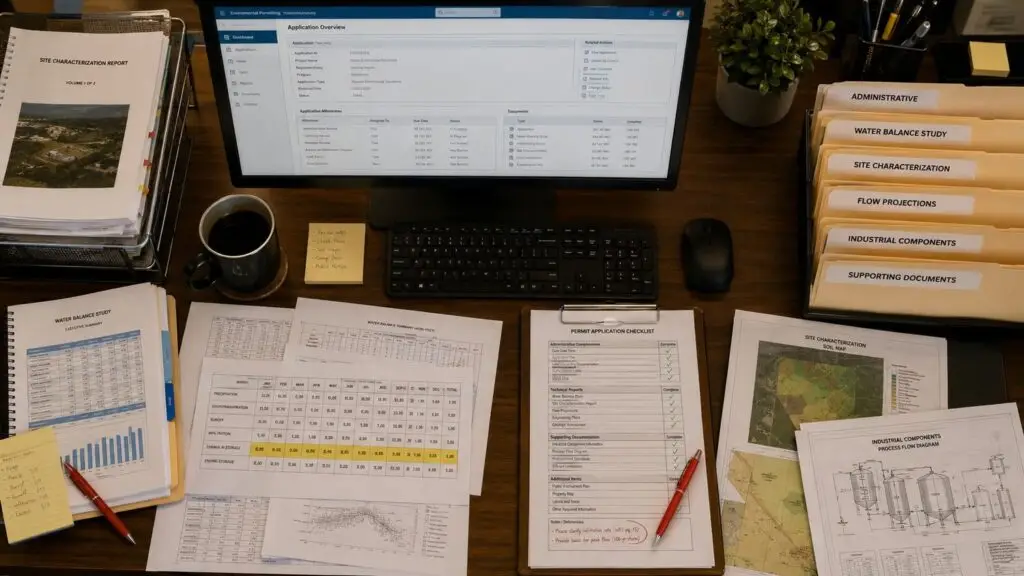
TCEQ reviewers are not the reason most permit applications take 24 months. Incomplete submittals are. Understanding what reviewers actually evaluate, and what triggers a deficiency notice, is the difference between a 4-week approval and an 18-month revision cycle.
Water Balance Studies Under 30 TAC §309.20: What They Require and Who Prepares Them
Every reuse-based wastewater permit in Texas depends on one engineering analysis to hold together: the water balance study. Get it right and the permit moves. Get it wrong and you will be answering TCEQ deficiency notices for months while your project carries costs it was never designed to absorb.
What Engineers Submit to TCEQ and Why Your Application Gets Rejected
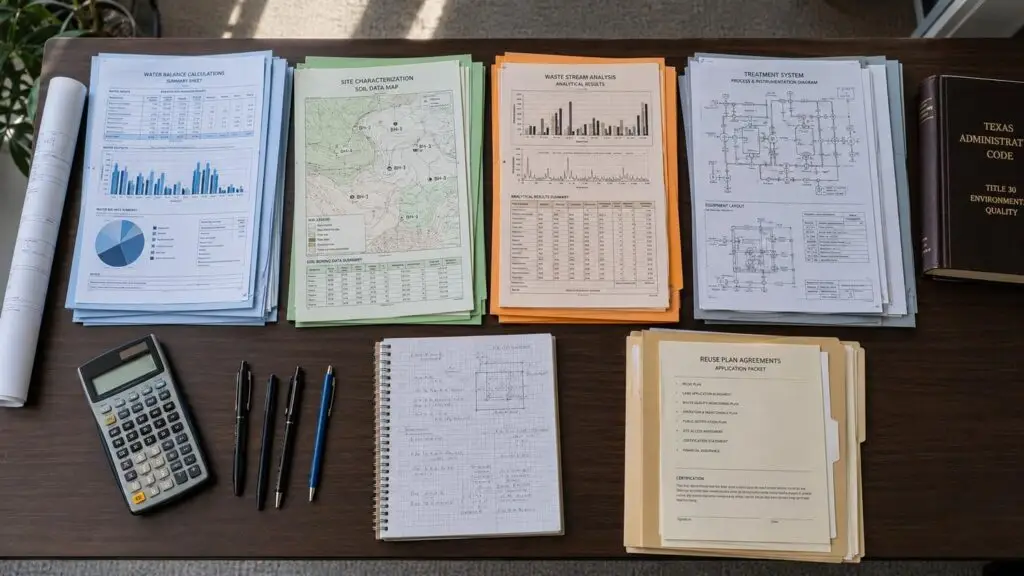
If your TCEQ wastewater permit application has been sitting in review for three months without an approval, the most likely explanation is not TCEQ’s workload. It is an incomplete submittal. Here is what a complete application actually contains and where most of them fall short.
Flow Rate Projections: How to Size a Wastewater Treatment Plant for Your Development Without Over-Building
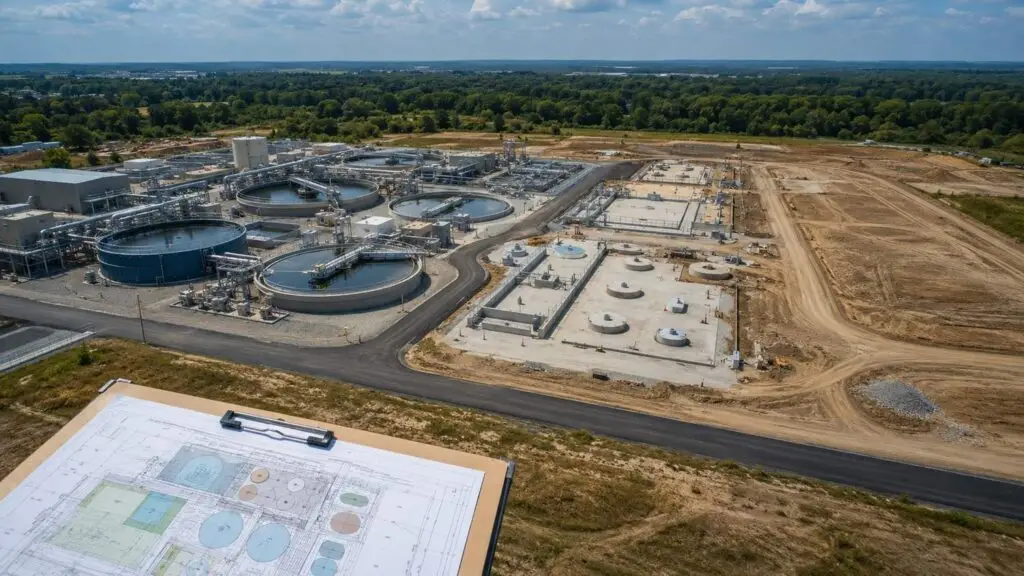
The single number that determines how much your wastewater treatment plant costs to build, permit, and operate is design flow. Get it wrong in either direction and you pay for it either in excess capital committed to capacity you do not need yet, or in compliance failures you cannot recover from without expensive redesign.
How Carrying Costs Are Killing Texas Development Projects (And the Permit Strategy That Fixes It)
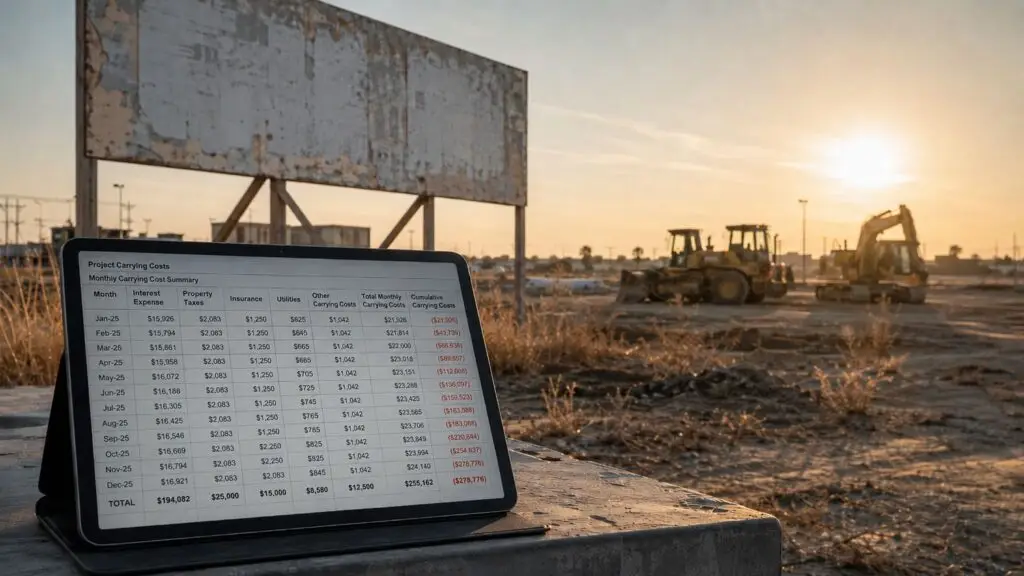
Every month your wastewater permit sits in TCEQ’s queue is a month your pro forma is bleeding. Here is what that actually costs and the permit strategy that eliminates the dependency entirely.
Building a Private WWTP in Texas: What Developers Need to Know Before They Commit
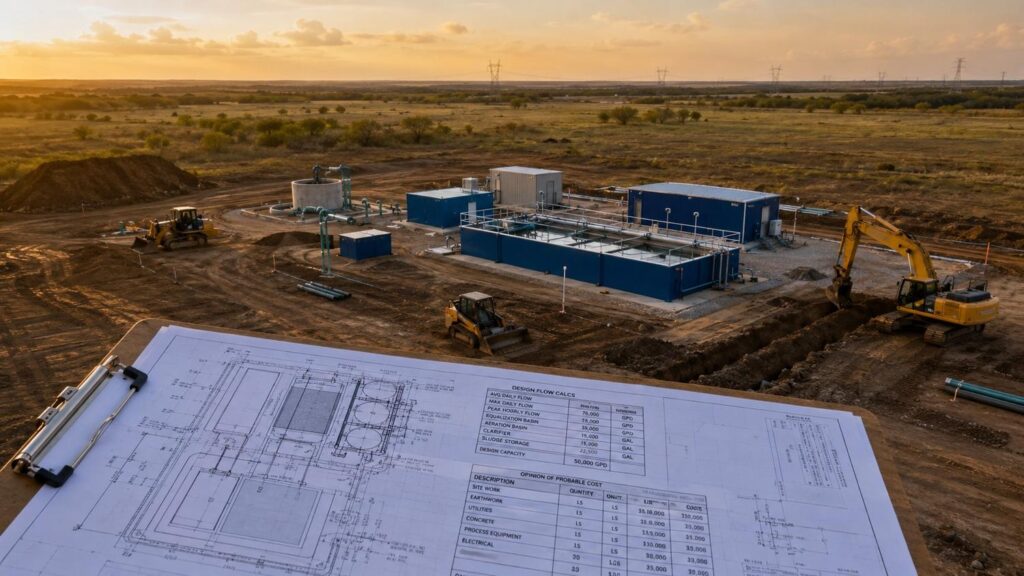
If your Texas development site cannot connect to municipal sewer, a private wastewater treatment plant may be your only path to breaking ground. Here is what that decision actually involves before you hire an engineer.
What Is a 210E Authorization and How Can It Save Your Texas Development Project?
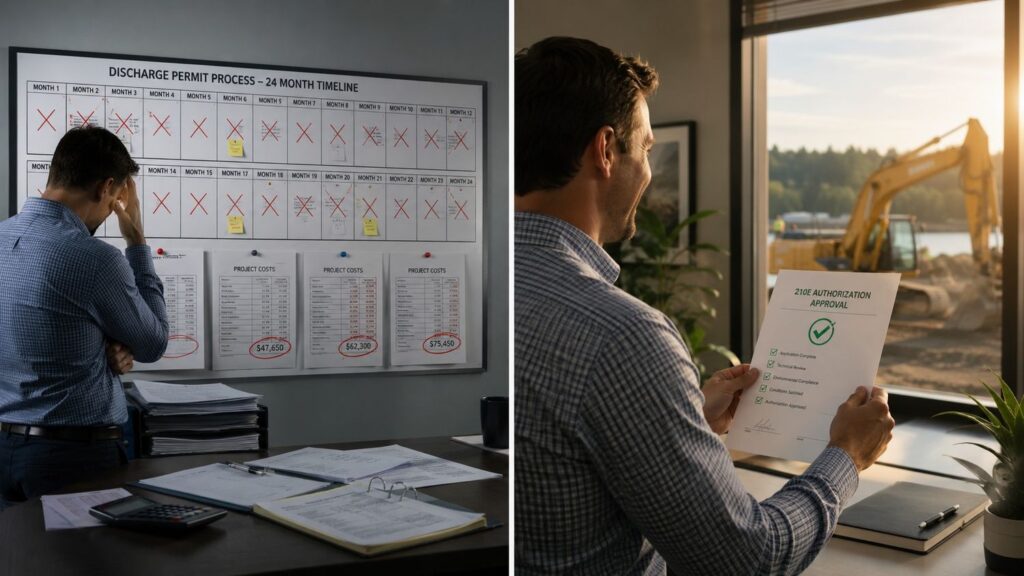
Most Texas developers waiting 24 months for a TCEQ discharge permit don’t know a faster pathway exists. If your project includes any industrial component, you may already qualify.
Cloacina’s Integrated Wastewater Solutions: How Developer-Focused Design Creates Better Treatment Systems
Cloacina joined our Engineers for Communities podcast to share insights about their approach to wastewater treatment systems, particularly for developers working on new projects. Troy brings years of operational experience to equipment design, and his company has built their reputation on understanding what developers actually need versus what they think they need. Our conversation revealed how Cloacina’s methodology addresses both the financial realities developers face and the long-term operational challenges that determine project success.
Texas Governor Opens $22.5 Billion Water Fund For Wastewater Developers
Senate Bill 7 hit Governor Abbott’s desk on June 1, 2025, carrying the framework for Texas’s largest water infrastructure investment ever: $22.5 billion over the next 20 years. Combined with House Joint Resolution 7 and House Bill 500, this package creates unprecedented opportunities for developers who understand water infrastructure. If you are developing residential or commercial projects in Texas, this bill could transform your water and wastewater systems from cost centers into funded assets.
Texas Wastewater Permitting Guide For Developer
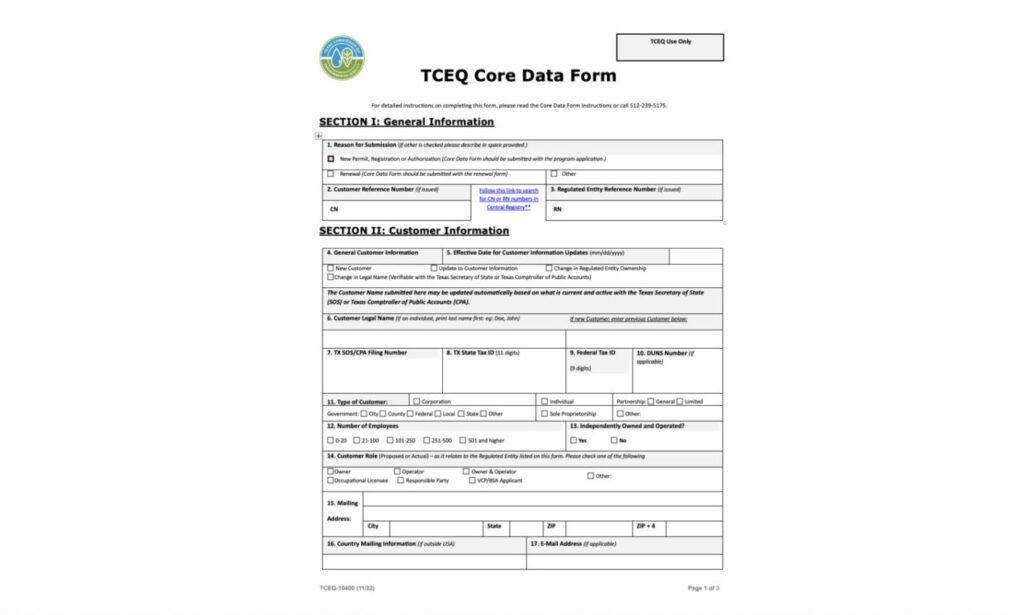
Texas wastewater permitting requires developers to obtain TCEQ approval before constructing or operating wastewater treatment facilities. The process involves three main permit types: TPDES (surface water discharge), TLAP (land application), and Chapter 210 (reclaimed water reuse).