
Blog
Plan of Reuse vs. Direct Discharge: Strategic Wastewater Disposal Decisions in Colorado
Colorado wastewater disposal is a project strategy decision not a permit category. Here is how Plan of Reuse and direct discharge compare for Colorado developers.
Quick Answer
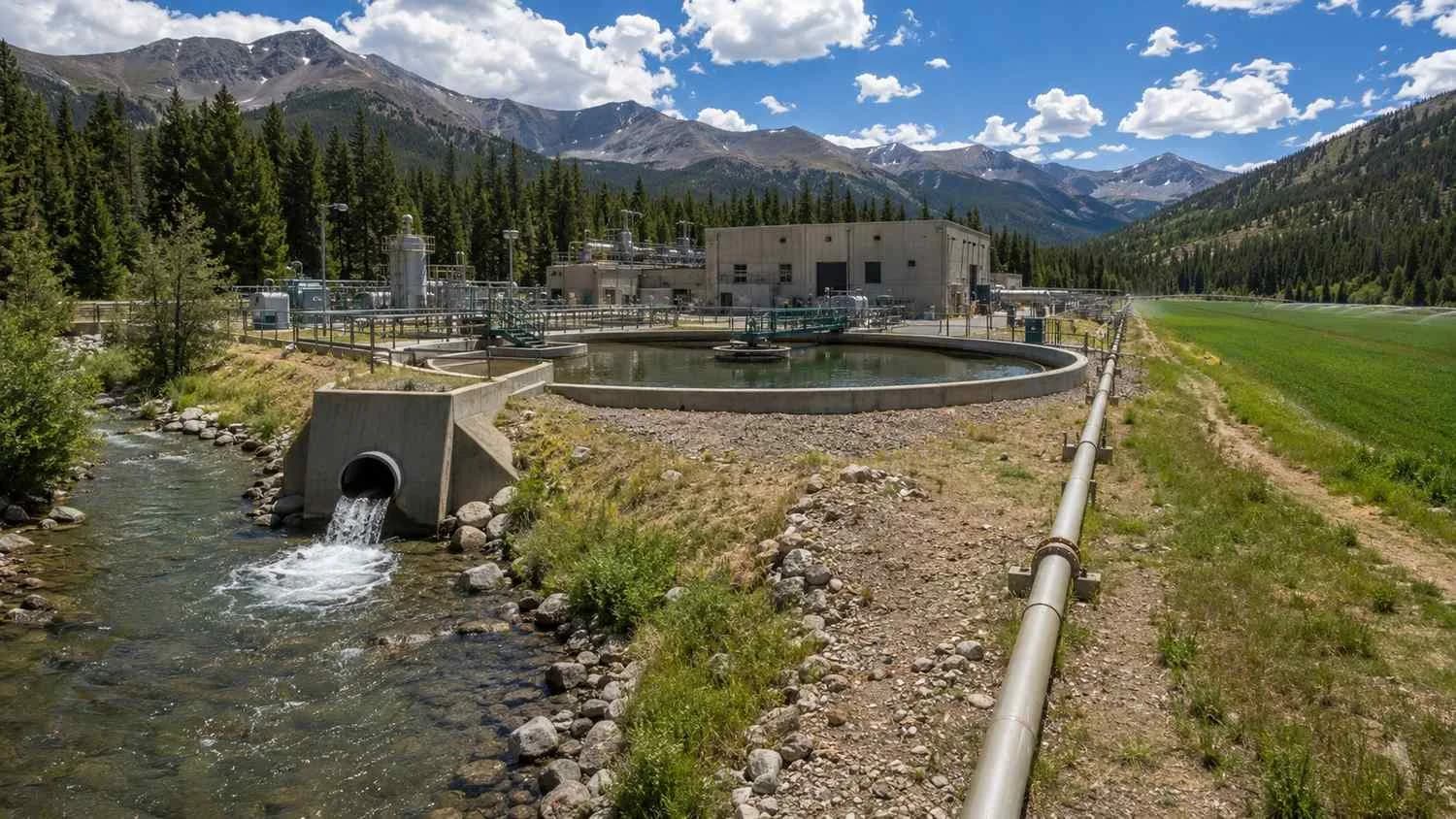
Colorado recognizes two primary pathways for disposing of treated wastewater: direct discharge to state waters under a Colorado Discharge Permit System permit administered by CDPHE, and reuse through a Plan of Reuse that authorizes the treated effluent to be applied to a beneficial use rather than discharged to a receiving stream. The right choice between these two pathways depends on site conditions, available land, receiving water quality, water rights, regulatory review timeline, treatment cost, and the long-term operational model the project owner is prepared to sustain. Neither pathway is universally superior. Both carry real costs and real regulatory requirements. The decision should be made during project planning, before treatment technology is selected, before land is committed, and before a permit application is submitted.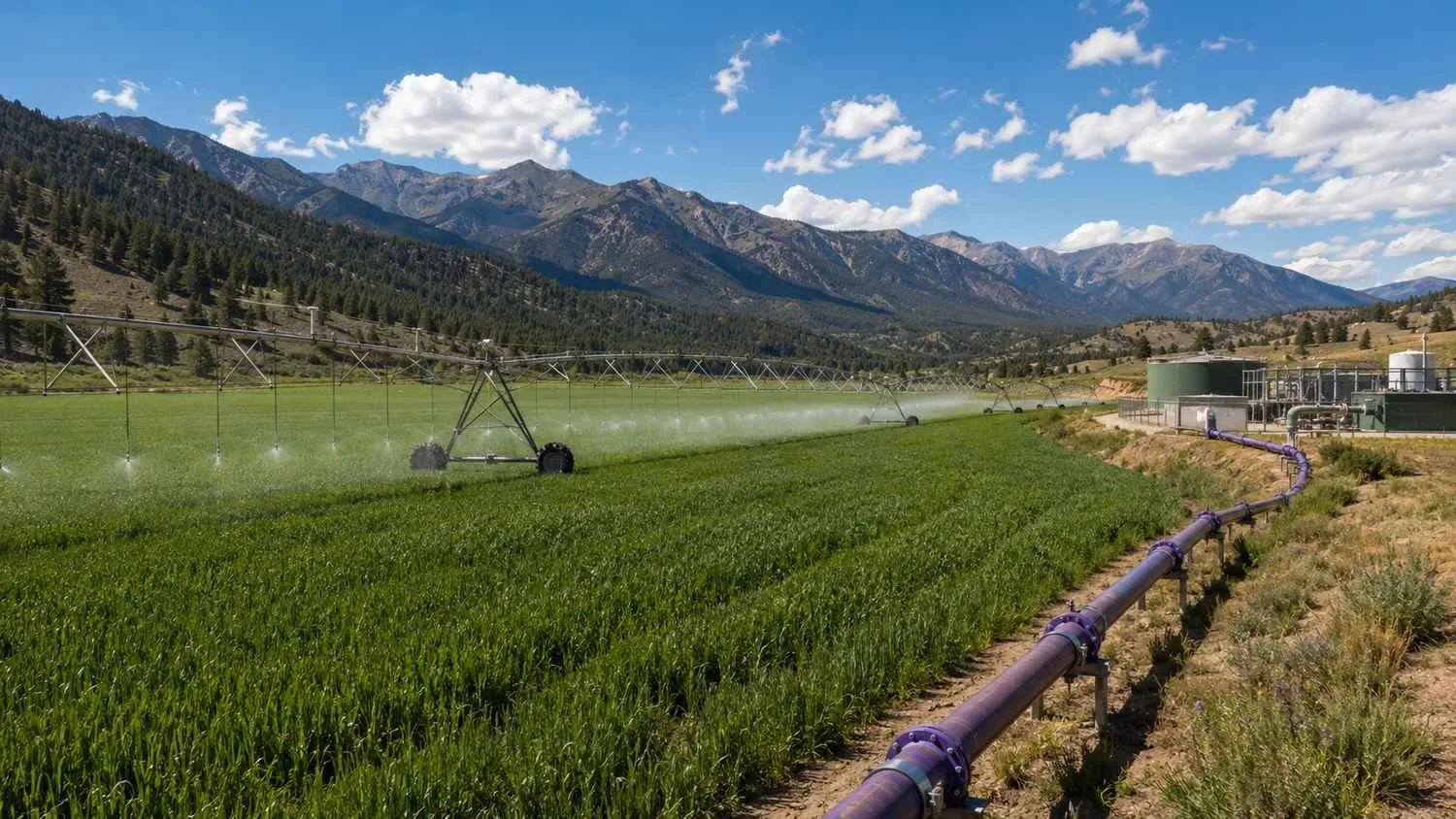
What a Plan of Reuse Is and How It Works in Colorado
A Plan of Reuse is a document submitted to and approved by CDPHE’s Water Quality Control Division that authorizes the beneficial reuse of treated wastewater rather than its discharge to state waters. The concept behind a Plan of Reuse is that treated effluent has value as a water supply resource, particularly in a prior appropriation state where water rights are finite, and that putting it to beneficial use protects water quality by keeping the effluent out of receiving streams while simultaneously serving an agricultural, landscape, industrial, or non potable municipal demand.
Colorado Regulation 84 governs reclaimed water use in the state and establishes the treatment standards, distribution system requirements, and end-use restrictions that apply to different categories of reuse. The categories range from unrestricted landscape irrigation, which requires a high level of treatment including disinfection to a defined standard, down to agricultural reuse on non food contact crops, which may be achievable at a lower treatment level depending on the specific application. The treatment standard required for a given reuse application is tied to the potential for human contact with the reclaimed water and the sensitivity of the use, and those standards must be met consistently, not just on average.
The Plan of Reuse itself describes the source of the reclaimed water, the treatment process and expected effluent quality, the proposed reuse application, the land area or facility receiving the water, the hydraulic loading rate, and the monitoring and management program that will ensure the reuse is occurring at the approved conditions. CDPHE reviews the Plan of Reuse to confirm that the proposed reuse is beneficial, that the treatment standard is appropriate for the use, that the application rate is agronomically or hydraulically appropriate for the site, and that the plan includes adequate monitoring and documentation to verify compliance. Approval of a Plan of Reuse does not eliminate all CDPHE oversight. It establishes the framework within which the reuse must be managed on an ongoing basis.
Direct Discharge: When It Makes Sense and What It Requires
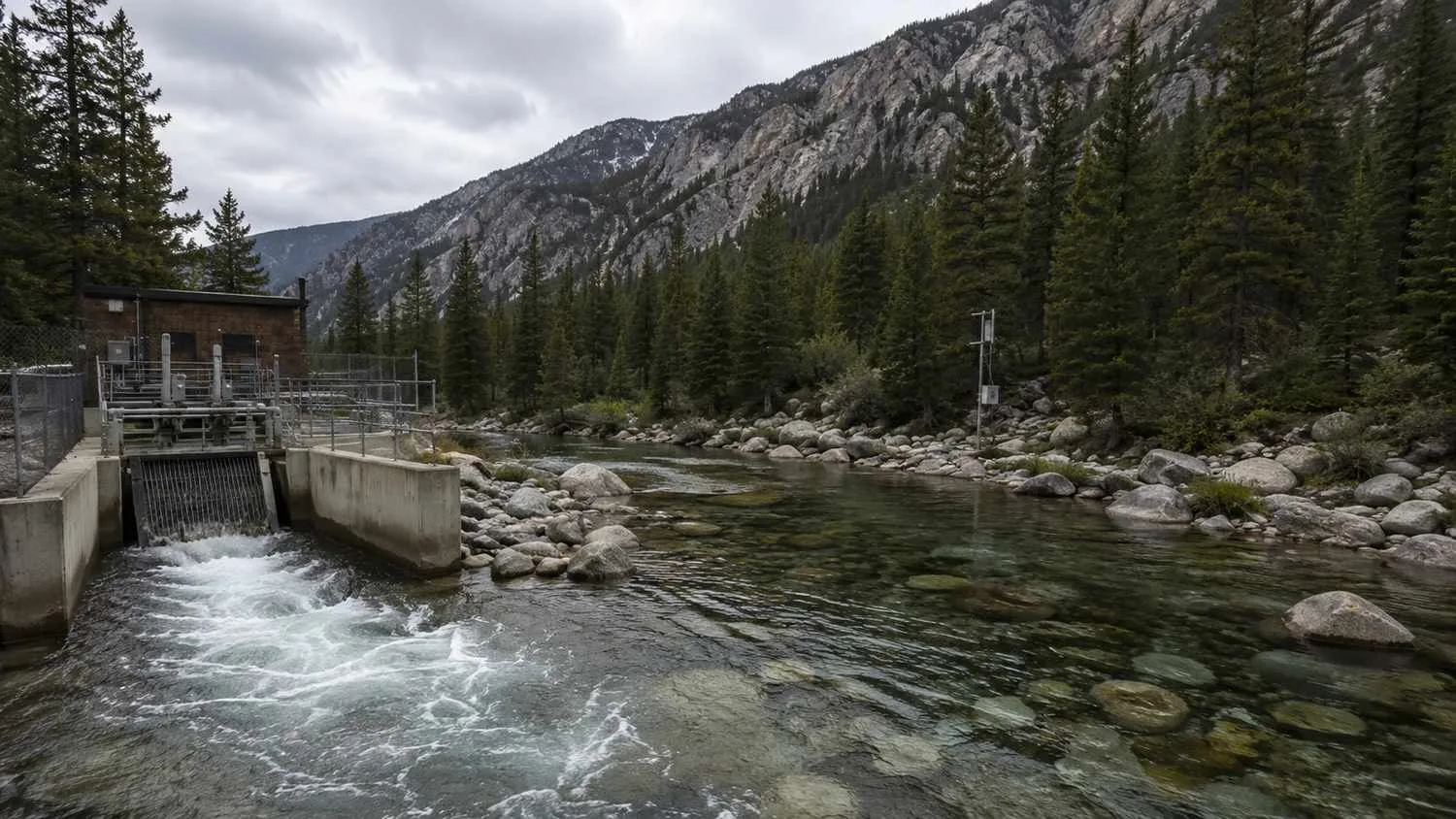
Direct discharge of treated wastewater to a Colorado stream, creek, ditch, or other state water requires a CDPS permit from CDPHE. The permit establishes effluent limits based on the classification and designated uses of the receiving water, the volume of flow available for dilution at critical low flow conditions, and Colorado’s water quality standards under Regulation 31. For many Colorado discharge scenarios, particularly those involving discharge to mountain streams or high quality tributaries, the effluent limits required to protect receiving water quality are stringent enough to require advanced treatment technology that significantly increases both the capital cost and the operating cost of the treatment system.
Direct discharge makes the most sense in project contexts where a large, well mixed receiving water with adequate assimilative capacity is available at or near the project site, where the receiving water classification does not impose treatment requirements beyond what the proposed treatment technology can reliably achieve, and where no practical reuse application exists for the effluent volume being generated. For a large municipal system discharging to a major Colorado river with significant base flow and a receiving water classification that accommodates the proposed effluent quality, direct discharge may be the most straightforward and cost effective disposal pathway available. For a small development on a high altitude site discharging to a cold water tributary, the same analysis often points to reuse as the more practical option.
The antidegradation review requirement that Colorado applies to new or increased discharges to waters currently meeting their quality standards adds a layer of regulatory complexity to the direct discharge pathway that is not present in a Plan of Reuse scenario. When the antidegradation review applies, the project team must demonstrate that the proposed discharge is socially and economically justified, that less environmentally damaging alternatives have been evaluated, and that the receiving water will not be degraded below its current quality as a result of the new discharge. That demonstration requires additional technical documentation and extends the permit timeline in ways that a Plan of Reuse approval typically does not.
Reuse Options: Agricultural, Landscape, Industrial, and Non Potable Applications
The practical reuse options available to a Colorado developer or municipality depend on the volume of reclaimed water being generated, the location and land characteristics of the project site, the seasonal demand patterns of potential reuse customers, and the treatment level the treatment plant can consistently achieve.
Agricultural irrigation is one of the most common reuse applications in Colorado, particularly for developments in rural and semi rural areas where irrigated agriculture is already part of the land use pattern surrounding the project. Reclaimed water applied to agricultural fields for non food contact crop irrigation, pasture, or hay production can substitute for raw water supplies that would otherwise need to be diverted from a stream or pumped from a well, providing an economic incentive for the landowner receiving the water and a compliant disposal pathway for the project generating it. The agronomic rate calculation that establishes the maximum application rate on a given field is based on the nitrogen and phosphorus content of the reclaimed water and the uptake capacity of the crop being grown, which means the application rate varies seasonally and must be managed accordingly.
Landscape irrigation reuse includes application to parks, golf courses, highway medians, commercial landscaping, and residential common areas. For a mixed use development or a planned community, on site landscape reuse can absorb a meaningful fraction of the reclaimed water volume generated by the development’s domestic wastewater flows, reducing or eliminating the need for a separate discharge outfall. The treatment standard for unrestricted landscape irrigation under Colorado Regulation 84 requires disinfection to a defined standard and may require filtration depending on the specific application and the proximity of the irrigated area to public contact. That treatment standard must be consistently demonstrated through the monitoring program required under the Plan of Reuse.
Industrial reuse applications include cooling tower makeup water, process water for certain manufacturing operations, dust suppression, and construction water. Data centers, concrete batch plants, and other industrial facilities with significant non potable water demands can be viable reuse customers if the reclaimed water quality is appropriate for the intended use and if the logistical connection between the treatment plant and the reuse facility is feasible. Non potable municipal reuse for toilet flushing, fire suppression system testing, and other building uses represents an emerging application in Colorado urban contexts, though the distribution system requirements and dual piping infrastructure costs associated with these applications make them most practical in new construction rather than retrofit scenarios.
Water Rights, Return Flows, and the Strategic Importance of Disposal Pathway Selection
The interaction between wastewater disposal and Colorado water rights is one of the most significant differences between Colorado and Texas project planning contexts, and it is a factor that affects the choice between reuse and direct discharge in ways that have nothing to do with treatment technology or regulatory preference. In Colorado, treated wastewater that is discharged to a stream becomes part of the stream’s flow and may be accounted for in the return flow calculations that support downstream water rights. If a water right holder downstream depends on those return flows to satisfy their decreed right, the removal of that discharge, whether through reuse, disposal changes, or project termination, could affect the downstream right holder’s supply.
This return flow obligation can actually constrain the ability of a project to switch from direct discharge to reuse once the discharge is established. A municipality that has been discharging treated effluent to a stream for years and wants to transition to full reuse may find that downstream water rights holders have become dependent on those return flows and that the transition requires water rights legal analysis, potentially court proceedings, and compensatory arrangements before it can occur. This dynamic argues strongly for making the reuse versus discharge decision at the beginning of a project rather than after operations are established, because early decisions about disposal pathway do not carry the return flow obligation complications that arise after years of discharge to a stream.
For new developments and new treatment facilities, evaluating the water rights implications of both disposal pathways before selecting one is a planning step that engineers and water rights attorneys should address together. The answer is not always to choose reuse to avoid return flow obligations. Sometimes the water rights context actually favors discharge because the project’s return flows support downstream rights that the developer has an interest in maintaining. The point is that the decision requires analysis of the specific water rights context around the project, not a generic preference for one disposal pathway over the other.
Regulatory Timeline and Cost Comparison
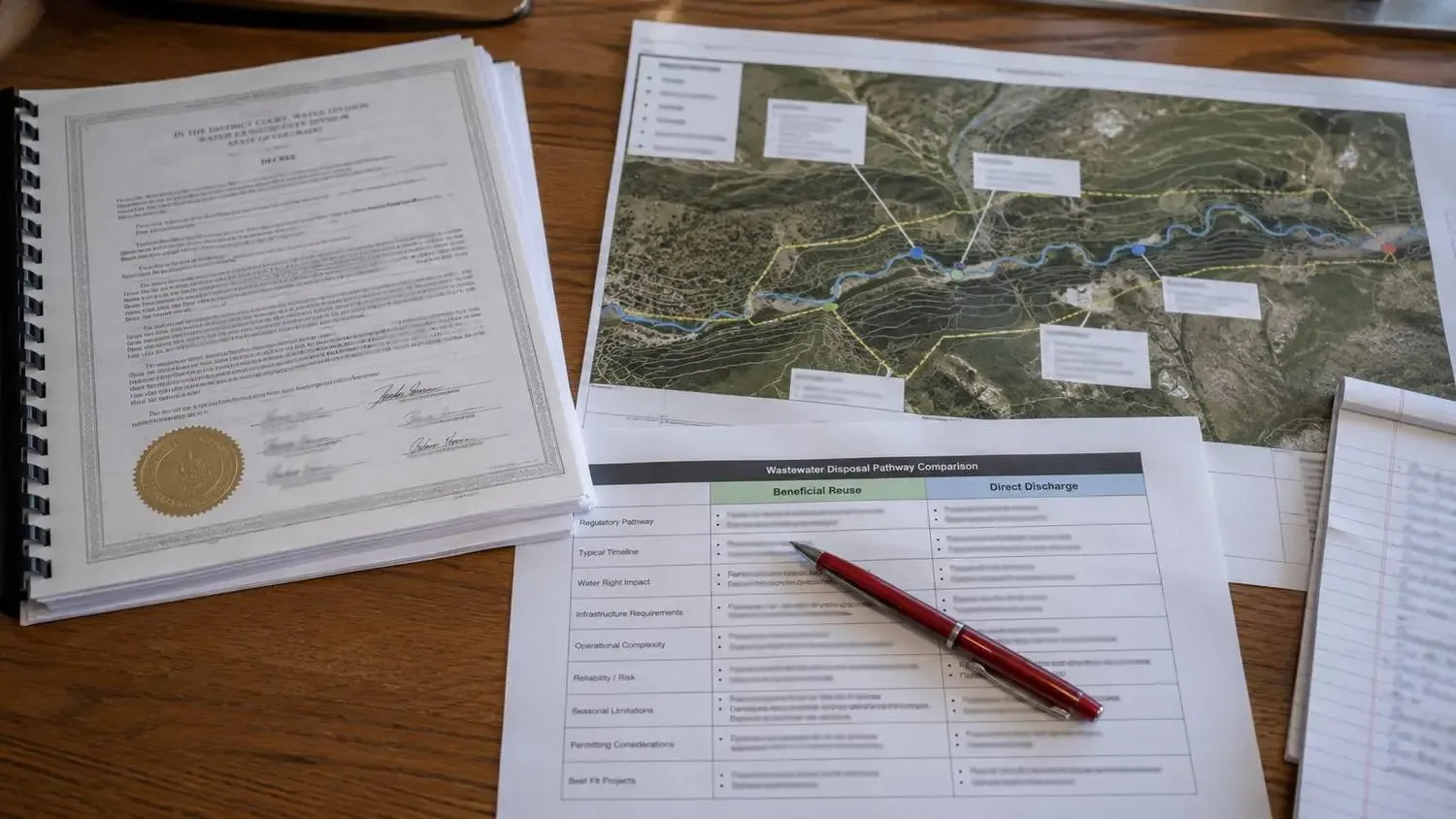
For project planning purposes, the regulatory timeline and cost comparison between a Plan of Reuse and a direct discharge permit in Colorado generally favors the Plan of Reuse when reuse is technically and logistically feasible. A Plan of Reuse approval, when the reuse application is well defined and the treatment standard is clearly achievable, can often be processed by CDPHE in six to twelve months. A new CDPS discharge permit for a facility proposing discharge to a classified receiving water can take eighteen to thirty six months when antidegradation review, complex effluent limit development, and public comment periods are factored in.
The treatment cost comparison between the two pathways is more variable and depends heavily on the specific discharge scenario. A direct discharge permit for a facility discharging to a sensitive receiving water may require nitrification, biological phosphorus removal, filtration, and advanced disinfection to meet permit limits, producing a treatment cost that significantly exceeds what would be required for the same volume of water treated to an agricultural reuse standard. A direct discharge to a less sensitive receiving water may require only secondary treatment and basic disinfection, producing a treatment cost comparable to or lower than a reuse application requiring a high treatment standard. The cost comparison must be performed for the specific project context, not assumed based on a general preference for either pathway.
Land requirements represent another practical differentiator. A Plan of Reuse for agricultural or landscape irrigation requires land suitable for the application, and the volume of land required scales with the application rate and the effluent volume. A project generating 100,000 gallons per day of reclaimed water applied at an agricultural rate typical for Colorado conditions may require ten to thirty or more acres of suitable land depending on the crop and the season, which may or may not be available within a reasonable distance of the treatment plant. Direct discharge to a nearby stream requires only the pipe connection and the permit, with no land area commitment beyond the outfall structure. That land requirement difference is a real project constraint that must be evaluated honestly during the feasibility phase.
Frequently Asked Questions
Can a Colorado project use both a Plan of Reuse and a direct discharge permit for the same treatment plant?
Yes. Many Colorado wastewater systems operate with a primary reuse application during irrigation seasons and a permitted discharge outfall for wet season flows when reuse demand is low and storage capacity is insufficient to hold all of the reclaimed water generated. This hybrid approach requires both a Plan of Reuse approval and a CDPS discharge permit, and the discharge permit conditions will reflect the fact that discharge occurs primarily during low demand periods when receiving water flows may also be lower. Managing both authorizations requires careful operational planning, but the hybrid approach is a practical and commonly used solution for projects where seasonal reuse demand does not match year-round wastewater generation.
We are a small development in a rural Colorado county. Is a Plan of Reuse realistic for our scale of wastewater generation?
Yes, particularly if agricultural reuse is available in your area. A small development generating 10,000 to 50,000 gallons per day of reclaimed water is a volume that a single irrigated field or pasture can absorb during the growing season. The practical challenge at small scales is managing the gap between winter wastewater generation and the absence of irrigation demand, which typically requires on site storage capacity sized for the non irrigation period. A lined storage pond or tank system sized for winter accumulation with sufficient capacity to draw down during the irrigation season is the standard approach for small rural Colorado reuse systems.
How do we determine which disposal pathway is right for our project before we have completed the engineering design?
A wastewater disposal feasibility study that evaluates both pathways in parallel is the appropriate starting point. That study should identify the classification and sensitivity of any nearby receiving waters, evaluate available land for reuse application and its suitability for the anticipated effluent volume, assess the water rights context around both disposal options, estimate the treatment level required for each pathway, and produce a comparative cost and timeline summary that gives the project owner the information needed to make a strategic decision. This study should be completed before treatment technology is selected and before any permit application is initiated.
Related Resources
- Colorado CDPHE Discharge Permit Process: Timeline, Requirements, and How It Differs from Texas
- Colorado Water Quality Control Division Reclaimed Water Program
- Colorado Regulation 84 Reclaimed Water Control Regulation
Evaluating Wastewater Disposal Options for Your Colorado Project?
MES is licensed in Colorado and works with developers, municipalities, water districts, and utility planners to evaluate reuse feasibility, compare disposal alternatives, prepare Plan of Reuse documentation, coordinate CDPHE permitting, and build project schedules that account for Colorado’s regulatory environment realistically.
We specialize in:
- Plan of Reuse feasibility evaluation and CDPHE application preparation for Colorado wastewater projects
- Direct discharge permit comparison and receiving water classification review for Colorado disposal alternatives
- Agricultural, landscape, and industrial reuse system design under Colorado Regulation 84
- Water rights impact analysis for wastewater disposal pathway selection in Colorado prior appropriation contexts
- Wastewater disposal feasibility studies comparing reuse and discharge options for Colorado developers and municipalities
- Treatment technology selection matched to Colorado reuse standards and CDPS permit conditions
Modern Engineering Solutions, McKinney, Texas and Golden, Colorado. Contact: (214) 833-6748 or mod-eng.com
Keep reading
More to read.
Talk to an engineer
Tell us about your project.
An engineer reads it
Not a salesperson. Someone who can tell you whether the pathway is real.
You get a first answer
Your options, the agencies involved and the questions that decide cost and schedule.
You decide
No commitment to have the first call.
Prefer the phone? (214) 833-6748