
Blog
The Title 22 Engineering Report: The Real Bottleneck in California Recycled Water Projects
A recycled water project can look simple on a site plan. See why the Title 22 Engineering Report is where every design gap gets exposed at once.
Quick Answer
A Title 22 Engineering Report is the technical submission California’s Division of Drinking Water, DDW, and often the relevant Regional Water Quality Control Board review before authorizing a recycled water project under Title 22 of the California Code of Regulations. It is not a summary of the project concept, it is a detailed engineering description of the treatment process, the recycled water use areas, the distribution system including dual plumbing and purple pipe layout, cross connection control testing and procedures, monitoring points, system reliability features, and the operator responsibilities that keep the system compliant once it is running. The report becomes the real bottleneck on most projects not because the underlying recycled water concept is flawed, but because the report is where every gap between what was planned and what was actually engineered gets exposed at once, treatment design that does not match the intended use area’s quality requirements, a distribution layout that has not resolved cross connection risk, or a use area whose boundaries and monitoring points were never precisely mapped. Projects that treat the engineering report as a formality to complete after design is finished lose the most time. Projects that build the report’s requirements into the design from the start move through DDW and Regional Board review far faster.
Why the Report Is a Different Document Than the Design Drawings
A Title 22 Engineering Report is not simply a narrative wrapper around a set of design drawings, it is the document DDW and the Regional Water Board use to evaluate whether the entire system, treatment through delivery, meets Title 22’s water recycling criteria for the specific reuse the project intends. That means the report has to describe the treatment process in enough technical detail to confirm it can reliably produce water meeting the quality standard for the proposed use, not just state that treatment will occur. It has to describe the recycled water use areas with enough specificity, boundaries, acreage, and public access characteristics, that a reviewer can confirm the proposed use category and quality standard actually match what is being built.
This level of specificity is where projects that moved quickly through conceptual planning start to slow down. A conceptual plan describing “landscape irrigation across the development’s common areas” is not the same as a Title 22 Engineering Report describing exact use area boundaries, expected demand, public access conditions at each area, and how those conditions map to the required level of treatment and monitoring. Producing that level of detail requires design decisions that may not have been finalized when the recycled water concept was first proposed, and reconciling those decisions after the fact is exactly what turns report preparation into the project’s longest single phase.
Treatment Process Description and the Quality Standard It Has to Support
The engineering report’s treatment process description has to tie directly to the specific recycled water use the project proposes, because Title 22 sets different quality standards depending on public access and contact likelihood for the use area, similar in structure to the exposure based classification used elsewhere in California and Texas reclaimed water rules. A use area with unrestricted public access, a park, a school yard, a golf course open to the public, generally requires a higher level of treatment and disinfection reliability than a use area with restricted or no public access.
The report has to demonstrate that the treatment process is actually capable of consistently meeting that standard, not just that the treatment train includes the right unit processes in theory. This means describing disinfection contact time, filtration performance, and the redundancy or reliability features that keep the system compliant even during equipment maintenance or unexpected flow variation. A treatment process that was conceptually selected to be “advanced enough” for recycled water, without engineering verification that it reliably meets the specific standard for the specific proposed use areas, is the kind of gap that generates DDW review comments and design revisions mid review.
Use Areas, Distribution Layout, and the Purple Pipe System Design
Mapping recycled water use areas precisely, not just describing them generally, is one of the report’s most detail intensive requirements. Each use area needs defined boundaries, an estimate of recycled water demand, and a clear statement of public access conditions, because that access condition determines the treatment and monitoring standard the area is held to. A use area whose boundaries shift after the report is submitted, because a later site plan revision changed where irrigation actually occurs, creates a mismatch between what was approved and what gets built, the same kind of drift problem we described for 210E systems in Texas whose built conditions no longer match their approved plan.
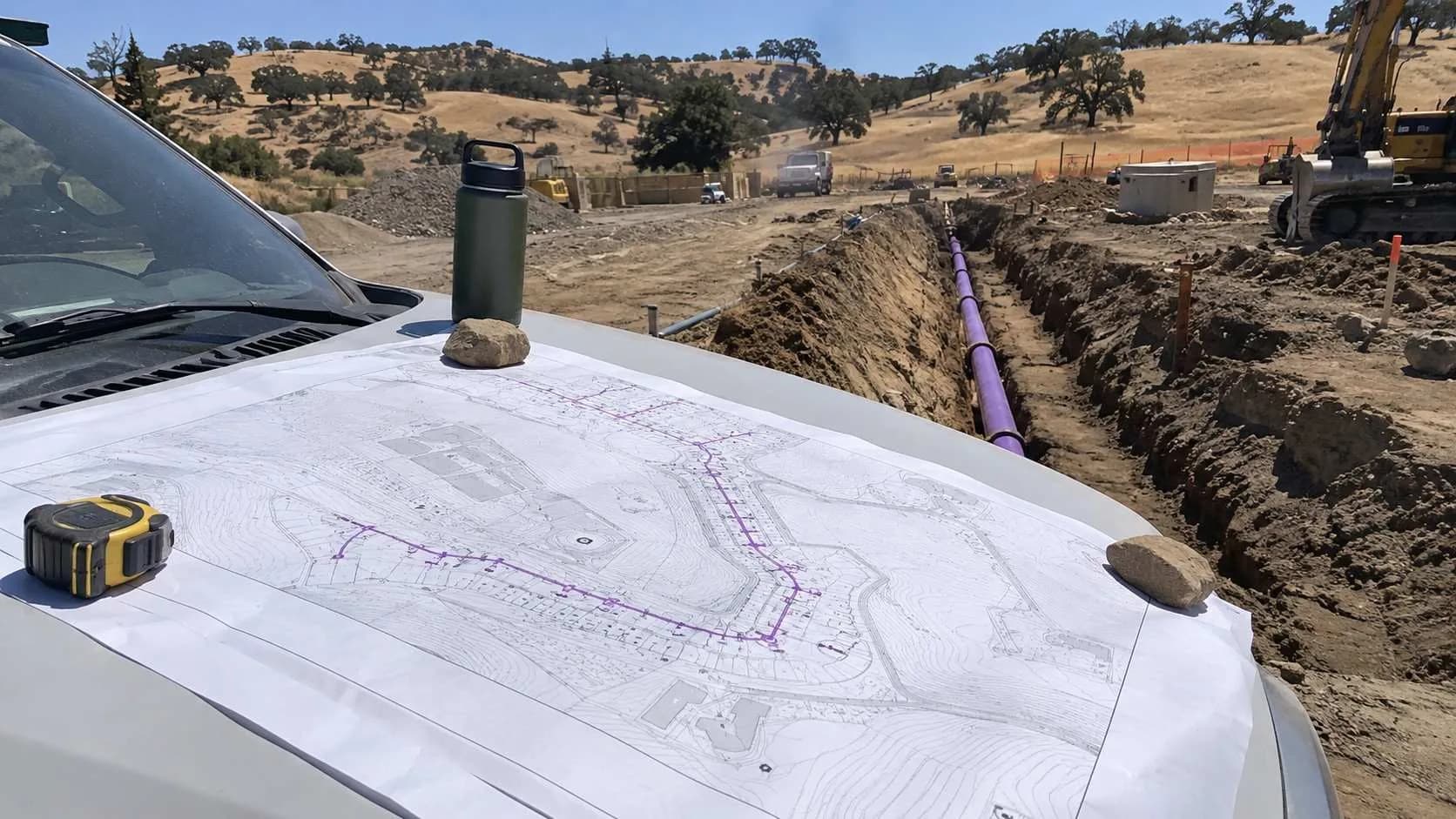
Distribution system design, the purple pipe network delivering recycled water to each use area, has to be laid out with enough specificity to support the cross connection control analysis reviewers require. Dual plumbing, where a site has both potable and recycled water piping, adds real design complexity because every point where the two systems could conceivably be connected, intentionally or by error, has to be identified and addressed with backflow protection, air gaps, or other approved control methods. A distribution layout finalized without this cross connection analysis built in from the start typically needs rework once the report preparation process forces that analysis to actually happen.
Cross Connection Testing, User Agreements, and the Coordination Burden
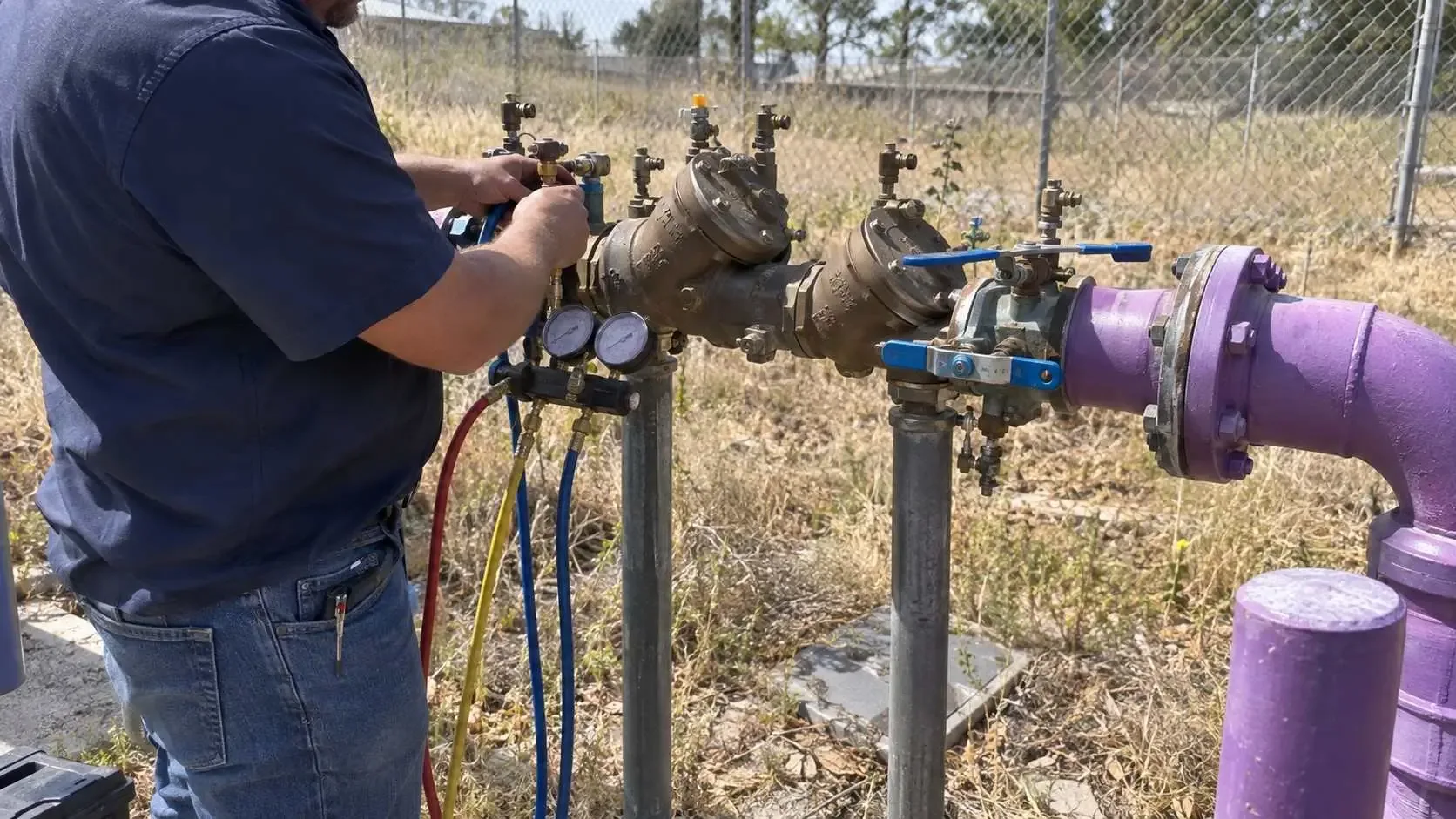
Cross connection control is not satisfied by pipe labeling and signage alone, though those are part of it. Title 22 recycled water systems require a cross connection control testing program, periodic verification that no unauthorized connection between potable and recycled water systems exists, and that testing program has to be described in the engineering report along with who is responsible for conducting it. For projects with multiple property owners or tenants receiving recycled water, user agreements defining each user’s responsibilities for onsite cross connection control, signage maintenance, and reporting obligations become part of the documentation package the report has to reference or include.
This is where multi tenant or multi parcel recycled water projects, an HOA served irrigation system, a business park with multiple tenants on purple pipe, add a coordination burden that a single owner project does not face. Getting user agreements drafted and executed takes real time, and a report submitted while those agreements are still being negotiated is a report DDW cannot fully evaluate, because the operational responsibility for maintaining cross connection control across multiple users has not actually been established yet.
Monitoring Points, Reliability, Maps, and Operator Responsibilities
The report has to specify monitoring point locations, where samples are actually taken to confirm the recycled water meets its required quality standard, and those points have to be positioned to represent the water actually being delivered to each use area, not just the treatment plant’s outlet. System reliability features, backup power, redundant treatment components, or automatic shutoff and alarm systems that activate if quality drops below the required standard, have to be described in enough detail for DDW to confirm the system will not deliver out of spec recycled water during an equipment failure or process upset.
Maps showing the distribution system, use area boundaries, and monitoring point locations are a required part of the submission, and inconsistencies between the maps and the narrative description of the same features are a common source of review comments that add a cycle to the approval timeline. Operator responsibilities round out the report, defining who maintains the treatment process, conducts required sampling and cross connection testing, and responds to an alarm condition, because DDW and the Regional Water Board are evaluating not just whether the system can be built correctly but whether it will actually be operated correctly once it is running.
Coordinating DDW and Regional Water Board Review Without Losing Months to It
Most recycled water projects require coordinated review between DDW, which evaluates the Title 22 engineering report itself, and the relevant Regional Water Quality Control Board, which may have its own permitting interest depending on the specific discharge and local requirements. Local agencies, a water district or municipality operating the recycled water system, often layer their own requirements on top of the state level review, particularly around user agreements and local distribution standards. Projects that submit a report without having already reconciled these three sets of expectations, DDW’s Title 22 criteria, the Regional Board’s requirements, and local agency standards, tend to generate parallel rounds of comments from each reviewer rather than a single coordinated review cycle.
The projects that move through this process fastest are the ones where use area boundaries, distribution layout, cross connection control design, and user agreements were all finalized, or at least substantially resolved, before the engineering report was drafted, rather than treating the report as the document that will sort out those open questions during agency review. Building the report around decisions that are already made, instead of decisions still being negotiated, is the single biggest factor in whether Title 22 review becomes a bottleneck or a straightforward confirmation of work already done.
Frequently Asked Questions
When is a Title 22 Engineering Report actually required for a California project?
It is required for projects proposing to produce and distribute recycled water for a use covered under Title 22’s water recycling criteria, essentially any project treating wastewater to a recycled water standard for irrigation, industrial reuse, or other approved reuse categories rather than discharging or land disposing of it under a different framework.
Who is qualified to prepare a Title 22 Engineering Report?
A licensed civil or environmental engineer with experience in recycled water treatment and distribution system design typically prepares the report, since it requires detailed technical description of treatment performance, distribution system engineering, and cross connection control design that DDW and the Regional Water Board will review closely.
What causes the most delay in Title 22 Engineering Report review?
Use area boundaries or distribution layouts that are not yet finalized when the report is submitted, incomplete cross connection control analysis, unresolved user agreements for multi tenant systems, and inconsistencies between the report’s narrative and its required maps are the most common sources of review comments that extend the approval timeline.
Does every recycled water project need coordination with both DDW and a Regional Water Board?
Most do, though the specific coordination required depends on the project’s discharge characteristics and the local agency’s own requirements. Confirming which agencies actually need to review the project, and what each one specifically requires, is a necessary early step rather than an assumption.
How does MES help prevent the Title 22 report from becoming a project bottleneck?
We finalize use area boundaries, distribution layout, and cross connection control design before drafting the report, coordinate user agreement requirements early for multi tenant systems, and align the report’s content with DDW, Regional Water Board, and local agency expectations before submission, so the review process confirms work already resolved rather than surfacing gaps that require redesign mid review.
Related Resources
- The 90 Day Rule: What California Industrial Users Must Do Before Discharging to a Sewer
- Local Sewer Connection vs. State Permit: When a California SIU Permit Is the Faster Path
- Understanding Order WQ 2016-0068-DDW: California’s General Recycling Authorization
- What TCEQ’s 30 TAC Chapter 210 Actually Requires for Effluent Quality Under a 210E Authorization
Preparing a Title 22 Engineering Report That Doesn’t Stall in Review?
If your recycled water project’s use areas, distribution layout, or cross connection control design are not fully finalized yet, MES can resolve those decisions before the report goes in, not after DDW sends back comments.
We specialize in:
- Use area boundary definition and demand estimation for Title 22 submission
- Distribution and purple pipe system design with cross connection control built in
- Treatment process description matched to the required quality standard for each use area
- User agreement coordination for multi tenant or multi parcel recycled water systems
- Monitoring point placement and system reliability documentation
Modern Engineering Solutions, San Jose, California. Contact: (214) 833-6748 or mod-eng.com
Keep reading
More to read.
Talk to an engineer
Tell us about your project.
An engineer reads it
Not a salesperson. Someone who can tell you whether the pathway is real.
You get a first answer
Your options, the agencies involved and the questions that decide cost and schedule.
You decide
No commitment to have the first call.
Prefer the phone? (214) 833-6748