
Blog
The Six Month Rule: What California’s NPDES Timeline Actually Says and What It Does Not
A finished sewer connection does not mean a facility can legally discharge. California treats these as two separate approvals with two separate timelines.
Quick Answer
Federal regulation at 40 CFR 122.21, applied in California by the State and Regional Water Quality Control Boards administering the NPDES program, requires a discharger with a currently effective permit to submit a renewal application at least one hundred eighty days, six months, before that permit expires. That is the entire content of the six month rule. It tells an existing permit holder when they must file to avoid a coverage gap. It says nothing about how long the Regional Water Board actually takes to review and issue a new permit, and for a new discharger without an existing permit to renew, there is no six month figure that applies at all, the actual timeline depends entirely on application completeness, the technical complexity of effluent limit development, receiving water conditions, antidegradation review, CEQA coordination, and whether public comments raise issues that require additional response. Developers who plan a project around six months as an approval timeline are planning around a number that was never meant to describe approval speed, and the gap between that assumption and the real review timeline is where NPDES dependent projects lose their schedule.
What the Six Month Rule Actually Regulates
The rule exists to prevent a discharger’s permit coverage from lapsing, not to set an expectation for how quickly a new permit gets issued. A facility with a permit set to expire in twelve months has to have its renewal application in front of the Regional Water Board at least six months before that expiration date, giving the Board a defined window to process the renewal before the old permit’s authorization runs out. This is fundamentally an administrative filing deadline attached to an existing, already-characterized discharge, one the Board has already reviewed once and is now reviewing again against the same or updated conditions.
A new discharger, a facility that has never held an NPDES permit and is applying for the first time, is in a completely different position. There is no prior permit expiration date driving a filing deadline, and more importantly, there is no prior technical review the Board can build on. The entire effluent limit development, receiving water analysis, and antidegradation review has to happen from scratch, which is precisely why a new NPDES application routinely takes considerably longer than six months, sometimes extending well beyond a year, particularly where the receiving water or the proposed discharge raises technical questions the Board has not already resolved for that discharger.
Why New Applications Take Longer Than the Six Month Figure Suggests
The technical core of an NPDES permit is effluent limit development, the Regional Water Board calculating what pollutant concentrations and loads the proposed discharge can contain without pushing the receiving water below its water quality standards. This calculation depends on the receiving water’s existing condition, its assimilative capacity, what other permitted discharges already affect it, and any water quality impairments already documented for that water body. A discharge proposed to a receiving water with limited assimilative capacity or existing impairments requires a more involved technical review than a discharge to a water body with ample capacity and no competing pressures, and that difference in technical complexity translates directly into review time that no filing deadline can compress.
Antidegradation review adds another layer specific to California’s implementation of the federal antidegradation policy, requiring the Board to evaluate whether a new or increased discharge is necessary and whether it will lower water quality in a water body currently meeting its standards, even where the proposed discharge would still comply with applicable numeric limits. This review is not a formality, it can require the applicant to demonstrate that the proposed discharge represents the best practicable treatment and control, which is its own technical submission requiring engineering justification, not just a permit application form.
Incomplete Engineering Reports and Weak Flow Data as the Most Common Self-Inflicted Delay
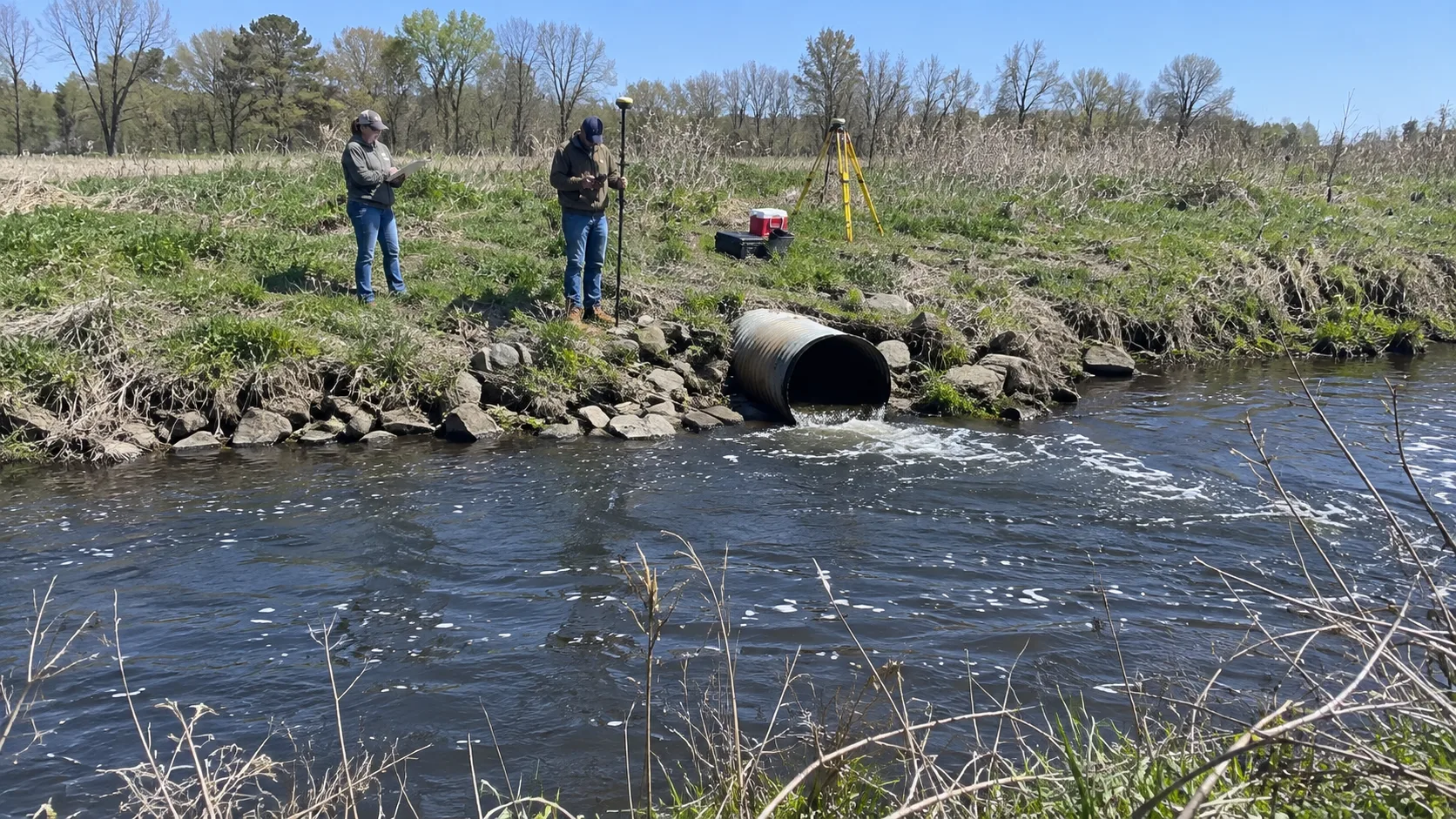
The single most common cause of NPDES review taking longer than a developer expected is an application the Board cannot actually evaluate as submitted, most often because the supporting engineering report is incomplete or the flow data behind the proposed discharge is weak or unsubstantiated. A Regional Water Board reviewing an application with vague or unsupported flow projections cannot responsibly develop effluent limits against that data, and the practical result is a request for additional information that stops the review clock until the applicant responds, then restarts a review cycle that may itself take additional time.
Unclear discharge location is a related and surprisingly common problem, an application that does not precisely define where the discharge point is relative to the receiving water, or that describes a discharge location in terms too general for the Board to conduct its receiving water analysis against a specific point. Getting flow data, discharge location, and the supporting engineering report right and complete before submission is not a formality that speeds up an otherwise fixed timeline, it is the single largest variable within a developer’s own control that determines whether the application timeline looks anything like the shortest realistic case or stretches toward the longest one.
Receiving Water Issues, Pollutant Concerns, and Recycled Water Alternatives That Add Review Cycles
A receiving water already carrying documented water quality impairments for a pollutant relevant to the proposed discharge creates a more demanding technical review almost automatically, because the Board has to evaluate the new discharge’s contribution to an already stressed condition, not just whether the new discharge alone would meet a standard in isolation. Specific pollutant concerns tied to the applicant’s own industrial process, a chemical or contaminant the receiving water is particularly sensitive to, or one not well characterized in the application’s supporting data, generate additional technical questions that extend review regardless of how administratively complete the rest of the application is.
Regional Water Boards increasingly ask applicants to evaluate recycled water or other alternatives to direct discharge as part of permit review, particularly where a receiving water’s condition makes a new or increased discharge harder to justify under antidegradation review. An applicant who has not considered or documented why a recycled water alternative, the same non-potable reuse frameworks covered under Title 22 elsewhere in this series, is not a viable option for their project may find that question raised mid review, adding a response cycle that a developer who addressed it proactively in the original application would have avoided entirely.
CEQA Coordination, Public Notice, and Comments as Independent Timeline Drivers
NPDES permit issuance in California typically requires CEQA compliance, and where CEQA review is still underway or has not been completed, the Regional Water Board generally cannot finalize permit action until that environmental review reaches a defined stage, adding a coordination dependency that runs on its own timeline separate from the technical permit review itself. A developer treating CEQA and NPDES review as sequential rather than coordinated processes, addressing CEQA only after submitting the NPDES application, is adding avoidable time to the overall schedule rather than running both processes in parallel from the start.
Public notice and comment periods are a required part of NPDES review under the Clean Water Act, and while the notice period itself has a defined duration, a comment raising a substantive technical concern, an antidegradation objection, a question about effluent limit adequacy, or a request for a public hearing, can require the Board to respond in a way that extends the review timeline beyond what the notice period alone would suggest. Missing monitoring plans, an application that does not clearly define how the discharger will monitor and report compliance once permitted, is a related gap that can draw comment or Board scrutiny during this stage, adding yet another item that a complete original application would have avoided raising in the first place.
Building a Realistic Schedule Instead of Relying on a Filing Deadline
The developers who avoid a costly schedule surprise are the ones who treat NPDES review timeline as a project-specific technical question requiring engineering judgment about their receiving water, their discharge characteristics, and their application’s completeness, rather than defaulting to a six month figure that was never meant to describe approval speed for a new application. Building a complete engineering report with solid flow data, a precisely defined discharge location, a proactive evaluation of recycled water alternatives where relevant, and CEQA coordination running in parallel from the start, is what actually compresses the realistic range of outcomes toward the faster end rather than the slower one.
Frequently Asked Questions
What does California’s six month NPDES rule actually require?
It requires a discharger with a currently effective NPDES permit to submit a renewal application at least one hundred eighty days before that permit expires. It is a filing deadline for existing permit holders, not a timeline for how long a new application takes to be reviewed and approved.
Does a new NPDES applicant get approval within six months?
Not typically. New applications require the Regional Water Board to develop effluent limits and conduct antidegradation and receiving water review from scratch, without the benefit of a prior permit review to build on, and this process commonly takes considerably longer than six months depending on the receiving water’s condition and the application’s completeness.
What causes an NPDES application to take longer than expected?
Incomplete engineering reports, weak or unsubstantiated flow data, an unclear discharge location, receiving water impairments requiring more involved antidegradation review, substantive public comments, and missing monitoring plans are the most common causes of extended review timelines.
Can construction start before an NPDES permit is actually issued?
Discharging without an issued permit is not authorized regardless of construction status, and while site construction unrelated to the discharge itself may proceed on its own schedule, actual discharge cannot legally begin until the permit is issued, which means construction schedules assuming discharge readiness before permit issuance carry real risk.
How does MES help reduce NPDES schedule risk for a project?
We build the engineering report, flow data, and discharge location description to be complete and defensible from first submission, evaluate recycled water alternatives proactively where antidegradation review is likely to raise the question, and coordinate CEQA review in parallel with the NPDES application rather than sequentially, so the realistic timeline reflects the shortest defensible review path rather than repeated information request cycles.
Related Resources
- Local Sewer Connection vs. State Permit: When a California SIU Permit Is the Faster Path
- The Title 22 Engineering Report: The Real Bottleneck in California Recycled Water Projects
- Permitting Land Application: Choosing Between WDRs and Recycled Water Rules
- The 90 Day Rule: What California Industrial Users Must Do Before Discharging to a Sewer
Planning a Project Around an NPDES Permit Timeline?
If your schedule assumes a six month NPDES approval and you have not confirmed your receiving water’s condition, your application’s completeness, or your CEQA coordination status, MES can pressure-test that timeline before it becomes a construction delay.
We specialize in:
- Engineering report and flow data preparation built for first submission completeness
- Discharge location and receiving water analysis matched to the specific water body’s condition
- Antidegradation review support including recycled water alternative evaluation
- CEQA coordination run in parallel with NPDES application review
- Monitoring plan development to avoid comment stage delays
Modern Engineering Solutions, San Jose, California. Contact: (214) 833-6748 or mod-eng.com
Keep reading
More to read.
Talk to an engineer
Tell us about your project.
An engineer reads it
Not a salesperson. Someone who can tell you whether the pathway is real.
You get a first answer
Your options, the agencies involved and the questions that decide cost and schedule.
You decide
No commitment to have the first call.
Prefer the phone? (214) 833-6748