
Blog
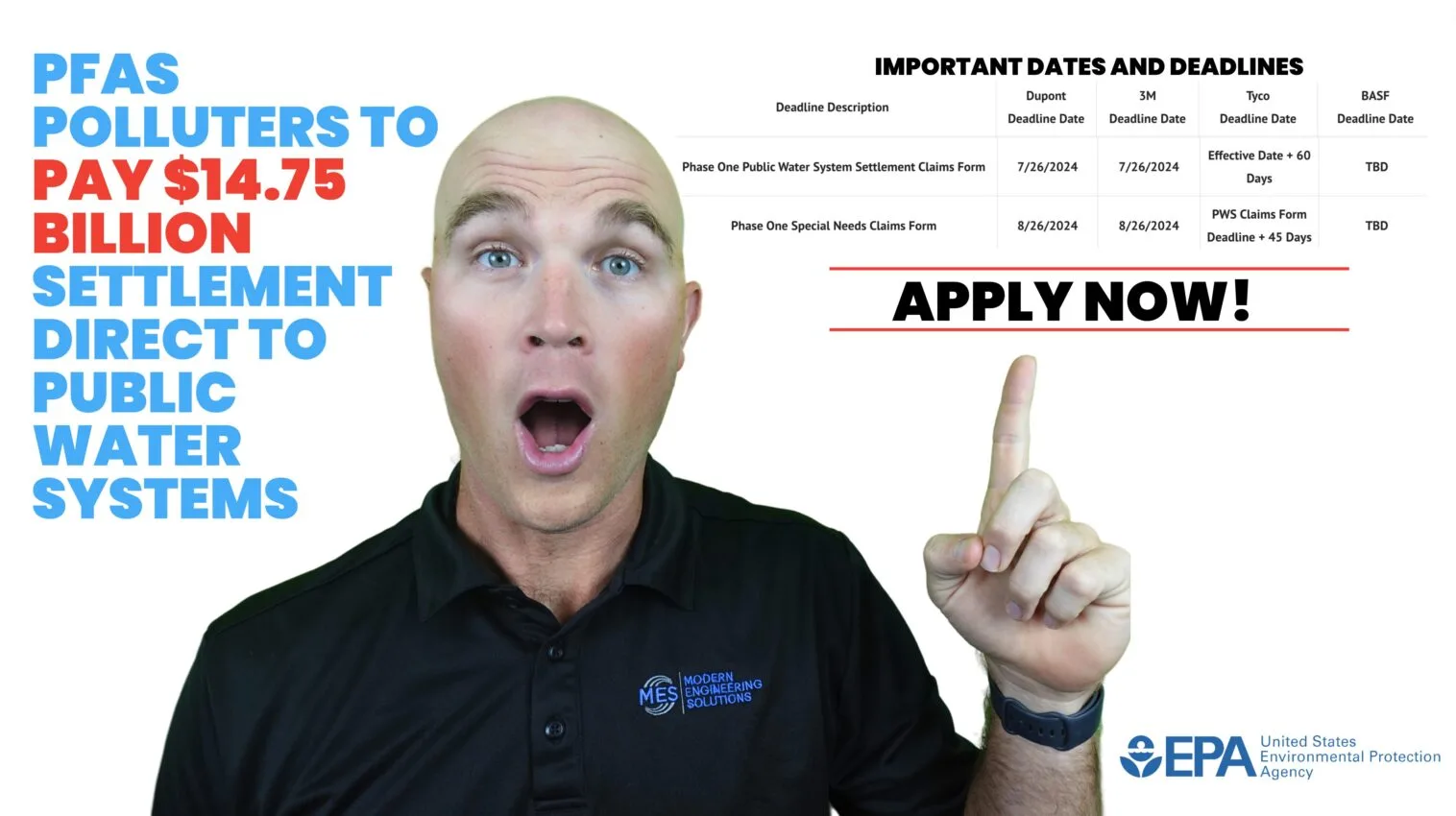
PFAS Polluters to Pay $14.75 Billion Settlement Direct to Public Water Systems
Discover how the PFAS Settlement allocates $14.75 billion directly to public water systems, offering crucial financial relief.
Welcome to a special edition of “Engineers for Communities“, dedicated to unraveling the complexities of PFAS litigation and its implications for water utilities across the United States. Today, we’re diving deep into the subject with insights from Sam Wade, former CEO of the National Rural Water Association, and current Water Consultant to Napoli Shkolnik Law to understand the legal landscape and financial opportunities available to utilities grappling with PFAS contamination.
Understanding PFAS: The Forever Chemicals
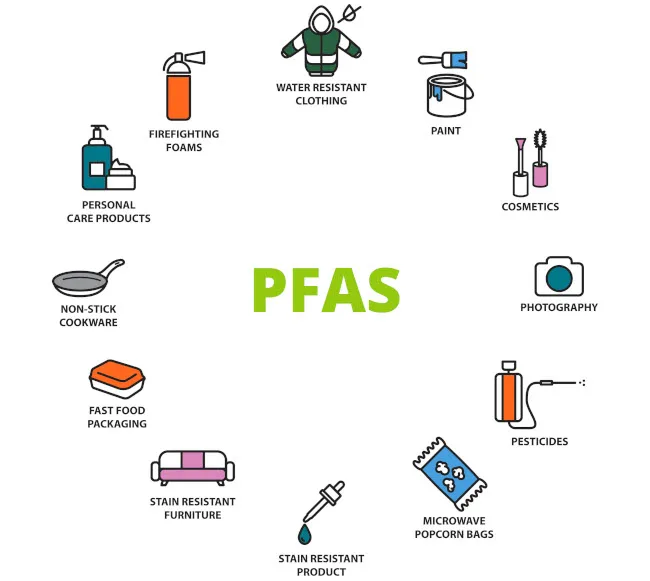
Per- and polyfluoroalkyl substances (PFAS), commonly known as forever chemicals due to their persistence in the environment, have been used extensively in various industries since the 1940s. Found in everything from firefighting foams to everyday consumer products like cosmetics and water-resistant clothing, PFAS poses significant health and environmental risks. Recognized for their carcinogenic properties, these chemicals have infiltrated water supplies, leading to stringent regulatory measures by the EPA, including setting maximum contaminant levels (MCLs) as low as four parts per trillion.
The Impact of PFAS Litigation on Water Utilities
In response to the widespread impact of PFAS, a monumental litigation effort was spearheaded by the Napoli Skolnick law firm, representing various utilities against global PFAS manufacturers. The goal? To alleviate the financial burdens faced by utilities due to required PFAS remediation efforts. As of 2023, settlements have reached approximately $14.75 billion, with major contributions from companies like 3M, DuPont, Tyco, and BASF. The goal is to hold these companies accountable for the environmental and health damage caused by PFAS. Notably, settlements have been reached with several companies, including:
Key Deadlines and How to Participate in the Settlement
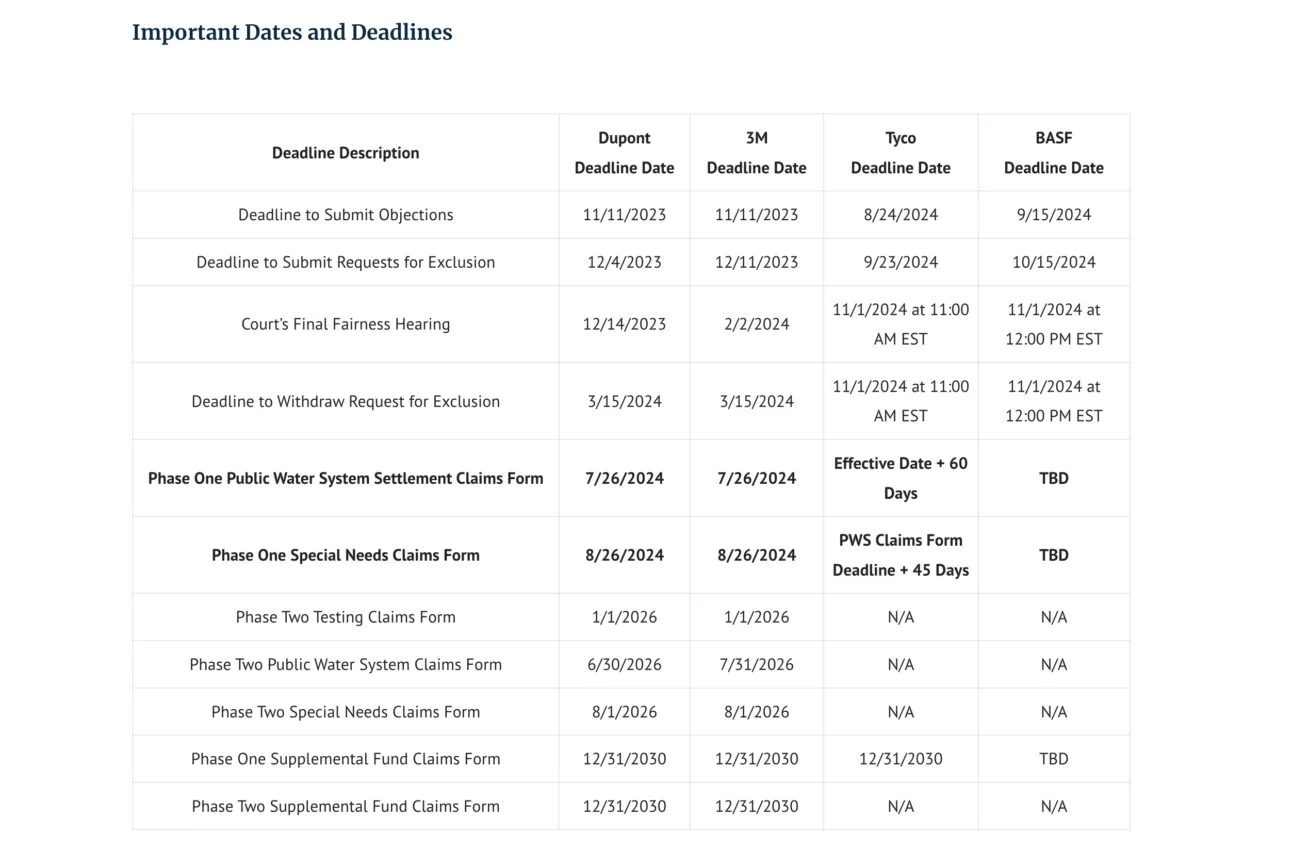
For utilities, engaging in this litigation could mean recouping significant funds to offset remediation costs. Utilities detected with PFAS by June 22, 2023, fall under ‘Phase 1’ and have until July 26, 2023, to apply for funds. Those testing positive after this date enter ‘Phase 2’, with subsequent deadlines depending on ongoing settlements. It’s crucial for utilities to act swiftly to meet these deadlines and secure their financial relief.
Application Process: Documenting Impact and Securing Funds
To apply, utilities need to provide:
- Laboratory results for each water source
- Completed IRS W-9 forms
- Detailed pumping records for the last ten years to calculate maximum daily flows
- Any applicable withdrawal permits or alternative documentation if direct records are unavailable
This information helps determine the eligibility and the amount of funds a utility may receive, calculated based on the highest average daily flows and PFAS levels.
Benefits to Water Utilities
Engaging in this litigation not only provides financial relief but also aligns with the principle that the polluter should pay. Funds received directly benefit the utilities without intermediary requirements, offering a direct influx of capital to manage PFAS impacts. Additionally, utilities can apply for additional funds if PFAS levels increase or if they take preemptive remedial actions.
Closing Thoughts
This PFAS litigation represents a pivotal opportunity for water utilities to mitigate the financial impacts of complying with stringent new health advisories and regulations. It underscores a crucial shift towards holding manufacturers accountable and easing the financial strain on local utilities and their customers.
For detailed guidance on the application process and to estimate potential funding through the settlement, utilities are encouraged to visit the official Napoli law website and utilize available resources.
Keep reading
More to read.
Talk to an engineer
Tell us about your project.
An engineer reads it
Not a salesperson. Someone who can tell you whether the pathway is real.
You get a first answer
Your options, the agencies involved and the questions that decide cost and schedule.
You decide
No commitment to have the first call.
Prefer the phone? (214) 833-6748