Quick Answer
Florida has one of the most developed and actively enforced reclaimed water programs in the United States. Reclaimed water, the treated effluent from domestic wastewater treatment plants that meets defined quality standards for reuse, is used extensively in Florida for landscape irrigation, golf course irrigation, agricultural irrigation, industrial cooling and processing, groundwater recharge, and other beneficial applications. FDEP’s Chapter 62-610 rules govern reclaimed water treatment standards, distribution system design, storage requirements, setback distances, end-use restrictions, monitoring, and operator responsibilities. For developers, the practical significance of Florida’s reuse framework is that reclaimed water affects site planning, purple pipe infrastructure requirements, treatment plant design, permitting strategy, and long term operating cost in ways that must be understood and accounted for before a project’s water and wastewater strategy is finalized.
Why Florida Prioritizes Reclaimed Water
Florida’s water management challenge is a paradox. The state receives abundant rainfall but faces genuine freshwater supply constraints driven by the same population growth that produces the wastewater the reuse program manages. Florida’s aquifers, particularly the Floridan Aquifer System that underlies much of the state, are under increasing withdrawal pressure from municipal and agricultural users. The Water Management Districts that manage Florida’s water resources have identified water supply as a strategic concern in most regions of the state and have incorporated reclaimed water into regional water supply plans as a substitute for potable water in applications where reclaimed water quality is appropriate.
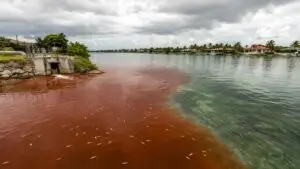
From an environmental standpoint, reclaimed water reuse keeps nutrients and treated effluent out of surface water bodies and coastal receiving waters that are already under pressure from multiple loading sources. A treatment plant that converts its full effluent flow to reclaimed water for beneficial reuse rather than discharging to a surface water body eliminates the receiving water loading impact associated with the discharge entirely. In Florida’s coastal watersheds where nutrient management is a regulatory priority, this distinction matters for permitting strategy, for environmental compliance, and for the public trust dimensions of wastewater infrastructure planning in communities that are sensitive to coastal water quality.
FDEP has consistently encouraged reclaimed water reuse over surface discharge as the preferred effluent management strategy for Florida wastewater utilities, and that preference is expressed not just in regulatory guidance but in the permitting process itself. Utilities proposing new or expanded surface discharge authorizations in areas where reuse is feasible face a harder regulatory path than utilities proposing reclaimed water systems that substitute for discharge. Understanding that regulatory preference as a project planning input rather than as a permitting surprise is the practical benefit of engaging with Florida’s reuse framework early.
Treatment Standards and What They Require
Florida’s Chapter 62-610 rules establish treatment standards for reclaimed water that are tied to the intended end use and the potential for human contact with the reclaimed water. The highest treatment standard, required for public access reuse applications including landscape irrigation in areas where people may come into direct contact with the reclaimed water, is called high level disinfection. A reclaimed water system serving a residential community’s common area irrigation, a park, a school ground, or a golf course where golfers and staff have unrestricted access must meet the high level disinfection standard, which requires secondary treatment followed by filtration and disinfection to a defined fecal coliform standard.
The treatment process that achieves high level disinfection in Florida typically involves secondary biological treatment, filtration through a sand or membrane filter, and disinfection using chlorine or ultraviolet light to a standard of no detectable fecal coliform in at least seventy five percent of samples and a maximum of twenty five colony forming units per one hundred milliliters. This treatment standard is more stringent than what is required for secondary treated effluent discharged to a receiving water body under a surface discharge permit, and facilities converting from surface discharge to reuse must verify that their treatment process is capable of consistently meeting the high-level disinfection standard before the reclaimed water is distributed for public access uses.
Lower treatment standards apply to reuse applications with restricted public access or no direct human contact, including agricultural irrigation of non food contact crops, groundwater recharge through rapid infiltration basins, and some industrial uses. Developers and municipalities evaluating reuse options for applications other than unrestricted public access irrigation should confirm the applicable treatment standard with FDEP and with the engineering team designing the treatment facility before assuming that secondary treatment alone will be sufficient for the intended use.
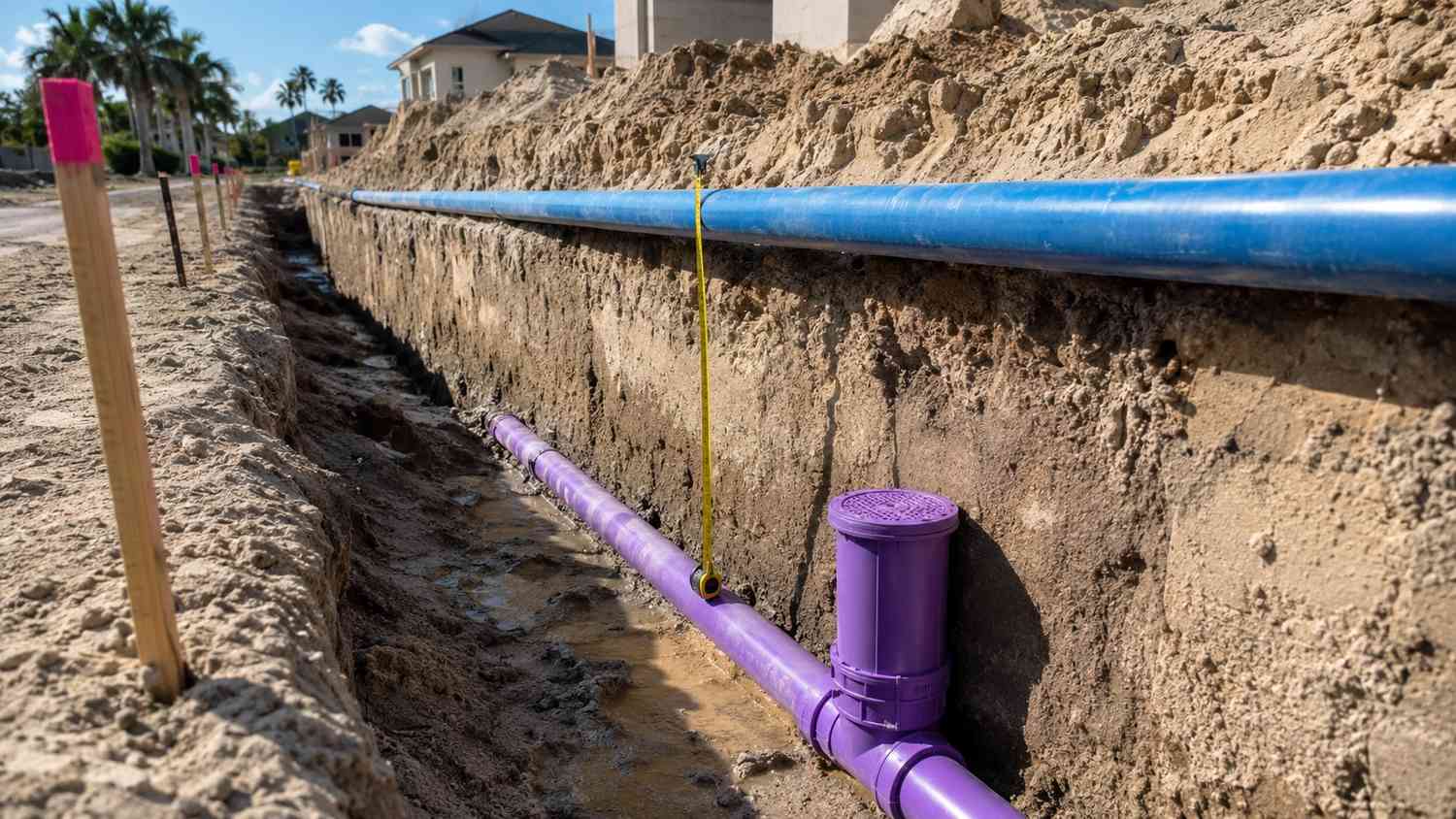
Purple Pipe Systems, Distribution Infrastructure, and Setback Requirements
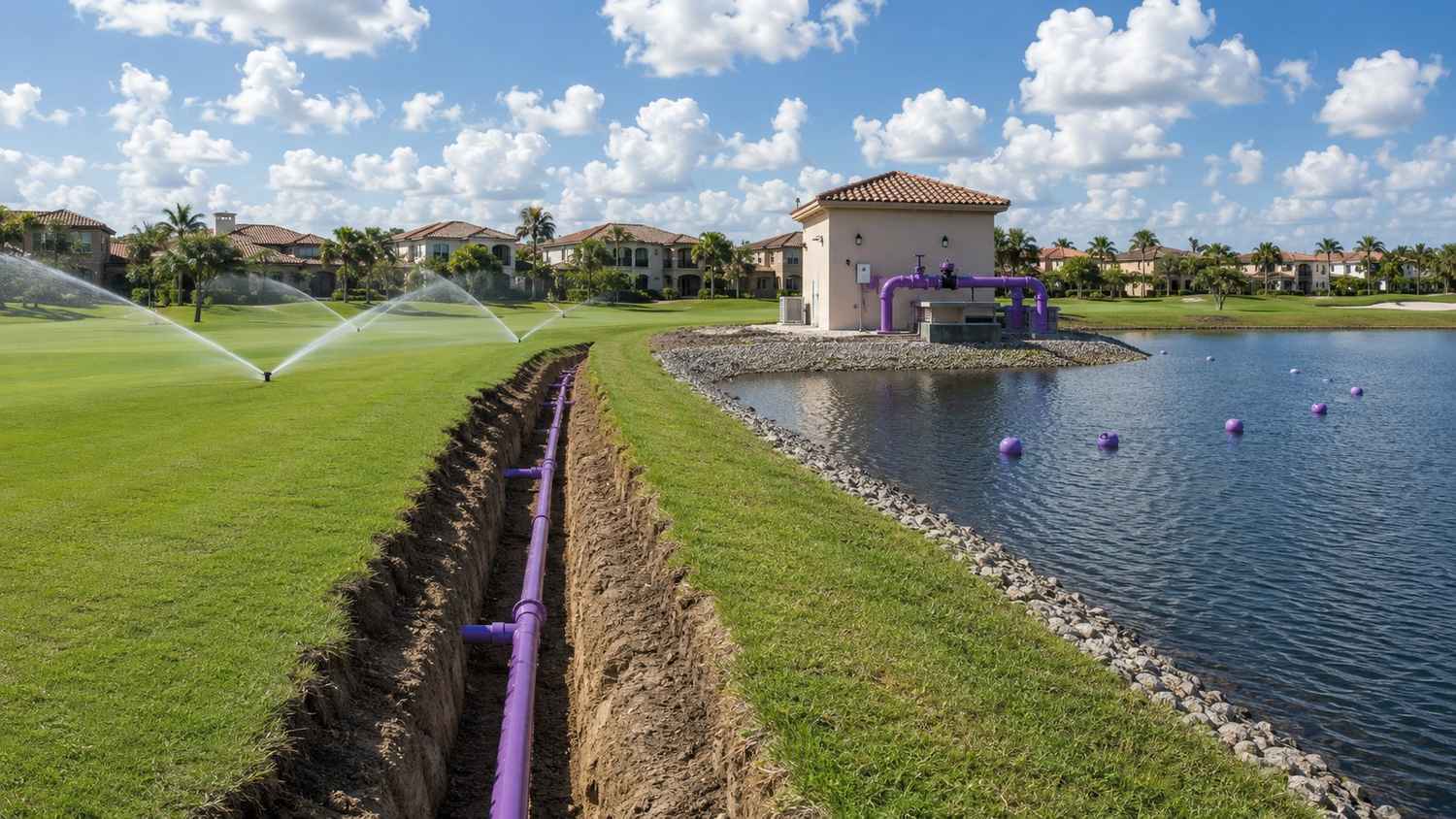
The purple pipe distribution system is the most visible physical element of a Florida reclaimed water program. Purple, which is internationally recognized as the color designating reclaimed water infrastructure, is required for all reclaimed water distribution piping, irrigation equipment, and associated fixtures under Chapter 62-610 to prevent cross-connection with the potable water system. The color coding requirement extends to pipe, fittings, valves, valve boxes, meters, and backflow prevention assemblies, and it must be maintained consistently throughout the distribution system from the treatment plant to the point of use.
Separation requirements between reclaimed water distribution piping and potable water distribution piping are established in Chapter 62-610 and specify minimum horizontal and vertical separation distances that must be maintained where the two systems share a common corridor. These separation requirements affect site layout planning for developments that include both potable and reclaimed water distribution, because the pipe corridors, trench widths, and utility easements required to maintain compliance separation must be integrated into the site plan before construction drawings are finalized.
Setback requirements for reclaimed water application areas establish minimum distances from the irrigation zone to potable water wells, surface water bodies, building foundations, and property lines. These setbacks affect how much of a development site can be served by reclaimed water irrigation and must be evaluated against the site plan to confirm that the proposed irrigation areas are compliant before the reclaimed water system design is finalized. A development that plans to use reclaimed water for all landscaped areas but has potable water wells or sensitive surface water bodies within the required setback distance may need to reduce the reclaimed water irrigation area or modify the site plan to create adequate setback from the sensitive features.
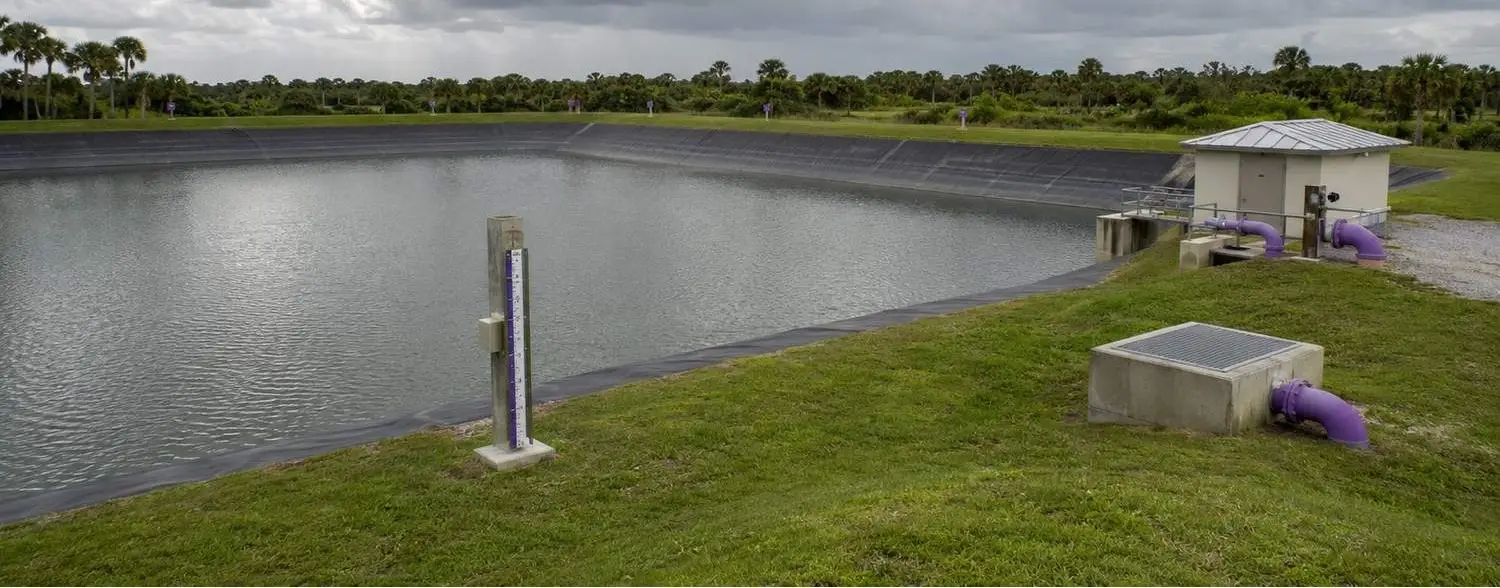
Seasonal Demand, Wet Weather Storage, and Operational Balance
One of the most operationally challenging aspects of a Florida reclaimed water system is the mismatch between reclaimed water supply, which is relatively constant year round because wastewater generation does not vary dramatically with season, and reclaimed water demand, which in Florida’s climate is heavily influenced by rainfall. During Florida’s summer wet season, which can produce rainfall several days per week for months at a time, irrigation demand for reclaimed water drops dramatically because natural rainfall is satisfying most of the landscape water requirement. During the dry season from October through May, irrigation demand increases and reclaimed water systems can struggle to meet it.
This seasonal imbalance requires wet-weather storage capacity that holds reclaimed water during periods of low irrigation demand until the demand recovers. Chapter 62-610 requires reclaimed water systems to either have storage capacity adequate to balance supply and demand across seasonal variations or to have an approved backup disposal method for wet-weather periods when storage is full and irrigation demand is insufficient to absorb the full treatment plant effluent volume. Approved backup disposal methods include permitted surface water discharge through a backup permit, rapid infiltration basins, and emergency disposal to a receiving water body under conditions specified in the reclaimed water permit.
Wet-weather storage design requires sizing analysis that evaluates the treatment plant’s daily effluent volume, the seasonal irrigation demand pattern for the reuse service area, and the capacity required to balance supply and demand across the critical wet season period without triggering backup disposal. For a treatment plant serving a large golf course and community landscape irrigation demand, the wet weather storage volume required to avoid backup disposal during a wet summer can be substantial, and the land area required for a storage pond of that capacity must be reserved in the site plan from the beginning of project planning. Storage ponds are expensive to retrofit into a site that was not designed for them.
Industrial Reuse, Groundwater Recharge, and Emerging Applications
Florida’s reuse program is not limited to landscape and golf course irrigation. Industrial reuse applications including cooling tower makeup water, process water for manufacturing operations, and construction dust suppression represent growing segments of the reclaimed water market in Florida that offer utilities and developers alternatives to irrigation only reuse programs. Cooling tower makeup water use is particularly attractive for industrial and commercial facilities with significant cooling loads because it substitutes reclaimed water for potable water in a non-contact application where the treatment standard is lower than public access irrigation, reducing both the water cost for the industrial user and the discharge volume or storage requirement for the treatment plant.
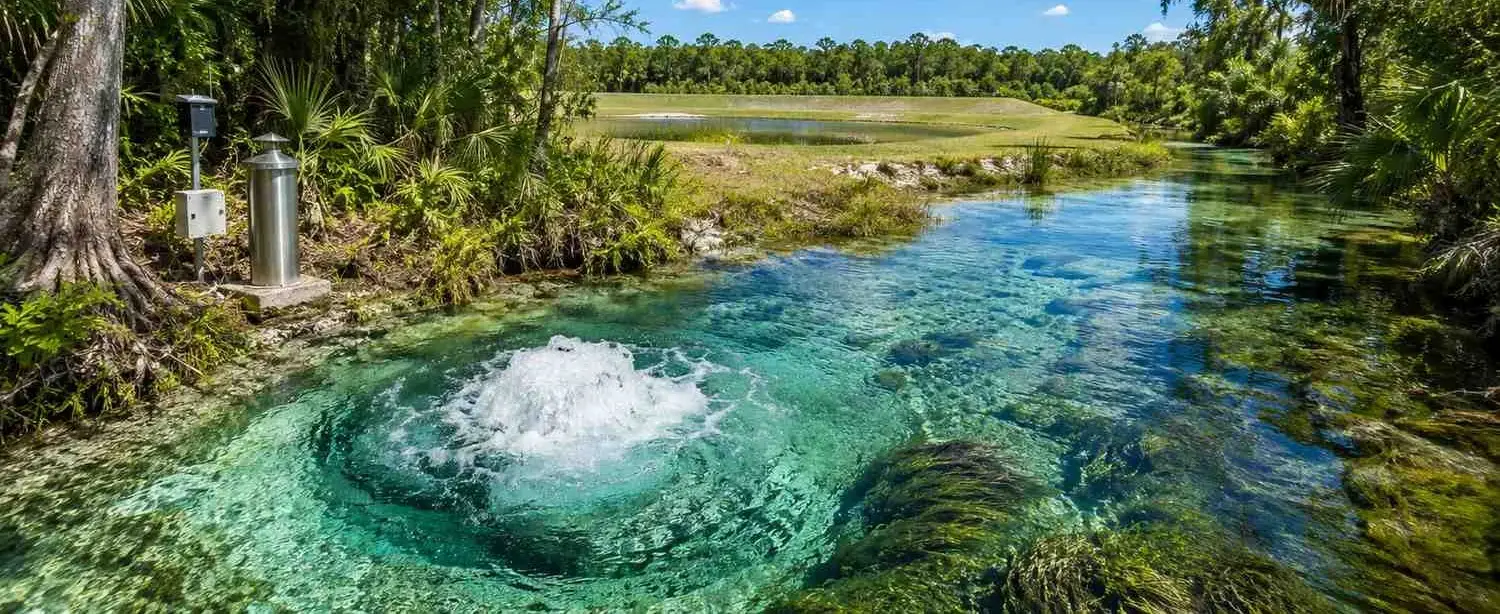
Groundwater recharge through rapid infiltration basins is a disposal and reuse strategy that returns treated effluent to the aquifer from which much of Florida’s water supply is drawn, effectively completing a water cycle that treats wastewater and returns it to the water supply system rather than disposing of it to surface water. This strategy requires a suitable site with adequate soil permeability and groundwater conditions, and FDEP’s permitting requirements for rapid infiltration basin systems are specific to the site conditions and the receiving aquifer characteristics. For communities in areas with suitable geology, rapid infiltration can provide a reliable wet weather backup that addresses the seasonal storage challenge without requiring a surface discharge permit.
Frequently Asked Questions
Our Florida development includes a golf course and community landscaping. Are we required to use reclaimed water for irrigation?
Florida law and many local utility ordinances require connection to a reclaimed water system for irrigation when reclaimed water is available from a nearby utility. If a utility has extended reclaimed water distribution infrastructure to within a defined proximity of your project, connection for irrigation purposes may be mandatory rather than optional. If reclaimed water is not currently available from a nearby utility, connection may not be required but may be a condition of development approval in communities with active reuse planning. Confirming the reclaimed water availability status and any connection requirements with the local utility and the local government before finalizing the site plan is the appropriate due diligence step for any Florida development with significant irrigation demand.
What is the capital cost difference between designing a development with reclaimed water purple pipe versus potable only irrigation?
Adding a purple pipe reclaimed water distribution system to a development that would otherwise use potable water for irrigation increases the upfront infrastructure cost through the addition of the separate distribution system, the storage and pumping infrastructure to serve it, and the irrigation system modifications required for dual system compatibility. However, the long-term operating cost savings from substituting reclaimed water, which is typically priced below potable water, for potable irrigation water offset that capital investment over time. For developments with large irrigation demands such as golf courses, parks, or master planned community common areas, the payback period for the reclaimed water infrastructure investment is generally favorable. The capital cost comparison should be evaluated project specifically using the local utility’s reclaimed water rate and connection fee structure.
We operate a small wastewater treatment plant that currently discharges to a surface water body. How do we evaluate converting to a reuse program?
The conversion evaluation begins with a demand analysis that identifies potential reclaimed water customers within a reasonable distribution distance of the treatment plant, estimates their seasonal demand profile, and compares that demand to the treatment plant’s daily effluent volume across the year. If the demand analysis shows that reuse customers can absorb the full effluent volume or most of it, the next step is a treatment process evaluation to determine whether your current process can achieve the high level disinfection standard required for public access irrigation, or whether process upgrades are needed. A storage analysis follows to determine what wet weather storage capacity would be needed to balance supply and demand during the wet season. The complete evaluation produces a feasibility report that supports the decision to convert and the FDEP permit modification application for the reclaimed water authorization.
Related Resources
- FDEP Permitting for Wastewater Systems in Florida: A Practical Guide for Developers
- Florida’s Red Tide and Water Quality Crisis: What It Means for Coastal Wastewater Engineers
- Florida Department of Environmental Protection Chapter 62-610 Reuse of Reclaimed Water
- Florida Water Management Districts Reclaimed Water Programs and Water Supply Planning
Designing a Reclaimed Water System for Your Florida Project?
MES is licensed in Florida and works with developers, municipalities, water utilities, golf communities, and industrial users to evaluate reclaimed water feasibility, design purple pipe distribution systems, coordinate Chapter 62-610 permitting, plan wet-weather storage, and integrate reuse into broader infrastructure strategies that reduce discharge, conserve potable water, and meet Florida’s regulatory expectations for reclaimed water programs.
We specialize in:
- Reclaimed water system feasibility evaluation and demand analysis for Florida developments and municipal utilities
- Purple pipe distribution system design and Chapter 62-610 compliance documentation for Florida reuse programs
- Treatment process evaluation and upgrade design for facilities converting from surface discharge to reclaimed water reuse
- Wet-weather storage design and backup disposal strategy for Florida reclaimed water systems with seasonal demand variation
- Industrial reuse feasibility evaluation and cooling tower makeup water system design for Florida commercial and industrial facilities
- FDEP reclaimed water permit application preparation and coordination for new and modified Florida reuse systems