
Blog
Florida’s Exploding Growth vs. Aging Wastewater Infrastructure: What Engineers Are Facing Right Now
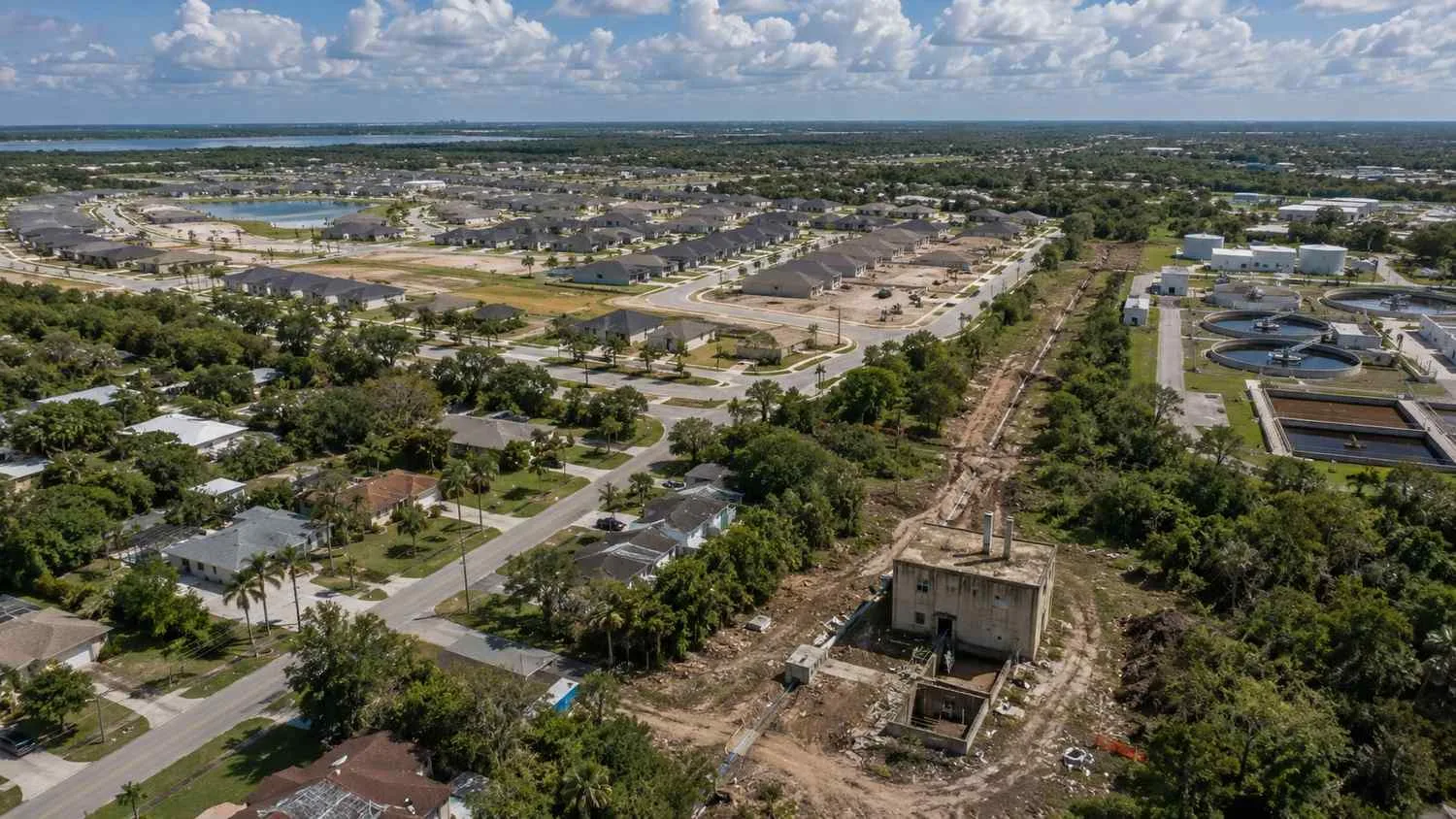
Florida wastewater infrastructure is straining under growth of about 1.9 million people since 2020, and FDEP rules set when plants must plan expansion.
Quick answer
Florida wastewater infrastructure in many communities is aging while it absorbs fast growth: the state added about 1.9 million residents between April 2020 and July 2025. The pressure shows up as treatment plants nearing permitted capacity, corroded force mains and gravity lines, and septic-to-sewer conversions. Florida rules require capacity and needs planning years ahead, so developers should check sewer capacity before they buy.
How fast is Florida growing now?
Still fast, but slower than in 2022 and 2023. The Census Bureau's Vintage 2025 estimates, released January 27, 2026, put Florida at 23,462,518 on July 1, 2025, up from an April 2020 base of 21,538,207.
The state grew by 196,680 people in the year to July 2025. Net domestic migration dropped to 22,517, from 183,646 in 2023 and 310,892 in 2022, while net international migration was 178,674.
A slower year does not shrink the backlog. Connections added since 2020 are already on the pipes, pumps and plants, and capacity projects take years to plan, design, permit and build.
Why does growth hit Florida wastewater systems so hard?
Flat ground means pumps, and pumps mean force mains that age and corrode. With little natural slope, Florida collection systems lean on lift stations and force mains, which we cover in lift station design for Florida's flat topography. Each new subdivision adds flow to stations sized for an older service area.
Corrosion compounds the load problem. EPA's report to Congress on hydrogen sulfide corrosion (1991) explains the mechanism: sulfide forms when dissolved oxygen in the wastewater is nearly used up, and bacteria on the moist pipe crown turn the released gas into sulfuric acid that attacks concrete. It found severe corrosion may cut a 50 to 100 year life expectancy to under ten years.
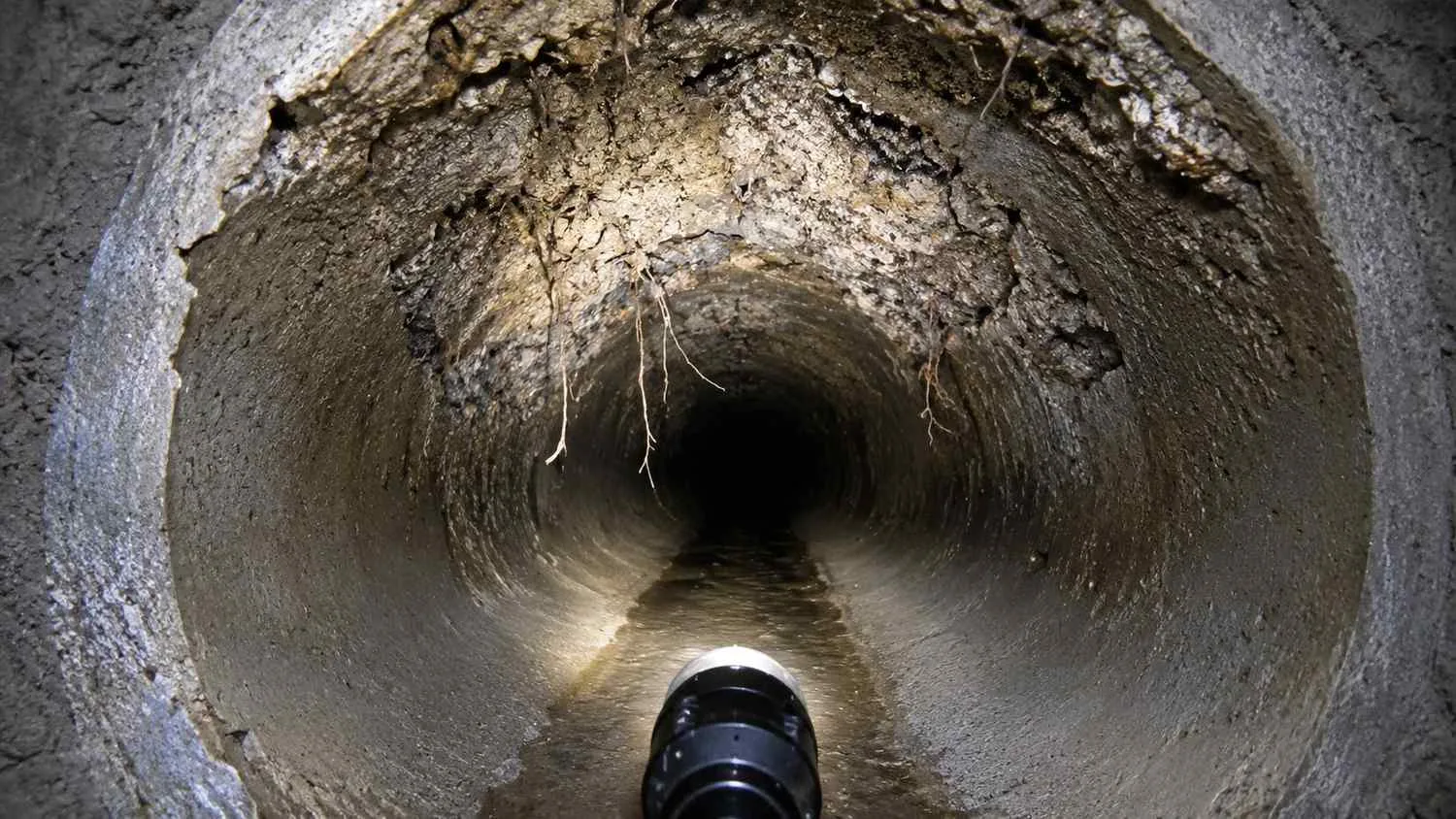
Long force mains and slow flows keep wastewater in the pipe longer, which favors sulfide. That is an engineering reading, not a rule, but it is why condition data matters before a station is pushed harder.
What does FDEP require when a treatment plant nears capacity?
A capacity analysis report once flow passes half of permitted capacity, and set deadlines after that. Under Rule 62-600.405, F.A.C., a permittee must file a capacity analysis report when the three-month average daily flow for the latest three consecutive months exceeds 50 percent of the plant's permitted capacity.
The report projects flows at least 10 years ahead and estimates when the plant reaches permitted capacity. A Florida professional engineer must seal it. Updates come every five years, or every year once the report shows capacity within 10 years.
The rule then ties the projection to action:
- capacity within five years: planning and preliminary design of the expansion must be under way;
- within four years: plans and specifications must be in preparation;
- within three years: a complete permit application for the expansion is due within 30 days of the report.
DEP can adjust that schedule when the permittee documents that adequate capacity will be available (Rule 62-600.405(9)).
For a developer, the latest capacity analysis report is the best single document on whether a plant can take new flow, and when an expansion is due.
What does FDEP require for aging collection systems?
A pipe assessment, repair and replacement plan, plus a power outage plan. Rule 62-600.705, F.A.C., requires domestic wastewater facilities to act to prevent sanitary sewer overflows and pipe leaks. Each facility permittee develops a collection system action plan with a five-year planning horizon and reports on it every year by June 30.
The same rule requires a power outage contingency plan for the collection system and pump stations with each new permit, renewal or substantial revision. When a spill does happen, section 403.077, Florida Statutes, requires the owner or operator to notify DEP within 24 hours of discovering a reportable release.
What does septic-to-sewer conversion add to the load?
Each conversion adds flow to plants and pipes that growth is already filling. FDEP's onsite sewage program estimates about 2.6 million septic systems in Florida, used by roughly 30 percent of residents. Since July 1, 2021, under the Clean Waterways Act of 2020, DEP implements the septic statutes and rules, while county health departments still issue permits.
The state funds part of the work. The water quality improvement grant program in section 403.0673 can pay for septic-to-sewer connections, upgrades to advanced waste treatment and wastewater facility repairs or expansions that reduce nutrient loading to eligible waters, such as those missing nutrient standards, with a TMDL or in a restoration plan area. Projects with a local cost share get priority, except in rural areas of opportunity.
How should a utility plan capital for growth?
Start from the 20-year needs analysis Florida already requires. Under section 403.9301, Florida Statutes, every county, municipality or special district providing wastewater service had to complete a needs analysis by June 30, 2022, and must update it every five years.
The analysis covers the next 20 years: connections and residents served in five-year steps, the service area, costs, remaining useful life of each facility, and a plan to fund maintenance or expansion. Pair it with a current hydraulic model and condition data, and it becomes the backbone of a capital improvement plan.
For financing, FDEP's State Revolving Fund offers low-interest Clean Water loans to local governments for wastewater and stormwater work. Projects enter by a Request for Inclusion and are funded in priority-score order.
How can a developer check sewer capacity before buying land?
Get capacity in writing and test it against the plant's own records. Use this check before a contract goes hard. Any "no" means the sewer plan is not ready.
- Do you have a written capacity or availability letter from the utility for your projected flow?
- Have you compared the plant's three-month average daily flow with its permitted capacity?
- Have you read the plant's latest capacity analysis report and its expansion schedule?
- Does the utility's needs analysis or capital plan include the lift stations and force mains between your site and the plant?
- Do you know the condition of the receiving lift station and force main?
- If capacity is short, do you have a fallback, such as funding a share of an expansion or an interim plant?
Then ask your wastewater engineer to review the route from your site to the plant, not just the plant itself.
This article is general education on Florida rules and public data as read in October 2026. Utility policies differ, and FDEP and each utility decide their own cases, so confirm current requirements for your project.
Frequently asked questions
What triggers a capacity analysis report in Florida?
The three-month average daily flow for the latest three consecutive months exceeding 50 percent of the plant's permitted capacity (Rule 62-600.405(3)). The first report is due within 180 days after that three-month period, or with the permit renewal application if sooner.
Who reports a sewage spill in Florida, and how fast?
The owner or operator of the installation where a reportable release occurs must notify DEP within 24 hours of discovery under section 403.077.
I'm a developer under contract on a site in a fast-growing Florida county, and the utility says capacity is tight. What should I ask for before I close?
Ask for a written capacity commitment for your flow, the plant's latest capacity analysis report and the expansion schedule it sets. If the report shows capacity within three to five years, the rule already requires design or a permit application, which tells you how real the expansion is.
Our small Florida city is growing faster than our capital plan assumed. Where do we start?
Start with your section 403.9301 needs analysis and update its connection projections. Build or update a hydraulic model of the collection system and plant, add condition data for the oldest lift stations and force mains, then rank projects and submit a Request for Inclusion to the State Revolving Fund.
The utility serving our Florida project has stopped committing new capacity. Are there options besides waiting?
Sometimes. Some utilities accept developer funding toward a specific expansion in exchange for reserved capacity, and some allow an interim private plant, permitted by FDEP, until the utility can serve. Each option needs the utility's agreement and engineering for your site.
Related resources
- FDEP Permitting for Wastewater Systems in Florida: A Practical Guide for Developers
- Force Main Corrosion in Florida's Coastal Environment: Design Strategies That Last
- How to Navigate FDEP's OSTDS Upgrade Program: A Guide for Florida Property Owners and Developers
- Florida's Advanced Wastewater Treatment Mandate: What AWT Requirements Near Impaired Waters and Springs Add to a Project's Treatment Design
Is wastewater capacity holding up a Florida project?
We check the plant, the pipes and the pumps between your site and treatment, then build the plan that gets the project served.
We specialize in:
- Sewer capacity and utility feasibility studies
- Lift station and force main design
- Collection system hydraulic modeling
- FDEP wastewater permitting
- Package wastewater treatment plant design
- Capital improvement planning for utilities
Modern Engineering Solutions, McKinney, Texas. Contact: (214) 833-6748 or mod-eng.com
Talk to an engineer
Tell us about your project
An engineer reads it
Not a salesperson. Someone who can tell you whether the pathway is real.
You get a first answer
Your options, the agencies involved and the questions that decide cost and schedule.
You decide
No commitment to have the first call.
Prefer the phone? (214) 833-6748