
Blog
How to Navigate FDEP’s OSTDS Upgrade Program: A Guide for Florida Property Owners and Developers
FDEP's OSTDS upgrade rules decide when a Florida septic system must become nutrient-reducing or connect to sewer, based on location, lot size and sewer access.
Quick answer
FDEP's OSTDS upgrade requirements are not one program. They are a set of rules that say when a Florida septic system must become an enhanced nutrient-reducing system or connect to sewer. The triggers are location (a BMAP, a springs priority focus area or the Indian River Lagoon), lot size, sewer availability, and a repair, replacement or new permit. Check all four before you buy or plan a project.
Who regulates septic systems in Florida now?
FDEP, since July 1, 2021, with county health departments still doing most permitting and inspection. FDEP's onsite sewage program page says the Clean Waterways Act of 2020 moved the program from the Department of Health to DEP. FDEP handles permitting directly in the Panhandle counties and Marion County.
The scale is large. FDEP estimates about 2.6 million systems in operation, serving about 30% of Floridians. The program's rules now sit in Chapter 62-6, F.A.C.
Why does Florida care so much about septic nitrogen?
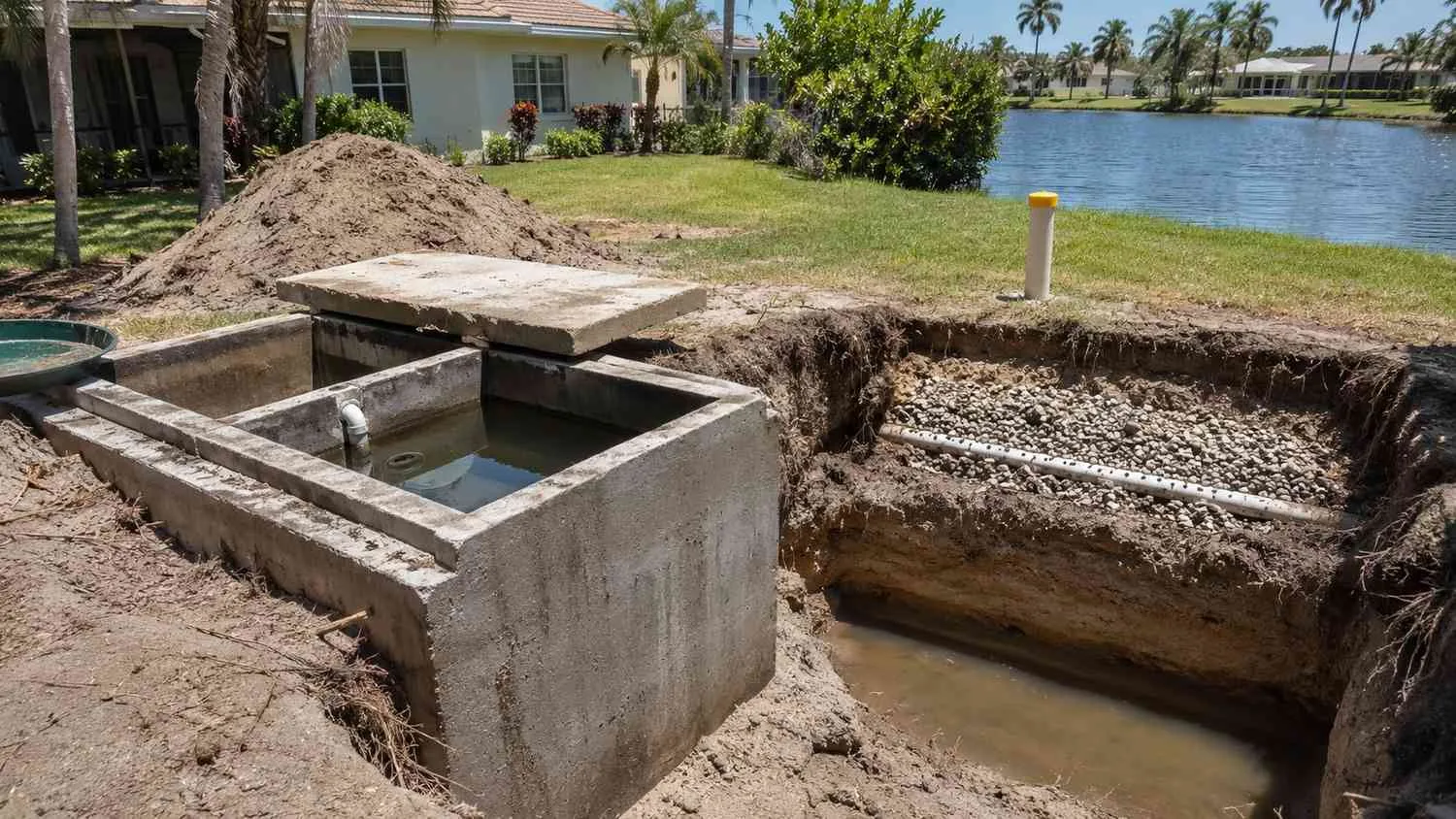
Because a conventional system removes little nitrogen, and Florida's geology moves it fast. A septic tank settles and digests solids, and the drain field treats the liquid in the soil. That reduces pathogens but leaves most nitrate in place.
In sandy soils over a shallow water table, that nitrate reaches groundwater, springs and lagoons. That is why the upgrade rules follow the state's nutrient restoration plans, called basin management action plans (BMAPs).
When must a new septic system be nutrient-reducing?
In any BMAP area, on a lot of one acre or less without sewer, since July 1, 2023. That comes from House Bill 1379 (2023), as summarized on FDEP's ENR-OSTDS permitting page. The applicant installs an enhanced nutrient-reducing system (ENR-OSTDS) instead of a conventional one.
The Indian River Lagoon goes further. Since January 1, 2024, section 373.469, F.S. prohibits new systems in the Indian River Lagoon Protection Program area where central sewer is available, unless previously permitted. Where sewer is not available, new systems on lots of every size must be ENR-OSTDS or another system with at least 65 percent nitrogen reduction.
Springs add their own layer. In a BMAP for an Outstanding Florida Spring, section 373.811, Florida Statutes prohibits new septic systems where sewer is available. On lots of one acre or less without sewer, only ENR-OSTDS or systems with at least 65 percent nitrogen reduction are allowed.
When must an existing septic system be upgraded?
It depends on where it is, and in most places the trigger is repair or replacement, not a calendar date.
- Springs priority focus areas. Where a springs BMAP has an OSTDS remediation plan, an existing system on a lot under one acre inside the priority focus area must be upgraded to ENR-OSTDS when it needs repair or replacement. The exception is a showing that sewer will be available within five years.
- Indian River Lagoon. By July 1, 2030, every commercial property, and every residential property of 10 acres or less, with an existing system in the protection program area must connect to central sewer if available, or upgrade to ENR-OSTDS or another system with at least 65 percent nitrogen reduction.
Springs basins are switching on one at a time. FDEP's page on requirements for existing septic systems lists DeLeon Spring as effective January 31, 2024, with other basins following as local conditions are met. Check the current date for your basin.
When do you have to connect to sewer instead?
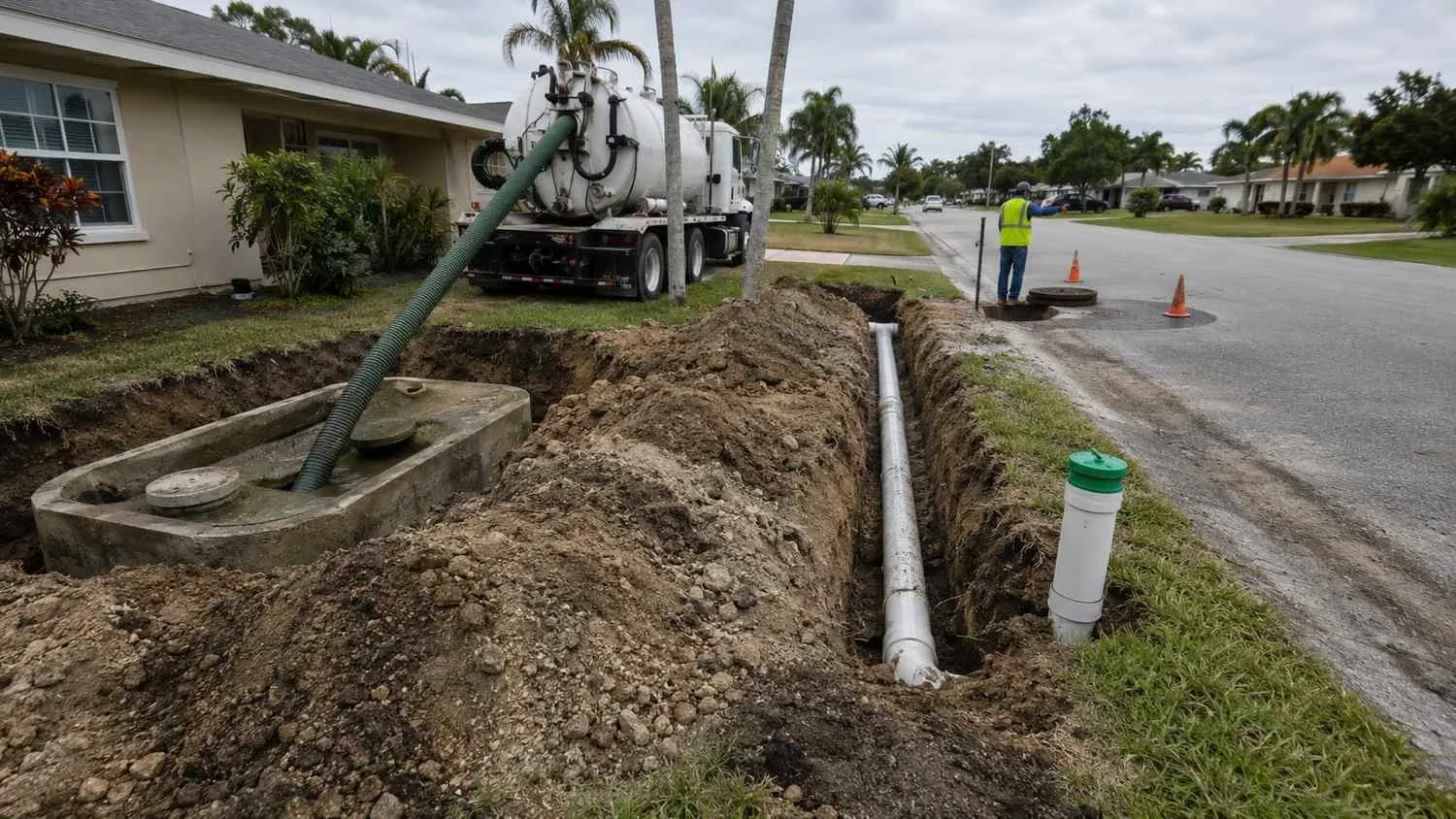
Within 365 days after the sewer owner's written notice that sewer is available, for a working system. That is section 381.00655, Florida Statutes. The sewer owner must also give at least a year's notice of anticipated availability.
A system that needs repair or modification gets 90 days after the state's notice. The statute allows installment payment of connection charges and lets a local government grant variances in some cases.
For a buyer, the lesson is simple. If a sewer extension is planned past the property, staying on septic may not be an option for long.
What does an upgrade mean for site design?
An ENR system usually needs more equipment and sometimes more room. Nitrogen reduction comes from added treatment, such as aerobic treatment, nitrogen-reducing media or a lined drain field design. Power, access for maintenance and a service contract often come with it.
On a small lot with a high water table, the drain field may need to sit higher, as a mound or other elevated design. Setbacks to wells, water bodies and property lines still apply. A lot that worked for a 1980s conventional system may not fit a compliant system today.
What changes for a developer planning lots on septic?
Lot size and sewer availability now drive the wastewater decision on day one. In a BMAP area, every new lot of one acre or less without sewer needs an ENR system. In a springs BMAP, a lot where sewer is available cannot have a new septic system at all.
So run soils and site evaluations lot by lot before the plat is final. A lot that cannot hold a compliant system needs another wastewater strategy, such as a collection system to central sewer or a permitted treatment plant.
A redevelopment that adds bedrooms, units or flow usually needs a new permit. A new permit is reviewed under current rules, not the rules the old system was built under.
Is there money for upgrades and sewer conversions?
Sometimes, and it depends on what the Legislature funds that year. FDEP's septic upgrade incentive program has paid installers toward ENR upgrades in eligible springs priority focus areas when the Legislature appropriated funds. FDEP advises homeowners to ask their local government about current local programs.
Communities converting neighborhoods from septic to sewer often use the Clean Water State Revolving Fund. Those applications need the engineering first: a feasibility study, the collection system layout and nutrient loading estimates.
Are you ready to close on a Florida property with a septic system?
If any answer is no, you do not yet know your wastewater obligation.
- Is the property inside a BMAP, a springs priority focus area or the Indian River Lagoon area?
- Is the lot one acre or less?
- Is sewer available now, or has the utility given notice that it will be?
- Have you pulled the county health department or FDEP permit records for the existing system?
- Does your plan add bedrooms, units or flow that would need a new permit?
- Have you had the existing system inspected?
This article is general education on public Florida statutes and FDEP guidance as of October 2026. Requirements and effective dates differ by basin, so confirm the rules for a specific parcel with FDEP or the county health department.
Frequently asked questions
What is an ENR-OSTDS?
An enhanced nutrient-reducing onsite sewage treatment and disposal system. It adds treatment to cut nitrogen well below a conventional septic system. FDEP lists approved technologies.
Does every Florida septic system have to be upgraded?
No. Upgrades depend on location, lot size and triggers such as repair, replacement or a new permit. Many systems outside BMAP areas have no upgrade requirement today.
Who issues septic permits in Florida?
The county health departments in most counties, under FDEP's program. FDEP permits directly in the Panhandle counties and Marion County.
We're buying a lakefront lot under an acre in a springs basin with an old septic system. Will we have to upgrade?
If the lot is in a springs priority focus area with an active remediation plan, plan on an ENR upgrade the first time the system needs repair or replacement, unless sewer is coming within five years. Check the basin's effective date first.
I'm a developer planning 40 lots in an Indian River Lagoon county with no sewer nearby. Can we use individual septic systems?
Possibly. Where sewer is not available, every new system in the protection program area must be an ENR-OSTDS or reach at least 65 percent nitrogen reduction, regardless of lot size. Where sewer is available, new systems are prohibited. Compare that cost and maintenance burden with a collection system and a treatment plant before you lay out the plat.
Related resources
- Florida's Red Tide and Water Quality Crisis: What It Means for Coastal Wastewater Engineers
- Florida's Exploding Growth vs. Aging Wastewater Infrastructure: What Engineers Are Facing Right Now
- Lift Station Design for Florida's Flat Topography: Challenges Every Developer Should Understand
- Wastewater engineering in Florida
Deciding between septic, an upgrade or sewer on a Florida site?
We check the basin rules, the lot conditions and sewer availability, then lay out the wastewater option that fits the site. Tell us about your property.
We specialize in:
- Water supply and wastewater due diligence
- Onsite wastewater feasibility and sewer connection planning
- Collection system and lift station design
- Wastewater treatment plant planning and permitting
- Site civil engineering for land development
- Construction administration
Modern Engineering Solutions, McKinney, Texas. Contact: (214) 833-6748 or mod-eng.com
Talk to an engineer
Tell us about your project
An engineer reads it
Not a salesperson. Someone who can tell you whether the pathway is real.
You get a first answer
Your options, the agencies involved and the questions that decide cost and schedule.
You decide
No commitment to have the first call.
Prefer the phone? (214) 833-6748