Quick Answer
A 210E Industrial Reclaimed Water Authorization under 30 TAC §210.56(d) and §210.57 requires four ongoing compliance obligations: daily operational logs, monthly effluent quality sampling, a certified operator on staff, and five-year recordkeeping. None of these are optional. None of them go away as the development matures. Developers who planned carefully for permitting and construction but did not plan for operations consistently discover that the compliance program they need to run was never set up, and TCEQ’s enforcement attention gets triggered not by catastrophic failures, but by missing logs, late sampling, and undocumented operator changes.
What You Are Now Operating
When a developer builds a private WWTP or 210E-authorized reuse facility and the development comes online, they become a utility operator. This is a regulatory status that most developers do not fully internalize during the permitting phase. The permit does not belong to the engineering firm. It does not belong to the contractor who built the plant. It belongs to the entity that signed the application, and that entity is now responsible for continuous compliance with the terms of the authorization.
For 210E facilities, that authorization was issued by TCEQ under 30 TAC Chapter 210, Subchapter E. The compliance obligations in §210.56(d) and §210.57 are not aspirational guidelines. They are enforceable permit conditions. Failure to meet them does not generate a courtesy call from TCEQ. It generates a notice of violation.
Requirement 1: Daily Operational Logs
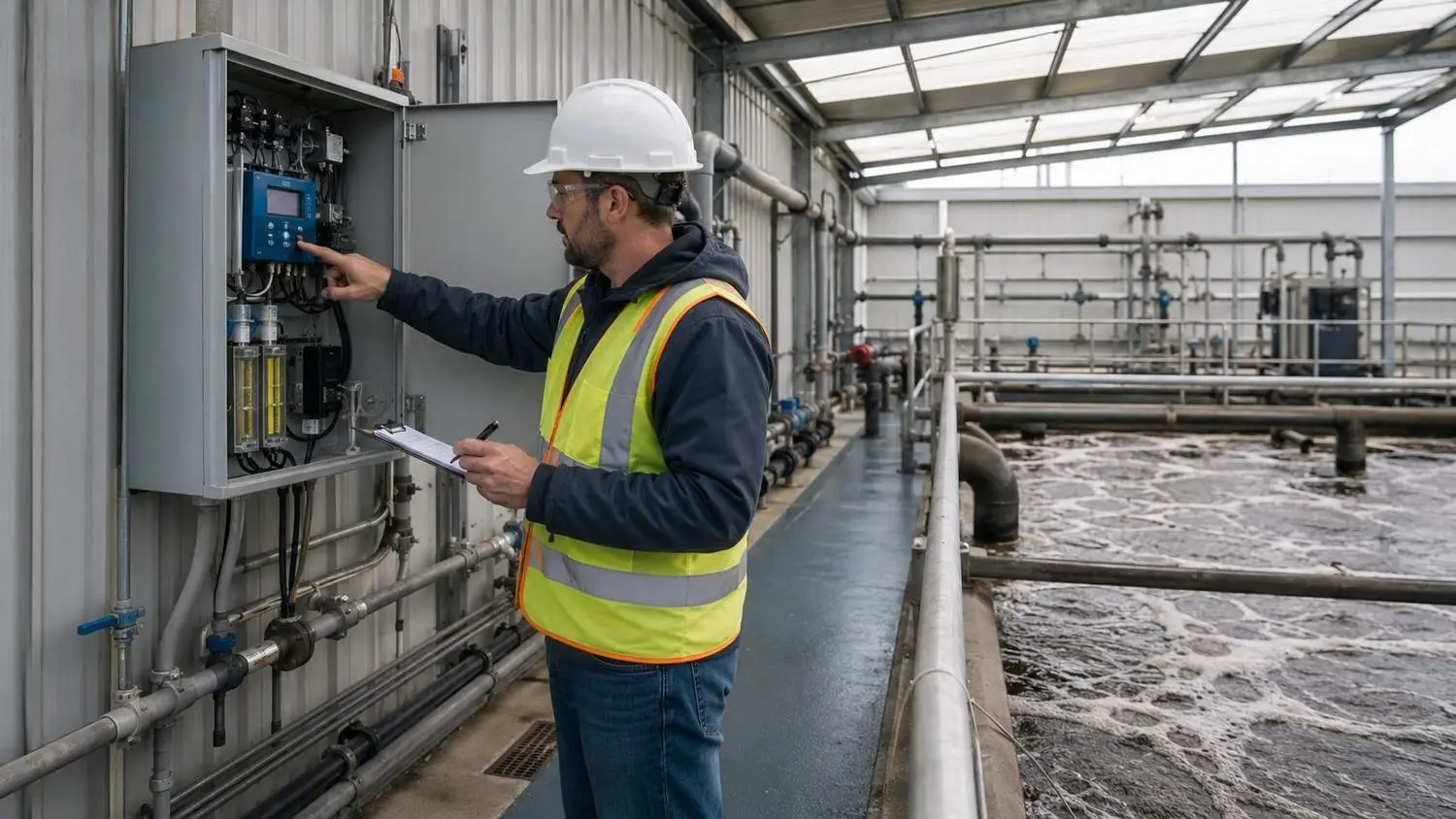
Per 30 TAC §210.56(d), the permit holder must maintain daily operational logs documenting what wastewater is being treated and monitoring effluent quality. The log must be maintained every day the facility is operating, which for a private development WWTP is every day.
What goes in the log: daily flow volume, equipment operational status, any process anomalies, maintenance activities performed, and any observations relevant to treatment performance. The log is not a suggestion to document unusual events. It is a continuous record of normal operations that TCEQ can request at any time as evidence that the facility has been properly operated throughout the permit period.
Most compliance failures on private development facilities start with log gaps. A facility where operators recorded entries inconsistently, where weekend entries were left blank because no one was assigned to cover them, or where logs were kept informally and cannot be produced during a TCEQ inspection has a documentation problem that cannot be resolved retroactively. Daily logs must be contemporaneous (written at the time of the operational activity they document) not reconstructed after the fact.
Requirement 2: Monthly Effluent Quality Sampling
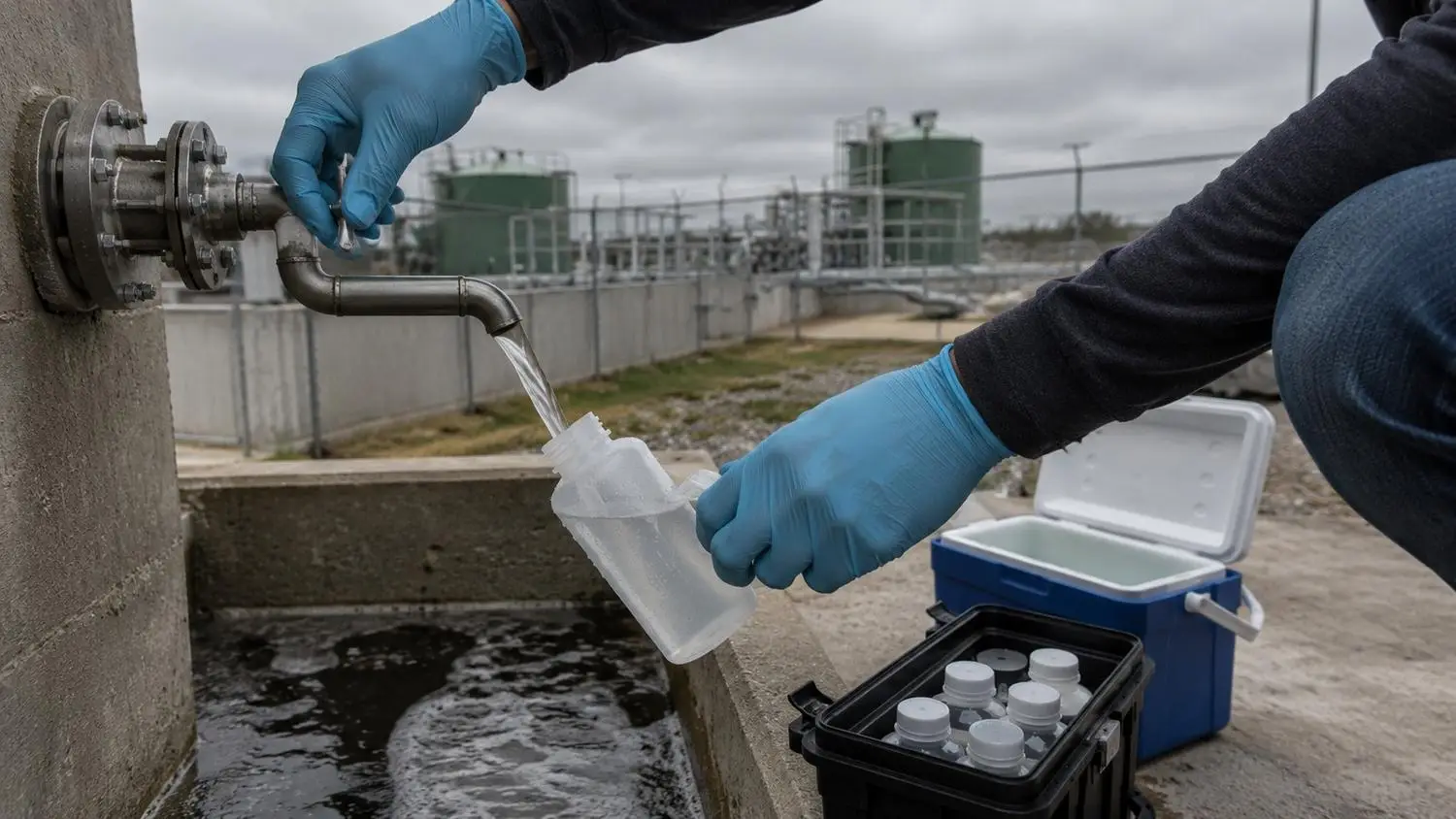
Per 30 TAC §210.57, the permit requires monthly effluent quality sampling at the specific parameters established in the authorization. For 210E facilities, the effluent quality standards are pH 6.0 to 9.0 and total organic carbon (TOC) ≤55 mg/L. Samples must be collected monthly, analyzed by an accredited laboratory, and the results documented in the facility’s compliance records.
These are the parameters TCEQ focuses on for 210E facilities, not the full suite of BOD, TSS, ammonia, nutrients, and pathogen parameters required under a TPDES discharge permit. That is a meaningful reduction in analytical cost and complexity compared to a discharge permit, but it does not mean sampling can be skipped or deferred.
Missing a monthly sampling event is a permit deviation. Two consecutive missing events is a pattern that draws TCEQ’s attention. Effluent results that exceed the permitted limits (pH outside the 6.0 to 9.0 range, TOC above 55 mg/L) require notification and documented corrective action. Results do not have to exceed limits to create a compliance record issue. A facility that has gaps in its monthly sampling history has a gap in its evidence of continuous compliance, which is exactly what TCEQ will look for in a compliance review.
Requirement 3: Certified Operator
TCEQ requires a certified wastewater treatment operator to be on staff for any permitted facility in Texas. For 210E facilities, the operator must hold the appropriate class of certification for the facility’s design flow under TCEQ’s operator licensing program.
The certified operator requirement is not satisfied by hiring someone to check the plant periodically. It requires a designated individual with a valid TCEQ certification, documented as the responsible operator of record for the facility. That person’s name and certification number are on file with TCEQ as part of the permit record.
When the certified operator leaves (retires, changes jobs, takes another position) the developer must notify TCEQ and designate a new certified operator. A facility operating without a certified operator of record is in violation of its permit regardless of whether the treatment plant is functioning correctly. Operator changes that are not reported to TCEQ become compliance issues that surface during inspections or permit renewal.
Contracted operations arrangements (where a third-party certified operator provides regular site visits, operates the facility on behalf of the permit holder, and handles the monitoring and reporting program) are common on development-scale facilities. The cost typically runs $3,000 to $7,000 per month depending on facility size, visit frequency, and reporting complexity. That cost needs to be in the operating budget from day one.
Requirement 4: Five-Year Recordkeeping
Per 30 TAC §210.57, records must be maintained for a minimum of five years. This includes daily operational logs, monthly sampling results, operator certification documentation, maintenance records, and any correspondence with TCEQ related to the facility’s compliance status.
Five years is the lookback window TCEQ uses during compliance evaluations and permit renewals. A developer who cannot produce five years of complete operational logs, sampling records, and operator documentation during a TCEQ review has a compliance history problem regardless of whether the facility has actually been operated correctly. Records that exist only in someone’s email inbox, in informal notes, or in the memory of a former operator do not satisfy the recordkeeping requirement.
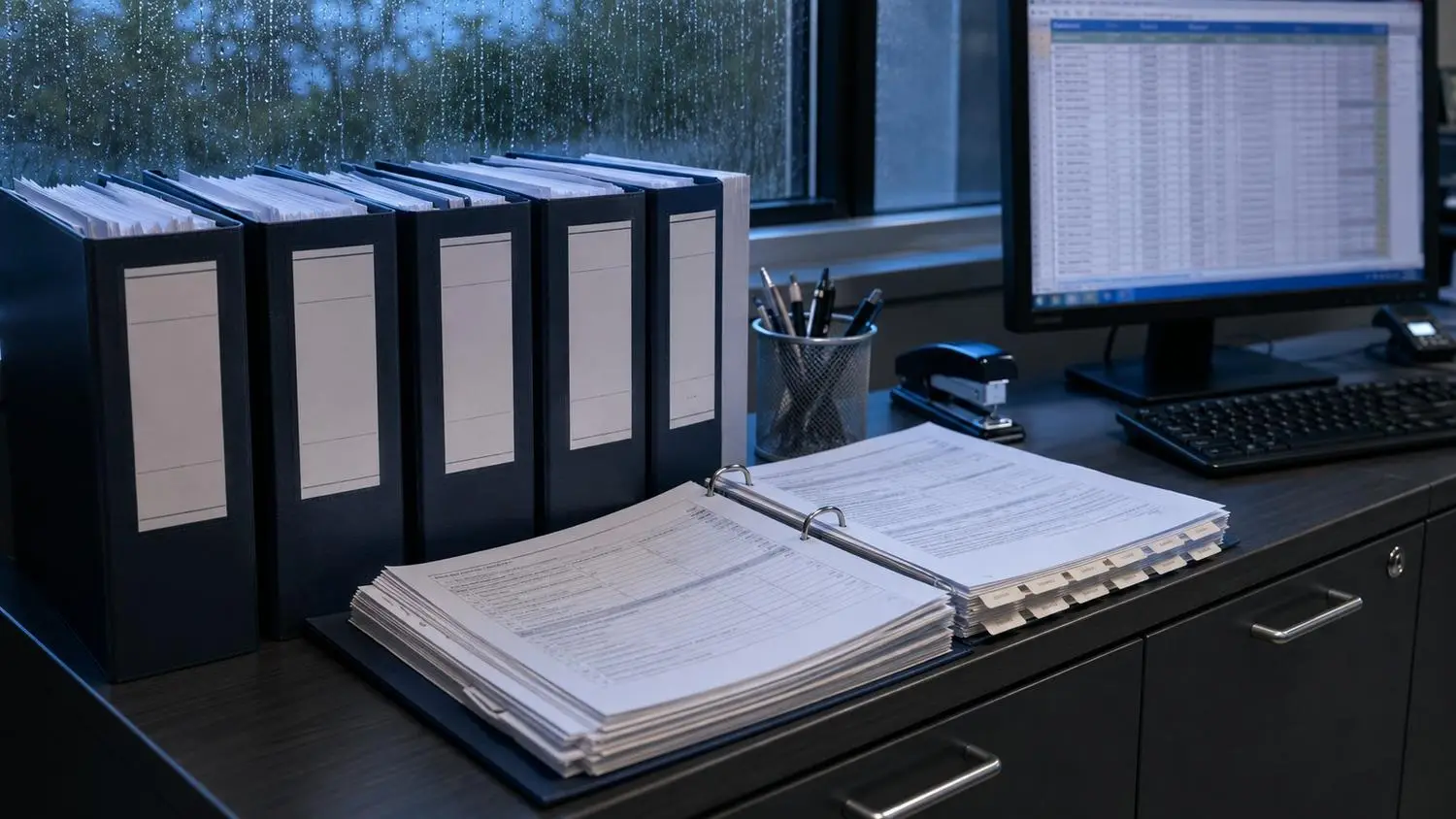
The practical solution is a designated compliance file (physical or electronic) organized by year and month, containing every required document in a retrievable format. This system needs to be set up at startup, not retrofitted three years into operations when TCEQ asks for records.
What Triggers Enforcement
TCEQ’s enforcement attention for private WWTP and reuse facilities is triggered by four things: effluent quality exceedances, missing or incomplete monitoring records, unreported operator changes, and reuse arrangement failures (specifically, cases where the reuse user has exited the arrangement and the developer has not arranged alternative reuse or notified TCEQ).
The most common path to enforcement contact is not catastrophic process failure. It is an accumulation of documentation gaps (missing log entries, late sampling, incomplete records) that compound over time into a compliance history that TCEQ cannot verify. By the time the enforcement contact arrives, the developer is looking at a notice of violation that requires a formal response, a corrective action plan, and in some cases a penalty assessment under TCEQ’s enforcement schedule.
Penalties under TCEQ’s administrative penalty framework range from a few thousand dollars for minor documentation violations to tens of thousands of dollars for pattern violations or effluent exceedances. More consequential than the penalty is the permit compliance record: a history of violations that complicates future permit modifications, expansions, and renewals.
Frequently Asked Questions
Does TCEQ inspect private 210E facilities on a regular schedule?
TCEQ conducts compliance inspections of permitted facilities under its inspection program. The frequency varies based on facility size, compliance history, and program priorities. Facilities with clean compliance records are typically inspected less frequently than facilities with documented deviations. The most reliable way to avoid an inspection-triggered enforcement action is to maintain complete compliance records from day one.
What happens if monthly effluent sampling shows a parameter exceedance?
An exceedance must be documented in the compliance record and corrective action taken. For 210E facilities, a single exceedance that is promptly identified, documented, and corrected through a verifiable operational adjustment is different in TCEQ’s review from a pattern of recurring exceedances with no documented response. Proactive documentation of the exceedance and the corrective action is what distinguishes a managed compliance event from an enforcement-level pattern.
Can compliance obligations be transferred when the development is sold?
The permit follows the facility, not the developer. When a development with a private WWTP is sold, the permit must be transferred to the new owner through a TCEQ permit transfer process. The new owner assumes all compliance obligations. A buyer acquiring a development with a private WWTP should review the facility’s compliance record (five years of logs, sampling results, and operator documentation) as part of transaction due diligence.
Related Resources
- Building a Private WWTP in Texas: What Developers Need to Know Before They Commit
- What Is a 210E Authorization and How Can It Save Your Texas Development Project
- How Carrying Costs Are Killing Texas Development Projects (And the Permit Strategy That Fixes It)
- Water Balance Studies Under 30 TAC §309.20: What They Require and Who Prepares Them
Need Help Setting Up Compliance for a Texas Reuse Facility?
Modern Engineering Solutions works with Texas developer-operators to establish compliance programs, connect them with certified operators, and maintain the documentation systems that protect their permit and their facility’s long-term operating status.
We specialize in:
- Post-permit compliance program setup for private WWTP and 210E reuse facilities
- Certified operator identification and contracted operations coordination
- Daily log templates and monthly sampling program design
- TCEQ reporting and recordkeeping systems for five-year compliance documentation
- Compliance review and gap analysis for facilities with existing permit records
Modern Engineering Solutions, McKinney, Texas. Contact: (214) 833-6748 or mod-eng.com
Share via: