Quick Answer
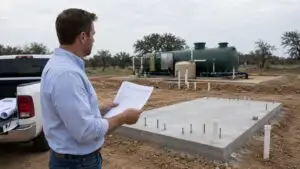
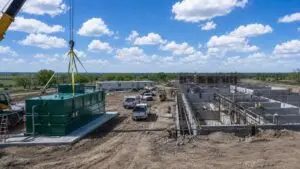
A WWTP does not operate in isolation. It depends on gravity collection mains to gather flow from the development, lift stations to pump that flow when gravity is not available, force mains to convey the pumped flow to the plant, and wet wells to buffer peak flows before they enter the treatment process. Each of these components has specific design requirements that must be coordinated with the civil site layout and with the WWTP design itself. The most common and costly mistakes on private Texas developments (undersized force mains, wet wells without pump redundancy, and grading plans that create collection problems) occur when civil design and utility design run on separate tracks without a coordinated engineer keeping them aligned.
How Flow Gets from the Development to the Plant
Understanding what happens upstream of the treatment plant starts with understanding how wastewater moves through a private system.
Gravity collection mains gather wastewater from building connections throughout the development and convey it downhill toward a collection point. Gravity is free. It does not require power, mechanical equipment, or operator intervention. A development that can be graded to route wastewater by gravity all the way to the treatment plant site has the simplest and least expensive collection system possible. Most Texas developments cannot do this entirely: topography, lot layout, and plant siting create elevation differentials that gravity alone cannot overcome.
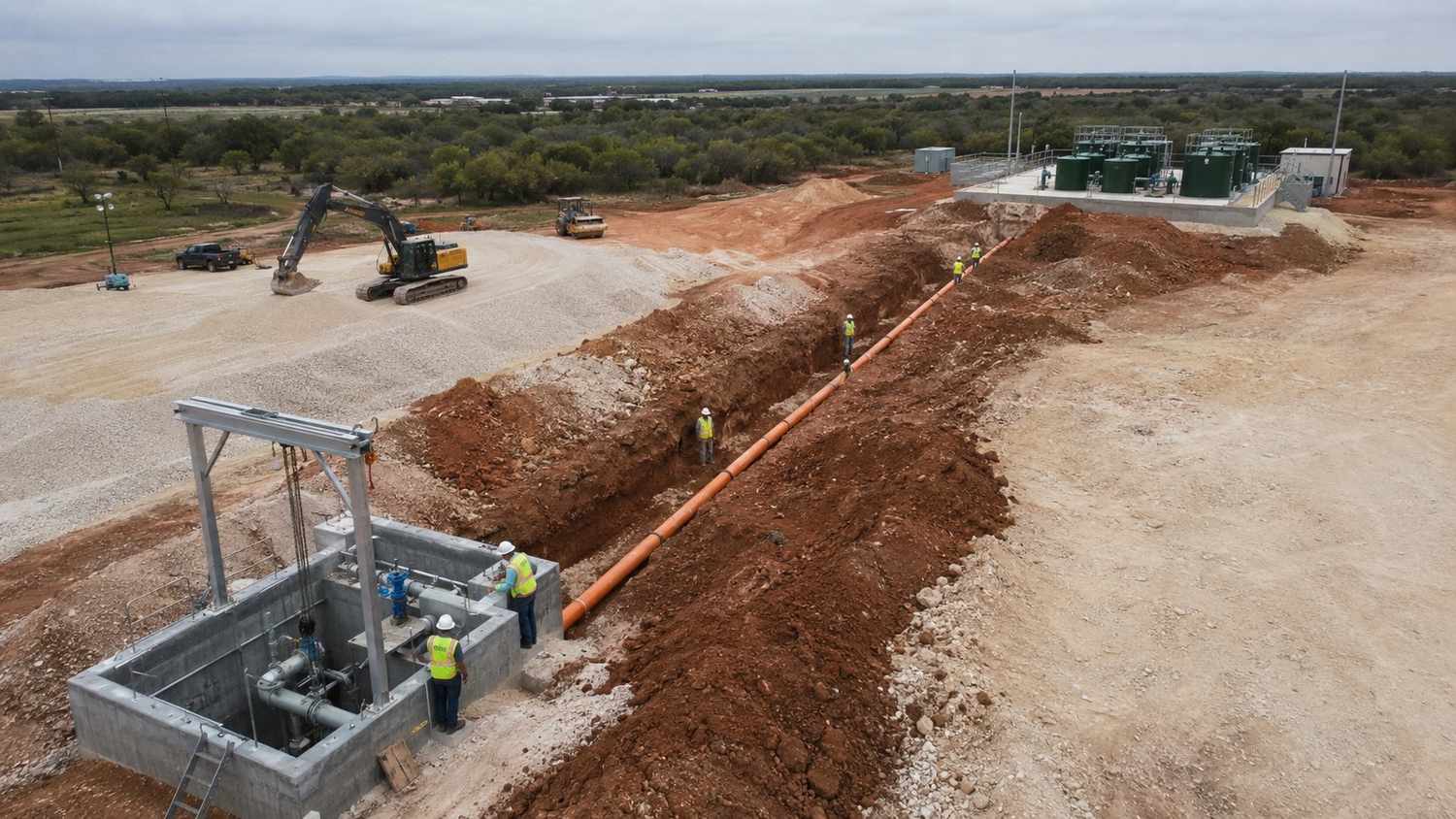
When gravity conveyance is not sufficient, a lift station takes over. The lift station receives flow from the gravity collection system into a wet well (a below-grade storage chamber where two or more submersible pumps alternate to pump the accumulated wastewater) through a pressurized force main to a higher elevation or to the treatment plant site. From there, gravity resumes or another lift station is required.
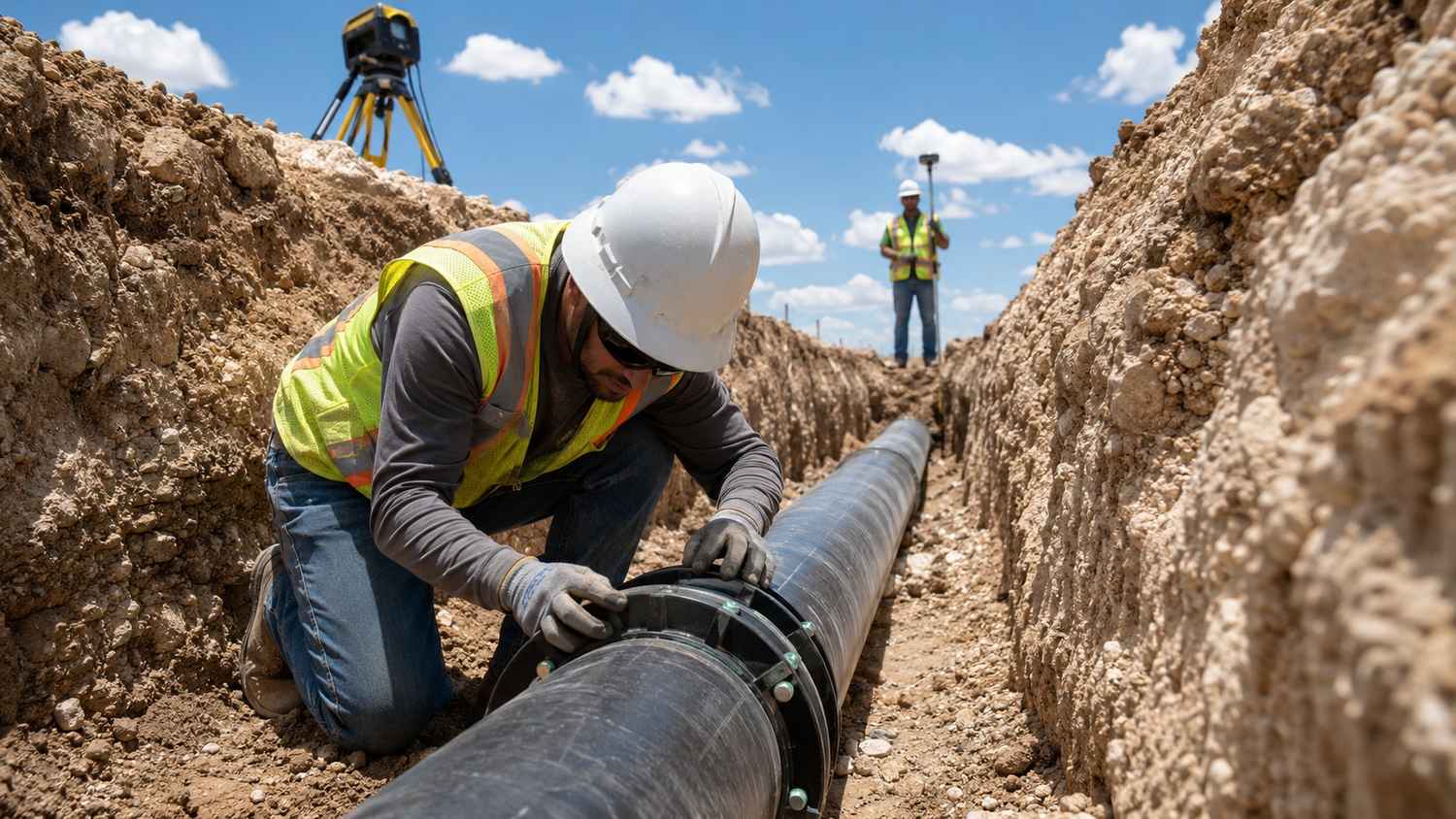
Force mains convey pressurized flow from the lift station discharge to the receiving point. Force mains are pressurized pipes (typically 4-inch to 16-inch diameter on private development scales) that run uphill, across flat terrain, or along routes where gravity is not viable. The design variables that matter most are pipe diameter (sized for velocity), total dynamic head (the pressure the pumps must overcome), and pipe material (HDPE and PVC are standard in Texas).
Common Design Mistakes on Private Developments
The most expensive upstream problems on private development WWTPs are preventable. They share a common cause: utility design that was not coordinated with the civil site plan from the beginning.
Undersized force mains. Force main sizing determines velocity. A force main that is too large for the flow produces velocities below 2 feet per second, the minimum required to keep solids in suspension. Solids settle in an undersized-velocity force main and accumulate over time, causing odor problems, blockages, and eventual pipe failure that requires emergency excavation to clear. A force main that is too small for peak flows creates excessive head loss, forces the lift station pumps to work against higher pressure than designed, and reduces the effective pumping capacity of the system. Force main diameter must be sized for both minimum self-cleaning velocity at average daily flow and acceptable head loss at peak flow. On most private development scales, this means a 4-inch to 8-inch force main with a target velocity of 2 to 4 feet per second.
Missing redundancy in wet wells. A lift station wet well with a single pump has no backup. When that pump fails (and pumps fail) flow backs up in the collection system. On a development with occupied tenants or residents, a pump failure without a backup means sewage overflows at the lowest points in the collection system within hours. TCEQ design standards for Texas require a minimum of two pumps at each lift station, each capable of handling peak flow independently, with an automatic alternation system that cycles between them to equalize wear. Developments that are designed with a single pump to reduce capital cost discover the redundancy requirement during TCEQ permit review, not before, generating design revisions and construction cost increases that could have been avoided.
Poor grading coordination. The civil grading plan and the utility layout have to be developed together. A grading plan that establishes pad elevations and road grades without input from the wastewater engineer produces developments where the gravity collection mains end up shallower than the minimum cover requirement, where lift station locations are not accessible for maintenance vehicles, or where the force main route conflicts with other utilities or runs through areas that were graded before the utility design was finalized. These conflicts are cheap to resolve on paper before grading starts. They are expensive to resolve in the field after concrete is poured.
What Gets Permitted Separately and What Is Part of the WWTP Package
This is the question that most frequently surprises developers coordinating civil and utility design for the first time on a private system.
In Texas, the TCEQ permit for a wastewater treatment plant covers the treatment facility itself: the process equipment, the treatment train, the effluent disposal or reuse system, and the operational and monitoring requirements. The WWTP permit does not cover the collection system or the lift stations that feed it.
Collection mains and lift stations on private developments in Texas are permitted separately. TCEQ requires engineering review and construction authorization for sewage collection systems and pump stations under the Texas Water Code. The engineering report and construction drawings for the collection system and lift station are submitted to TCEQ’s water quality division separately from the WWTP permit application. Both authorizations must be in place before construction begins.
The practical implication for project managers: the WWTP permit, the collection system permit, and the lift station permit are three separate TCEQ submittals that must be coordinated to support a unified construction schedule. If the WWTP permit application is submitted six months into the project and the collection system submittal follows three months later, the collection system authorization may not arrive in time to support the construction start date the WWTP permit enabled. Coordinating all three submittals together from the beginning of the engineering process is what keeps the construction schedule intact.
How Civil and Utility Design Have to Be Coordinated
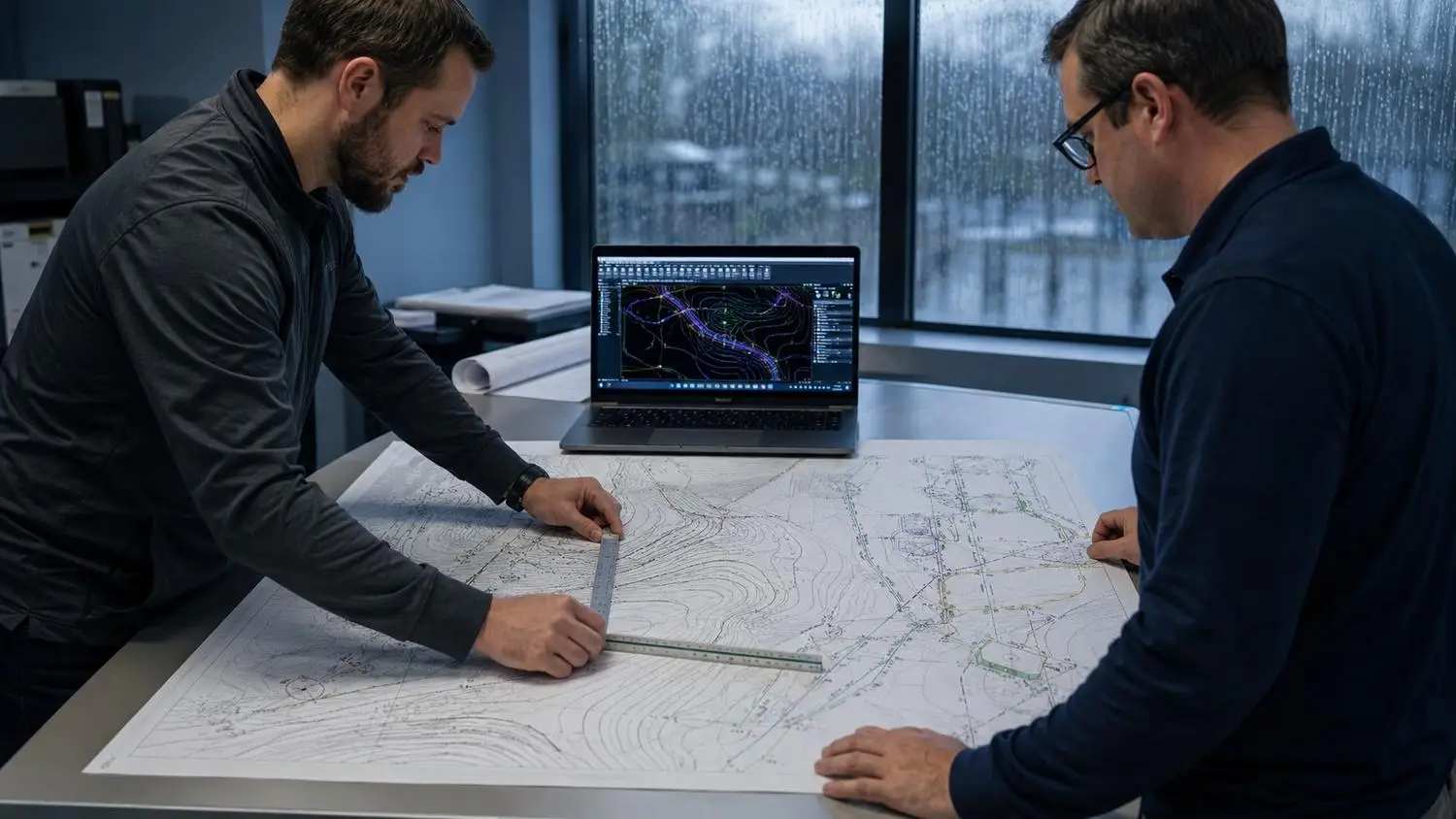
The project manager coordinating civil and utility design on a private development has one primary responsibility that the individual designers do not: making sure the civil site plan and the utility plan are solving for the same development layout at the same time.
Lift station location has to be established before the civil grading plan is finalized. The wet well excavation depth is determined by the invert elevation of the incoming gravity main, which is determined by the grades of the collection mains, which are determined by the pad elevations and road grades on the civil plan. Changing pad elevations after the collection system is designed changes the gravity main grades, changes the wet well depth, and potentially changes the pump selection. These are not small revisions.
The force main route has to be shown on the civil plan before underground utilities are coordinated. A force main that conflicts with a storm drain, a water main, or a foundation requires a redesigned route that may add length, increase head loss, and change the pump sizing.
The treatment plant site has to be selected before the collection system layout is finalized. The force main discharges at the treatment plant site. The treatment plant site elevation relative to the lift station discharge determines the total dynamic head the pumps must overcome. Changing the plant site after the pumps are selected means reselecting the pumps.
None of these coordination tasks are complicated. All of them are avoidable problems when civil and utility engineering are running in parallel from the beginning of the project.
Frequently Asked Questions
Does a TCEQ WWTP permit cover the lift station and collection system?
No. Collection mains and lift stations require separate TCEQ engineering review and construction authorization under the Texas Water Code. All three authorizations (WWTP, collection system, and lift station) must be coordinated and submitted to support a unified construction schedule.
What is the minimum number of pumps required at a Texas lift station?
TCEQ design standards require a minimum of two pumps at each lift station, each capable of independently handling peak flow, with an automatic alternation system. A single-pump design will not pass TCEQ review. See lift station design requirements for more detail on pump sizing and selection.
What velocity should a force main be designed for?
A minimum of 2 feet per second at average daily flow to maintain self-cleaning velocity and prevent solids settling. Maximum velocity is typically capped at 5 to 6 feet per second to limit pipe wear and surge pressure. Most private development force mains are sized for 2 to 4 feet per second under normal operating conditions.
Related Resources
- Building a Private WWTP in Texas: What Developers Need to Know Before They Commit
- Flow Rate Projections: How to Size a WWTP for Your Development Without Over-Building
- Package WWTP vs. Custom-Designed Plant: Which One Fits Your Project
- Gravity Sewer vs. Pressure Sewer: Choosing the Right System for Your Community
Designing a Lift Station or Collection System for a Texas Development?
Modern Engineering Solutions works with Texas developers and project managers to coordinate civil and utility design from the beginning, producing collection systems, lift stations, and force mains that integrate cleanly with the site layout and support the WWTP permit process without schedule conflicts.
We specialize in:
- Lift station design for private Texas developments: wet well sizing, pump selection, redundancy
- Force main sizing and routing coordinated with civil site plans
- Gravity collection system layout and hydraulic modeling
- TCEQ collection system and lift station construction authorization
- Civil-utility design coordination to prevent field conflicts and permit delays
Modern Engineering Solutions, McKinney, Texas. Contact: (214) 833-6748 or mod-eng.com
Share via: