
Blog
Gravity Sewer vs. Pressure Sewer: Choosing the Right System for Your Community
Gravity sewer vs pressure sewer: how slope, rock, groundwater, lot density and pump upkeep decide which fits, with Texas and Colorado design rules.
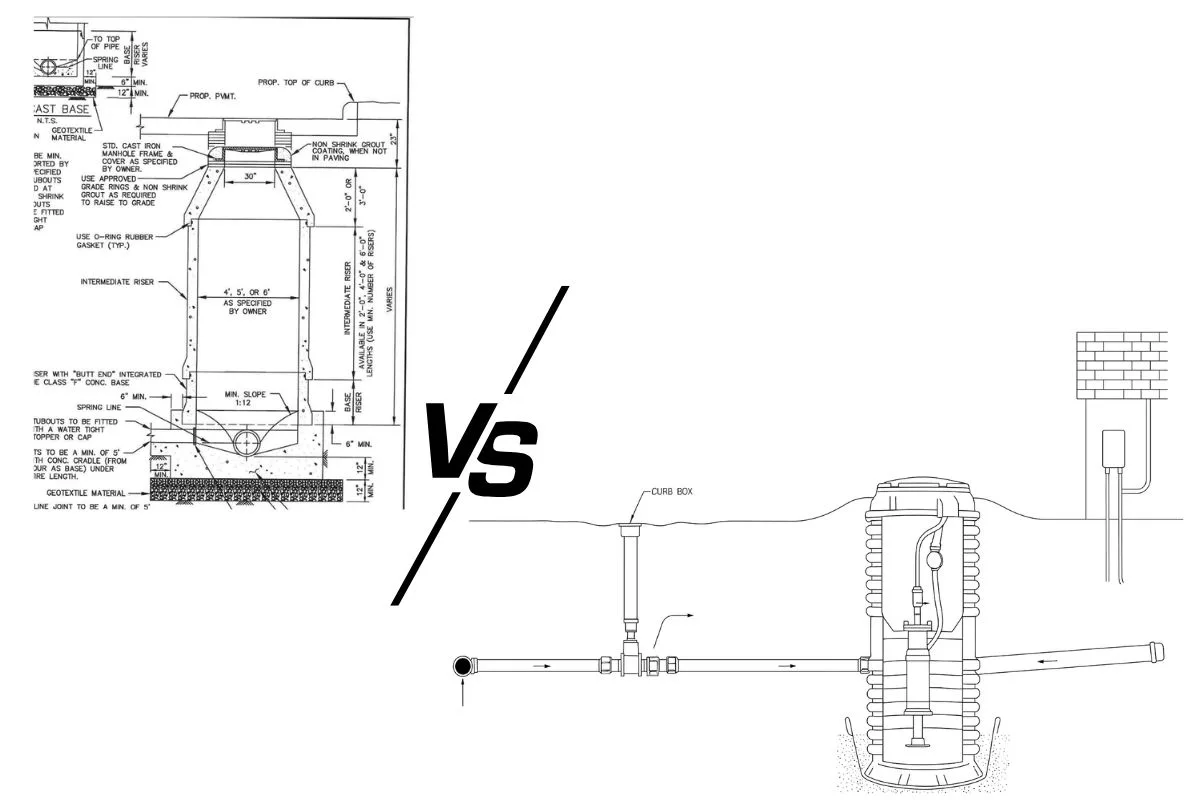
Gravity sewer vs pressure sewer comes down to ground and density. A gravity sewer carries wastewater downhill in sloped pipes with no pumps, and it wins where the land falls toward the outfall and lots sit close together. A pressure sewer puts a small pump at each property and pushes flow through small sealed pipes. It wins where rock, high groundwater, flat or rolling terrain, or scattered homes would make gravity trenches deep and long.
What is a gravity sewer?
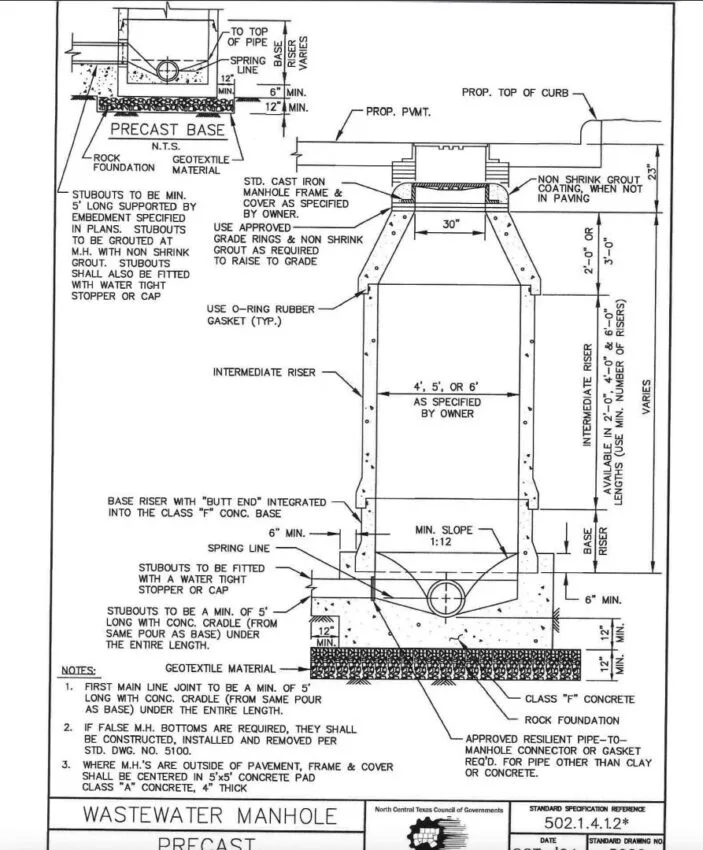
A gravity sewer system is a network of sloped pipes that lets wastewater run downhill to a lift station or treatment plant. Each pipe flows like a small open channel, partly full, not under pressure.
In Texas, TCEQ's pipe design rule, 30 TAC §217.53, requires a gravity pipe of at least 6 inches, sized to carry peak flow plus infiltration and inflow, on slopes that give at least 2.0 feet per second flowing full. Its slope table is built on Manning's formula with an n of 0.013.
What goes into gravity sewer design?
Slope, size, depth and access.
You will hear 1 to 2 percent quoted as a minimum slope. For sewer mains that floor is too steep. The TCEQ table gets flatter as pipes get bigger: 0.50 percent for a 6-inch pipe, 0.335 percent for an 8-inch and 0.20 percent for a 12-inch. Above 39 inches, Manning's formula sets the slope directly.
Manholes go at every change in alignment, grade or pipe size, at intersections, and at line ends that may be extended, under TCEQ's manhole rule, 30 TAC §217.55, which also caps spacing by pipe size, at 500 feet for 6- to 15-inch pipe on straight runs. On flat ground, holding minimum slope over a long run is what drives a gravity sewer deep.
What is a pressure sewer?
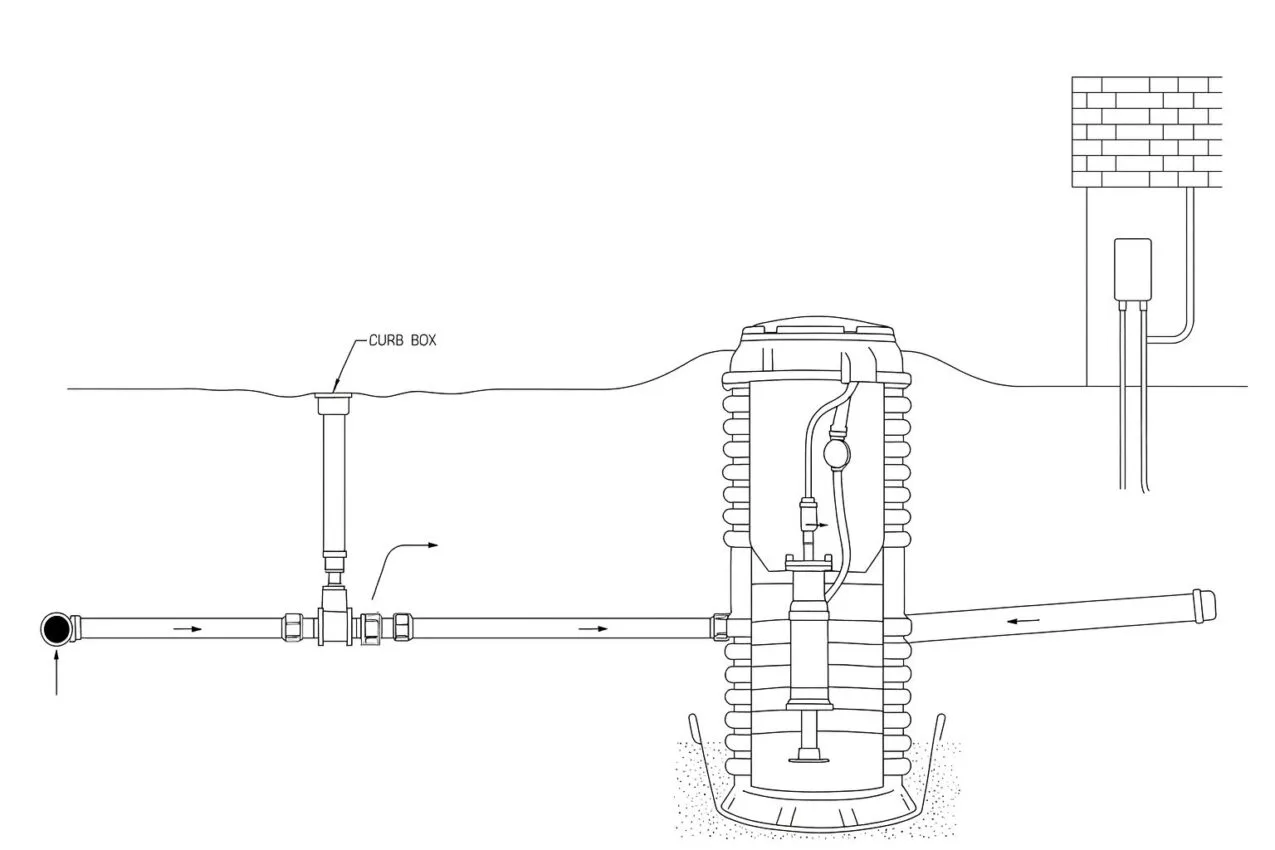
A pressure sewer system pumps wastewater from each property, or a small cluster, into small sealed pipes that run full under pressure. It does not need a continuous downhill grade.
The EPA pressure sewer fact sheet (2002) describes two main types. A grinder pump (GP) grinds the solids and pumps everything into the main. A septic tank effluent pump (STEP) system settles solids in a septic tank and pumps only the liquid. Neither changes indoor plumbing, and the pipes can follow the ground or the street in shallow trenches.
Are sewer lines pressurized?
Most are not. Gravity mains and the drains from most buildings run partly full. Force mains and pressure sewer pipes run full under pressure.
A force main is the discharge pipe from a lift station. Colorado's Regulation 22 (5 CCR 1002-22) defines a lift station as a pumping station used when continuing a gravity sewer at reasonable slopes would mean excessive depth, or when an area sits too low to drain, and treats the force main as part of it.
When does a gravity sewer make more sense?
When the ground falls toward the outfall, lots are reasonably dense, and you expect growth. Gravity uses no power for normal flow and has few moving parts.
EPA calls gravity collection usually reliable, with no power use and large spare capacity that pressure systems lack.
The catch is terrain. Slope requirements can force deep excavation in hilly or flat ground, plus pump stations, and each station gives up the no-power advantage. If your profile is heading that way, our walkthrough of force main and pump sizing calculations covers the next step.
When does a pressure sewer make more sense?
When digging is the problem. Rock, high groundwater, flat or rolling terrain, scattered homes, or an outfall uphill of the service area all point toward pressure.
EPA lists pressure sewers as most cost effective where housing density is low, the terrain rolls with high relief, or the outfall sits at or above most of the service area. They also fit flat ground with high groundwater or bedrock, and difficult construction or right-of-way conditions. Pressure pipes are generally buried to at least frost depth but need no extra depth to hold a grade, so there is less rock to dig.
Watertight mains with no manholes keep groundwater out. Where occupancy is seasonal or build-out is slow, STEP systems tolerate low flows better than grinder systems.
What goes into pressure sewer design?
Pump type, pipe velocity, valves and storage. In Texas, the rules sit in Subchapter D of Chapter 217, Alternative Collection Systems.
TCEQ's pressure sewer rule, 30 TAC §217.97, sets the numbers that shape a layout:
- Grinder pump mains must reach at least 3.0 feet per second once per day. STEP mains must reach at least 1.0 foot per second once per day.
- Pressure pipe must be at least 1.5 inches in diameter.
- Isolation valves go at main intersections, on both sides of stream crossings and unstable soil, and no more than 2,500 feet apart.
- Every high point, and any spot where air can collect, gets an air release valve.
- A wet well serving one equivalent dwelling unit needs at least 100 gallons of reserve after the high-water alarm.
Design flow depends on pump type. For centrifugal grinder pumps, EPA gives Q = 20 + 0.5D, with Q in gallons per minute and D the homes served, and recommends a computer simulation check. Grinder systems send stronger wastewater to the plant. STEP tanks need pumping every two to three years.
How do operation and ownership compare?
Gravity is simple to run until it needs lift stations. Pressure moves the work out to many small pumps that someone has to own, power and service.
EPA notes heavier maintenance from the pump count, though lift stations on a gravity system can reverse that. Without standby generators, outages can cause overflows. Pressure sewers also wear out sooner, and their septic wastewater calls for odor and corrosion control.
Settle ownership early. EPA's view is that the utility should generally maintain all components, with easements to reach pumps on private lots. For utilities and municipalities, that means staff, spare pumps and a service-call plan.
Which state rules apply in Texas and Colorado?
In Texas, Chapter 217 covers both: Subchapter C for gravity sewers, lift stations and force mains, and Subchapter D for pressure systems. In Colorado, Regulation 22 covers lift stations and certain interceptors designed to receive more than 2,000 gallons per day, and a new lift station needs a site location application under section 22.9.
How do you choose between gravity and pressure for your community?
Start with a ground profile from the service area to the outfall. If gravity reaches it at minimum slope without deep cuts or extra lift stations, gravity usually wins.
Yes to items 1 and 2 and no to items 3 through 5 means start with gravity. Otherwise, lay out both.
- Does the ground fall toward the outfall along most of the route?
- Are lots close enough that each run of main picks up many connections?
- Will you hit rock or groundwater above normal gravity sewer depth?
- Would gravity need a lift station to reach the outfall?
- Is the outfall at or above most of the service area?
Then ask your engineer who owns the on-lot pumps, what standby power is planned, and whether the receiving plant accepts grinder or STEP flow. A site feasibility study should settle those before you commit.
A note on limits: this is general education from public sources, current as of October 2026. Rules change, and your design engineer and the reviewing agency have the final word.
Frequently asked questions
Is a force main the same as a pressure sewer?
No. A force main carries flow from one lift station. A pressure sewer is a network fed by many small grinder or STEP pumps. Both run full and under pressure.
What is the minimum slope for an 8-inch gravity sewer in Texas?
TCEQ's table in 30 TAC §217.53 sets 0.335 percent, so the pipe reaches 2.0 feet per second flowing full. Local standards can be stricter.
I manage public works for a small Colorado mountain town with rocky ground and a lot of seasonal cabins. Should we look at a STEP pressure system instead of extending gravity sewer?
Lay both out side by side. Pressure suits rock, and STEP handles seasonal low flows better than grinder pumps. Weigh that against tank pumping, odor control and servicing pumps on private lots. If gravity needs a new lift station designed for more than 2,000 gallons per day, that station also needs Regulation 22 site location approval.
I'm developing a subdivision on flat ground in Texas with high groundwater, and the city sewer is uphill from the lots. Do I need a lift station, or can each lot have a grinder pump?
Either can work. A lift station and force main fall under Subchapter C of Chapter 217, and grinder pumps under §217.97. EPA flags flat ground with high groundwater as a good fit for pressure. Ask the city first whether it accepts pressure connections and who will own the pumps.
Related resources
- Types of Sewer Systems
- Understanding Your Community's Wastewater Collection System
- Lift Stations and Collection Systems: What the Plant Needs Upstream to Function Properly
- Optimizing Collection Systems: Advanced Solutions for I&I Challenges in Rural Communities
Choosing between gravity and pressure sewer for your site?
Send us the ground profile, the lot layout and the outfall location. We will help you compare both layouts against your state's design rules before the plans lock in.
Modern Engineering Solutions, McKinney, Texas, with offices in Golden, Colorado and San Jose, California. 525+ projects completed.
Talk to an engineer about your collection system or call (214) 833-6748.
Keep reading
More to read.
Talk to an engineer
Tell us about your project.
An engineer reads it
Not a salesperson. Someone who can tell you whether the pathway is real.
You get a first answer
Your options, the agencies involved and the questions that decide cost and schedule.
You decide
No commitment to have the first call.
Prefer the phone? (214) 833-6748