Quick Answer
The Construction General Permit TXR150000 is a TCEQ stormwater construction permit that applies to Texas construction projects disturbing one acre or more of land, or less than one acre if the project is part of a larger common plan of development. Before breaking ground, the permit holder must submit a Notice of Intent to TCEQ, develop a Stormwater Pollution Prevention Plan, and implement erosion and sediment controls on the site. The permit is not a one-time filing. It is an active compliance obligation that governs how construction activities must be managed, documented, and inspected throughout the entire construction phase until the site is stabilized and a Notice of Termination is filed. Developers who treat it as paperwork to file and forget discover the compliance obligations mid-project when they are harder and more expensive to address.
What TXR150000 Is and Who Needs Coverage
The Construction General Permit TXR150000 is issued by TCEQ under the Texas Pollutant Discharge Elimination System program, which Texas administers under authorization from the federal Clean Water Act. The permit authorizes stormwater discharges from construction sites and requires operators to minimize sediment, pollutants, and construction-related runoff from reaching waters of the state during land disturbance activities.
Coverage under TXR150000 is required for any construction project that disturbs one or more acres of land. The one-acre threshold applies to the total disturbed area, not the built footprint. A commercial pad site with a 15,000 square foot building footprint that requires 1.5 acres of land clearing, grading, and utility work meets the threshold. A residential subdivision that individually disturbs less than one acre per lot but is part of a larger common plan of development that collectively disturbs more than one acre also requires coverage.
The permit applies to the primary operator of the construction site, typically the owner or general contractor, and to any subcontractors who operate independently on portions of the site. Multiple operators on the same site may each need their own NOI filing depending on how operational control is structured.
The Notice of Intent: When to File and What It Triggers
The NOI is the mechanism by which a construction project obtains coverage under TXR150000. It must be submitted to TCEQ before construction activities that disturb the land begin. Coverage under the permit is not effective on the day the NOI is filed. Under TXR150000, permit coverage takes effect seven days after TCEQ receives the NOI unless the project falls within a specific category that allows earlier authorization.
That seven-day waiting period has schedule implications. A developer whose contractor is ready to begin grading on a Monday needs the NOI filed at least seven days in advance. Filing the NOI after the grading contractor has already started work is not a technical fix. It is operating without coverage, which exposes the operator to enforcement action.
The NOI requires identification of the operator, the site location, the total disturbed acreage, the receiving water body for stormwater discharges, and confirmation that a SWPPP has been developed. The SWPPP must be in place before the NOI is filed, not developed after coverage is obtained.
The Stormwater Pollution Prevention Plan
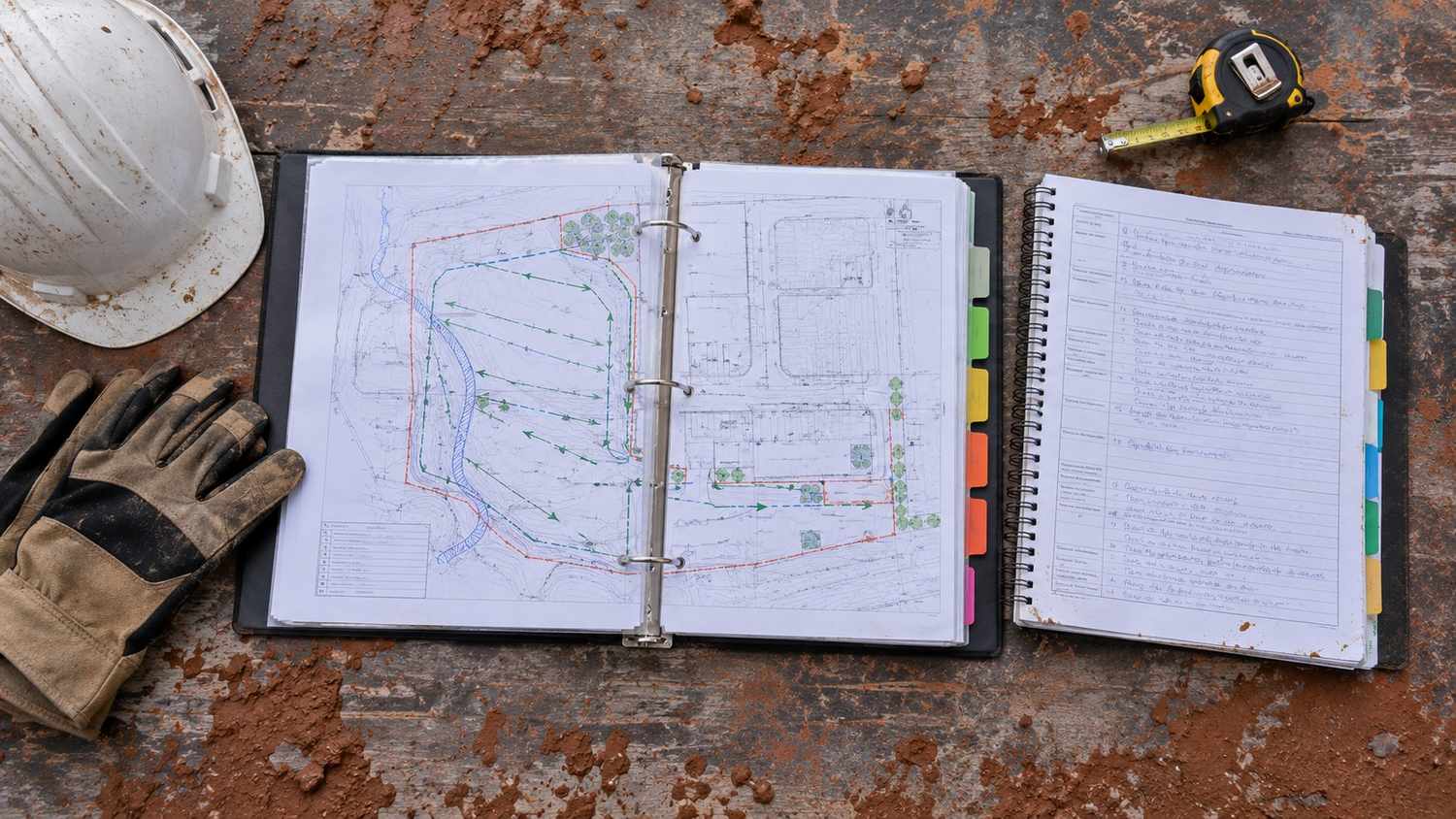
The SWPPP is the operational document that TXR150000 requires every covered construction site to have and maintain. It is not a regulatory form. It is a site-specific plan that describes how the project will control stormwater runoff, prevent sediment from leaving the site, manage construction materials and waste, and maintain compliance throughout the construction phase.
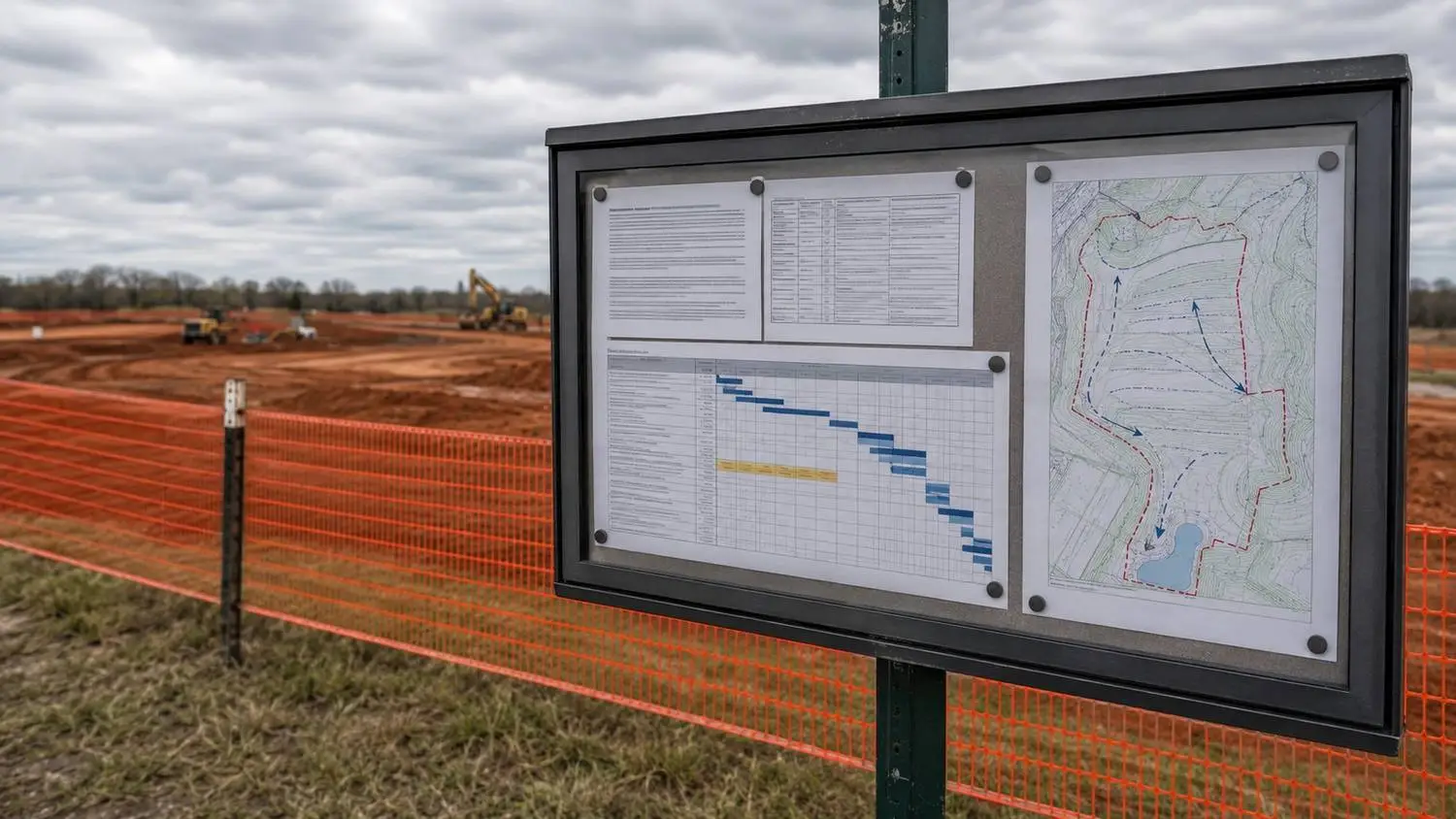
A complete SWPPP for a Texas construction site includes a site map showing drainage patterns and control locations, a description of all erosion and sediment control best management practices to be implemented, a maintenance and inspection schedule for those controls, procedures for addressing discharges that exceed permit limitations, and documentation of all inspections and corrective actions taken during construction.
The SWPPP must be kept on the construction site and made available to TCEQ inspectors on request. It must be updated when site conditions change, when controls are modified, or when inspections identify deficiencies that require corrective action. A SWPPP that was accurate at the start of construction and has not been updated to reflect current site conditions is a compliance deficiency regardless of whether the physical controls on the ground are adequate.
Erosion and Sediment Controls: What the Permit Actually Requires
TXR150000 does not specify a single required control configuration. It requires operators to select, install, maintain, and document best management practices appropriate for the site conditions, the disturbed area, the receiving water, and the construction activities being performed.
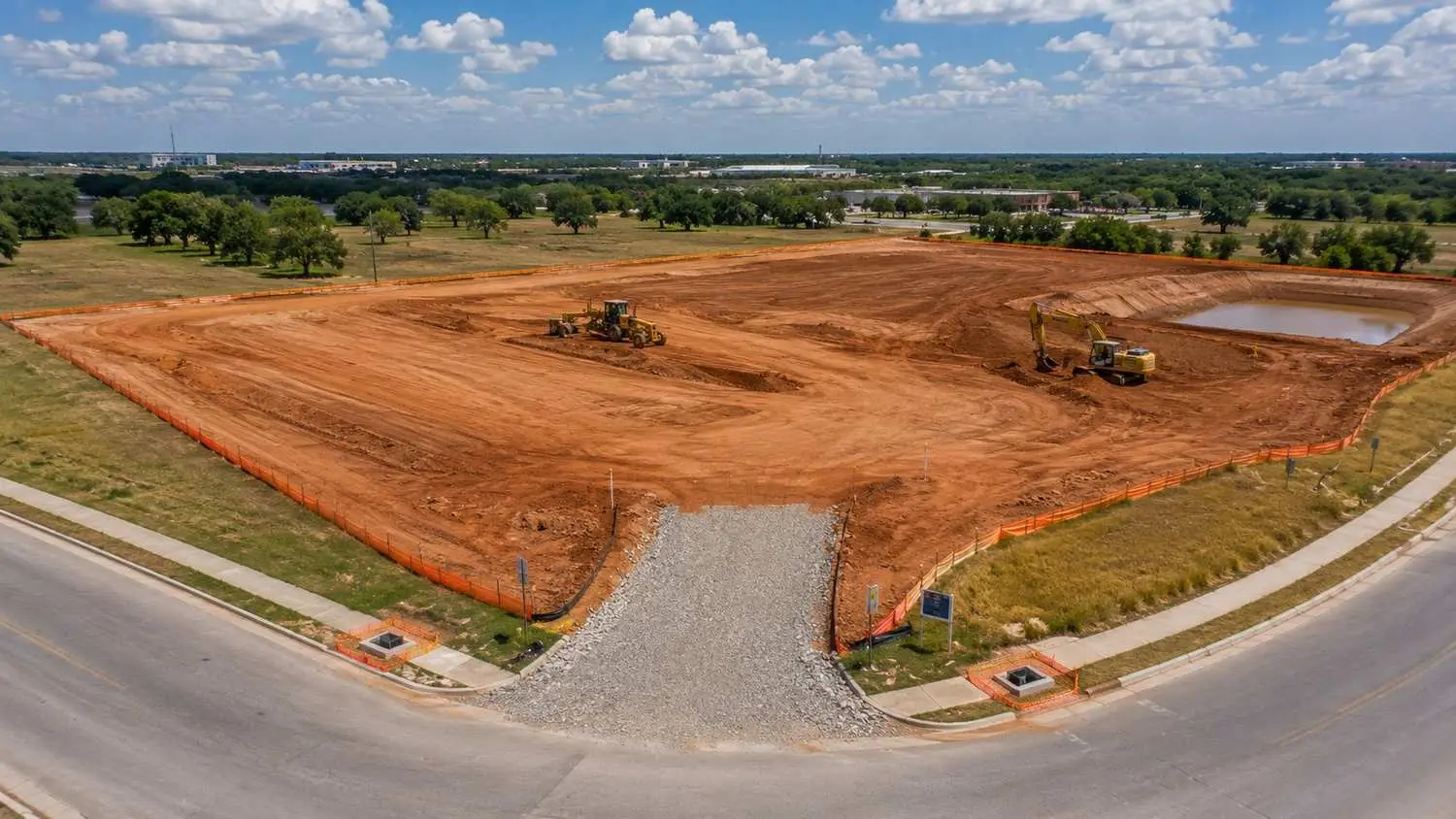
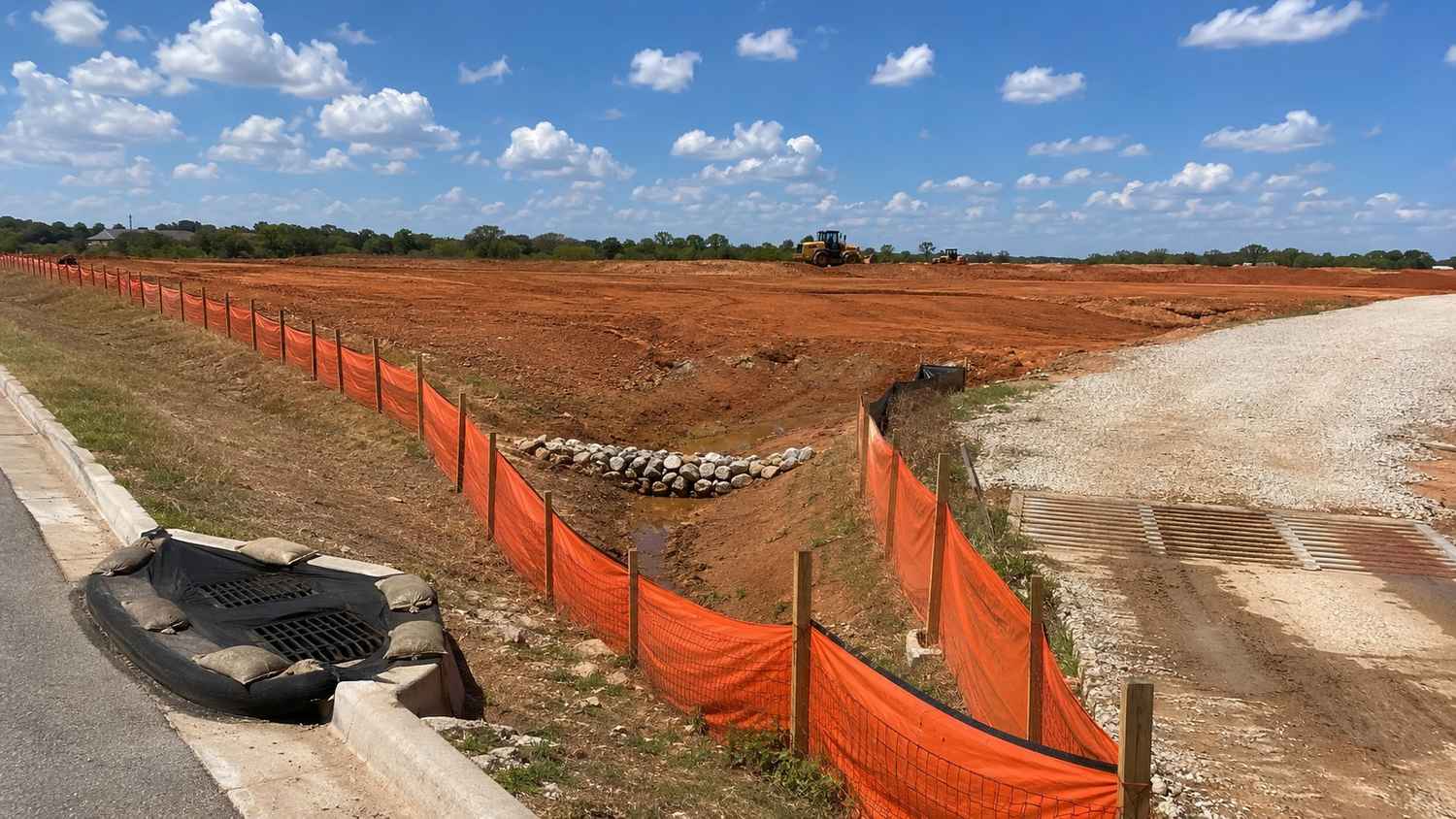
Common erosion controls on Texas construction sites include temporary seeding and mulching of disturbed areas, erosion control blankets on slopes, inlet protection at storm drain inlets, silt fence at the site perimeter, sediment basins or rock check dams in drainage swales, and stabilized construction entrances to prevent tracking onto public roads.
Controls must be installed before land disturbance begins in the areas they are designed to protect, not after grading has already exposed bare soil. Silt fence installed after the first rain event that has already transported sediment off the site provides no compliance benefit for the discharge that already occurred.
Controls must be inspected at minimum once per seven calendar days and within 24 hours of a rain event of 0.5 inches or greater. Inspections must be documented in the SWPPP inspection log with the date, inspector’s name, observations, and any corrective actions taken. Inspection logs that are missing entries, that were completed in batches rather than at the time of inspection, or that do not document corrective actions when deficiencies were observed create a compliance record that does not support the operator’s position if TCEQ conducts a site inspection.
What Happens When Coverage Is Missing or Documentation Is Inadequate
TCEQ conducts construction site stormwater compliance inspections. Inspectors check whether coverage is in place, whether the SWPPP is on site and current, whether controls are installed and maintained, and whether inspection logs reflect actual site conditions.
A construction site without TXR150000 coverage is operating in violation of the Texas Water Code. TCEQ enforcement responses range from a notice of violation requiring correction to administrative orders requiring cessation of construction activities until compliance is achieved. Administrative penalties under TCEQ’s penalty schedule can reach $10,000 per day per violation for serious or ongoing violations.
Beyond the enforcement risk, inadequate stormwater documentation creates a practical problem when local authorities, lenders, or buyers require confirmation of compliance during or after construction. A project that cannot produce a complete SWPPP, current inspection logs, and an NOI acknowledgment letter has a documentation gap that complicates project closeout regardless of how the physical site looks.
The Notice of Termination
When construction is complete and the disturbed area has been stabilized, a Notice of Termination must be filed to close out TXR150000 coverage. Final stabilization means that all ground surfaces that were disturbed during construction have been covered by permanent vegetation, pavement, or other permanent stabilization measures that prevent erosion.
Coverage does not automatically terminate at project completion. Filing the NOT is the operator’s responsibility and is required before the permit obligation ends. A project that completed construction two years ago but never filed a NOT is technically still under active TXR150000 coverage. In practice, this creates a potential compliance issue if any inspection or documentation request is made after the fact.
Frequently Asked Questions
Does TXR150000 coverage apply to every Texas construction project?
Coverage is required for projects disturbing one acre or more of land, or projects under one acre that are part of a larger common plan of development where the combined disturbed area is one acre or more. Small individual lot improvements that do not meet these thresholds do not require TXR150000 coverage, but the threshold applies to the total disturbed area of the project, not the building footprint or impervious cover.
Who is responsible for TXR150000 compliance on a multi-contractor construction project?
The primary operator, typically the owner or general contractor with operational control over the site, holds primary responsibility for TXR150000 compliance. Subcontractors who operate independently and have the ability to implement stormwater controls for their portion of the work may also need their own coverage. The SWPPP should identify all operators and their respective responsibilities.
Can construction begin before the seven-day NOI waiting period expires?
No. Under TXR150000, permit coverage does not take effect until seven days after TCEQ receives the NOI for most projects. Construction activities that disturb land before coverage is effective constitute operating without a permit. The seven-day period should be factored into the construction schedule before the grading contractor is mobilized.
Need TXR150000 Permit Support for a Texas Construction Project?
Modern Engineering Solutions works with Texas developers to prepare Stormwater Pollution Prevention Plans, coordinate NOI filings, and set up construction phase compliance documentation systems that keep projects covered from groundbreaking through final stabilization.
We specialize in:
- Stormwater Pollution Prevention Plan preparation for Texas construction projects
- TXR150000 Notice of Intent coordination and permit timing support
- Construction phase stormwater compliance documentation and inspection log setup
- Erosion and sediment control plan preparation coordinated with site grading design
- Drainage and grading plan preparation for residential, commercial, and industrial land development
Modern Engineering Solutions, McKinney, Texas and Golden, Colorado. Contact: (214) 833-6748 or mod-eng.com