
Blog
How Mixed-Use Developments Qualify for 210E Even When 90% of Their Flow Is Residential
No minimum industrial percentage is required for 210E. If an eligible industrial flow commingles with domestic wastewater, the whole stream can qualify.
Quick Answer
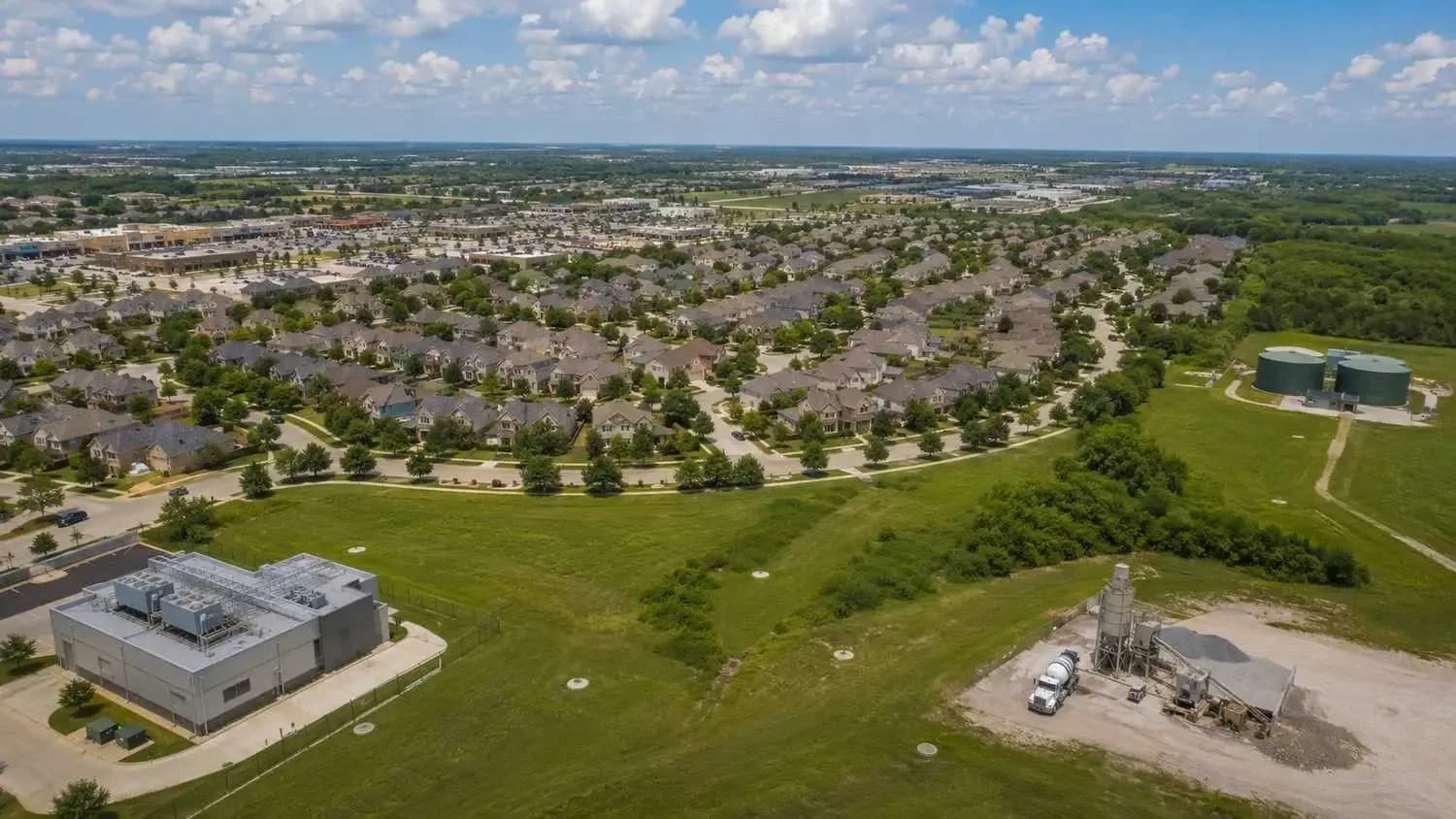
Under 30 TAC §210.53(b)(2), industrial wastewater that contains any amount of domestic wastewater is eligible to apply for 210E Level II authorization. No minimum percentage is required. TCEQ approved a 210E authorization that MES secured for a 2.0 MGD master-planned development where industrial flow was only about 6% of the design flow: 120,000 GPD of data center cooling water and 600 GPD (0.03%) of concrete batch plant wash water. Domestic wastewater, mostly from homes, made up the rest, about 94%. The industrial component does not need to dominate the project. It needs to exist, and it needs to be a waste the rule allows. For many mixed-use developments, it already does.
What the Regulation Actually Says
The qualification threshold under 30 TAC §210.53(b)(2) is stated plainly: industrial reclaimed water that contains any amount of domestic wastewater is eligible to apply for Level II 210E authorization. Section 210.52 calls this commingled wastewater. TCEQ has applied it to streams that are mostly domestic, as the Martindale project below shows.
The regulation does not establish a minimum industrial percentage. It does not require that industrial flow represent the majority of the waste stream, a specific fraction of total volume, or even a flow above a defined threshold. What matters to TCEQ is the quality of the treated effluent, not the proportion of industrial versus domestic sources feeding the treatment system. For Level II, §210.56(d) limits total organic carbon to 55 mg/L and holds pH between 6.0 and 9.0. Because the stream is commingled, §210.56(a)(1) also applies the reclaimed water quality standards in §210.33.
This is the part that most developers, and many engineers, underestimate. The 210E pathway was not designed exclusively for industrial parks or manufacturing-dominant facilities. It covers projects where an eligible industrial wastewater component is present and where treated effluent can be beneficially reused rather than discharged to surface water. Mixed-use developments with predominantly residential flow profiles can and do qualify.
What Counts as an Industrial Component
The most common question from developers reviewing their project for 210E eligibility is: what actually qualifies as an industrial use? The answer is broader than most expect. Common qualifying industrial components that MES has documented in 210E applications include:
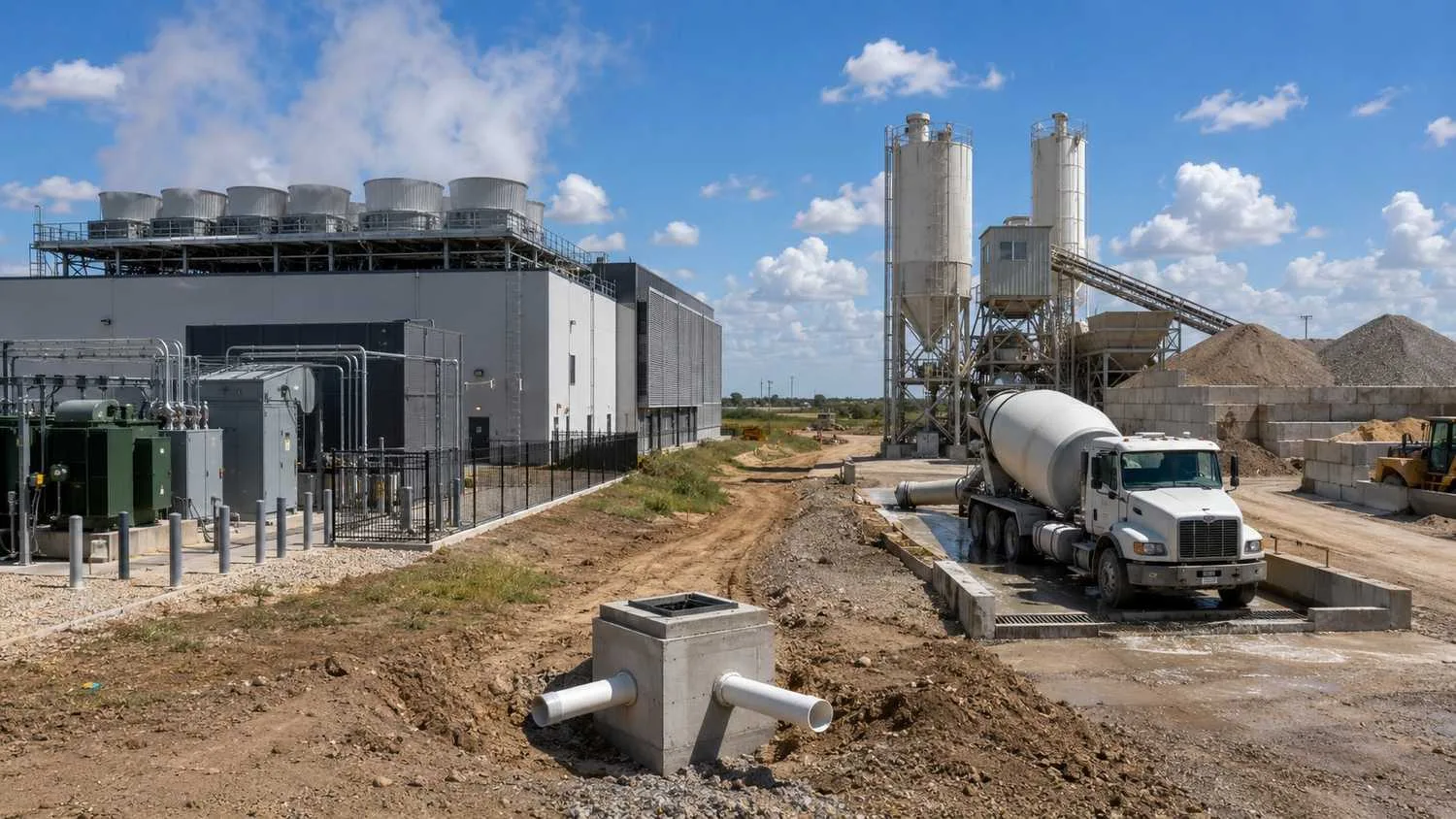
Data center cooling tower blowdown and equipment wash water. Data centers generate cooling tower blowdown as a routine operational byproduct of managing server temperatures. A data center generating 120,000 GPD of cooling water discharge (6% of the 2.0 MGD design flow) alongside about 1.88 million GPD of domestic wastewater (mostly from homes), as documented in MES’s authorization for a mixed-use development near Martindale, Texas, qualified the entire combined waste stream for 210E Level II authorization.
Concrete batch plant wash water and truck washout. Concrete production operations generate wash water from mixer trucks, batch equipment, and aggregate handling. The same Martindale-area project included 600 GPD of concrete batch plant waste (0.03% of the 2.0 MGD design flow) as a qualifying industrial component alongside the data center and residential flows.
Light manufacturing and warehouse facility operations. Many manufacturing processes generate process wastewater, equipment wash water, or industrial cleaning effluent that can qualify. Check 30 TAC §210.54 first: process wastewater from most federally regulated industry categories (40 CFR Parts 400 to 471) is not eligible. Warehouse facilities with fleet maintenance operations, equipment cleaning, or industrial wash-down areas generate industrial flow that commingles with employee domestic wastewater in the collection system.
Power generation and natural gas facility process water. Power plants, compressor stations, and natural gas processing facilities generate cooling water, equipment wash water, and other industrial effluent. Non-contact cooling water is on the rule’s eligible list, and steam electric power generation is a federal category §210.54 allows. Gas facility process water needs a closer check against §210.54.
Food processing wash water. Food processing operations, including food manufacturing facilities and commercial bakery and beverage production, generate non-domestic wash water, which makes the waste stream industrial. Section 210.54 allows some federal food categories, such as dairy, canned fruits and vegetables, and sugar. Others, such as meat and poultry products, are excluded, and so is grease trap waste.
The key question is not whether the industrial use sounds industrial enough. It is whether the waste stream generated by that use is industrial wastewater as defined in 30 TAC §210.52, and whether §210.54 excludes it. For the categories above, it usually qualifies, with the exceptions noted.
Why the Flow Proportion Does Not Govern Qualification
Developers building predominantly residential projects sometimes pass over the 210E pathway because they assume a 90% residential flow profile disqualifies them. That assumption misreads the regulation.
The 210E authorization is not structured around flow proportions. It is structured around waste stream commingling. When industrial and domestic wastewater enter the same collection system, when they flow through the same pipes to the same treatment facility, they are commingled. That commingled waste stream is what the 210E regulates.
TCEQ’s review under a 210E application does not calculate the industrial percentage and compare it to a minimum threshold. Reviewers confirm that an eligible industrial component exists and is documented, that the combined waste stream will be treated to the Level II limits in §210.56(d) and the reclaimed water quality standards in §210.33, and that the treated effluent will be beneficially reused per the documented reuse plan. The treatment system must handle the combined waste stream, including any elevated loading characteristics from the industrial component, at the design effluent quality. But the proportion of industrial to domestic flow does not determine eligibility.
This is confirmed by the actual authorization records. MES’s 2.0 MGD reuse project at a mixed-use development near Martindale, Texas, permitted in 4 weeks, had a design flow made up of about 94% domestic wastewater (mostly from homes), 6% data center wastewater (120,000 GPD), and 0.03% concrete batch plant wash water (600 GPD). TCEQ approved the 210E authorization for the entire 2.0 MGD facility, not just the industrial portion. The industrial component qualified the project. It did not need to represent a majority of the flow to do so.
The Planning Implication for Mixed-Use Developers
For developers structuring a mixed-use project (including residential units, commercial retail, and light industrial or data uses) the 210E qualification analysis should happen before the project program is finalized, not after.
A development program that already includes a data center pad, a concrete batch plant, or a light industrial component for market or operational reasons may qualify for 210E without any program modification. The industrial use that the developer planned for economic reasons also unlocks the fastest wastewater permitting pathway available in Texas.
For projects that do not yet have an industrial component but are looking for permitting efficiency, the question of whether a small qualifying use can be incorporated into the development program is worth evaluating before committing to a TPDES discharge permit process, which TCEQ asks applicants to file at least 330 days before discharge begins and which can run much longer when contested. A concrete batch plant that also serves adjacent construction activity, a data center cooling pad serving the development’s IT infrastructure, or a light manufacturing tenant that fits the project’s market position may save many months of permitting time.
The industrial component does not have to define the project. It has to exist within it.
Frequently Asked Questions
What is the minimum industrial flow volume needed to qualify for a 210E authorization?
No minimum volume is specified in 30 TAC §210.53(b)(2). The regulation requires that industrial wastewater be commingled with domestic wastewater, not that it exceed a specific flow rate or percentage. In MES’s 2.0 MGD authorization near Martindale, the industrial component was about 6% of the design flow, and the concrete batch plant part alone was 600 GPD, or 0.03%.
Does the industrial use need to be operational before the 210E application is submitted?
The industrial component must exist to maintain permit validity, but TCEQ requires no specific phasing or construction sequence. Projects can phase development as market conditions dictate. The key compliance requirement is that the industrial component is operational and generating industrial wastewater before the facility comes online under the authorization.
What happens to the 210E authorization if the industrial component is not built until Phase 2 of the development?
The authorization must reflect the actual operational state of the facility. If Phase 1 construction begins before the industrial component is operational, the facility is not yet generating the commingled waste stream that qualifies it under §210.53(b)(2). Coordination with the TCEQ reviewer on phasing expectations before the application is submitted is the most direct way to structure this correctly.
If a mixed-use development qualifies for 210E, does the entire facility get permitted under the 210E including all residential flow?
Yes. The 210E authorization covers the entire combined waste stream being treated at the facility, industrial and domestic flows together. Under 30 TAC §210.56(a)(1), the commingled stream is held to the general reclaimed water rules in Subchapters A through C as well as the Level II limits in §210.56(d). The residential flow is treated under the same authorization as the industrial component.
Related Resources
- What Is a 210E Authorization and How Can It Save Your Texas Development Project
- 210E vs. TPDES Discharge Permit: A Side-by-Side Comparison for Developers
- Getting a Discharge Permit as a Backup After Your 210E Is Operational
- Your Three Wastewater Disposal Options in Texas: Discharge, Reuse, or Land Application
Does Your Mixed-Use Development Qualify for 210E?
Modern Engineering Solutions evaluates mixed-use development programs for 210E eligibility and prepares complete TCEQ applications that document the industrial component, waste stream characterization, and reuse plan, authorized in 4 to 10 weeks in MES’s published cases.
We specialize in:
- 210E eligibility evaluation for mixed-use and master-planned developments
- Industrial component identification and waste stream characterization per 30 TAC §210.53
- Complete 210E application preparation including water balance, site characterization, and reuse plan
- TCEQ coordination through authorization issuance
- Permit pathway comparison including 210E vs. TPDES vs. TLAP with timeline and cost analysis
Modern Engineering Solutions, McKinney, Texas. Contact: (214) 833-6748 or mod-eng.com
Keep reading
More to read.
Talk to an engineer
Tell us about your project.
An engineer reads it
Not a salesperson. Someone who can tell you whether the pathway is real.
You get a first answer
Your options, the agencies involved and the questions that decide cost and schedule.
You decide
No commitment to have the first call.
Prefer the phone? (214) 833-6748