
Blog
Industrial TPDES vs. TLAP: Which Wastewater Permit Path Fits Your Texas Facility?
Industrial TPDES vs TLAP in Texas comes down to where treated water goes, and the choice sets your treatment, land needs, monitoring and permit schedule risk.
Quick answer
Industrial TPDES vs TLAP comes down to where the treated water goes. A TPDES permit lets an industrial facility discharge treated wastewater to a creek, river or other water in the state. A Texas Land Application Permit (TLAP) lets it apply treated wastewater to land with no discharge to surface water. TCEQ's industrial wastewater permits page (opens in a new tab) treats them as the two individual permit paths.
The choice sets your treatment train, how much land you need, what you monitor for the life of the plant, and how exposed the permit is to a receiving-stream review. Pick it before design starts, not after.
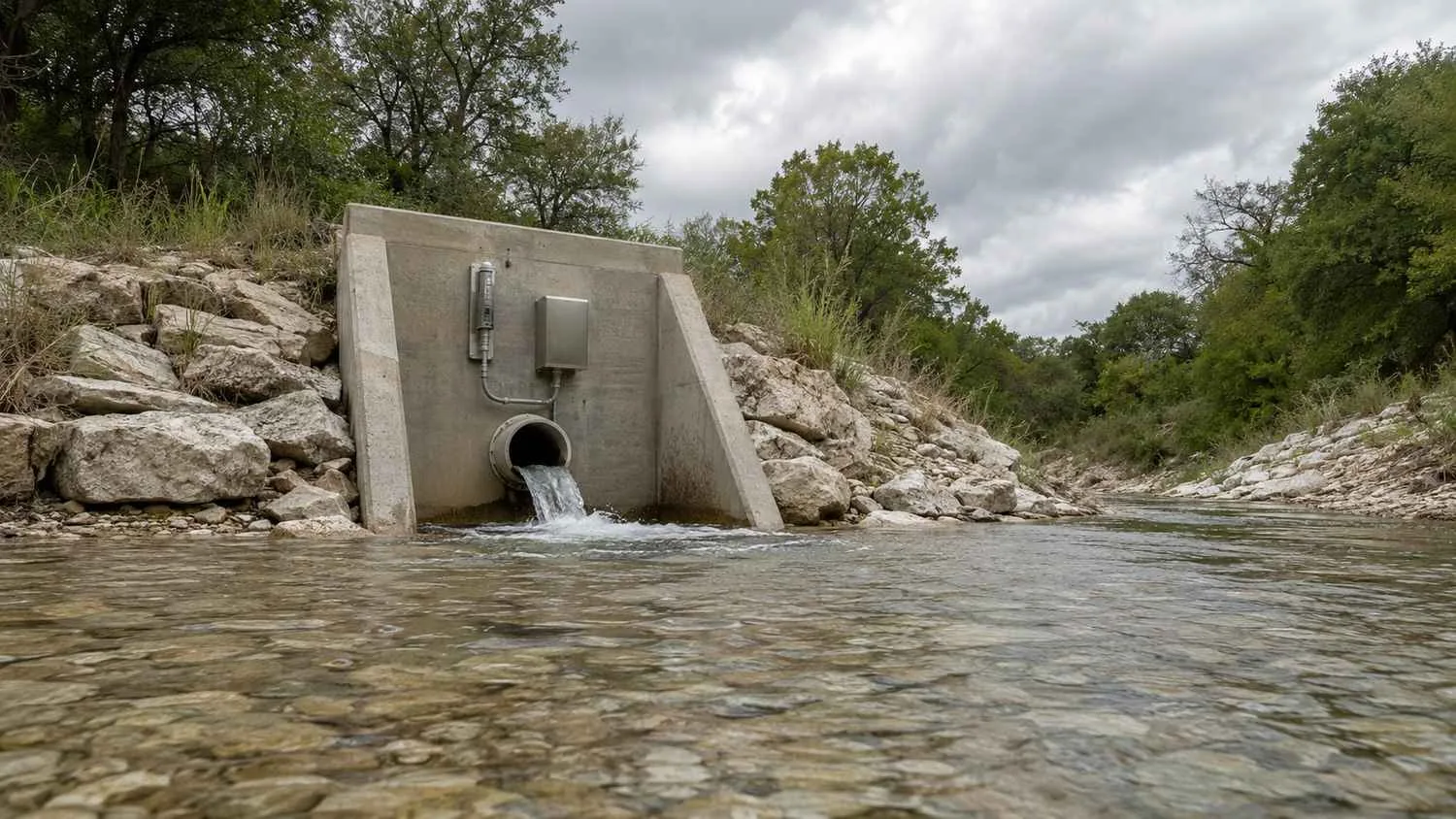
What does an industrial TPDES permit authorize?
A TPDES permit authorizes a discharge to a named water body after treatment to limits that protect that water. The receiving stream drives the permit, so two plants with the same wastewater can get different limits on different creeks.
TCEQ sets limits from the stream's classification and uses, its capacity to take the load, and the technology-based standards for the industry. Typical industrial limits cover BOD, TSS, pH, oil and grease, and the constituents of your process. Some streams also get total nitrogen or total phosphorus limits. Our post on how TCEQ sets effluent limits walks through that math.
High-strength streams change the design. Food processing, chemical, metal finishing and petroleum wastewater can need treatment well beyond standard secondary treatment to meet a stream-based limit. That drives capital cost, operator skill and the monitoring program.
What does a TPDES permit require after it is issued?
A TPDES permit is a five-year commitment that gets reopened at every renewal. Under 30 TAC §305.127(1)(C)(i) (opens in a new tab), a TPDES permit term may not exceed five years. At renewal, TCEQ can tighten limits based on new stream data or new standards.
In between, you sample each permitted parameter on the permit's schedule and report results electronically, as the federal NPDES electronic reporting rule (40 CFR Part 127) (opens in a new tab) requires. Plan the plant so it has room for a tighter limit later. A plant built exactly to today's limits can face a retrofit at its first renewal.
What does a TLAP authorize instead?
A TLAP authorizes treated wastewater to be applied to land, where soil and plants take it up, with no discharge to surface water. Spray irrigation and subsurface drip are the common methods. Our post on spray irrigation, subsurface drip and evaporation ponds compares them.
Because nothing goes to a stream, a TLAP skips the receiving-water analysis that drives much of a TPDES review. The review turns to three questions instead:
- Will the treated effluent be suitable for the soil and the crop?
- Can the site take the hydraulic and nutrient load without runoff, groundwater harm or crop damage?
- Does the water balance show where every gallon goes in a wet year?
The term is also longer. Under §305.127(1)(C)(ii)(III), permits that regulate land disposal systems may run up to ten years.
Why does land decide most TLAP cases?
Land is the constraint that rules out most industrial TLAPs. The application rate has to fit the soil's hydraulic and nutrient capacity. Wastewater high in nitrogen, salts or organic load needs a lower rate, which means more acres for the same daily flow.
Storage is the second constraint. You need somewhere to hold effluent when the soil is saturated, when it rains for a week, or when the crop cannot take water. The water balance sets that volume, and the storage has to be in the application.
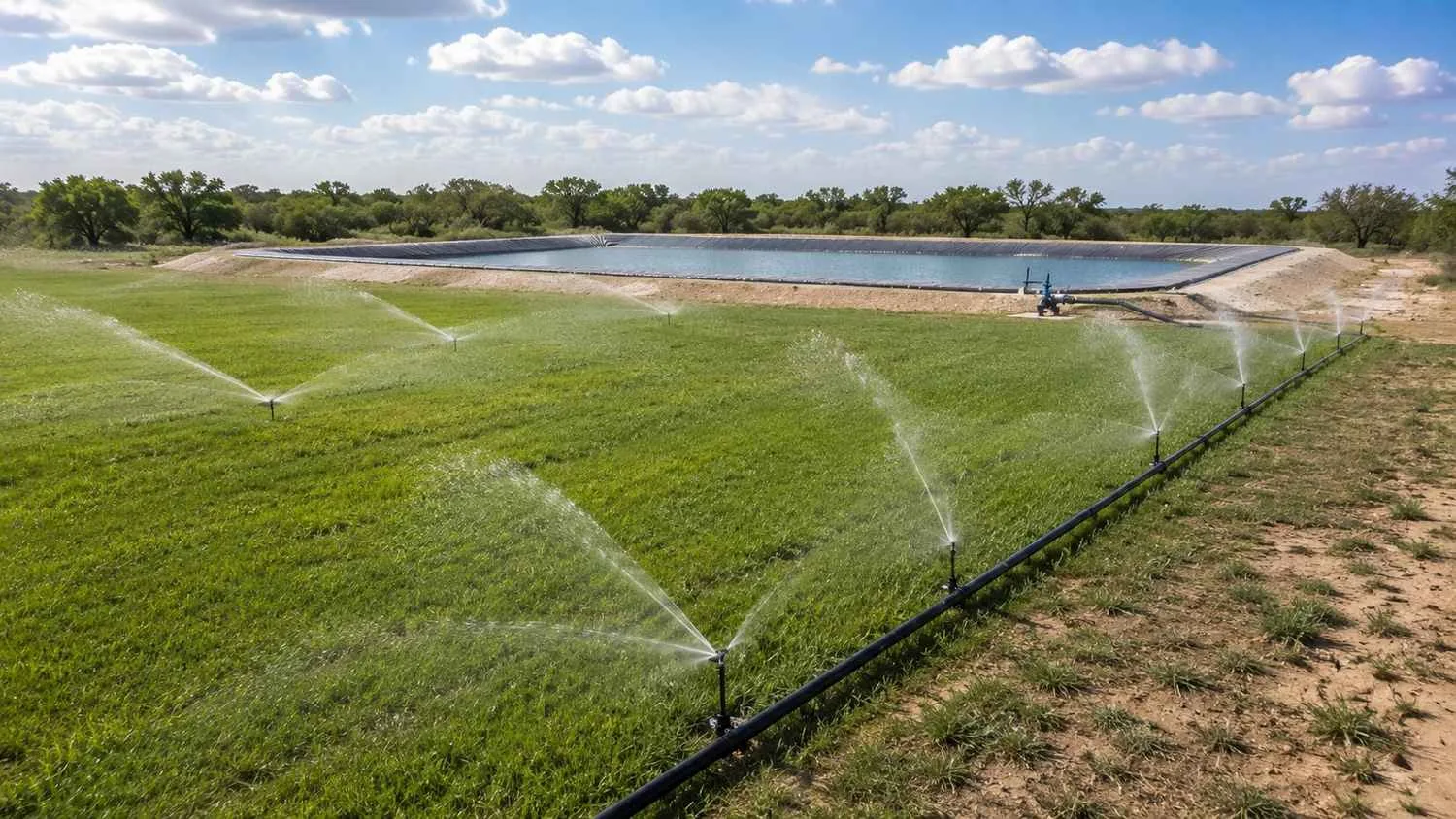
Which permit path fits your facility?
Four questions settle most decisions, and they should be answered with data, not hope.
- What is in the wastewater? Metals, hydrocarbons or chemicals that harm soil or groundwater may rule out land application at any acreage. Characterize the stream at real operating conditions first.
- Is there a workable discharge point? A nearby stream with room for the load favors TPDES. A sensitive watershed, no nearby stream, or predictable opposition favors TLAP.
- Is there enough land, with storage? If the site and adjacent land cannot carry the load, TLAP is off the table whatever the effluent quality.
- How tight is the schedule? Both paths need a full TCEQ application. A TLAP avoids the receiving-stream review, but a complex industrial stream needs careful schedule planning either way.
Location can decide it for you. In the Edwards Aquifer recharge zone, 30 TAC §213.8(a)(6) (opens in a new tab) prohibits new municipal and industrial wastewater discharges into or adjacent to water in the state that would add pollutant loading.
How long should you plan for the permit?
Plan on filing at least 330 days ahead. TCEQ's industrial permit process page (opens in a new tab) says to submit the application at least 330 days before the proposed discharge begins, or as soon as possible. It is a lead time, not a promise of when the permit issues.
The same page lists the steps: administrative review, technical review, a first public notice, a draft permit and a second notice. The public can comment, ask for a public meeting, or ask for a contested case hearing. A hearing request is the biggest schedule risk on a discharge permit, and TCEQ's antidegradation rule in 30 TAC §307.5 (opens in a new tab) adds review where a discharge could lower water quality.
What happens when the wrong path is chosen?
The usual failure is designing for TPDES before checking the stream. The application then shows tighter limits than expected, or a hearing request arrives. Switching to TLAP at that point means a new treatment design, a land search and a new application on a new clock.
The fix is to price the options side by side before engineering starts. For a facility with no sewer nearby, that usually means three: a force main to the nearest city sewer, a treatment plant with a TPDES discharge permit, and a treatment plant with land application under a TLAP. Each has a different capital cost, permit calendar and land need. The cheapest on paper is not always the fastest to permit.
Settling the path first means the treatment system is designed once, for the permit it will actually get.
Limits of this article: it is general education on Texas rules as of October 2026. Your path depends on your wastewater, site and receiving water, so confirm it with TCEQ and your engineer before you commit.
Frequently asked questions
Can an industrial facility get a TLAP if its wastewater has industrial constituents?
It depends on which constituents and how much. TCEQ looks at the treated effluent and at whether the site can take those constituents without harming soil, groundwater or crops. Some streams qualify after treatment. Others need constituent-specific analysis, or pretreatment, before anyone can say.
Does switching from TPDES to TLAP mean redesigning the treatment plant?
Not always. The effluent quality a land application site needs can be close to secondary treatment. For complex industrial streams, though, the two paths can need different processes. Comparing both before design avoids the redesign.
Do TPDES and TLAP use different application forms?
Both are individual industrial wastewater permits. TCEQ's process page lists the industrial administrative report and the industrial technical report for the package, along with the Core Data Form. A new permit also needs the Public Involvement Plan form. Check the current form versions on TCEQ's site before you file.
I manage a food processing plant in Central Texas with no city sewer nearby. We have farmland next door. Should we start with TLAP?
Start by testing it. Characterize the wastewater, then check whether the adjacent land can take the hydraulic and nutrient load with enough storage for wet months. If it can, a TLAP avoids the receiving-stream review. If the land falls short, compare a TPDES discharge and a force main to the nearest sewer before choosing.
We are a manufacturer in the Hill Country and our consultant says a discharge permit will draw opposition. How should that change our plan?
Treat it as a schedule risk and price the land application option seriously. A contested case hearing can be requested on any TPDES draft permit, and sites over the Edwards Aquifer recharge zone face a prohibition on new discharges that add loading. Settle the path before you buy equipment.
Related resources
- The 330-Day Timeline: Why Texas Wastewater Permits Take Longer Than Developers Expect
- Antidegradation Review Explained: Why Some Texas Streams Trigger a Harder TCEQ Review
- How to Evaluate Wastewater Utility Options Before You Close on Land
- TCEQ Permit Timelines for Dallas Area Industrial Facilities
Choosing between a discharge permit and land application for your Texas facility?
We help industrial owners compare TPDES, TLAP and sewer connection before design starts, then carry the chosen path through TCEQ.
We specialize in:
- Wastewater permit path evaluation for Texas facilities
- TPDES discharge permit applications
- Land application design and TLAP applications
- Wastewater treatment plant design
- Water balance and storage sizing for land application
- Force main and sewer connection design
Modern Engineering Solutions, McKinney, Texas. Contact: (214) 833-6748 or mod-eng.com
Talk to an engineer
Tell us about your project
An engineer reads it
Not a salesperson. Someone who can tell you whether the pathway is real.
You get a first answer
Your options, the agencies involved and the questions that decide cost and schedule.
You decide
No commitment to have the first call.
Prefer the phone? (214) 833-6748