
Blog
Phase II MS4 Permits: What Small Texas Cities and Public Entities Need to Know
A Phase II MS4 permit covers Texas cities, counties and districts in Census urban areas of 50,000+, with six control measures and a March 31 annual report.
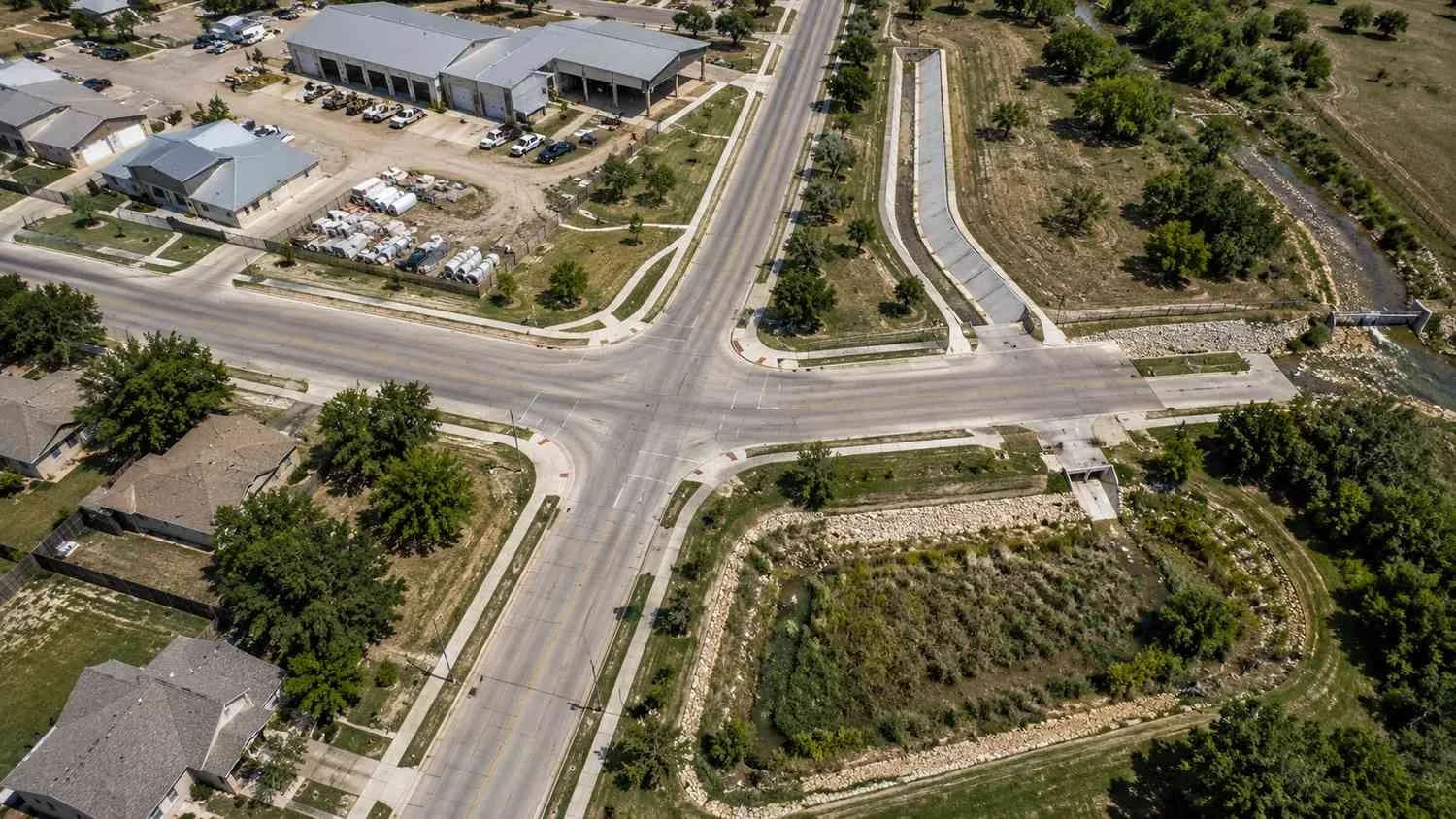
A Phase II MS4 permit applies to a Texas city, county or district when any part of its storm sewer system sits inside a Census urban area of 50,000 people or more, unless it already holds a Phase I permit. "Small" describes the storm sewer system, not the town. Coverage means a written stormwater program, six control measures, records you can show TCEQ and a report due every March 31.
What is a Phase II MS4 permit?
It is TCEQ's general permit for small municipal separate storm sewer systems, TXR040000. Instead of a wastewater permit's numbers, it requires a Stormwater Management Program (SWMP) that reduces pollutants to the maximum extent practicable. The practices in that program count as the permit's effluent limitations.
The federal small MS4 rule at 40 CFR 122.34 sets the six minimum control measures. TCEQ's page for the 2024 small MS4 general permit shows the current version took effect August 15, 2024, and the 2024 TXR040000 permit runs five years.
Phase I covers medium and large systems, which the definitions in 40 CFR 122.26 tie mostly to incorporated places of 100,000 or more at the 1990 Census. So a suburb that grew past 100,000 later can still hold a "small" MS4 permit.
Does your city or district need coverage?
Yes, if any part of your storm sewer system lies in an urban area of at least 50,000 people in the 2000, 2010 or 2020 Census, or if TCEQ designates you. Only the part inside the urban area, or any part TCEQ designates, is regulated.
TCEQ's urban area maps page lists the 2020 Texas urban areas and links the Census Bureau's TIGERweb map for checking a boundary.
Counties, drainage districts, transportation entities, military bases, universities, colleges, correctional institutions, municipal utility districts and other special districts are non-traditional MS4s. Inside the urban area they need coverage whatever population they serve, unless waived.
Two waivers exist. Option 1 is for systems serving fewer than 1,000 people that add little to a connected regulated MS4's pollutant load. Option 2 is for systems under 10,000, and only after TCEQ evaluates every receiving water and finds controls are not needed.
Which permit level is your MS4?
Your level sets how much the permit asks. It is based on the residential population in your regulated area at the 2020 Census, and it changes mid-term only if you gain or lose regulated area, such as by annexation.
- Level 1: cities and towns serving fewer than 10,000 people.
- Level 2a: cities serving 10,000 to 39,999.
- Level 2b: all non-traditional MS4s, such as counties and districts.
- Level 3: cities serving 40,000 to 99,999.
- Level 4: cities serving 100,000 or more.
Over the term, Level 1 needs at least three public education practices and two public involvement activities; Levels 3 and 4 need five and four. Level 4 adds dry weather screening, floatables control and a seventh measure that includes yearly inspections of facilities holding TPDES industrial stormwater permits.
What are the six minimum control measures?
Public education and outreach, public involvement, illicit discharge detection and elimination (IDDE), construction site runoff control, post-construction stormwater management, and pollution prevention and good housekeeping for municipal operations. All six apply at every level. An optional eighth lets the MS4 cover its own construction projects.
If you have a public website, post the SWMP within 30 days of TCEQ approving your NOI, and each annual report or a summary within 30 days of its due date.
IDDE requires standing records: a current MS4 map of every outfall you operate and each receiving water, reviewed yearly; yearly training for field staff; and a log of every investigation with the date observed, result, follow-up and date closed.
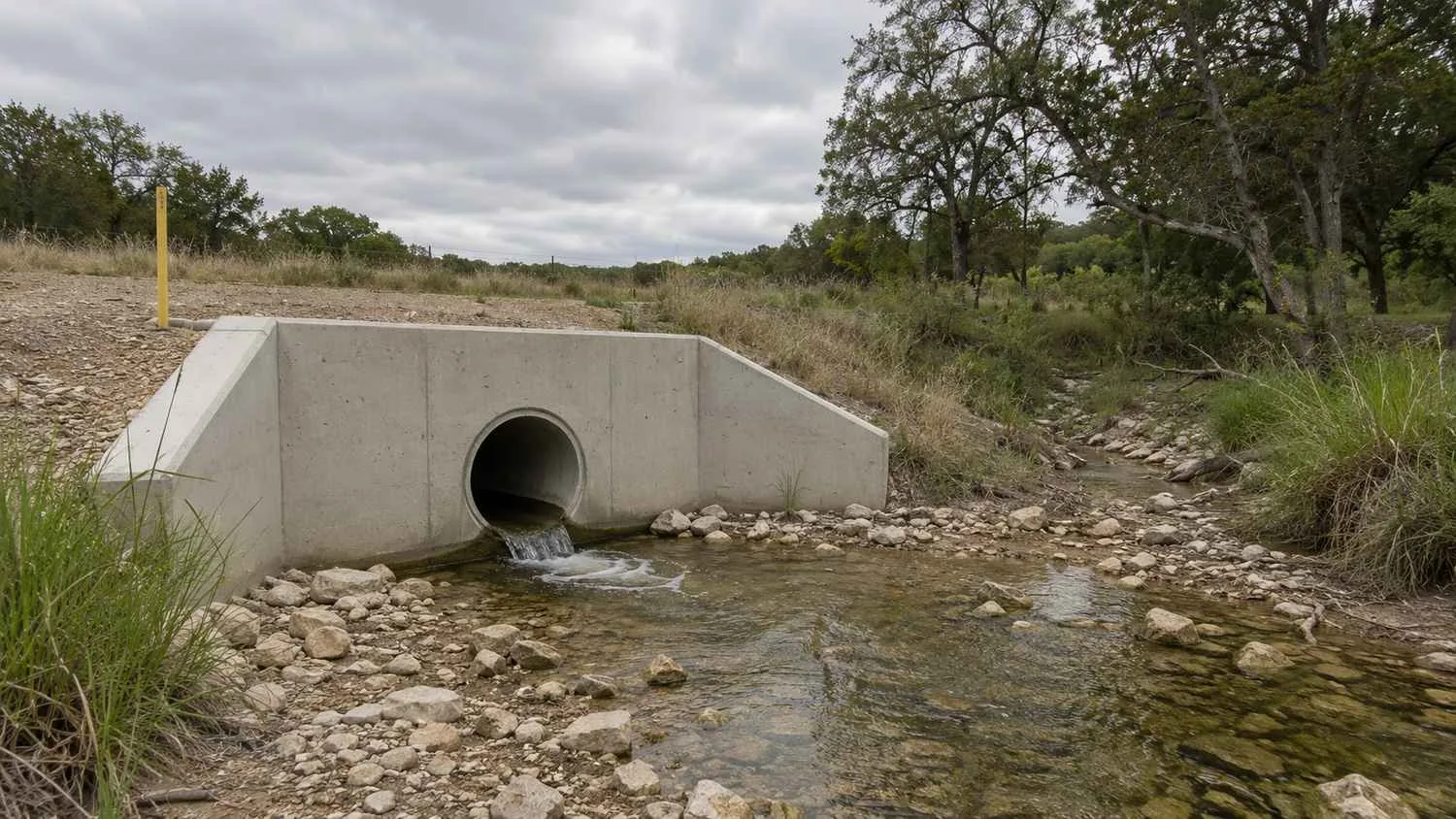
Construction control needs an ordinance, plan review for every new site plan and inspections of at least 80% of active sites each year. Plans you approve must meet the state construction permit, so know what developers file under the Construction General Permit TXR150000.
Post-construction rules apply to development and redevelopment that disturbs an acre or more, including smaller parts of a larger common plan. You need an ordinance requiring permanent controls and a way to keep them maintained. Where an owner maintains them, its maintenance plan must be filed in the county real property records.
Good housekeeping means an inventory of the facilities and controls you own, reviewed yearly, an operation and maintenance program and annual training for the people who run it.
Why do small MS4 programs fall short?
Usually not because the work is missing. Because the record is.
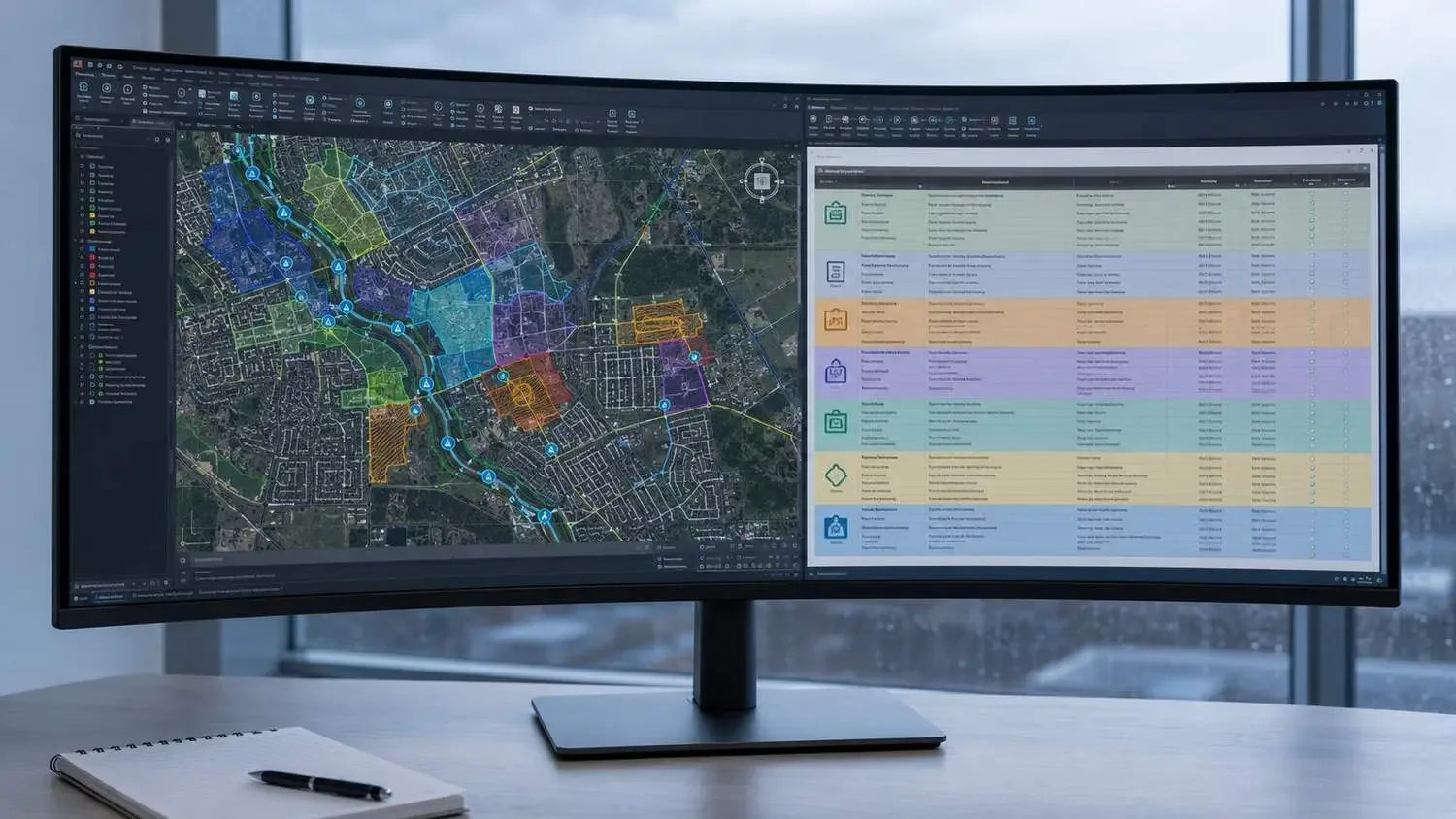
Crews sweep streets, inspectors walk sites and someone answers the call about suds in the creek. If none of it is logged against a measurable goal in your SWMP, the annual report has nothing to stand on. "Outreach was conducted" is not progress toward a goal.
Legal authority is the other gap. Cities had two years from the permit's effective date, so until August 15, 2026, to review their ordinances and revise them if needed to cover illicit discharges, inspections, required controls and penalties. New SWMP elements must be fully in place within five years. Records stay on file at least three years or the rest of the permit term, whichever is longer.
When is the annual report due, and what goes in it?
By March 31 each year, covering the previous calendar year. Your first report runs from the day you got coverage to December 31 of that year.
It covers compliance status, progress on each measurable goal, data you collected, work on impaired waters, next year's plans and proposed SWMP changes.
The permit calls for filing through the NeT-MS4 online system, but TCEQ's permit page, updated June 2026, says annual reports still go in on paper until further notice. Check it before you file.
What happens when the permit is renewed?
Expect to file a new NOI with an updated SWMP by the deadline the renewed permit sets. Existing coverage carries over until that deadline or until you file, whichever is first.
In 2024 the window was 180 days, which TCEQ's renewal notice put at February 11, 2025. Until TCEQ approves your renewal NOI, keep running your last approved SWMP and keep filing annual reports. A late NOI covers only discharges after coverage begins.
The yearly SWMP review due with each annual report is the easiest renewal prep.
Is your MS4 program ready for its next annual report?
It is if you can answer yes to all six.
- Have you checked your regulated area and level against the 2020 urban area map?
- Has TCEQ approved your NOI under the 2024 permit?
- Is your MS4 map current, with every outfall and receiving water?
- Does every practice in your SWMP have a measurable goal and a person who logs it?
- Have your ordinances had the legal authority review?
- Could you pull this year's training lists, inspection reports and investigation logs in one day?
Six yeses mean the report is mostly assembly; any no is where to start.
Questions for your engineer or program lead: Who owns each measurable goal? Does the map match what crews see?
A note on limits: this is general education from the 2024 TXR040000 permit and TCEQ's pages as of October 2026. Your approved SWMP, any TMDL or Edwards Aquifer conditions and TCEQ's direction govern your program.
Frequently asked questions
Does every Texas city need a Phase II MS4 permit?
No. Only operators with storm sewers inside an urban area of at least 50,000 people, or those TCEQ designates.
When is the TCEQ MS4 annual report due?
March 31 each year, for the previous calendar year.
Can several small MS4s share one stormwater program?
Yes. A coalition can run a shared SWMP. The NOI names each member and who does each activity, and the coalition files one system-wide annual report that every member signs.
I'm the public works director for a Texas town of about 6,000 people, and we just learned the 2020 Census put us inside an urban area. Where do we start?
Confirm the regulated area on TCEQ's urban area maps and plan for Level 1. Write the SWMP, then file the NOI. The 180-day window for newly regulated systems has closed, so coverage starts only when TCEQ approves your NOI, and TCEQ can act on discharges before then. Ask TCEQ's stormwater team first whether a waiver fits.
I manage a municipal utility district in a Texas suburb and we can't pass ordinances. How do we handle construction inspections under our MS4 permit?
MUDs are Level 2b. You enforce over your own facilities, staff and contractors, and at minimum inspect the sites you or your contractors run. For other sites, sign an interlocal agreement with the city or, if that is not feasible, report problems to the adjacent MS4 operator or the TCEQ regional office.
What happens if we miss an annual report?
A missed report breaks a permit condition, which the permit treats as a violation and grounds for enforcement. File it as soon as you can.
Related resources
- Municipal TPDES Individual Permits: What Texas Cities and Utility Providers Need to Know
- Discharging to a Storm Drain vs. Sanitary Sewer: Why Texas Contractors Get It Wrong on Pipeline and Tank Projects
- Pretreatment Program Delegation: When a Texas City Runs Its Own Industrial Pretreatment Program Versus Deferring to TCEQ
- Capital Improvement Planning for Small Municipalities: Where to Start When You Don't Know Where to Start
Behind on your MS4 map, ordinances or annual report?
We help Texas cities and districts work out what the 2024 permit asks of their stormwater program, from the outfall map to the records behind the report.
Talk to Modern Engineering Solutions about your MS4 program, or call (214) 833-6748.
Keep reading
More to read.
Talk to an engineer
Tell us about your project.
An engineer reads it
Not a salesperson. Someone who can tell you whether the pathway is real.
You get a first answer
Your options, the agencies involved and the questions that decide cost and schedule.
You decide
No commitment to have the first call.
Prefer the phone? (214) 833-6748