
Blog
Why Your Texas Development Needs a Wastewater Engineer Before the Architect Signs Off
Wastewater infrastructure constraints discovered after the architect signs off cost more to fix than to prevent. Engage a wastewater engineer during due diligence.
Quick Answer
Wastewater infrastructure constraints in Texas are discovered at one of two moments: during due diligence, when a developer still has options, or after the architect has delivered a signed site plan and the project is committed to a layout that conflicts with what the wastewater system actually requires. The second moment is the expensive one. Treatment plant siting, collection system routing, lift station locations, force main alignments, and reuse land requirements all connect directly to where buildings sit, how grades are designed, and how lots are laid out. A wastewater engineer engaged after the architect has signed off is working around decisions that should have informed the architectural layout from the beginning.
The Problem with Treating Wastewater as a Downstream Discipline
The conventional project sequencing for Texas development goes something like this. The developer acquires land. The land planner establishes a conceptual layout. The architect develops a site plan. The civil engineer takes over for grading, drainage, and utilities. Somewhere in that sequence, often late and often as an afterthought, someone asks about wastewater.
That sequencing made sense when most Texas development sites had access to municipal sewer. The developer called the city, confirmed service availability, paid the connection fee, and the civil team showed a sewer connection on the utility plan. Wastewater was a utility coordination task, not an engineering problem.
The sequencing does not make sense for the significant and growing share of Texas development sites that cannot connect to municipal sewer. For those sites, wastewater infrastructure is not a utility coordination task. It is a site planning constraint that belongs in the same conversation as the building footprint, the lot layout, and the grading design.
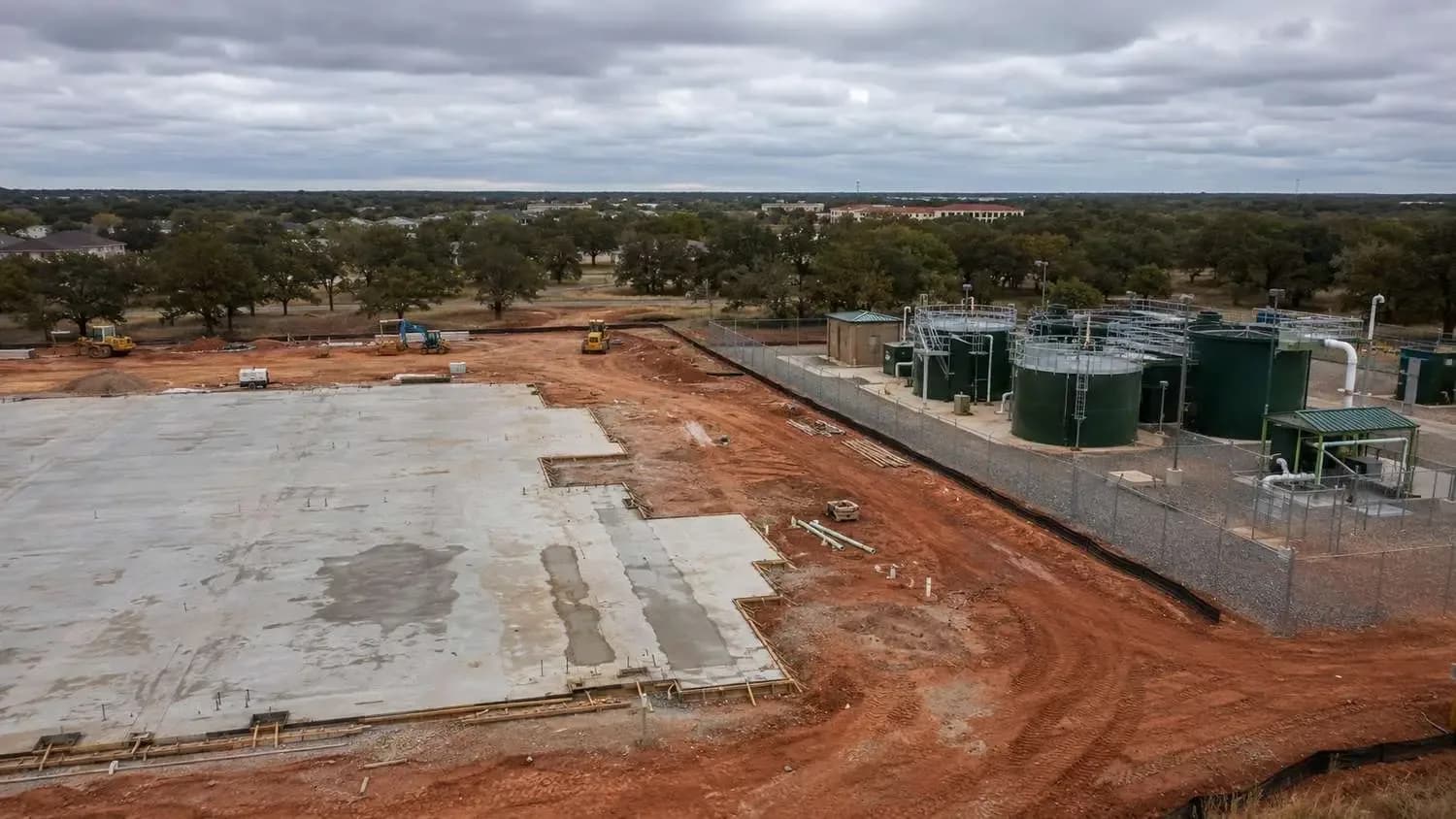
A private wastewater treatment plant has to sit somewhere on the site or adjacent to it. It requires vehicle access for maintenance, setbacks from buildings and property lines, and a connection to both the incoming collection system and the outgoing reuse or disposal infrastructure. A lift station has to be positioned where the collection system gravity can reach it and where force main routing to the treatment plant is feasible. A force main has to be routed without conflicting with building foundations, parking structures, or storm drainage infrastructure. A reuse irrigation area has to be sized, located, and connected to the treated effluent outfall.
Every one of those requirements connects directly to the site plan. When the site plan is developed without a wastewater engineer at the table, the conflicts between the architectural layout and the wastewater infrastructure emerge later in the process. By that point, they are expensive to resolve.
What Gets Decided Before the Architect Is Even Hired
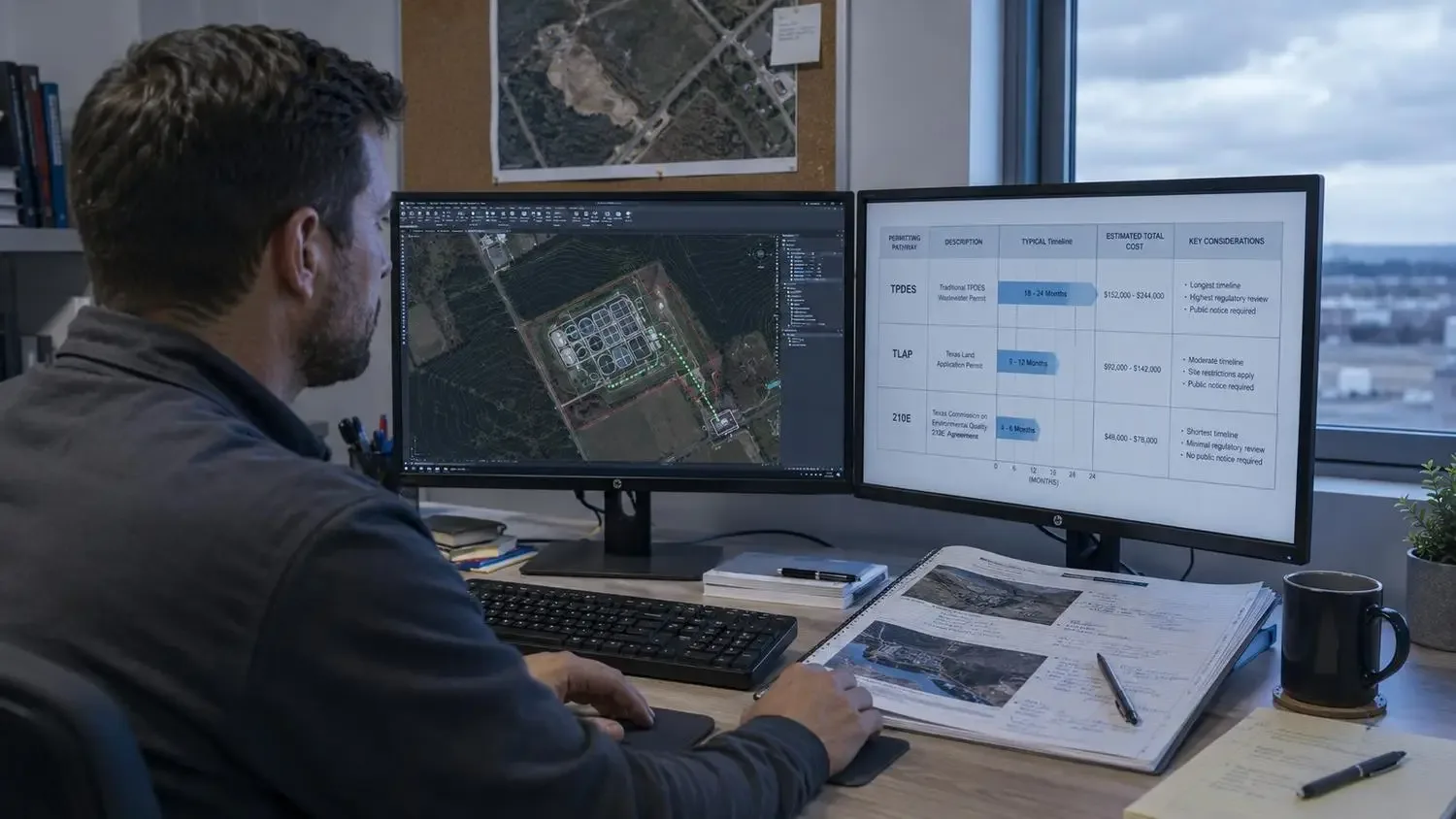
The most consequential wastewater decisions on a Texas development site are made during due diligence, before any professional design work begins.
The permitting pathway decision is the most important. Whether the project will connect to municipal sewer, build a private WWTP under a TPDES discharge permit, pursue a 210E Industrial Reclaimed Water Authorization, or use a Texas Land Application Permit determines the timeline before construction can start, the land requirements for disposal, and the capital cost of the infrastructure. A developer who reaches the architectural design phase without knowing which permitting pathway applies is building on an assumption that may not hold.
The plant siting decision shapes the entire site plan. A 130,000 GPD package treatment plant requires a dedicated site area for the treatment equipment, access roads, storage reservoir, and effluent distribution infrastructure. Discovering the treatment plant site requirement after the architect has filled the parcel with buildings and parking requires either redesigning the site plan or acquiring additional land. Neither is free.
The reuse land requirement shapes the project boundary. For a 210E or TLAP project relying on agricultural irrigation, the developer needs approximately 2,000 gallons per day per acre of confirmed reuse land. A 300,000 GPD facility needs roughly 150 acres of irrigation area plus a properly sized storage reservoir. That land must be identified, controlled, and documented in the permit application. A developer who discovers this requirement after the site plan is finalized may find that the reuse land they need is not available adjacent to the project, or that securing it requires negotiations that delay the permitting timeline.
What Changes When the Wastewater Engineer Is Engaged Early
Early engagement changes what is possible, not just what is efficient.
When a wastewater engineer evaluates the site during due diligence, the permitting pathway is identified before the architectural program is set. The site plan is developed with the treatment plant location, lift station positions, force main routing, and reuse land requirements already established. The architect works around constraints that are known, not constraints that are discovered after the design is complete.
The 210E qualification analysis happens before the project program is finalized. A development that might qualify for a 210E authorization with a small industrial component can evaluate whether incorporating that component into the program makes financial and operational sense before the site plan is locked. A development that cannot qualify for 210E evaluates TLAP and TPDES timelines with enough lead time to structure the project financing around a realistic construction start date.
The pro forma reflects actual infrastructure costs. A developer who knows the treatment plant will cost $2.3 million to $2.6 million to build, will take 8 weeks to permit under a 210E authorization, and will cost $10,000 per month to operate can build a pro forma that reflects those numbers. A developer who discovers the same costs after closing builds a pro forma that is already wrong.
MES works with Texas developers as a wastewater engineering partner from the earliest stage of site evaluation through TCEQ permit issuance. That engagement does not delay the project. It eliminates the delays that occur when infrastructure constraints are discovered after design decisions have already been made.
What Happens When the Wastewater Engineer Is Engaged After the Architect Signs Off
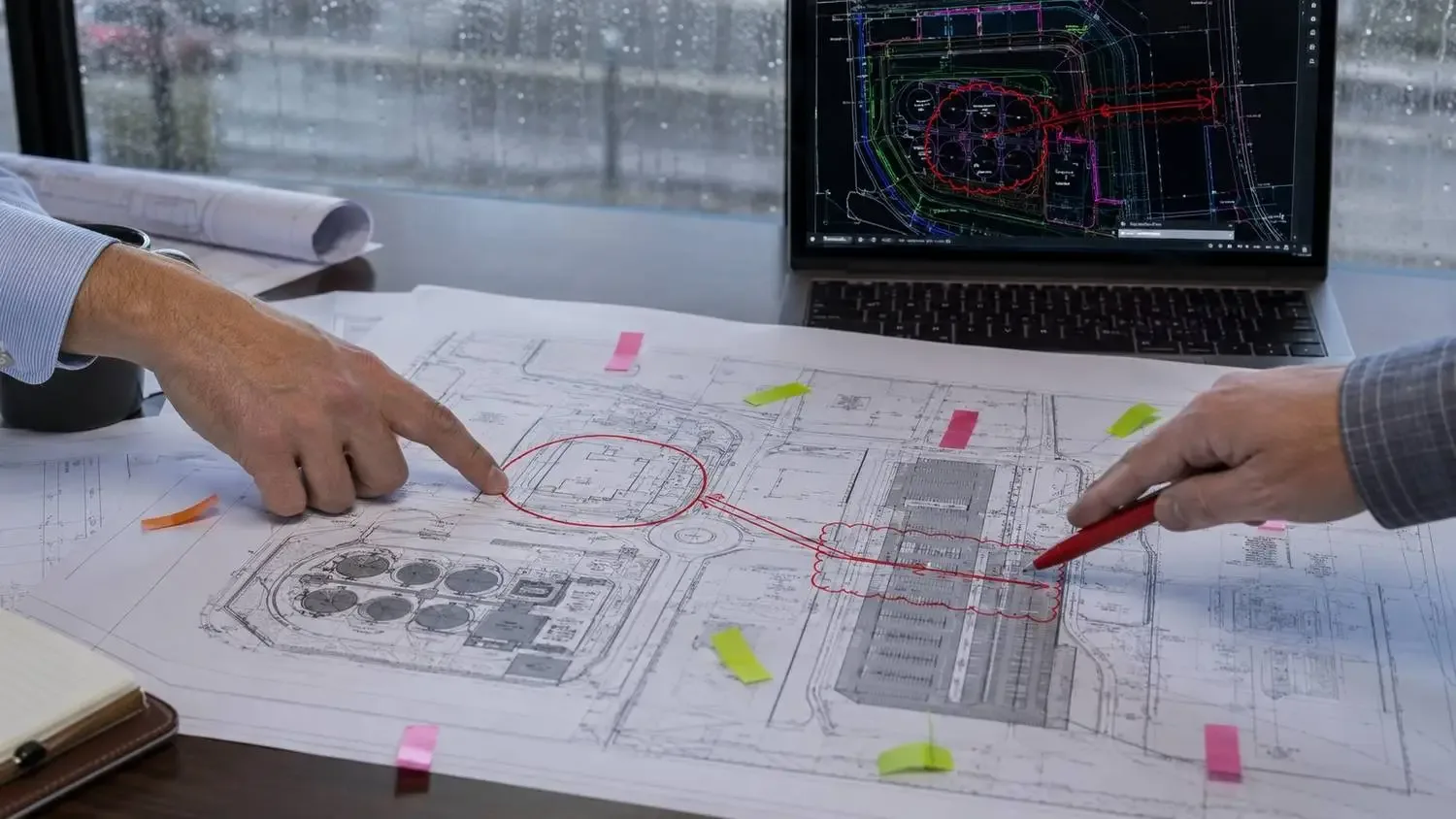
The pattern is consistent. The site plan is delivered with buildings positioned where the treatment plant needs to go. The lift station location conflicts with a retaining wall or a building foundation. The force main route runs through a parking structure that is already in construction documents. The reuse land identified in the permit application is the same acreage the developer has already committed to a commercial pad tenant.
Each of these conflicts has a resolution. None of them are free. Redesigning a site plan that has already been through a round of owner review and city comment costs time and fees that would not have been incurred if the infrastructure constraints had been established before the first layout was drawn. Resolving a force main conflict after construction documents are complete costs significantly more than routing the force main correctly in the first place.
The wastewater engineer engaged after the architect has signed off is not leading the project. They are managing the consequences of a sequencing decision that put the wrong professional in the lead at the wrong stage.
Frequently Asked Questions
When in the development process should a wastewater engineer be engaged?
During due diligence, before land acquisition is finalized if possible, and no later than the first week after going under contract. The permitting pathway determination, the plant siting analysis, and the reuse land evaluation should be completed before the site planner or architect begins developing the conceptual layout.
Does the wastewater engineer replace the architect or site civil engineer on a Texas development project?
No. The wastewater engineer provides the infrastructure constraints that the architect and civil engineer need to develop the site plan correctly. All three disciplines work in parallel. The wastewater engineer’s role is to define what the wastewater infrastructure requires from the site, so those requirements can be incorporated into the layout from the beginning rather than accommodated through redesign later.
How much does early wastewater engineering engagement actually save compared to late engagement?
The savings vary by project but consistently fall into three categories: avoided redesign fees when infrastructure constraints are discovered after design is complete, avoided carrying costs when a permitting pathway that could have been identified in week one takes 18 months longer than expected, and avoided acquisition price premium when infrastructure cost is unknown at closing and cannot be negotiated into the land price.
Related Resources
- Why Your Site Civil Engineer Is Not the Right Person to Lead TCEQ Permitting
- What a Utility Feasibility Study Actually Tells You, and When to Get One
- Building a Private WWTP in Texas: What Developers Need to Know Before They Commit
- How to Evaluate Wastewater Utility Options Before You Close on Land
Evaluating a Texas Development Site and Need Wastewater Answers Before Design Starts?
Modern Engineering Solutions works with Texas developers to evaluate wastewater infrastructure constraints, identify the correct permitting pathway, and establish the site requirements that the architect and civil engineer need before the first layout is drawn.
We specialize in:
- Wastewater feasibility studies during land due diligence (two to four week turnaround)
- 210E eligibility evaluation and permitting pathway comparison
- Treatment plant siting analysis and infrastructure constraint documentation for site planning
- TCEQ permit application preparation including 210E, TLAP, and TPDES pathways
- Coordination with site civil and architectural teams on utility layout and site plan integration
Modern Engineering Solutions, McKinney, Texas. Contact: (214) 833-6748 or mod-eng.com
Keep reading
More to read.
Talk to an engineer
Tell us about your project.
An engineer reads it
Not a salesperson. Someone who can tell you whether the pathway is real.
You get a first answer
Your options, the agencies involved and the questions that decide cost and schedule.
You decide
No commitment to have the first call.
Prefer the phone? (214) 833-6748