Quick Answer
A utility feasibility study for development tells you whether water and sewer can serve a site, what each viable option costs, which permitting pathway applies, and how long it will take to reach construction authorization. It should be ordered in the first week after going under contract, not after closing, not in the final days before the option expires. Developers who skip this step consistently discover infrastructure constraints after capital is committed, when the acquisition price is locked and the options to walk away, renegotiate, or restructure are gone. The study is not an engineering deliverable. It is acquisition pricing information.
What a Utility Feasibility Study Actually Covers
A utility feasibility study for development answers five questions that every project director and acquisitions manager should have answered before a purchase agreement is signed.
Can this site be served? This is the foundational question. For sites with access to municipal water and sewer, confirmation of service availability and system capacity is the starting point. A utility line on a plat is not confirmation. Service availability means the collection system, lift stations, and treatment plant have confirmed headroom to accept the project’s flow at the point of connection. Cities in high-growth Texas corridors are frequently at or near capacity in the sub-areas where development pressure is highest. A written capacity confirmation letter from the utility is what confirmation looks like.
What does each viable option cost? For sites without municipal access, the study evaluates private infrastructure options and produces rough order-of-magnitude cost ranges for each. Force main extensions to the nearest municipal connection run $500 to $1,000 per linear foot installed. Package wastewater treatment plants cost $18 to $20 per gallon of design capacity in construction at current Texas market pricing. A 130,000 GPD system runs $2.3 to $2.6 million in construction before engineering and permitting. These numbers need to be in the pro forma before closing, not discovered during design.
Which permitting pathway applies? The permitting pathway controls the project timeline more than any other single variable. A TPDES discharge permit in Texas takes 24 to 36 months under current TCEQ conditions. A Texas Land Application Permit runs 10 to 18 months. A 210E Industrial Reclaimed Water Authorization (available for projects with any industrial wastewater component) can be approved in 4 to 10 weeks. A private equity group evaluating six Texas warehouse sites engaged MES for rapid utility feasibility across all six. The results: two had municipal utilities available at low cost, three required package systems in the $1.5 to $2.5 million range, and one had no viable wastewater solution. Without that analysis, all six sites would have been underwritten against the same infrastructure assumption.
How long will it take? Timeline risk is carrying cost risk. For most Texas development projects of meaningful scale, carrying costs run $50,000 to $200,000 per month. A permitting pathway that adds 18 months to a project timeline that was modeled for six adds $900,000 to $3.6 million in unplanned exposure. The feasibility study identifies the permitting timeline for each option so the financing structure, construction schedule, and investor expectations can reflect it accurately.
What are the lender and tenant requirements? Utility commitment letters are often required by lenders before loan closing and by anchor tenants before lease execution. The feasibility study identifies what documentation can be produced at what stage, so the development schedule accounts for it rather than being surprised by it.
Pre-Contract vs. Post-Closing: What Changes
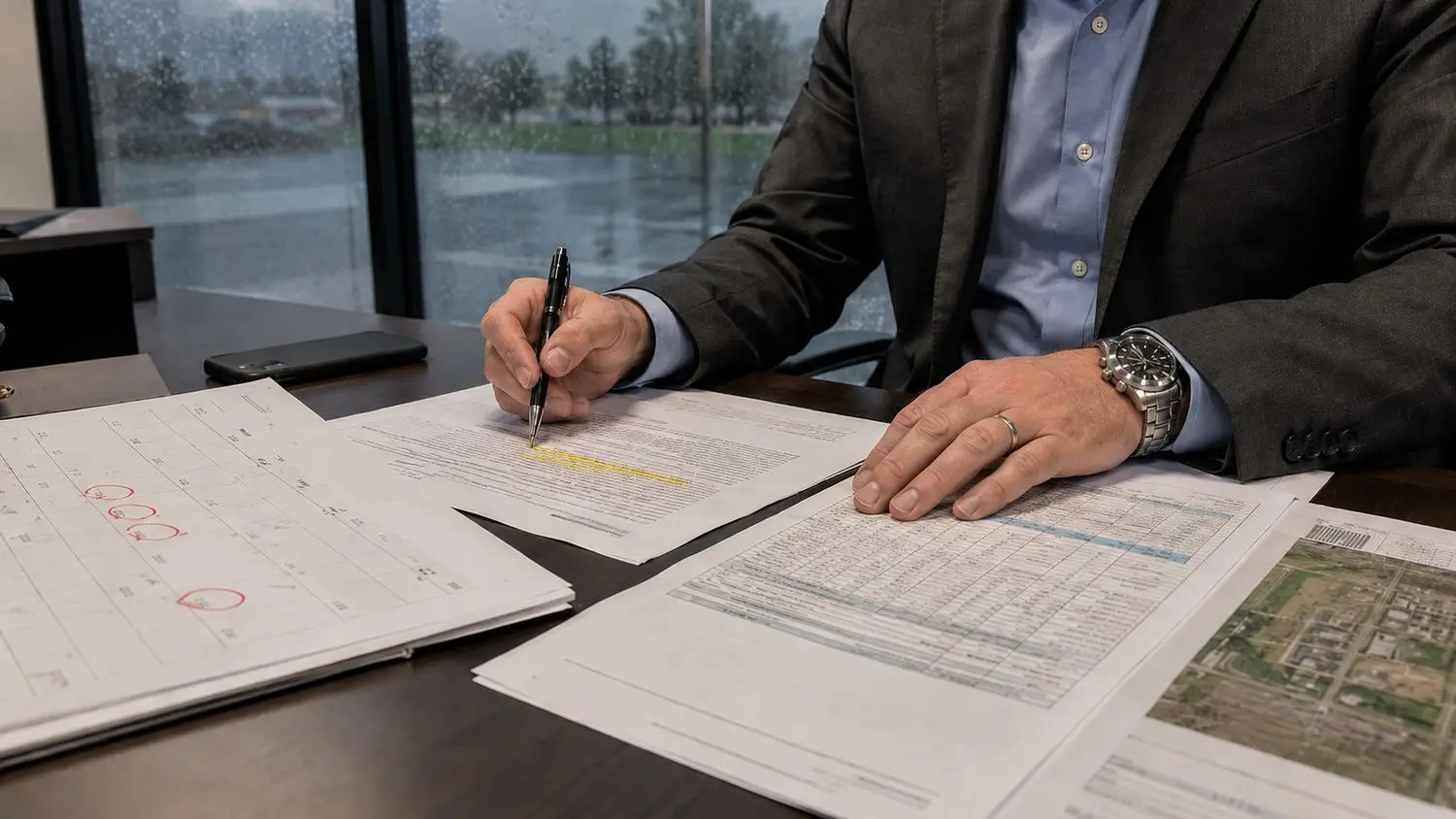
A utility feasibility study ordered during due diligence (before the purchase agreement is signed or while the option period is still open) gives the acquisitions team information they can act on.
If the study reveals that the site requires a $4 million force main extension that was not in the acquisition model, the purchase price can be renegotiated to reflect that cost. If a faster permitting pathway is available that the current engineering team did not identify, it can be incorporated into the project strategy before capital is committed. If the site has no viable wastewater solution at any cost that makes the project pencil, it can be passed on. Capital is preserved for a deal that works.
A utility feasibility study ordered after closing produces the same information. But none of those options exist anymore. The developer owns the problem at the price they paid. The infrastructure cost is absorbed, not negotiated. The permitting delay is absorbed, not planned for. The investor conversations that follow are about damage control, not deal optimization.
The practical difference between ordering a utility feasibility study in week one of due diligence versus discovering the same information after closing is often $1 million to $5 million in unplanned cost and six to eighteen months of schedule impact. The study itself runs $3,000 to $8,000 depending on complexity and the number of options to evaluate.
What Happens When Developers Skip This Step
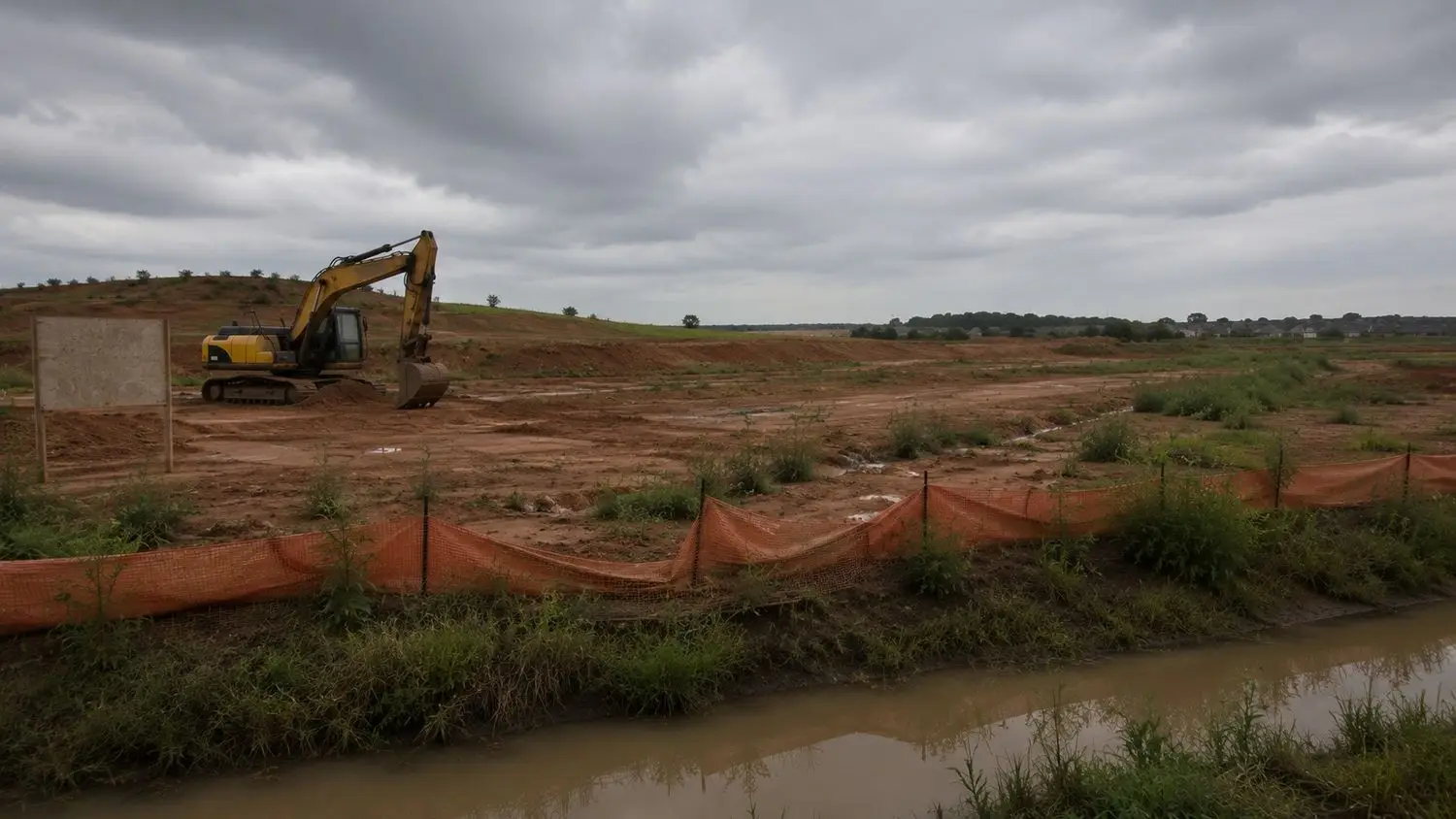
The pattern is consistent across the markets MES works in: Texas, Colorado, California, Arizona. A developer acquires a site. The site civil engineer handles grading and drainage. Wastewater gets treated as a detail to resolve after closing. The utility issue surfaces six to twelve months later during permitting, after land closing, after construction drawings are partially complete, after the development is committed to a timeline the infrastructure cannot support.
The costs that follow are not engineering costs. They are carrying cost exposure, redesign fees, permit revision cycles, and in some cases investor exits triggered by a project that is months behind a schedule that was never built around the actual utility constraints.
A 30-day due diligence period is enough time to complete a utility feasibility study on most Texas development sites when the work starts immediately. A 60-to-90-day option period provides more than enough time. The study requires a site description, a development program in GPD or land use terms, and the location of the nearest utility infrastructure. Everything else is the engineer’s work to produce.
Frequently Asked Questions
What does a utility feasibility study cost?
Most utility feasibility studies for Texas development sites run $3,000 to $8,000 depending on the number of options to evaluate and site complexity. That cost is a small fraction of the infrastructure cost differential between options and a fraction of one month of carrying costs on a project that stalls waiting on permits.
How long does a utility feasibility study take?
Two to four weeks on most Texas development sites when ordered promptly. For sites with complex regulatory environments or multiple viable options requiring agency contact, four to six weeks. Ordered in week one of a 60-day due diligence period, results are available with time to act before the option expires.
Who should perform the study?
A water and wastewater engineer with direct experience in the relevant regulatory agencies: TCEQ for Texas, CDPHE for Colorado, Regional Boards for California. A site civil engineer who handles grading and paving can identify where a sewer line is on a plat. Evaluating system capacity, identifying permitting pathways, estimating private infrastructure costs, and assessing realistic timelines requires a different discipline.
Related Resources
- Land Application Permits in Texas: A Faster Path to Wastewater Approval for Developers
- Building a Private WWTP in Texas: What Developers Need to Know Before They Commit
- How Carrying Costs Are Killing Texas Development Projects (And the Permit Strategy That Fixes It)
- What Is a 210E Authorization and How Can It Save Your Texas Development Project
Need a Utility Feasibility Study on a Texas Site?
Modern Engineering Solutions works with developers, acquisitions managers, and project directors to evaluate utility feasibility during due diligence, delivering infrastructure cost and permitting pathway analysis that supports accurate acquisition pricing before capital is committed.
We specialize in:
- Utility feasibility assessments during land due diligence (two to four week turnaround)
- Municipal connection capacity and extension cost analysis
- Private WWTP sizing, process selection, and permitting pathway comparison
- 210E, TLAP, and TPDES permit strategy for Texas development projects
- Pro forma support: infrastructure cost and carrying cost exposure analysis for lender and investor reporting
Modern Engineering Solutions, McKinney, Texas. Contact: (214) 833-6748 or mod-eng.com
Share via: