Quick Answer
Florida’s rapid population growth is colliding with wastewater infrastructure that in many communities is forty to sixty years old, operating above its designed hydraulic capacity, and funded by capital improvement programs that were not sized for the pace of growth the state is experiencing. The practical consequences include lift station failures, force main breaks, collection system overflows, treatment plant capacity shortfalls, and developer moratoriums where utilities have stopped accepting new connections because they cannot guarantee capacity. For developers, this means that wastewater service availability is no longer a background utility assumption. It is a land development constraint that must be evaluated before acquisition, before entitlement, and before any project financing is structured. For municipalities and utilities, it means that capital planning cycles that worked for gradual growth are inadequate for the growth rates Florida is now absorbing.
Where Florida’s Wastewater Infrastructure Came From and Why It Is Under Stress
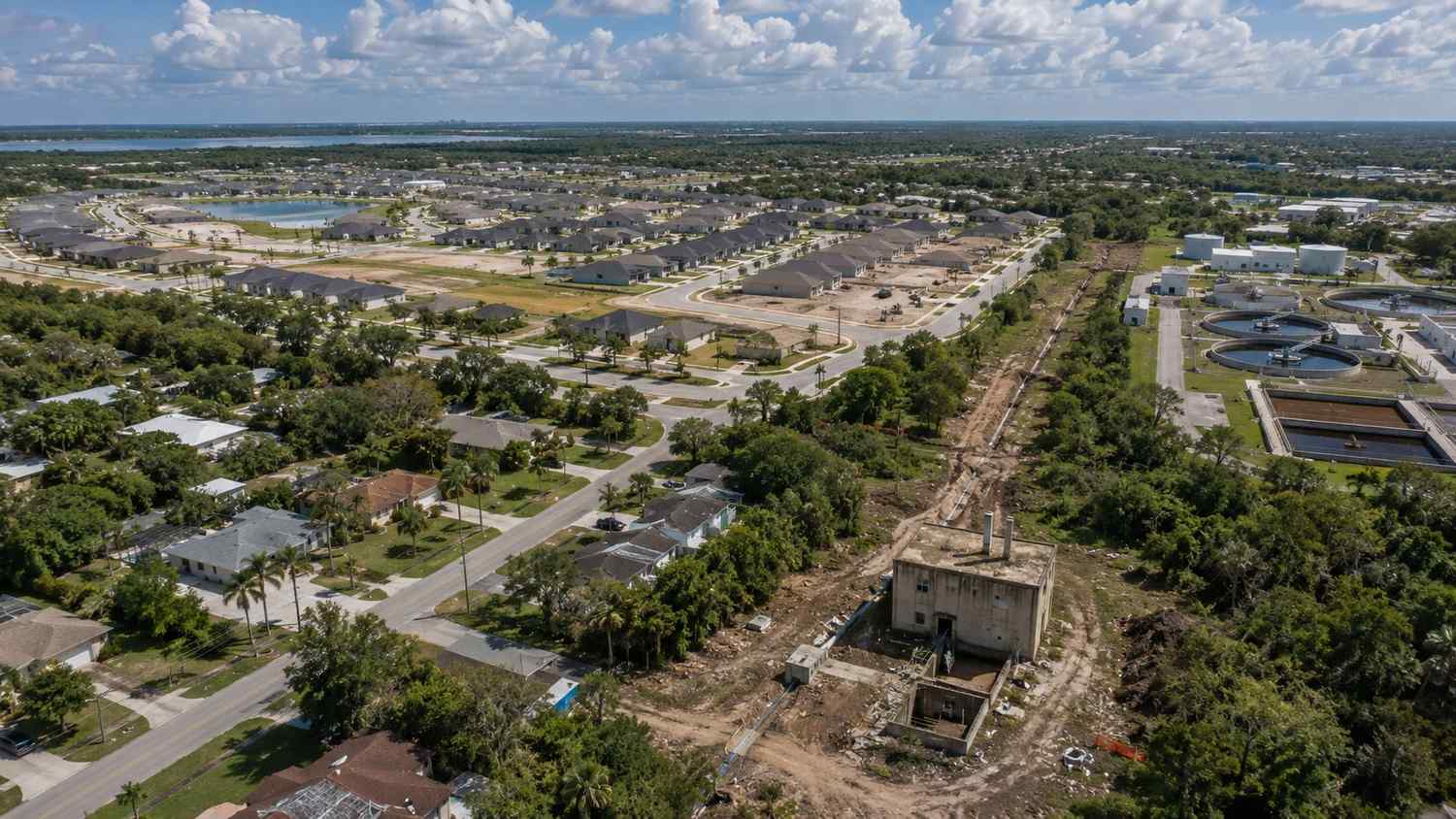
The majority of Florida’s existing wastewater collection and treatment infrastructure was built during the development booms of the 1960s, 1970s, and 1980s, when the state’s population was growing rapidly but from a much smaller base than today. That infrastructure was designed using the population projections and flow assumptions of its era, with service areas, pipe capacities, lift station pumping rates, and treatment plant headworks sized for the communities those planners envisioned. Many of those communities have grown well beyond those projections, and the infrastructure has absorbed incremental connections and extensions over decades without systematic replacement or comprehensive capacity expansion.
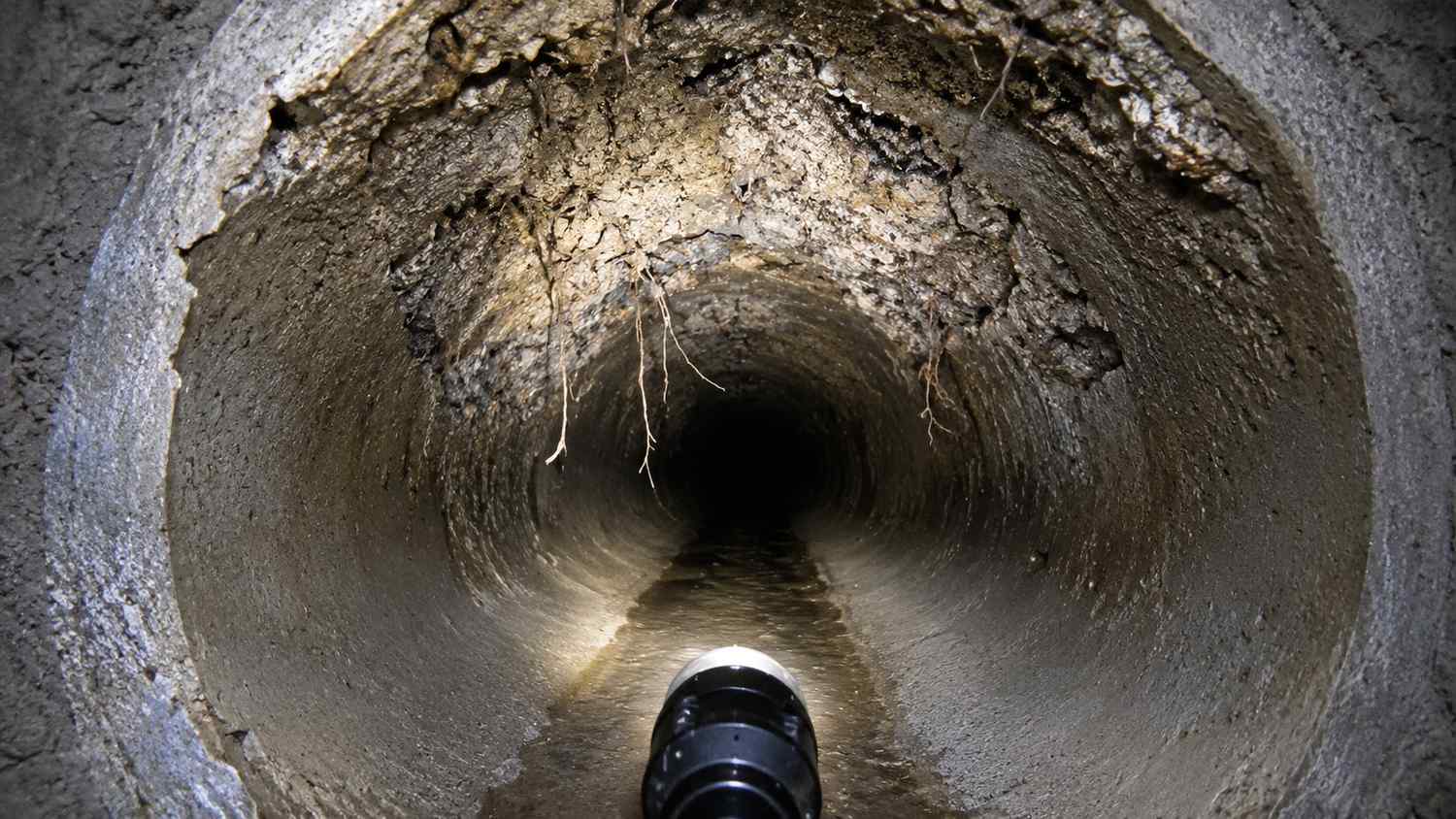
Concrete sewer pipes installed in the 1960s and 1970s in Florida’s coastal environments have experienced accelerating deterioration from hydrogen sulfide corrosion, which attacks the crown of the pipe from inside the collection system and progressively reduces structural integrity. Cast iron force mains installed in the same era are reaching the end of their service life and failing with increasing frequency, producing spills that trigger FDEP regulatory response, public health concerns, and enforcement obligations. Lift stations that were adequate for a neighborhood of 200 homes now serve two or three times that number of connections, operating outside their original design envelope with pumps running longer duty cycles, higher wet well levels, and reduced response time for equipment failures before an overflow event occurs.
The Florida Department of Environmental Protection has become more active in enforcement of collection system spills and overflows as the frequency of those events has increased with system age and loading. Consent orders, corrective action plans, and fines for sanitary sewer overflows have become a regular feature of utility management in Florida communities experiencing growth related infrastructure stress. Utilities that are managing a portfolio of aging assets while simultaneously trying to serve new development are doing so with capital budgets that were not designed for both challenges simultaneously.
Lift Station Failures and Force Main Vulnerabilities
Florida’s wastewater collection system relies heavily on lift stations and force mains because the state’s flat topography makes gravity only collection impractical for most service areas. A typical Florida community has dozens to hundreds of lift stations of varying age and condition, many of which have not been comprehensively evaluated for current loading conditions since their original installation. A lift station that was sized for a peak hourly flow of 150 gallons per minute serving a 1980s subdivision is now receiving 300 gallons per minute from the same service area as infill development and density increases have added connections it was never designed to handle.
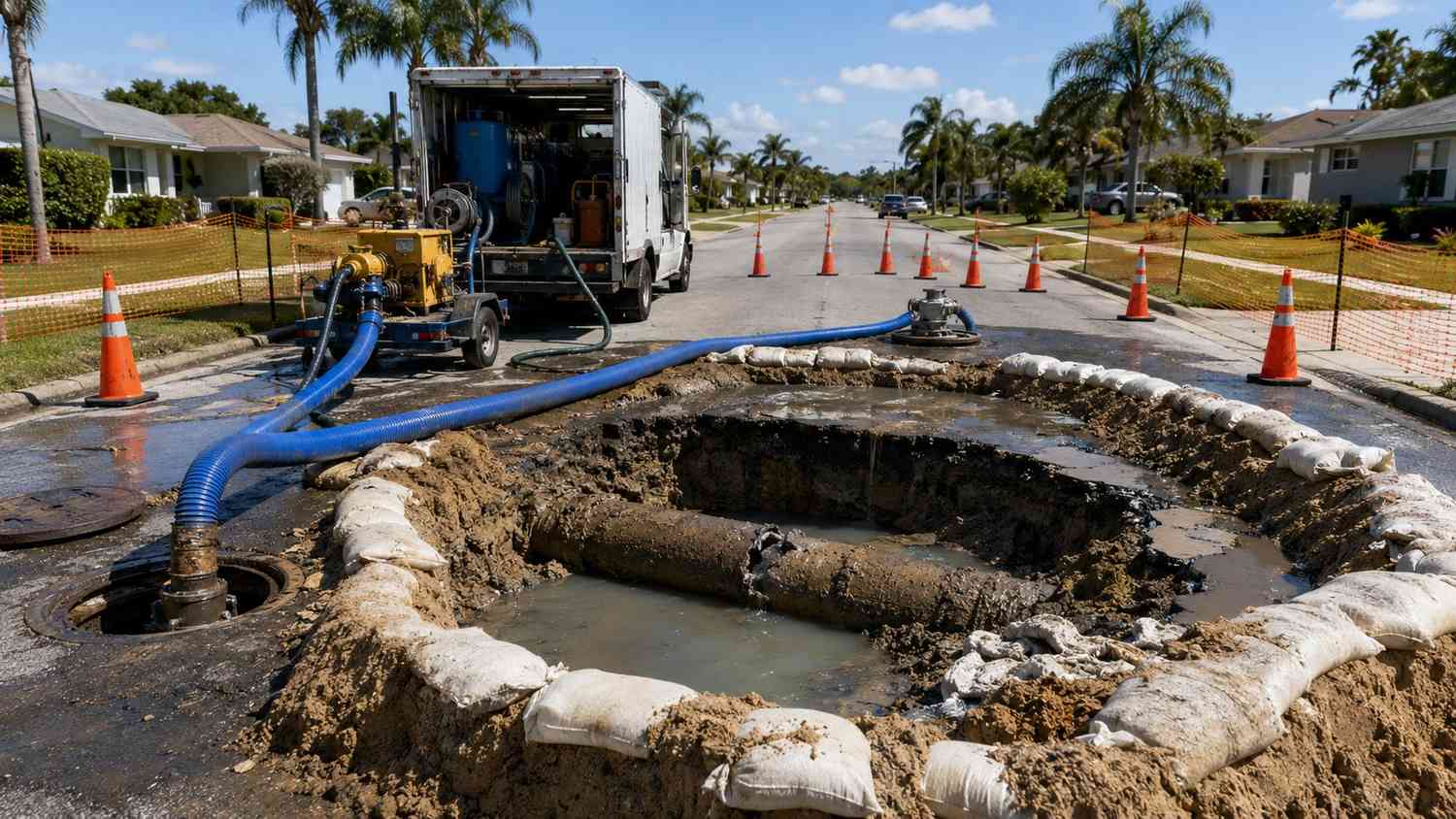
Force main failures in Florida produce immediate regulatory and public relations consequences. A force main break that spills raw or partially treated wastewater to a drainage ditch, a canal, or a coastal water body triggers a mandatory FDEP notification, a spill response, a cleanup obligation, and in many cases a media event that creates public pressure on utility managers and elected officials. The frequency of these events is increasing in communities with aging force main infrastructure because pipe wall thickness has been reduced by corrosion to the point where operating pressure excursions from pump starts produce failures at pipe joints and fittings that showed no external evidence of deterioration before the break occurred.
Condition assessment programs for force mains, including closed-circuit television inspection, acoustic leak detection, and pipe wall thickness measurement, are the engineering tools that allow utilities to identify high risk segments before they fail rather than after. Prioritizing capital replacement investment on the segments with the highest failure probability and the highest consequence of failure is a capital efficiency strategy that requires current condition data to execute. Many Florida utilities are now implementing these programs for the first time after years of reactive maintenance, and the findings consistently reveal that the backlog of pipe in need of replacement is larger than the capital program can address in the near term.
Treatment Plant Capacity and the Developer Moratorium Problem
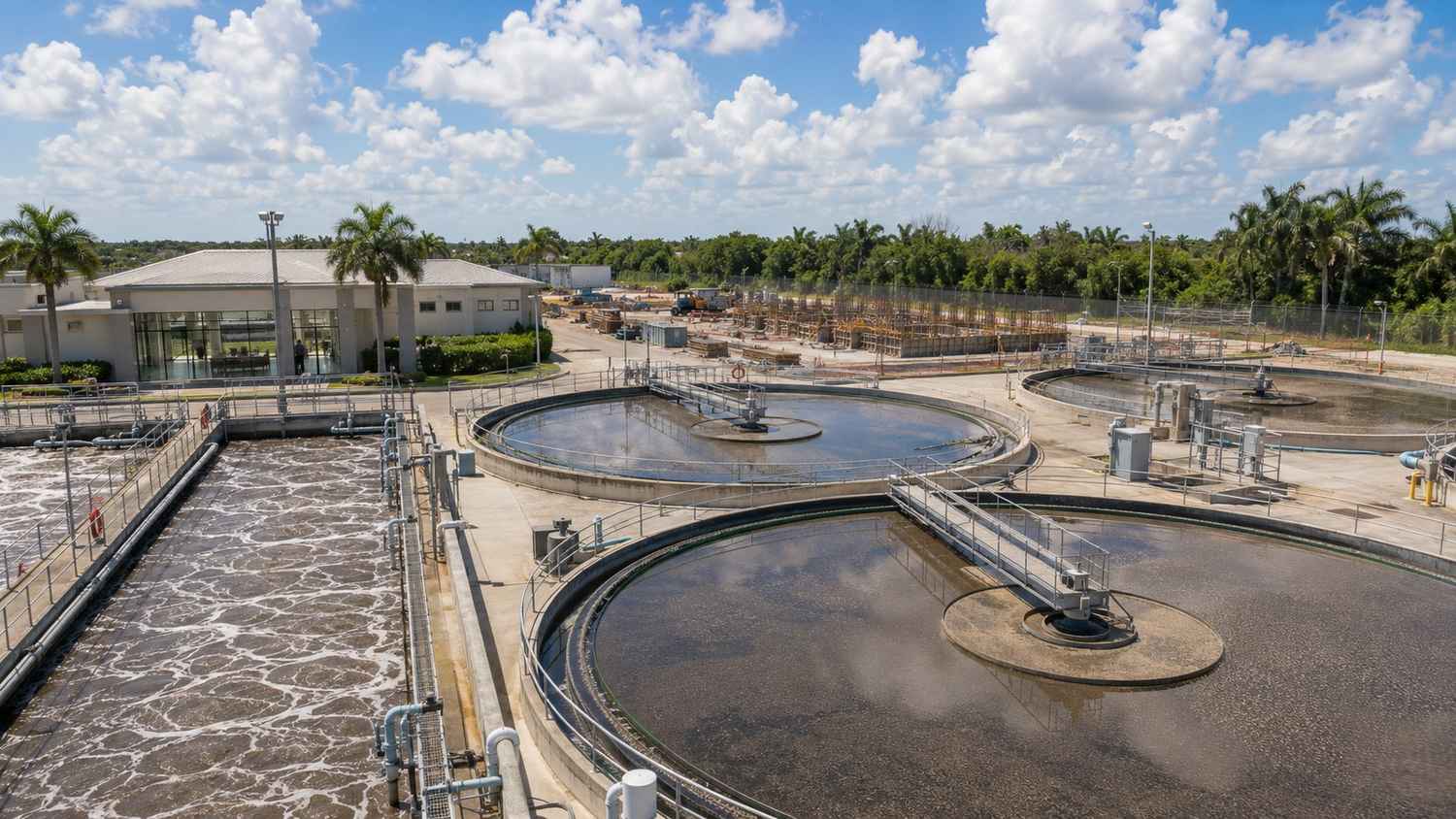
Treatment plant capacity is the constraint that most directly affects development feasibility in Florida right now. A utility that has reached or is approaching its permitted treatment capacity cannot accept new connections without either expanding its permitted capacity or demonstrating that conservation measures and inflow and infiltration reduction will free up capacity from the existing allocation. In Florida, the permitted capacity of a wastewater treatment facility is established in the FDEP operating permit, and exceeding the annual average daily flow limit in that permit is a violation that can trigger enforcement action.
Developer moratoriums occur when a utility formally notifies the development community that it cannot issue capacity reservation commitments for new connections because the treatment plant and collection system do not have adequate capacity to serve additional load. Moratoriums are not uncommon in high growth Florida counties, and they can affect projects at any stage from site acquisition through final plat approval. A developer who has completed entitlement, secured financing, and is ready to begin construction can find that the utility serving the project has issued a moratorium that halts the project until the utility completes a treatment plant expansion that may be two to four years away from completion.
Evaluating utility capacity availability before acquisition is the only reliable protection against this scenario. A formal capacity availability inquiry to the serving utility, reviewed in conjunction with the utility’s capital improvement plan and its current average daily flow relative to its permitted capacity, provides a defensible picture of whether the utility can serve the proposed development and on what timeline. This evaluation should occur before any serious financial commitment is made to a Florida development site.
Septic to Sewer Conversion and the Coastal Water Quality Imperative
Florida has approximately 2.6 million active septic systems, many of them in coastal communities where nitrogen loading from septic tank drain fields is a documented contributor to seagrass decline, algal blooms, and the degradation of the nearshore marine environment that drives Florida’s tourism economy. The state has established a prioritization framework for septic to sewer conversions in areas with identified water quality impairments, and local governments in high priority areas are under increasing regulatory and political pressure to extend sewer service to neighborhoods that have relied on septic systems for decades.
Septic to sewer conversion projects are capital intensive undertakings that require collection system design and construction, lift station installation, connection to an existing treatment plant with adequate capacity, and coordination with thousands of individual property owners who must disconnect their septic systems and connect to the new sewer. For utilities in high growth coastal communities, managing a septic to sewer conversion program while simultaneously serving new development and maintaining an aging existing system is a capital planning and project management challenge that exceeds the internal capacity of many smaller utilities. Engineering support for conversion program planning, grant and funding application development, and project management is a growing need in coastal Florida communities facing this convergence of pressures.
Capital Improvement Planning in a High Growth Environment
The capital improvement planning process that worked for Florida utilities during periods of moderate growth is not adequate for the growth rates many communities are now experiencing. Traditional five year capital improvement plans built around incremental asset replacement and modest capacity additions cannot address the scale of infrastructure need created by communities that are growing at ten to twenty percent per year while simultaneously managing assets that are reaching the end of their service lives.
Florida utilities facing this challenge need capital improvement plans built on current system condition data, realistic growth projections by service area, hydraulic modeling that identifies capacity constraints before they produce failures or moratoriums, and a funding strategy that matches the scale of the identified need. Funding sources available to Florida utilities include the Florida Department of Environmental Protection’s State Revolving Fund, EPA Bipartisan Infrastructure Law allocations flowing through state programs, USDA Rural Development funding for smaller communities, and special assessment districts for growth driven infrastructure that can allocate costs to the development creating the demand. None of these funding sources are automatic, and all of them require engineering documentation, project prioritization, and application preparation that must be managed as a deliberate program rather than a reactive response to individual failures.
Frequently Asked Questions
How do we know whether the utility serving our Florida development site has capacity to serve the project before we commit to the acquisition?
The most direct approach is a formal written inquiry to the utility requesting a capacity availability determination for the proposed project flow. Florida law requires utilities to respond to these inquiries, and the response will indicate whether capacity is available, whether a reservation can be made, and whether any planned capacity expansions are programmed in the utility’s capital improvement plan. Reviewing the utility’s current FDEP operating permit and its most recent annual report for current average daily flow relative to permitted capacity provides additional context for evaluating the reliability of the capacity determination. This due diligence step should occur before any significant financial commitment is made to the site.
Our Florida municipality is experiencing growth faster than our capital improvement plan anticipated. Where do we start?
Start with a current hydraulic model of your collection system and treatment plant loading relative to capacity. If you do not have a current hydraulic model, commissioning one is the first priority because it provides the factual foundation for every capital prioritization decision that follows. From the model, identify the segments and facilities that are operating closest to or above their design capacity, and prioritize condition assessment and capital investment on those elements. Simultaneously, initiate contact with FDEP and the Florida Department of Environmental Protection’s State Revolving Fund program to begin the funding application process for the projects your model identifies, because the time from funding application to construction award is long enough that every month of delay in starting the process is a month added to the end of the project schedule.
We are a developer in Florida dealing with a utility that has issued a moratorium. Are there any options for moving our project forward?
Options exist but they require careful evaluation. In some cases, a developer can negotiate a capacity reservation agreement tied to a specific utility expansion project, with a defined timeline and financial participation from the developer in the expansion cost. In other cases, the project may be able to install a private package treatment plant with FDEP permitting as an interim measure while the utility expands its capacity, with a transition to utility service when capacity becomes available. Each of these options has regulatory, financial, and operational implications that require engineering analysis specific to the project site and the utility’s circumstances. Treating the moratorium as a fixed constraint rather than a variable to be engineered around is rarely the right strategic response for a developer with a viable site and a legitimate project.
Planning Wastewater Infrastructure for Growth in Florida?
MES is licensed in Florida and works with developers, municipalities, utility districts, and engineering teams to evaluate infrastructure capacity, assess system condition, plan capital improvements, support permitting, and make practical engineering decisions before wastewater constraints delay or derail projects.
We specialize in:
- Wastewater system capacity evaluation and hydraulic modeling for Florida utilities managing rapid growth
- Lift station condition assessment, sizing evaluation, and replacement planning for Florida collection systems
- Force main condition assessment program development and capital replacement prioritization
- Septic to sewer conversion program planning, engineering, and funding application support for Florida coastal communities
- Treatment plant capacity expansion permitting and FDEP coordination for Florida municipalities and utility districts
- Capital improvement plan development and State Revolving Fund application support for Florida water and wastewater utilities