
Blog
LCRA Water Rights and New Development: What You Need to Know Before Breaking Ground East of Austin
Before building east of Austin, check how LCRA water rights, your utility's CCN, its contract supply and LCRA drought cuts affect water for your site.
LCRA water rights usually reach your project through the utility that serves your tract. East of Austin, that utility may run on its own water rights, a firm water contract with the Lower Colorado River Authority (LCRA), groundwater or a mix. A water line at the property edge proves none of that. Before you close, confirm who serves the tract, where its water comes from, how much is left and how a drought would cut it.
Why isn't a water line at the property edge proof of supply?
Because pipes are capacity and supply is acre-feet. A utility can have room in its mains and still have most of its contracted water committed to existing customers and approved plats.
Texas surface water runs on priority. Texas Water Code §11.027 says that between appropriators, the first in time is the first in right. A utility without enough rights of its own buys water under contract. Even the City of Austin works this way: LCRA's page on its water partnership with Austin says the city can use water from a combination of Austin's and LCRA's water rights.
An LCRA contract sets a Maximum Annual Quantity (MAQ), the most water LCRA will make available to that buyer in a year. TCEQ's minimum capacity rule, 30 TAC §290.45, sizes pumps and treatment per connection. A system can meet that rule and still have little uncommitted MAQ. Ask for both.
Where does water east of Austin come from?
It depends on the provider. Some take Colorado River water under LCRA contracts, some pump groundwater and some use both.
LCRA's firm water contracts serve customers such as municipalities and industries in its water service area that take water from the Highland Lakes or the lower Colorado River. In Bastrop County, groundwater falls under the Lost Pines Groundwater Conservation District, whose primary aquifer is the Carrizo-Wilcox. Drought rules follow the source, not the pipe.
Who has the right to serve your site?
The utility that holds the certificate of public convenience and necessity (CCN) for your tract. Find it first, because every other answer comes from that utility.
Under Texas Water Code Chapter 13, a utility or water supply corporation needs a CCN from the Public Utility Commission (PUC) before it provides retail water or sewer service (§13.242). A CCN holder must serve every consumer in its certified area, with listed exceptions (§13.250).
The CCN and the LCRA contract are two different maps. LCRA's Water Contract Rules (November 2022) define each contract's service area by legal description. Adding 50 acres or more, or 25 percent or more of that area, is a substantive amendment LCRA must approve. Ask whether your tract sits inside both lines.
If the CCN holder cannot serve on workable terms, §13.2541 lets an owner of at least 25 acres that is not receiving service, in a county meeting the statute's population tests, petition for streamlined expedited release. The owner may owe the utility compensation set by appraisal, and release alone brings no water: the tract still needs another provider. The same boundary checks come up in CCN territory disputes in Collin County.
What is the difference between firm and interruptible LCRA water?
Firm water is supply LCRA can deliver through a repeat of the worst drought on record. Interruptible stored water can be cut back or cut off in a drought so firm demand is met.
LCRA's 2020 Water Management Plan fact sheet says firm customers are typically cities, while agricultural customers in Colorado, Wharton and Matagorda counties buy interruptible water. A subdivision needs firm supply behind it, confirmed in writing. TCEQ approved the current plan in February 2020, and LCRA's Water Management Plan page says its board approved proposed updates in February 2026 and LCRA submitted them to TCEQ in March. Check which version is in effect.
Does firm water mean no cuts in a drought?
No. Firm customers face mandatory demand reduction goals as the Highland Lakes drop, and pro rata cuts in the worst case.
LCRA's Drought Contingency Plan for Firm Water Customers (April 2024) ties each stage to combined storage in Lakes Buchanan and Travis, after interruptible water to downstream farms has been curtailed:
- Stage 1, below 1.1 million acre-feet: a 10 percent reduction goal.
- Stage 2, below 900,000 acre-feet or a low-inflow test: a 20 percent goal and ornamental watering once a week at most.
- Stage 3, below 750,000 acre-feet: a 25 percent goal and sprinklers banned or capped at 6 hours a week.
- Stage 4, below 600,000 acre-feet with a board declaration of a drought worse than the drought of record: firm supply curtailed pro rata, starting at 20 percent.
Two rules reach a developer directly. A contract holder that sells to a third party serving end users, such as a district, must require matching conservation and drought programs. And LCRA's Water Conservation Plan Rules require every municipal plan to limit spray irrigation to twice a week, permanently. Design HOA and amenity irrigation for that from day one.
The drought plan does not limit a customer's use of groundwater or of surface water from outside the Colorado River basin.
When does a project need its own LCRA raw water contract?
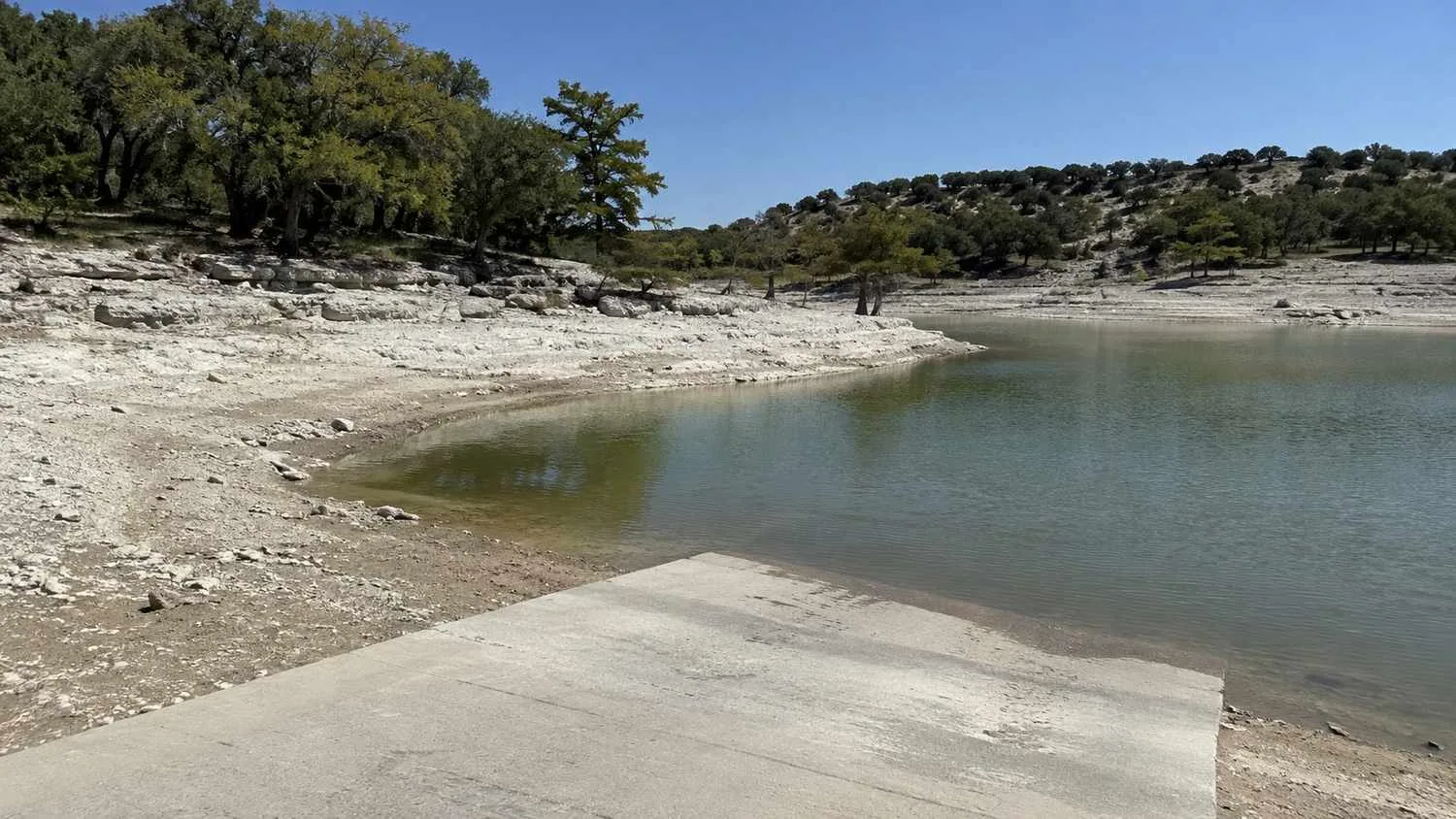
When a large user, often industrial, plans to take water straight from the Colorado River or the Highland Lakes instead of buying treated water. That is a bigger job than a meter tap.
LCRA's contract rules set the main hurdles:
- LCRA must accept your water conservation and drought plans first.
- New contracts of 500 acre-feet per year or more need board approval.
- Requests of 1,500 acre-feet or more, or for supply not immediately available from existing sources, get an extended technical review.
- An industrial quantity needs a professional engineer's written demand estimate.
- Intakes should be engineer-designed to divert across a range of lake or river levels. The contract grants no easement to reach the water.
- The meter needs LCRA approval, 5 percent accuracy and an all-weather access road.
Should the wastewater plan be settled at the same time?
Yes. Water and sewer often come from different providers, and both drive layout and phasing.
Confirm who holds the sewer CCN and whether you would need your own discharge or land application permit. LCRA's conservation rules also ask customers whether wastewater reuse fits as a supply. A site feasibility study can answer water and wastewater in one pass.
What should you confirm before you close?
Seven yes-or-no checks for developers and builders in a feasibility period. Any no or unknown means your water supply is not confirmed yet.
- Do you know which utility holds the water CCN for every acre?
- Has it said in writing where its water comes from?
- If an LCRA contract is involved, is your tract inside its service area?
- Has the utility confirmed in writing that its uncommitted supply covers your buildout demand?
- Is that supply firm, not interruptible?
- Have you read the utility's drought contingency plan and its stage triggers?
- Is your landscape irrigation designed for twice-a-week watering?
Pass rule: all seven are yes. Then ask the utility which facilities you must build, how it plans to add supply, and what happens to later phases if its contract fills first.
Limits: this is general education from LCRA's published plans and rules and the Texas Water Code as of October 2026. Every contract has its own terms. The utility's written answers and an engineer's review of your site govern.
Frequently asked questions
Does LCRA sell water directly to developers?
Usually through a utility. LCRA's firm contracts go to buyers such as municipalities and industries, and the utility sells retail water inside its CCN. LCRA does offer property owner associations landscape irrigation contracts of up to 30 acre-feet per year for up to 10 years.
How much water is an acre-foot?
325,851 gallons, enough to cover one acre one foot deep.
I'm a developer under contract on 60 acres in eastern Travis County, and the local water supply corporation says it can serve us. What should I get in writing before my feasibility period ends?
Its water source, whether the supply is firm, its uncommitted supply against your buildout demand, whether your tract is in its LCRA contract service area, the facilities you must build and its drought triggers. A will-serve letter without those is a start, not a supply.
I'm a homebuilder buying acreage east of Austin where the seller holds an LCRA firm water contract. Does that contract transfer to me at closing?
Not automatically. LCRA's rules say water contracts do not convey with title. A contract can be assigned only as it allows, with LCRA's consent before the sale.
Does LCRA's drought plan apply to well water?
No. The firm customer plan does not limit groundwater use. Wells answer to the local groundwater conservation district where one exists, such as Lost Pines in Bastrop and Lee counties.
Related resources
- What a Utility Feasibility Study Actually Tells You, and When to Get One
- Austin Water Service Extension Requests: Who Pays for Off Site Water, Wastewater, and Reclaimed Water Improvements?
- Water Supply Planning for Master Planned Communities in Tarrant County: What Developers Get Wrong
- Your Three Wastewater Disposal Options in Texas: Discharge, Reuse, or Land Application
Checking water supply for a tract east of Austin?
We trace the supply from the CCN holder back to the water right, read the contract and drought terms, and size your demand before you close.
Talk to Modern Engineering Solutions about your site, or call (214) 833-6748.
Keep reading
More to read.
Talk to an engineer
Tell us about your project.
An engineer reads it
Not a salesperson. Someone who can tell you whether the pathway is real.
You get a first answer
Your options, the agencies involved and the questions that decide cost and schedule.
You decide
No commitment to have the first call.
Prefer the phone? (214) 833-6748