
Blog
Water Supply Planning for Master Planned Communities in Tarrant County: What Developers Get Wrong
Water supply planning for master planned communities in Tarrant County means confirming the CCN, wholesale supply, storage, pressure plane and fire flow early.
Quick answer
Water supply planning for master planned communities in Tarrant County means proving more than a main on the frontage. Confirm in writing who must serve the tract, whether the retail utility's wholesale supply and storage still meet TCEQ minimums with your lots added, which pressure plane serves each part of the site, and the fire flow at your connections. Get those answers during due diligence, before the phasing plan and the closing.
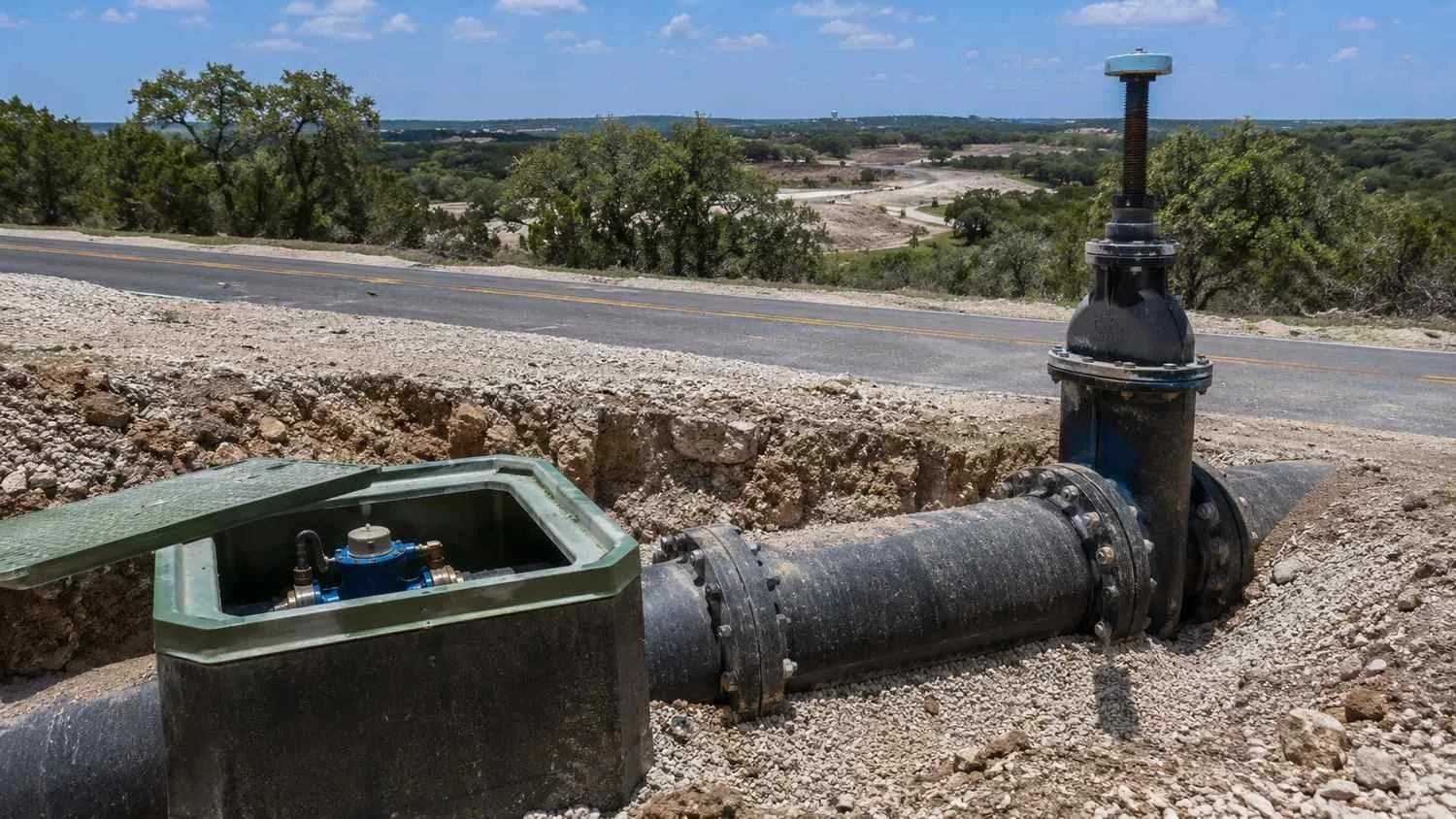
Who actually supplies water to a Tarrant County development?
Usually three layers, and each one has to say yes. The Tarrant Regional Water District provides raw water to more than 50 wholesale customers in 11 North Texas counties. Its primary wholesale customers are Arlington, Fort Worth, Mansfield and the Trinity River Authority.
Below that, Fort Worth Water says other cities and entities in Tarrant, Johnson, Denton and Parker counties contract with it for drinking water, wastewater and reclaimed water. Then your retail provider, a city, a district or a certificated utility, serves the lots.
A main on the GIS map only shows the bottom layer has a pipe there. It says nothing about the treatment, contract and storage behind it.
Which utility has to serve your tract?
Start with the certificate. Under Texas Water Code §13.250(a), a retail public utility that holds a certificate of convenience and necessity (CCN) must serve every consumer within its certified area and render continuous and adequate service. The Public Utility Commission's water and sewer CCN viewer shows who holds the area.
Release is possible, with one big Tarrant exception. Tarrant County's 2020 census population was 2,110,640, above the 1.2 million threshold in Water Code §13.2541. That section lets the owner of a tract of at least 25 acres that is not receiving service petition for streamlined release, and the PUC must grant it within 60 days of filing. The PUC may require compensation to the certificate holder.
The exception is §13.254(a-2). If the tract is inside the limits or extraterritorial jurisdiction of a city over 500,000 people, and that city or its utility holds the certificate, streamlined release is not available. In Tarrant County, check Fort Worth first. Either way, release only removes a provider; you still need one that can serve.
Does the retail utility have supply and storage for your lots?
TCEQ sets minimum capacity per connection, and your lots count. 30 TAC §290.45 applies its minimums to the whole system and to each pump station and pressure plane. For a community system on surface water, they include:
- treatment plant capacity of 0.6 gpm per connection;
- total storage of 200 gallons per connection;
- elevated storage of 100 gallons per connection, or 20 gallons of pressure tank per connection in a smaller system; above 2,500 connections the rule calls for elevated storage unless TCEQ approves an alternative method of pressure maintenance.
A utility that buys treated water carries the same duty. Under §290.45(f), its contract's maximum daily purchase rate plus its own production must reach at least 0.6 gpm per connection, and the purchaser is responsible for meeting the capacity requirements, unless the contract bars it from other sources, in which case the wholesaler is.
Run the arithmetic for 2,000 lots: about 1,200 gpm of added supply capacity, 400,000 gallons of added total storage and, where elevated storage is the method, 200,000 gallons of it. These are state minimums, and the rule says they do not include fire flow. If the utility's contract or tanks are already near their limits, your project is the one that tips them.
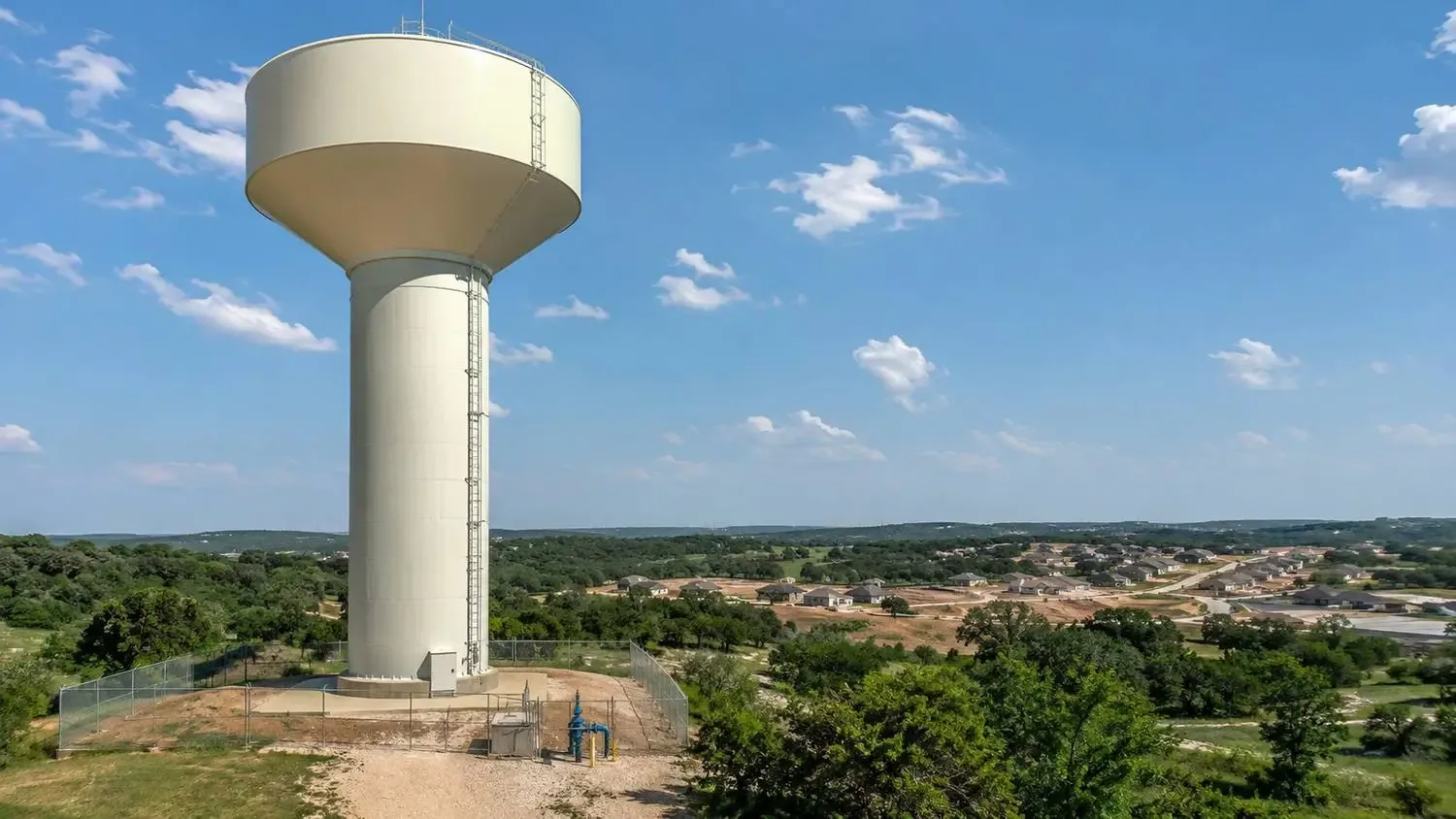
Which pressure plane serves which part of the site?
Elevation decides it, and large tracts often straddle a boundary. TCEQ's distribution rule, 30 TAC §290.44(d), requires a system designed for at least 35 psi at all points at 1.5 gpm per connection, and, where the system provides firefighting, 20 psi under combined fire and drinking water flow.
Every 2.31 feet of rise costs about 1 psi. A tract with 40 feet of relief loses about 17 psi from its low lots to its high lots on the same plane. The high end may need a booster station, a pressure reducing valve at a plane boundary, or service from the next plane up.
The same section says that when service is provided to more than one pressure plane, or low pressures develop, boosting is by pumps taking suction from storage tanks unless TCEQ approves an exception. That is a facility, a site and a schedule item, so find it during due diligence.
Is fire flow checked where your buildings are?
Check it at the hydrants that serve the largest buildings, not on average. The local fire code sets the required flow by building type and size. An amenity center, a school site or a multifamily parcel usually needs far more than a single-family street.
That flow has to be available at a residual pressure, at the hydrants serving each building, with the pipe sizing, looping and storage in place for that phase. Start the fire flow analysis from a flow test and the utility's model, and phase the loops so each phase stands on its own.
When should you get these answers in writing?
Before the feasibility period ends. Send the utility a formal capacity request with lot counts, unit types, commercial and amenity parcels, phasing and peak demands. Ask for treatment and contract capacity, storage by plane, the plane assignment for each part of the site, fire flow at representative connections, and any offsite mains, storage or pumping they will require.
Ask whether the reply is an availability statement or a commitment to serve, and what turns one into the other. A site feasibility study that runs these questions before closing keeps your options open: renegotiate, rephase or walk.
Is your water supply plan ready to commit to?
Answer yes or no. Any no is an open risk to your phasing plan.
- Do you know who holds the water CCN, or which city serves the tract?
- If release is an option, have you checked §13.2541 and the §13.254(a-2) exclusion?
- Has the retail utility confirmed supply and contract capacity for your full build-out?
- Has it confirmed storage per connection for the plane that will serve you?
- Do you know which pressure plane serves each part of the site?
- Has fire flow been checked for the largest buildings in each phase?
- Is the answer in writing, and do you know whether it commits the utility?
Questions for your team: What offsite work does the utility expect from us? Which phase triggers new storage? Who pays for what is a negotiation, so when does it start?
Limits: this is general education on water supply due diligence in Tarrant County. Statutes, rules, contracts and city policies change, and each utility answers for its own system, so confirm the current requirements with the serving utility, the PUC, TCEQ and your engineer and counsel.
Frequently asked questions
What is a CCN and why does it matter for a master planned community?
It is the PUC certificate that gives a retail utility the service area and the duty to provide continuous and adequate service in it. If your tract is inside one, that holder is your starting point.
Can we get our Tarrant County tract released from a CCN?
Possibly. A tract of at least 25 acres not receiving service can petition under Water Code §13.2541, with a 60-day decision and possible compensation. It is not available inside the limits or ETJ of a city over 500,000, such as Fort Worth, where that city holds the certificate.
I'm a land acquisition manager looking at a large tract in western Tarrant County, and the seller says there's a 12-inch main on the frontage. What should we ask before the feasibility period ends?
Ask who must serve the tract, whether the retail utility's contract and storage cover your full build-out under §290.45, which pressure plane serves the high ground, and what fire flow the main delivers at residual pressure. Get the replies in writing.
We're planning about 1,800 lots with a city that buys treated water from Fort Worth. How do we know its wholesale contract can carry us?
Ask for the contract's maximum daily purchase rate and the city's current connections. Section 290.45(f) requires that rate plus any own production to reach 0.6 gpm per connection, so you can check whether your lots fit.
Our tract spans two pressure planes. Does that complicate the design?
It adds a boundary to design around, usually with valves, a booster or separate systems by plane. Found early, it shapes the phasing and lot layout. Found late, it reshapes approved plans.
Related resources
- The Integrated Pipeline Project: What Tarrant Regional Water District’s Raw Water Supply Plan Means for Fast Growing Western Suburbs
- Wastewater Capacity in Fort Worth’s ETJ: What Happens When the City Won’t Annex Your Development
- CCN Territory Disputes in Collin County: What to Check Before Land Crosses a Water Provider Boundary
- Water and wastewater engineering in Dallas-Fort Worth, Texas
Is water supply holding up your Tarrant County land deal?
We work through the CCN, capacity, pressure plane and fire flow questions with the serving utility, so your phasing plan rests on answers you have in writing.
We specialize in:
- Water and sewer due diligence for land acquisition
- Water system hydraulic modeling
- Fire flow analysis
- Water distribution and pump station design
- Utility coordination for master planned communities
- Site civil design for land development
Modern Engineering Solutions, McKinney, Texas. Contact: (214) 833-6748 or mod-eng.com
Talk to an engineer
Tell us about your project
An engineer reads it
Not a salesperson. Someone who can tell you whether the pathway is real.
You get a first answer
Your options, the agencies involved and the questions that decide cost and schedule.
You decide
No commitment to have the first call.
Prefer the phone? (214) 833-6748