
Blog
CCN Territory Disputes in Collin County: What to Check Before Land Crosses a Water Provider Boundary
A CCN boundary can turn a Collin County development site into a utility and schedule problem before design begins. Learn what to confirm before closing on land.
Quick Answer
A Certificate of Convenience and Necessity, or CCN, gives a specific water or sewer provider the exclusive legal right to serve a defined territory in Texas. When a development tract in McKinney, Prosper, Celina, Anna, Melissa, or elsewhere in Collin County crosses or sits near a CCN boundary, the practical question is not just who has paperwork rights to the land. It is who actually provides service, whether that provider has the capacity to serve your project on your timeline, what infrastructure you may need to build or fund, and how long any boundary conflict takes to resolve if the wrong provider or an unclear line is involved. Confirming CCN status and provider capacity before closing or filing plans is the only reliable way to avoid a schedule delay you did not see coming.
What a CCN Actually Is
A Certificate of Convenience and Necessity is issued by the Public Utility Commission of Texas and grants a specific retail water or sewer utility the exclusive right, and generally the obligation, to serve customers within a defined geographic territory. That dual structure matters. The provider has the right to be the only one serving that area, but is also expected to serve new customers within it upon reasonable request, though “reasonable” leaves considerable room for capacity limitations, required infrastructure improvements, and timeline disagreements.
For a Collin County developer, this means the CCN answers who legally may serve a tract, but not automatically whether that provider can serve it well, quickly, or at a cost that fits the project’s pro forma.
Why Collin County’s Growth Corridors Create Boundary Complexity
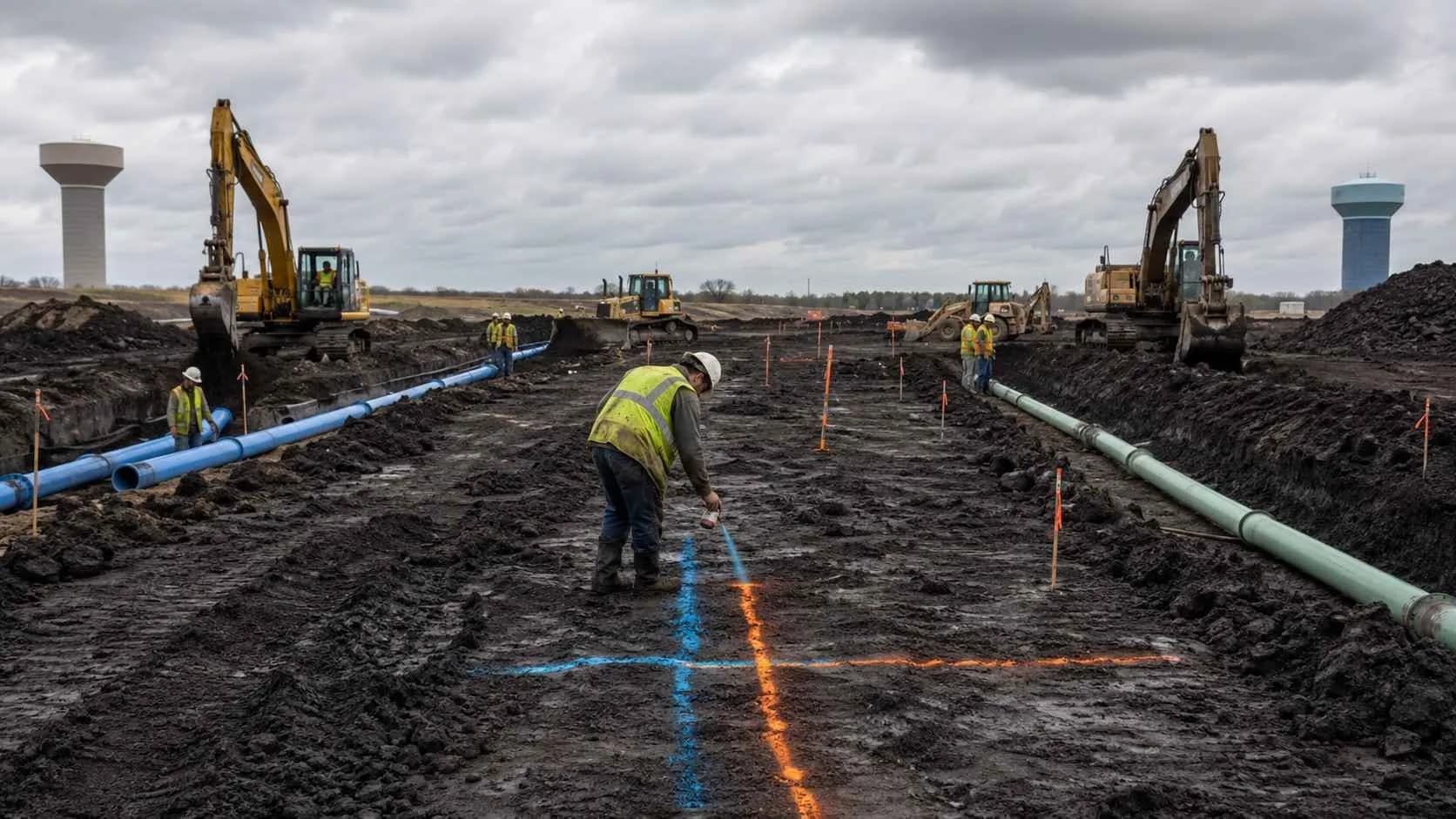
Fast growing areas like McKinney, Prosper, Celina, Anna, and Melissa have seen CCN territories established years or decades ago, often before current growth patterns were anticipated, layered against newer municipal boundaries, MUD service areas, and annexation activity. The result is a patchwork where a single development tract can straddle two different CCN holders, sit near an unclear or contested boundary line, or fall within a CCN territory held by a provider whose infrastructure was sized for a much lower level of demand than current development plans require.
A Texas CCN water provider boundary is not always intuitive from a plat or a general area map, and boundary lines drawn decades ago do not always align cleanly with how growth corridors have actually developed since. Confirming the exact boundary against your specific tract, rather than assuming based on which municipality is closest or which provider serves a neighboring subdivision, is the necessary first step.
Service Availability Versus Actual Capacity
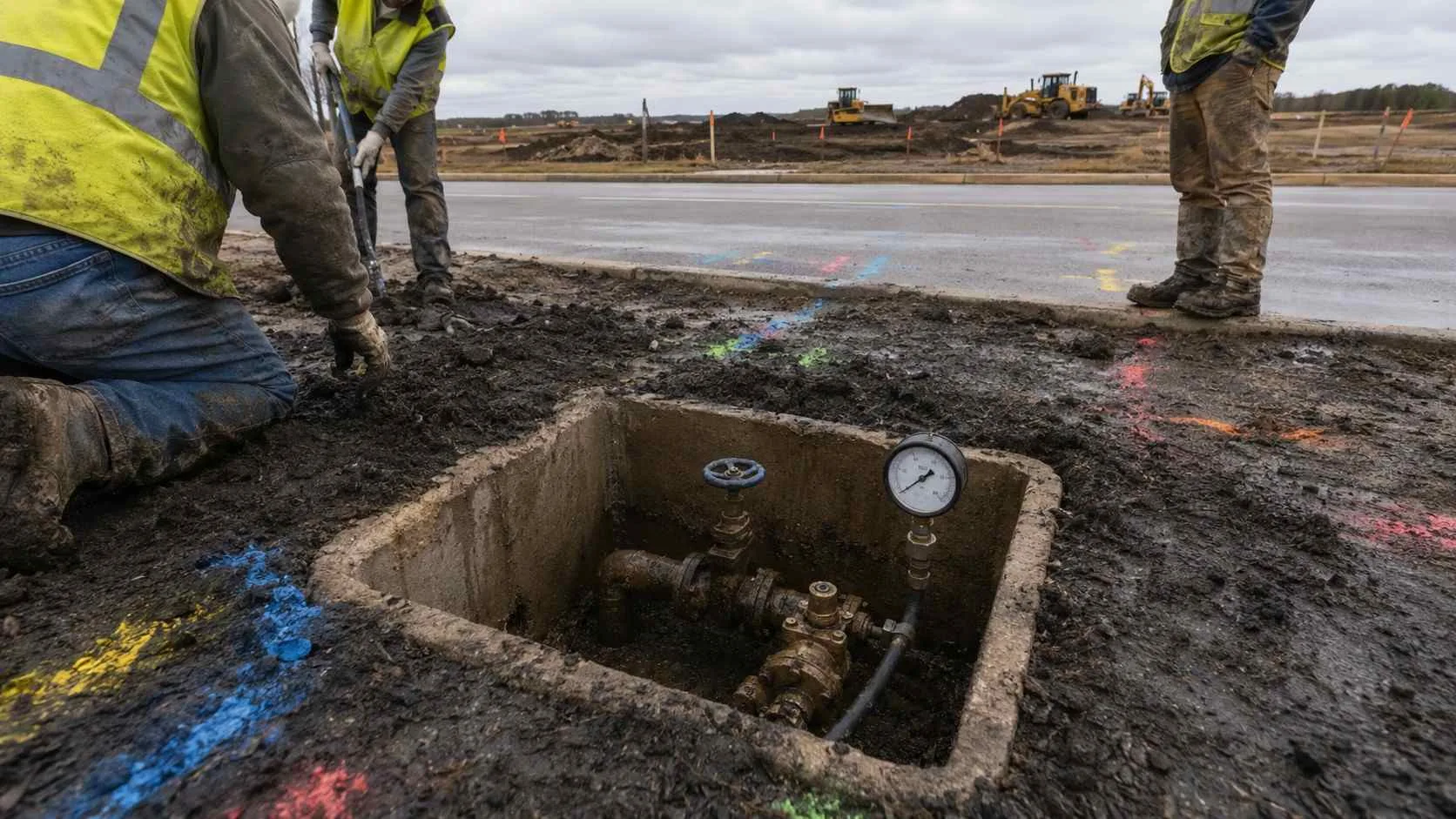
Even where a single CCN holder clearly covers your entire tract, service availability on paper does not guarantee adequate capacity to serve your specific project. A provider may hold the CCN rights but lack the treatment capacity, distribution infrastructure, or collection system capacity to serve a new subdivision, mixed-use project, or commercial development at the density or timeline you are planning. Where capacity is inadequate, the CCN holder’s obligation to serve does not eliminate the practical reality that infrastructure improvements are required before service can actually be extended, and the cost and schedule for those improvements often becomes the developer’s problem to fund or wait on.
This is why Collin County utility due diligence needs to go beyond confirming which provider holds the CCN, and needs to include a direct capacity and infrastructure conversation with that specific provider early in the process.
Boundary Conflicts and PUC Coordination
Where a tract crosses a genuinely disputed or unclear boundary between two CCN holders, or where a boundary conflict exists independent of any specific developer’s project, resolving that question can require coordination through the Public Utility Commission of Texas, following the same PUC utility service Texas framework that governs CCN disputes generally. This process has its own timeline and evidentiary requirements, and a developer whose site sits near a contested boundary should confirm early whether any pending dispute or boundary uncertainty affects the specific parcel, rather than discovering a boundary conflict only after site plans are already submitted.
Decertification, Utility Extension Obligations, and Cost Participation
Where an existing CCN holder cannot or will not serve a tract on a reasonable basis, Texas law allows for decertification of a specific area from an existing CCN, or a boundary adjustment reassigning territory to a different provider, through a formal petition to the PUC. This is a genuine option but a time consuming one, and it should be evaluated alongside, not instead of, working directly with the existing provider on service extension terms and cost participation for any required infrastructure improvements.
Cost participation is where financial exposure often shows up unexpectedly. A developer proceeding through an existing CCN holder despite capacity limitations may be asked to fund infrastructure improvements upfront, sometimes with an uncertain or partial reimbursement mechanism as other properties later connect to and benefit from that same infrastructure. Quantifying this potential cost exposure before closing, even as an estimated range, should be part of the same financial due diligence applied to land price and construction cost.
MUD Formation and Private Utility Alternatives
Where CCN constraints are significant enough to threaten a project’s schedule or economics, evaluating municipal utility district formation as an alternative can be worth pursuing, though MUD formation within an area already covered by an existing CCN still generally requires addressing that provider’s existing rights through decertification, a negotiated agreement, or another resolution. Private wastewater treatment can offer a workaround in specific wastewater constrained situations, evaluated under the same TPDES and TLAP framework relevant elsewhere in Texas, though private water supply alternatives are more limited given the exclusivity CCN water certification carries.
Project Schedule Risk and What to Confirm Before Closing
The practical risk across all of these scenarios is schedule delay. A boundary dispute, a capacity shortfall requiring negotiated infrastructure funding, or a decertification petition can each add months to a project timeline that a developer had not built into their original schedule. Before closing on a Collin County growth corridor tract, developers should confirm the specific CCN holder covering the entire parcel, whether any boundary uncertainty or dispute affects that parcel, whether the provider has adequate capacity to serve the project as planned, what infrastructure improvements and carrying costs might be required, and what timeline that provider’s own internal service approval process typically takes for a project of similar scale.
Frequently Asked Questions
How do we confirm the exact CCN boundary for a specific Collin County tract?
This requires reviewing the PUC’s CCN maps and records for the specific area, since boundary lines are not always aligned with municipal or county lines in a way a general map would suggest, and a title report alone does not always clearly identify CCN status.
If our tract crosses two different CCN holders’ territories, do we need service agreements with both?
Potentially, depending on how the tract is planned and platted. This is a scenario worth resolving early with both providers and with legal counsel, since coordinating two separate service relationships across one project adds complexity to both design and schedule.
Is a decertification petition a fast way to resolve an unresponsive CCN holder?
No. Decertification and boundary adjustment proceedings before the PUC involve real evidentiary and procedural requirements and can take considerable time, so it is generally evaluated as a longer term option alongside, not instead of, working directly with the existing provider in the near term.
What is the biggest mistake developers make regarding CCN status in Collin County?
Assuming that because a municipality is annexing or nearby, that municipality’s utility will automatically serve the site. CCN rights are separate from municipal boundaries, and a site inside city limits can still fall within a different CCN holder’s exclusive service territory.
Related Resources
- Impact Fees and CIP Timing: Why Phasing Costs Blindside Developers When the Capital Improvement Plan Schedule Does Not Match Their Build Out
- NTMWD Connection vs. Private Treatment: The McKinney Developer’s Guide to Choosing the Right Wastewater Path
- CCN Disputes in West Houston: What Happens When Your Development Lands Inside Someone Else’s Certified Service Area
Designing Buried Utilities for Expansive Clay Conditions in Collin County?
MES helps developers and project teams coordinate geotechnical findings with practical buried utility design, reducing construction risk and improving long term reliability across McKinney area subdivisions, commercial sites, and master planned communities.
We specialize in:
- Coordinating geotechnical recommendations directly into buried utility design decisions
- Bedding, backfill, and trench design tailored to site specific expansive clay conditions
- Pipe material and joint selection matched to expected shrink swell movement
- Manhole and structure detailing to reduce settlement and infiltration risk
- Sewer slope protection and gravity system design for challenging soil conditions
- Utility corridor and pavement subgrade coordination to prevent post-construction surface failures
Modern Engineering Solutions, McKinney, Texas. Contact: (214) 833-6748 or mod-eng.com
Keep reading
More to read.
Talk to an engineer
Tell us about your project.
An engineer reads it
Not a salesperson. Someone who can tell you whether the pathway is real.
You get a first answer
Your options, the agencies involved and the questions that decide cost and schedule.
You decide
No commitment to have the first call.
Prefer the phone? (214) 833-6748