
Blog
Austin Water Service Extension Requests: Who Pays for Off Site Water, Wastewater, and Reclaimed Water Improvements?
Austin Water Service Extension Requests routinely require off site improvements developers did not budget for. Learn what triggers them and who pays before land closes.
Quick Answer
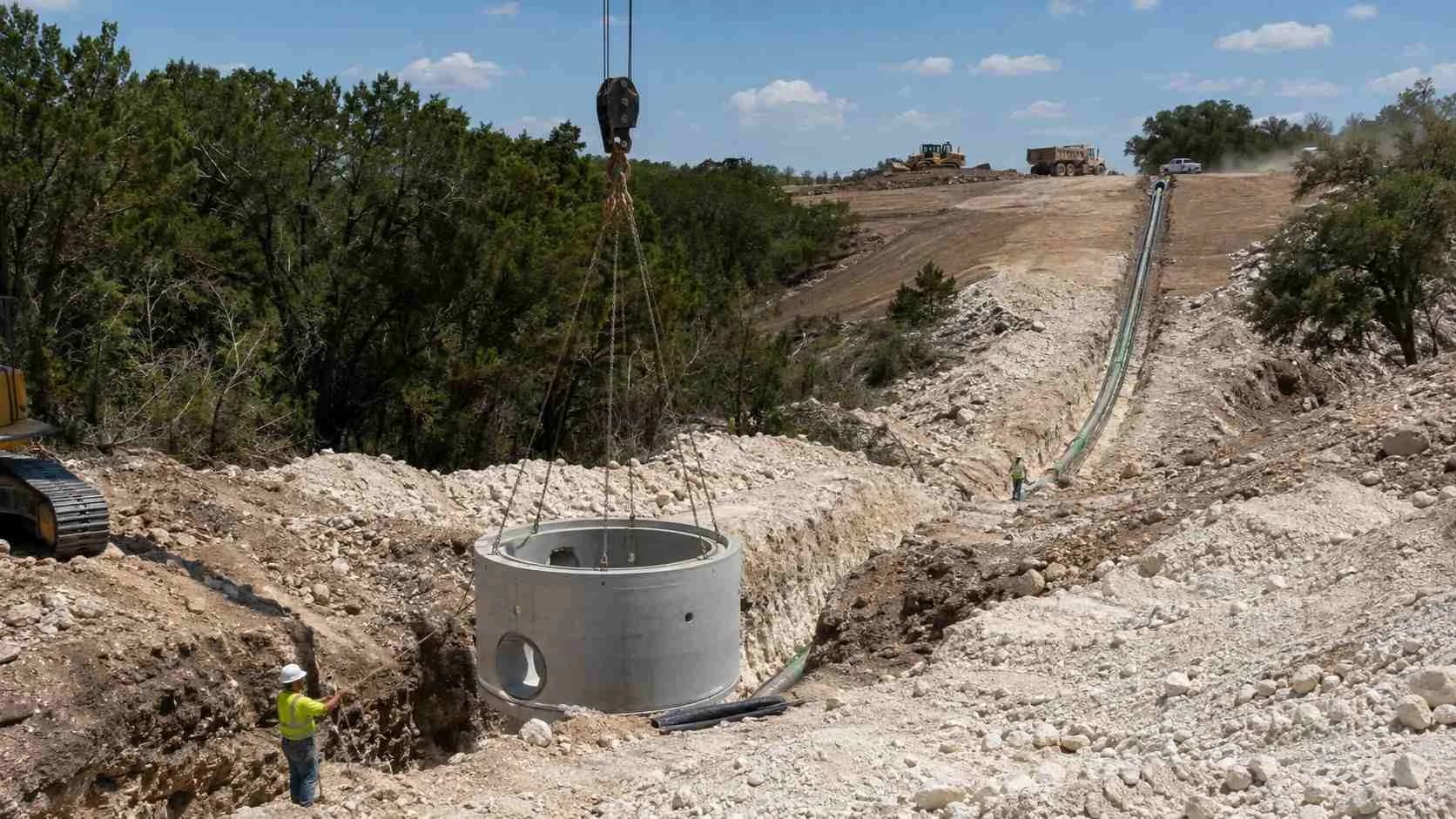
An Austin Water Service Extension Request is the formal process through which a developer requests water, wastewater, or reclaimed water utility service for a project that requires infrastructure beyond what’s already immediately available at the project site, and this process evaluates whether adequate capacity exists in the nearby system, what off site improvements, main extensions, lift stations, force mains, or reclaimed water lines are needed to deliver service, and who bears the cost of those improvements. In many cases, the developer requesting service is responsible for funding some or all of the required off-site improvement, sometimes with a reimbursement mechanism that allows partial recovery as other properties later connect to and benefit from the same improvement, though this reimbursement isn’t guaranteed and depends on the specific circumstances and Austin Water’s applicable policy at the time. Developers should evaluate their project’s likely need for a Service Extension Request, and the potential cost and schedule exposure that request could carry, during initial site due diligence, before land closing, since nearby infrastructure’s mere presence on a utility map doesn’t confirm that your project can connect without material off site work.What a Service Extension Request Actually Evaluates
When a project’s water, wastewater, or reclaimed water service need exceeds what’s immediately available through an existing adjacent main with confirmed adequate capacity, Austin Water’s Service Extension Request process becomes the mechanism through which the utility formally evaluates the project’s specific service request against the system’s actual capacity and infrastructure configuration in that area. This evaluation considers factors including whether the nearest adequate main has sufficient remaining capacity for the project’s projected demand, what distance and route an extension would need to cover to reach the project site, whether any lift station, force main, or other specialized infrastructure is needed given the project’s location relative to existing gravity service, and what the utility’s own capital improvement plans, if any, already anticipate for infrastructure serving that area.
The outcome of this evaluation determines not just whether service can technically be provided, but what specific infrastructure improvements are required to provide it, and this is the point at which many developers first discover that “infrastructure is nearby” and “infrastructure is nearby and adequate to serve this specific project without additional improvement” are two different findings, with the gap between them representing potentially significant off site construction and cost.
Off Site Water Main Extensions and Capacity Review
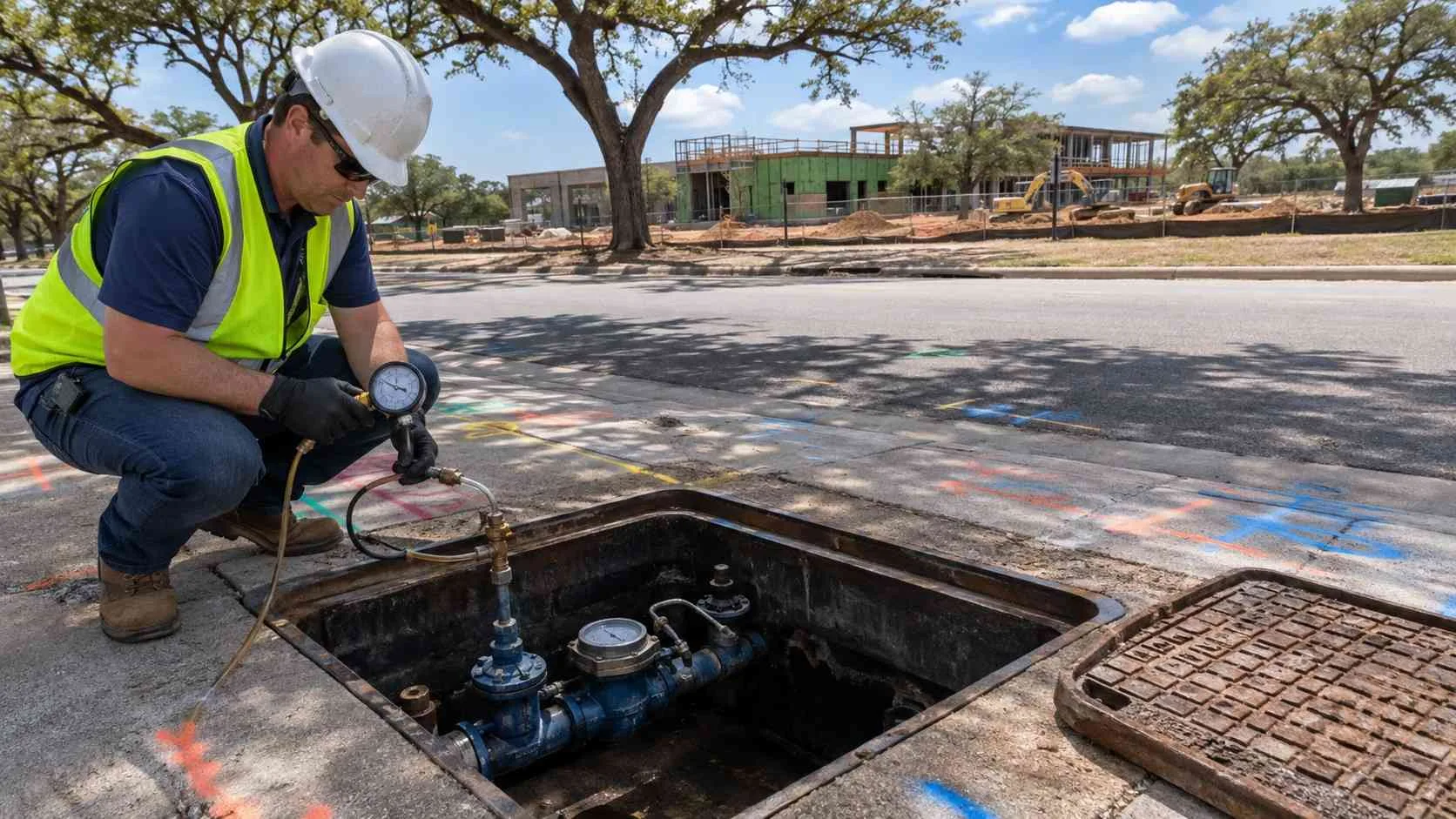
Where a Service Extension Request reveals that the nearest water main has adequate capacity but doesn’t physically reach the project site, an off site main extension becomes necessary, and the length, routing, and cost of that extension depend on the specific distance between the project and the adequate capacity connection point, along with any easement acquisition the extension route requires across intervening parcels. Where the nearest main does reach the site but doesn’t have adequate remaining capacity for the project’s demand, following the same capacity confirmation logic relevant to utility due diligence generally, the required improvement shifts from a simple extension to a main upsizing or a different capacity adding improvement, which can carry different cost and construction complexity than an extension alone.
Confirming which of these scenarios applies to your specific project, adequate capacity requiring only extension, or inadequate capacity requiring upsizing or another capacity improvement, requires the same specific capacity confirmation with Austin Water that any thorough utility due diligence process should include, since a general assumption based on the presence of nearby infrastructure doesn’t distinguish between these two meaningfully different cost and construction scenarios.
Wastewater Extensions, Lift Stations, and Force Mains
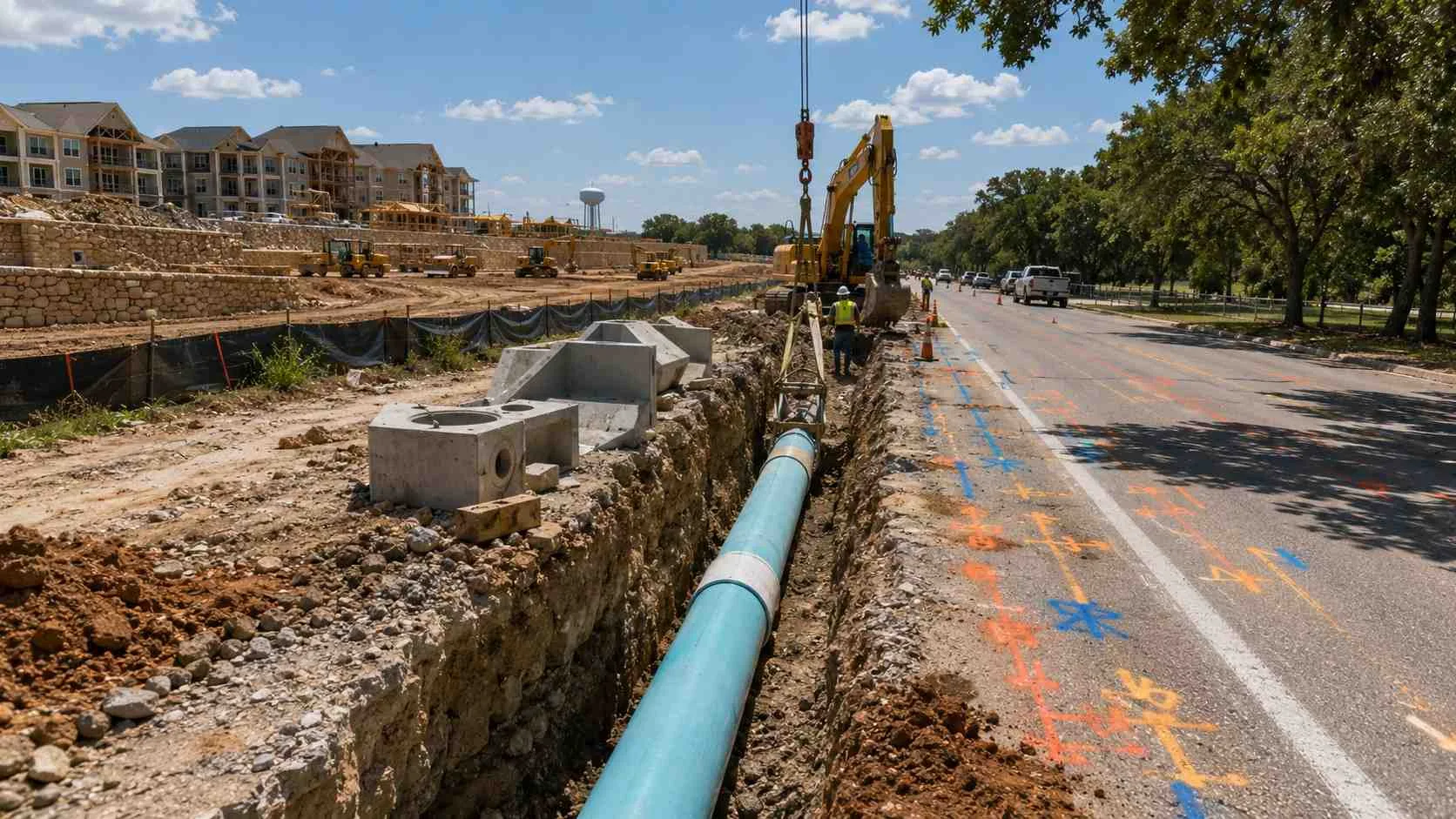
Wastewater service extension needs follow a similar capacity and infrastructure evaluation, but with the added complexity that gravity flow requirements mean a project’s specific elevation relative to the nearest adequate capacity gravity main can determine whether a straightforward gravity extension is feasible or whether a lift station and force main are required to convey flow to an adequate connection point. A lift station and force main solution carries meaningfully higher construction and, in most cases, ongoing operational cost than a gravity extension would, following the same lift station feasibility evaluation relevant to wastewater infrastructure planning generally, and confirming which scenario applies to your specific site early in due diligence directly affects your project’s utility cost estimate and, in some cases, its overall site plan.
Where a Service Extension Request for wastewater service also reveals downstream capacity constraints, whether in a trunk sewer, an interceptor, or at the treatment plant itself, the required response can extend well beyond your project’s immediate connection point, following the same full flow path evaluation relevant to regional interceptor capacity concerns in other North Texas growth corridors, adapted here to whatever specific downstream infrastructure serves your Austin-area site.
Reclaimed Water Line Extensions for Qualifying Projects
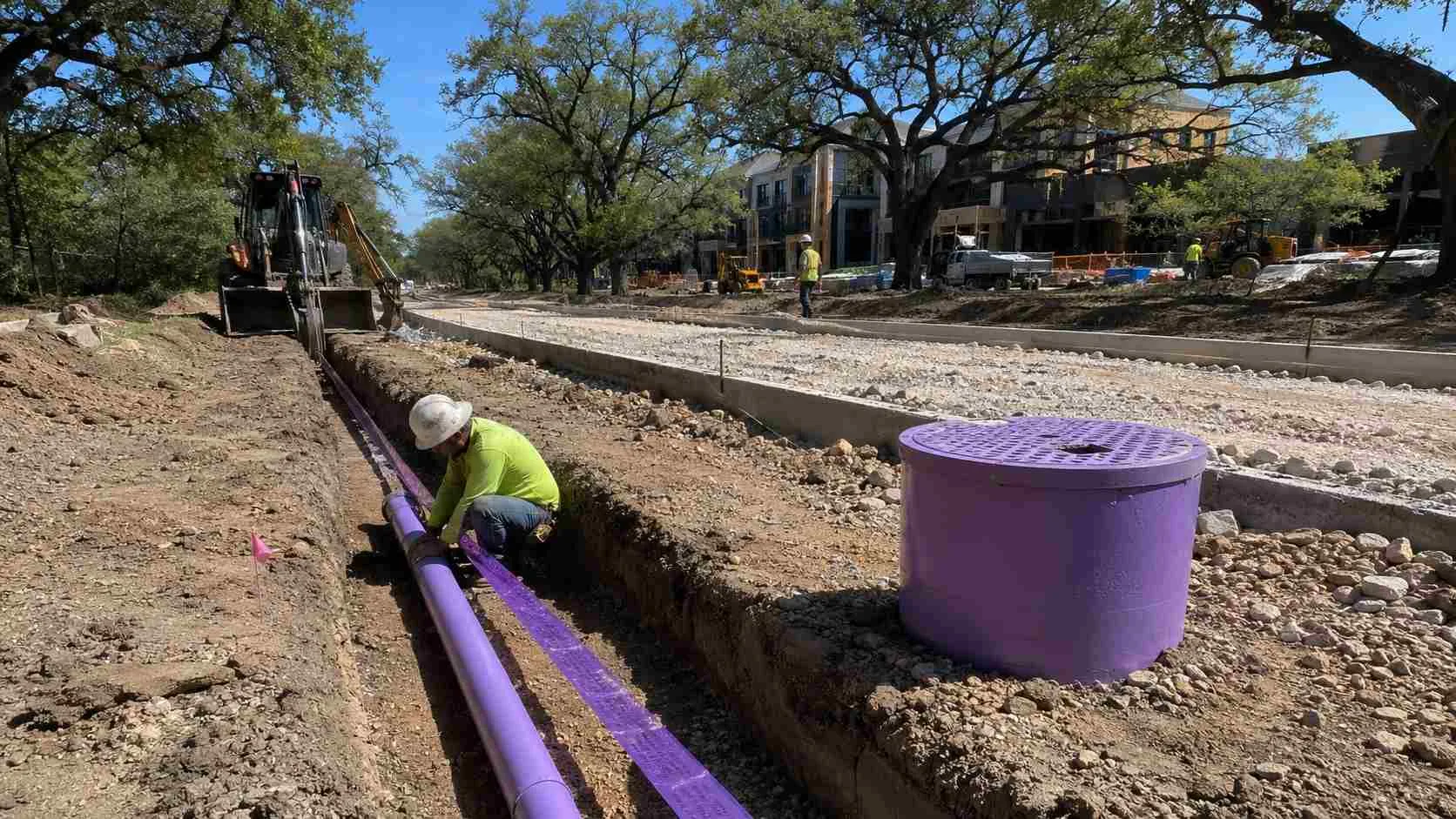
For projects with meaningful irrigation demand or other qualifying reclaimed water use, extending a reclaimed water line to serve the project follows a parallel Service Extension Request evaluation, assessing whether Austin Water’s reclaimed water distribution system reaches the project’s area with adequate capacity, or whether an extension is needed, and this evaluation matters specifically for projects where reclaimed water availability could meaningfully reduce potable water demand and associated cost, following the same reclaimed water reuse evaluation relevant to Chapter 210 and 210E planning generally. Confirming reclaimed water line proximity and extension feasibility early, alongside the potable water and wastewater evaluation, allows a project to factor reclaimed water’s potential cost and demand benefits into its overall utility strategy rather than defaulting to full potable water use without evaluating this alternative.
Easements, Cost Participation, and Reimbursement Uncertainty
Any off site extension, whether water, wastewater, or reclaimed water, that crosses property the developer doesn’t own requires easement acquisition from the affected property owners, and this easement acquisition process has its own timeline and, in some cases, its own negotiation and cost that should be factored into the project’s overall extension cost and schedule estimate rather than treated as a formality that will resolve itself once design is complete. A developer evaluating an off-site extension requirement should confirm early whether the necessary easements are likely to be readily obtainable or whether the extension route crosses parcels where easement negotiation could add meaningful schedule risk.
Cost participation for required off site improvements typically falls, at least initially, to the developer requesting the service extension, and while Austin Water’s policies in some circumstances allow for a reimbursement mechanism that returns a portion of the improvement’s cost to the original developer as other properties later connect to and benefit from the same infrastructure, this reimbursement is not guaranteed, is not immediate, and depends on the specific policy framework applicable at the time and the pace at which other qualifying connections actually materialize. Developers should evaluate their specific project’s cost participation exposure under Austin Water’s current policy directly with the utility, rather than assuming a reimbursement mechanism will fully or promptly offset the upfront cost of a required improvement.
Phasing, Construction Timing, and Coordination With Site Development Plans
The construction timeline for a required off site improvement needs to be coordinated with the project’s overall site development schedule, since a project that plans to begin site construction before its required off site water or wastewater extension is complete risks a sequencing conflict that can delay the project’s ability to actually receive service even if site construction itself proceeds on schedule. This coordination becomes particularly important for phased projects, where later phases may depend on an off site improvement that wasn’t required for the initial phase’s more limited demand, following the same phased capacity planning logic relevant to master planned community wastewater design generally, adapted here to a redevelopment or infill context where a project’s phased demand growth interacts with Austin Water’s specific service extension requirements at each phase.
Developers should build the Service Extension Request process’s own timeline, including Austin Water’s review period, any required design and easement acquisition for the improvement itself, and the improvement’s actual construction duration, into the project’s overall development schedule from the outset, since this timeline can be substantial for a project requiring a significant off site extension, and discovering this timeline only after other project milestones are already committed creates schedule risk that earlier awareness would have allowed the developer to plan around.
Why This Matters Most for Growth Corridors, Redevelopment, and Edge of Service Area Sites
Projects in Austin’s active growth corridors, infill redevelopment areas, and sites near the edge of Austin Water’s practical service area face this Service Extension Request exposure more acutely than projects in areas with recently upgraded or clearly adequate nearby infrastructure, since growth corridor and edge of service area sites are more likely to be requesting service in locations where infrastructure was sized for a different level of demand than the current or proposed development represents, following the same infrastructure versus demand mismatch relevant to Dallas PD overlay redevelopment and other rapid growth corridor utility planning generally. Developers working on these site types should treat Service Extension Request evaluation as a core due diligence item, on par with entitlement and market feasibility analysis, rather than a downstream design detail to be resolved after other project commitments are already made.
Frequently Asked Questions
How early in our project should we submit a Service Extension Request or otherwise engage Austin Water about our project’s utility needs?
This engagement should begin during initial site due diligence, before land closing where possible, since the findings from this evaluation, whether adequate capacity exists, what off site improvements are needed, and what cost and schedule those improvements represent, can materially affect your project’s feasibility and economics in ways that are far easier to factor into an acquisition decision than to absorb after closing.
If our project requires a costly off site improvement, is there any way to reduce or share that cost with other nearby property owners who might also benefit?
Depending on Austin Water’s applicable policy and the specific circumstances, a reimbursement mechanism may allow you to recover a portion of the improvement’s cost as other properties later connect and benefit, though this isn’t guaranteed and shouldn’t be assumed as a given when evaluating your project’s upfront cost exposure. Discussing your specific project’s cost participation and any available reimbursement framework directly with Austin Water during the Service Extension Request process is the reliable way to understand what’s actually available in your specific circumstances.
Does having a Service Extension Request approved guarantee that construction of the required improvement will happen on our project’s desired timeline?
Approval confirms the technical and policy path forward for your service request, but the actual construction timeline still depends on design completion, easement acquisition where required, and construction duration for the improvement itself, each of which carries its own schedule that needs to be planned and coordinated with your overall project timeline rather than assumed to happen automatically once approval is granted.
Related Resources
- Land Application Permits in Texas: A Faster Path to Wastewater Approval for Developers
- Dallas Water Utilities Impact Fee Structure for Infill Redevelopment: What Changes When You’re Rebuilding Inside the Loop
Evaluating Off Site Utility Costs for an Austin-Area Development Project?
MES works with Austin area developers, redevelopment teams, and utility planners to evaluate Service Extension Request requirements, estimate off site water, wastewater, and reclaimed water improvement costs, coordinate easement and construction timing with site development schedules, and reduce financial surprises before land closing or design commitment.
We specialize in:
- Service Extension Request feasibility evaluation for Austin Water water, wastewater, and reclaimed water connections
- Off site main extension, lift station, and force main cost and routing analysis for Austin area projects
- Reclaimed water extension feasibility and reuse strategy evaluation for qualifying developments
- Easement identification and cost participation analysis for required off site utility improvements
- Phasing and construction timeline coordination between utility extensions and site development schedules
- Utility due diligence for growth corridor, redevelopment, infill, and edge of service area Austin projects
Modern Engineering Solutions, Austin, Texas. Contact: (214) 833-6748 or mod-eng.com
Keep reading
More to read.
Talk to an engineer
Tell us about your project.
An engineer reads it
Not a salesperson. Someone who can tell you whether the pathway is real.
You get a first answer
Your options, the agencies involved and the questions that decide cost and schedule.
You decide
No commitment to have the first call.
Prefer the phone? (214) 833-6748