Quick Answer
A wastewater storage reservoir for a Texas reuse project must be sized using worst-case 25-year precipitation data per 30 TAC §309.20 to demonstrate that the facility can manage all treated effluent without discharge during the critical storage period, typically the wet winter and early spring months when irrigation demand is lowest and precipitation is highest. The reservoir must hold the maximum cumulative volume of effluent that cannot be applied to the reuse site during that period. For MES‘s 2.0 MGD River Valley Water Reclamation Facility in Martindale, Texas, that calculation produced a 53 acre-foot storage reservoir. The number is not a planning guess. It is the output of a specific engineering analysis that TCEQ reviews as part of every reuse permit application.
Why the Reservoir Exists and What It Has to Do
A wastewater treatment plant generates treated effluent every day of the year at a rate determined by its design flow. A 300,000 GPD facility produces approximately 9 million gallons per month in January. A 2.0 MGD facility produces approximately 60 million gallons per month in January. That production does not stop when the weather turns wet, when the irrigation site is saturated, or when the agricultural operator has no demand for water because it has been raining for three weeks.
The reuse site, by contrast, has variable capacity. In summer months with high evapotranspiration rates and low precipitation, the site can accept large volumes of treated effluent efficiently. In winter months, precipitation is higher, evapotranspiration is lower, soil moisture is elevated, and the site’s capacity to accept additional irrigation is significantly reduced. In some months, particularly January through March in Central Texas, the site may have very limited capacity to accept effluent at all.
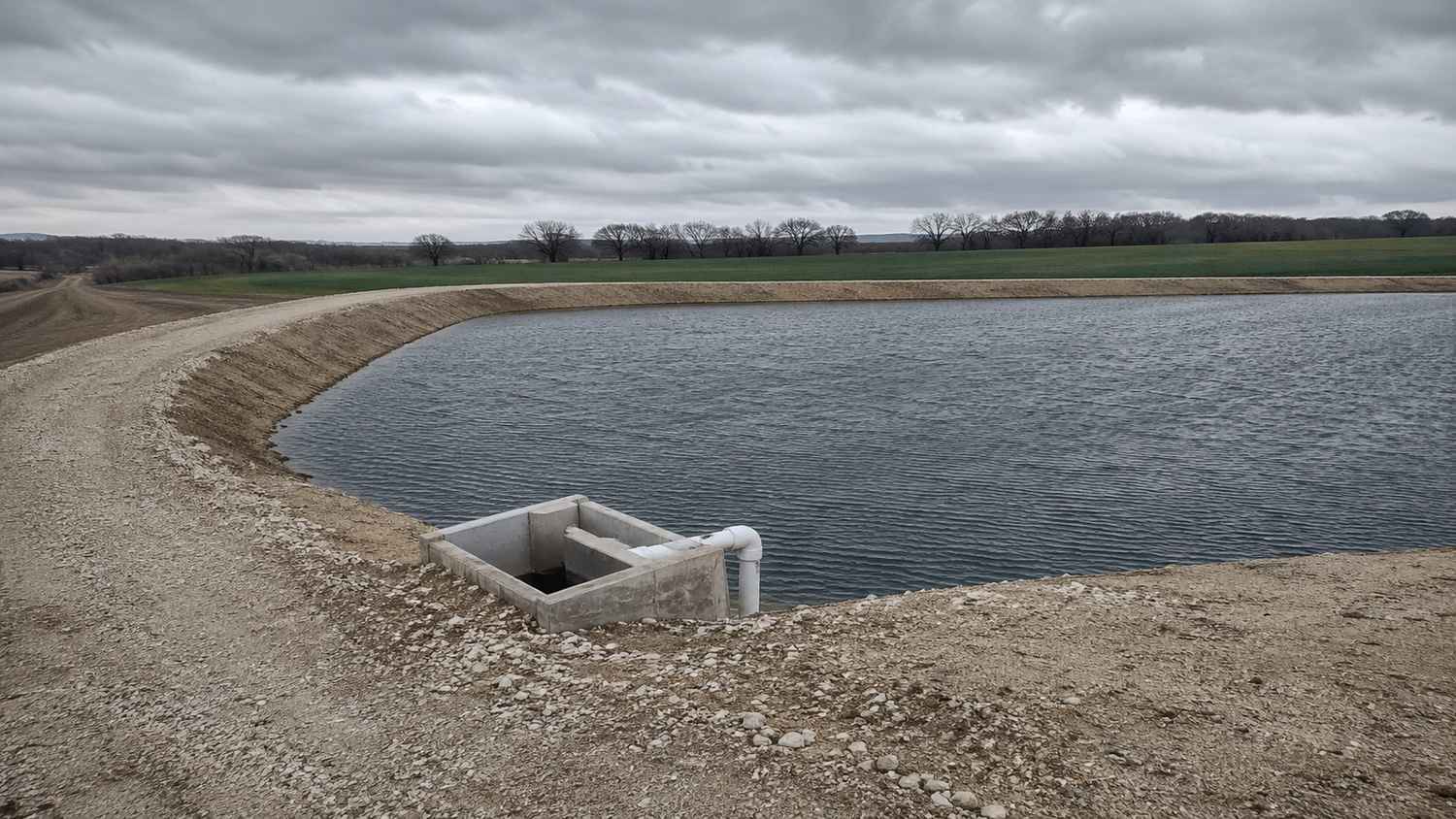
The storage reservoir is what bridges that gap. It accepts the effluent that cannot be applied to the reuse site during the low-demand months and holds it until the site can accept irrigation again. The reservoir must be large enough to hold the maximum cumulative volume of effluent that accumulates during the worst-case critical storage period the site will experience across a 25-year weather record.
That is the calculation 30 TAC §309.20 requires. Not an average. Not a typical year. The worst case in 25 years.
The Inputs That Drive the Sizing Calculation
The reservoir sizing calculation is a monthly water balance that tracks inflows to the reservoir and outflows from it across the full annual cycle, using the worst-case 25-year precipitation data for the project location.
Monthly effluent inflow. The treatment plant produces effluent at the design flow rate every day. For a 300,000 GPD facility, that is approximately 9 million gallons per month in a 30-day month. This number is constant throughout the year regardless of weather, irrigation demand, or seasonal conditions.
Monthly effluent outflow to the reuse site. The volume of effluent that can be applied to the reuse site each month is determined by the site’s agronomic and hydraulic capacity during that month. In summer, high evapotranspiration rates and plant uptake allow the site to accept large volumes. In winter, reduced plant uptake, elevated soil moisture from precipitation, and lower evapotranspiration rates reduce the site’s capacity substantially. For agricultural irrigation in Central Texas, the limiting months typically run from November through February, when the site may be able to accept only a fraction of the monthly effluent production.
Monthly precipitation loading on the reservoir. Precipitation falls directly into the reservoir, adding to its volume. The worst-case 25-year precipitation data includes months with significantly above-average rainfall that load the reservoir simultaneously with the reduced capacity of the reuse site to accept effluent. Both effects occur at the same time during the critical storage period, which is why the worst-case precipitation standard produces a substantially larger reservoir requirement than an average-year analysis would.
Evaporation from the reservoir surface. Open water reservoirs lose volume to evaporation. Evaporation rates are highest in summer and lowest in winter. Because the critical storage period falls in winter, evaporation provides relatively little relief during the months when the reservoir is filling fastest.
The Cumulative Deficit Calculation
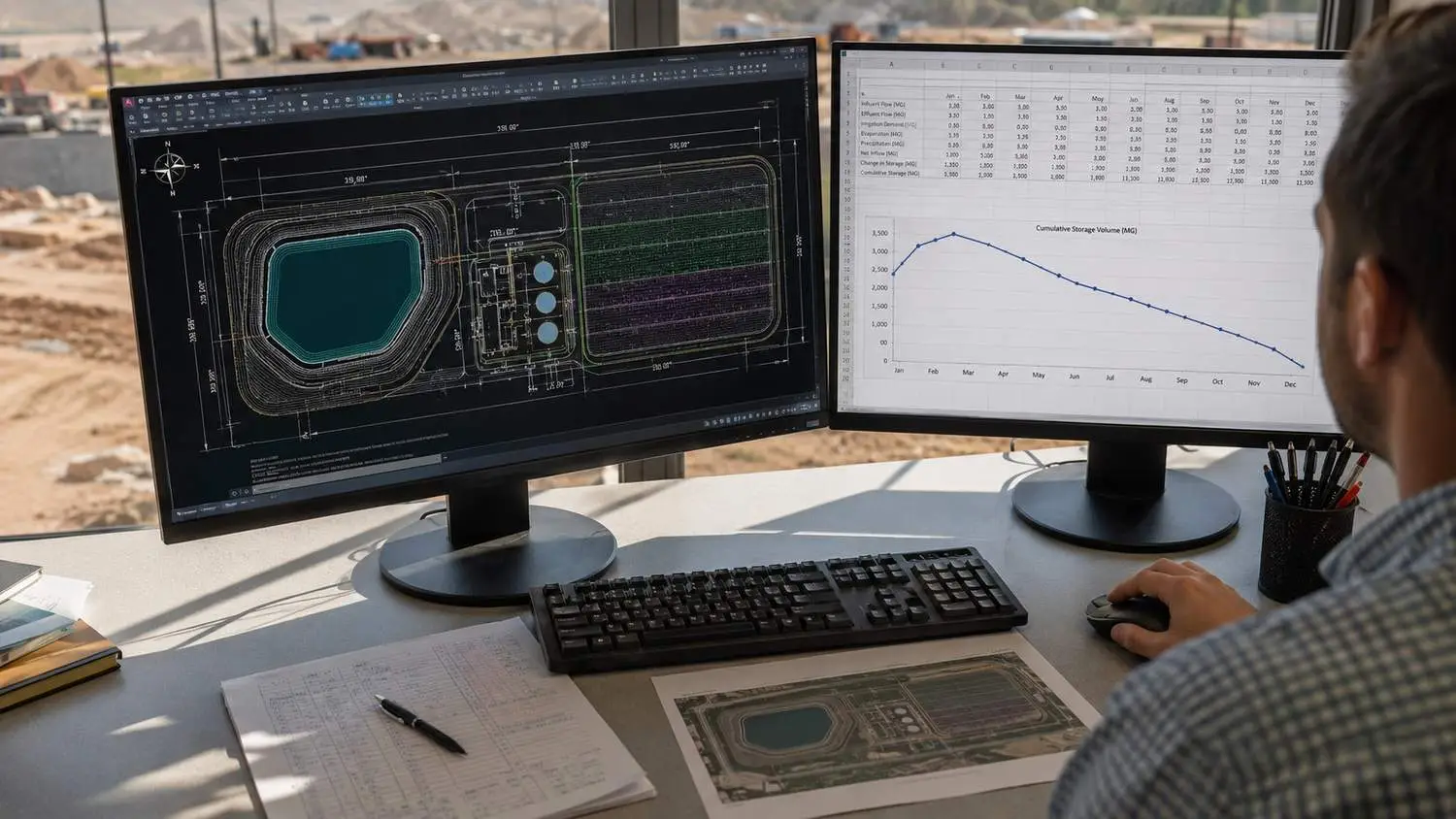
The reservoir must be large enough to hold the maximum cumulative deficit that develops during the critical storage period. The calculation works like this. For each month, the engineering analysis calculates how much effluent the reuse site can accept, subtracts that from the effluent the treatment plant produces, and adds the net deficit to a running cumulative total. The cumulative total increases during months when the site cannot accept all the effluent and decreases during months when the site can accept more than the plant produces. The maximum cumulative deficit across the full annual cycle, evaluated against worst-case 25-year precipitation, is the minimum required reservoir volume.
For a 300,000 GPD facility with agricultural irrigation reuse in Central Texas, the critical storage period typically runs from November through February. The maximum cumulative deficit across that period, using worst-case 25-year precipitation data, typically drives a reservoir requirement in the range of 15 to 25 acre-feet for facilities of that scale. Larger facilities require proportionally larger reservoirs. MES’s 2.0 MGD River Valley facility in Martindale required a 53 acre-foot reservoir when the same calculation was applied at that flow volume, using the specific site location’s worst-case 25-year precipitation record for Caldwell County.
Liner Requirements Under §210.23
The reservoir must meet liner requirements under 30 TAC §210.23. The applicable standard depends on the project location. For facilities located outside the Edwards Aquifer recharge or contributing zones, a clay liner meeting specified permeability requirements is generally acceptable. For facilities located within Edwards Aquifer recharge zones, stricter liner standards apply under §210.4(d). Developers evaluating sites in the Hill Country or other areas that intersect the Edwards Aquifer recharge zone should confirm the applicable liner standard before finalizing the reservoir design, as the more stringent requirements affect both construction cost and design specifications.
What Happens When the Reservoir Is Undersized
An undersized reservoir creates a compliance problem at two stages. At the permit review stage, TCEQ will identify that the reservoir volume is insufficient to manage effluent during the critical storage period and issue a deficiency notice requiring a revised water balance study and reservoir sizing analysis. That deficiency cycle adds weeks to the permit review timeline.
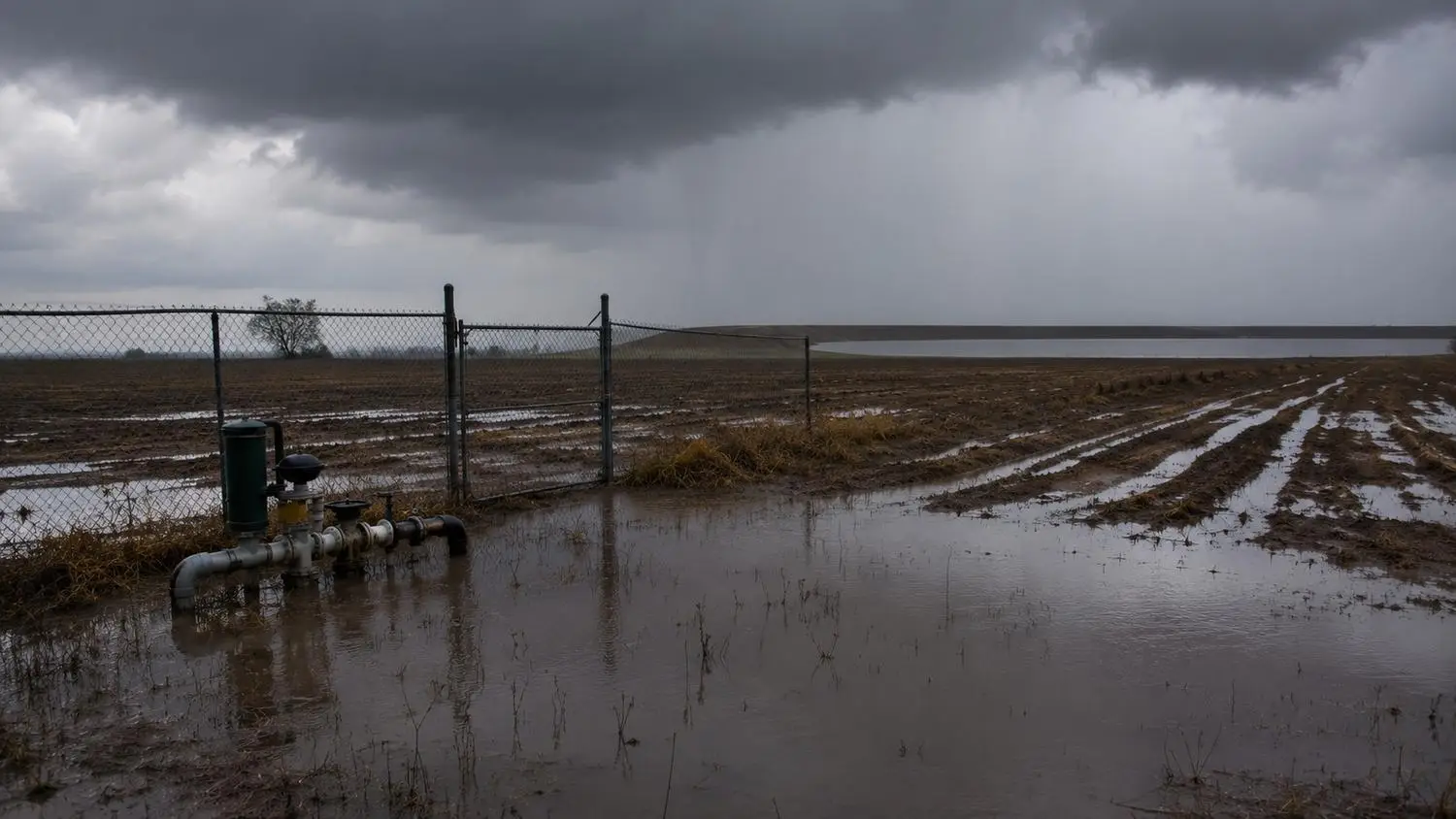
At the operational stage, a facility that exhausts its storage capacity during a wet season has no compliant disposal pathway for effluent that cannot be applied to the reuse site. The facility must either cease accepting flow above the rate the reuse site can accept or find an emergency alternative disposal arrangement. Neither option is operationally or financially convenient for a development that is already occupied and generating wastewater.
The sizing calculation is not conservative by instinct. It is conservative by regulatory requirement. The 25-year worst-case standard exists specifically to prevent facilities from failing during the most adverse conditions they will statistically encounter. Undersizing by using average precipitation data or optimistic irrigation demand estimates is the most common source of reservoir-related permit deficiency notices on Texas reuse permit applications.
Frequently Asked Questions
How do I know what worst-case 25-year precipitation data to use for my project location?
Historical precipitation records for Texas locations are available from NOAA’s National Centers for Environmental Information and from Texas A&M AgriLife Extension’s weather data resources. The water balance study must document the source of the precipitation data used and confirm that it represents the 25-year worst-case record for the project location, not a regional average or a shorter period of record.
Does the storage reservoir count toward the reuse site acreage requirement?
No. The storage reservoir serves a buffering function, not a disposal function. Treated effluent stored in the reservoir has not been beneficially reused. The reuse site acreage requirement is calculated separately and must be sufficient to accept all design-flow effluent during the periods when irrigation is feasible. The reservoir and the reuse acreage are jointly sized by the water balance analysis but serve distinct functions in the reuse system.
What does a storage reservoir cost to construct in Texas?
Construction cost for an earthen storage reservoir in Texas depends on the volume required, the site’s soil conditions, the liner requirements, and the access and outlet infrastructure. A rough planning range for an unlined or clay-lined earthen reservoir of 15 to 50 acre-feet runs $200,000 to $600,000 depending on site conditions. Reservoirs requiring synthetic liner systems under the Edwards Aquifer recharge zone standards run higher. The reservoir cost should be included in the infrastructure budget alongside the treatment plant construction cost, not treated as a minor add-on.
Related Resources
- Water Balance Studies Under 30 TAC §309.20: What They Require and Who Prepares Them
- What Engineers Submit to TCEQ and Why Your Application Gets Rejected
- Land Application Permits in Texas: A Faster Path to Wastewater Approval for Developers
- What Is a 210E Authorization and How Can It Save Your Texas Development Project
Sizing a Storage Reservoir for a Texas Reuse Permit?
Modern Engineering Solutions prepares complete water balance studies and storage reservoir sizing analyses for Texas reuse permit applications, including 210E authorizations and Texas Land Application Permits, using worst-case 25-year precipitation data and site-specific agronomic calculations sealed by a licensed PE.
We specialize in:
- Water balance studies under 30 TAC §309.20 using worst-case 25-year precipitation data
- Storage reservoir sizing and design for 210E and TLAP reuse projects
- Liner specification and compliance with §210.23 requirements including Edwards Aquifer recharge zone standards
- Complete 210E and TLAP permit application preparation
- Reuse site agronomic analysis and hydraulic loading calculations
Modern Engineering Solutions, McKinney, Texas. Contact: (214) 833-6748 or mod-eng.com
Share via: