Quick Answer
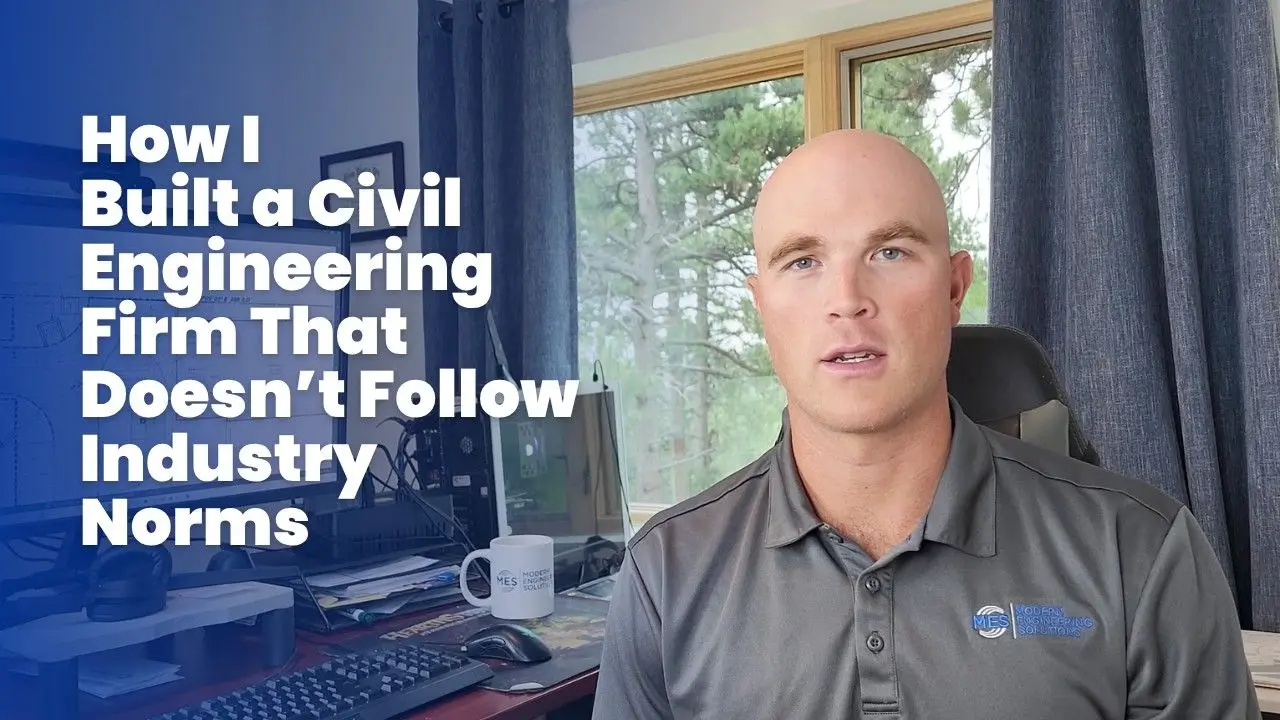
MES is a remote-first water and wastewater engineering firm founded in 2018 by Michael Groselle, P.E., in Golden, Colorado. The firm has completed more than 300 projects across nine states, grown to a team of 40, and crossed $2 million in annual revenue. None of those numbers are the point. The point is that we built a firm around a different set of principles: value over hours, speed as a design constraint, AI as leverage, and deep work over performative busyness. This article explains where that came from and why it matters to every client who works with us.
Where It Started
I was standing in a dusty field in Guernsey, Wyoming when my boss told me no.
Not no to something unreasonable. No to a career-advancing opportunity that another manager within the same firm had offered me. I asked for permission to take it. One word came back. No.
That night I barely slept. The next morning I walked into the office, sat down at my desk, typed a resignation letter, and walked out for the last time. I did not have a plan. I did not have clients lined up. What I had was a gut-level understanding that I could not build the career I wanted when someone else held a veto over every decision.
Most engineers who have worked inside a large firm know the version of that feeling. The realization that your license, your judgment, and your reputation are assets that belong to the firm’s balance sheet, not to the outcomes you actually produce. The frustration of watching projects move slowly not because the engineering is hard, but because the structure was designed for something other than getting things done.
That is what MES was built to replace.
What We Call Grandfather Engineering
Most of the engineering industry is still running a model that was designed for a different era. We call it Grandfather Engineering.
Grandfather Engineering is the comfortable, slow, hourly-obsessed model that rewards time spent over value created. It is senior PEs doing CAD work that should be handled by drafters. It is firms billing hours against a multiplier with no structural incentive to finish faster. It is developers absorbing months of carrying costs while permit applications cycle through deficiency notices that a better-prepared submittal would have prevented. It is AI dismissed as a toy instead of used as the force multiplier it actually is.
We are not competing with Grandfather Engineering. We are replacing it.
The Model We Built Instead
MES operates on five principles that we treat as operational, not aspirational.
Value over hours. We price around outcomes: faster permits, lower construction costs, reduced risk. What matters is what we unlock for clients, not how long it took us to unlock it. A firm that bills by the hour has no structural incentive to finish faster. We do.
Speed as a design constraint. Time to permit matters as much as hydraulics. We engineer schedule into our work from day one, not as an afterthought at the end. For a developer carrying $100,000 per month in holding costs, every month of permit delay is a financial event. That is the frame we bring to every project.
AI as leverage. We train AI on our templates and standards so it handles first drafts, structure, and routine documentation. Engineers still do 100% of the judgment and review everything, because AI makes mistakes. But the combination is the difference between producing two projects and producing ten. Most firms have not changed how engineering work gets done in 20 years. We have.
Deep work over busy work. We protect focus time ruthlessly. No endless meetings. No performative availability. Engineers need to actually think, and that requires uninterrupted time. The morning at MES is production: design, calculations, plan reviews, proposals. Reactive work is stacked into a scheduled window. Our clients get faster deliverables because our engineers are not spending the morning clearing out 30 overnight messages before they have produced anything.
Conservative money, aggressive quality. We grow slower with cash reserves than faster with debt. That gives us the freedom to protect quality, say no to the wrong projects, and protect the people doing the work. Firms over-leveraged on debt have to chase any project under any terms. We do not.
What We Actually Do
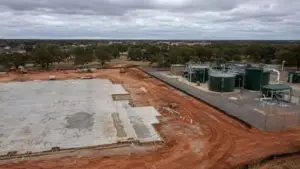
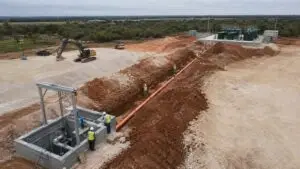
MES is a water and wastewater engineering firm. We design treatment plants, model distribution systems, size lift stations, and navigate TCEQ, CDPHE, and state regulatory processes across nine states. We have completed more than 300 projects ranging from 2-inch waterline replacements to full-scale wastewater treatment facilities.
Our clients are Texas and Colorado developers who need infrastructure feasibility answers before they close on land, TCEQ and CDPHE permits that move in weeks rather than years, and treatment plant designs that do not require repeated redesign because the first version was engineered correctly. Our clients are municipalities and water districts that need an engineering partner who shows up with ideas, not just deliverables. Our clients are civil engineering firms that need overflow support and specialty water and wastewater depth they do not have in-house.
We are not the right fit for every project. If you want the cheapest stamp, think AI has no place in engineering, or believe that the way things have always been done is a sufficient reason to keep doing them that way, we are not your firm.
If you are ready to build infrastructure faster, smarter, and without sacrificing quality or the sanity of the people designing it, we are exactly your firm.
What Clients Actually Experience
When developers work with MES, the experience is different in ways that show up in pro formas and project schedules, not just in how calls feel.
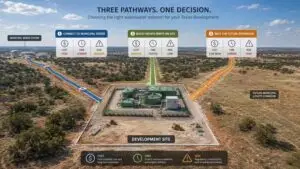
They get a permitting pathway analysis before engineering begins, not a submittal that assumes the default pathway is the right one. They get a 210E Industrial Reclaimed Water Authorization evaluated against their project before anyone commits to a 24-month TPDES discharge permit queue. They get infrastructure cost estimates that belong in a pro forma, not estimates that will be revised after closing when the surprises surface.
They get a firm where the engineer working on their project is the one answering their questions, not a junior staff member relaying messages to a principal who reviews the file twice a year.
They get deliverables that arrive complete the first time because we built our workflows around producing correct work quickly, not around billing revision cycles.
Why We Are Still Building It
MES is not a finished product. We are still building the systems, the team, the AI tools, and the operating model that make the vision above operationally real at scale.
The book that describes the model, Engineer Your Freedom, was written because I could not find it anywhere else when I needed it. The newsletter that follows it exists because the conversations it starts are the most useful conversations I have. The firm that grew out of a resignation letter in a field in Wyoming exists because I believed, and still believe, that infrastructure delivery does not have to require burning out the engineers who design it or bleeding out the developers who fund it.
We are proving there is a better way.
Frequently Asked Questions
What states does MES work in?
MES is currently licensed in Texas, Colorado, California, Oklahoma, Nevada, Arizona, Florida, Kansas, and New Mexico, with more than 300 projects completed across nine states. If you have a target state for expansion, we can pursue PE licensure there. Typical timeline is four to eight weeks for license approval in most states, which allows planning ahead for regional rollouts without permitting delays.
What types of clients does MES work with?
MES works with three primary client groups. Texas and Colorado developers who need wastewater feasibility analysis, TCEQ and CDPHE permitting, and treatment plant design before and after land acquisition. Municipalities and water districts that need capital improvement planning, hydraulic modeling, lift station design, and regulatory support. Civil engineering firms that need overflow CAD support and specialty water and wastewater engineering depth they do not carry in-house.
How is MES different from a traditional civil engineering firm?
The core difference is how we are organized and how we price. Traditional firms bill hours against a multiplier with no structural incentive to finish faster. MES prices around outcomes: faster permits, lower construction costs, and reduced risk for clients. We use AI to handle first drafts and routine production so engineers spend their time on judgment, not formatting. Every deliverable is reviewed by a licensed PE before it reaches the client. And our engineers work directly with clients rather than routing communication through layers of account management.
Does MES offer fixed-fee pricing?
Yes. We offer both hourly and fixed-fee engagements depending on the project scope. Fixed-fee arrangements are available for defined-scope work including utility feasibility studies, TCEQ permit applications, treatment plant design, and hydraulic modeling. Fixed-fee pricing gives clients predictable costs for lender and investor reporting and removes the structural incentive to bill more hours than the work requires.
How quickly can MES turn around a utility feasibility study?
Most utility feasibility assessments for Texas and Colorado development sites are completed in two to four weeks from engagement. For sites with complex regulatory environments or multiple viable options requiring agency contact, four to six weeks. The study should be ordered in the first week after going under contract to ensure results are available before the option period expires.
Related Resources
- Engineer Your Freedom The book that documents the MES model at mod-eng.com
- Building AI Infrastructure for an Engineering Firm: The Complete Data Architecture
- Why Speed Is a Design Constraint: How Modern Engineering Firms Deliver Infrastructure Faster
- The Four Layers Under MES, Top Down
- Join MES: Engineering Careers
Work With Modern Engineering Solutions
Modern Engineering Solutions works with developers, municipalities, and civil engineering firms to deliver water and wastewater infrastructure faster and with fewer surprises than the traditional engineering model allows.
We specialize in:
- Water and wastewater feasibility analysis during land due diligence
- TCEQ and CDPHE permitting including 210E, TLAP, and TPDES pathways
- Package WWTP and custom treatment plant design
- Distribution system modeling and hydraulic analysis
- Lift station design and collection system engineering
- Overflow CAD support and specialty water and wastewater engineering for civil firms
Modern Engineering Solutions, McKinney, Texas and Golden, Colorado. Contact: (214) 833-6748 or mod-eng.com
Share via: