Quick Answer
The wastewater costs in a development pro forma that most developers either underestimate or miss entirely fall into five categories: WWTP construction cost per gallon of design capacity, permit timeline impact on carrying costs, engineering and permitting fees, ongoing monthly operations and maintenance, and permit compliance obligations that continue for the life of the facility. For a 130,000 GPD development outside municipal sewer service in Texas, the all-in infrastructure cost (construction, engineering, permitting, and year-one operations) routinely runs $3.5 million to $4.5 million. Most pro formas that get to closing without a utility feasibility study have none of that number in the model.
Line Item 1: WWTP Construction Cost
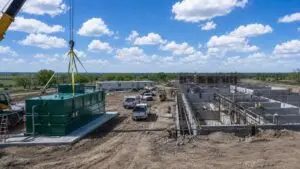
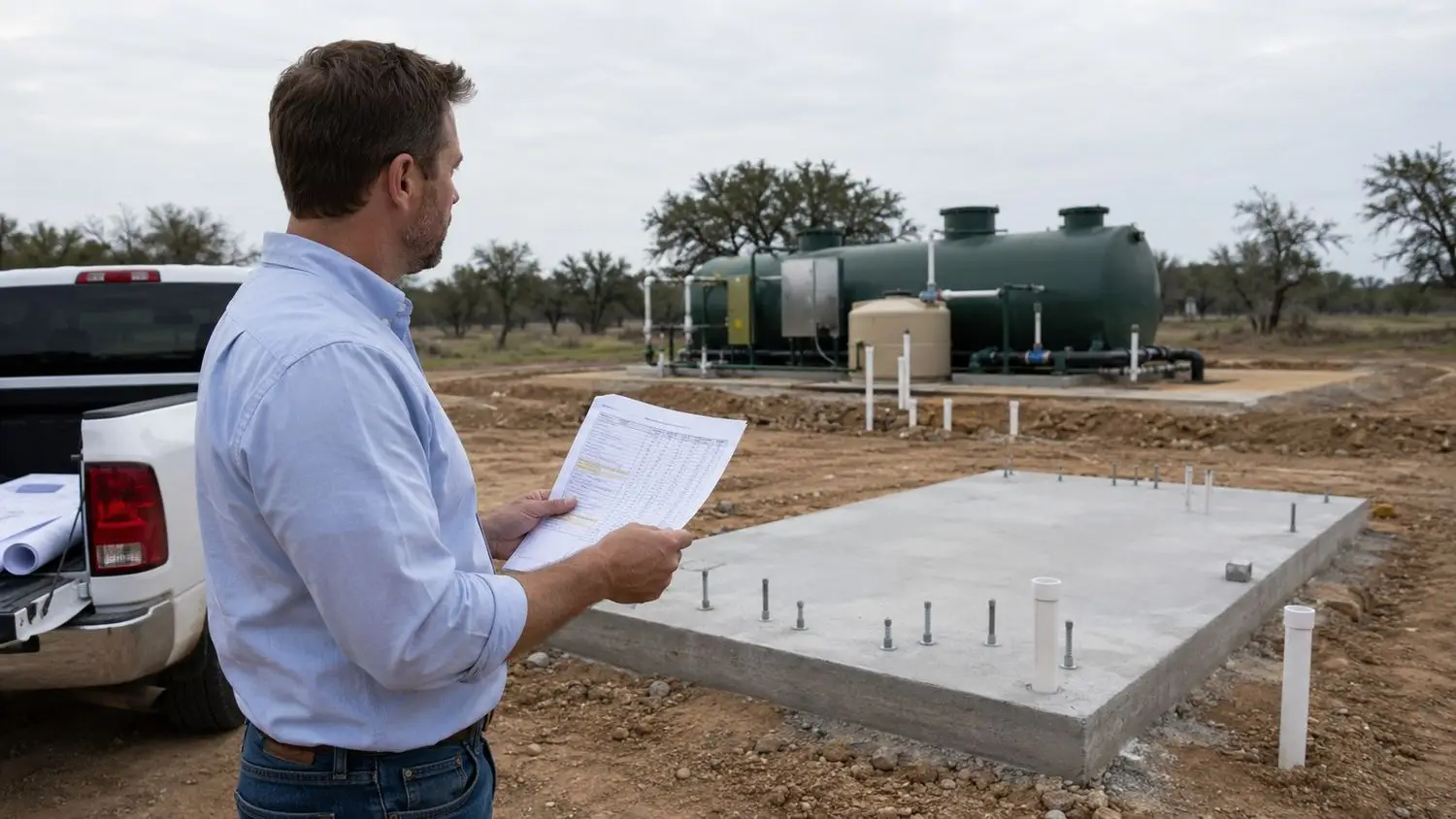
The construction cost of a package wastewater treatment plant in Texas runs $18 to $20 per gallon of design capacity at current market pricing. That is the number to work from when building a pro forma for any development site that cannot connect to municipal sewer.
At that rate, a 130,000 GPD system costs $2.34 million to $2.6 million in construction before engineering, permitting, and civil site work. A 300,000 GPD system runs $5.4 million to $6 million. These numbers do not include the collection system, the force main from the development to the plant, or the reuse infrastructure if a land application or reuse permit is the permitting pathway.
Engineering and permitting typically add 15 to 25% on top of construction. On a $2.5 million construction project, that is an additional $375,000 to $625,000. The total capital requirement before the plant goes operational is $2.9 million to $3.2 million at the low end for a 130,000 GPD system. Most pro formas that include a WWTP line item contain a placeholder that does not reflect actual market cost.
The second sizing error is building for full buildout capacity at day one. A development that will ultimately generate 500,000 GPD does not need that capacity at initial occupancy. Phased construction (designing for ultimate flow but building in stages that match actual demand) can shift $2 million to $4 million of construction cost out of the initial equity requirement on large projects.
Line Item 2: Permit Timeline Impact on Carrying Costs
This is the line item that most frequently does not appear in the pro forma at all, and the one that does the most damage when it surfaces.
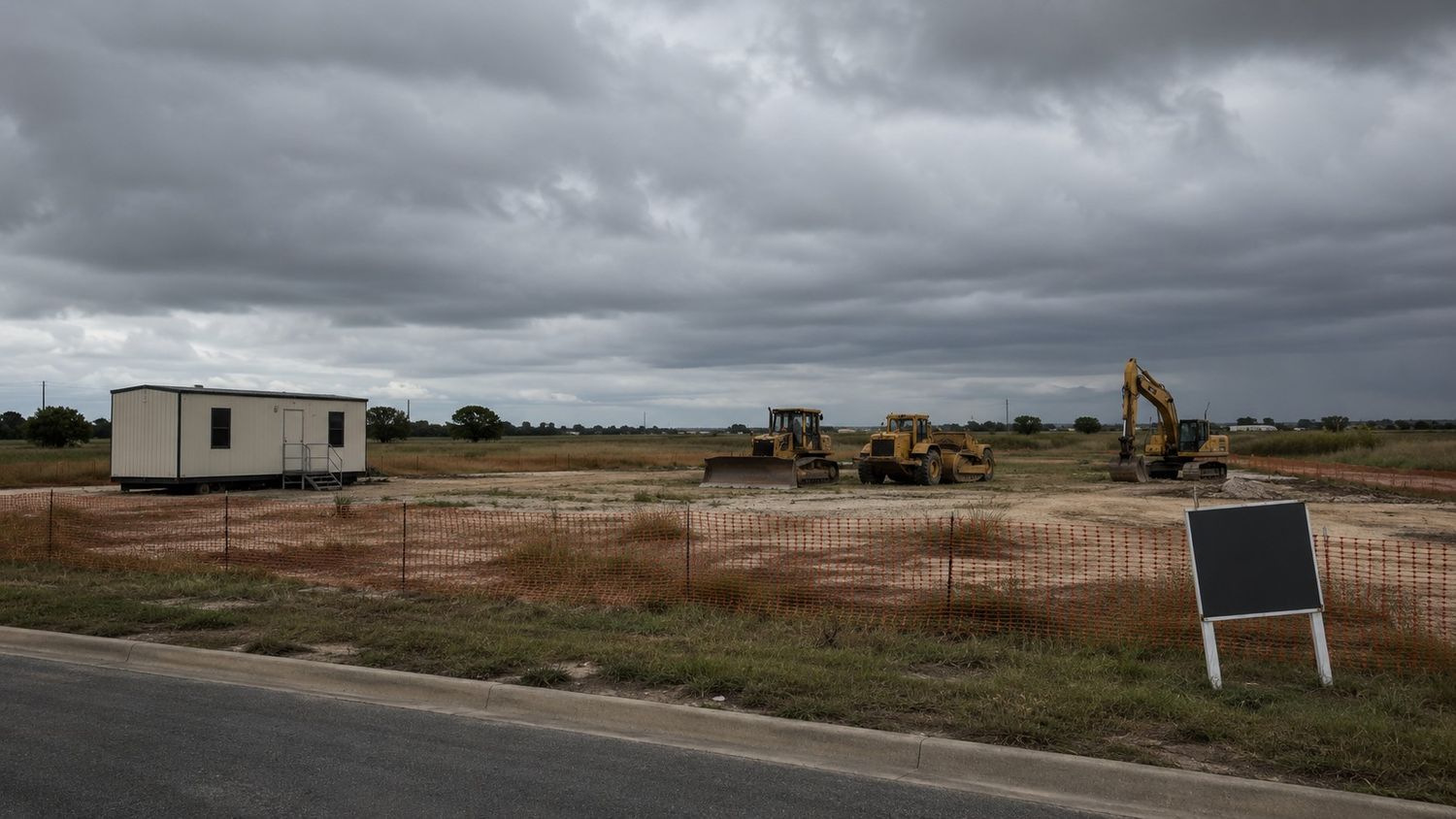
TCEQ discharge permits in Texas currently take 24 to 36 months under standard review conditions. A developer in Montgomery County came to MES eight months into carrying costs on a 130,000 GPD development when TCEQ informed him to expect another 12 or more months before approval. Monthly carrying costs (financing, property taxes, insurance) were deteriorating the project economics. Investor confidence was eroding. The infrastructure cost was manageable. The timeline was not.
For a project carrying $100,000 per month in holding costs, the difference between a 210E authorization approved in 8 weeks and a TPDES discharge permit that runs 24 months is $2.1 million in carrying cost exposure. That number has a direct impact on IRR. A project underwritten at a 20% IRR assumption with a 6-month construction start modeled in may deliver 14% if the permit runs 18 months longer than projected.
The carrying cost exposure of each permitting pathway is a financial variable that belongs in the pro forma alongside construction cost, not in the footnotes under regulatory risk.
Line Item 3: Ongoing Operations and Maintenance
A WWTP is not a capital expenditure with a defined end date. It is an operating infrastructure asset that generates monthly costs for the life of the development.
Monthly operations and maintenance for a 100,000 GPD extended aeration system in Texas runs $8,000 to $15,000 per month. That range reflects certified operator costs, energy costs for aeration and pumping, routine maintenance and consumables, lab testing, and biosolids disposal. For a 200,000 GPD system, budget $12,000 to $20,000 per month. These costs are ongoing whether the development is at 30% occupancy or 100%.
Over a 10-year operating horizon, a $12,000 per month O&M budget is $1.44 million in operating cost. Over 20 years it is $2.88 million. Those numbers belong in any long-term financial model for a development that operates its own private wastewater infrastructure.
Line Item 4: Certified Operator Requirements
TCEQ requires a certified wastewater treatment operator for any permitted facility in Texas. This is not optional and it is not transferable to general maintenance staff.
Certified operator costs vary by contract structure. An owner-operator arrangement is most cost-effective for large systems. For smaller systems in the 50,000 to 200,000 GPD range, contracted third-party certified operators typically run $3,000 to $7,000 per month depending on system complexity, visit frequency, and reporting obligations. That cost is already included in the O&M range above, but it is worth calling out separately because developers who model operations costs without accounting for certified operator requirements routinely underestimate this line item by 40 to 60%.
Line Item 5: Permit Compliance Obligations
A TCEQ operating permit is not a one-time approval. It generates compliance obligations that continue indefinitely and carry financial consequences for non-compliance.
Standard TPDES permit compliance includes monthly effluent sampling and laboratory analysis, quarterly and annual reporting to TCEQ, electronic reporting through TCEQ’s online database, and biosolids characterization and disposal documentation. Lab testing for a standard secondary treatment facility runs $500 to $1,500 per month depending on the number of parameters required under the permit. Annual reporting fees and permit maintenance costs add several thousand dollars per year.
Permit exceedances (treated effluent that fails to meet discharge limits) generate notices of violation that escalate to enforcement actions and penalties under TCEQ’s penalty schedule. Repeated exceedances can trigger permit revocation proceedings. The cost of a permit compliance failure is not just the penalty. It is the cost of the remediation engineering, the permit amendment process, and the operational disruption during the resolution period.
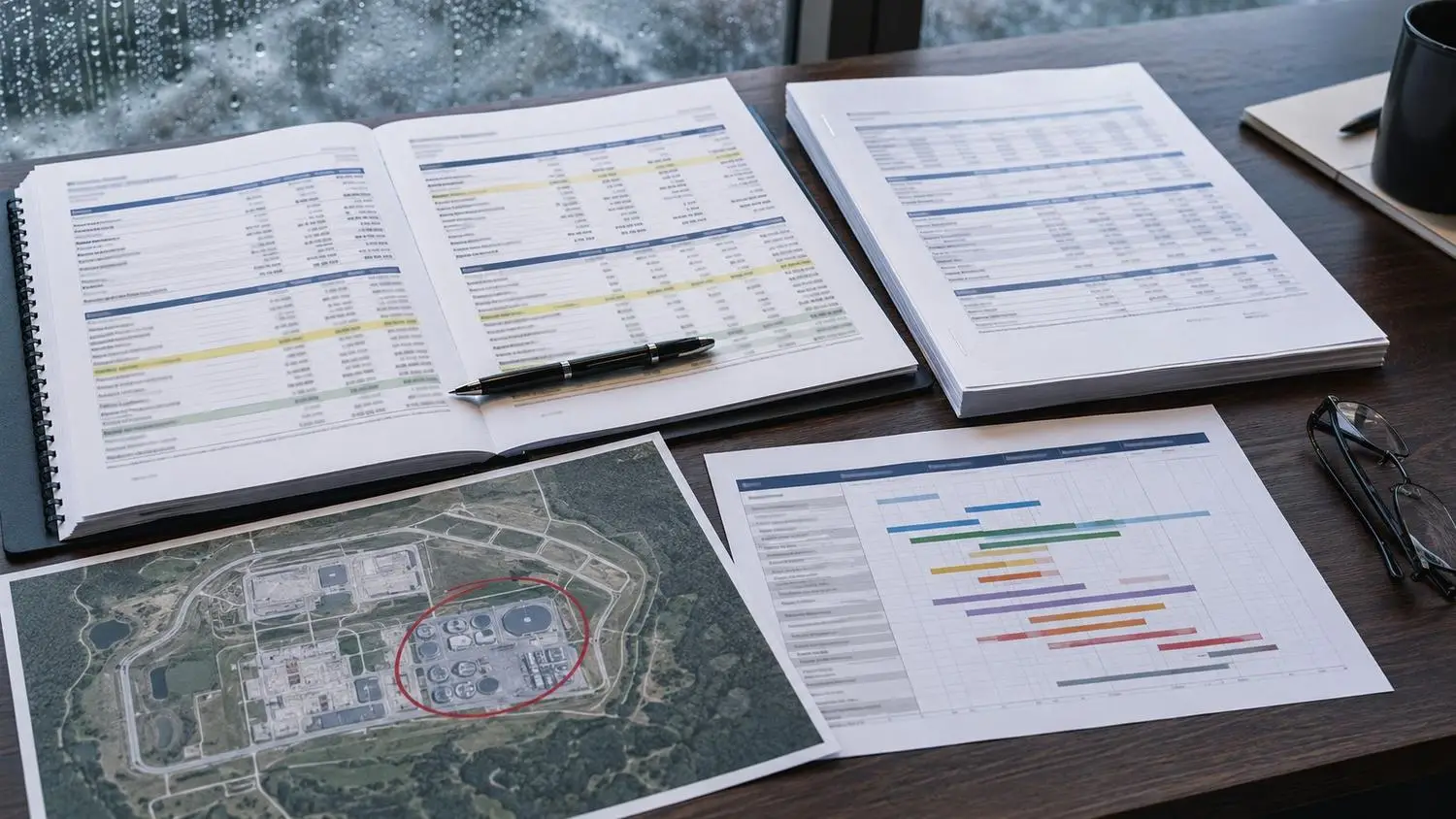
What a Complete Pro Forma Wastewater Section Looks Like
A pro forma that accurately accounts for wastewater infrastructure on a private system includes:
Capital costs: WWTP construction at $18 to $20 per gallon of design capacity, plus 15 to 25% for engineering and permitting, plus civil site work for the plant site, reuse infrastructure, and collection system connections.
Permit timeline carrying cost: Modeled for each viable permitting pathway with a sensitivity analysis showing IRR impact at the expected timeline and at a 12-month delay scenario.
Annual O&M: $96,000 to $240,000 per year for a 100,000 to 200,000 GPD system, escalated over the operating horizon.
Compliance costs: Lab testing, reporting, and operator costs included in the O&M budget or called out separately.
Contingency: Sized to actual risk. A 5% construction contingency does not cover a permit pathway that runs 18 months longer than modeled. Contingency for wastewater infrastructure on unserved sites should reflect the range of outcomes, not the optimistic assumption.
Frequently Asked Questions
What is the construction cost per gallon for a Texas package wastewater treatment plant?
$18 to $20 per gallon of design capacity at current market pricing. A 130,000 GPD system runs $2.34 million to $2.6 million in construction. Engineering, permitting, and civil site work add 15 to 25% on top.
How much do monthly operations cost for a private WWTP in Texas?
$8,000 to $15,000 per month for a 100,000 GPD extended aeration system. Includes certified operator, energy, maintenance, lab testing, and biosolids disposal. Scales with system size and permit complexity.
What is the carrying cost impact of a TCEQ discharge permit delay?
For a project carrying $100,000 per month in holding costs, a discharge permit that runs 24 months instead of the modeled 6 months adds $1.8 million in unplanned carrying cost exposure. The 210E Industrial Reclaimed Water Authorization (available for projects with any industrial wastewater component) compresses that to 4 to 10 weeks for qualifying projects, protecting financing windows and absorption schedules.
Related Resources
- Building a Private WWTP in Texas: What Developers Need to Know Before They Commit
- Flow Rate Projections: How to Size a WWTP for Your Development Without Over-Building
- How Carrying Costs Are Killing Texas Development Projects (And the Permit Strategy That Fixes It)
- What Is a 210E Authorization and How Can It Save Your Texas Development Project
Need Wastewater Cost Inputs for Your Pro Forma?
Modern Engineering Solutions works with Texas developers to produce accurate wastewater infrastructure cost estimates, permitting timeline analysis, and operations cost projections for development pro formas and lender underwriting packages.
We specialize in:
- WWTP construction cost estimation and process selection for Texas development sites
- Permitting pathway analysis: TPDES, TLAP, and 210E with timeline and carrying cost comparison
- Operations and maintenance cost modeling for private wastewater infrastructure
- Utility feasibility studies during land due diligence (two to four week turnaround)
- Pro forma support for wastewater infrastructure decisions
Modern Engineering Solutions, McKinney, Texas. Contact: (214) 833-6748 or mod-eng.com
Share via: