Quick Answer
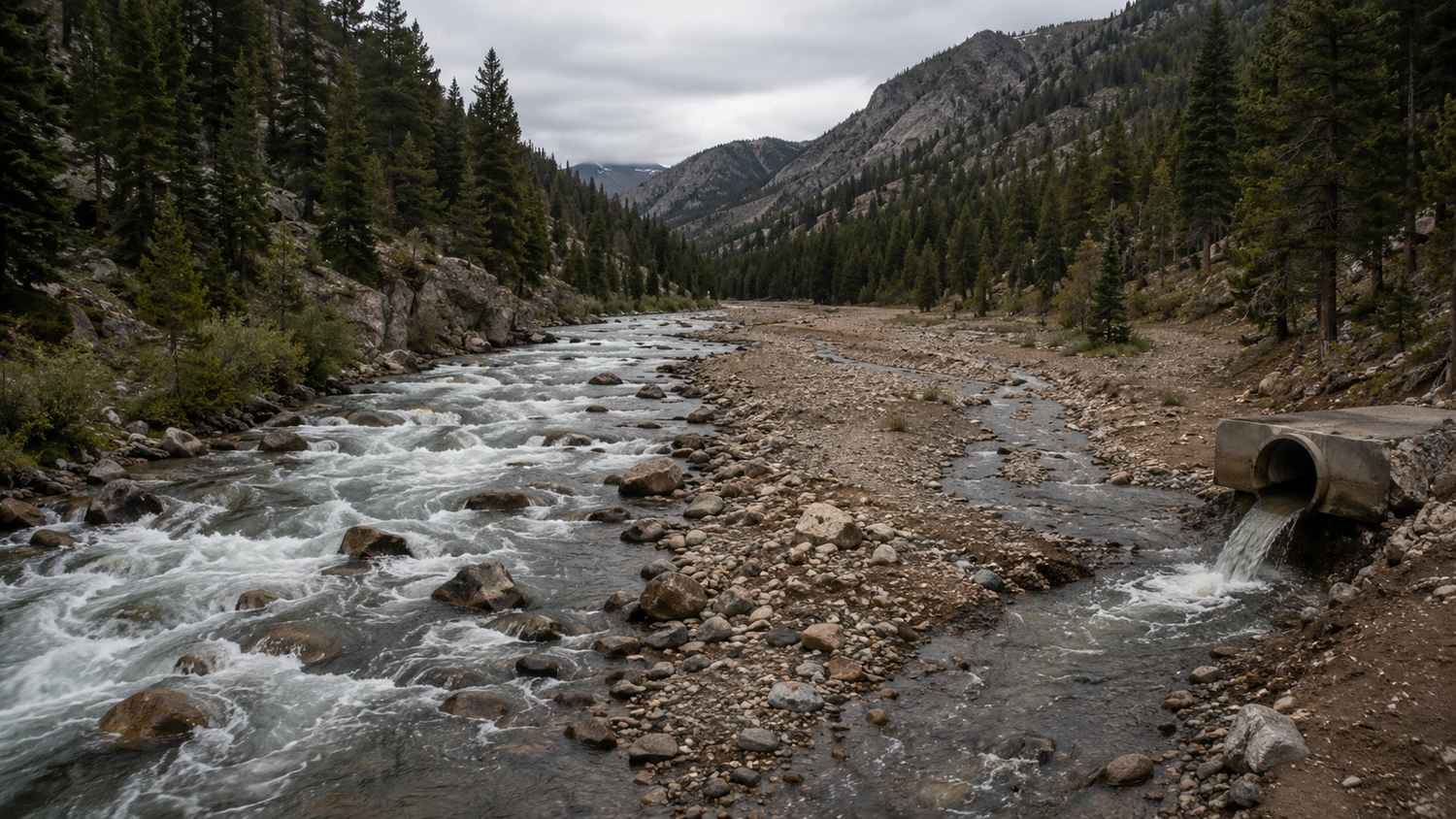
Colorado’s mountain and foothill watersheds experience some of the most extreme seasonal streamflow variation in the United States. Spring snowmelt produces high flow conditions that provide substantial dilution for wastewater discharges and temporarily mask the compliance challenges that emerge during low flow periods. Summer and fall low flow conditions, combined with warm water temperatures and reduced dilution, create the critical design scenarios that drive the most stringent effluent limits in Colorado discharge permits. CDPHE uses a seven day, ten year low flow statistic, known as the 7Q10, as the critical dilution condition for permit limit development on most Colorado receiving waters, meaning the permit limits are set to protect water quality during the most hydrologically stressed conditions the stream experiences, not the average conditions. Designing a treatment system around average flow conditions rather than critical low-flow conditions is one of the most common and costly planning errors in Colorado wastewater engineering.
How Colorado Hydrology Creates Permitting Challenges That Do Not Exist Elsewhere
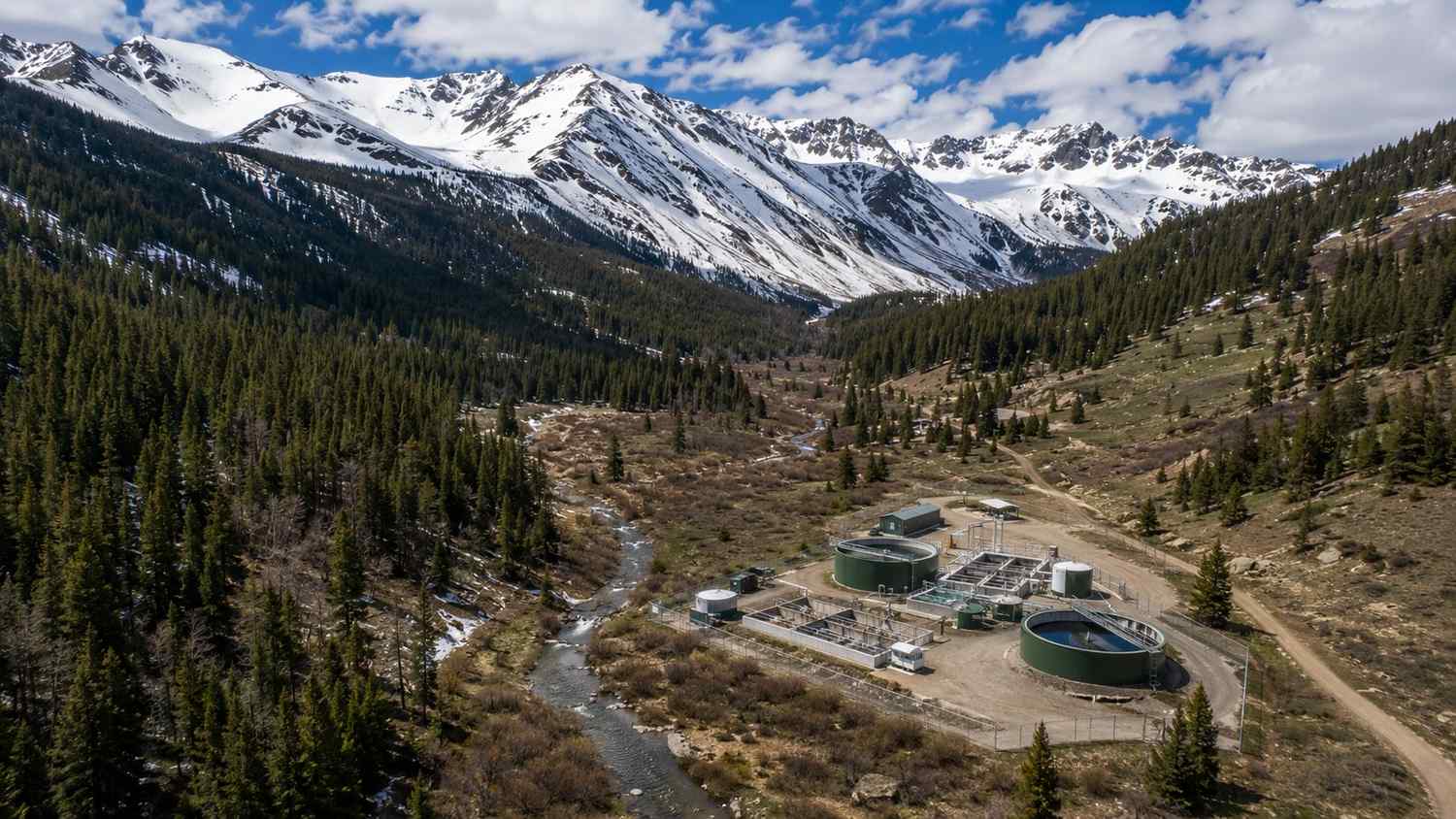
The hydrologic cycle in Colorado mountain watersheds is driven primarily by snowpack accumulation during winter and snowmelt runoff during spring. The timing, volume, and intensity of that runoff vary from year to year based on winter precipitation totals, spring temperatures, and the rate at which the snowpack melts. In a high snowpack year, spring runoff can be sustained for weeks at flows that are ten to fifty times the late summer base flow. In a drought year, even the spring runoff pulse may be modest, and the stream may reach critically low flows earlier in the season and sustain them longer than in normal years.
This variability creates a permitting environment where the hydrologic conditions that prevail during most of the year are not the conditions that determine the permit limits. The permit limits are set by the critical low flow scenario, and those limits must be met consistently across all seasons, including seasons when the treatment plant is operating under conditions that are far more challenging than the spring high flow period. A municipality or developer that evaluates discharge feasibility only during high flow conditions, or that uses average annual flow data rather than low flow statistics in its receiving water analysis, will receive a permit whose limits it cannot reliably meet during the dry season.
The seasonal population dynamics of many Colorado communities add a second layer of complexity to this hydrologic challenge. Resort communities in the mountains experience dramatic swings in population between peak ski season in winter, peak summer tourism season, and shoulder seasons when the community reverts to its much smaller permanent population base. The wastewater treatment plant that must handle peak winter or summer flows is the same plant that must achieve its permit limits during late fall or early spring when influent flows are a fraction of the peak, temperatures are dropping, and the biological treatment processes that depend on consistent loading and temperature to maintain performance are being tested at both ends of their operating range simultaneously.
Low-Flow Permit Conditions and the 7Q10 Design Standard
CDPHE develops effluent limits for Colorado discharge permits using the 7Q10 low flow statistic as the critical dilution condition for most parameters. The 7Q10 represents the lowest seven day average streamflow that occurs on average once every ten years, and it is the flow condition under which the dilution available to a wastewater discharge is most limited. Using the 7Q10 as the design basis for permit limits means that the limits must be protective of receiving water quality standards even during the most extreme low flow conditions the stream experiences in a ten year period, not just during average or above-average flow conditions.
For streams in Colorado mountain watersheds, the 7Q10 flow can be remarkably low. A stream that carries several hundred cubic feet per second during snowmelt may have a 7Q10 flow of only a few cubic feet per second or less. When a wastewater discharge volume is significant relative to the 7Q10 stream flow, the dilution available at critical conditions is minimal, and the effluent limits must be tight enough to protect water quality standards with little or no credit for mixing and dilution. In extreme cases, where the proposed discharge volume approaches or exceeds the 7Q10 stream flow, the permit limit calculation produces effluent quality requirements that essentially mean the treated effluent must meet or nearly meet the receiving water quality standard on its own, with no meaningful dilution credit. That level of treatment performance is beyond the capability of standard secondary treatment processes and requires advanced treatment technology that significantly increases both capital and operating costs.
The practical implication for project planning is that the feasibility of a surface discharge to a Colorado mountain stream must be evaluated using the 7Q10 flow data for the specific receiving water segment, not average flow estimates or visual observation of the stream during high flow periods. Obtaining the gauge data necessary to calculate or estimate the 7Q10 for a specific stream segment is an early engineering task that should occur before any treatment technology is selected or any discharge location is committed to.
Snowmelt Season: Why High Flows Create a Different Set of Problems
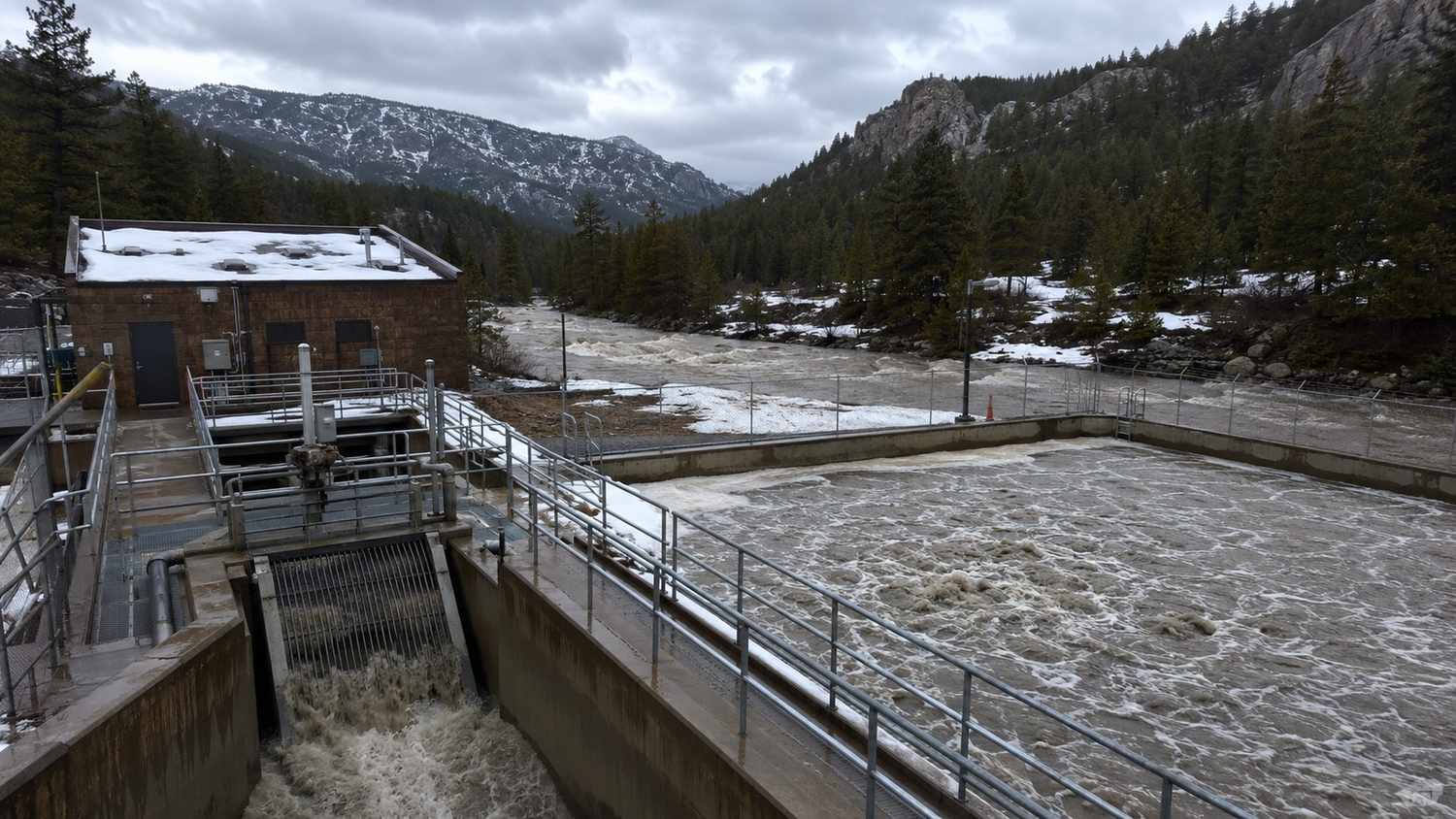
While low flow conditions drive the most stringent permit limits, snowmelt season creates operational challenges for Colorado wastewater treatment systems that are equally real and potentially more immediately disruptive. Spring snowmelt produces significant groundwater recharge and surface water infiltration into aging sewer collection systems, a phenomenon known as infiltration and inflow that can dramatically increase the hydraulic loading on a treatment plant during the weeks of peak runoff. A treatment plant designed for an average daily flow of one million gallons per day may receive two to three times that volume during peak snowmelt infiltration and inflow events, pushing hydraulic loading beyond design capacity and reducing the hydraulic retention time in biological treatment processes to a point where treatment performance is compromised.
The consequences of snowmelt driven hydraulic overloading are not confined to treatment plant operations. If the overloading results in treated effluent that does not meet permit limits during the high flow period, the facility has a compliance problem even though the receiving stream has abundant dilution capacity during those same weeks. Permit limits do not relax during high flow periods. They apply uniformly across all seasons, and an effluent quality exceedance during snowmelt is a violation that requires the same response and documentation as an exceedance during the critical low flow period.
Colorado treatment plants serving communities with older collection systems should evaluate the degree of infiltration and inflow affecting their wet weather flows as part of treatment plant design and permitting strategy. A sewer system rehabilitation program that reduces infiltration and inflow reduces the peak hydraulic loading that the treatment plant must manage during snowmelt, improves treatment performance during the period when hydraulic overloading is most likely, and reduces the volume of treated effluent discharged to the receiving water during the period when the plant is least able to reliably achieve its permit limits.
Temperature Variation and Its Effect on Biological Treatment Performance
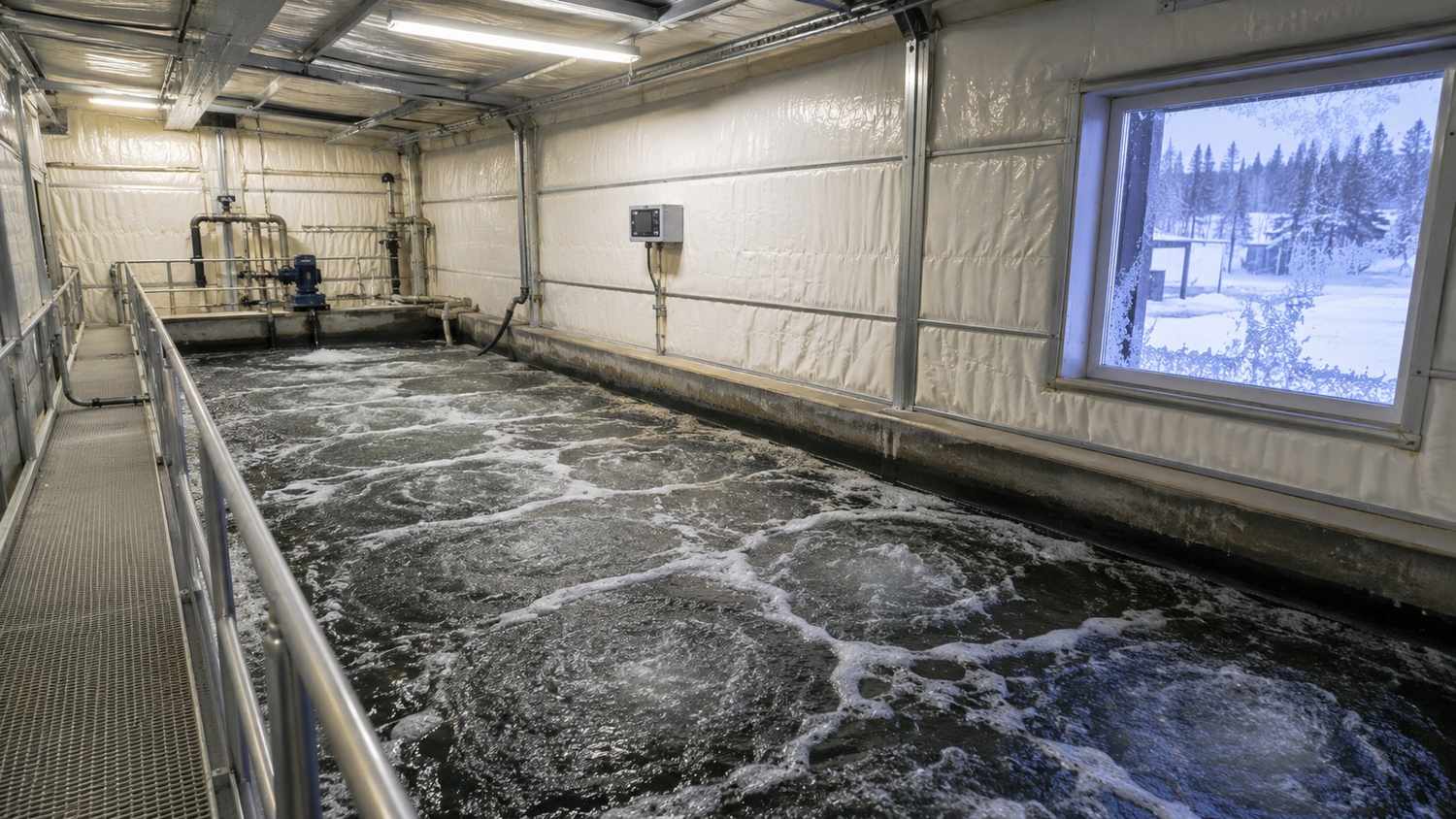
Colorado mountain communities experience air temperature swings that directly affect wastewater treatment plant performance through their impact on influent wastewater temperature and biological process temperature. Biological treatment processes, particularly nitrification which is required to achieve low ammonia effluent limits on coldwater stream permits, are highly sensitive to temperature. Nitrifying bacteria are slower growing and more temperature-sensitive than the heterotrophic bacteria responsible for BOD removal, and their activity decreases significantly as water temperature drops below approximately fifteen degrees Celsius and declines further as temperature approaches ten degrees or below.
A Colorado mountain treatment plant that achieves reliable nitrification during summer at influent temperatures of fifteen to eighteen degrees Celsius may experience nitrification failure during winter months when influent temperatures drop to eight to twelve degrees Celsius, particularly if the reactor is not adequately insulated or if the solids retention time in the biological process is insufficient to maintain an adequate population of nitrifying bacteria at low temperatures. A permit exceedance for ammonia during winter is not explained away by cold weather. It is a treatment system design deficiency that should have been addressed during the process design phase by selecting equipment capable of maintaining nitrification performance at the minimum influent temperature the plant will experience in operation.
Treatment system design for Colorado mountain communities must include a detailed temperature analysis that evaluates influent wastewater temperature across all seasons, the thermal behavior of the treatment reactors under winter conditions, and the minimum solids retention time required to maintain nitrification at the coldest anticipated operating temperature. This analysis must occur before treatment technology is selected, because the technologies capable of maintaining reliable nitrification at low temperatures are not the same as those adequate for warm climate applications, and the capital cost difference between them is significant.
Storage, Flow Equalization, and Operational Strategy
Flow equalization storage is a design element that directly addresses the peak flow management challenges created by snowmelt infiltration and inflow and by seasonal population swings. An equalization basin upstream of the biological treatment process buffers peak hydraulic loads, reduces the flow variation entering the treatment reactors, and improves biological treatment performance consistency across the seasonal operating range. For small Colorado communities where peak snowmelt flows significantly exceed average daily flows, equalization storage can be the difference between a treatment system that consistently meets permit limits and one that experiences seasonal compliance failures during wet weather events.
Effluent storage is a related concept that applies specifically to facilities pursuing a Plan of Reuse or a hybrid reuse and discharge strategy. During late fall and winter months when irrigation demand is absent and the reuse application cannot absorb the full volume of treated effluent being generated, effluent storage capacity holds the excess volume until irrigation demand returns in spring. A lined storage pond or tank system sized to hold the non-irrigation season’s effluent volume is a capital cost that must be included in the project budget from the beginning, not added later as an operational accommodation when it becomes clear that winter effluent has nowhere to go.
Frequently Asked Questions
We evaluated our proposed discharge during summer when stream flows were observable, and the stream appeared to have adequate capacity. Why does the permit analysis use a different flow condition?
Visual observation of a stream during summer baseflow conditions does not capture the critical low flow scenario that CDPHE uses to develop permit limits. The 7Q10 low flow statistic is derived from long term stream gauge records and represents a more extreme low flow condition than typical summer observations reflect. In some years, summer baseflow may be several times higher than the 7Q10 flow. In drought years, summer flows may approach or reach the 7Q10 level. The permit limits must be protective under the worst-case conditions the stream experiences, not the conditions observed during a single site visit or a typical year.Our resort community has a winter population three times larger than our summer population. How should we size the treatment plant?
Treatment plant sizing for communities with extreme seasonal population swings must address both the hydraulic and organic loading extremes. The peak flow condition drives the hydraulic design of clarifiers, filters, and other flow-sensitive unit processes. The minimum flow condition drives the biological process design, because low-flow periods with reduced organic loading can result in excessive solids retention time, sludge bulking, or other biological instability issues if the process is not designed for turndown conditions. A treatment plant sized for peak winter population must be capable of stable, compliant operation at summer minimum flows as well. That turndown requirement influences reactor sizing, recycle ratios, and control system design in ways that a straightforward peak-flow sizing exercise does not capture.Is a Plan of Reuse a realistic option for avoiding low-flow permit limit challenges on a Colorado mountain stream?
For many Colorado mountain communities, reuse is the most practical path to avoiding the stringent effluent limits that low flow receiving water conditions produce. Agricultural irrigation reuse, landscape irrigation for resort or community facilities, and storage based reuse programs that hold treated effluent during non irrigation periods can eliminate or substantially reduce the surface discharge volume that triggers low flow permit limit concerns. The feasibility of reuse for a specific community depends on the availability of suitable application land, the seasonal pattern of irrigation demand relative to wastewater generation, and the storage capacity that can be incorporated into the system. A comparative feasibility study that evaluates both reuse and surface discharge options using the actual hydrologic data for the receiving water is the appropriate starting point for communities facing difficult low-flow permit limit scenarios.Designing a Colorado Discharge Permit Strategy Around Seasonal Hydrology?
MES is licensed in Colorado and works with municipalities, utility districts, treatment plant designers, and water quality engineers to evaluate seasonal flow conditions, analyze low flow permit limit scenarios, design treatment systems capable of reliable performance across the full operating year, and build permit applications that reflect the actual hydrologic reality of Colorado mountain receiving waters. We specialize in:- Low flow receiving water analysis and 7Q10 permit limit projection for Colorado discharge permit applications
- Treatment system design for seasonal temperature variation, snowmelt hydraulic loading, and nitrification reliability in Colorado mountain communities
- Infiltration and inflow evaluation and sewer system rehabilitation planning for Colorado communities with wet weather overloading challenges
- Flow equalization and effluent storage design for communities managing seasonal population swings and reuse program seasonal gaps
- Seasonal permit condition evaluation and compliance strategy for Colorado facilities with variable influent and receiving water conditions
- Plan of Reuse feasibility evaluation as an alternative to surface discharge for communities facing challenging low-flow permit limit scenarios