
Blog
How TCEQ Sets Effluent Limits: Understanding Receiving Water Quality Standards and Permit Conditions
TCEQ effluent limits come from the receiving water's designated uses, 7Q2 low flow, impairment status and TMDLs, and each one shapes your treatment design.
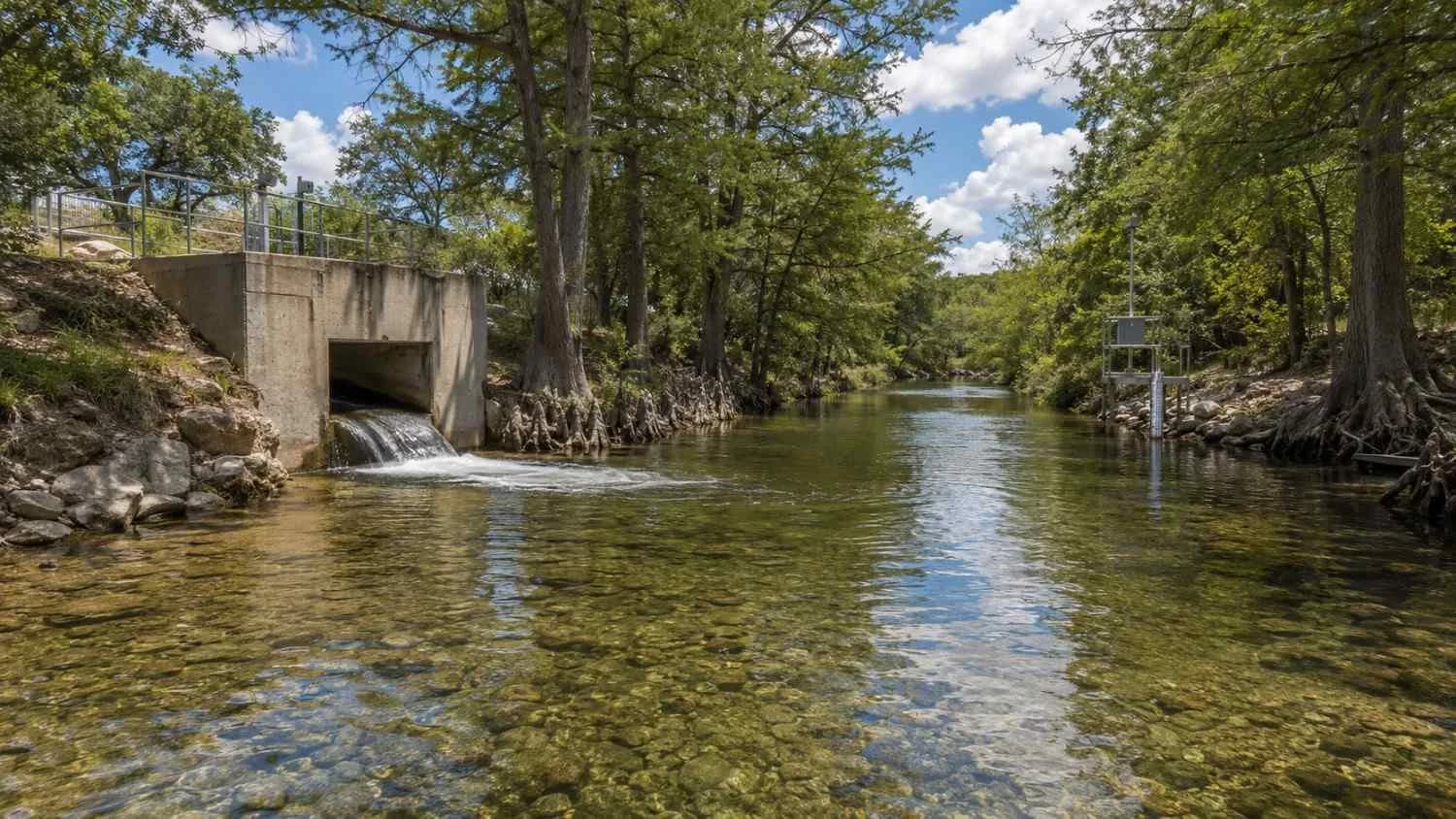
TCEQ effluent limits start with the receiving water, not the treatment plant. Every Texas discharge permit has a technology-based floor for secondary treatment, and TCEQ tightens or adds any limit the creek, river, lake or bay needs to keep meeting the Texas Surface Water Quality Standards at its critical flows. That is why two plants with the same flow can get very different permit conditions.
What two kinds of limits go into a Texas discharge permit?
Technology-based limits set the minimum treatment. Water-quality-based limits tighten them, or add parameters such as ammonia nitrogen, wherever the receiving water needs more.
The federal floor is EPA's secondary treatment rule, 40 CFR 133.102: BOD5 and suspended solids of 30 mg/L as a 30-day average and 45 mg/L as a 7-day average, with at least 85 percent removal. 30 TAC §309.1 sets the Texas secondary treatment minimum for domestic sewage and says stricter limits may be required to protect water quality.
Stricter limits come from 40 CFR 122.44(d), which requires a limit on any pollutant with the reasonable potential to cause or contribute to an excursion above a state water quality standard. TCEQ applies the Texas standards, 30 TAC Chapter 307, through its Procedures to Implement the Texas Surface Water Quality Standards. The June 2010 version (RG-194) governs most topics. Our guide to reading a TCEQ effluent limit table covers the result.
How does the receiving water's classification change your limits?
The classification sets the designated uses TCEQ must protect, and each use brings its own criteria. A higher aquatic life use means a higher dissolved oxygen target and tighter oxygen-demand limits.
Classified segments carry site-specific uses and criteria in Appendix A of §307.10. Unclassified waters not listed in Appendix D get presumed uses under 30 TAC §307.4(h): perennial streams are presumed high aquatic life use, intermittent streams with perennial pools limited, and other intermittent streams minimal.
Under 30 TAC §307.7, the freshwater dissolved oxygen means run from 2.0 mg/L for minimal use through 3.0, 4.0 and 5.0 up to 6.0 mg/L for exceptional. The rule says the dissolved oxygen models that set effluent limits normally run against those means at steady-state, critical conditions. TCEQ uses that modeling to set CBOD5, ammonia nitrogen and effluent dissolved oxygen limits.
For primary contact recreation 1, the bacteria criterion is an E. coli geometric mean of 126 per 100 mL in fresh water. A public drinking water supply use brings its own human health criteria under 30 TAC §307.6(d). Water better than fishable and swimmable can trigger a Tier 2 review under 30 TAC §307.5. We cover that in why some Texas streams trigger an antidegradation review.
Why does critical low flow (7Q2) matter so much?
TCEQ checks your effluent against the stream in a dry week, not on an average day. Less flow means less dilution and tighter limits.
The 7Q2 is the lowest seven-day average flow with a two-year recurrence interval (§307.3). Under 30 TAC §307.8, chronic toxic criteria and several dissolved oxygen criteria do not apply below critical low flow, so permits are built to meet them at it. Long-term criteria such as chloride, sulfate, total dissolved solids and human health toxics use harmonic mean flow instead.
A hypothetical 0.5 MGD discharge into a creek with a 7Q2 of 0.3 MGD makes up more than 60 percent of the flow at critical conditions, so its limits approach the in-stream criteria. A 7Q2 of zero means no dilution at all. Low dilution also makes whole effluent toxicity testing harder to pass.
What changes when the receiving water is impaired or has a TMDL?
The question shifts from how clean your effluent must be to whether the water can take it at all. An impaired water may have no room for a new load, and a total maximum daily load (TMDL) fixes each point source's share.
Check the 303(d) list in TCEQ's Texas Integrated Report; EPA approved the 2026 list on August 5, 2026. TCEQ's domestic wastewater permitting steps warn that new discharges into impaired water bodies may not be allowed or may come with stringent requirements. Under 40 CFR 122.4(i), a new discharger into a segment that fails standards, where a load allocation has been done for that pollutant, must show there is enough allocation left for its discharge and that existing dischargers are on compliance schedules.
A TMDL splits the water's loading capacity into wasteload allocations for point sources and load allocations for nonpoint sources and natural background, as 40 CFR 130.2 defines them. Your limits must be consistent with your wasteload allocation. If the allocation is used up, the options are another outfall, land application under 30 TAC Chapter 309, Subchapter C, or reuse under 30 TAC Chapter 210, which still needs a backup for times with no demand (§210.1(c)).
How do permit limits turn into treatment design?
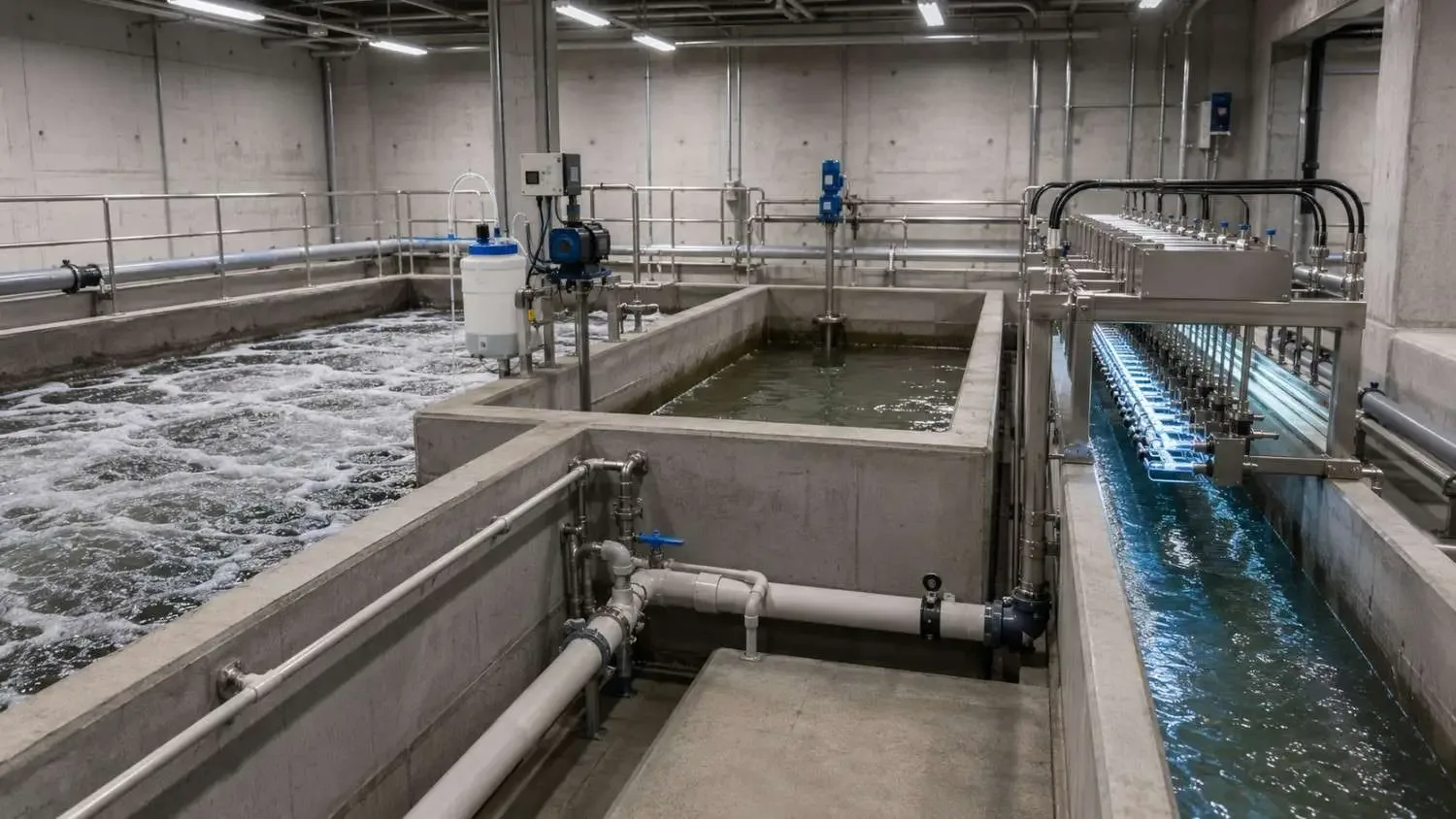
Each limited parameter maps to a process you have to build and then run every day.
CBOD5 and TSS limits near secondary numbers fit a conventional activated sludge process such as extended aeration. An ammonia limit means reliable nitrification, winter included. EPA's 2000 package plant fact sheet says extended aeration can be designed to nitrify, so design for it: sludge age, aeration capacity and alkalinity. The same fact sheet says extended aeration needs added unit processes for denitrification or phosphorus removal, while sequencing batch reactors can do all three. Bacteria limits mean disinfection sized for peak flow. Every limit also brings sampling and reporting to budget for.
What should you check about the receiving water before you apply?
Check it before you lock in the site, the outfall or the plant size. A pre-application desk review shows early whether surface discharge is realistic.
Readiness check: six yeses means you are ready to talk limits with your engineer. Any no is a gap to close first.
- Do you know the exact receiving water and whether it is a classified segment?
- Do you know its aquatic life, recreation and water supply uses, including downstream?
- Have you checked the 2026 303(d) list and any TMDL for that water and the segments below it?
- Do you have the 7Q2 and harmonic mean flows at the outfall?
- Have you compared your design flow with those flows?
- Do you have a fallback, such as land application or reuse, if discharge does not work?
Then ask your engineer which parameters the dissolved oxygen model will drive and whether a Tier 2 review applies. TCEQ highly recommends contacting permitting staff before applying for a new permit or major amendment, and filing a complete application at least 330 days before discharge begins. When the draft permit arrives, read TCEQ's technical summary or fact sheet; where a fact sheet is required, 40 CFR 124.56 says it must show how the limits were derived.
A note on limits: this is general education on Texas and federal rules as of October 2026. TCEQ is still revising its 2010 implementation procedures, and your numbers come only from TCEQ's review of your application.
Frequently asked questions
Why did a plant a few miles away on the same river get looser limits than ours?
Usually because the receiving water differs at the two outfalls. Low flow, segment uses, downstream water supply, other dischargers and impairment status all change along a river. A larger reach gives more dilution than a small tributary.
Can we negotiate effluent limits with TCEQ?
Not by bargaining. The limits follow from the standards, the flows and the models. What you can do is make sure the inputs are right: the receiving water, the outfall location, the flow data and the aquatic life use. Raise problems early, and comment during public notice if the draft's basis is wrong.
I'm a developer in Central Texas planning a small package plant that would discharge to an intermittent creek. How tight should I expect my limits to be?
Assume tighter than secondary treatment until a review says otherwise. An intermittent creek can have a 7Q2 of zero, which leaves little or no dilution, and the perennial water downstream may control. Plan for a plant that nitrifies and disinfects, then confirm the numbers before you size anything.
I manage a small city utility in Texas and our receiving stream was just added to the 303(d) list. What does that mean for our next permit renewal?
The listing assesses the water; it does not rewrite your permit. The effect shows up through permit actions such as your renewal and through any TMDL, and your limits must be consistent with its wasteload allocation. TCEQ asks for renewal applications 180 days before the permit expires.
What if the receiving water can't take our discharge at any treatment level?
Then you need a different disposal path, not a better plant: another outfall on a water with capacity, land application, or reuse under Chapter 210 with a backup for days when there is no demand. Find this out before design starts.
Related resources
- Your Three Wastewater Disposal Options in Texas: Discharge, Reuse, or Land Application
- Private Wastewater Treatment Plants in Texas: When Developers Need Their Own TPDES Permit
- Municipal TPDES Individual Permits: What Texas Cities and Utility Providers Need to Know
- Outfall Design and Diffuser Engineering: The Overlooked Civil Design Work Behind a Compliant Discharge Point
Designing a plant before you know your effluent limits?
We review the receiving water, project the likely limits and match the treatment process to them before the application goes in.
Modern Engineering Solutions, McKinney, Texas. Call (214) 833-6748.
Keep reading
More to read.
Talk to an engineer
Tell us about your project.
An engineer reads it
Not a salesperson. Someone who can tell you whether the pathway is real.
You get a first answer
Your options, the agencies involved and the questions that decide cost and schedule.
You decide
No commitment to have the first call.
Prefer the phone? (214) 833-6748