
Blog
How to Size a Package Wastewater Treatment Plant for a New Texas Development
Size a package wastewater treatment plant in Texas from TCEQ's Table B.1 flows, the 1.5 and 4.0 factors, phased permits and the 75% and 90% triggers.
To size a package wastewater treatment plant for a new Texas development, count the people and uses the site will serve at buildout and multiply by TCEQ's per capita flows. Below 1.0 MGD, multiply by at least 1.5 for design flow, then by at least 4.0 for peak flow when you have no site data. Permit the final flow, build in phases, and pick the process once you know the effluent limits.
What flow does TCEQ expect you to start from?
Table B.1 of 30 TAC §217.32, applied to everyone the plant will serve at buildout.
30 TAC §217.32 sets flows and loadings for a new wastewater treatment facility. Its Table B.1 lists flow and strength by source. The rows you will use most:
- Subdivision, residential: 75 to 100 gallons per person per day, BOD5 of 250 to 400 mg/l
- Mobile home park, 3 people per trailer: 50 to 75 gallons per person
- Office building or factory: 20 gallons per person, for the largest shift
- Hotel or motel: 50 to 75 gallons per bed
- Restaurant: 7 to 10 gallons per meal, BOD5 of 1,000 mg/l with a grease trap
Count use by use from the land plan, not from one "per home" number. If an existing plant already serves the area, the rule requires its historical data when there is enough. Run this math before you close on the land, in a site feasibility study, because the flow sets the permit, the footprint and any land for effluent disposal.
How do you turn average flow into design flow and peak flow?
Multiply the Table B.1 total by at least 1.5 for design flow when that total is under 1.0 MGD. Multiply design flow by at least 4.0 for peak flow, unless site data supports another number.
Under 30 TAC §217.2, design flow is the highest anticipated 30-day average, and peak flow is the highest two-hour flow, including wet weather. Table B.1 gives you the annual average. A worked example, assuming 1,200 residents and the top of the subdivision range:
- Annual average: 1,200 people × 100 gallons = 120,000 gallons per day (gpd)
- Design flow: 120,000 × 1.5 = 180,000 gpd, or 0.18 MGD
- Peak flow: 180,000 × 4.0 = 720,000 gpd, or 500 gallons per minute
The peak factor sits on design flow, not on the average. One shortcut runs a 3.0 factor on average flow and calls the result design flow. That permits twice the design flow the 1.5 minimum gives, and it still never sizes for the peak. Every flow-limited pipe, weir, flume and disinfection unit must carry the peak. Flow equalization can lower the peak that later units see, if the engineering report has data to support it.
Why can a small restaurant move the plant more than its flow suggests?
Because Table B.1 sets organic load as well as flow, and restaurant wastewater is several times stronger than household wastewater.
Under §217.32, design organic load is annual average flow times the table's concentration, unless you have actual data. Add a restaurant serving 500 meals a day at 10 gallons a meal: 5,000 gpd at 1,000 mg/l, about 42 pounds of BOD5 a day. The homes, at an assumed 300 mg/l, carry about 300 pounds. The restaurant is 4% of the flow and about 12% of the load, and aeration volume and oxygen supply follow the load.
Process water from a food plant or similar tenant is not in Table B.1. Get its flow and strength data, and ask TCEQ permitting staff early which permit it needs.
Which process fits: extended aeration, SBR or membrane bioreactor?
The one that meets your permit's effluent limits at every phase's flow. Choose it after the limits are known, not from a vendor brochure.
EPA's package plant fact sheet (2000) says extended aeration often handles load swings well but does not denitrify or remove phosphorus without added units. A sequencing batch reactor (SBR) can do both in less space, though its cycle times are hard to adjust for small communities.
The activated sludge rules in Subchapter F of Chapter 217 set the details. An SBR needs multiple tanks and enough decant volume to pass design flow and meet its limits with the largest basin out of service. A membrane bioreactor needs fine screening, a way to clean the membranes and enough units or trains to run at design flow with the largest one out of service. Its expected effluent is 5 mg/l BOD5 and 1 mg/l TSS. That quality pays when your limits or a reuse plan call for it.
How do you phase the plant without running out of capacity?
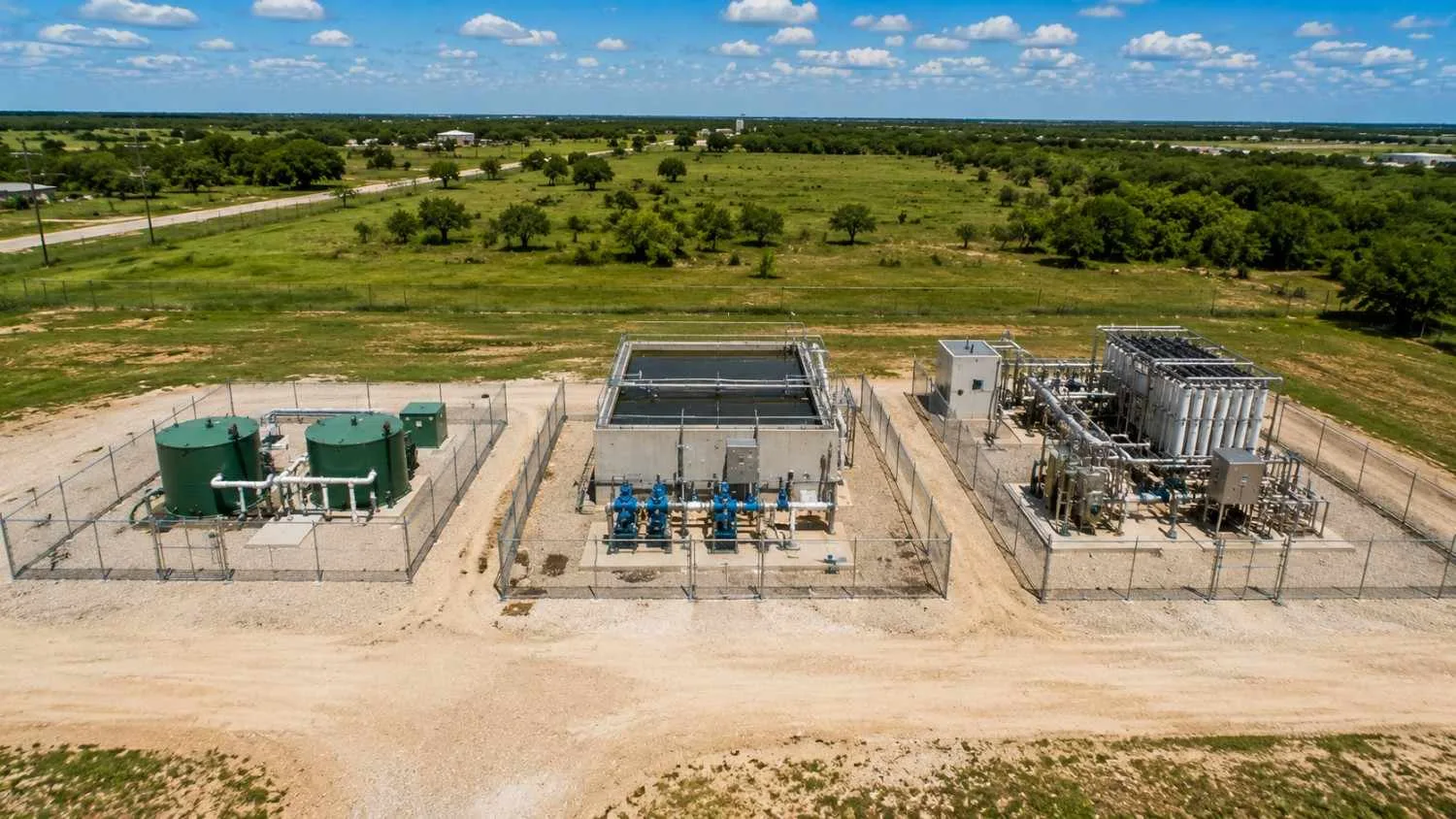
Permit the final flow and build interim phases sized to lot releases. Then watch the 75% and 90% triggers.
The Domestic Technical Report, Form TCEQ-10054, on TCEQ's domestic wastewater permitting process page, asks for Interim I, Interim II and Final phases, each with a design flow, a two-hour peak flow and start dates. New and major amendment applications must justify every phase not yet permitted. At renewal, a phase unbuilt five years after authorization needs a case for continued need. Do not permit phases you will never build.
Once the plant runs, 30 TAC §305.126 sets the clock. At 75% of permitted flow for three consecutive months, start engineering and financial planning for expansion. At 90% for three months, obtain TCEQ authorization to build. Size phase one so the 75% trigger leaves time to design and install the next train, and lay out yard piping and headworks for the final phase on day one.
What redundancy does TCEQ expect from a package plant?
Spare air capacity, two basins and two clarifiers at 0.4 MGD or more, and treatment and disinfection through a power outage.
Under §217.155, the air compressors (blowers) must meet the maximum design air requirement with the largest single unit out of service. Under §217.153, a plant with a design flow of 0.4 MGD or more needs at least two aeration basins and two clarifiers. The second aeration basin can be skipped only if the aeration equipment, diffusers included, comes out without taking the basin out of service.
Under 30 TAC §217.36, the plant must prevent discharge of untreated or partially treated wastewater during outages, for at least the longest outage in the electric utility's last 60 months of records or 20 minutes, whichever is longer. Primary treatment and disinfection must keep running. See emergency bypass and backup power requirements for package plants for the options.
Is your sizing basis ready for TCEQ review?
It is ready when you can answer yes to all six.
- Is every use counted with a Table B.1 rate or actual data?
- Is the buildout count of people, beds, meals or shift workers documented?
- Did you apply at least 1.5 for design flow and 4.0 for peak, or justify site data?
- Do you have flow and strength data for every process tenant?
- Does each phase have a design flow, a peak flow and a start date tied to lot releases?
- Does the process meet the limits at each phase's flow, with the redundancy Chapter 217 requires?
Six yeses mean the flow basis is ready for the engineering report. Any no comes first.
Questions for your engineer: Which rate did you use for each use? When does phase one reach 75%? What does equalization do to the peak?
A note on limits: this is general education from TCEQ rules and forms and an EPA fact sheet, as published in October 2026. Your permit and site data govern, and no article can predict a review outcome or a schedule.
Frequently asked questions
What is a package wastewater treatment plant?
A pre-manufactured plant for a small community or a single property. EPA's fact sheet says they most commonly treat 0.01 to 0.25 MGD. In Texas, one that treats domestic wastewater falls under Chapter 217's design rules.
What peaking factor does TCEQ require for a new plant?
At least 4.0 times design flow without site data. If the actual daily factor tops 4.0, or events top 5.0, the higher number governs unless you equalize flow.
I'm developing a 300-lot subdivision in Central Texas that will build out over eight years. Should I permit the full flow now or start small and amend later?
Permit the final flow with interim phases. TCEQ-10054 gives each phase its own design flow, peak flow and dates. Tie the phases to a real absorption schedule, because a phase still unbuilt five years after authorization must be justified at renewal.
I'm the civil engineer on a Texas mixed-use project with apartments, a hotel and two restaurants. How do I build the flow basis for a package plant?
Use Table B.1 by use: residents at 75 to 100 gallons per person, the hotel at 50 to 75 gallons per bed, restaurants at 7 to 10 gallons per meal. Add them, then apply the 1.5 and 4.0 minimums. Run organic load per use too; the restaurants carry more than their flow suggests.
Related resources
- Flow Rate Projections: How to Size a Wastewater Treatment Plant for Your Development Without Over-Building
- Package WWTP vs. Custom-Designed Plant: Which One Fits Your Project?
- How to Read a TCEQ Effluent Limit Table: What the Numbers Actually Mean for Your Development
- Building a Private WWTP in Texas: What Developers Need to Know Before They Commit
Sizing a package plant for a Texas development?
We build the Table B.1 flow basis, set phases against your lot releases and match the process to the permit before you buy equipment.
Talk to Modern Engineering Solutions about your site, or call (214) 833-6748.
Keep reading
More to read.
Talk to an engineer
Tell us about your project.
An engineer reads it
Not a salesperson. Someone who can tell you whether the pathway is real.
You get a first answer
Your options, the agencies involved and the questions that decide cost and schedule.
You decide
No commitment to have the first call.
Prefer the phone? (214) 833-6748