Quick Answer
The Arizona Department of Environmental Quality administers wastewater permitting in Arizona through its Water Quality Division, which regulates the design, construction, and operation of wastewater collection systems, treatment facilities, reclaimed water systems, and onsite wastewater systems that have the potential to affect Arizona’s groundwater and surface water quality. Developers proposing new wastewater infrastructure, extending collection systems, installing private treatment facilities, or implementing reclaimed water systems must obtain ADEQ permits or approvals before construction begins. Review timelines for a complete and well-prepared application typically run three to six months for straightforward projects. New treatment facilities, reclaimed water systems, and complex sites can take twelve to eighteen months or more. Developers who begin the ADEQ permitting process during site due diligence rather than after land closing consistently encounter fewer schedule surprises and lower total project costs than those who treat permitting as a sequential step after design.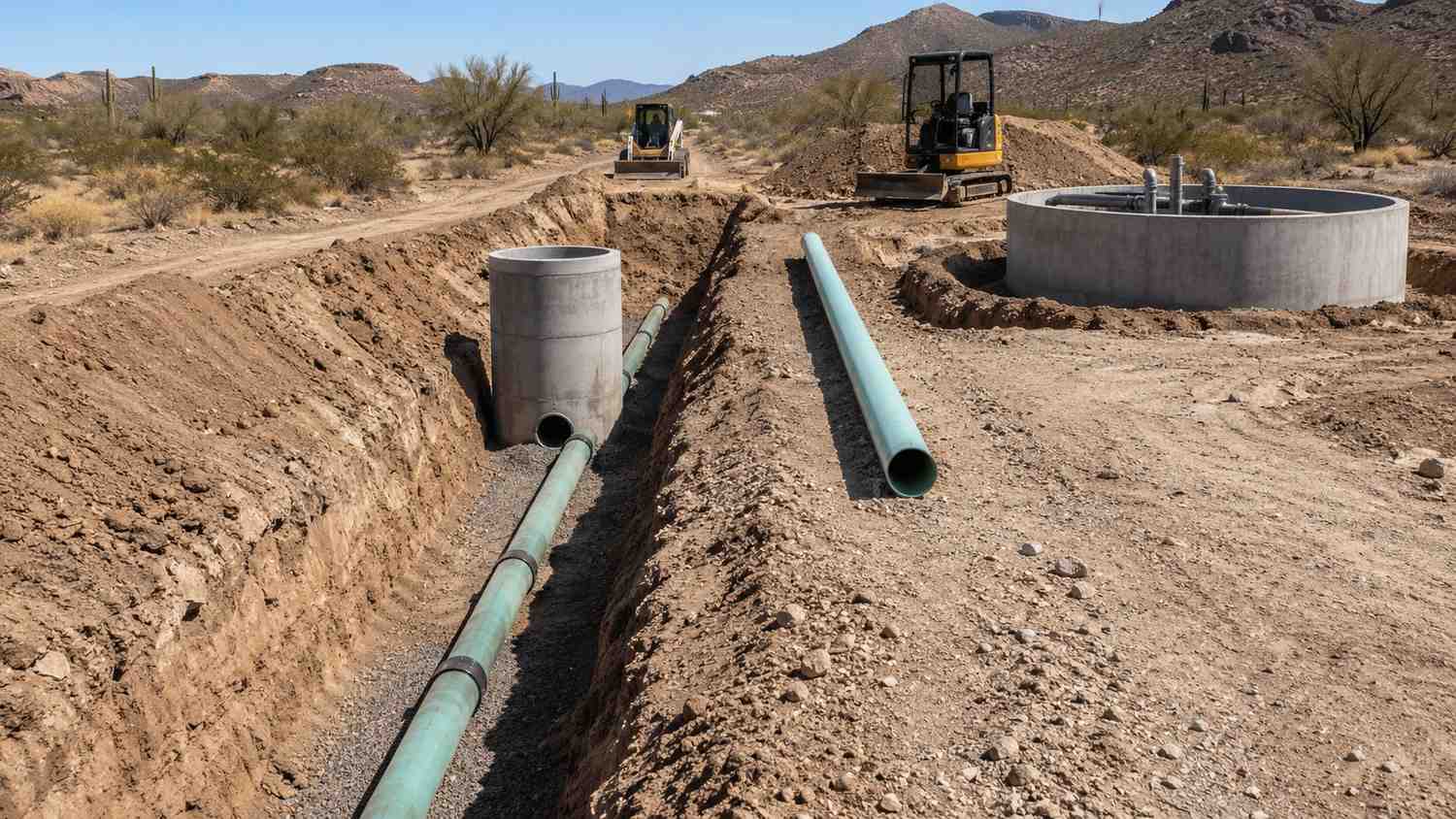
What Triggers ADEQ Wastewater Permitting in Arizona
ADEQ wastewater permitting is triggered by any construction, modification, or operation of wastewater infrastructure that has the potential to affect Arizona groundwater or surface water quality. For a residential developer extending a collection system into a new subdivision and connecting to an existing utility’s treatment plant, the collection system mains, manholes, lift stations, and force mains require ADEQ approval under the Aquifer Protection Permit program or under ADEQ’s individual permit requirements before construction. For a developer whose project site is not served by a public sewer system and requires a private treatment facility, the treatment plant requires an Aquifer Protection Permit that governs the design, construction, operation, and monitoring of the facility.
Arizona’s Aquifer Protection Permit program is the primary regulatory mechanism for wastewater permitting in the state, established under Arizona Revised Statutes Title 49 and Arizona Administrative Code Title 18. The program requires permits for facilities that discharge pollutants to the land surface or subsurface in a manner that may affect groundwater quality, which encompasses virtually all wastewater treatment and disposal activities. The permit establishes the engineering design standards the facility must meet, the operational requirements the permittee must follow, and the monitoring and reporting obligations that apply throughout the life of the facility.
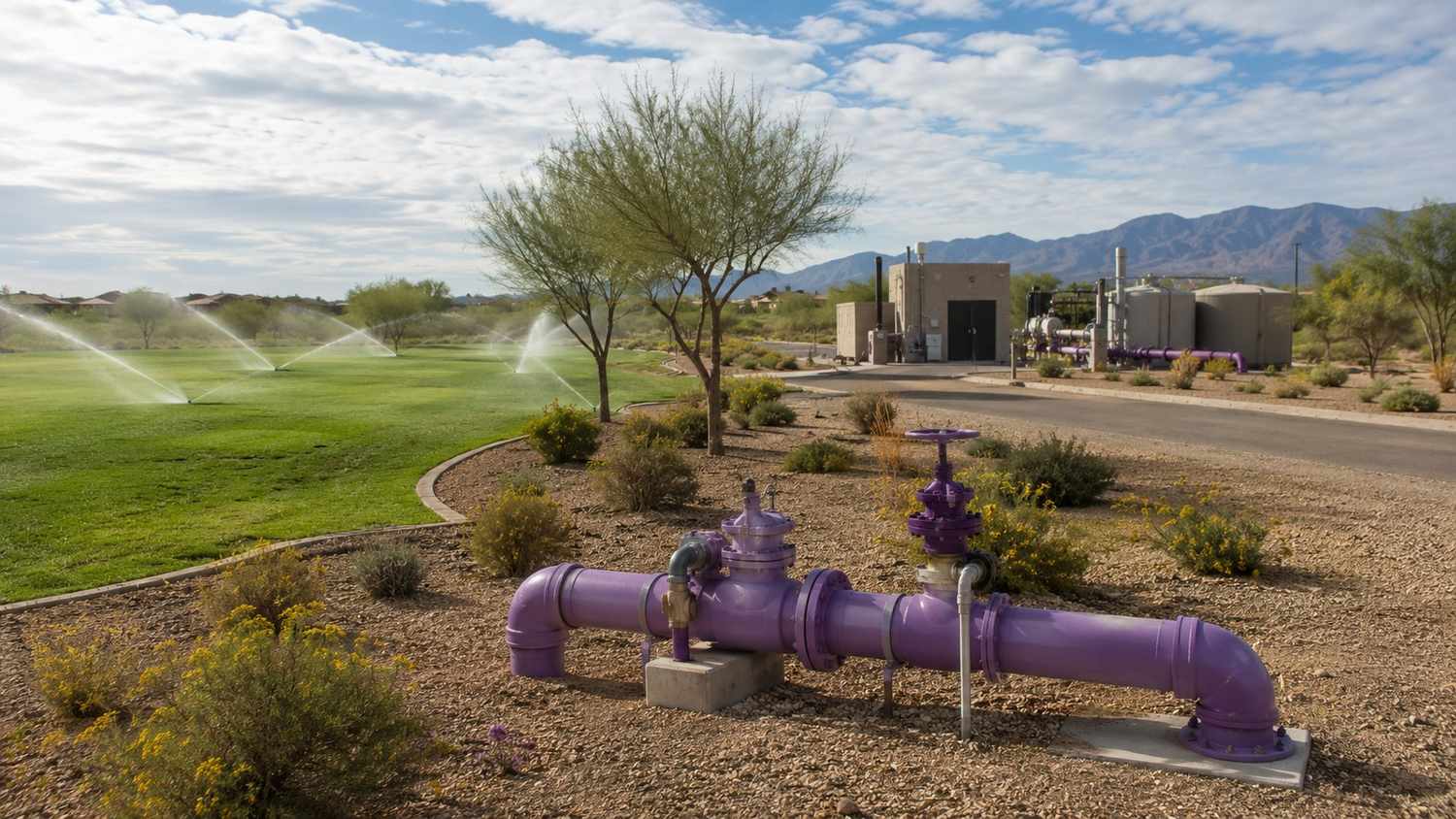
Reclaimed water systems in Arizona require separate authorization under ADEQ’s reclaimed water rules in addition to any Aquifer Protection Permit required for the underlying treatment facility. A developer proposing on site reclaimed water reuse for landscape irrigation, golf course irrigation, or industrial non potable uses must obtain a reclaimed water permit that specifies the treatment standard required for the intended use, the distribution system requirements, the setback distances from wells and surface water, and the monitoring and recordkeeping obligations. Understanding that the reclaimed water authorization is a separate permit from the treatment facility permit, and that both must be in hand before operation begins, is a project planning detail that developers who have not worked in Arizona before commonly miss.
Connecting to a Public Sewer Versus Installing a Private Treatment System
The first wastewater strategy question for any Arizona development is whether public sewer service is available at or near the project site and whether connecting to that system is the most practical option. A project that can connect to a public utility with confirmed available treatment capacity avoids the Aquifer Protection Permit process for the treatment facility itself and limits ADEQ involvement to the collection system construction permit for the pipes, manholes, and lift stations serving the development. That is a significantly simpler and faster permitting pathway than installing and permitting a private treatment plant.
Confirming public sewer service availability in Arizona requires more than identifying the nearest sewer main on a utility map. It requires a formal capacity inquiry to the serving utility that asks specifically whether the utility has available treatment capacity to serve the project’s anticipated flow, whether the collection system between the project site and the treatment plant has hydraulic capacity to convey the additional flow, and whether any infrastructure upgrades would be required as a condition of service. In high growth Arizona markets, particularly in the Phoenix and Tucson metropolitan areas, utilities have experienced rapid growth that has consumed treatment capacity faster than expansion projects can keep pace. A utility that appears to serve an area on a map may have issued moratoriums on new connections in specific service zones where capacity is constrained.
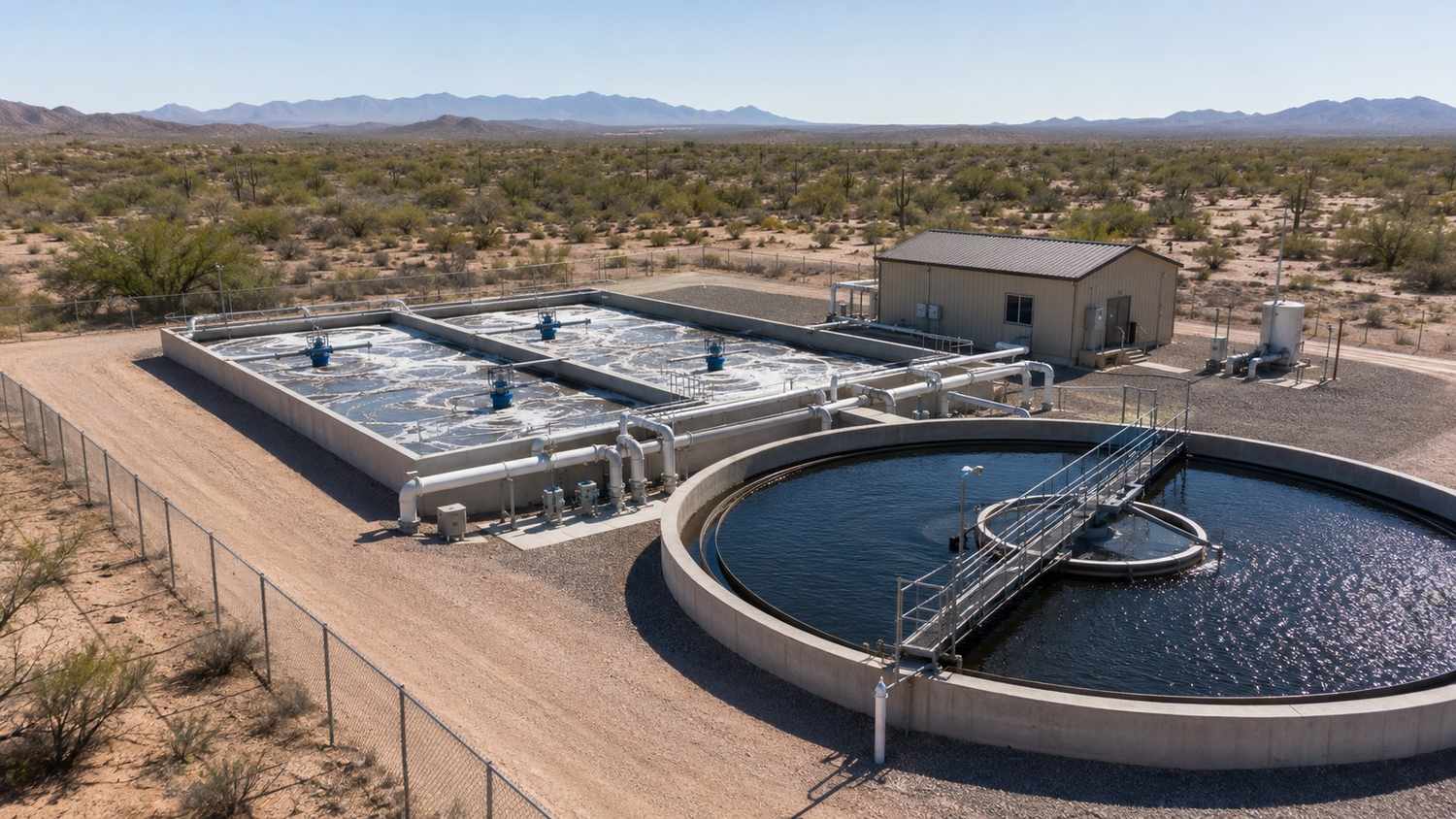
When public sewer is not available or not feasible, the developer must evaluate private treatment. Arizona’s private wastewater treatment options range from small onsite wastewater treatment systems for single parcels to full scale package treatment plants or constructed treatment wetlands for larger developments. The size, character, and layout of the project determine which technology is applicable, and the receiving environment, whether the treated effluent will be discharged to a soil absorption system, used for reclaimed water irrigation, or discharged to a surface water body, determines the treatment standard the system must achieve and the permit type that applies.
Aquifer Protection Permit Requirements and What the Application Needs
An Aquifer Protection Permit application for a private wastewater treatment facility in Arizona requires a comprehensive engineering package that ADEQ’s Water Quality Division uses to evaluate whether the proposed facility will protect Arizona groundwater quality. The core components of the application include a facility description that identifies the wastewater source, the design flow, and the service area, an engineering report prepared by a licensed Arizona professional engineer that describes the treatment process, the design basis, the expected effluent quality, and the groundwater protection measures incorporated into the design, site and design drawings that show the facility layout, the treatment units, the effluent disposal or reuse system, the monitoring points, and the setback distances from wells, property lines, and water features, and a monitoring and reporting plan that establishes the sampling program for demonstrating ongoing compliance with the permit conditions.
ADEQ’s design standards for wastewater treatment facilities in Arizona are established in the Facilities Design Manual, which specifies the engineering criteria for treatment process design, hydraulic design, solids handling, disinfection, reclaimed water treatment, and disposal system design. The engineering report submitted with an Aquifer Protection Permit application must demonstrate that the proposed design meets these standards for each applicable facility component. A design that omits required elements, uses technology that does not meet the applicable design criteria, or proposes a disposal method that is not compatible with the site’s soil and groundwater conditions will generate requests for additional information from ADEQ that delay the review and, in some cases, require significant design modifications before the permit can be issued.
ADEQ conducts a technical review of the permit application and may request additional information, clarifications, or design modifications before issuing a draft permit. The draft permit is subject to a public comment period before the final permit is issued. For straightforward private treatment facility applications in unconstrained locations, the total timeline from complete application submission to final permit issuance typically runs four to eight months. Applications in sensitive groundwater protection areas, near active water supply wells, or proposing technologies that are less familiar to ADEQ reviewers can take longer.
Reclaimed Water Permitting and Reuse Strategy
Arizona’s reclaimed water program, administered under ADEQ rules in Arizona Administrative Code Title 18 Chapter 9, establishes a tiered permitting framework based on the intended use of the reclaimed water and the potential for human contact. The highest treatment standard, required for unrestricted urban reuse including landscape irrigation in publicly accessible areas, requires tertiary treatment with filtration and disinfection to defined standards. Lower treatment standards apply to restricted uses including agricultural irrigation of non food contact crops, golf course irrigation with restricted access, and certain industrial applications.
For Arizona developers proposing on site reclaimed water reuse, the treatment standard required for the intended reuse application determines the treatment plant design, and the treatment plant design determines both the capital cost and the long term operating cost of the system. A developer who plans to use reclaimed water for common area landscape irrigation in a residential community, for a golf course, or for commercial building non potable uses must design the treatment system to meet the unrestricted urban reuse standard from the beginning, not install a lower standard system and upgrade it later. Retrofitting a treatment system to achieve a higher treatment standard after the facility is built is consistently more expensive than designing for the required standard in the initial installation.
The reclaimed water permit application must identify the reuse site or sites, the reclaimed water distribution system, the application rate for irrigation uses, the setback distances from wells and property lines, the monitoring program for the reuse application area, and the backup disposal method for periods when reclaimed water generation exceeds irrigation demand. Arizona’s dry climate provides favorable conditions for reclaimed water reuse because irrigation demand is sustained over most of the year, but wet weather events and seasonal demand reductions still require a backup disposal pathway that is authorized under the permit.
Construction Sequencing, Compliance Obligations, and Post Permit Requirements
ADEQ Aquifer Protection Permits authorize construction and operation of the permitted facility but impose ongoing compliance obligations that begin when construction is complete and the facility enters operation. Monitoring and reporting requirements under the permit typically include effluent sampling at defined frequencies for the parameters specified in the permit, groundwater monitoring at compliance monitoring wells if required by the permit conditions, and submission of discharge monitoring reports to ADEQ on the schedule established in the permit. Failure to comply with monitoring and reporting requirements is a permit violation regardless of whether the effluent quality itself is meeting the permit limits, and ADEQ treats documentation failures with the same seriousness as effluent quality exceedances in its compliance program.
Modifications to a permitted facility, including increases in design flow, changes to the treatment process, addition of new disposal or reuse areas, and changes to the monitoring program, require permit modifications that must be reviewed and approved by ADEQ before the modification is constructed or implemented. Developers who plan phased projects should build the anticipated capacity and reuse area needs of future project phases into the initial permit application where possible, or should initiate permit modification applications for future phases early enough that the modifications are approved before the construction of those phases is ready to begin.
Frequently Asked Questions
How do we know whether our Arizona project needs an Aquifer Protection Permit or just a collection system construction permit?
The distinction depends on whether your project will connect to an existing permitted treatment system or will install new treatment and disposal infrastructure. A project that connects to a municipal utility’s collection system and treatment plant through new collection mains and lift stations that convey flow to an existing permitted treatment facility generally requires collection system construction authorization rather than an individual Aquifer Protection Permit for a treatment facility. A project that installs a private treatment plant, a soil absorption system, a reclaimed water irrigation system, or any other infrastructure that treats or disposes of wastewater on the project site requires an Aquifer Protection Permit for that infrastructure. When the permit type is unclear for a specific project, a pre application inquiry to ADEQ’s Water Quality Division will clarify the applicable permit requirements without committing to a formal application.
Our Arizona project is in a rural area with no public sewer available. What is the fastest realistic path to a permitted private treatment system?
The fastest path begins with a pre-application meeting with ADEQ to confirm the applicable permit requirements, the design standards that apply to the proposed facility type, and the completeness expectations for the permit application. Following that meeting, a complete Aquifer Protection Permit application prepared by an engineer familiar with ADEQ’s Facilities Design Manual requirements, submitted without deficiencies, will move through ADEQ review significantly faster than a piecemeal application requiring multiple rounds of additional information requests. For a straightforward package plant with soil absorption or reclaimed water reuse disposal in an unconstrained location, a complete application submitted after a pre-application conference can receive a final permit in four to eight months. Engaging an engineer with current ADEQ permitting experience before the application is assembled is the most reliable investment in a shorter review timeline.
Can we start construction of the collection system while the treatment facility permit is still under review?
In some cases, ADEQ will authorize collection system construction before the treatment facility permit is finalized if the collection system design is complete and compliant and the treatment facility design is sufficiently advanced that the permit is expected to be issued before the collection system construction reaches the point of connection. This approach requires careful coordination with ADEQ and carries the risk that the treatment facility permit may impose design modifications that affect the collection system connection. The more conservative approach is to obtain the treatment facility permit before committing to collection system construction contracts. For projects where schedule pressure makes parallel construction and permitting attractive, a detailed discussion with ADEQ about the sequencing options for the specific project is the appropriate starting point.
Related Resources
- Water Scarcity Engineering in Arizona: How Developers Are Planning for a Drier Future
- Colorado Package Wastewater Treatment Plant Permitting: CDPHE Approval, Operations, and Compliance
- FDEP Permitting for Wastewater Systems in Florida: A Practical Guide for Developers
- Biosolids Land Application from Private Wastewater Treatment Facilities in Texas
Planning Wastewater Permitting for Your Arizona Development?
MES is licensed in Arizona and works with developers, municipalities, civil engineers, and project teams to evaluate wastewater options, confirm utility service availability, coordinate ADEQ permitting strategy, prepare Aquifer Protection Permit applications, design reclaimed water systems, and reduce avoidable delays before construction begins.
We specialize in:
- ADEQ Aquifer Protection Permit application preparation for private wastewater treatment facilities in Arizona
- Collection system construction authorization and lift station permitting coordination with ADEQ for Arizona developments
- Reclaimed water permit application preparation and reuse system design meeting Arizona Administrative Code Title 18 requirements
- Treatment technology evaluation and engineering report preparation for Arizona private treatment facility applications
- Pre application coordination with ADEQ Water Quality Division for complex or unfamiliar permit scenarios
- Wastewater permitting strategy and due diligence support for developers evaluating Arizona land acquisition and development feasibility