
Blog
Force Main Corrosion in Florida’s Coastal Environment: Design Strategies That Last
Force main failures in coastal Florida trigger FDEP notifications and spills. Here is how material selection and hydraulic design determine whether your system lasts.
Quick Answer
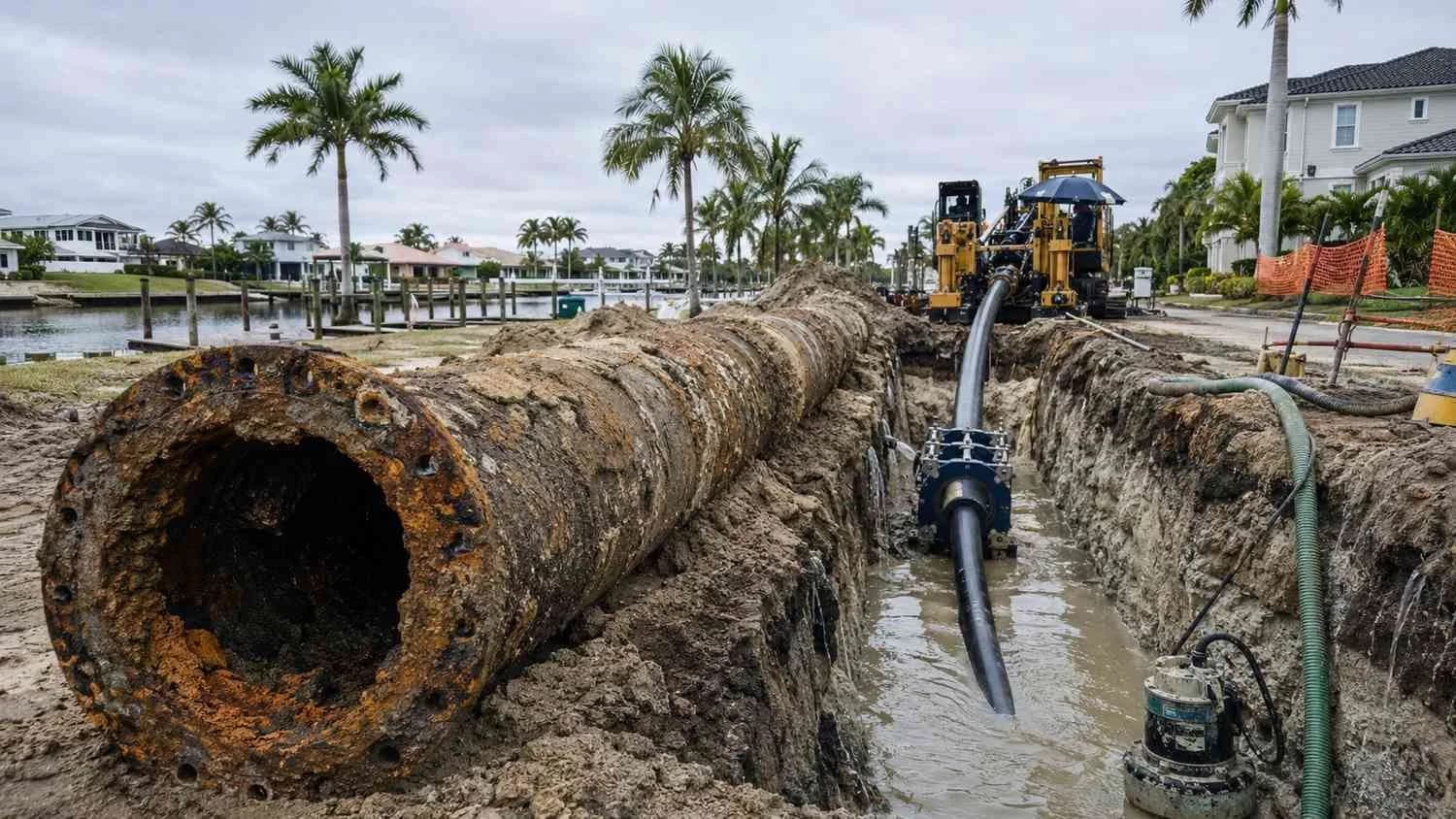
Force main corrosion in Florida’s coastal environment is driven by a combination of factors that are more concentrated and more aggressive than what inland systems typically face. High groundwater salinity, warm wastewater temperatures, long hydraulic detention times in mains with low velocities, sulfide generation in anaerobic wastewater, hydrogen sulfide attack on susceptible pipe materials, and the difficulty of inspection and repair in high groundwater coastal conditions all contribute to accelerated deterioration of force mains that were not designed with these conditions in mind. The force mains that fail prematurely in Florida coastal communities are almost always the ones designed to minimum hydraulic requirements without adequate consideration of the corrosive environment they operate in. Designing for corrosion resistance, not just hydraulic capacity, is the difference between infrastructure that lasts and infrastructure that becomes a liability within a decade of installation.
Why Coastal Florida Is Harder on Force Mains Than Almost Anywhere Else
Florida’s coastal environment creates a corrosion environment for buried wastewater infrastructure that combines several aggressive factors simultaneously. The groundwater that surrounds buried pipes in coastal Florida is often brackish to saline, with chloride concentrations that accelerate external corrosion of metallic pipe components and that support the electrochemical reactions responsible for external corrosion of ductile iron and steel. The warm year-round soil temperatures in Florida accelerate the biological and chemical reactions that produce corrosion both internally and externally. The high water table means that any pipe defect that allows infiltration also allows the corrosive groundwater environment to enter the pipe interior, and any defect that allows exfiltration delivers wastewater into an environment that is in direct hydraulic connection with coastal waters.
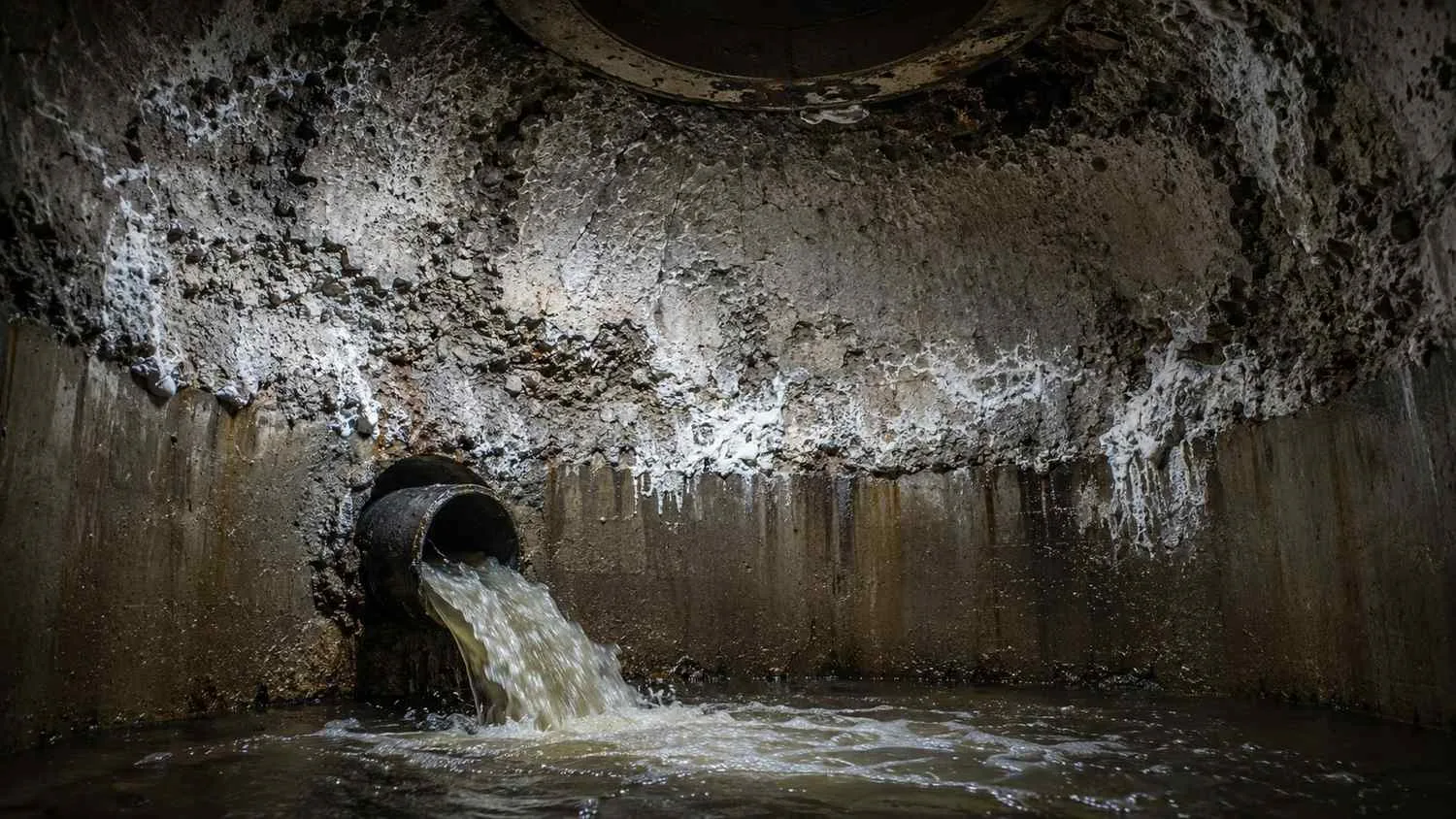
The internal corrosion mechanism that most directly affects force main service life in Florida is hydrogen sulfide attack. In a force main, wastewater is transported under pressure in a completely full pipe with no air space above the flow. As wastewater travels through the main, the dissolved oxygen originally present is rapidly consumed by biological activity, and the wastewater becomes anaerobic. Under anaerobic conditions, sulfate reducing bacteria convert dissolved sulfates in the wastewater to hydrogen sulfide. The hydrogen sulfide remains dissolved in the wastewater under the pressure conditions in the force main but is released as a gas when the pressure drops at the point of discharge into a receiving manhole or gravity sewer. That gas phase hydrogen sulfide attacks the concrete or mortar above the waterline in the receiving manhole, the crown of any gravity sewer downstream, and any metallic components that are exposed to the gas phase environment.
In a force main itself, the mechanism of damage is somewhat different from what occurs in a gravity sewer. The hydrogen sulfide dissolved in the pressurized wastewater can attack the interior surface of susceptible pipe materials directly, and the microbiologically influenced corrosion that occurs at the pipe wall in long force mains with slow velocities can produce internal pitting and wall thickness reduction over time. In ductile iron force mains without adequate interior lining protection, this internal attack combines with external corrosion from the surrounding soil and groundwater environment to produce a simultaneous interior and exterior deterioration that dramatically shortens service life compared to protected or corrosion-resistant alternatives.
Material Selection: The Most Important Design Decision
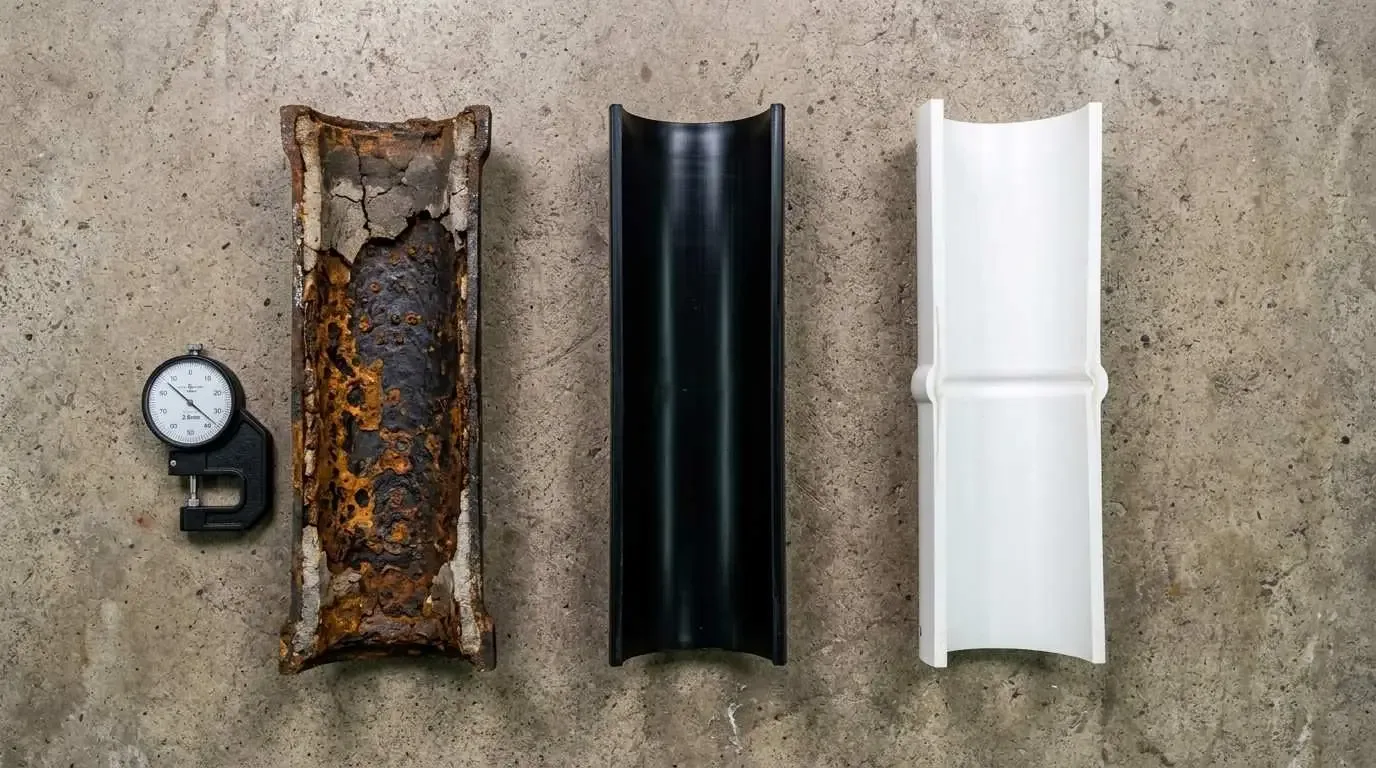
The pipe material selected for a Florida coastal force main is the single most consequential design decision that affects the long term performance of the system. The materials most commonly used for force mains in Florida, each with different corrosion performance characteristics, include ductile iron pipe, high density polyethylene pipe, polyvinyl chloride pressure pipe, fiberglass reinforced pipe, and fusible PVC pipe. Each of these materials has appropriate applications, and the selection must account for the specific hydraulic requirements, the soil and groundwater conditions, the operating pressure range, the available installation methods, and the long-term maintenance environment of the project.
Ductile iron pipe has been the dominant force main material in Florida for decades because of its high strength, its ability to handle significant pressure and surge loading, and the familiarity of the construction and utility operations workforce with its installation and maintenance requirements. The limitation of ductile iron in Florida coastal environments is its susceptibility to both external corrosion from the saline soil and groundwater environment and to internal corrosion from hydrogen sulfide attack when the interior cement mortar lining is compromised. Ductile iron force mains in coastal Florida with inadequate external coating protection and compromised interior lining can experience significant wall thickness loss within fifteen to twenty years, which is well before the end of the service life the asset was designed to provide.
High-density polyethylene pipe offers excellent corrosion resistance to both internal sulfide attack and external soil corrosion because it is chemically inert to the relevant attack mechanisms. HDPE force mains are installed using directional drilling, pipe bursting, or open cut methods, and the fused joint system used for HDPE creates a fully restrained, continuous pipe wall with no joint leakage points. The limitations of HDPE include lower pressure ratings than ductile iron at equivalent wall thickness, the need for specialized fusion equipment and trained installation contractors, and the flexibility of the material that requires careful handling during installation to avoid deflection that affects long-term joint integrity. For new force main installations in coastal Florida where corrosion resistance is a priority and directional drilling or trenchless installation methods are preferred, HDPE is the material that most consistently delivers long service life in the coastal environment.
Fusible PVC pipe combines the corrosion resistance of PVC with a fused joint system that produces a continuous pipe wall similar to HDPE, addressing the joint leakage vulnerability of conventional gasketed PVC while retaining the pressure ratings and stiffness characteristics that make PVC familiar to utility engineers and contractors. Fiberglass reinforced pipe is used in applications where its high strength-to-weight ratio and excellent corrosion resistance make it appropriate, including large-diameter force mains in highly corrosive environments, though its cost and the specialized nature of its installation limit its use to applications where the corrosion resistance benefit justifies the premium.
Air Release Valves, Surge Protection, and Hydraulic Design for Corrosion Control
The hydraulic design of a force main affects its corrosion performance in ways that go beyond the selection of pipe material. Force mains with low velocities develop longer hydraulic detention times that allow more complete sulfide generation before the wastewater reaches the discharge point. The minimum velocity required to maintain scour in a force main is generally two feet per second, but from a sulfide generation standpoint, velocities above three feet per second are preferable because they reduce the time available for bacterial sulfide production in the main. Force mains sized significantly above the hydraulic minimum to reduce friction losses may produce lower velocities that favor sulfide generation, and the tradeoff between energy savings from lower friction losses and corrosion costs from increased sulfide production must be explicitly evaluated in the design.
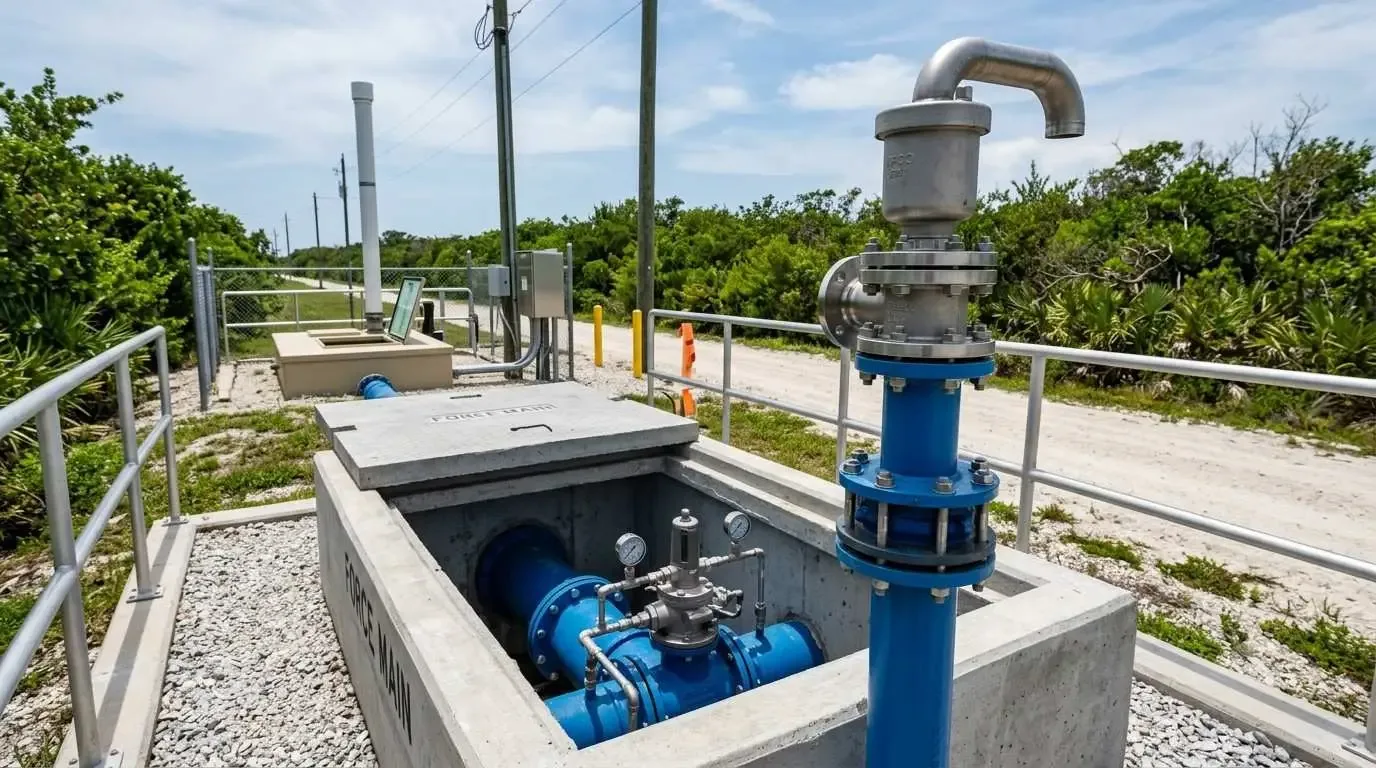
Air release valves at high points in the force main profile are required to prevent air locking that can reduce effective pumping capacity and create operational problems. In a coastal environment, the air release valve assembly must be designed and specified to resist external corrosion at its above ground or vault-mounted components while maintaining reliable operation over its service life. A corroded or seized air release valve that cannot open to release accumulated air is an operational liability that can be difficult to identify until its effect on pump performance becomes obvious.
Surge protection for Florida force mains is a design requirement that is particularly important in coastal communities where emergency repair is complicated by high groundwater, tidal conditions, and the environmental sensitivity of the receiving area. A pressure surge from pump startup or shutdown that exceeds the pipe’s pressure rating can cause a catastrophic failure at the worst possible location in the worst possible environmental context. Surge analysis for force mains in Florida coastal communities should evaluate the pressure transients generated by the pump control sequence and by power failure scenarios, and the results should drive the selection of surge protection devices including hydropneumatic tanks, surge anticipating valves, and pump control valve timing that are sized and specified for the specific hydraulic conditions of the system.
Inspection, Maintenance, and Long-Term Asset Management
A force main that was correctly designed and installed with corrosion resistant materials still requires a systematic inspection and maintenance program to achieve its intended service life. The inspection methods available for in-service force mains in Florida include acoustic leak detection surveys that identify active leaks and potential failure points before a break occurs, internal inspection using CCTV with specialized cameras designed for pressurized pipe, pipe wall thickness measurement using electromagnetic or ultrasonic testing equipment deployed through access fittings, and pressure testing to verify the integrity of the pipe and its joints. The appropriate combination of inspection methods depends on the pipe material, the age and history of the main, and the consequence of failure at different points along its alignment.
For older ductile iron force mains in coastal Florida communities, the inspection priority should be focused on segments with the longest hydraulic detention time, the highest sulfide exposure, the oldest installation date, and any history of leaks or repairs that may indicate advancing corrosion. A condition assessment program that evaluates these segments systematically and produces a prioritized rehabilitation or replacement schedule is the asset management tool that allows utilities to get ahead of force main failures rather than responding to them reactively. The capital cost of proactive replacement of high risk force main segments is consistently lower than the combined cost of emergency repair, spill cleanup, regulatory response, and service disruption associated with an unplanned failure of the same segment.
Corrosion mitigation through chemical dosing is a maintenance strategy used for existing force mains where material replacement is not immediately feasible. Dissolved iron dosing to precipitate sulfide as iron sulfide before it can be released as hydrogen sulfide, oxygen injection to maintain aerobic conditions that suppress sulfide generating bacteria, and pH elevation using caustic or lime addition to shift the chemical equilibrium away from free hydrogen sulfide are all techniques used in Florida to extend the service life of force mains that are operating in high sulfide conditions. These chemical strategies require ongoing operating cost and monitoring but can meaningfully reduce the rate of internal corrosion in mains where the alternative is premature replacement.
Frequently Asked Questions
Our coastal Florida utility has several ductile iron force mains that are between twenty and thirty years old. How do we evaluate whether they need replacement?
The starting point is a condition assessment that combines pipe age and installation history with field investigation of the highest risk segments. Acoustic leak detection can identify active leaks and anomalies that indicate wall deterioration. Ultrasonic or electromagnetic pipe wall thickness measurement at representative locations provides direct evidence of remaining wall thickness and estimates the remaining service life based on the observed corrosion rate. For force mains in high sulfide environments with a history of repairs or leaks, internal CCTV inspection through access fittings can provide visual confirmation of the interior corrosion condition. The assessment findings support a prioritized capital replacement plan that addresses the highest risk segments first and provides a defensible basis for capital budget requests.
Is directional drilling a better installation method than open cut for coastal Florida force mains from a corrosion standpoint?
Directional drilling with HDPE pipe is generally the preferred installation method for new force mains in coastal Florida for several reasons that extend beyond corrosion resistance. The continuous fused joint eliminates the joint leakage vulnerability of mechanical joint ductile iron. The HDPE material is chemically inert to the coastal soil and groundwater environment. The directional drilling installation avoids the dewatering, trench instability, and surface disruption challenges associated with open cut excavation in high-groundwater coastal conditions. The premium cost of directional drilling with HDPE compared to open cut ductile iron is justified by the longer expected service life, the reduced maintenance cost, and the lower probability of a spill event in a sensitive coastal receiving environment.
How do we address hydrogen sulfide generation in a long force main that cannot be replaced in the near term?
Chemical dosing is the primary interim strategy for managing hydrogen sulfide in existing force mains with long detention times. Ferrous sulfate or ferric chloride dosing at the wet well, which precipitates sulfide as iron sulfide before it can generate hydrogen sulfide gas, is the most widely used approach in Florida. Oxygen injection into the force main can maintain aerobic conditions that suppress sulfide generating bacteria if the oxygen demand of the wastewater is not too high for the injection rate to overcome. These strategies require proper chemical feed equipment, dosing optimization through monitoring of the effluent sulfide concentration at the discharge manhole, and ongoing operating cost that must be budgeted in the utility’s annual operations program. They reduce the rate of corrosion and the odor impact at the receiving manhole but do not eliminate the need for replacement of significantly deteriorated pipe.
Related Resources
- Lift Station Design for Florida’s Flat Topography: Challenges Every Developer Should Understand
- FDEP Permitting for Wastewater Systems in Florida: A Practical Guide for Developers
- Florida’s Exploding Growth vs. Aging Wastewater Infrastructure: What Engineers Are Facing Right Now
Evaluating Force Main Corrosion Risk for Your Florida Coastal Wastewater System?
MES is licensed in Florida and works with coastal municipalities, utility districts, developers, and wastewater engineering teams to evaluate force main corrosion risk, compare material options and installation methods, design corrosion resistant pressure sewer systems, plan inspection and condition assessment programs, and develop capital improvement strategies that address coastal corrosion challenges before they produce failures in environmentally sensitive receiving areas.
We specialize in:
- Force main material selection and corrosion resistance evaluation for Florida coastal wastewater infrastructure
- Hydraulic design for velocity, surge protection, and sulfide generation management in Florida force main systems
- Condition assessment program development for aging ductile iron force mains in Florida coastal utility systems
- Directional drilling and trenchless installation coordination for new force mains in high groundwater coastal environments
- Chemical dosing program evaluation for hydrogen sulfide management in existing Florida force mains
- Capital improvement planning and FDEP permitting support for force main rehabilitation and replacement projects in Florida coastal communities
Contact: (214) 833-6748 or mod-eng.com
Keep reading
More to read.
Talk to an engineer
Tell us about your project.
An engineer reads it
Not a salesperson. Someone who can tell you whether the pathway is real.
You get a first answer
Your options, the agencies involved and the questions that decide cost and schedule.
You decide
No commitment to have the first call.
Prefer the phone? (214) 833-6748