Quick Answer
Battery energy storage system facilities in Arizona require water infrastructure planning that addresses fire protection water supply, fire flow requirements, emergency response access, onsite storage capacity, hydrant coverage, stormwater containment, washdown provisions, and coordination with local fire authorities and the Arizona State Fire Marshal. The specific water system design requirements depend on the facility size, the battery chemistry, the number and configuration of battery enclosures, the proximity to municipal water service, and the applicable fire code standards including NFPA 855, which governs the installation of stationary energy storage systems. Arizona’s water scarcity environment, remote site locations, extreme heat, and limited utility service availability in rural areas add layers of complexity that do not exist for BESS development in water abundant markets. Getting the water system design right is a project prerequisite, not a construction phase detail.
Why BESS Facilities Need Serious Water Infrastructure Planning
The perception that battery energy storage facilities are low water intensity industrial uses is accurate in the operational sense. Unlike a semiconductor fab, a data center, or a power plant with cooling towers, a BESS facility does not consume significant volumes of water during normal operations. The water infrastructure requirement for a BESS facility is not driven by operational consumption. It is driven by fire protection, emergency response, and regulatory compliance.
Lithium ion battery fires, the most serious safety concern for BESS facilities, present suppression challenges that are fundamentally different from conventional structural or equipment fires. A thermal runaway event in a lithium ion battery module can propagate through adjacent cells and enclosures in ways that are difficult to interrupt with conventional suppression approaches, and the water volumes required to cool burning battery assemblies and prevent thermal runaway propagation can be substantially higher than what a fire protection engineer would specify for a conventional commercial or industrial structure of equivalent footprint. NFPA 855, the standard specifically developed for stationary energy storage systems, provides the framework for fire protection system design, including suppression system requirements, detection system requirements, emergency response planning, and the separation distances between enclosures that affect fire flow demand calculations.
In Arizona’s remote utility corridors and rural solar development zones, where most large scale BESS projects are being sited to co locate with utility scale solar generation, municipal water service is often absent or available only at flows and pressures that do not meet the fire flow requirements for the facility as designed. That supply gap must be closed through onsite storage, a dedicated water supply well, a water service extension from the nearest municipal main, or some combination of these approaches, and each option carries capital cost, permitting obligations, and operational requirements that must be evaluated before the facility layout is finalized.
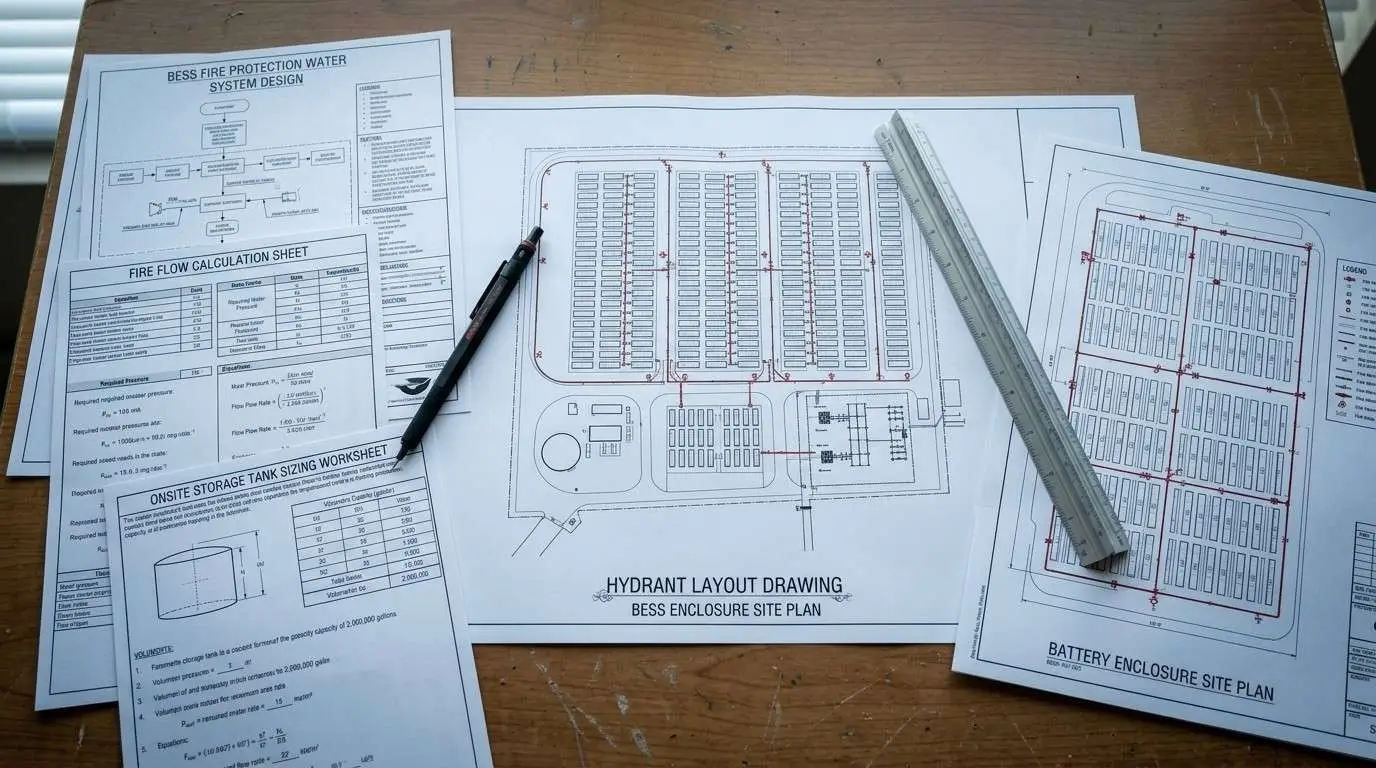
Fire Flow Requirements and How NFPA 855 Drives the Water System Design
NFPA 855 establishes the design framework for energy storage system installations and directly affects the fire protection water system requirements for a BESS facility. The standard specifies maximum energy storage quantities per fire compartment, separation distances between enclosures, detection and suppression system requirements, and emergency response planning elements that influence how the facility is laid out and how much water must be available for fire suppression and cooling. The specific fire flow demand for a BESS facility is determined through fire protection engineering analysis that accounts for the total storage capacity, the battery chemistry, the enclosure configuration, the suppression system design, and the exposure risk to adjacent enclosures and structures.
Fire flow requirements for large BESS facilities can be substantial. Depending on the system configuration and the suppression strategy, sustained fire flows of 1,000 to 3,000 gallons per minute or more for durations of two hours or longer are not uncommon in fire protection designs for utility-scale battery storage projects. At 1,500 gallons per minute for two hours, the required fire storage volume is 180,000 gallons. At 2,000 gallons per minute for two hours, it exceeds 240,000 gallons. These volumes must be available at adequate pressure at the point of use, which means the onsite storage tank, the fire pump, and the distribution piping system must all be designed and sized to deliver the required flow under the worst case fire scenario without reliance on a municipal supply that may not exist or may not be reliable at the remote location.
The local authority having jurisdiction, which in most Arizona rural areas is the county or the Arizona State Fire Marshal, must review and approve the fire protection system design before a construction permit is issued. Pre application coordination with the authority having jurisdiction early in the project design process is critical because the fire marshal’s interpretation of NFPA 855 requirements, the acceptable suppression strategies for the specific battery chemistry and enclosure type, and the fire flow assumptions they will apply to the facility can significantly affect the water storage volume and distribution system that the project must provide. Discovering after the permit application is submitted that the authority having jurisdiction requires a different suppression approach or a larger storage volume than the design assumed is an expensive redesign that a pre-application meeting would have prevented.
Onsite Water Storage: Sizing, Tank Design, and Integration With Fire Protection
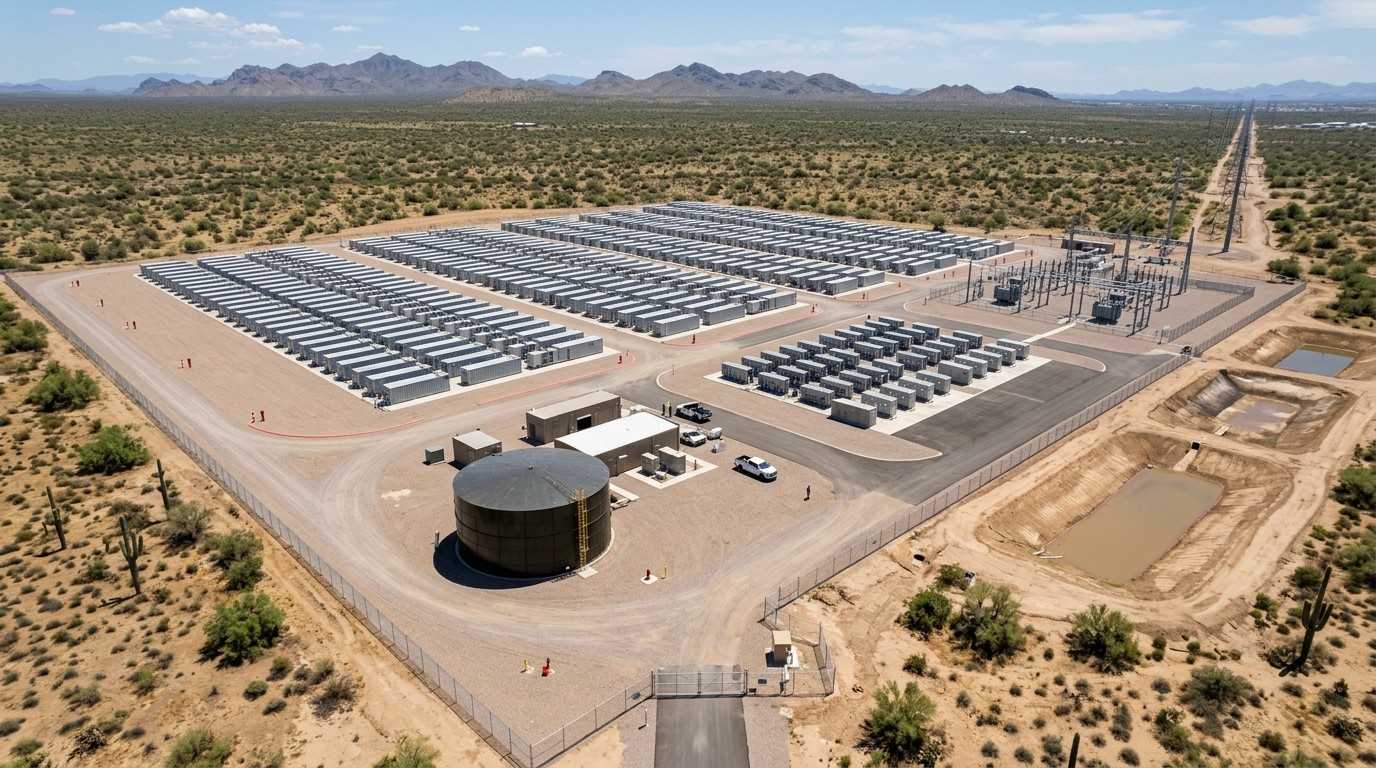
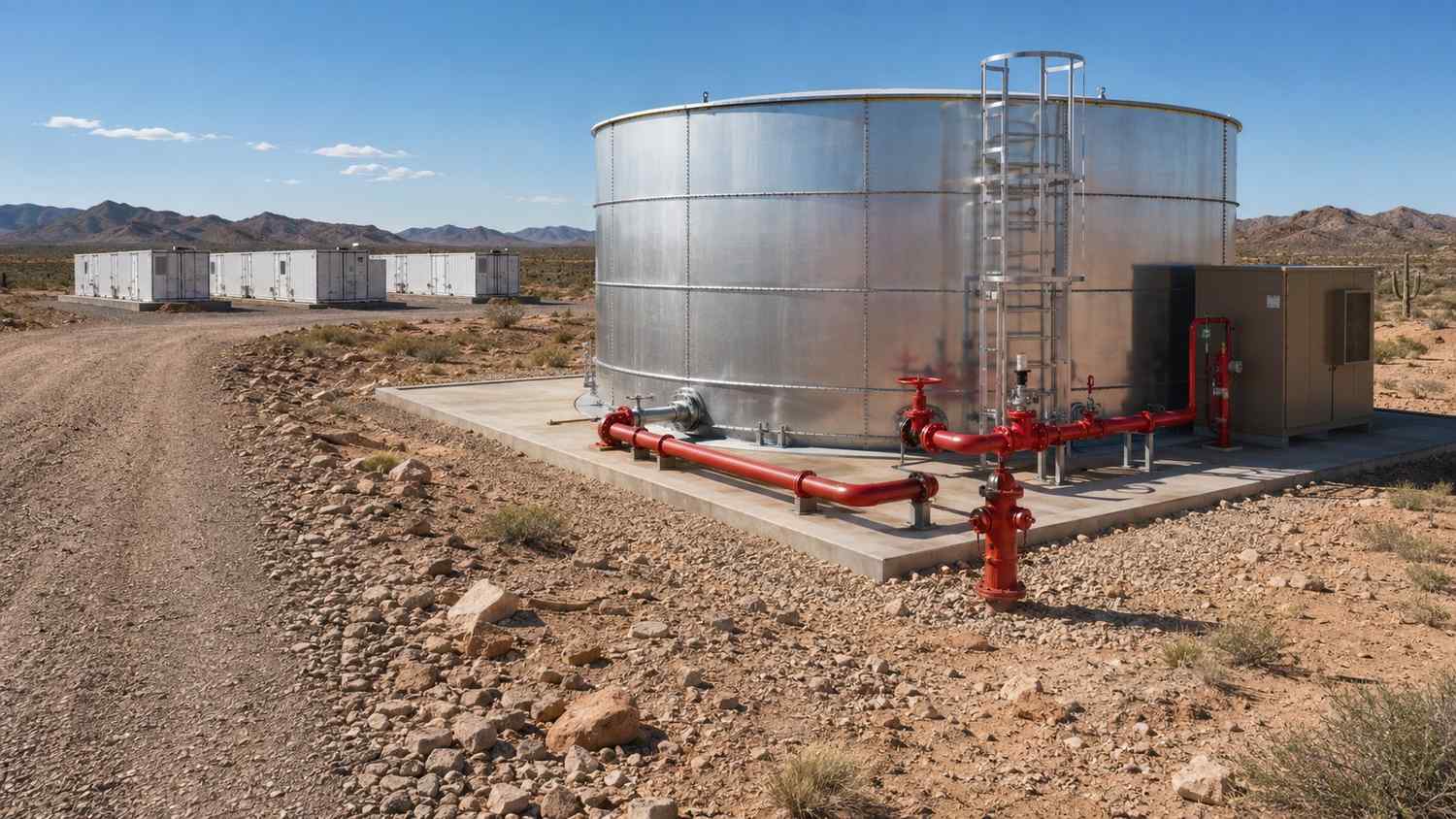
For BESS facilities without access to municipal water service, onsite water storage is the foundation of the fire protection system. The storage volume must satisfy the full fire flow demand for the required duration plus any additional reserve for cooling operations, dust suppression, emergency response vehicle supply, and post fire salvage operations. The storage system typically consists of one or more above ground steel tanks or a buried concrete or fiberglass tank, a fire pump system that maintains the required pressure and flow at the most remote hydrant or suppression system connection, and a distribution piping system that delivers water to all hydrant locations and suppression system connections on the site.
Tank sizing is an engineering calculation that begins with the fire flow demand established by the fire protection system design and adds a margin for operational needs and system inefficiencies. For a large BESS facility in remote Arizona, total onsite storage of 200,000 to 500,000 gallons or more is not unusual depending on the facility size and the fire protection strategy. A tank of that capacity requires a significant footprint, a concrete pad foundation sized for the tank weight when full, fill connections from the water supply source, and a maintenance access plan that allows the tank to be inspected, cleaned, and repaired without disrupting the fire protection system availability.
The water supply for refilling the onsite storage tank after a fire event or after testing and maintenance is a planning consideration that is often overlooked in early project design. A dedicated water supply well capable of producing adequate yield to refill the tank within a defined timeframe, a water supply agreement with a local utility for tanker truck deliveries, or a potable water service connection sized for the tank fill rate are the most common supply approaches for remote Arizona BESS sites. The well option requires hydrogeologic evaluation of the site’s groundwater resources and ADWR well permit coordination in addition to ADEQ permitting for the well construction.
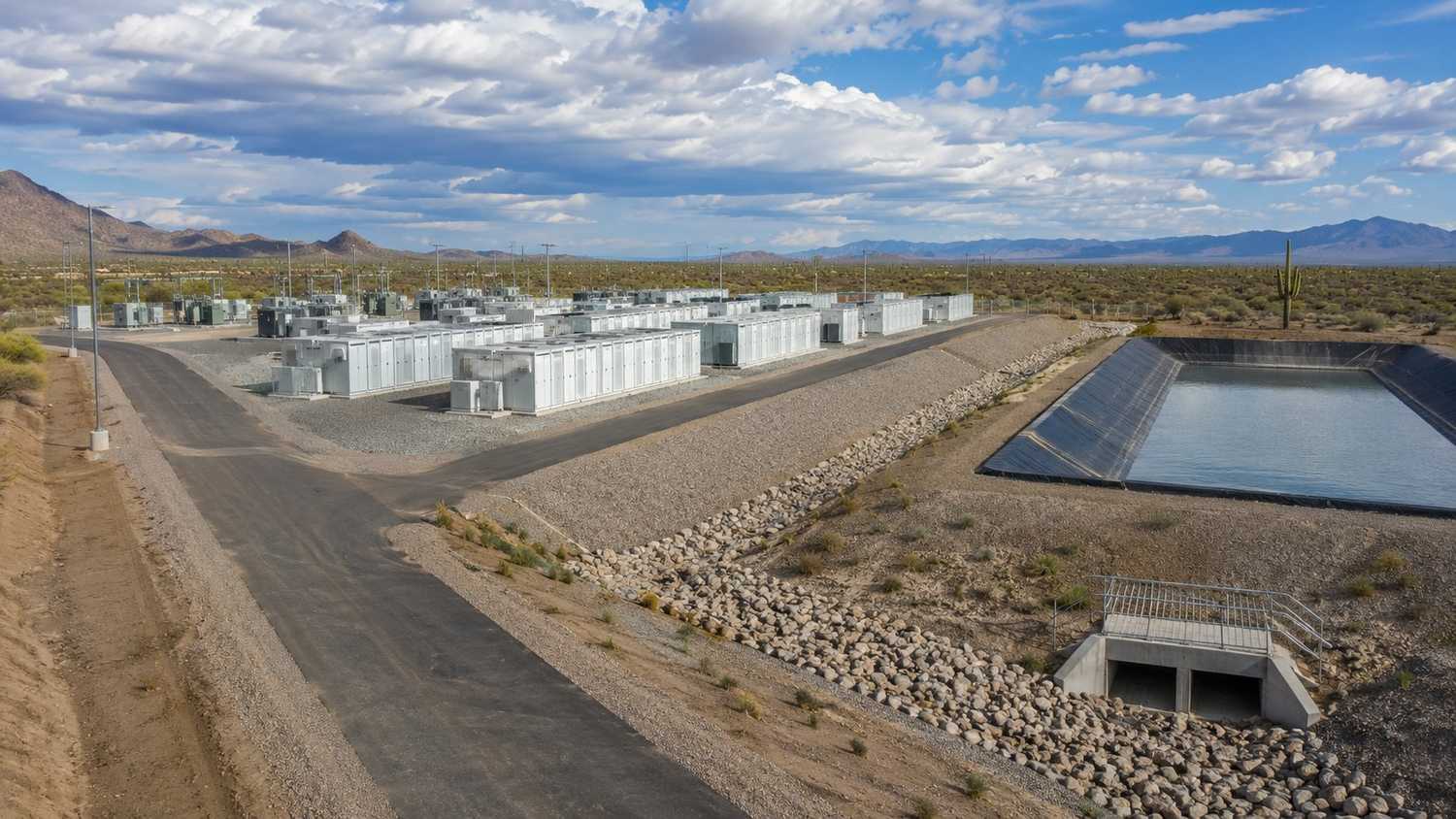
Stormwater Management, Containment, and Environmental Design
Arizona’s desert climate creates a stormwater management challenge that is different from what BESS developers encounter in wetter states. Arizona experiences intense, short-duration thunderstorm events, particularly during the summer monsoon season from June through September, that can produce several inches of rain in a matter of hours. A BESS facility site that is not graded and drained to manage these events effectively can experience flooding of battery enclosures, erosion of access roads, and discharge of contaminated runoff from containment areas.
Secondary containment design for battery enclosures must account for both the electrolyte and fire suppression water volumes that could be released during a fire or thermal runaway event. The containment area must be sized to hold these volumes without overflow to the surrounding environment, and the containment design must prevent stormwater from accumulating in the containment area under normal conditions in a way that could compromise the battery enclosures or the electrical infrastructure. A properly designed containment system includes drainage provisions that allow stormwater to drain from the containment area during normal weather events while preventing the release of contaminated liquids during an emergency event.
Stormwater permits for BESS facilities in Arizona may be required under ADEQ’s construction general permit for the construction phase and under an industrial stormwater permit for the operational phase if the facility’s activities and site conditions trigger industrial stormwater permitting requirements. Confirming the stormwater permit applicability and designing the stormwater management system to meet the applicable requirements before grading begins is a project management discipline that avoids permit violations during construction and establishes the operational stormwater compliance program before the facility enters service.
Access Road Design, Hydrant Coverage, and Emergency Response Coordination
Access road design for a BESS facility must satisfy two distinct requirements that are not always compatible with the most cost effective civil grading approach. The roads must be capable of supporting the heavy construction equipment and transformer delivery vehicles that access the site during construction, and they must also provide emergency vehicle access that meets the turning radius, load bearing, and clearance requirements for fire apparatus. In Arizona’s remote energy development zones, access roads are often gravel surfaced for cost reasons, but the surface material, width, and bearing capacity must meet the fire apparatus access requirements in NFPA 1 and the local fire code before the authority having jurisdiction will approve the site plan.
Hydrant coverage requirements under NFPA 855 and the applicable fire code establish maximum spacing between hydrants and maximum hose lay distances from a hydrant to the most remote point of any battery enclosure. These requirements drive the hydrant layout on the site, which in turn drives the water distribution piping design. A large BESS facility with multiple battery enclosure rows may require eight to fifteen or more hydrants distributed across the site to meet coverage requirements, and the distribution piping that serves those hydrants must be sized to deliver the required simultaneous flow to adjacent hydrants during a fire event without excessive pressure loss.
Emergency response coordination with the local fire department or county emergency services is an early project activity that shapes both the site design and the emergency response plan. Local fire departments in Arizona’s rural energy development zones may have limited experience with BESS facility fires and limited equipment specifically designed for lithium ion battery suppression. An emergency response plan developed in coordination with the local fire authority, incorporating the facility’s fire protection system design, the suppression strategy, the onsite water supply location and connection points, and the battery enclosure layout, is a required element of NFPA 855 compliance and is also the foundation for a productive working relationship with the authority having jurisdiction throughout the permitting process.
Frequently Asked Questions
Our Arizona BESS project is in a rural area with no municipal water service within several miles. What are our water supply options for fire protection?
The most reliable option for a remote Arizona BESS facility is a dedicated onsite water storage system with a groundwater supply well for refilling. The well must be sized to produce adequate yield to refill the storage tank within a reasonable timeframe after a drawdown event, and it requires both ADWR well permit authorization and ADEQ well construction permitting. Where groundwater yield at the site is insufficient for a dedicated supply well, a water supply agreement with a local water utility for tanker truck delivery to refill the storage tank is an alternative, though it requires a logistical plan that ensures tank refill within the timeframe required by the authority having jurisdiction following a fire or testing event. The fire protection engineer and the civil engineer should evaluate both options concurrently as part of the site feasibility analysis.
How do we coordinate fire protection water system requirements with the Arizona State Fire Marshal versus the local county?
The authority having jurisdiction for fire code compliance depends on the specific project location. In incorporated municipalities, the local fire marshal typically has jurisdiction. In unincorporated county areas, the county fire authority has jurisdiction for facilities below a certain size or complexity threshold, and the Arizona State Fire Marshal may have concurrent or primary jurisdiction for larger facilities or for facilities with particularly hazardous characteristics. Confirming which authority has jurisdiction and initiating a pre application meeting with that authority before the fire protection system design is finalized is the correct approach. Both the Arizona State Fire Marshal and most county fire authorities are familiar with BESS projects and have developed internal guidance on how they interpret NFPA 855 requirements that is essential information for the fire protection engineer designing the suppression and detection systems.
Does our BESS facility need a separate ADEQ permit for the onsite water storage and distribution system?
An onsite fire protection water system that uses groundwater from a supply well requires an ADWR well permit for the well construction and may require an ADEQ Aquifer Protection Permit if the well construction or the water storage system has the potential to affect groundwater quality. A water storage tank and distribution system that serves only fire protection purposes and does not treat or discharge wastewater is generally not subject to ADEQ’s Aquifer Protection Permit program requirements for the storage and distribution infrastructure itself. However, if the facility also has domestic wastewater from restroom facilities, maintenance building sanitary systems, or other domestic sources, those flows require separate wastewater permitting under ADEQ’s program regardless of the fire protection water system permitting status.
Related Resources
Planning Water Infrastructure for Your Arizona BESS Project?
MES is licensed in Arizona and works with energy developers, renewable energy companies, industrial site selectors, and utility providers to evaluate water availability, design fire protection water systems, size onsite storage, coordinate stormwater management, support authority having jurisdiction coordination, and deliver practical civil and water infrastructure solutions for BESS facilities in Arizona’s water-constrained development environment.
We specialize in:
- Fire protection water system design and onsite storage sizing for Arizona BESS and energy storage facilities
- NFPA 855 compliance coordination and fire flow analysis for utility-scale battery energy storage projects
- Groundwater supply well feasibility evaluation and ADWR permitting support for remote Arizona energy facility sites
- Stormwater management design and ADEQ construction general permit coordination for Arizona BESS projects
- Secondary containment design for battery enclosure areas meeting Arizona environmental and fire code requirements
- Authority having jurisdiction coordination and pre-application fire marshal engagement for Arizona BESS facility permitting