
Blog
Water Line Replacement in Dallas: How Developers Navigate Aging Trinity River Authority Infrastructure
Dallas developers face aging water line surprises after closing. Learn how to confirm capacity, fire flow, and Trinity River Authority constraints before you commit.
Quick Answer
Water line replacement issues in the Dallas area typically surface when a development’s water demand or fire flow requirement exceeds the capacity of the existing water main serving the site, when the existing line has reached an age and material condition that the serving utility will not permit new connections to without upgrade, or when Trinity River Authority or a municipal utility identifies the segment as part of a capital improvement plan that the developer’s project timeline does not align with. Developers who confirm water line capacity, condition, and any required upgrades during site due diligence, before closing on land, avoid the redesign, cost sharing negotiations, and schedule delays that surface when this evaluation happens after entitlement work is already underway. In Dallas’s rapid growth corridors, an existing water line that served adequately for decades of low density use is frequently inadequate for the density and fire flow requirements of new development, and confirming that fact early is the single most effective way to protect a project’s schedule and budget.
Why Existing Water Lines Don’t Always Support New Development
Water distribution systems are designed to serve the demand that exists at the time of design, with some margin for anticipated growth. In many Dallas-area corridors, particularly older suburban areas that are now experiencing infill and redevelopment, the water mains in the ground were sized decades ago for the land use pattern that existed then, which was often lower density residential or light commercial use with modest fire flow requirements. When a developer proposes a higher density residential project, a large commercial building, or an industrial facility on a site served by one of these older mains, the demand and fire flow requirement of the new development can exceed what the existing line was designed to deliver.
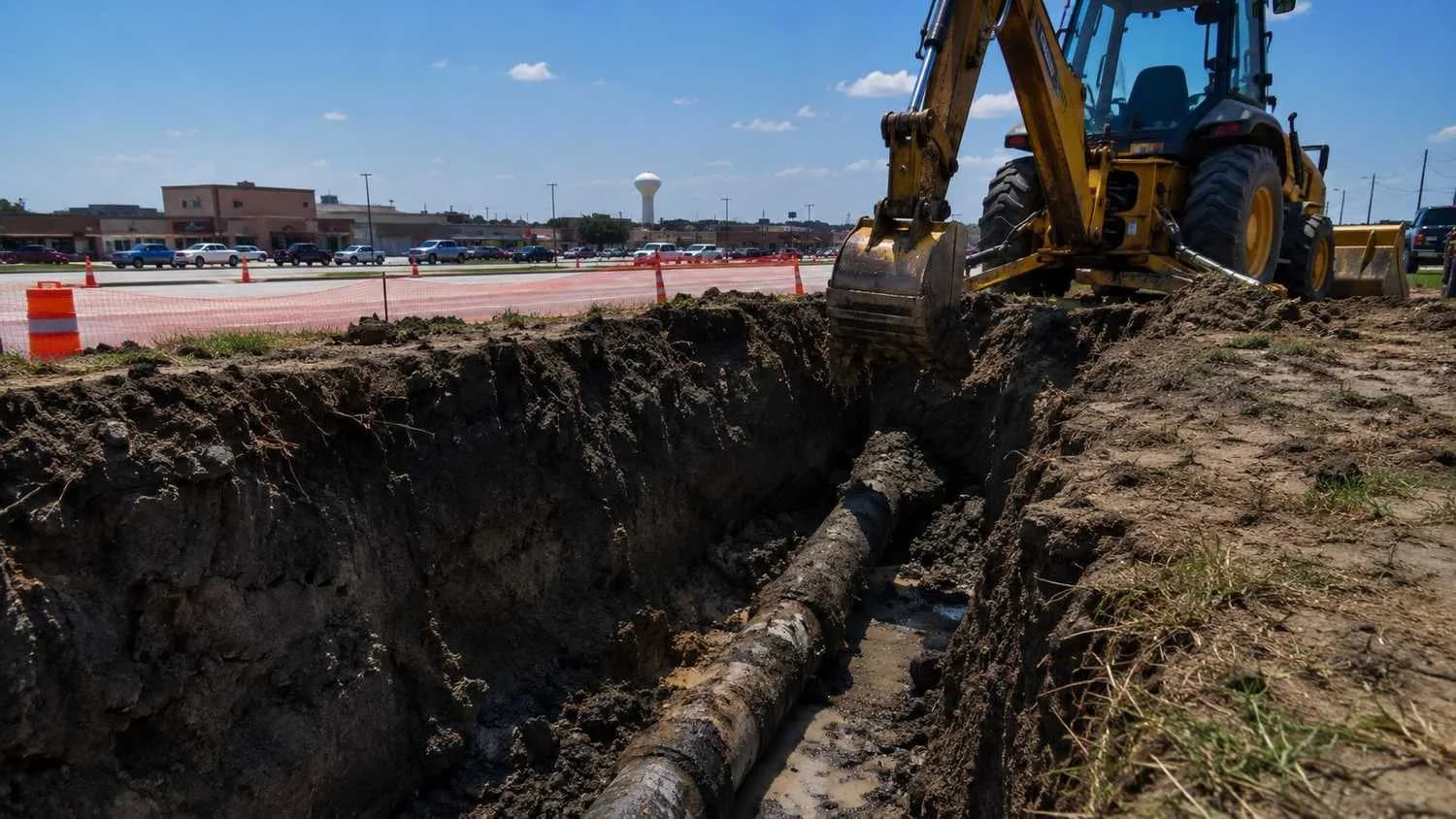
Pipe material and age compound this capacity problem. Water mains installed in the Dallas area during the mid twentieth century growth period were commonly cast iron or early ductile iron pipe, materials that are now well past the midpoint of their expected service life and, in some cases, well past their originally anticipated replacement date. Cast iron water mains in particular are prone to internal tuberculation, a buildup of corrosion products on the pipe interior that reduces the effective diameter of the pipe and correspondingly reduces its hydraulic capacity even though the pipe’s outside dimensions have not changed. A main that was rated for a certain flow capacity when installed may be delivering significantly less than that rated capacity decades later due to internal corrosion, and a hydraulic capacity analysis based on the pipe’s original design specifications without accounting for actual field measured flow and pressure performance can produce a misleadingly optimistic capacity picture.
The serving utility, whether a municipal water department or a wholesale provider like Trinity River Authority supplying treated water to municipal customers in the region, evaluates new connection requests against the actual performance of the existing system, not against its original design specifications. When a utility’s engineering review determines that an existing main cannot support a proposed connection without unacceptable pressure loss, inadequate fire flow, or capacity conflicts with other users on the same system, the utility will require infrastructure upgrades as a condition of service. That requirement can range from a relatively modest main upsizing along the project frontage to a substantial offsite line replacement extending well beyond the project boundary to the nearest point in the system with adequate capacity.
Trinity River Authority’s Role in Regional Water Infrastructure
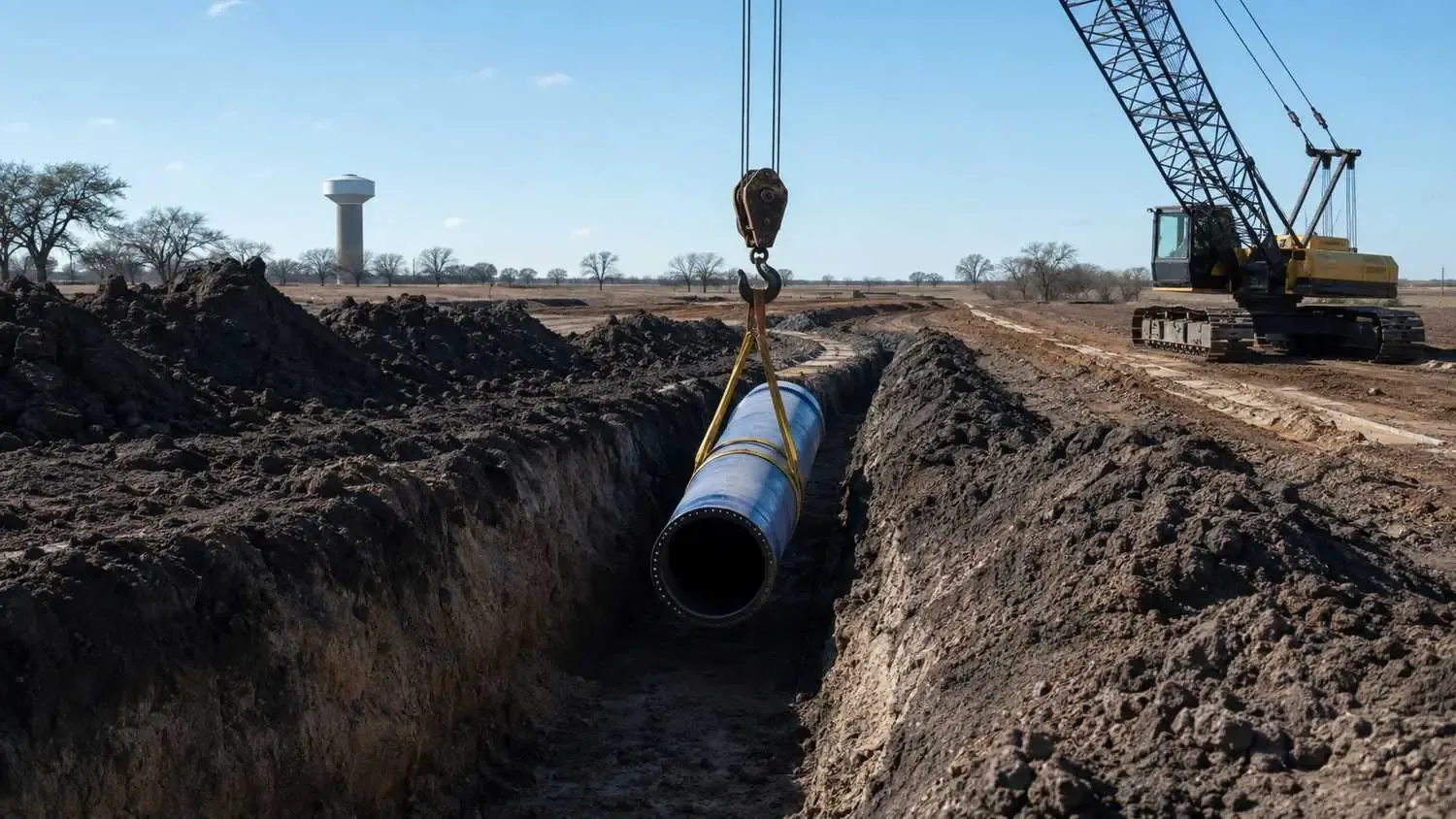
Trinity River Authority operates as a wholesale water supplier to numerous municipalities and utility districts throughout the Dallas-Fort Worth region, treating raw water and delivering it through large transmission mains to the distribution systems that individual cities and districts then operate to serve their retail customers. For developers, understanding this two-tier structure matters because a capacity or infrastructure issue affecting a project’s water service can originate at either level. A municipality’s local distribution main may be adequate, but if the municipality’s connection to Trinity River Authority’s transmission system or the wholesale capacity allocation from Trinity River Authority is constrained, that upstream limitation can affect what the municipality is able to offer a new development regardless of the condition of the local distribution infrastructure.
Trinity River Authority’s capital improvement planning for its transmission infrastructure operates on a regional timeline that reflects the aggregate growth projections of all the municipalities it serves, not the schedule of any individual development project. A developer whose project depends on a Trinity River Authority transmission capacity expansion that is scheduled for a future phase of the authority’s capital improvement plan needs to understand where that expansion sits in the authority’s timeline and funding sequence, because that timeline is not something an individual developer can accelerate through negotiation or additional payment in most circumstances. Coordinating directly with the municipality that holds the retail relationship with the development, and having that municipality engage with Trinity River Authority on the developer’s behalf, is generally the more productive path than attempting direct developer to authority negotiation on capacity timing.
Capacity Confirmation: What Developers Should Verify Before Closing
The water capacity due diligence process for a Dallas area development site should produce written confirmation, not verbal assurance, of several specific items before land acquisition closes. First, confirmation from the serving utility of the available capacity at the point of connection, including both average day demand capacity and fire flow capacity, evaluated against the specific development program proposed rather than a generic land use category. Second, confirmation of the age, material, and condition of the water main serving the site, which the utility’s engineering or capital planning department can typically provide from their asset management records. Third, identification of any capital improvement projects currently planned or budgeted for the water infrastructure serving the site, including the project scope, funding status, and anticipated construction timeline. Fourth, a clear statement from the utility regarding what infrastructure upgrades, if any, will be required as a condition of new service, and who bears responsibility for designing, funding, and constructing those upgrades.
This due diligence is best performed through a formal capacity and service availability request submitted to the utility’s engineering department, supported by a preliminary development program and site plan that gives the utility enough information to perform a meaningful capacity analysis. A generic inquiry asking whether water service is available at a site will typically receive a generic answer confirming that a main exists at the location. A specific inquiry that describes the proposed density, building types, and fire flow requirements will produce a substantive engineering response that identifies real constraints if they exist. Developers who invest in the more detailed inquiry before closing consistently avoid the surprises that developers relying on the generic inquiry encounter later in the project.
Offsite Infrastructure, Cost Sharing, and Easement Requirements
When a capacity evaluation determines that offsite water line replacement or upsizing is required to serve a development, the cost responsibility for that infrastructure is a negotiation between the developer and the serving utility that is governed by the utility’s cost participation policies and, in some cases, by state law provisions governing utility extension and reimbursement. Many Dallas area municipalities have cost participation policies that require the developer to fund the full cost of offsite infrastructure needed specifically to serve their development, with a reimbursement mechanism that allows the developer to recover a portion of that cost from other properties that subsequently connect to and benefit from the same infrastructure. Understanding the specific reimbursement policy of the serving utility, and calculating a realistic estimate of the reimbursement potential based on the development pattern of the surrounding area, is important for accurately assessing the net cost impact of an offsite infrastructure requirement on the project’s financial feasibility.
Easement acquisition for offsite water line replacement is frequently the more time consuming element of these projects, more so than the actual design and construction. An offsite line replacement that must cross other property owners’ land to reach the point of adequate capacity in the system requires easement negotiation and acquisition from each affected property owner, and a single unwilling property owner can delay a project by months while the developer negotiates, pursues alternative alignments, or in some cases works with the municipality to pursue condemnation for public infrastructure purposes. Identifying the offsite easement requirements early, ideally during the same due diligence phase where capacity constraints are first identified, allows the developer to build a realistic timeline for easement acquisition into the overall project schedule rather than discovering the easement requirement after construction contracts have already been let.
Fire Flow, Pressure, and Site Design Implications
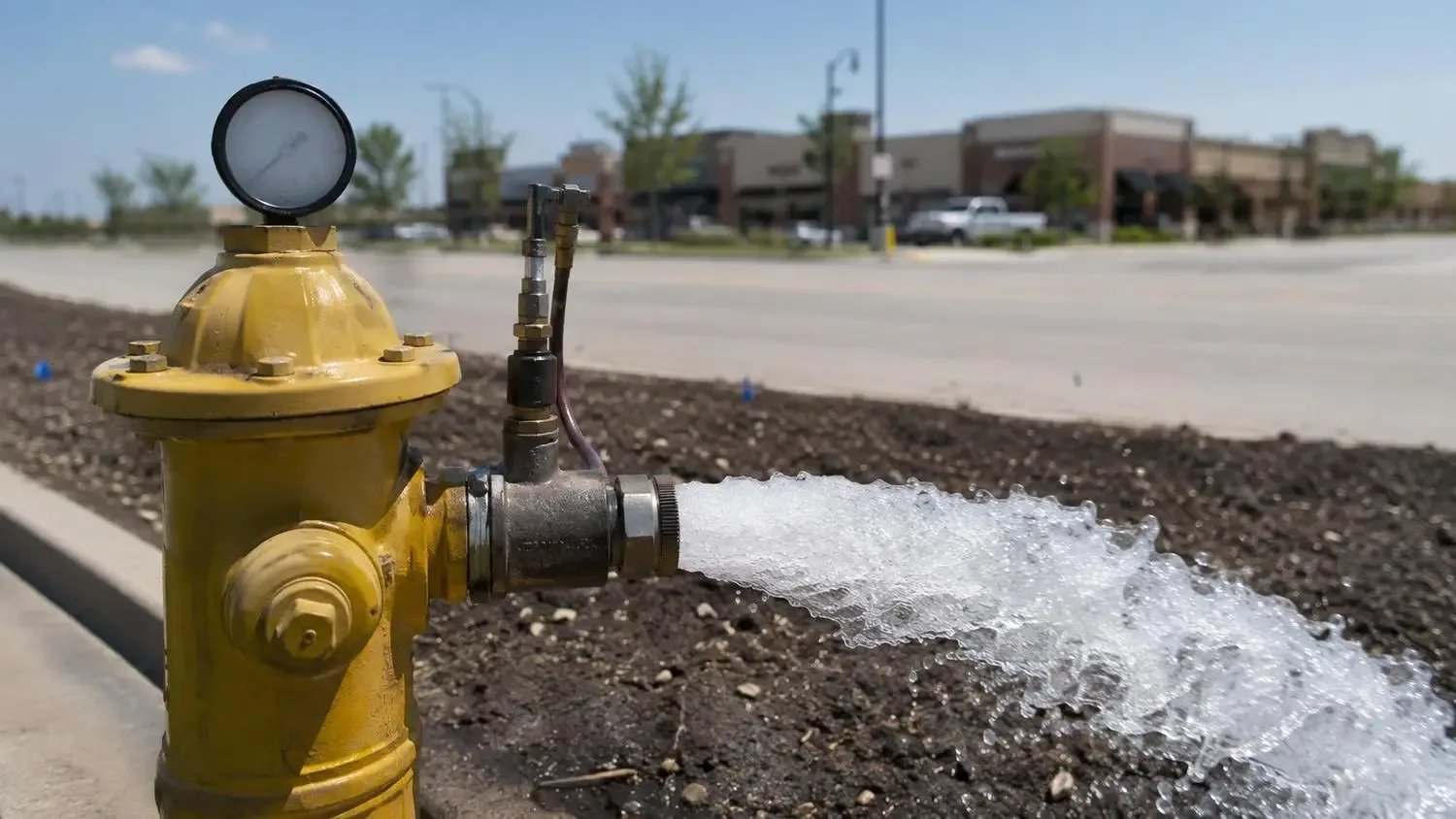
Fire flow requirements are frequently the binding constraint that drives water line replacement needs, even when average day demand capacity in the existing system appears adequate. Fire flow requirements in Dallas area municipalities are established based on the building type, construction materials, occupancy, and size of the proposed structures, with larger commercial and industrial buildings requiring substantially higher fire flows than typical residential construction. An existing water main that comfortably serves a neighborhood’s domestic demand may be significantly undersized for the fire flow requirement of a new commercial building proposed for a site along that main, and the fire flow analysis, not the domestic demand analysis, may be the calculation that determines whether infrastructure upgrades are required.
Static and residual pressure in the existing system at the point of connection also affects site design decisions beyond the water main itself. A development that requires fire pump systems, elevated storage, or specific building sprinkler system designs because the available system pressure is inadequate for the proposed building height or fire protection strategy is absorbing a cost and design complexity that a site with adequate available pressure would not require. Confirming available system pressure at the specific point of connection, not assuming pressure based on general knowledge of the area, is a due diligence step that has direct implications for building design and construction cost.
Frequently Asked Questions
We are under contract on a Dallas-area site and just learned the water main serving it may need replacement. What should we do before closing?
Request a formal capacity and service availability determination from the serving utility if one has not already been obtained, specifying your actual proposed development program including building types, unit counts, and anticipated fire flow requirements. Ask the utility directly whether infrastructure upgrades will be required as a condition of service and, if so, what the utility’s cost participation policy is for that infrastructure. If the timeline allows, extend your due diligence period to obtain this written confirmation before the contingency period expires. If an infrastructure upgrade is required, get a preliminary engineering cost estimate and timeline for that upgrade so you can evaluate the impact on your project’s financial feasibility and construction schedule before you are committed to closing.
How long does an offsite water line replacement project typically take in the Dallas area, from identification of the need to substantial completion?
The timeline varies significantly based on the length and complexity of the replacement, whether easement acquisition is required from third party property owners, and the utility’s permitting and inspection requirements. A straightforward replacement along existing public right of way with no easement acquisition needed can often be designed, permitted, and constructed within six to twelve months. A replacement requiring easement acquisition from multiple property owners can extend well beyond twelve months if negotiations are contentious or if condemnation proceedings become necessary. Developers should build a realistic contingency into their construction schedule for any project where offsite water infrastructure is a known requirement, rather than assuming the utility work will proceed in parallel with the developer’s own site construction without delay.
Can we design our project to avoid triggering a water line replacement requirement?
In some cases, yes. Reducing the density or building size of a proposed project can reduce the domestic demand and fire flow requirement to a level the existing infrastructure can support, though this approach has obvious implications for the project’s financial return. Alternative fire protection strategies, including onsite fire storage tanks and fire pump systems, can in some cases satisfy fire flow requirements without requiring the offsite main to be upsized, though this shifts the capital cost to the project itself rather than eliminating it. A phased development approach that sequences the project to align with a utility’s already planned infrastructure improvement timeline is another strategy worth evaluating if the utility’s capital improvement plan shows a capacity expansion coming within a workable timeframe. The right strategy depends on the specific capacity gap, the utility’s requirements, and the project’s financial tolerance for each approach, and this evaluation should be done as an engineering and financial analysis specific to the site rather than assumed from general principles.
Related Resources
- Approved Plans Aren’t Always Optimized Plans: The Difference Can Cost $15 Million
- Land Application Permits in Texas: A Faster Path to Wastewater Approval for Developers
- Phase II MS4 Permits: What Small Texas Cities and Public Entities Need to Know
Evaluating Water Infrastructure for a Dallas Area Development Site?
MES works with developers, land acquisition teams, civil engineers, and project managers throughout the Dallas Fort Worth region to evaluate water line capacity and condition, coordinate with Trinity River Authority and municipal utilities, confirm fire flow and pressure availability, plan offsite infrastructure and cost sharing strategies, and identify water utility constraints before they become closing day or construction day surprises.
We specialize in:
- Water capacity and service availability due diligence for Dallas area land acquisition and development projects
- Hydraulic capacity analysis for aging water mains including pipe condition and internal tuberculation assessment
- Trinity River Authority and municipal utility coordination for wholesale and retail water service issues
- Offsite water line replacement design, easement coordination, and cost participation strategy
- Fire flow analysis and site design coordination for commercial, industrial, and multifamily developments
- Water infrastructure capital improvement plan review and project sequencing strategy for Dallas growth corridor developments
Modern Engineering Solutions, Dallas, Texas. Contact: (214) 833-6748 or mod-eng.com
Keep reading
More to read.
Talk to an engineer
Tell us about your project.
An engineer reads it
Not a salesperson. Someone who can tell you whether the pathway is real.
You get a first answer
Your options, the agencies involved and the questions that decide cost and schedule.
You decide
No commitment to have the first call.
Prefer the phone? (214) 833-6748