
Blog
Texas Wastewater Pretreatment Permits: What Industrial Facilities Discharging to a POTW Must Know
Connecting to city sewer does not end the analysis for industrial facilities. POTW pretreatment permits set limits, sampling schedules, and equipment requirements.
Quick Answer
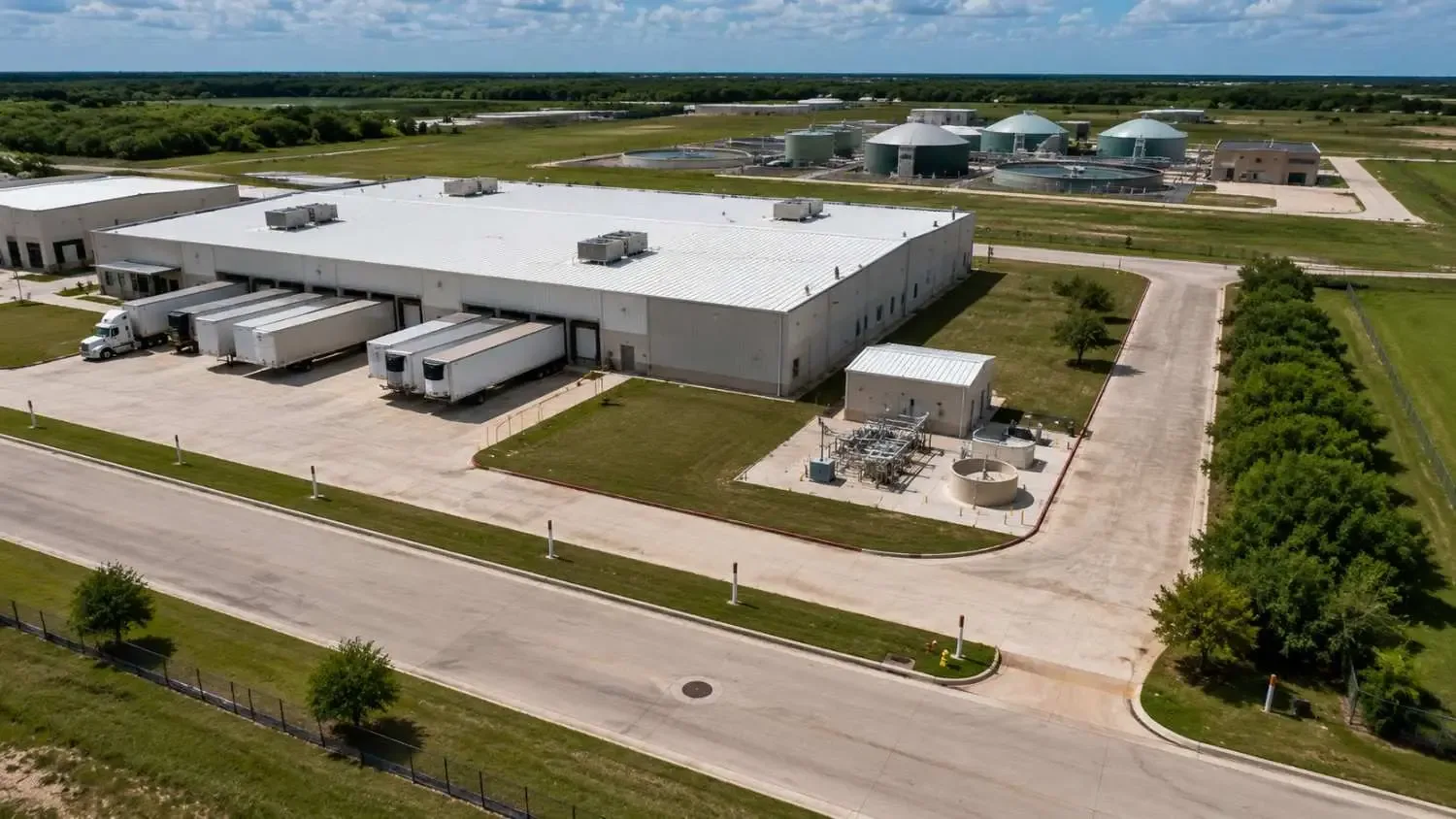
A publicly owned treatment works (commonly called a POTW) is designed primarily to treat domestic municipal wastewater from homes, businesses, and commercial buildings. When an industrial facility, food processor, manufacturer, or other significant industrial user connects to that system and discharges process wastewater, the POTW may require the facility to pretreat its wastewater before discharge to protect the collection system, the treatment process, worker safety, and the POTW’s own TPDES permit compliance. That pretreatment obligation may come with local discharge limits, an industrial user permit, sampling and monitoring requirements, reporting obligations, and engineering documentation that the facility must satisfy before it can legally discharge to the city sewer. Facilities that discover these requirements after they have already signed a lease, completed construction, or begun operations face the most difficult and expensive version of the problem.
Why the City Sewer Connection Does Not End the Analysis
A POTW is a permitted wastewater facility operating under its own TCEQ TPDES permit. That permit sets the effluent quality the POTW’s treated water must meet before it discharges to a creek or river. The POTW achieves compliance by treating the wastewater it receives. When an industrial user sends wastewater to the POTW that the treatment process was not designed to handle (high-strength organic waste, metals, oils, low or high pH, hazardous chemicals, or high temperature flows) the treatment process can be disrupted, the effluent quality can degrade, or the POTW’s own TPDES compliance can be jeopardized.
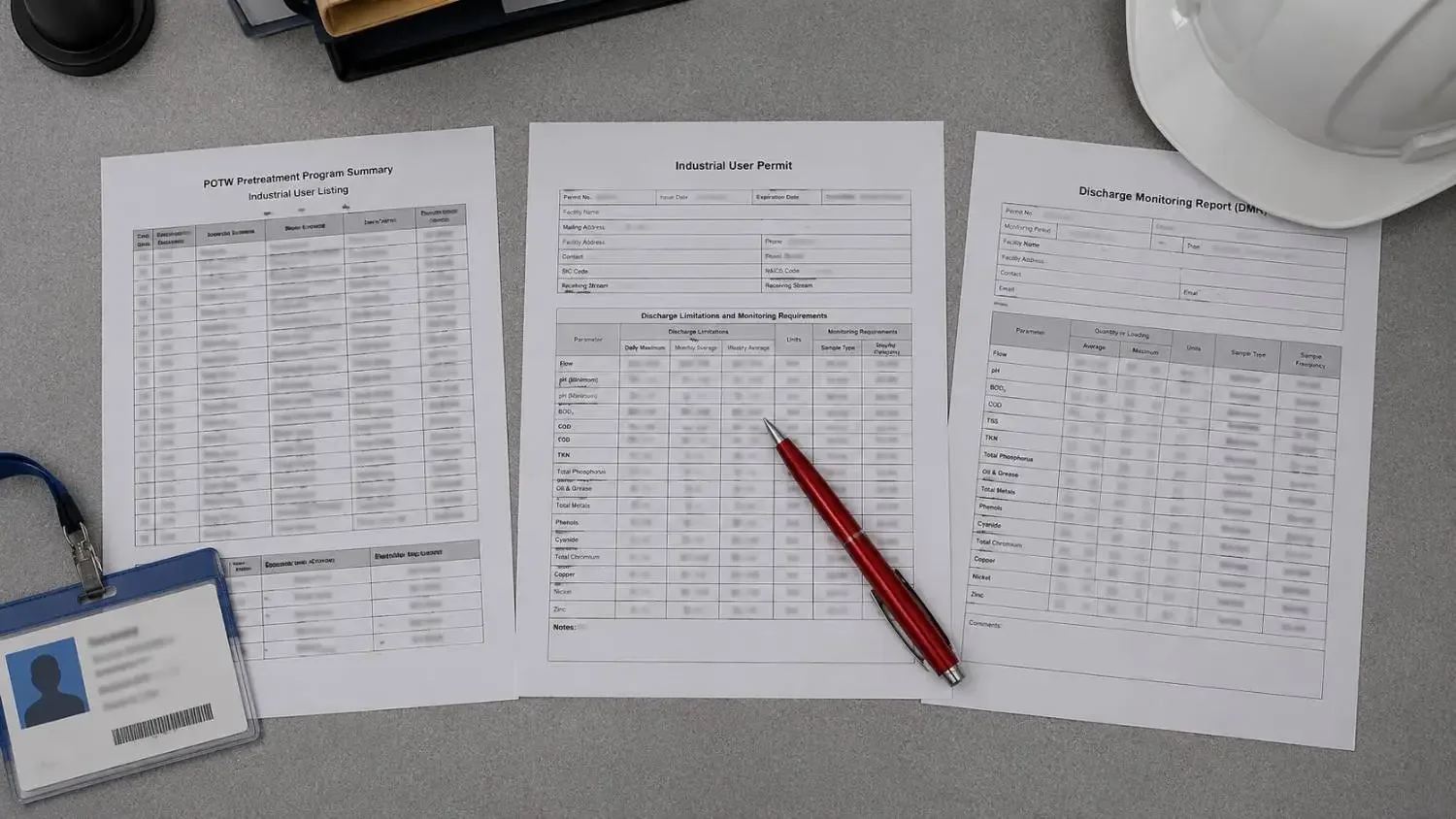
This is the fundamental reason pretreatment requirements exist. Federal pretreatment regulations under 40 CFR Part 403, implemented in Texas through TCEQ oversight, require POTWs that receive industrial wastewater above defined thresholds to establish and enforce a pretreatment program. Under that program, significant industrial users (facilities discharging above defined flow thresholds or contributing specific pollutant categories) must obtain an industrial user permit from the POTW and comply with discharge limits and monitoring requirements established to protect the POTW and its permit.
Not every Texas city has a formal pretreatment program. Cities with TPDES permits below certain flow thresholds may not be required to administer a pretreatment program. But even POTWs without a formal pretreatment program have the authority to set local discharge limits and refuse or restrict connections from industrial users whose wastewater would interfere with the treatment process. A city can accept a standard commercial food service connection and decline a food processing facility generating high-strength waste even if both businesses are in the same industrial park served by the same sewer main.
What Wastewater Parameters Trigger Pretreatment Review
The parameters that most consistently trigger pretreatment requirements or POTW concerns for industrial users in Texas fall into several categories.
High-strength organic waste. Domestic wastewater from residential and standard commercial sources has a typical BOD in the range of 200 to 300 mg/L. Food processing wastewater from meat processing, dairy operations, beverage production, institutional cooking, or prepared food manufacturing can carry BOD concentrations of 1,000 to 5,000 mg/L or higher. A food processor discharging 30,000 gallons per day of 3,000 mg/L BOD wastewater to a POTW designed for 200 mg/L domestic-strength waste is sending an organic load equivalent to many times its actual flow volume. That load affects aeration capacity, sludge production, and effluent quality at the treatment plant.
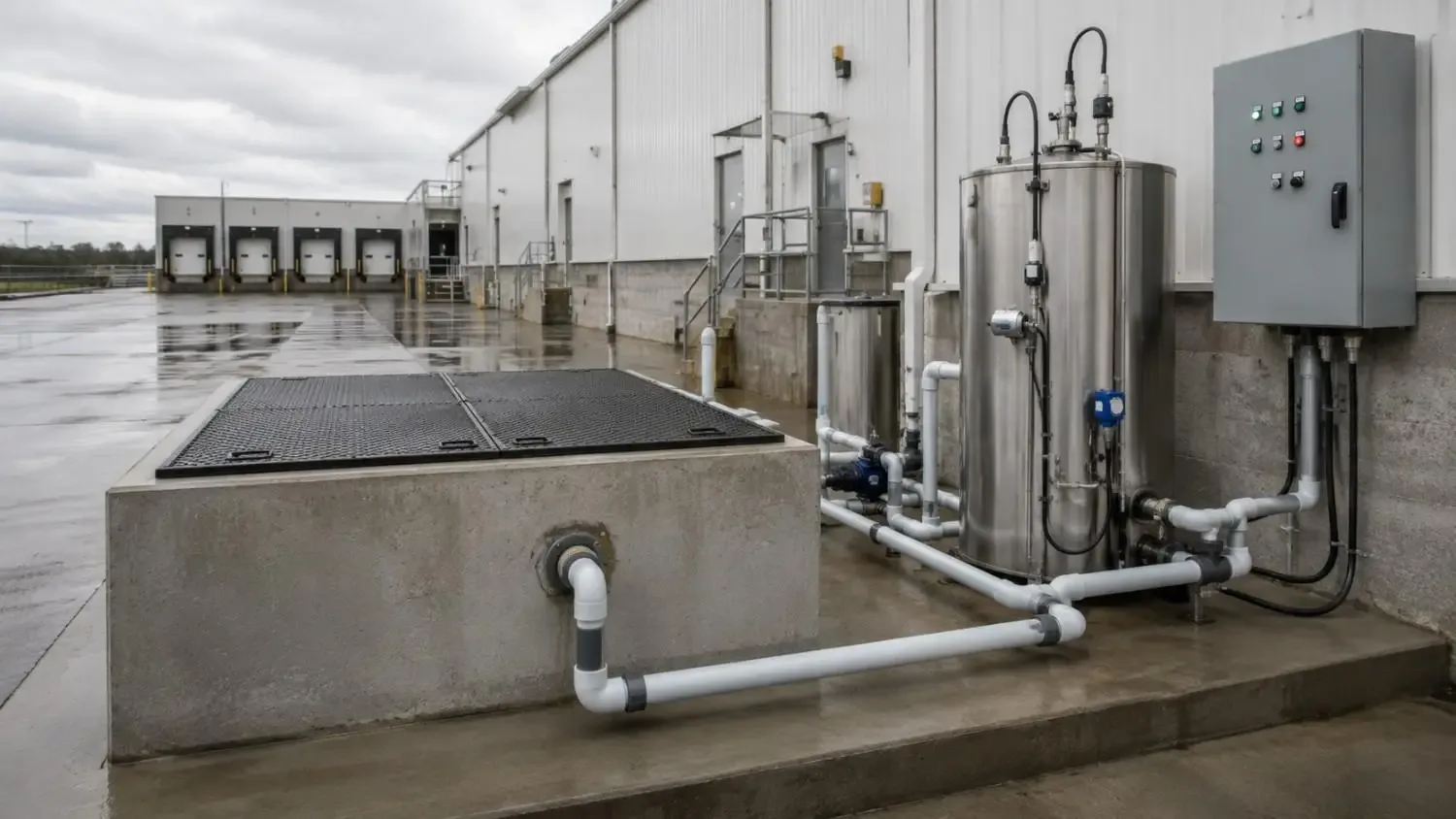
Fats, oils, and grease. FOG from food service operations, food processing, and industrial cleaning is one of the most consistently regulated parameters in Texas POTW pretreatment programs. FOG accumulates in collection system pipes, reducing hydraulic capacity and creating maintenance obligations and overflow risk. Grease traps and grease interceptors are standard pretreatment requirements for commercial kitchens, but food processing operations generating high-FOG wastewater streams may require more substantial pretreatment equipment and sampling programs.
Metals and specific industrial constituents. Metal finishing operations, circuit board manufacturing, certain chemical processing operations, and plating facilities generate wastewater with heavy metals (chromium, nickel, copper, zinc, lead) that pass through biological treatment systems largely untreated and appear in the POTW’s effluent and sludge. Sludge that exceeds metals limits cannot be land applied under federal 503 regulations, which creates significant management cost and compliance risk for the POTW. A POTW managing its sludge quality closely will scrutinize connections from facilities generating metals-bearing wastewater before allowing the connection.
pH extremes. Wastewater with pH outside the range of 5.0 to 11.0 (typical of acid cleaning operations, chemical processing, and certain manufacturing processes) can damage collection system pipe materials and disrupt biological treatment. Local pH limits in POTW pretreatment programs typically require neutralization to a narrower range before discharge to the collection system.
Temperature. High-temperature wastewater from industrial processes, commercial laundry operations, or food processing can damage PVC collection system components and affect the biological treatment process in the POTW. Many POTWs set local temperature limits, typically in the range of 104 to 140 degrees Fahrenheit at the point of discharge to the sewer.
Batch discharges. A facility that generates high-strength process wastewater in batches (a cleaning operation that drains a high-concentration batch at a specific time of day, or a process that generates a large discharge at shift changes) can create peak loading conditions at the POTW that affect treatment performance even if the daily average loading appears acceptable. POTWs review batch discharge patterns when evaluating industrial user connections and may require flow equalization as a pretreatment measure.
What the POTW’s Pretreatment Review Process Looks Like
For industrial facilities connecting to a POTW with a formal pretreatment program, the process begins with an industrial user survey or application that characterizes the facility’s wastewater. The POTW reviews the application and determines whether the facility is a significant industrial user subject to categorical pretreatment standards under federal regulations, a significant industrial user subject to local limits, or a minor industrial user that can connect without a formal permit but may be subject to local discharge requirements.
The industrial user permit (if required) establishes specific discharge limits for the parameters that matter for the facility’s wastewater type, sampling and monitoring requirements including the frequency and type of samples to be collected and analyzed, reporting obligations (typically submitted quarterly or semiannually to the POTW), and requirements for any pretreatment equipment the facility must install and maintain.
For food processing facilities, the permit typically addresses BOD, TSS, FOG, pH, and flow. For metal-using manufacturing facilities, it addresses metals, pH, and flow. The specific parameters and limits are set by the POTW’s pretreatment program based on the local limits the POTW has established to protect its own TPDES permit compliance.
What This Means Before Lease Signing or Construction
The pretreatment analysis for an industrial facility connecting to a Texas POTW must happen before the lease is signed or before construction begins, not after. The question is not just whether the city sewer is physically accessible. It is whether the POTW will accept the facility’s wastewater at all, under what conditions, and at what cost in pretreatment equipment and ongoing monitoring.
A food distribution developer evaluating a site near a DFW suburb where the city offers sewer service needs to know what that city’s pretreatment program requires for food processing operations before signing the lease. If the POTW requires a grease interceptor sized for the facility’s peak FOG loading, pH adjustment equipment, and an industrial user permit with quarterly sampling, those are capital costs and ongoing operational costs that belong in the project pro forma.
If the POTW cannot accept the facility’s wastewater at any reasonable cost (because the treatment plant lacks capacity for the organic loading, because the facility’s wastewater contains constituents that would impair sludge management, or because the POTW’s local limits cannot be met without a level of pretreatment that makes the connection economically impractical) the developer needs to know that before acquiring the land, not after.
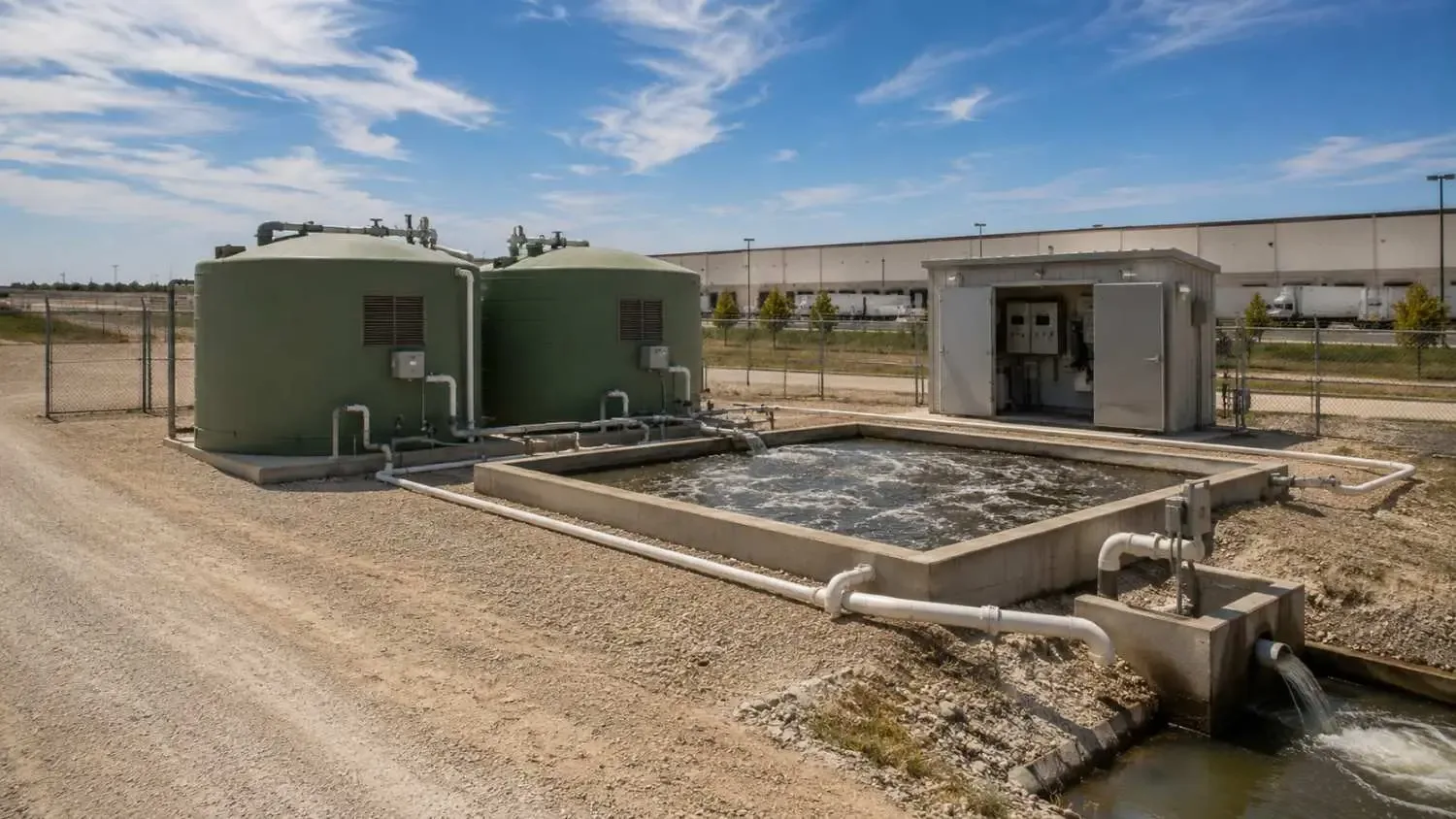
The alternative for facilities whose wastewater cannot be accepted by the POTW is a private treatment system: a package WWTP with a TPDES discharge permit, a Texas Land Application Permit, or for qualifying projects with an industrial component and a viable reuse plan, a 210E Industrial Reclaimed Water Authorization. A food distribution facility in Fort Bend County, Texas, generating high-strength process wastewater with BOD above 800 mg/L that could not be accepted by the nearest POTW, was served by MES through a private extended aeration plant with a TPDES discharge permit to an unnamed tributary. The facility operated on schedule, the tenant was satisfied with compliance and reliability, and the developer avoided the months of negotiation and regulatory uncertainty that a POTW connection at that loading level would have required.
Frequently Asked Questions
Does every Texas city have a formal pretreatment program that issues industrial user permits?
No. Cities whose POTW TPDES permits are below the threshold that triggers mandatory pretreatment program requirements are not required to administer a formal pretreatment program. However, all POTWs in Texas have the authority to set local discharge requirements and restrict connections from industrial users whose wastewater would interfere with the treatment process or the POTW’s own compliance. Confirming requirements directly with the POTW before finalizing a site or lease is the most reliable approach.
How do I know if my facility’s wastewater qualifies as a significant industrial user?
Significant industrial user status is determined by the POTW based on federal pretreatment regulations under 40 CFR Part 403. Facilities that are subject to federal categorical pretreatment standards for their specific industrial category, or that discharge more than 25,000 gallons per day to the POTW, or that have wastewater the POTW determines could interfere with its operations, are generally treated as significant industrial users. The initial industrial user survey submitted to the POTW is how the determination is made for a specific facility.
What happens if a facility starts discharging without complying with the POTW’s pretreatment requirements?
Unpermitted discharge that violates POTW pretreatment requirements can result in the POTW issuing a notice of violation, requiring the facility to cease discharge until compliance is achieved, and potentially disconnecting the facility from the sewer system. The POTW is also responsible to TCEQ for its own pretreatment program compliance, which means repeated violations by a significant industrial user can trigger TCEQ oversight of the POTW’s program management in addition to direct action against the industrial user.
Related Resources
- Industrial TPDES vs. TLAP: Which Wastewater Permit Path Fits Your Texas Facility
- Building a Private WWTP in Texas: What Developers Need to Know Before They Commit
- How to Evaluate Wastewater Utility Options Before You Close on Land
- How to Read a TCEQ Effluent Limit Table: What the Numbers Actually Mean for Your Facility
Evaluating a POTW Connection or Private Treatment Alternative for Your Texas Industrial Facility?
Modern Engineering Solutions works with Texas industrial facilities and developers to characterize industrial wastewater, evaluate POTW pretreatment requirements before lease signing, and design private treatment systems when POTW connection is not viable.
We specialize in:
- Industrial wastewater characterization and POTW pretreatment requirement evaluation for Texas facilities
- Industrial user permit application preparation and POTW coordination
- Pretreatment equipment sizing and design for FOG, pH, metals, and high-strength waste streams
- Private WWTP feasibility evaluation when POTW connection is not viable
- TPDES, TLAP, and 210E permit applications for industrial facilities requiring private treatment systems
Modern Engineering Solutions, McKinney, Texas. Contact: (214) 833-6748 or mod-eng.com
Keep reading
More to read.
Talk to an engineer
Tell us about your project.
An engineer reads it
Not a salesperson. Someone who can tell you whether the pathway is real.
You get a first answer
Your options, the agencies involved and the questions that decide cost and schedule.
You decide
No commitment to have the first call.
Prefer the phone? (214) 833-6748