Quick Answer
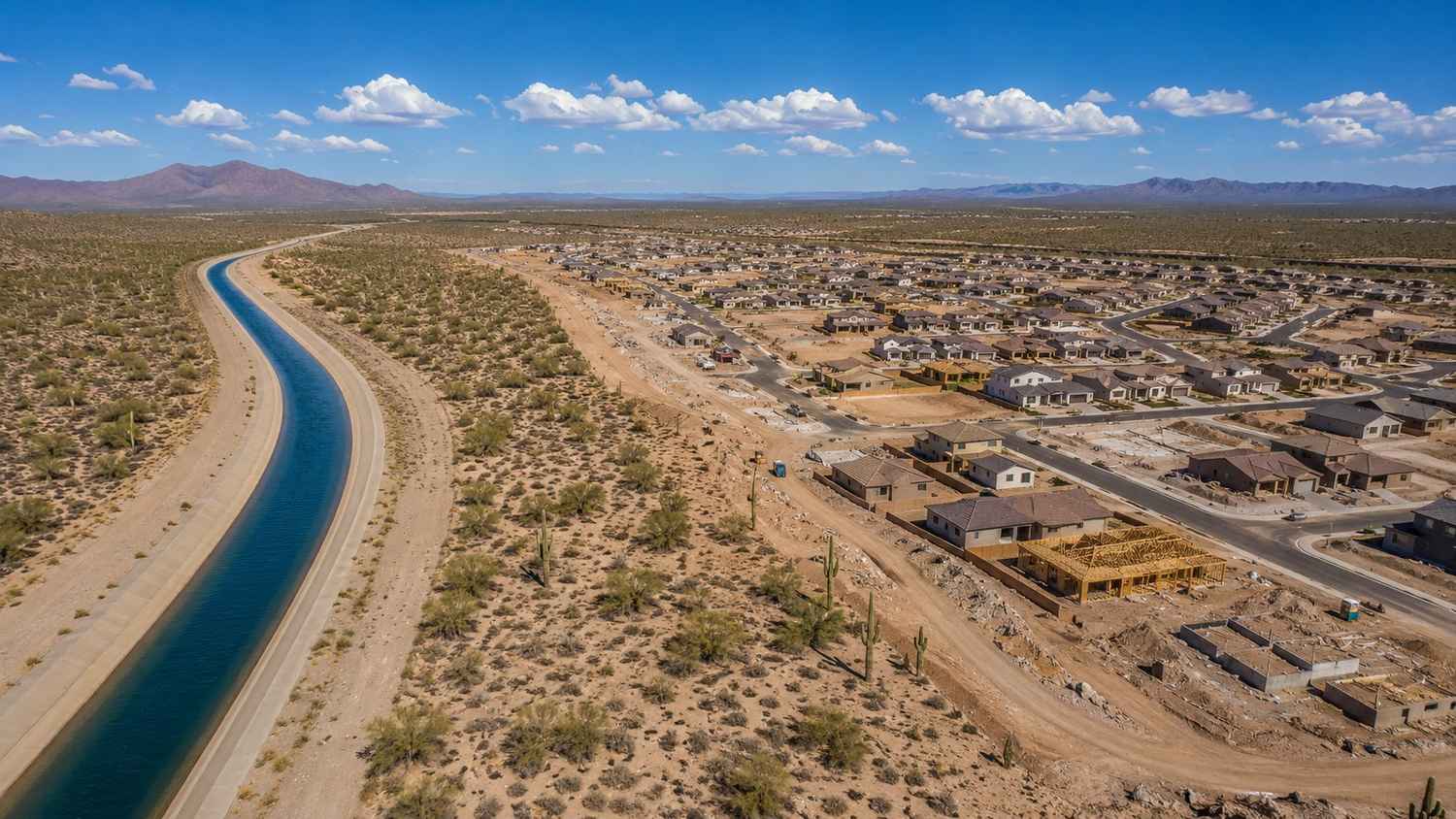
Arizona’s water supply challenges are structural, not cyclical. The Colorado River allocation that has supported Arizona’s growth for decades is under stress from overallocation, drought, and climate driven reductions in Lake Mead and Lake Powell storage. The Groundwater Management Act of 1980 established Active Management Areas in the state’s most populous regions and requires developers in those areas to demonstrate a one hundred year assured water supply before subdivisions can be platted. Outside Active Management Areas, groundwater rights are less regulated but the physical supply is equally finite. Developers who do not evaluate water availability before acquiring land in Arizona are accepting a feasibility risk that has derailed projects at every stage from entitlement through construction. Water planning in Arizona is not a permitting step. It is a project foundation.
The Arizona Water Supply Framework and Why It Matters for Developers
Arizona’s water law is a layered framework that reflects decades of conflict over a scarce resource. The Groundwater Management Act of 1980, which created the Active Management Areas in Phoenix, Tucson, Prescott, Pinal, and Santa Cruz, is the most significant piece of water legislation in the state’s history. Within Active Management Areas, the Arizona Department of Water Resources regulates groundwater withdrawal and requires developers proposing new subdivisions to demonstrate a physically and legally assured water supply that will last one hundred years. That demonstration must account for all sources the project intends to rely on, including Colorado River water delivered through the Central Arizona Project, surface water rights, reclaimed water, groundwater, and water service from a utility that has its own assured supply.
The one hundred year assured water supply requirement is not a formality. The Arizona Department of Water Resources reviews assured water supply applications with scrutiny, and projects that cannot demonstrate a compliant supply cannot receive a subdivision public report from the Arizona Department of Real Estate, which means they cannot be marketed for sale. For a developer, this means that the water supply demonstration is a prerequisite for the entitlement process, not a subsequent step, and it must be built on a supply that is physically, legally, and contractually secure at the time of the application.
Outside Active Management Areas, the regulatory framework is less prescriptive, but the physical supply constraints are no less real. Rural Arizona communities that depend on groundwater are drawing from aquifers that are not being recharged at the rate they are being pumped in most parts of the state. A developer proposing a project in rural Arizona that depends on a new well for water supply needs to evaluate the depth, yield, and long term sustainability of the aquifer being accessed as a project feasibility question, not as an operational detail to be resolved after entitlement.
Colorado River Allocations and the Shortage Declaration Reality
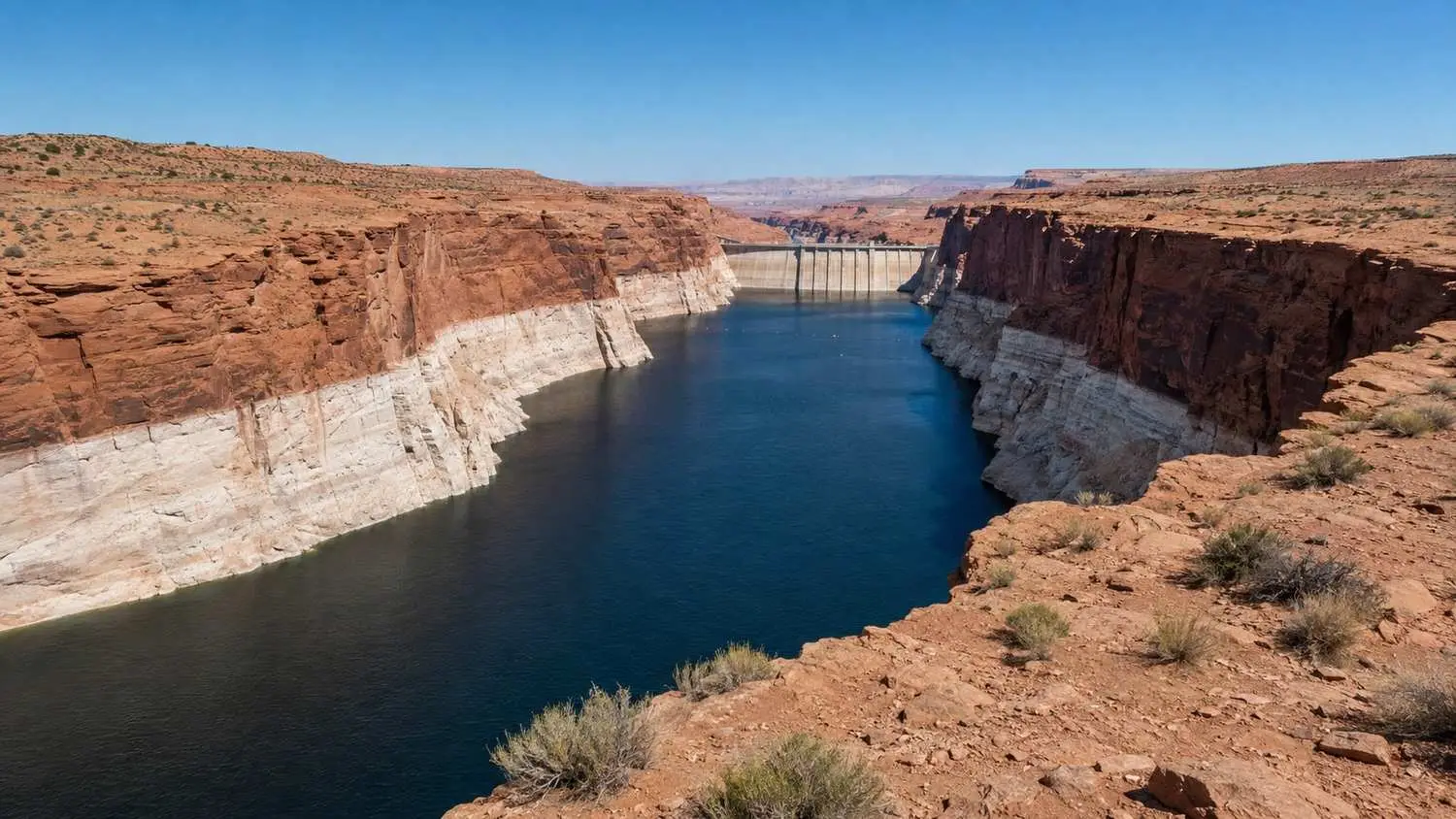
The Colorado River has historically supplied approximately forty percent of Arizona’s municipal water, delivered through the Central Arizona Project canal system that runs from Lake Havasu to Tucson. The reservoir storage that feeds that system, Lake Mead and Lake Powell, reached critically low levels during the extended drought of the early 2020s, triggering federal shortage declarations that reduced Arizona’s Colorado River allocation in ways that were unprecedented in the history of the project. Arizona, as a junior priority holder in the Colorado River compact, bears the first and largest cuts when shortage conditions require allocation reductions.
Arizona cities and water districts that rely heavily on Colorado River water through the Central Arizona Project have responded to shortage conditions by accelerating groundwater recharge programs, diversifying into alternative water sources including reclaimed water and water banking, and implementing conservation measures that reduce per capita demand. The infrastructure investments these utilities have made to build drought resilience are one reason that major Arizona metropolitan utilities have been able to manage shortage conditions without supply failures to date. But the underlying structural imbalance between Colorado River allocations and the demand they were intended to serve has not been resolved, and the long term trajectory of Lake Mead and Lake Powell storage depends on precipitation patterns that are outside human control.
For developers evaluating projects that depend on Colorado River water allocations delivered through a Central Arizona Project connected utility, understanding the utility’s drought response plans, its water banking portfolio, and its contingency supply strategy is part of the water availability due diligence process. A utility that has a diversified supply portfolio with significant groundwater banking credits and alternative supply contracts is a more reliable long-term water supply partner than one that is heavily dependent on a single source that is under shortage pressure.
Groundwater Management and the Developer’s Due Diligence Checklist
Groundwater is the water source that most Arizona developers encounter when utility service is not available or is insufficient for a proposed project. Evaluating groundwater viability as a development water supply in Arizona requires several distinct analyses that go beyond simply drilling a test well and measuring the yield. The legal right to pump groundwater in an Active Management Area is regulated through withdrawal permits, and the type of use, the location, and the volume all affect permit availability. Outside Active Management Areas, the right to pump groundwater from a well on owned land is generally less restricted, but it does not confer a legal right to the water that is superior to other users’ claims in all circumstances.
The physical yield of a well is not a reliable indicator of long term supply if the aquifer serving that well is being depleted faster than it recharges. Water table data from monitoring wells in the area, aquifer storage and recovery studies, and regional water level trend data maintained by the Arizona Department of Water Resources can provide the context needed to evaluate whether a proposed groundwater source will sustain the project’s demand over its useful life. A well that yields adequate water at project startup but is drawing from an aquifer that has declined fifty feet in the past twenty years is a supply risk that requires honest evaluation before a development program is committed to it.
For projects in Active Management Areas requiring an assured water supply demonstration, the groundwater component of the supply portfolio must be supported by a certificate of assured water supply from the Arizona Department of Water Resources or by service from a water provider that holds an assured water supply designation. The application process for an individual certificate requires documentation of the water source, the legal right to the water, the physical availability of the supply over the one hundred year planning period, and a water management plan demonstrating that the use is consistent with Active Management Area management goals. This documentation is engineering and legal work that should be initiated early in the development planning process, not at the time of the subdivision plat application.
Water Reuse as a Strategic Development Tool
Reclaimed water from wastewater treatment is an increasingly important component of Arizona water supply portfolios for both municipalities and private developers, because it provides a source of non potable water supply that is largely independent of the precipitation driven variability that affects surface water and groundwater systems. Arizona’s reuse rules under the Arizona Department of Environmental Quality’s reclaimed water program establish treatment standards, end-use categories, and monitoring requirements that govern how reclaimed water can be used in the state.
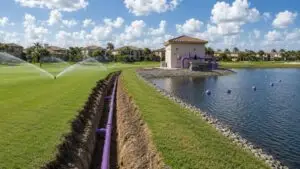
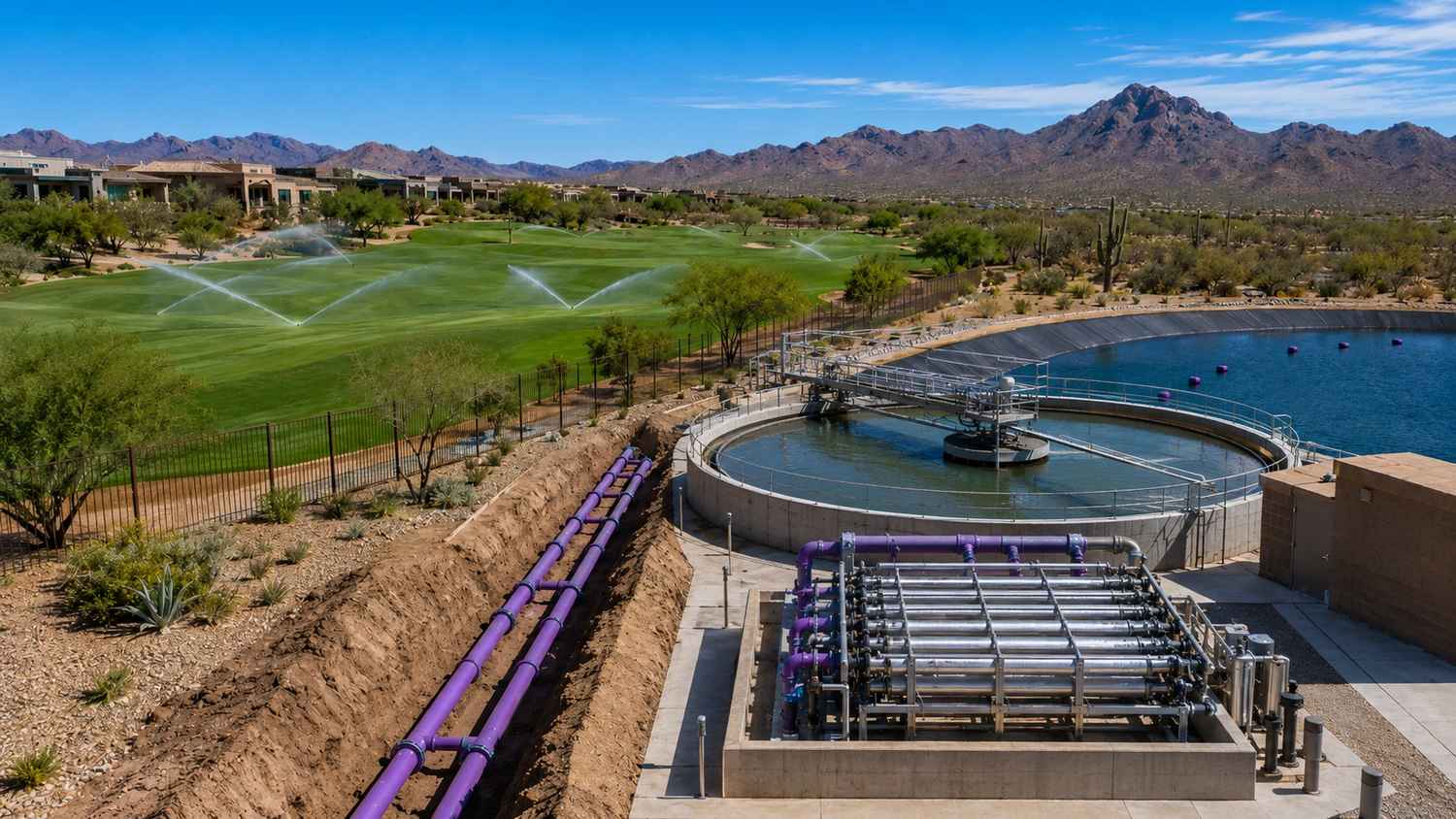
For developers proposing large scale projects in Arizona, on site reclaimed water reuse through a private wastewater treatment and reuse system can offset a significant fraction of the project’s potable water demand by supplying reclaimed water for landscape irrigation, golf course irrigation, toilet flushing in commercial buildings, industrial cooling, and other non potable uses. A master planned community that generates its own reclaimed water from a private treatment facility and distributes it through a purple pipe system for all non potable landscape and common area demands can reduce its potable water demand by thirty to fifty percent compared to a community that relies entirely on potable supply for all uses. That demand reduction has direct implications for the assured water supply calculation, for the utility connection fees associated with the potable water service, and for the long-term operating cost of water supply for the project.
The feasibility of on site reuse depends on the balance between the volume of reclaimed water the development will generate from its wastewater flows and the irrigation and non potable demand that can absorb that volume. Arizona’s dry climate and long irrigation season create a favorable demand environment for reclaimed water systems compared to wetter climates, because the demand for landscape irrigation in Arizona is sustained over most of the year rather than being concentrated in a short summer season. Storage requirements for an Arizona reuse system, while still necessary, are generally more manageable than in Florida’s wet season challenged reuse environment.
Wastewater Infrastructure Planning and Its Connection to Water Supply
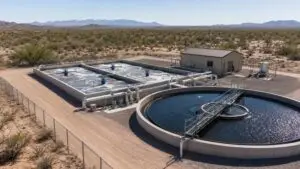
Wastewater infrastructure planning in Arizona is inseparable from water supply planning because the reclaimed water that a properly designed wastewater system produces is a water supply asset. A development that plans its wastewater treatment facility to produce reclaimed water meeting Arizona Department of Environmental Quality standards for unrestricted urban reuse has converted a waste disposal problem into a water supply resource. That conversion affects the project’s assured water supply demonstration, its long term operating cost, its environmental compliance profile, and its regulatory positioning with the Arizona Department of Water Resources.
For developers who must install private wastewater treatment systems because public sewer is not available at the project site, the wastewater system design decision is also a water supply decision. A treatment plant designed to produce secondary effluent for disposal through a soil aquifer treatment system or an evapotranspiration bed is a waste disposal system. A treatment plant designed to produce Class A plus reclaimed water meeting unrestricted reuse standards is a water supply system that reduces the potable demand the project must demonstrate in its assured water supply application. The capital cost difference between these two treatment system designs is often less than the value of the water supply credit that the higher treatment standard produces.
Frequently Asked Questions
We are evaluating a land acquisition in an Arizona Active Management Area. What water availability information should we gather before closing?
Before closing on land in an Active Management Area, you should determine whether the property is served by a water provider with an assured water supply designation or whether an individual certificate of assured water supply will be required. If a utility serves the area, obtain written confirmation of the utility’s current service capacity and the service extension requirements for the project. If the project will rely on groundwater, review the Arizona Department of Water Resources well registration data for wells within a one mile radius and examine the water level trend data for the aquifer underlying the property. Engage a water rights attorney and a water engineer to evaluate the supply picture before the earnest money commitment is made. The cost of that due diligence is a fraction of the cost of discovering a supply problem after the acquisition closes.
How do Arizona’s drought conditions affect our project if we are connected to a municipal utility with a Central Arizona Project allocation?
Your exposure depends on the utility’s supply portfolio and its drought response planning. A utility with a diversified supply portfolio including groundwater banking, alternative water sources, and aggressive conservation programs is less vulnerable to Colorado River shortage conditions than one heavily dependent on Central Arizona Project deliveries. Request the utility’s integrated water resources plan and its drought contingency plan as part of your due diligence. Understand what demand management measures the utility would implement during a shortage and how those measures would affect the service reliability your project depends on. For large projects that will be under development for five to ten years, the utility’s long term supply resilience is a project risk variable that deserves the same analytical attention as any other major project risk.
Can on site wastewater reuse satisfy a significant portion of our Arizona project’s water demand?
Yes, for the non potable fraction of demand. A well designed on site reuse system serving landscape irrigation, golf course irrigation, and commercial non potable uses can offset thirty to fifty percent of total project water demand in a typical Arizona master planned community. The feasibility depends on the balance between wastewater generation volume and irrigation demand, the treatment standard achievable with the proposed treatment system, and the distribution infrastructure required to serve the reuse demand areas. A water balance analysis that quantifies the reuse potential for your specific project program is the appropriate starting point for evaluating whether on site reuse should be a component of your water supply strategy.
Planning Water and Wastewater Infrastructure for Your Arizona Development?
MES is licensed in Arizona and works with developers, municipalities, utility providers, and project teams to evaluate water availability, compare infrastructure options, design reuse systems, coordinate wastewater permitting, and reduce project risk in Arizona’s water constrained development environment.
We specialize in:
- Water availability evaluation and assured water supply strategy for Arizona Active Management Area developments
- Groundwater feasibility assessment and aquifer sustainability analysis for Arizona development projects
- On site wastewater treatment and reclaimed water system design for Arizona developments requiring private water and wastewater solutions
- Water reuse system design meeting Arizona Department of Environmental Quality reclaimed water standards
- Wastewater permitting coordination with Arizona Department of Environmental Quality for private treatment facilities
- Water and wastewater infrastructure planning for residential, commercial, industrial, and master-planned projects in Arizona water-constrained markets