Quick Answer
Water supply planning for a Tarrant County master planned community requires confirmation of far more than whether a water line exists near the property. It requires verifying the serving utility’s available treatment and delivery capacity for the project’s full build out demand, the pressure zone the property sits within and whether that zone can support the proposed development without booster or storage infrastructure, the fire flow the system can deliver at the point of connection under flowing conditions, whether the property falls within an existing Certificate of Convenience and Necessity service area with an obligated provider, and whether any offsite infrastructure, storage, or wholesale coordination is required to serve the project as planned. Developers who confirm these items during due diligence, before finalizing a phasing plan or closing on the land, protect their lot yield and construction budget. Developers who confirm them during design development are the ones who end up redesigning.
Why Tarrant County’s Growth Pattern Makes This Especially Easy to Get Wrong
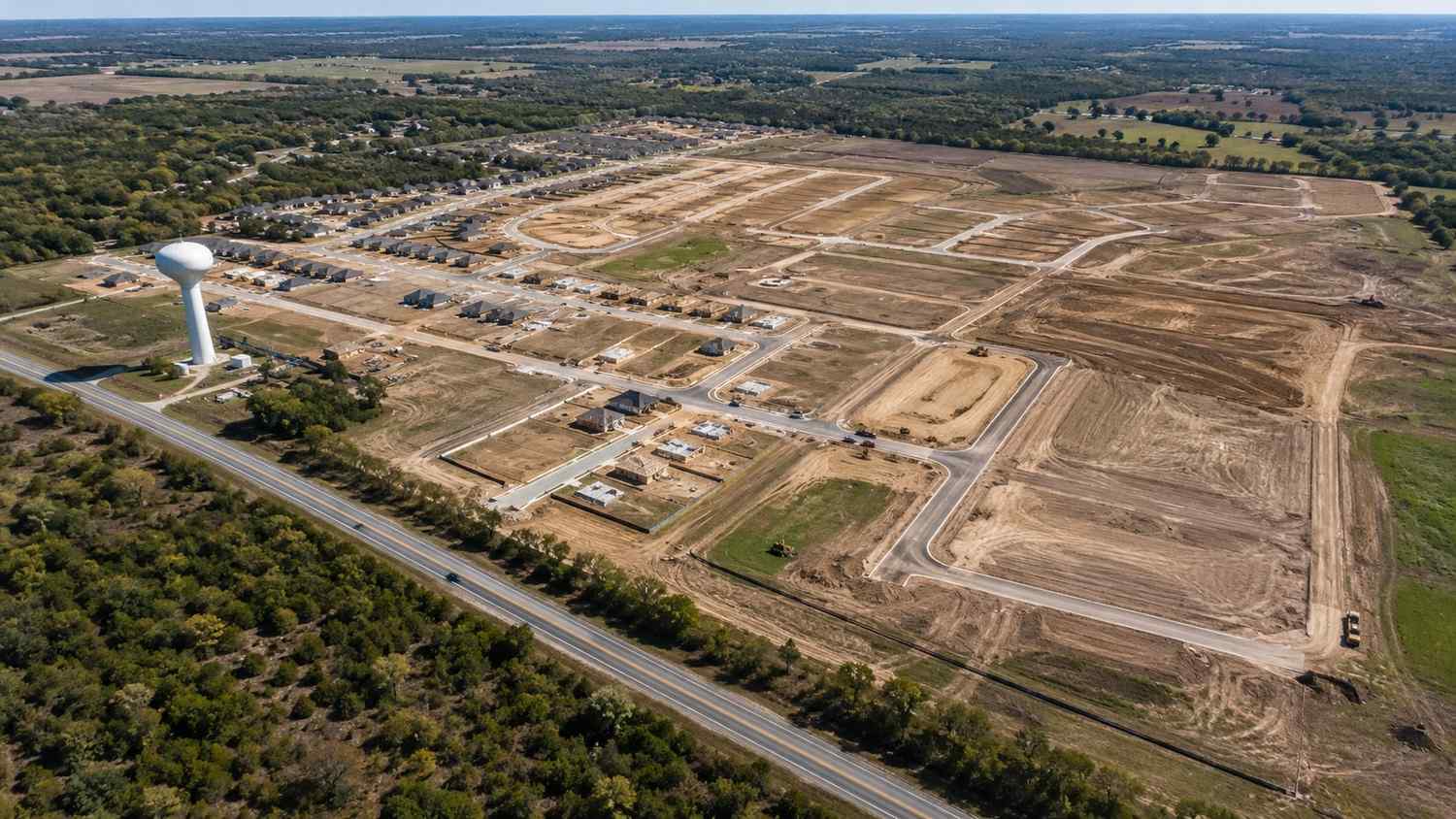
Tarrant County’s development pressure is concentrated in areas that were, until recently, rural or low density suburban, served by water systems designed for that lower density condition. As master planned community proposals move into these areas, often bringing thousands of platted lots to a service area that a utility sized for a fraction of that demand, the gap between what the existing system can deliver and what the proposed community requires can be substantial. This is not a defect in the utility’s planning. It reflects the reality that utilities size infrastructure to serve known and reasonably anticipated demand, and a single large master planned proposal can represent demand growth that exceeds what the utility’s existing capital improvement plan anticipated for that area.
The mistake developers make is assuming that because a water main is visible on a GIS map running along or near the property frontage, water service is available in the sense that matters for a master planned community, meaning adequate capacity, pressure, and fire flow for the full development program. A water main’s presence confirms only that a physical connection point exists. It says nothing about whether the utility’s treatment plant, its wholesale water supply contract, its transmission and storage infrastructure, or the specific main itself has the capacity to serve a development that may be an order of magnitude larger than anything currently connected to that segment of the system.
Common Mistake One: Assuming Nearby Lines Have Capacity
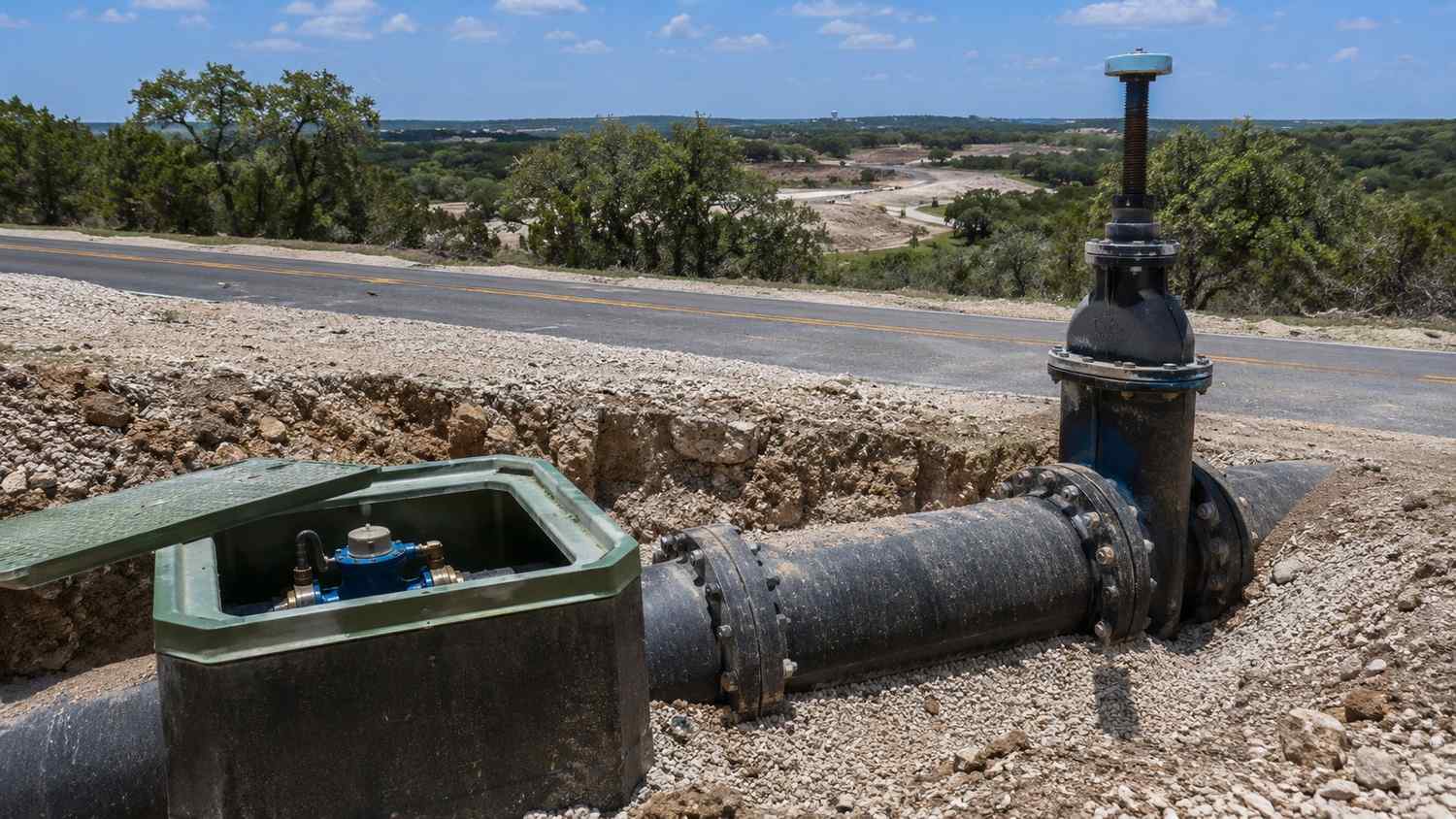
The single most common and most costly mistake in Tarrant County master-planned community planning is treating line proximity as a proxy for service availability. A capacity determination requires the serving utility’s engineering department to evaluate the project’s specific anticipated demand, calculated from the proposed lot count, unit types, and any commercial or amenity components, against the system’s actual current capacity at the relevant points in the distribution network. This evaluation should be requested formally, in writing, with a detailed development program attached, rather than assumed from a general conversation or from the fact that other subdivisions in the general vicinity have functioned without apparent water supply issues.
A utility’s response to a generic inquiry, asking simply whether water service is available at a location, will typically be a generic confirmation that a main exists. A utility’s response to a specific capacity request, describing the actual proposed density and phasing, will surface real constraints if they exist, including whether the utility’s current wholesale water supply contract has adequate uncommitted volume to serve the addition, whether treatment plant capacity is available or already allocated to other approved projects, and whether the distribution main serving the site has adequate size and condition to convey the added flow without unacceptable pressure loss.
Common Mistake Two: Underestimating Fire Flow Requirements
Domestic demand and fire flow demand are different hydraulic conditions, and a common planning error is evaluating only the average day and peak hour domestic demand for a master planned community while treating fire flow as a secondary consideration that the fire marshal will simply confirm during plan review. In practice, fire flow is frequently the governing hydraulic condition for a master planned community, particularly where the development program includes larger multifamily buildings, commercial components, or clubhouse and amenity structures with fire flow requirements well above typical single-family residential requirements.
Fire flow requirements in Tarrant County municipalities and utility districts are established based on building construction type, size, and occupancy, and the required flow must be available at the specific hydrant locations serving each structure, at an adequate residual pressure, under flowing conditions, not just as a calculated theoretical capacity. A distribution system that can supply adequate domestic demand for a fully built out community may still be inadequate for the fire flow required at a specific amenity center or multifamily building if the pipe sizing, looping, and storage supporting that portion of the system were not designed with that fire flow requirement in mind from the beginning. This is a common source of late plan review comments that force pipe upsizing or looping changes after a subdivision’s phase one infrastructure is already under construction.
Common Mistake Three: Overlooking Pressure Zone Limitations
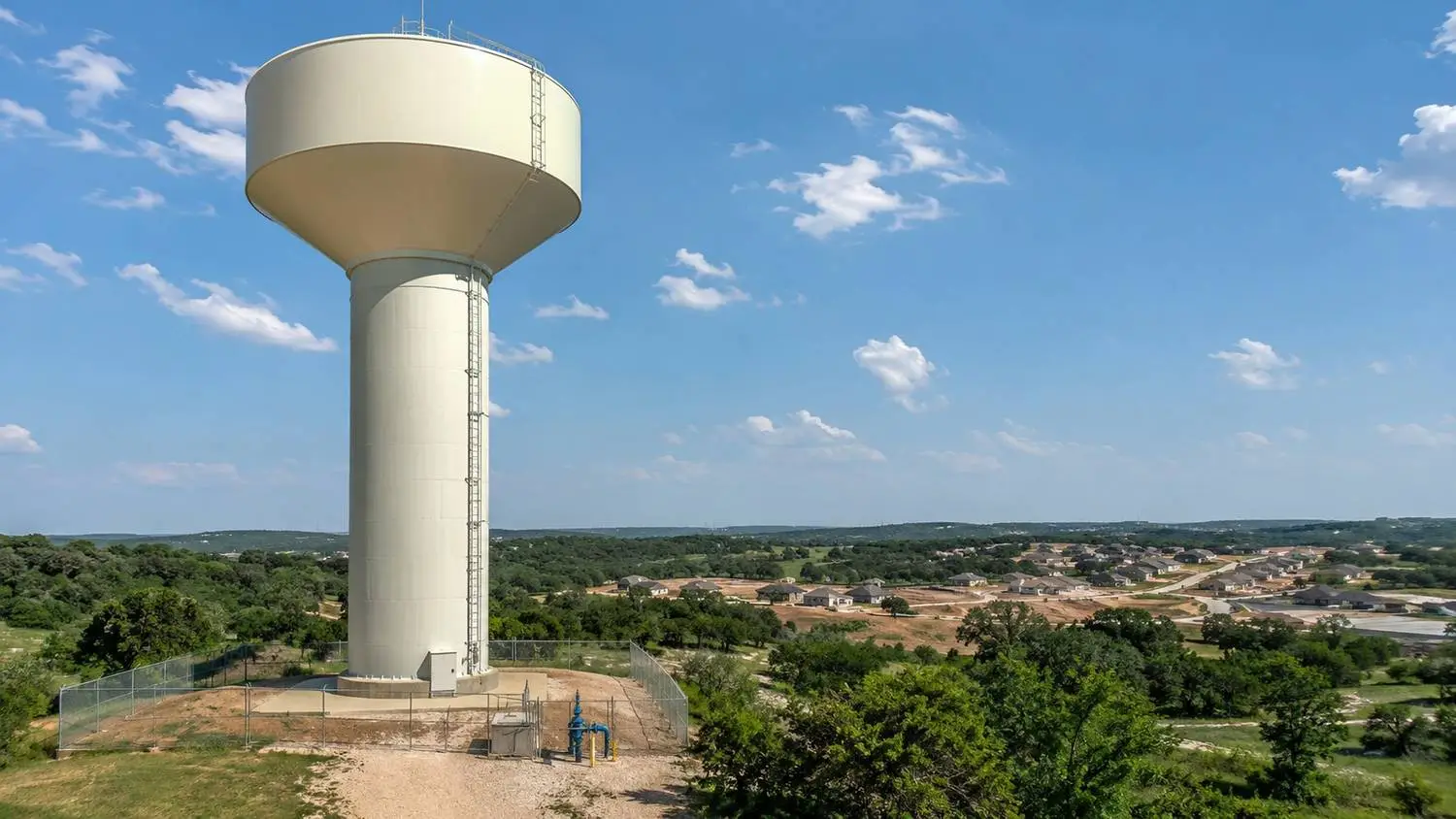
Tarrant County’s terrain, particularly in the county’s western and southwestern growth areas, includes meaningful elevation change across individual master-planned community sites, which means a single large development may span more than one pressure zone or may sit at an elevation that the existing zone boundary and infrastructure were not designed to serve efficiently. A subdivision phased across a tract with forty or fifty feet of elevation change can experience pressure that is more than adequate at the lowest lots and inadequate at the highest lots if the system is served from a single pressure zone without an intermediate pump station, an additional pressure zone, or elevated storage positioned to address the range.
Pressure zone boundaries are established by the utility based on system-wide hydraulic modeling, and a development proposal that straddles an existing zone boundary, or that sits at an elevation near the edge of a zone’s designed service range, requires early coordination with the utility to confirm which zone will serve which portion of the development and what infrastructure, if any, is needed to maintain adequate pressure across the full site. Developers who assume a single pressure zone will serve an entire large tract without confirming that assumption against the utility’s zone boundary mapping and hydraulic model are exposed to a mid construction discovery that a significant portion of their lots need different infrastructure than what was designed.
Common Mistake Four: Ignoring Storage Requirements
Elevated and ground storage tanks are a component of water system design that many developers assume is entirely the utility’s responsibility and therefore not something requiring developer attention during due diligence. For a master planned community of significant size, this assumption can be costly. Utilities size their storage infrastructure based on anticipated system wide demand, and a large master planned community can represent enough incremental demand that the utility’s existing storage capacity is inadequate to serve the combined existing and new demand without expansion.
When a utility determines that a proposed development will require storage capacity expansion to maintain adequate system reliability and fire flow reserve, the cost responsibility for that expansion, whether borne entirely by the developer, shared through a cost participation agreement, or absorbed by the utility’s general capital plan, is a negotiation that depends on the utility’s specific policies and the timing of the utility’s own capital improvement planning relative to the developer’s project timeline. Developers who identify a potential storage capacity gap early, during due diligence, have more room to negotiate a reasonable cost sharing arrangement or to adjust their phasing to align with the utility’s planned storage expansion than developers who discover the gap after their site plan and financing are already finalized.
Common Mistake Five: Failing to Coordinate With Wholesale Providers
Many Tarrant County municipalities and utility districts do not treat their own raw or treated water. They purchase treated water on a wholesale basis from a regional provider and then distribute it through their own retail system. This two tier structure means a capacity question for a master planned community may need to be evaluated at both levels: does the retail utility’s distribution system have capacity to serve the development, and does the retail utility’s wholesale supply contract have adequate uncommitted volume to support the additional demand the development represents.
A developer who confirms retail distribution capacity but never asks about the retail utility’s wholesale supply position has confirmed only half the picture. If the retail utility’s wholesale contract is near its committed capacity, the utility may be unable to commit to serving a large new master planned community regardless of how adequate its local distribution infrastructure appears, until the utility renegotiates or expands its wholesale supply arrangement, a process that operates on the wholesale provider’s regional planning timeline rather than on the individual developer’s project schedule. Asking the retail utility directly about its wholesale supply position and any capacity constraints at that level is a due diligence question that is frequently overlooked but can be the actual binding constraint on project feasibility.
Common Mistake Six: Waiting Too Long to Verify Utility Service
The mistake that compounds every other mistake on this list is timing. Developers who wait to formally verify water capacity, pressure zone assignment, fire flow availability, storage adequacy, and wholesale supply position until after land acquisition has closed, after a site plan has been drawn, or after a phasing and pro forma model has been built and shared with investors and lenders, have removed their own flexibility to respond to whatever the utility’s answer turns out to be. Verifying these items during the due diligence period before closing, while the purchase remains contingent, preserves the ability to renegotiate price, adjust the development program, or walk away from a tract that cannot be served as originally envisioned.
Frequently Asked Questions
What is a CCN and why does it matter for our Tarrant County master planned community?
A Certificate of Convenience and Necessity is an authorization issued by the Texas Public Utility Commission that grants a specific utility the exclusive obligation and right to provide water or sewer service within a defined geographic area. If your development tract falls within an existing CCN service area, the CCN holder generally has both the right and the obligation to serve your project, and you cannot simply select a different provider even if a neighboring utility’s infrastructure appears more convenient or better positioned to serve your site. Confirming which utility holds the CCN for your specific tract, and engaging that utility directly regarding its capacity to serve your proposed development, is a foundational step in water supply due diligence that should happen before you evaluate any other infrastructure question.
How do we get a utility to commit to serving our project in writing before we close on the land?
Request a formal capacity and service availability determination from the utility’s engineering department, providing a detailed development program including lot counts, unit types, phasing, and any commercial or amenity components. Ask specifically for confirmation of available treatment and distribution capacity, applicable pressure zone assignment, fire flow availability at representative points of connection, and any required offsite infrastructure or cost participation. Many utilities will provide this information in a letter or memo format that, while not always a binding legal commitment to serve, provides a documented basis for your due diligence and a record you can reference if the utility’s position changes later in the process. For larger master-planned communities, some utilities will negotiate a formal service agreement or development agreement that does create binding commitments, though this typically requires more extended negotiation than a due diligence period allows and may need to be pursued as a condition subsequent to closing.
Our tract spans two different pressure zones. Does this significantly complicate our infrastructure design?
It adds complexity but is a manageable design condition when identified early. Serving a tract that spans two pressure zones typically requires either separate distribution systems for each zone with a defined boundary between them, or a pressure reducing valve arrangement that allows a single system to serve both zones while maintaining pressure within acceptable limits throughout. The specific approach depends on the elevation range across your site, the utility’s existing zone boundary and infrastructure near your property, and your phasing plan. This is exactly the kind of condition that should be identified and designed around during the due diligence and early civil engineering phase, since it affects pipe sizing, phasing sequence, and potentially the location of specific lot types or amenities within the development.
Related Resources
- Water Line Replacement in Dallas: How Developers Navigate Aging Trinity River Authority Infrastructure
- Dallas Subdivision Wastewater Planning: When City Sewer Isn’t an Option in ETJ Growth Areas
- Land Application Permits in Texas: A Faster Path to Wastewater Approval for Developers
- Approved Plans Aren’t Always Optimized Plans: The Difference Can Cost $15 Million
- Biosolids Land Application from Private Wastewater Treatment Facilities in Texas
- Hydraulic Modeling for Dallas High Rise Developments: Why Pressure Zone Design Matters More Than You Think
- TCEQ Permit Timelines for Dallas Area Industrial Facilities: What Food & Beverage Manufacturers Need to Know
Evaluating Water Supply Feasibility for a Tarrant County Master Planned Community?
MES works with developers, land acquisition teams, civil engineers, and project managers throughout Tarrant County to evaluate water supply capacity, confirm pressure zone assignment, perform fire flow and hydraulic analysis, identify storage and offsite infrastructure needs, coordinate with wholesale and retail providers, and confirm CCN service obligations before a master planned community’s phasing and financial model are locked in around assumptions the utility cannot support.
We specialize in:
- Water capacity and service availability due diligence for Tarrant County master planned community land acquisition
- Fire flow analysis and hydraulic modeling for large scale residential and mixed use development phasing
- Pressure zone evaluation and booster or PRV infrastructure planning for tracts spanning multiple zones
- Storage capacity assessment and cost participation strategy for developments requiring utility infrastructure expansion
- Wholesale and retail water provider coordination for large master planned communities in Tarrant County growth corridors
- CCN service area confirmation and utility coordination strategy for Texas master planned community due diligence
Modern Engineering Solutions, McKinney, Texas. Contact: (214) 833-6748 or mod-eng.com