
Blog
Dallas Subdivision Wastewater Planning: When City Sewer Isn’t an Option in ETJ Growth Areas
Dallas ETJ subdivision wastewater options compared: an offsite sewer extension, a private TPDES or TLAP plant, MUD formation, septic and reclaimed water reuse.
Quick answer
Dallas ETJ subdivision wastewater comes down to a few paths when city sewer does not reach the site: extend sewer offsite to the city, build a private plant under a TCEQ discharge or land application permit, or, for large lots, use septic systems. A municipal utility district (MUD) can finance and own the system, and reclaimed water can be added to a plant.
Each path changes lot yield, schedule and who carries the system after build-out. Confirm which one works before you draw lots or close on the land.
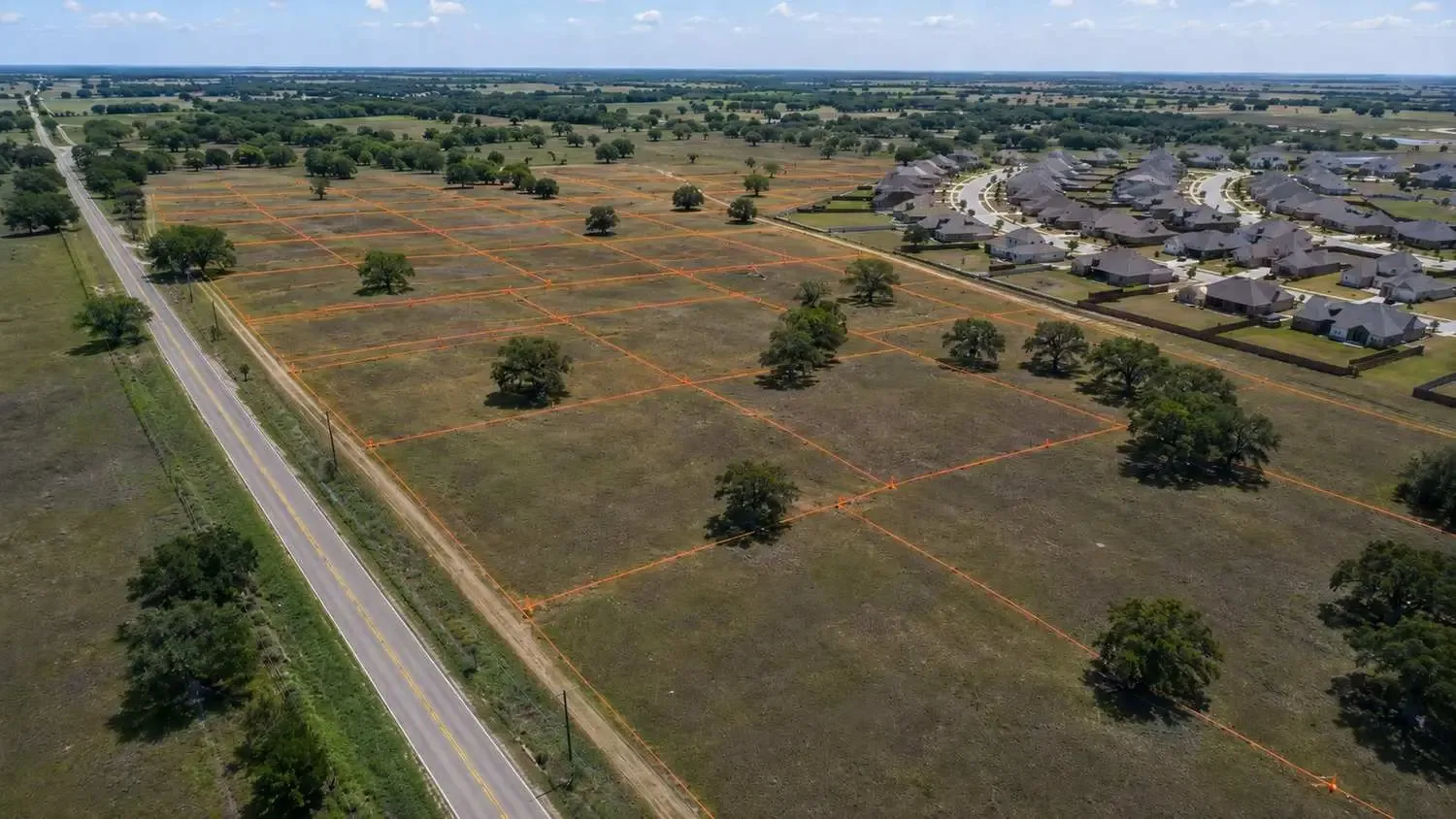
Why do ETJ sites run out of city sewer?
Because the ETJ is the growth edge, and sewer follows growth slowly. An extraterritorial jurisdiction is the unincorporated land next to a city's limits, out to a distance set by the city's population. City mains extend outward from trunk lines as development pays for them, so a new subdivision can sit hundreds of feet or several miles from the nearest connection.
Distance is not the only limit. A city may have committed its remaining plant capacity to approved projects. Under 30 TAC 305.126, a permittee must start planning an expansion when flow reaches 75 percent of permitted flow for three consecutive months, and must get TCEQ authorization to begin construction at 90 percent.
Some cities also decline to serve outside their limits unless the land annexes. That is a policy question, not an engineering one, and only a written answer from the city settles it.
The ETJ itself has changed. Since September 1, 2023, Senate Bill 2038 lets landowners and residents petition, or in some areas vote, for release from a city's ETJ, with some areas excluded. A 2025 amendment, HB 2512, added exclusions in Fort Worth's ETJ, including lots under 12 acres petitioning alone and land under a development agreement (Local Government Code 42.101). Released land is governed by the county, which usually makes city sewer even less likely.
When does an offsite sewer extension make sense?
When the city has capacity, will serve you in writing, and the route can be built on your schedule. A long gravity extension needs continuous slope, so it gets deeper with distance. At some point an intermediate lift station, designed to TCEQ's design criteria for domestic wastewater systems in 30 TAC Chapter 217, is cheaper than more depth.
A lift station brings operating duties. Decide early whether the city, a MUD, a private utility or an HOA will own and run it.
Easements across neighboring land are often the pacing item. Start those talks during due diligence, not after design.
Ask the city whether it offers cost participation or reimbursement when later development connects to your line. Then compare the net cost of the extension against a private plant on the same terms.
How do TPDES and TLAP permits compare for a private plant?
A TPDES permit needs a receiving stream. A TLAP permit needs land. TCEQ issues both through its wastewater permitting program. A TPDES permit authorizes a discharge to water in the state, with effluent limits set for that receiving stream. A small or stressed stream can push the plant toward tighter limits and more treatment.
A Texas Land Application Permit (TLAP) authorizes disposal by irrigation or other land methods instead of a discharge. Land disposal rules sit in 30 TAC Chapter 309, Subchapter C, and subsurface drip dispersal has its own rules in 30 TAC Chapter 222.
For most subdivisions, land is the deciding factor. Disposal fields sized for the flow and the soils cannot also be lots, so a TLAP reduces lot yield. A TPDES plant saves that land but usually costs more to build and run.
Either way, the plant needs room. Under 30 TAC 309.13(e), treatment units sit at least 150 feet from the nearest property line, unless an approved odor control report or legal restrictions on homes in the buffer meet the rule instead. See our guide to building a private WWTP in Texas for the full decision.
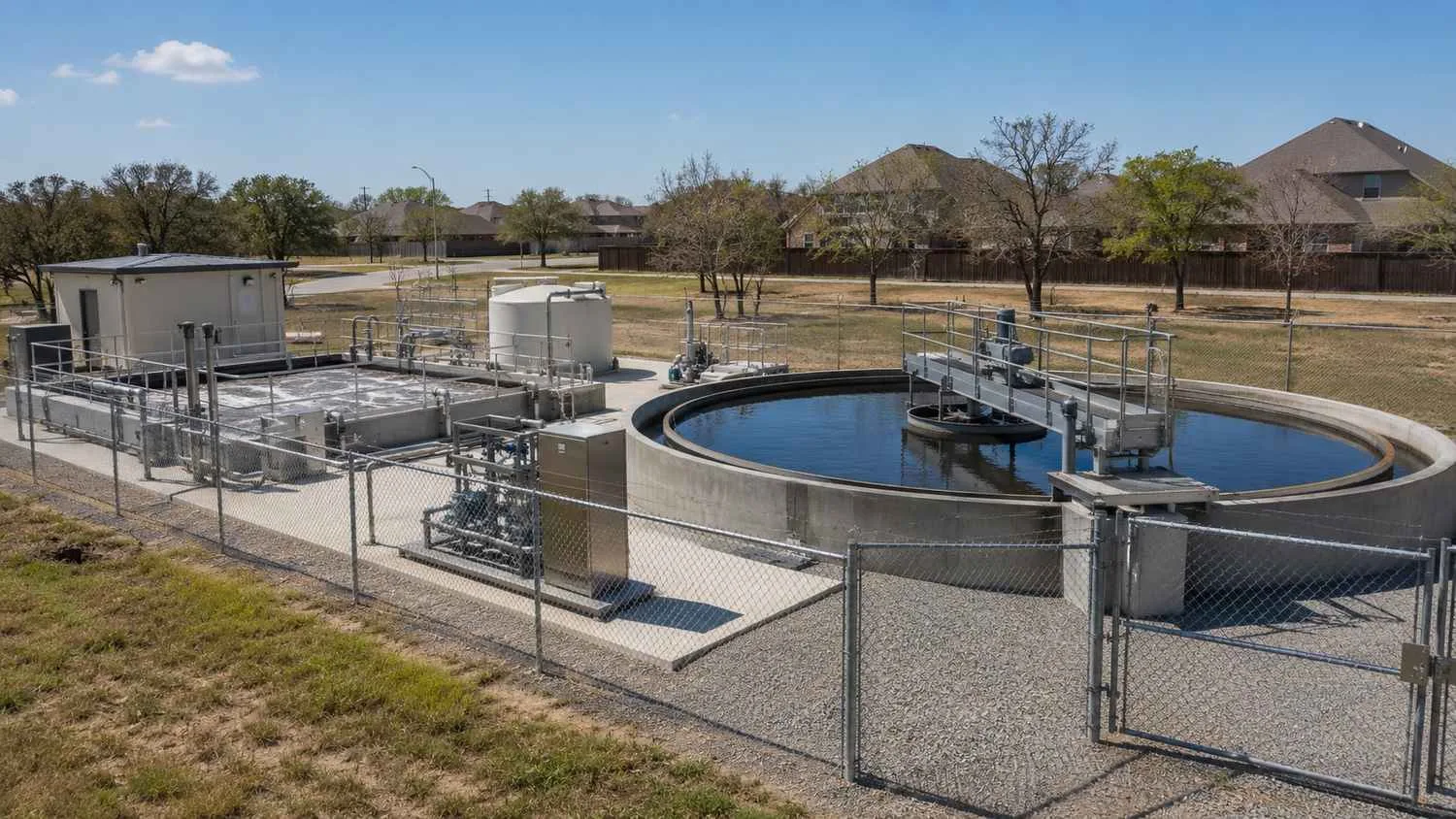
Who owns and runs a private plant after build-out?
Someone has to hold the permit for decades. The usual owners are a MUD, a private utility or, less often, an HOA. Decide this before permitting, because the permittee carries TCEQ compliance and the operating cost.
A private utility serving 15 or more potential connections for pay, or any number inside another provider's CCN, needs a sewer certificate of convenience and necessity (CCN). The Public Utility Commission's CCN guidance explains that a CCN gives the exclusive right to serve an area. Check the PUC's map early: another provider may already hold the sewer CCN over your site.
A poorly run plant with unclear ownership becomes an HOA problem and a sales problem for the lots that remain. Treat ownership as part of the design.
How does a MUD fit the wastewater plan?
A MUD is the financing and ownership layer, not a treatment method. It is a political subdivision that can issue bonds, levy taxes and own water, sewer and drainage systems. TCEQ creates MUDs on petition under Water Code Chapter 54, and the Legislature can also create them.
In a city's ETJ, city consent rules apply under Water Code Section 54.016, with a fallback if the city neither consents nor agrees to serve. TCEQ's summary of MUD creation requirements lists what the petition must include.
Bonds for water, sewer and drainage projects generally need TCEQ to find the project feasible and approve the issue under Water Code Section 49.181. Build creation and bond approval into the schedule from the start, because the plant often depends on that money.
Where does reclaimed water reuse fit?
As an add-on to a plant, not a substitute for its permit. A subdivision with common areas, parks or a golf course can irrigate with reclaimed water under 30 TAC Chapter 210. Under Section 210.4, the provider notifies TCEQ and gets written approval before supplying it.
Under Section 210.25, reclaimed water piping is purple or marked purple, and kept at least nine feet horizontally from potable lines unless the Chapter 290 separation rules are met. Section 210.22(e) bars discharges from reclaimed water storage ponds except from rainfall or under a permit, so the plant still needs its permitted outlet in wet weather.
Subchapter E of Chapter 210, often called 210E, covers industrial reclaimed water. Domestic reuse for subdivision irrigation follows the general Chapter 210 rules.
Is your site ready for a wastewater decision?
Any "no" is the next due diligence task before the concept plan.
- Do you have a written service answer from the city, including capacity?
- Do you know whether the site is in an ETJ, and whose?
- Have you checked who holds the sewer CCN over the site?
- Is there a receiving stream, or enough suitable land for disposal?
- Has the plant site been laid out with its 150-foot buffer?
- Is the long-term owner and operator decided?
Take the answers to your wastewater engineer and your lender together, before the lot count is fixed.
This article is general education based on the public sources linked above. Rules, city policies and TCEQ practice change, and every site differs. Your engineer and the agencies make the final call on your project.
Frequently asked questions
Can a large-lot subdivision in the ETJ use septic systems?
Often, if the lots are big enough. Under 30 TAC 285.4, single-family lots on septic need at least half an acre with public water, or one acre without it. The county or another authorized agent permits each system.
Does leaving the ETJ change the wastewater picture?
Yes. Released land falls under the county, so city sewer becomes less likely, and the city consent rule for MUDs in an ETJ no longer applies to it. Weigh that before petitioning.
I'm buying land in a Dallas-area ETJ for a subdivision. How do I find out early whether the city will actually provide sewer service?
Send the city a written service request with your lot count and phasing. Ask for capacity, the connection point and route, and its policy on serving outside city limits. If the answer is slow or doubtful, study a private plant in parallel.
We're planning about 300 lots in a Dallas-area ETJ. How do we compare a TLAP plant against extending city sewer?
Compare them on the same terms: capital cost, lots lost to disposal fields, operating cost over your holding period, and permit schedule. A TLAP costs land, while a long extension costs pipe, depth and easements.
If we build a private plant now, can we connect to city sewer later?
Often, yes, but plan it. Lay out the collection system to reach a future connection, agree on the plan with the city, and treat decommissioning as its own project.
Related resources
- Wastewater Capacity in Fort Worth’s ETJ: What Happens When the City Won’t Annex Your Development
- How to Size a Package Wastewater Treatment Plant for a New Texas Development
- Chapter 210 Reclaimed Water: What Texas Developers Need to Know About Water Reuse
- CCN Territory Disputes in Collin County: What to Check Before Land Crosses a Water Provider Boundary
Is city sewer out of reach for your Dallas-area subdivision?
We help developers confirm the wastewater path before the lot plan and the loan lock in assumptions the site cannot support.
We specialize in:
- Sewer service availability and wastewater feasibility studies
- Private wastewater treatment plant design and TCEQ permit support
- Offsite sewer extensions and lift station design
- MUD infrastructure planning
- Chapter 210 reclaimed water systems
- Construction administration
Modern Engineering Solutions, McKinney, Texas. Contact: (214) 833-6748 or mod-eng.com
Talk to an engineer
Tell us about your project
An engineer reads it
Not a salesperson. Someone who can tell you whether the pathway is real.
You get a first answer
Your options, the agencies involved and the questions that decide cost and schedule.
You decide
No commitment to have the first call.
Prefer the phone? (214) 833-6748