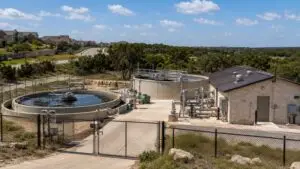
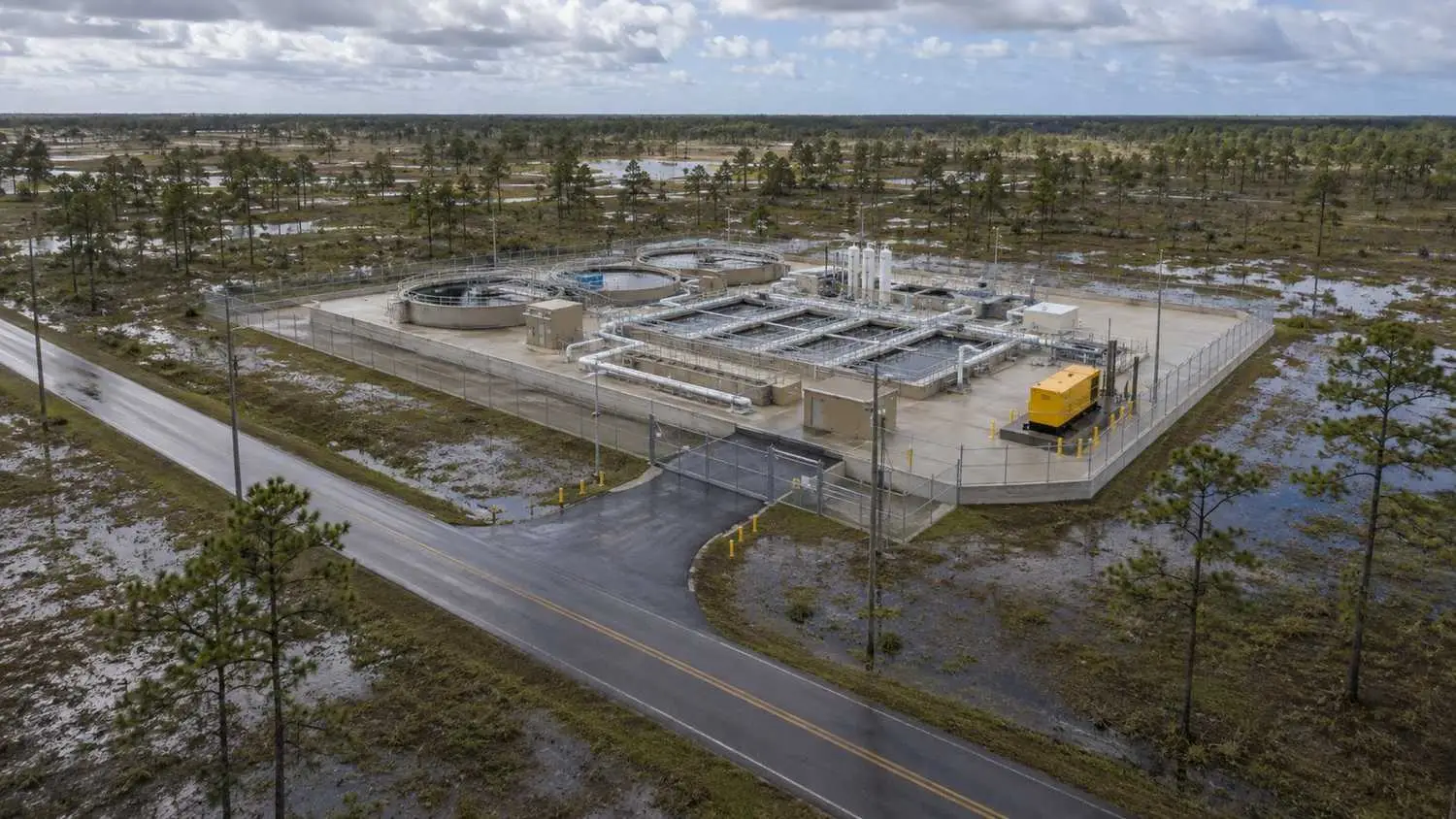
Quick Answer
Flood resilient water and wastewater infrastructure in the Houston area requires elevating critical electrical and control equipment above flood protection elevations, providing adequately sized and properly sited backup power generation capable of running lift stations and treatment plants through extended outages, floodproofing structures and equipment enclosures against both direct flooding and wind driven rain intrusion, maintaining reliable emergency access to critical facilities during and immediately after storm events, and reducing inflow and infiltration into collection systems that otherwise overwhelm treatment capacity during heavy rainfall. These measures add upfront capital cost, but that cost is consistently smaller than the cost of infrastructure failure during an actual storm event, which can include environmental compliance violations, service outages affecting public health, physical damage requiring extensive reconstruction, and, for a developer, longer term consequences to project reputation, insurance costs, and asset value. Resilience needs to be designed in from the outset rather than added after a facility experiences its first failure.
Why Flood Resilience Is a Developer Issue, Not Just a Public Sector Issue
It’s easy for a private developer to view flood resilient infrastructure design as primarily a public works or utility district concern, something municipalities and public utilities worry about because they’re accountable to the public for service reliability. That framing misses how directly infrastructure resilience affects a private development’s own interests. A lift station or treatment plant that fails during a storm event creates an immediate service disruption for the residents or businesses the development serves, exposing the developer, or the MUD or HOA that eventually takes over that infrastructure, to complaints, compliance violations, and reputational damage that follows the project for years.
Insurance carriers increasingly scrutinize flood risk and resilience measures when underwriting coverage for developments and the infrastructure serving them, and a development with a documented history of infrastructure failure during storm events, or infrastructure that was never designed with flood resilience in mind, faces a harder underwriting conversation than one with resilience measures built in from the start. Municipal reviewers and utility districts evaluating a proposed development’s infrastructure for acceptance into their systems, or evaluating a new district’s formation, are also increasingly attentive to resilience design, particularly in the years since Harvey prompted a broader regional reckoning with how thoroughly flood risk needs to be addressed in new infrastructure. A project’s approval timeline and long-term asset value are both affected by how seriously its infrastructure design addresses the flood risk the site actually faces.
Electrical Equipment Elevation: The Single Point of Failure That Recurs Most Often
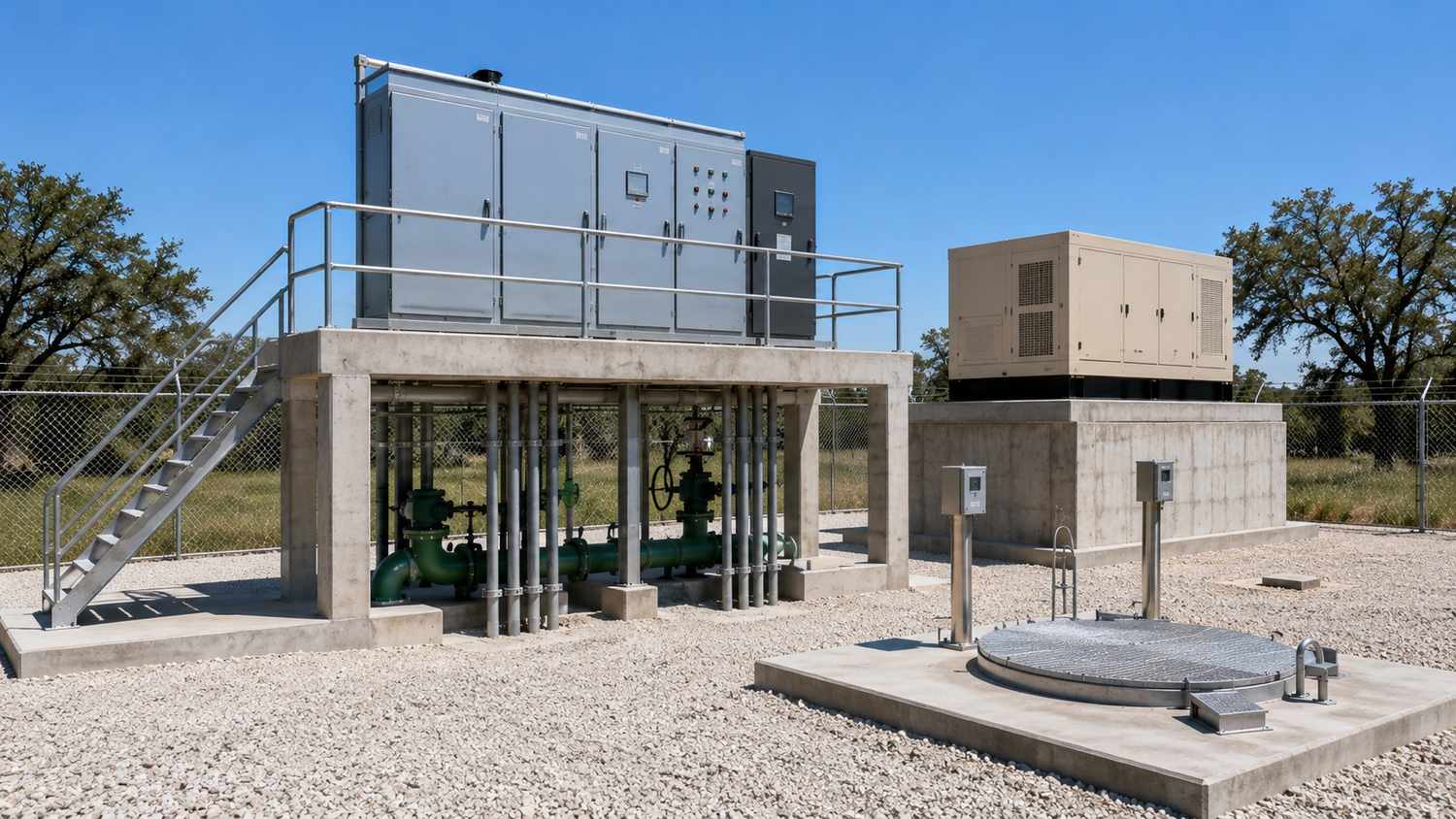
Across the post Harvey assessments of water and wastewater system failures throughout the Houston region, submerged or water damaged electrical equipment was one of the most frequently identified failure points, and it remains one of the most preventable. Motor control centers, variable frequency drives, programmable logic controllers, and telemetry equipment supporting a lift station or treatment plant are often more vulnerable to flood damage than the structural components housing them, since electrical components can be permanently damaged by water exposure that a concrete structure would survive with only cleanup required.
Elevating this equipment above the facility’s design flood protection elevation, which should reflect a conservative assessment of the site’s actual flood risk rather than only the minimum regulatory requirement, is one of the more cost effective resilience measures available, since the incremental cost of mounting control panels and motor control centers on an elevated platform or in an elevated enclosure is modest relative to the operational and compliance cost of losing that equipment during a storm. For facilities in or near Harris County floodplain areas, this elevation requirement should be evaluated using the same detailed floodplain analysis that governs the facility’s overall siting and finished floor elevation.
Backup Power: Sizing, Fuel Supply, and Placement
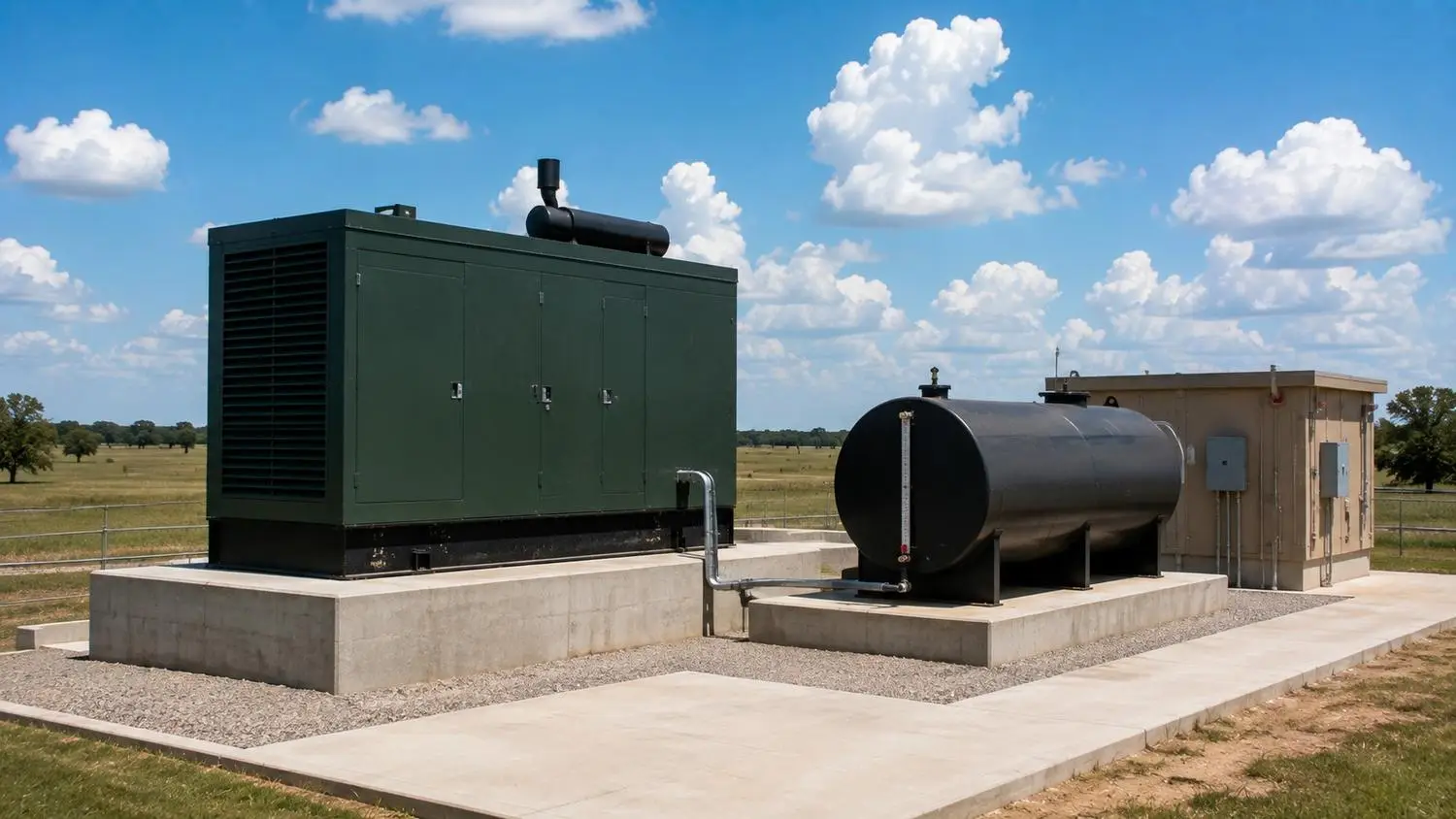
A lift station or treatment plant that loses grid power during a storm event needs backup generation capable of running critical equipment, and this requirement deserves more specific engineering attention than a generic assumption that “a generator” will handle the need. Generator sizing should reflect the facility’s actual critical load requirements, including not just pumps but also any critical control, monitoring, and, for treatment plants, aeration or other process equipment that needs to remain operational to avoid a compliance violation or a public health risk during an extended outage.
Fuel supply planning matters as much as generator sizing, since a generator with an inadequate onsite fuel supply for the realistic duration of a major storm related outage, which for a significant hurricane event in the Houston region can extend well beyond a day or two, is only a partial solution. Facilities should evaluate onsite fuel storage capacity against a realistic worst case outage duration, and where fuel delivery during an active storm event is uncertain due to road conditions or fuel supplier capacity constraints across a broader affected region, larger onsite storage or a contracted priority fuel delivery arrangement should be considered part of the resilience plan rather than an afterthought.
Generator placement itself needs to account for the same flood risk affecting the rest of the facility. A generator sited at grade in a flood prone location provides no real backup power benefit if it floods at the same time the primary power supply is lost, which is precisely the scenario a hurricane or major storm event creates. Elevating the generator, or siting it on higher ground within the facility’s property, protects the resilience measure itself from the same flood risk it’s meant to protect against.
Floodproofing Structures and Wind Driven Rain Protection
Floodproofing a treatment plant or lift station structure involves more than meeting a minimum finished floor elevation requirement. It includes evaluating whether structure openings, doors, vents, and penetrations are adequately sealed or protected against both direct floodwater intrusion and the wind driven rain intrusion that hurricanes and tropical storms produce even in areas that don’t experience direct floodwater contact with the structure. Wind-driven rain during a hurricane can force significant water intrusion through openings that would be adequate under normal rainfall conditions, and facilities in the direct path of a hurricane’s strongest winds should have this specific vulnerability addressed in the structural and architectural design, not just the flood elevation design.
Backflow prevention on drainage and sewer connections into a treatment plant or lift station structure, similar in principle to the cross connection control required for reclaimed water systems, but focused here on preventing floodwater or surcharged sewer flow from backing into the facility through connections designed to carry flow away from it, is another floodproofing detail that deserves specific engineering attention for facilities in flood prone locations.
Wet Well Protection and Force Main Reliability
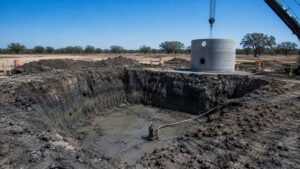
Lift station wet wells, already subject to buoyancy and flotation design considerations in Houston’s high groundwater conditions, need this same structural attention extended specifically to storm event conditions, when groundwater elevation and potentially surface floodwater levels around the structure reach their highest levels of the year. A wet well designed adequately for typical high groundwater conditions but not specifically evaluated against the flood elevation the site could experience during a major storm event carries a flotation risk that’s specifically a storm event risk, separate from the routine high groundwater condition the facility’s standard buoyancy design addresses.
Force main reliability during and after storm events depends on both the pipe and appurtenance design addressing the corrosion and soil movement considerations already relevant to Houston area force mains generally, and on the force main’s routing avoiding areas where storm-driven erosion, scour, or soil saturation could compromise pipe support or expose the pipe to damage during an extreme event. Force mains crossing drainage features or floodplain areas should be evaluated specifically for this storm event vulnerability, with pipe burial depth, bedding, and any necessary erosion protection measures at crossing points designed for the flood conditions those specific locations could experience during a major event, not just for routine operating conditions.
Treatment Plant Siting and Storage Tank Protection
Treatment plant siting decisions, already shaped by the floodplain and detention coordination discussed for Harris County developments generally, should specifically incorporate a storm event lens that goes beyond the routine floodplain mapping analysis, since a treatment plant’s continued operation through and immediately after a major storm event is a higher-stakes requirement than simply avoiding routine flood damage. Storage tanks, whether for treated water, chemicals, or other process needs, require their own flood protection evaluation, including anchoring adequate to resist buoyant uplift or wind loading during a storm event, and containment or secondary protection measures adequate to prevent tank contents from creating an environmental hazard if the tank or its containment is compromised during flooding.
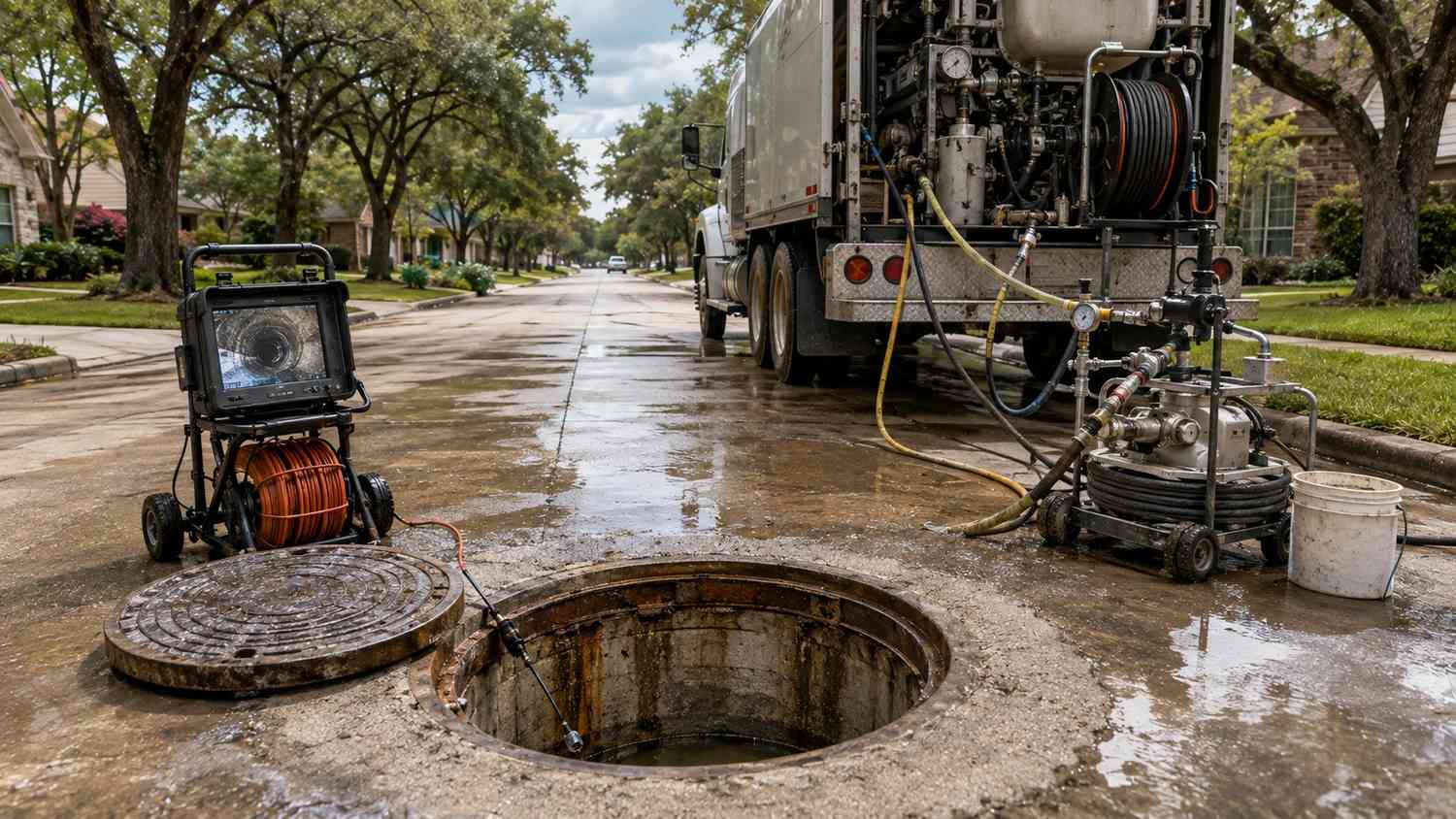
Inflow and Infiltration Reduction as a Storm Resilience Measure
Inflow and infiltration, extraneous stormwater and groundwater entering a sanitary sewer collection system through defective pipe joints, manhole covers, or illegal stormwater connections, becomes a particularly acute problem during major storm events, when heavy rainfall can overwhelm a collection system’s capacity with extraneous flow that has nothing to do with the actual sanitary wastewater the system was designed to convey. A collection system with significant inflow and infiltration problems can experience sanitary sewer overflows during storm events even when the actual sanitary wastewater generation hasn’t changed, purely because stormwater entering the system through defects consumes the collection system’s and the treatment plant’s available capacity.
Reducing inflow and infiltration through proper manhole sealing, pipe joint integrity, and eliminating illegal stormwater connections into the sanitary sewer system is both a routine system maintenance priority and a specific storm resilience measure, since a collection system with well controlled inflow and infiltration retains more of its designed capacity for actual wastewater conveyance during the heavy rainfall events that accompany hurricanes and tropical storms, reducing the likelihood of overflow events that create both environmental compliance violations and public health risk.
Emergency Access and Response Planning
Physical access to critical water and wastewater facilities during and immediately after a storm event, addressed at the design level through access road elevation and drainage crossing resilience, needs to be paired with an operational emergency response plan addressing how facility operators will actually reach and manage critical facilities when road conditions, fuel availability, and personnel availability may all be constrained simultaneously during a regional storm event. This planning should identify critical facilities requiring priority attention, establish realistic staffing and response expectations given the operator’s actual capacity during a major regional event, and coordinate with the broader emergency response framework the developer, MUD, or municipality has in place for the community the infrastructure serves.
Frequently Asked Questions
How much does incorporating these flood resilience measures typically add to a new lift station or treatment plant’s construction cost?
The incremental cost varies depending on the facility’s specific flood risk and which measures are most relevant to its particular site, but measures like elevating electrical equipment, properly sizing and siting backup generation, and floodproofing structural openings are generally modest relative to total facility construction cost when designed in from the outset. These costs increase substantially when resilience measures are added as retrofits after a facility has already experienced a failure, which is the scenario this article is intended to help developers avoid by addressing resilience during initial design rather than after a storm event demonstrates the need.Is there a specific Houston area regulatory requirement mandating these resilience measures, or is this discretionary design practice?
Requirements vary depending on the specific facility type, its location relative to mapped floodplains, and the specific municipality or utility district’s own design standards, some of which have been updated since Hurricane Harvey to require more stringent resilience measures than were previously standard. Even where a specific measure isn’t strictly mandated by current regulation, the operational, compliance, and asset value risks described in this article provide a strong independent rationale for incorporating these measures regardless of the minimum regulatory floor, since regulatory minimums don’t always keep pace with the actual flood risk a specific site faces.Our project is inland from the coast and not in a mapped floodplain. Do these resilience considerations still apply to us?
Houston area flooding during major storm events, including significant flooding during Hurricane Harvey, occurred well outside mapped floodplain boundaries in numerous locations throughout the region, since mapped floodplains reflect historical and modeled flood conditions that don’t always capture the full range of extreme rainfall scenarios the region can experience. A site outside a mapped floodplain still benefits from a realistic, site specific flood risk evaluation rather than relying solely on floodplain map status to determine whether resilience measures are warranted, particularly given the well documented pattern of extreme rainfall events exceeding historical mapping assumptions throughout the Houston region in recent years.Related Resources
- Harris County Flood Control Requirements and Your Wastewater System: How Detention Design Affects Treatment Plant Siting
- Lift Station Design in Houston’s High Groundwater Zones: Why Standard Specs Fail in Clay Heavy Soils
- Municipal Utility Districts in Houston Suburbs: When to Form One and When to Use a Developer Owned Treatment Plant Instead
- Wastewater Engineering for Houston’s Coastal Industrial Zone: TPDES vs. TCEQ Underground Injection in Harris and Galveston Counties
Evaluating Flood Resilience for a Houston Area Water or Wastewater System?
MES works with Houston area developers, utility districts, municipalities, and public works teams to evaluate flood risk, design resilient lift stations and treatment plants, coordinate backup power and floodproofing measures, reduce inflow and infiltration, and build infrastructure that keeps operating through the storm events this region will continue to experience.
We specialize in:
- Flood risk evaluation and resilient design for lift stations, treatment plants, and collection systems in the Houston region
- Backup power sizing, generator siting, and fuel supply planning for critical wastewater infrastructure
- Floodproofing design for structures, electrical equipment, and storage tanks in flood prone Texas locations
- Inflow and infiltration reduction strategies to protect collection system and treatment plant capacity during storm events
- Emergency access and response planning coordination for water and wastewater facilities in storm exposed areas
- Post storm infrastructure assessment and resilience retrofit design for existing Houston area water and wastewater systems
Modern Engineering Solutions, Houston, Texas. Contact: (214) 833-6748 or mod-eng.com