
Blog
Water Reuse for Austin Area Golf Courses and HOA Irrigation: How Chapter 210 Creates a Revenue Stream
Water reuse for Austin golf courses and HOA common areas under Chapter 210 replaces potable irrigation water, but it never replaces the plant's own permit.
Quick answer
Water reuse for Austin golf courses and HOA common areas is mostly a way to stop buying potable water for irrigation. Under 30 TAC Chapter 210, treated domestic wastewater can replace drinking water on fairways, parks and common areas, and the owner of the system can charge users a rate that recovers its cost.
It does not replace the treatment plant's own permit, and demand can stop at any time. Plan the reuse system, storage and agreements with the plant, not after it.
What does Chapter 210 allow for golf courses and HOA common areas?
Irrigation with treated domestic wastewater in place of potable water. 30 TAC §210.3 defines reclaimed water as domestic or municipal wastewater treated to a quality suitable for a beneficial use. A beneficial use is one that "takes the place of potable and/or raw water that could otherwise be needed from another source."
§210.32 names the uses. Golf courses, public parks, residential landscape irrigation and impoundments are all on the list, sorted into Type I and Type II by how likely the public is to touch the water.
Is reclaimed water a revenue stream or a cost saving?
For most master-planned communities, a cost saving with cost recovery. The golf course and HOA stop buying potable water at potable rates for irrigation. The entity that owns the reuse system, often a utility district, charges them a reclaimed water rate that can recover the system's capital and operating cost over time. That is real value, but it is rarely a profit center.
Drought adds to it. The City of Austin's drought page says city parks and golf courses irrigated with reclaimed water are "not subject to restrictions." Other utilities write their own drought plans, so check the one that serves your site.
The limit is demand. Under §210.7, reclaimed water moves "on a demand only basis," and a user may refuse delivery at any time. Plan as if the course will take less water in a wet month, because it will.
Does reuse replace the plant's discharge or land application permit?
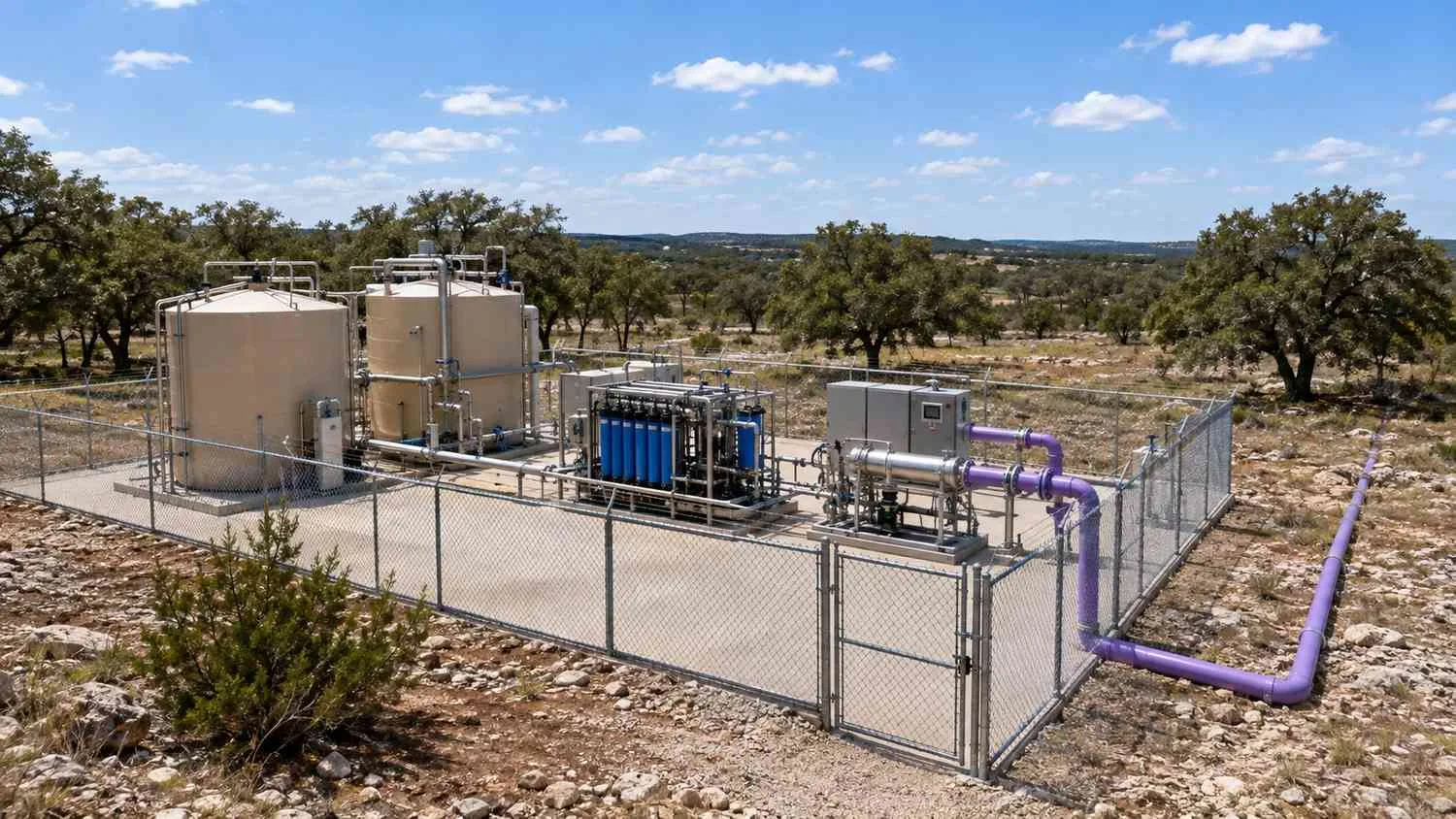
No. Under §210.2(e), a producer of reclaimed water must obtain a TPDES permit, a Texas Land Application Permit (TLAP) or a Chapter 321, Subchapter P authorization before building and operating the treatment facility. The plant still needs somewhere to send water on days the course does not want it.
Section 210.2(d) works the other way: a reuse project approved under Chapter 210 does not need a new or amended discharge permit, except as §210.5 provides. So reuse is usually added to a permitted plant, not a substitute for the permit.
Watch one line. Under §210.1(b), Chapter 210 does not apply to irrigation that a water quality permit authorizes as its method of disposal. If the golf course is your TLAP's disposal field, the TLAP governs it. Our post on Texas land application permits covers that route.
Does a golf course need Type I or Type II water?
It depends on whether the public is there when you irrigate. Section 210.32 lists "golf courses with unrestricted public access" as a Type I use. It also allows Type II on a course that is not used by the public while irrigation runs, such as fairways watered at night, and allows Type II syringing of greens with hand-held hoses.
Irrigation at homes and public parks is Type I, and so are HOA common areas where residents may be present while irrigation runs. An amenity lake is Type I if wading or fishing is anticipated, and Type II if direct contact is not likely.
The choice drives the plant. Section 210.33 sets separate 30-day average quality limits for each type, and §210.34 requires sampling twice a week for Type I and once a week for Type II. Decide the type before the treatment train is designed.
How do you handle the seasonal mismatch?
With storage, a broad demand base and a disposal path for the surplus. A community makes wastewater at a fairly steady rate. Irrigation demand peaks in summer and falls off in winter, and early phases may not produce enough water for a full course.
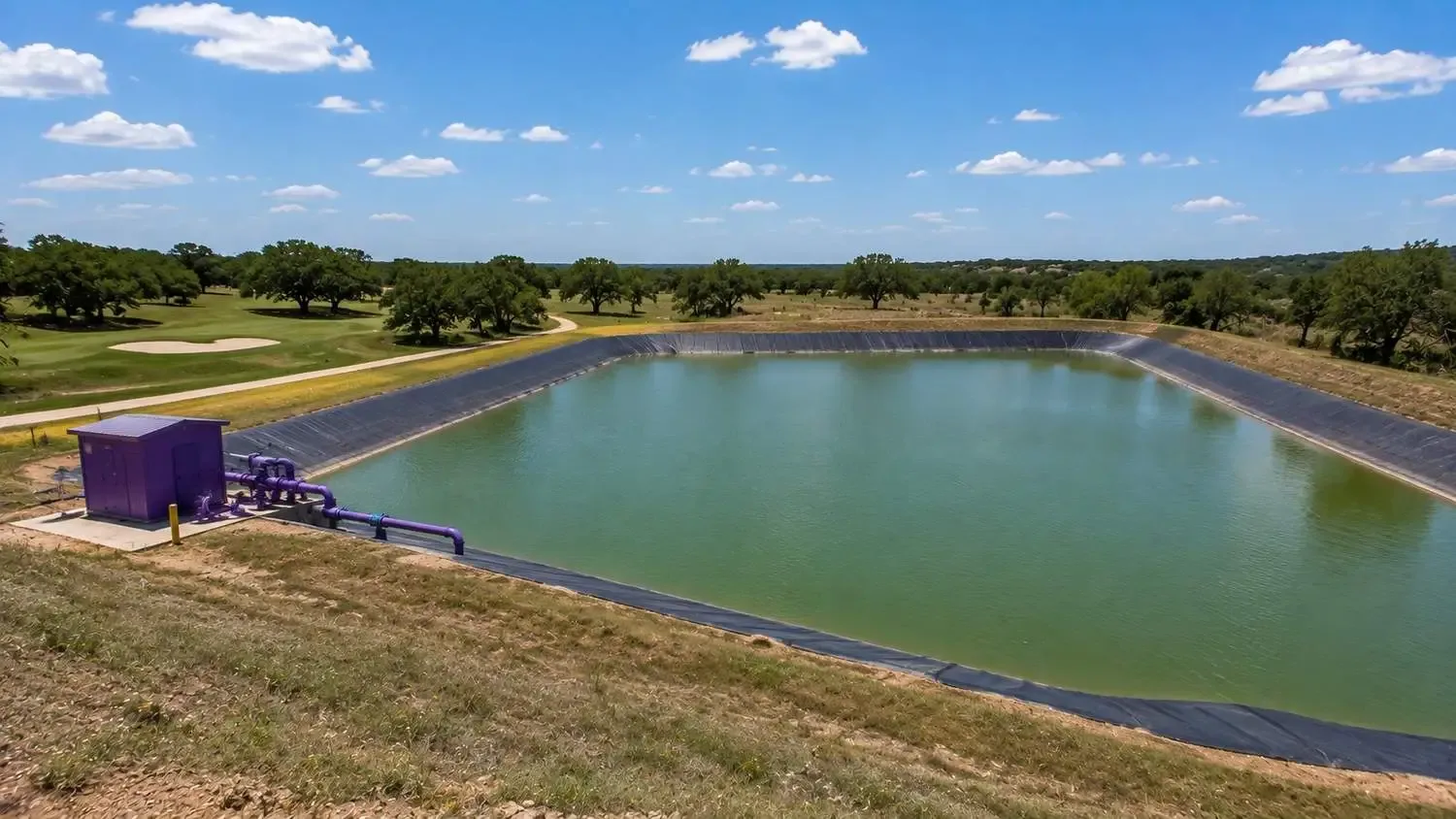
A seasonal water balance for the actual irrigated acreage and local weather sets the storage volume. Chapter 210 then shapes the ponds:
- no storage in the floodway, except authorized on-channel ponds (§210.23(a));
- lined initial holding ponds with a professional engineer's certification, and stricter liners over the Edwards Aquifer recharge zone (§210.23(b) to (d));
- no pond discharge except from rainfall events or under a permit, with written reports of an overflow within five working days (§210.22(e)).
Irrigation inside the Edwards Aquifer recharge zone also needs plans approved under Chapter 213 before construction (§210.4(d)), which matters across parts of the Austin area.
What does the distribution system need?
A separate, purple, clearly labeled network. §210.25 sets the basics:
- buried pipe manufactured purple, painted purple, wrapped in purple metallic tape or bagged in purple;
- at least nine feet of horizontal separation from potable water lines, or the Chapter 290 separation rules where that cannot be met;
- purple hose bibs that cannot take a standard hose, in locked vaults or tool-operated boxes;
- signs of at least eight by eight inches reading "Reclaimed Water, Do Not Drink" in English and Spanish, or a secured area;
- pressure pipe and fittings rated for at least 150 psi of working pressure.
Laying this network with the potable and irrigation lines during site development is far easier than adding it later.
Who signs what before water flows?
The provider notifies TCEQ and gets written approval first. Under §210.4(a), the notification describes the use and includes a binding agreement that tells each user its duties, the provider's authority to cut off misuse, and an operation and maintenance plan covering cross-connections, access, monitoring and failures.
A municipal utility district often takes the provider role, so one entity outlasts the developer. Under §210.36, the provider and user keep records for five years, and the provider or producer reports volume and quality to TCEQ monthly, by the 20th.
Before you commit, answer each question yes or no. Any no needs work with your engineer:
- Do you know which areas are Type I and which could be Type II?
- Does the plant have, or will it have, a TPDES permit, TLAP or Subchapter P authorization?
- Is any planned irrigation the permit's disposal method rather than Chapter 210 reuse?
- Has a seasonal water balance sized the storage for your acreage and phasing?
- Do you know whether the site is over the Edwards Aquifer recharge zone?
- Is it settled who will be the provider and sign the user agreements?
This is general education on 30 TAC Chapter 210 and the City of Austin's drought guidance as published in October 2026, not advice on a specific community. TCEQ and your utility decide each project, so confirm the rules with your engineer before design.
Frequently asked questions
Do Austin watering restrictions apply to reclaimed water?
The City of Austin says its parks and golf courses irrigated with reclaimed water are not subject to its restrictions. Other cities, utility districts and water suppliers set their own drought plans, so read the plan that covers your site.
Can a golf course use Type II reclaimed water?
Yes, where the public is not present while irrigation runs, for example fairways irrigated at night. Greens may be syringed with Type II water by hand-held hose. A course with unrestricted public access during irrigation needs Type I.
I'm on an HOA board in a Travis County community whose utility district runs a small treatment plant. Could we irrigate our common areas with its effluent instead of potable water?
Possibly. The district, as provider, would notify TCEQ and get written approval under §210.4, and the HOA would sign a user agreement. Common areas the public uses are a Type I use, so the plant must meet Type I quality.
I'm developing a master-planned community near Austin with an 18-hole course. Can the course be our TLAP disposal area and Chapter 210 reuse at the same time?
Not for the same irrigation. Section 210.1(b) says Chapter 210 does not apply to irrigation a water quality permit authorizes as disposal. Decide which role the course plays, and size the permit and the reuse system accordingly.
Related resources
- Texas Chapter 210 Reclaimed Water Permits: Type I vs. Type II and When You Need One
- How to Size a Wastewater Storage Reservoir for a Texas Reuse Project
- Edwards Aquifer Recharge Zone Development: What Austin Area Developers Must Do Differently for Wastewater
- Chapter 210 Reclaimed Water: What Texas Developers Need to Know About Water Reuse
Planning reclaimed water for a golf course or HOA near Austin?
We match the reuse type, storage and distribution to the plant's permit early, so the irrigation supply works in a wet month and a drought.
We specialize in:
- Chapter 210 reclaimed water systems
- TCEQ wastewater permitting, including TPDES and TLAP
- Wastewater treatment plant design
- Reuse storage and irrigation design
- Reclaimed water distribution design
- Utility planning for master-planned communities
Modern Engineering Solutions, McKinney, Texas. Contact: (214) 833-6748 or mod-eng.com
Talk to an engineer
Tell us about your project
An engineer reads it
Not a salesperson. Someone who can tell you whether the pathway is real.
You get a first answer
Your options, the agencies involved and the questions that decide cost and schedule.
You decide
No commitment to have the first call.
Prefer the phone? (214) 833-6748