
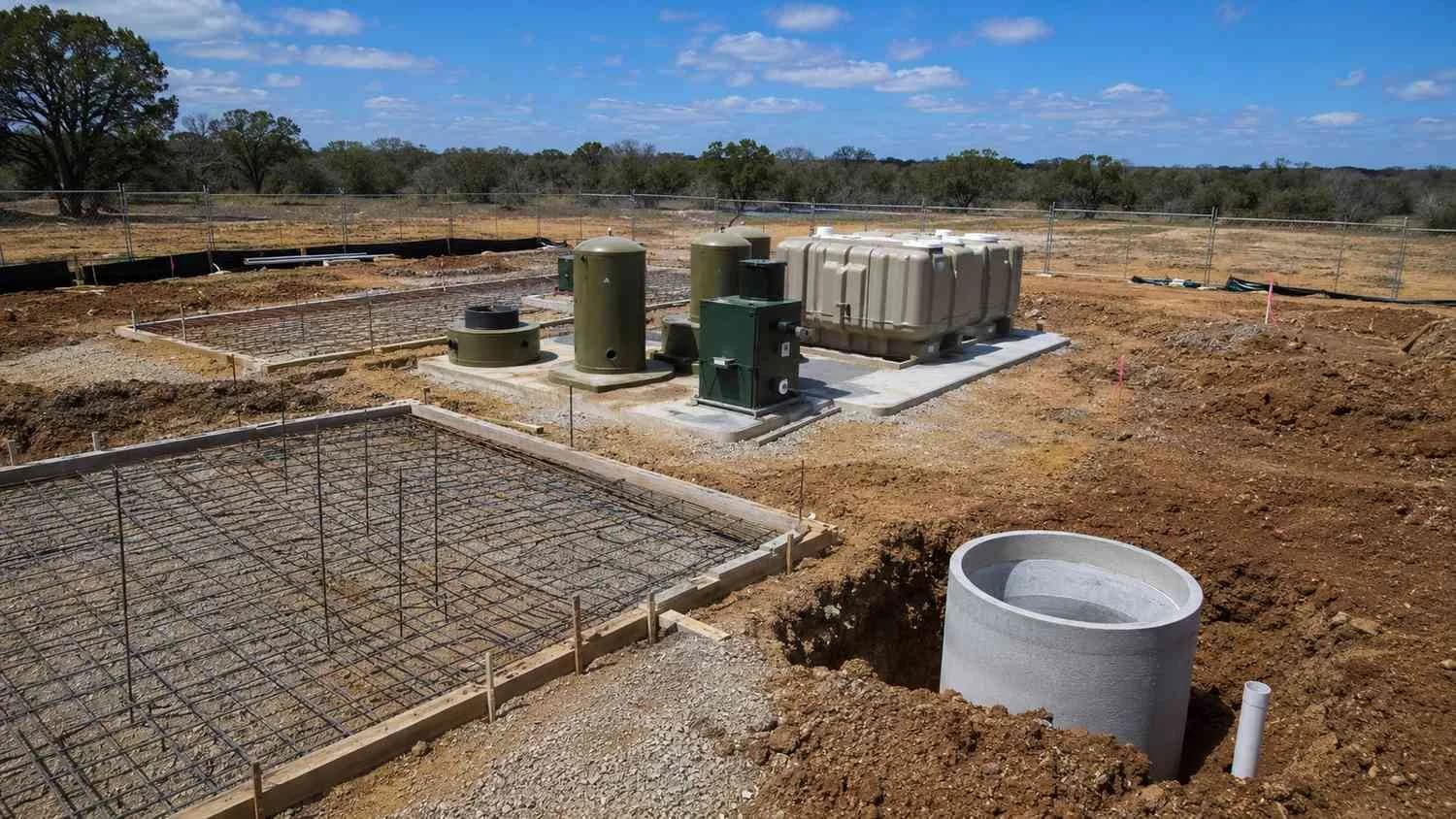
Blog
I-35 Corridor Development Wastewater Feasibility: How to Avoid the Most Common TCEQ Errors in Hays County
Hays County wastewater projects stall at TCEQ from the same eight avoidable errors. Learn what to fix before you submit your application.
Quick Answer
Wastewater feasibility for a Hays County or I-35 corridor development depends on confirming, early and specifically, whether municipal sewer service is realistically available given the utility’s current capacity and the site’s distance and elevation relative to the nearest connection point, or whether the project needs to be built around a private wastewater treatment plant permitted under a TPDES or TLAP permit. The most common reason Hays County projects face TCEQ delays is submitting a permit application built on assumptions rather than site specific technical analysis, including flow projections that don’t match the actual proposed development program, receiving water evaluations that don’t adequately characterize the specific stream segment’s assimilative capacity, and disposal or land application acreage calculations that don’t hold up under TCEQ’s technical review. Developers who invest in a thorough, site specific feasibility analysis before submitting an application consistently move through TCEQ review faster than developers who submit a generic application and respond to deficiency letters as they arrive.
Why Hays County and the I-35 Corridor Present a Distinct Set of Wastewater Challenges
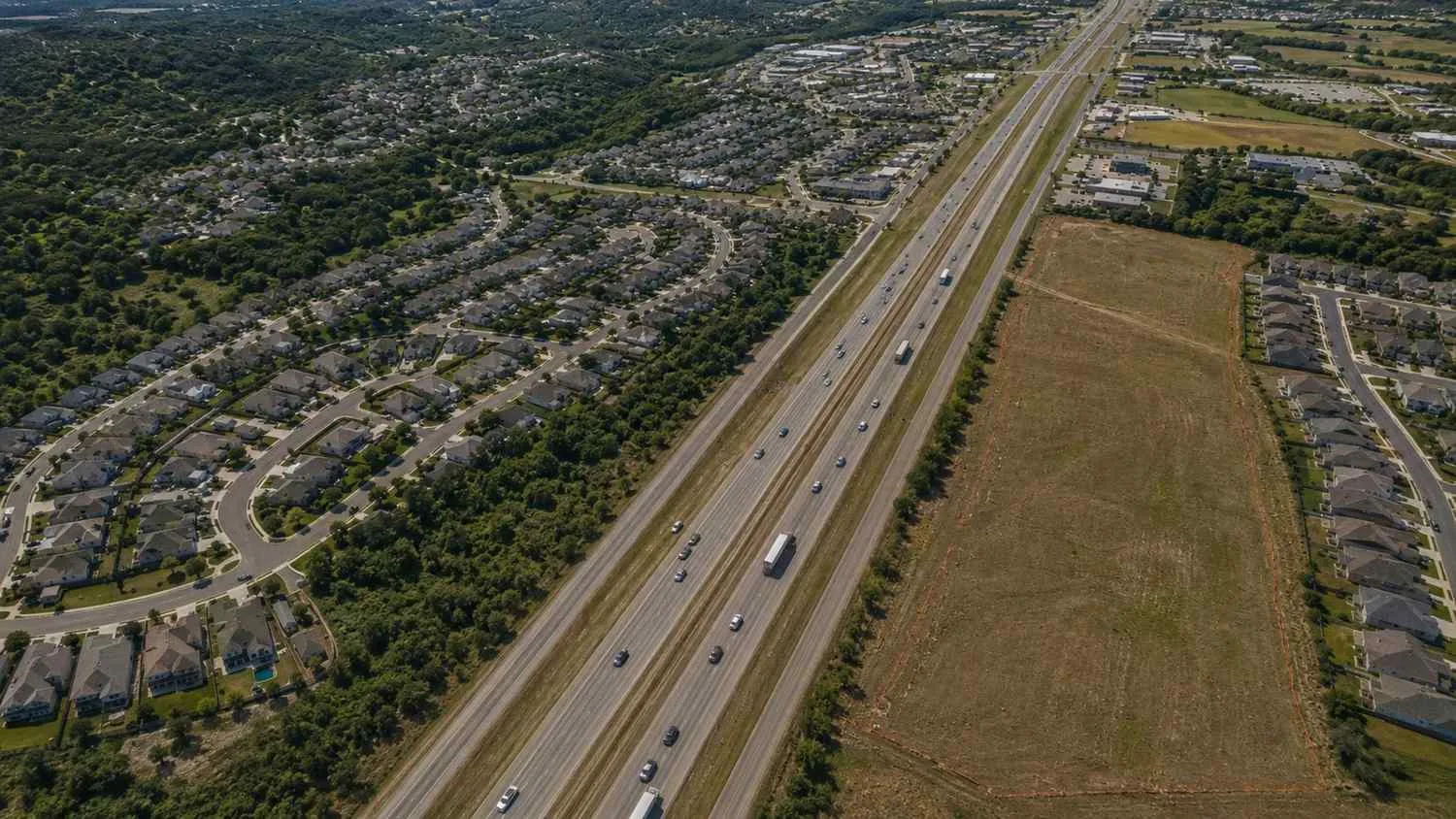
Hays County’s population growth over the past decade has outpaced the wastewater infrastructure investment that most of the county’s smaller municipalities and utility districts had planned for, which means a meaningful share of new development in the county is occurring in areas where municipal sewer capacity is already constrained or where the nearest available connection point is a significant distance from the proposed site. The county’s topography, transitioning from the relatively flat Blackland Prairie terrain east of I-35 to the more rugged Hill Country terrain to the west, adds elevation and slope considerations to sewer extension feasibility that don’t apply uniformly across the corridor, and portions of the county overlap with the Edwards Aquifer’s recharge and contributing zones, layering additional TCEQ Edwards Aquifer Rules requirements onto projects in those specific areas.
The corridor’s ETJ patchwork compounds these physical constraints. Development along I-35 in Hays County falls within a mix of ETJ areas belonging to Austin, San Marcos, Kyle, Buda, and other municipalities, along with unincorporated county land outside any ETJ, and CCN service areas held by a range of utility districts and water supply corporations. A developer evaluating a specific parcel needs to confirm not just whether municipal sewer is physically nearby, but which entity actually has jurisdiction and CCN authority to serve that specific location, since the answer determines which utility’s capacity, capital plan, and willingness to extend service actually governs the project’s feasibility.
Common TCEQ Error One: Weak or Generic Flow Assumptions
The foundation of any wastewater permit application, whether a TPDES discharge permit or a TLAP land application permit, is the projected wastewater flow the facility will need to treat and dispose of, and this projection needs to be calculated from the actual proposed development program, not from a generic per acre or per unit flow factor pulled from a different project or a rule of thumb that doesn’t account for the specific unit mix, commercial component, or industrial process water the project will generate. TCEQ reviewers evaluate flow projections against the supporting design calculations submitted with the application, and a flow projection that appears to be a rough estimate rather than a defensible calculation tied to specific fixture counts, unit types, and applicable design flow factors from TCEQ’s own design criteria is one of the most common triggers for a request for additional information that stalls application review.
For phased developments, which describes the large majority of Hays County and I-35 corridor master planned communities, the flow projection needs to address not just the full build out condition but the flow at each phase of development, since a treatment facility or land application system permitted for full build-out flow may operate very differently, and in some cases less effectively, at the lower flow rates typical of early development phases. TCEQ reviewers increasingly expect phased flow projections to be addressed explicitly in the application rather than left for the applicant to explain informally if a reviewer asks about it later.
Common TCEQ Error Two: Incomplete Wastewater Feasibility Analysis Submitted Too Early or Too Late
A wastewater feasibility analysis performed too early, before the development program is sufficiently defined, produces a generic feasibility conclusion that doesn’t hold up when the actual application is prepared with a more specific and often different development program than the feasibility analysis assumed. A feasibility analysis performed too late, after a purchase has closed and a subdivision layout has already been finalized, removes the developer’s ability to adjust the project based on what the feasibility analysis reveals, converting what should have been a decision-support tool into a post-hoc justification exercise for a decision already made.
The right timing for a wastewater feasibility analysis is during the due diligence period before land acquisition closes, using a development program specific enough to produce meaningful flow projections and disposal or discharge strategy conclusions, but with enough flexibility remaining in the project’s design that the feasibility findings can still influence the site plan, phasing, and financial model if the findings indicate a different wastewater strategy than the developer initially assumed. This is the same discipline that applies to Central Texas ETJ and recharge zone wastewater planning generally, but it deserves particular emphasis in Hays County given how frequently the actual feasible wastewater strategy for a specific site diverges from the developer’s initial assumption based on general knowledge of the corridor.
Common TCEQ Error Three: Poor Receiving Water Evaluation for TPDES Applications
For developments pursuing a TPDES discharge permit, the receiving water evaluation is one of the most technically demanding components of the application and one of the most common sources of TCEQ deficiency requests when done inadequately. TCEQ requires an evaluation of the specific receiving stream segment’s flow characteristics, existing water quality, and assimilative capacity for the pollutants the proposed discharge will contain, and a generic evaluation that doesn’t account for the receiving stream’s actual low-flow conditions, which govern the critical design case for most Texas effluent limit calculations, frequently draws a deficiency request asking for more rigorous stream flow and water quality data.
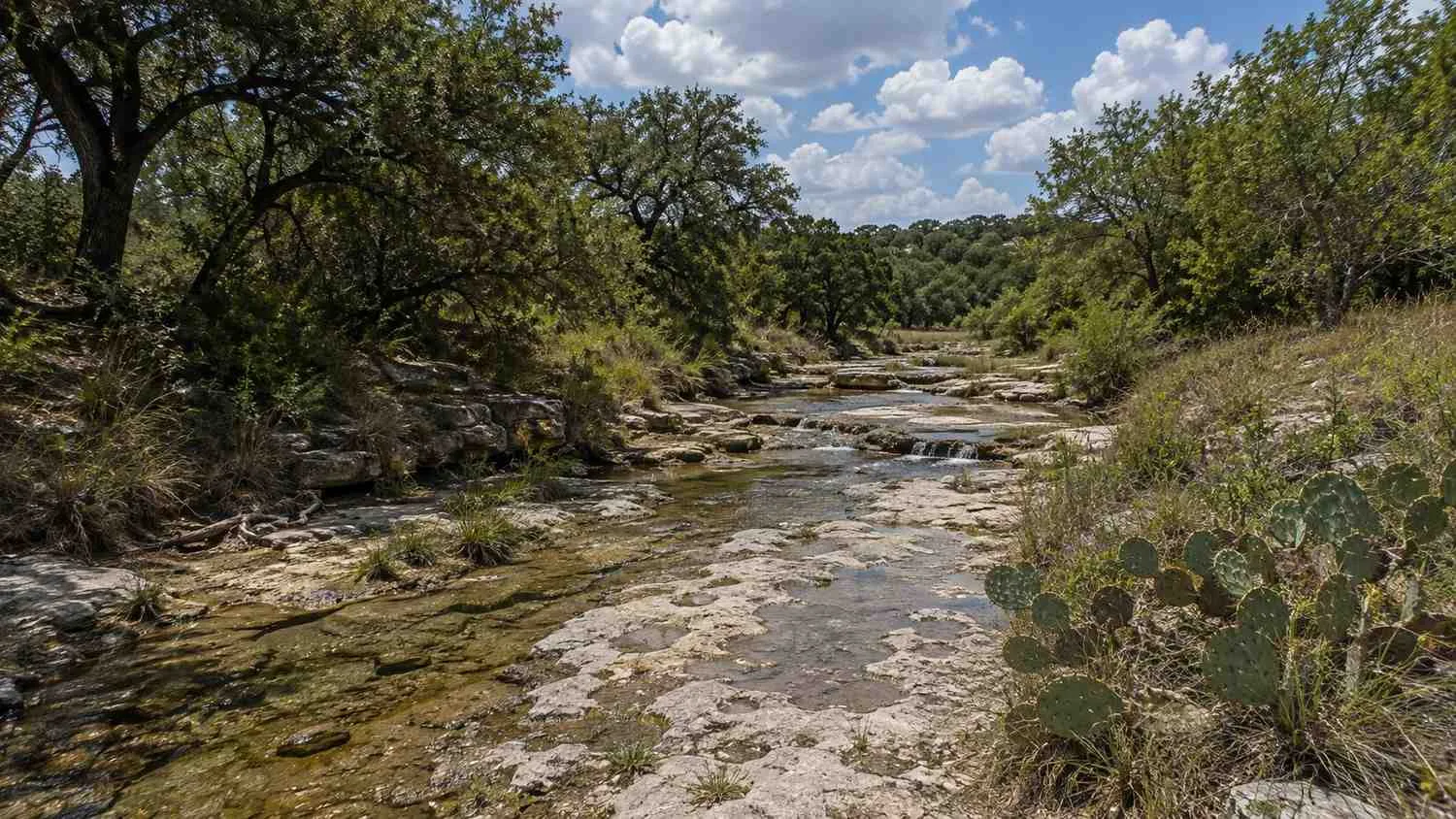
Many I-35 corridor streams in Hays County are intermittent or have limited flow records, which makes the receiving water evaluation more technically complex than it would be for a discharge to a larger, well-documented river system. Developers should expect that a TPDES application involving a smaller or intermittent receiving stream in this corridor will require more extensive supporting technical work, potentially including a site specific flow study, than a comparable application for a discharge to a major river, and should plan the application timeline and engineering scope accordingly rather than assuming a standard receiving water evaluation template will be adequate.
Common TCEQ Error Four: Late Operator Planning
Every permitted wastewater treatment facility in Texas requires a licensed wastewater treatment operator responsible for the facility’s day-to-day operation and regulatory compliance, and TCEQ requires operator information as part of permit compliance even though it is not always the first thing a developer thinks about during the permitting process. Developers who wait until a facility is nearing completion to arrange operator coverage frequently find that qualified operators serving their specific area and facility type have limited availability, and starting this search late can create an operational gap between when a facility is ready to begin operating and when qualified operator coverage is actually in place.
Because operator arrangements also affect the facility’s long-term governance structure, particularly for developments where a MUD, HOA, or private utility company will hold ongoing responsibility for the treatment plant, resolving the operator and long-term operations question during the design phase, not after construction is complete, avoids a startup delay that has nothing to do with the treatment technology itself and everything to do with staffing logistics that should have been arranged months earlier.
Common TCEQ Error Five: Missing or Miscalculated Land Application Acreage
For TLAP applications, the disposal field acreage required is calculated based on the projected wastewater flow, the treatment level achieved, and the specific soil and site characteristics of the proposed disposal area, and an underestimated acreage calculation is a common and costly error because it typically isn’t caught until well into TCEQ’s technical review, after the developer has already designed a site plan around an assumed disposal footprint that turns out to be too small for the actual permit requirements. This error is particularly costly in Hays County given how directly disposal field acreage competes with developable lot yield, meaning a miscalculated acreage assumption doesn’t just create a permitting delay, it can force a site plan revision that changes the project’s fundamental economics.
Developers should require that disposal acreage calculations supporting a TLAP application be prepared using site-specific soil data, ideally supported by actual soil testing at the proposed disposal location rather than general soil survey data alone, since TCEQ’s technical review will scrutinize the disposal acreage calculation closely and a calculation based on generalized assumptions is a common source of deficiency requests that could have been avoided with more rigorous upfront site investigation.
Common TCEQ Error Six: Underestimated Lift Station and Force Main Requirements
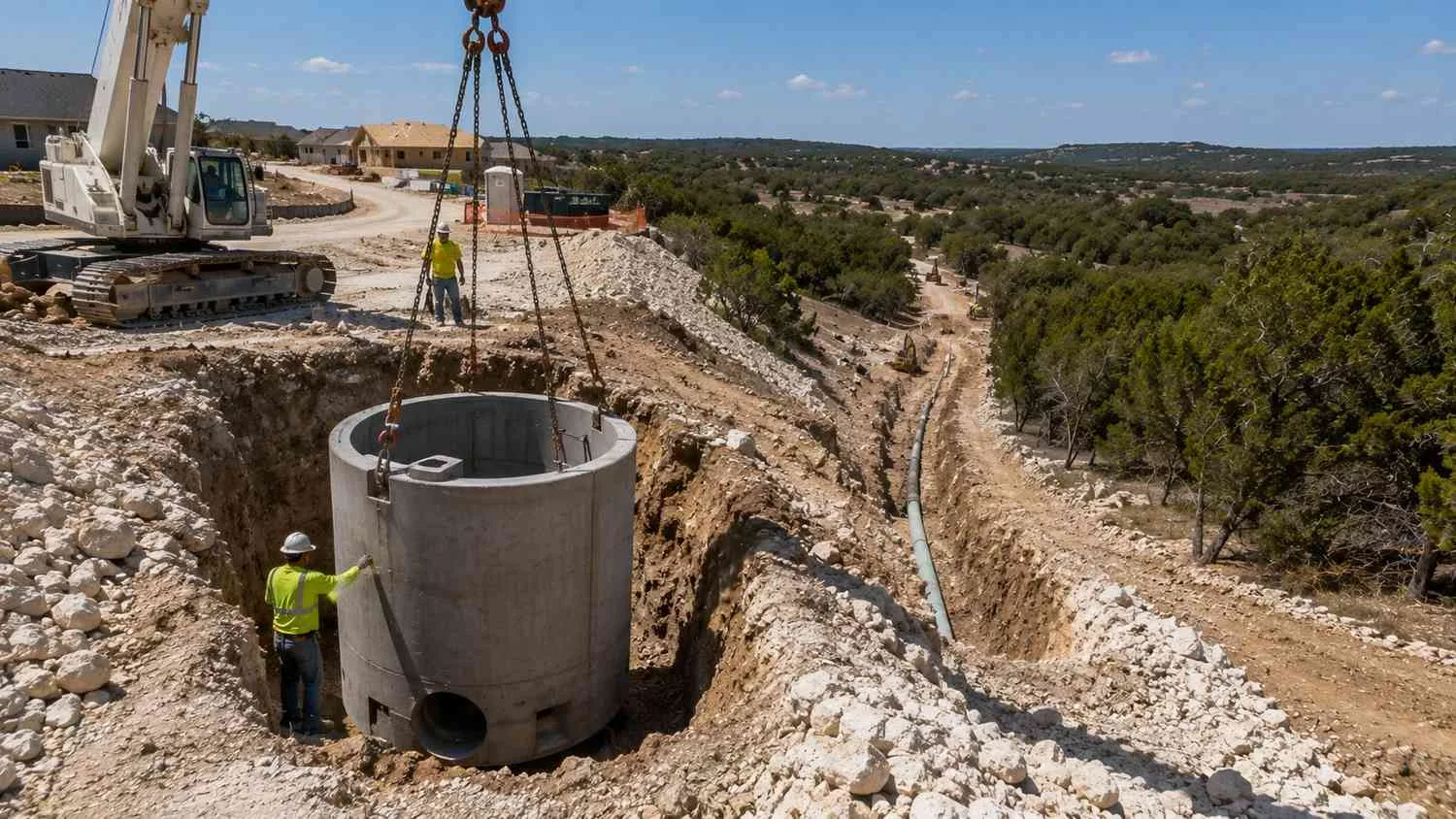
Hays County’s varied topography means that many sewer collection system designs, whether for connection to municipal infrastructure or for internal collection serving a private treatment plant, require lift stations and force mains to move wastewater across elevation changes that gravity flow alone cannot accommodate. Developers who design collection systems based on an optimistic assumption about achievable gravity flow, without a topographic survey confirming actual site elevations and slopes, frequently discover during detailed design that additional lift stations are needed beyond what was originally budgeted, adding both capital cost and operational complexity that wasn’t reflected in the original project pro forma.
A topographic survey and preliminary collection system layout performed during the feasibility phase, before detailed design begins, identifies these requirements early enough that they can be reflected in the project’s budget and schedule rather than discovered as a mid-design surprise.
Common TCEQ Error Seven: Unclear Phasing in the Permit Application
Master planned communities and larger commercial developments in the I-35 corridor are almost always built in phases, and a permit application that doesn’t clearly address how the wastewater treatment and disposal facility will be constructed, operated, and potentially expanded across those phases is a common source of TCEQ review questions. This is particularly relevant for TLAP and TPDES permits where the facility’s design capacity needs to align with the flow that will actually exist at each phase, and where an interim facility sized for early phases needs a clear and technically supported expansion pathway to reach full build-out capacity without requiring an entirely new permit application later.
Addressing phasing explicitly in the original application, including the facility’s initial capacity, the specific triggers or flow thresholds that will prompt expansion, and the engineering approach for that expansion, produces an application that TCEQ reviewers can evaluate more efficiently than one that addresses only the full build-out condition and leaves phasing implementation details unaddressed.
Common TCEQ Error Eight: Incomplete Permit Documentation
The most avoidable category of TCEQ delay is simple documentation incompleteness, applications missing required forms, technical reports that don’t include all the sections TCEQ’s application checklist requires, or supporting calculations that are referenced in the application narrative but not actually included as attachments. TCEQ’s administrative review process checks applications for completeness before technical review even begins, and an incomplete application is typically returned or held for the missing items before the substantive technical review can proceed, adding pure administrative delay on top of whatever technical review timeline the application would otherwise face.
Working from TCEQ’s current application checklist for the specific permit type, and having an experienced engineer review the complete application package against that checklist before submission, is a simple and inexpensive step that prevents a category of delay that has nothing to do with the technical merits of the project and everything to do with administrative thoroughness.
Frequently Asked Questions
How early should we start wastewater feasibility work for a Hays County subdivision, relative to our land closing date?
Wastewater feasibility work should begin as soon as a property is identified as a serious acquisition candidate, ideally with a preliminary feasibility assessment completed before the purchase contract’s due diligence period expires, so the findings can still inform your closing decision, purchase price negotiation, or contract contingencies. For larger master-planned projects, a more detailed feasibility analysis, including preliminary flow projections, receiving water or disposal site evaluation, and topographic assessment, should follow shortly after closing but before the subdivision layout is finalized, so the wastewater strategy can inform the site plan rather than constrain a site plan that’s already been designed around different assumptions.
What’s the realistic TCEQ review timeline for a TLAP or TPDES permit application in Hays County if we avoid the common errors described here?
A technically complete and well-supported application with no significant deficiencies typically moves through TCEQ’s standard review timeline more predictably, though the specific timeline still depends on permit type, application complexity, and whether the application draws public comment or a contested case hearing request. Avoiding the common errors described in this article primarily protects against the additional months that deficiency letters and requests for additional information add to an otherwise standard review timeline, rather than compressing TCEQ’s baseline review process itself, which operates on its own regulatory timeline regardless of application quality.
Our site is in an ETJ area with a municipality that hasn’t committed to extending sewer service. Should we pursue a TCEQ permit for a private facility while that conversation continues?
In many cases, yes, pursuing a private treatment facility feasibility analysis and, if warranted, a permit application in parallel with continued conversation with the municipality is a reasonable risk management approach, since it avoids losing time on private permitting if the municipal conversation ultimately doesn’t produce a service commitment on your project’s timeline. This parallel track approach requires careful coordination so you don’t invest significant capital in private facility construction if a municipal service agreement is reached, but developing the private option to at least the feasibility and preliminary permitting stage protects your schedule against the possibility that municipal service doesn’t materialize as hoped.
Related Resources
- Edwards Aquifer Recharge Zone Development: What Austin-Area Developers Must Do Differently for Wastewater
- LCRA Water Rights and New Development: What You Need to Know Before Breaking Ground East of Austin
- Wastewater Capacity in Fort Worth’s ETJ: What Happens When the City Won’t Annex Your Development
- Land Application Permits in Texas: A Faster Path to Wastewater Approval for Developers
Evaluating Wastewater Feasibility for a Hays County or I-35 Corridor Development?
MES works with developers, land acquisition teams, civil engineers, and project managers along the Austin to San Antonio corridor to prepare defensible flow projections, evaluate receiving water and land application feasibility, coordinate topographic and soils investigation, and build TCEQ-ready permit documentation that avoids the common errors that delay Hays County wastewater projects.
We specialize in:
- Wastewater feasibility analysis and flow projection development for Hays County and I-35 corridor land acquisition due diligence
- TPDES receiving water evaluation and TLAP disposal acreage calculation for Central Texas permit applications
- Topographic and soils investigation supporting lift station, force main, and land application system design
- TCEQ permit documentation preparation and completeness review for Texas wastewater permit applications
- Phased wastewater facility design and permitting strategy for master planned communities and large commercial sites
- Private wastewater treatment plant, TLAP, TPDES, and MUD strategy comparison for Hays County growth corridor developments
Modern Engineering Solutions, McKinney, Texas. Contact: (214) 833-6748 or mod-eng.com
Keep reading
More to read.
Talk to an engineer
Tell us about your project.
An engineer reads it
Not a salesperson. Someone who can tell you whether the pathway is real.
You get a first answer
Your options, the agencies involved and the questions that decide cost and schedule.
You decide
No commitment to have the first call.
Prefer the phone? (214) 833-6748