

Blog
Wastewater Engineering for Houston’s Coastal Industrial Zone: TPDES vs. TCEQ Underground Injection in Harris and Galveston Counties
Harris and Galveston County industrial facilities face a real choice between TPDES discharge and underground injection. Learn which path fits your waste stream.
Quick Answer
TPDES permits authorize direct discharge of treated wastewater to a receiving surface water body, such as the Houston Ship Channel, a bayou, or Galveston Bay, subject to effluent limits calculated from the receiving water’s assimilative capacity and applicable water quality standards, and are generally the more familiar and often faster path for facilities with reasonable access to a receiving water body that has adequate capacity to accept the specific pollutant loading the facility’s wastewater carries. TCEQ authorized underground injection, using a Class I injection well to place treated or pretreated wastewater into a deep, isolated geologic formation far below any usable groundwater, is a disposal method some Houston area coastal industrial facilities pursue when surface discharge faces receiving water capacity constraints, stringent effluent limits that would require extensive treatment investment, or when the facility’s specific waste stream characteristics make injection a more reliable long term disposal method. The right choice for a specific facility depends on wastewater volume and pollutant profile, proximity and capacity of an accessible receiving water, local hydrogeologic conditions suitable for injection, the comparative treatment investment each path requires, and the facility’s tolerance for each path’s respective permitting timeline and long term monitoring obligations.Why Coastal Harris and Galveston County Facilities Face This Choice More Than Most
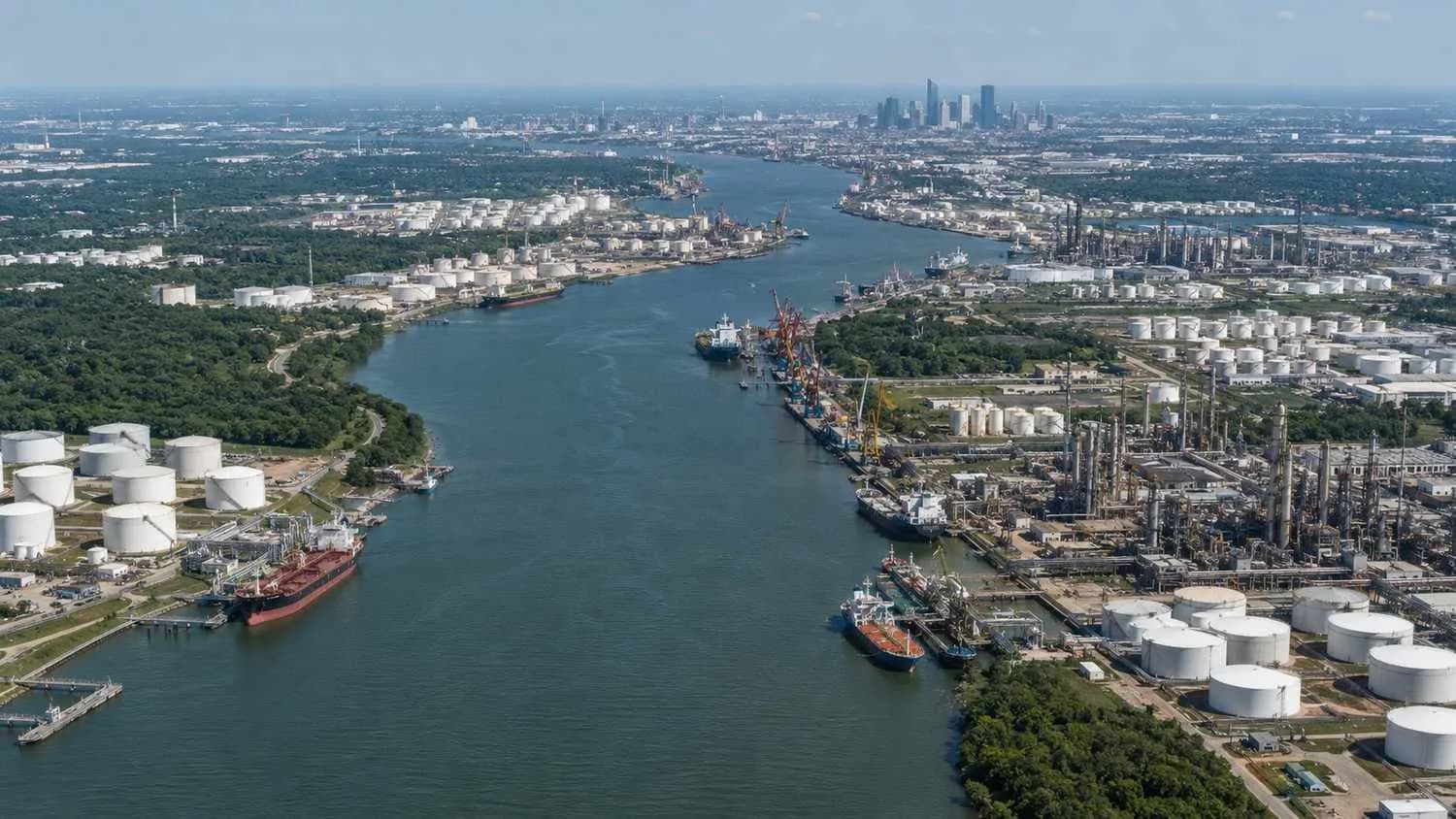
The concentration of petrochemical, refining, and heavy manufacturing facilities along the Houston Ship Channel and throughout the Galveston County industrial corridor creates a wastewater disposal landscape unlike most of Texas, where the vast majority of development, whether municipal, residential, or lighter commercial, defaults toward either municipal sewer connection or a TLAP or TPDES permit sized for domestic strength wastewater. Industrial facilities in this corridor frequently generate process wastewater with pollutant profiles, volumes, and characteristics that domestic wastewater treatment and disposal frameworks were never designed to address, including specific chemical constituents, elevated temperatures, high total dissolved solids, or other characteristics that require industrial specific treatment and disposal evaluation.
The region’s proximity to major surface water bodies, including the Ship Channel itself, San Jacinto River, Galveston Bay, and numerous connecting waterways, gives many facilities at least theoretical surface water discharge access that inland industrial facilities elsewhere in Texas don’t have. At the same time, the region’s specific geology, including the deep sedimentary formations underlying much of the Gulf Coast, has historically supported significant underground injection activity for both industrial wastewater and, separately, oil and gas disposal, giving this corridor an established base of injection well infrastructure, service providers, and TCEQ regulatory familiarity that isn’t equally developed everywhere in the state. Both disposal paths are genuinely viable options for many coastal industrial facilities in a way that isn’t true statewide, which is exactly why the comparative evaluation matters here more than it would in a region where one path is clearly the only realistic option.
Wastewater Characterization: The Starting Point for Either Path
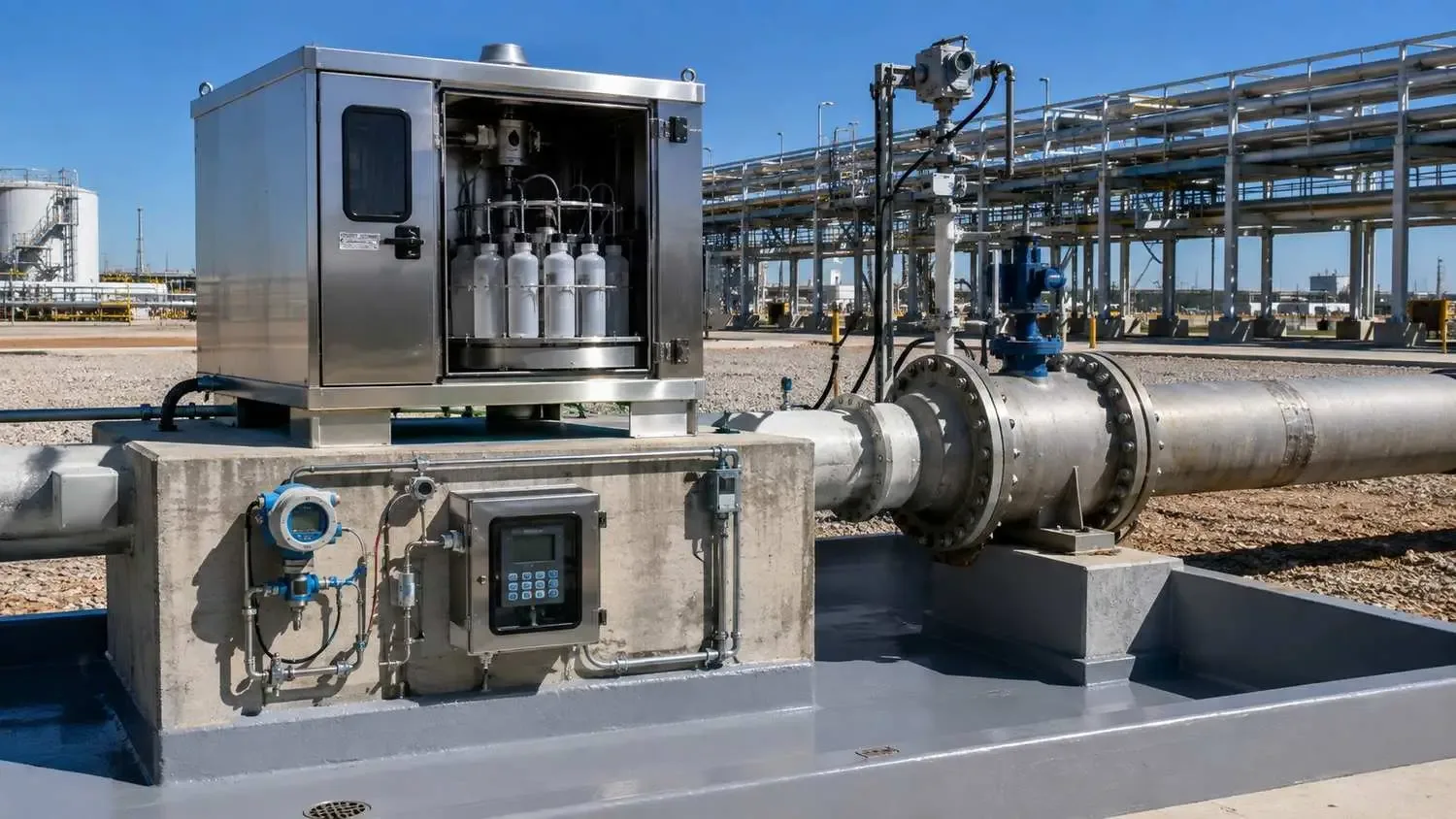
Before a facility can meaningfully evaluate TPDES discharge against underground injection, it needs a thorough and specific characterization of its actual wastewater, including flow volume and its variability across production cycles, the specific pollutant profile including any regulated constituents relevant to the facility’s industry, and physical characteristics like temperature, pH, and total dissolved solids that affect both treatment requirements and disposal method feasibility. This characterization needs to be based on actual representative sampling of the facility’s wastewater streams, not on generic industry averages or a similar facility’s profile, since even facilities within the same industrial sector can have meaningfully different wastewater characteristics based on specific process configuration, feedstock, and production volume.
This characterization work directly drives the comparative evaluation between the two disposal paths, since a wastewater stream with characteristics that a nearby receiving water body’s assimilative capacity can readily accommodate points toward TPDES discharge as the more straightforward path, while a wastewater stream with characteristics that would require extensive treatment to meet the effluent limits a TPDES permit would impose, or that a receiving water’s already-stressed water quality condition makes difficult to permit at all, points toward underground injection as a potentially more practical alternative, assuming the site’s hydrogeology supports it.
TPDES Surface Discharge: Receiving Water Capacity as the Central Constraint
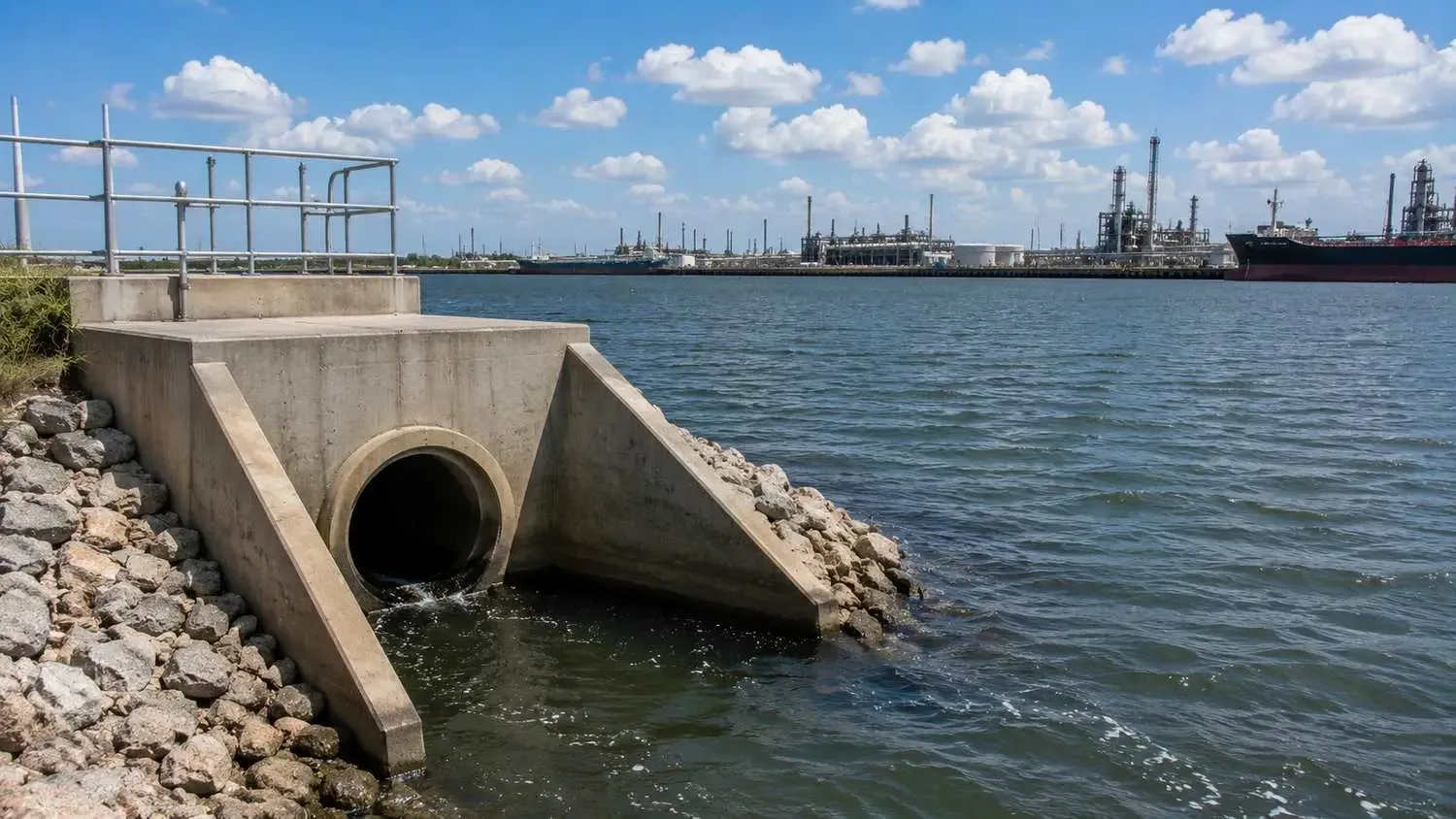
TPDES permitting for an industrial facility follows a similar underlying framework to what governs municipal and land development wastewater discharge, but with additional technical review specific to the facility’s industrial pollutant profile, including technology based effluent limits reflecting the specific treatment technology the facility’s industry category is expected to employ, and water quality based effluent limits calculated from the receiving water’s assimilative capacity for the specific pollutants present in the discharge. For coastal Harris and Galveston County facilities, receiving water evaluation frequently involves already heavily industrialized waterways, including segments of the Ship Channel and connecting waters, where existing water quality conditions and the cumulative loading from numerous other permitted dischargers already using the same receiving water’s assimilative capacity can constrain how much additional pollutant loading a new or expanding facility’s discharge can be permitted to add.
This cumulative loading consideration means that a facility’s TPDES permit application in this corridor may face more stringent effluent limits than a comparable facility discharging to a less heavily used receiving water elsewhere, precisely because TCEQ’s technical review has to account for the receiving water’s total loading from all permitted sources, not just the applicant’s individual discharge in isolation. Facilities evaluating TPDES feasibility should request or independently evaluate available water quality data and existing permitted loading information for their specific receiving water segment early in feasibility planning, since a receiving water already operating near its assimilative capacity limit for a facility’s specific pollutants of concern can materially affect both the achievable effluent limits and the treatment investment required to meet them.
Underground Injection: Hydrogeologic Feasibility and the Class I Well Framework
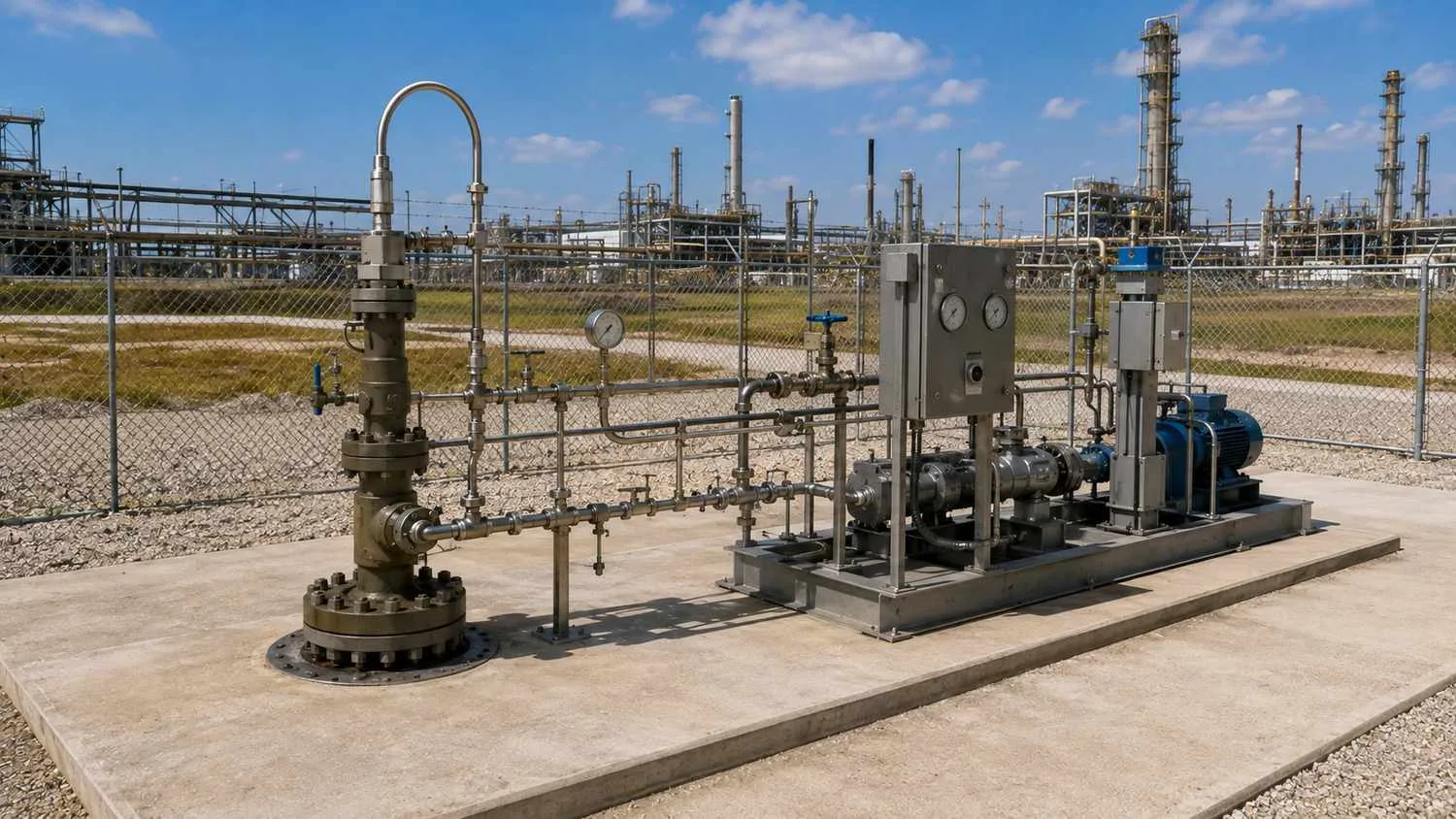
TCEQ authorized Class I underground injection wells are engineered to place wastewater into a deep geologic formation isolated by impermeable confining layers from any usable groundwater or the surface environment, and this disposal method’s feasibility depends fundamentally on the specific site’s hydrogeology, including whether a suitable injection formation with adequate permeability and confinement exists at an accessible depth beneath the facility’s location. Not every Harris or Galveston County site has hydrogeology equally suited to injection well development, and confirming injection feasibility requires a site specific hydrogeologic investigation, including test drilling and formation evaluation, before a facility can reliably commit to this disposal path over surface discharge.
Class I injection well permitting under TCEQ’s Underground Injection Control program requires extensive technical demonstration of the injection formation’s suitability, the well’s construction meeting specific design standards intended to prevent any migration of injected fluid outside the intended formation, and an area of review evaluation identifying any other wells, including oil and gas wells, that penetrate the same formation nearby and could provide a pathway for injected fluid migration if not properly identified and, where necessary, remediated. This technical review is thorough and the associated permitting timeline reflects that thoroughness, often extending longer than a comparable TPDES permit review, particularly for a facility’s first injection well application in a specific area where the hydrogeologic case has to be established from initial site investigation rather than building on an already established local precedent.
Comparing Treatment Investment Between the Two Paths
The pretreatment and treatment investment required before disposal differs meaningfully between the two paths and is one of the more significant factors in the overall cost comparison. TPDES discharge requires treatment adequate to meet the specific effluent limits the permit establishes, which, as discussed, can be quite stringent for a facility discharging to an already heavily loaded receiving water in this corridor, potentially requiring advanced treatment technology to remove specific pollutants to the concentration levels the permit requires. Underground injection generally requires pretreatment adequate to protect the injection well’s mechanical integrity and prevent formation plugging or corrosion, which is a different technical standard than meeting a water quality based surface discharge limit, and in some cases can represent a less extensive treatment investment than would be required to meet stringent surface discharge limits, though this comparison is specific to each facility’s actual wastewater characteristics and cannot be assumed to favor injection universally.
Corrosion protection and material selection for both the treatment system and, for injection wells specifically, the well casing and downhole equipment exposed to the specific wastewater stream’s chemistry over the injection well’s operating life, is a design consideration that affects both capital cost and long-term operational reliability, and should be evaluated specifically for the facility’s actual wastewater chemistry rather than assumed from general injection well design standards that may not account for a particularly aggressive or unusual waste stream.
Long-Term Compliance and Monitoring Obligations
Both disposal paths carry ongoing compliance and monitoring obligations that extend across the facility’s entire operating life, and these long term obligations deserve as much weight in the initial decision as the upfront permitting and treatment investment. TPDES permits require regular effluent monitoring and reporting demonstrating continued compliance with permit limits, along with periodic permit renewal that can reopen effluent limits for revision based on updated water quality standards or changed receiving water conditions, meaning a facility’s disposal strategy under TPDES is subject to some degree of ongoing regulatory evolution risk over a multi decade operating life.
Underground injection wells require their own ongoing mechanical integrity testing and monitoring demonstrating the well continues to perform as designed, with no fluid migration outside the intended injection zone, along with periodic permit renewal and reporting obligations specific to the Underground Injection Control program. Facilities should evaluate which set of ongoing compliance obligations better fits their operational and staffing capacity for long-term regulatory management, since both paths require sustained technical and administrative attention over the facility’s operating life, not simply a one-time permitting effort followed by minimal ongoing obligation.
Disposal Reliability and Redundancy Planning
A facility’s disposal strategy should also account for what happens if the primary disposal method becomes temporarily unavailable, whether due to a mechanical integrity issue requiring an injection well to be taken offline for testing or repair, or a receiving water condition that triggers a temporary discharge restriction under a TPDES permit’s specific provisions. Facilities with continuous production processes that generate wastewater regardless of disposal availability need a credible contingency plan, which might include temporary storage capacity, a backup disposal method, or in some cases redundant injection wells, addressing the operational risk that a single point of disposal failure could otherwise create for a facility that cannot simply halt wastewater generation while a primary disposal method is restored to service.
Frequently Asked Questions
How do we determine early in facility planning whether underground injection is even feasible at our specific site?
A preliminary hydrogeologic feasibility review, ideally performed before significant capital is committed to either disposal strategy, should evaluate existing geologic data for your specific site area, including any available information from nearby existing injection wells or oil and gas wells that have already characterized the local subsurface formations, followed by site-specific test drilling if the preliminary review indicates injection is a plausible option worth pursuing further. This feasibility work should happen in parallel with wastewater characterization and TPDES receiving water evaluation, so your facility can compare both paths on a genuinely informed basis rather than defaulting to whichever option seems more familiar without confirming its actual feasibility for your specific site and waste stream.
Is underground injection generally faster to permit than a TPDES permit for an industrial facility in this corridor?
Not necessarily, and in many cases the opposite is true, particularly for a facility’s first injection well in a given area, where the hydrogeologic investigation and area of review evaluation required to establish the injection formation’s suitability and confirm no nearby well penetrations create a migration risk can extend the overall permitting timeline beyond what a comparable TPDES permit application would require. The relative timeline between the two paths depends heavily on your facility’s specific circumstances, including whether the receiving water for a TPDES application is already well characterized with established effluent limits precedent, versus whether your site’s hydrogeology for an injection well application is well characterized or requires extensive new investigation.
Can a facility pursue both TPDES discharge and underground injection simultaneously as complementary disposal strategies rather than choosing one exclusively?
Yes, and for facilities with substantial or variable wastewater volume, or with different waste streams that have meaningfully different characteristics, a combined strategy using TPDES discharge for one stream and underground injection for another, or using one method as a primary disposal path with the other developed as a redundant backup, can be a reasonable risk management approach. This combined strategy does involve managing two separate permitting processes and two sets of ongoing compliance obligations, which should be weighed against the operational reliability and flexibility benefit the combined approach provides for your specific facility’s wastewater volume and risk tolerance.
Related Resources
- Land Application Permits in Texas: A Faster Path to Wastewater Approval for Developers
- Harris County Flood Control Requirements and Your Wastewater System: How Detention Design Affects Treatment Plant Siting
- Lift Station Design in Houston’s High Groundwater Zones: Why Standard Specs Fail in Clay-Heavy Soils
- Sewage Sludge and Biosolids Land Application Permits in Texas: Rules, Fees, and Common Mistakes
Evaluating Wastewater Disposal Strategy for a Coastal Harris or Galveston County Industrial Facility?
MES works with industrial facilities, manufacturers, and petrochemical operators in the Houston coastal industrial corridor to characterize wastewater streams, evaluate TPDES discharge against underground injection feasibility, assess receiving water and hydrogeologic constraints, compare treatment investment across disposal paths, and build a permitting strategy before equipment or well investment is committed.
We specialize in:
- Wastewater characterization and disposal path feasibility comparison for Harris and Galveston County industrial facilities
- TPDES permit support and receiving water assimilative capacity evaluation for coastal Houston industrial dischargers
- Underground injection well feasibility screening and hydrogeologic coordination for Class I well applications
- Pretreatment and treatment system design comparison across TPDES and underground injection disposal strategies
- Corrosion protection and materials evaluation for industrial wastewater treatment and injection infrastructure
- Long term compliance and disposal reliability planning for continuous process industrial facilities in the Houston corridor
Modern Engineering Solutions, Houston, Texas. Contact: (214) 833-6748 or mod-eng.com
Keep reading
More to read
- Knowing When to Fold: How Kiosk Operators Can Spot a Stalled Permit and Redeploy Before More Design Hours Are Spent
- Still Fixing Your Team's Drawings? How Engineering Leaders Stop Heroic Engineering and Get Their Time Back
- When does a Texas development need a municipal utility district (MUD), and what comes before the TCEQ petition?
Talk to an engineer
Tell us about your project
An engineer reads it
Not a salesperson. Someone who can tell you whether the pathway is real.
You get a first answer
Your options, the agencies involved and the questions that decide cost and schedule.
You decide
No commitment to have the first call.
Prefer the phone? (214) 833-6748