
Blog
Municipal Utility Districts in Houston Suburbs: When to Form One and When to Use a Developer-Owned Treatment Plant Instead
Houston developers default to MUD formation without evaluating if it fits their project. Learn when a developer-owned treatment plant is faster and simpler.
Quick Answer
Municipal Utility District formation makes the most sense for larger master planned developments with a multi year build out, where bond financing to fund upfront infrastructure and a growing tax base to repay that financing over time align well with the project’s scale and timeline. A developer owned wastewater treatment plant, whether permitted under TPDES, TLAP, or paired with Chapter 210 or 210E reuse strategies, tends to make more sense for smaller projects, projects with schedule pressure that a multi year MUD formation timeline can’t accommodate, or projects where the developer intends to retain long term ownership and operational control rather than transferring infrastructure to a district. The right choice depends on your project’s size and phasing, whether public utility service is realistically available, your projected water and wastewater demand, how much offsite infrastructure extension would cost under either path, your tolerance for MUD governance and bond financing complexity, and how you want infrastructure ownership and long term operations handled after the development is built out. This decision should be evaluated during initial feasibility, before land closes, because retrofitting one infrastructure strategy onto a project already committed to the other is expensive and slow.
Why MUDs Became the Default Answer in Houston’s Suburban Growth Market
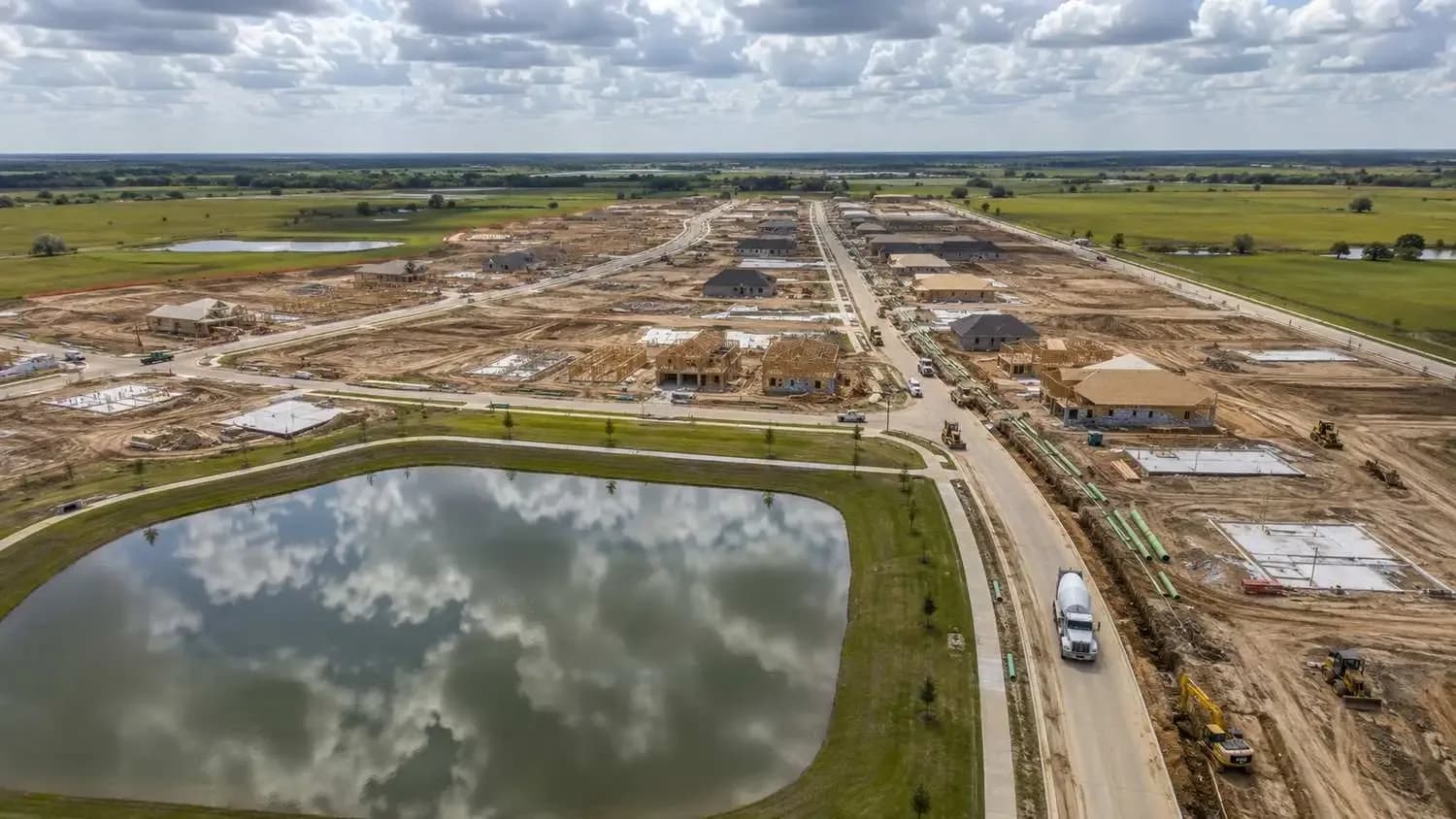
Municipal Utility Districts have functioned as the primary infrastructure financing and governance vehicle for suburban Houston development since Houston’s growth pattern shifted decades ago toward large scale, master planned communities built well ahead of the city’s own annexation and service extension capacity. A MUD allows a developer to form a special governmental district with the authority to issue tax exempt municipal bonds, using that bond capital to fund the water, wastewater, drainage, and often road infrastructure a large development requires, then repay those bonds over time through property taxes levied on the homes and businesses built within the district as the development sells out and its tax base grows.
This structure solved a specific financing problem that recurs constantly in Houston’s suburban growth corridors: a developer needs substantial infrastructure capital upfront, before any homes are sold and before any tax revenue exists, and a MUD’s bond financing lets that capital come from public debt markets rather than entirely from the developer’s own equity or private financing, with the district’s future taxpayers, the homeowners who will eventually live there, ultimately repaying that debt through their property tax bills. For large master planned communities with total build out spanning many years and potentially thousands of homes or substantial commercial development, this financing structure has proven durable and effective across a huge number of Houston area projects.
Where the MUD Default Starts to Break Down
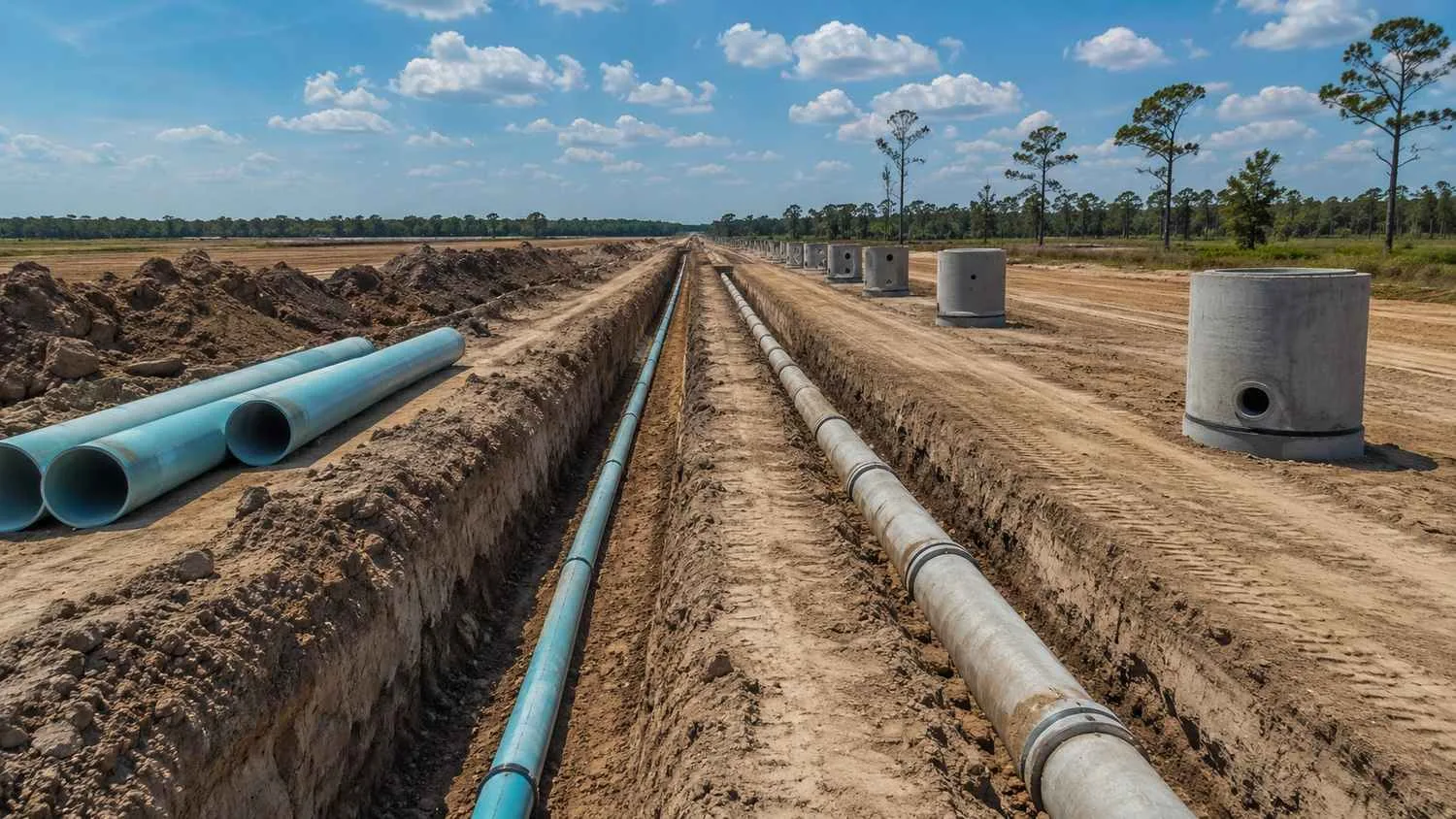
The MUD model’s advantages are most pronounced for projects with the scale and timeline to fully use them, and the model’s disadvantages become more prominent as project size decreases or schedule pressure increases. MUD formation is not a fast process. It requires a formation petition, TCEQ review and approval or, in some cases, legislative approval depending on specific circumstances, an election within the proposed district to authorize bond issuance, and then the actual bond sale process itself, a sequence that typically spans well over a year and often closer to two years from initial petition to first bond proceeds in hand. For a smaller project, or a project facing market timing pressure that makes a two-year infrastructure financing runway impractical, this timeline alone can be disqualifying regardless of the structure’s other merits.
MUD governance also introduces an ongoing layer of public administration that persists for the life of the district, typically decades, including an elected board of directors, public meeting and public information requirements, and a formal governmental structure subject to state oversight. For a developer who wants to retain direct, private control over infrastructure decisions and ongoing operations without transferring that authority to a public governmental entity, or for a developer whose project size doesn’t justify the administrative overhead a MUD’s governance structure requires, this ongoing public governance obligation is a meaningful factor to weigh against the financing benefits.
When a Developer Owned Treatment Plant Is the Better Fit
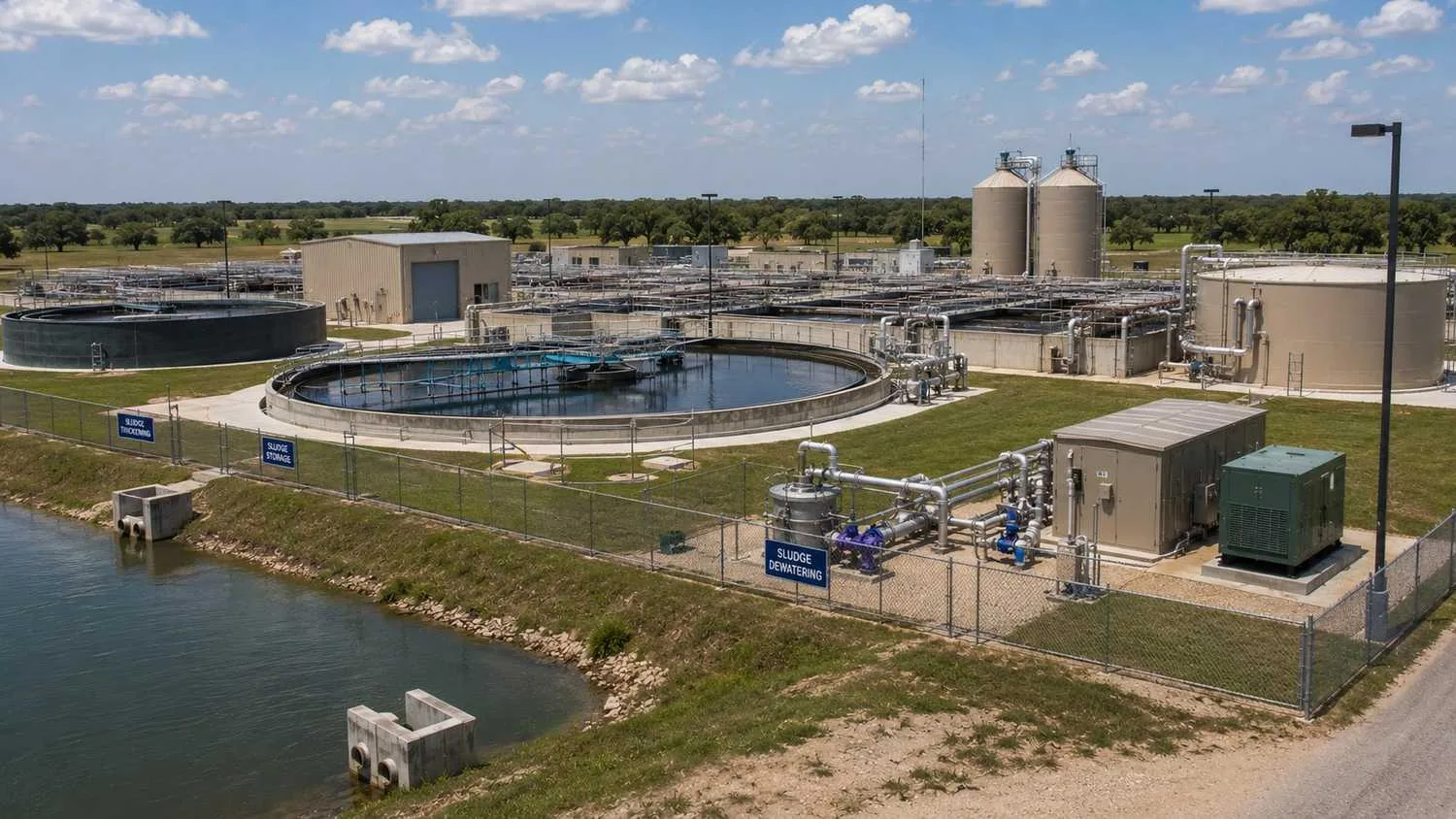
A private, developer owned wastewater treatment plant permitted under a TPDES discharge permit or a TLAP land application permit is a fundamentally different infrastructure model. The developer designs, permits, constructs, and initially owns and operates the facility directly, funding it through the project’s own capital structure rather than through public bond financing, and retains that ownership and operational responsibility either indefinitely or until a specific transition event, such as eventual annexation by a nearby municipality or a negotiated transfer to a homeowners association or a separately formed utility entity.
This model tends to fit smaller projects well, where the total infrastructure capital requirement doesn’t justify the fixed costs and timeline associated with MUD formation, and where the developer’s own capital or private financing can reasonably fund the smaller scale facility a smaller project requires. It also fits projects facing real schedule pressure, since a developer owned treatment plant’s permitting and construction timeline, while not fast by any absolute standard, doesn’t carry the additional MUD formation, election, and bond issuance sequence layered on top of the engineering and construction timeline, making it possible in many cases to reach operational wastewater service meaningfully faster than the MUD path allows.
Developer owned treatment plants also fit situations where the developer specifically wants to retain long-term operational control, either because the development includes specialized water reuse applications, like the golf course and HOA irrigation reuse strategies increasingly paired with Chapter 210 and 210E authorizations, that the developer wants to manage directly as part of the community’s amenity package, or because the developer’s broader business model involves retaining and operating infrastructure across a portfolio of projects rather than transferring each one to a separate public district as it’s completed.
Matching the Decision to Your Specific Project Size and Phasing
Project size is the single factor that most directly correlates with which path tends to make sense, though it is not the only relevant factor. A master planned community anticipating several thousand homes and a multi decade build out timeline generally has both the infrastructure capital requirement and the eventual tax base to make MUD financing genuinely advantageous, spreading a large infrastructure investment across a bond repayment structure that a homebuilder’s or developer’s own balance sheet would struggle to fund directly at the same speed. A smaller development, whether a few hundred homes, a commercial project, or an industrial site with modest wastewater demand, often doesn’t generate a large enough infrastructure capital requirement or a large enough eventual tax base to justify the MUD formation timeline and ongoing governance overhead relative to what a more modestly scaled developer owned treatment plant would cost to design, permit, and operate directly.
Development phasing interacts with this size question in an important way. A project planned for construction in a single continuous phase over two or three years has a different relationship to the MUD formation timeline than a project planned for phased development over ten or fifteen years, since the longer phased project has more natural runway to absorb a MUD formation timeline running in parallel with early site work, while the faster build project may need wastewater service operational well before a MUD’s bond financing could realistically be in place.
Utility Service Availability as the Threshold Question
Before evaluating MUD formation against a developer owned treatment plant, the more fundamental question is whether an existing municipal or utility district connection with adequate capacity is realistically available for the project at all, following the same due diligence discipline that applies to any Houston area or broader Texas development evaluating utility service. If an adjacent MUD or municipal utility has adequate capacity and is willing to serve the new development through annexation into an existing district or a direct service agreement, this can be both faster and less complex than forming an entirely new MUD or building a private treatment plant, since it avoids both the new-MUD formation timeline and the capital and permitting requirements of a developer owned facility.
Confirming this option’s availability requires the same kind of formal service availability inquiry directed at neighboring utility districts and municipalities that applies to utility due diligence generally, and this inquiry should happen before the MUD versus private treatment plant decision is evaluated in detail, since an available existing service connection can moot the entire question if the capacity, cost, and timeline of joining an existing system compare favorably to either alternative.
Bond Financing, Tax Base, and the Long Term Financial Relationship
The MUD financing model’s core mechanic, using bond proceeds to fund infrastructure and repaying those bonds through the future tax base the development creates, depends on that tax base materializing on a reasonably predictable timeline relative to the bond repayment schedule. A development that sells and builds out more slowly than projected creates a mismatch between the district’s bond repayment obligations and its actual tax revenue, a risk that MUD bond structuring and underwriting attempt to manage but that ultimately depends on the development’s market performance more than on the engineering or governance structure itself.
A developer owned treatment plant doesn’t carry this same public bond repayment obligation, since the developer’s own capital or private financing funds the facility directly, but this also means the developer bears the full infrastructure cost risk directly rather than distributing it across a bond structure and a future tax base, a tradeoff that shifts risk in the opposite direction from the MUD model and should be evaluated against the developer’s own capital structure and risk tolerance for the specific project.
Reuse Strategy Integration and Its Effect on the Decision
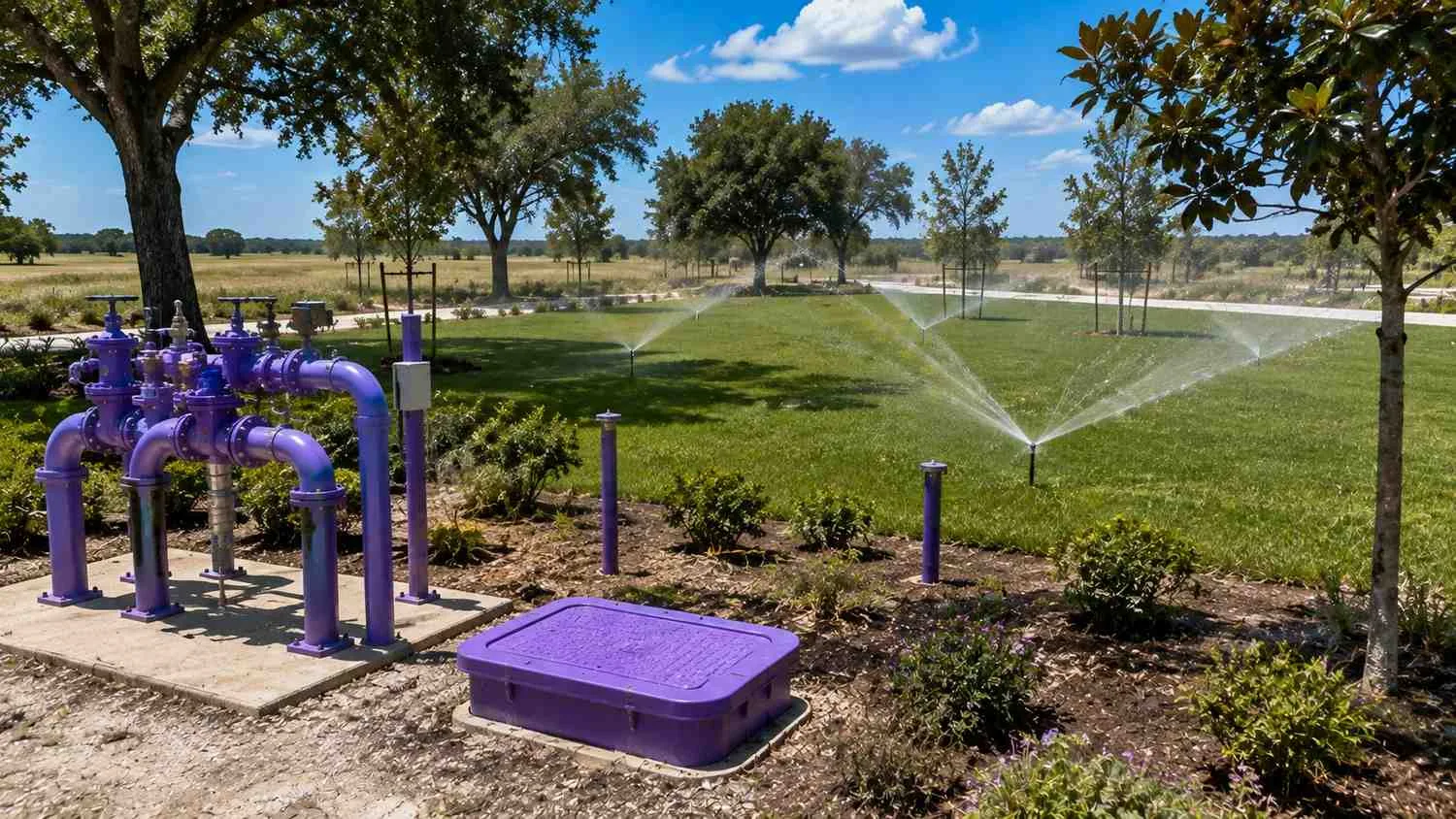
Chapter 210 reclaimed water reuse, and 210E authorization for smaller scale reuse applications where applicable, can factor into the MUD versus private treatment plant decision in a meaningful way for developments with substantial irrigation demand, such as a golf course community or a master planned community with extensive common area landscaping. A developer owned treatment plant paired with a reuse system gives the developer direct control over designing, financing, and operating that reuse strategy as an integrated amenity feature, while a MUD owned treatment plant and reuse system requires the same reuse design and operational responsibility to be structured through the district’s governance, which is entirely workable but adds another dimension to what the district’s board and its contracted operator need to manage.
For developments where reuse is a significant amenity and marketing feature, some developers prefer the more direct control a developer owned facility provides during the community’s initial build out and lease up or sale period, with an eventual transition to MUD or another long term governance structure once the reuse system’s design and operational patterns are established and proven.
Frequently Asked Questions
Can we start with a developer owned treatment plant and transition to a MUD later if our project grows larger than originally planned?
In some cases, yes, though the transition requires careful planning and isn’t always straightforward, particularly regarding how the existing treatment plant’s ownership, outstanding debt if any, and operational contracts are transferred into the MUD structure once formed. Some Houston area developers do plan an initial phase using a private treatment plant to meet early service needs while a MUD formation process runs in parallel, with an intended eventual transition of the facility into the district once bond financing is in place. This approach requires structuring the initial private facility with that eventual transition in mind from the outset, rather than treating the private facility purely as a temporary standalone solution, since retrofitting a transition plan onto a facility not originally designed or contracted with that transition in mind is more complex and costly.
How do we know if our project is large enough to justify MUD formation versus a smaller private treatment plant?
This depends on a specific comparison of your project’s total infrastructure capital requirement, projected tax base at build out, and development timeline against the fixed costs and timeline MUD formation requires, which is a feasibility analysis worth performing with your engineering team and bond counsel or financial advisor before committing to either path. As a general pattern, projects anticipating well over a thousand residential units or a comparably large commercial or mixed use tax base, with a multi year phased build out, more consistently justify the MUD formation investment than smaller projects, but this general pattern should be confirmed against your specific project’s numbers rather than treated as a fixed threshold, since land value, unit pricing, and commercial tax base all affect the calculation differently from project to project.
If we choose a developer owned treatment plant instead of a MUD, do we lose the ability to eventually connect to municipal sewer if the city extends service to our area later?
Not necessarily, though the transition requires coordination with both TCEQ and the receiving municipality or utility, and is more straightforward when anticipated in the original private facility’s design and permit structure rather than addressed only when the municipal service actually becomes available. This is the same transition planning consideration that applies to private treatment plant strategies in other Texas ETJ and growth corridor contexts, and it’s worth discussing with the relevant municipality’s planning and utilities staff about their own long-term service extension intentions even while your private facility is your primary near term strategy.
Related Resources
- Wastewater Capacity in Fort Worth’s ETJ: What Happens When the City Won’t Annex Your Development
- Lift Station Design in Houston’s High Groundwater Zones: Why Standard Specs Fail in Clay Heavy Soils
- Water Reuse for Austin Area Golf Courses and HOA Irrigation: How Chapter 210 Creates a Revenue Stream
- Land Application Permits in Texas: A Faster Path to Wastewater Approval for Developers
Evaluating MUD Formation Versus a Developer Owned Treatment Plant for a Houston Area Project?
MES works with Houston area developers, landowners, and project directors to compare MUD formation against private WWTP, TPDES, TLAP, and Chapter 210 or 210E reuse strategies, evaluate utility service availability, prepare engineering inputs for feasibility analysis, and reduce risk before your infrastructure strategy is locked in.
We specialize in:
- MUD versus developer owned treatment plant feasibility comparison for Houston suburban master planned communities
- Private WWTP design and TPDES or TLAP permitting support for Texas developer owned wastewater infrastructure
- Utility service availability due diligence for existing MUD and municipal connection alternatives
- Chapter 210 and 210E reclaimed water reuse strategy integration with developer owned treatment facilities
- Engineering inputs and technical feasibility analysis supporting MUD formation and bond financing decisions
- Long term infrastructure ownership and transition planning between private and public utility governance structures
Modern Engineering Solutions, Houston, Texas. Contact: (214) 833-6748 or mod-eng.com
Keep reading
More to read.
Talk to an engineer
Tell us about your project.
An engineer reads it
Not a salesperson. Someone who can tell you whether the pathway is real.
You get a first answer
Your options, the agencies involved and the questions that decide cost and schedule.
You decide
No commitment to have the first call.
Prefer the phone? (214) 833-6748