
Blog
The Role of Title 22 Engineering Reports in California Recycled Water Compliance
A Title 22 Engineering Report left as an afterthought stalls California recycled water projects for months. What it requires and when to start on it.
Quick Answer
Recycled water looks like an obvious win for a California developer: reduce potable demand, ease pressure on wastewater disposal, and check a sustainability box that helps with entitlements and community support. What often surprises a project team is that none of this actually happens until a Title 22 Engineering Report is prepared, reviewed, and approved, and that report is where a genuinely promising recycled water project can stall for months if it’s incomplete, inconsistent with the actual design, or not coordinated early with the correct reviewing agencies. A developer who treats the Title 22 Engineering Report as a paperwork formality to handle after design is finalized, rather than a document that needs to be developed alongside design from the start, is setting up exactly the kind of bottleneck this article is meant to help you avoid.
What a Title 22 Engineering Report Actually Is
A Title 22 Engineering Report is the technical document that ties a proposed recycled water project’s treatment, distribution, and use together into a single coherent package for agency review, demonstrating that the recycled water proposed for a specific project will be treated to an appropriate quality for its intended use, distributed safely to that use, and managed with adequate safeguards against cross connection with the potable water system. It is not a generic sustainability narrative or a marketing document describing a project’s water conservation benefits. It’s a detailed engineering submission addressing specific technical elements a reviewing agency needs to evaluate before authorizing recycled water use for the project.
Why This Report Is Central to Compliance, Not Just a Formality
California’s recycled water framework is built around matching treatment quality to intended use, and the Title 22 Engineering Report is the mechanism through which a specific project demonstrates that match for its own particular circumstances. A project can have excellent treatment technology and a well designed distribution system, and still face delay or rejection if the engineering report doesn’t clearly and consistently document how these pieces fit together and satisfy applicable requirements. Treating the report as central to project planning, rather than as a downstream compliance task, is the difference between a recycled water project that moves through review efficiently and one that generates repeated agency questions and revision cycles.
Recycled Water Use Areas and Approved Applications
A Title 22 Engineering Report needs to clearly identify the specific recycled water use areas proposed for a project and the specific approved applications intended for each, since treatment quality requirements and distribution safeguards can vary depending on the specific use. Irrigation of a golf course, common area landscaping in a residential community, and industrial reuse for a commercial or manufacturing user each represent distinct use categories that need to be addressed specifically and accurately in the report, rather than described in generic terms that don’t clearly establish what the recycled water will actually be used for once the system is operating.
Irrigation and Landscape Use
Where irrigation is a proposed use, the report needs to address the specific irrigated areas, application methods, and any relevant setback or buffer considerations protecting nearby structures, water features, or public access areas from inappropriate exposure to recycled water. Landscape architects working on a project’s irrigation design should coordinate directly with the engineering team preparing the Title 22 report, since irrigation design decisions directly affect what the report needs to document and demonstrate compliant.
Industrial Reuse
Industrial reuse applications, where a commercial or industrial user incorporates recycled water into a specific process or use, often require more detailed evaluation in the engineering report than a straightforward irrigation application, since industrial use characteristics and any process specific considerations need to be clearly understood and documented to confirm the proposed recycled water quality is genuinely appropriate for that specific industrial application.
Dual Plumbing and Purple Pipe Distribution
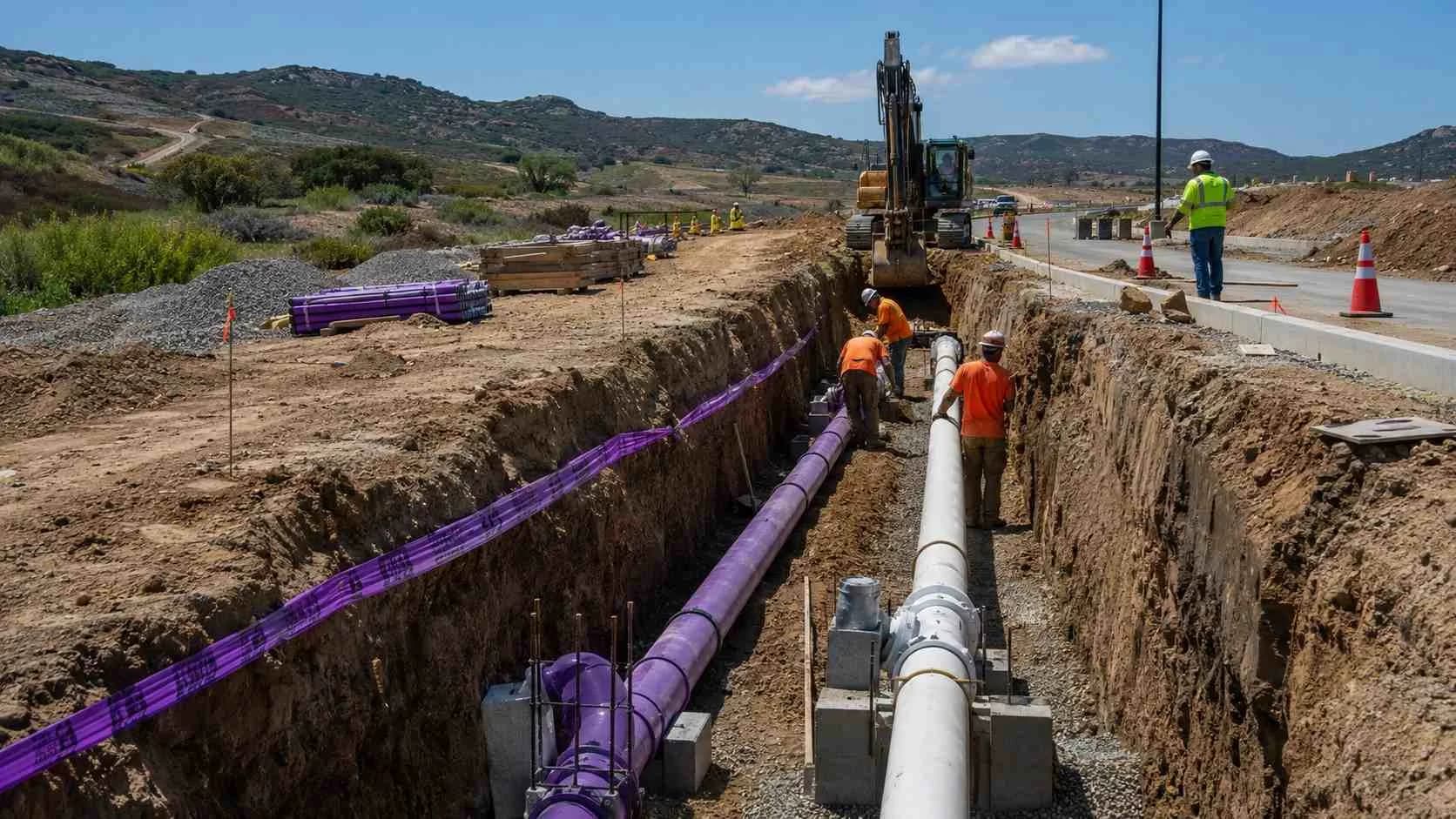
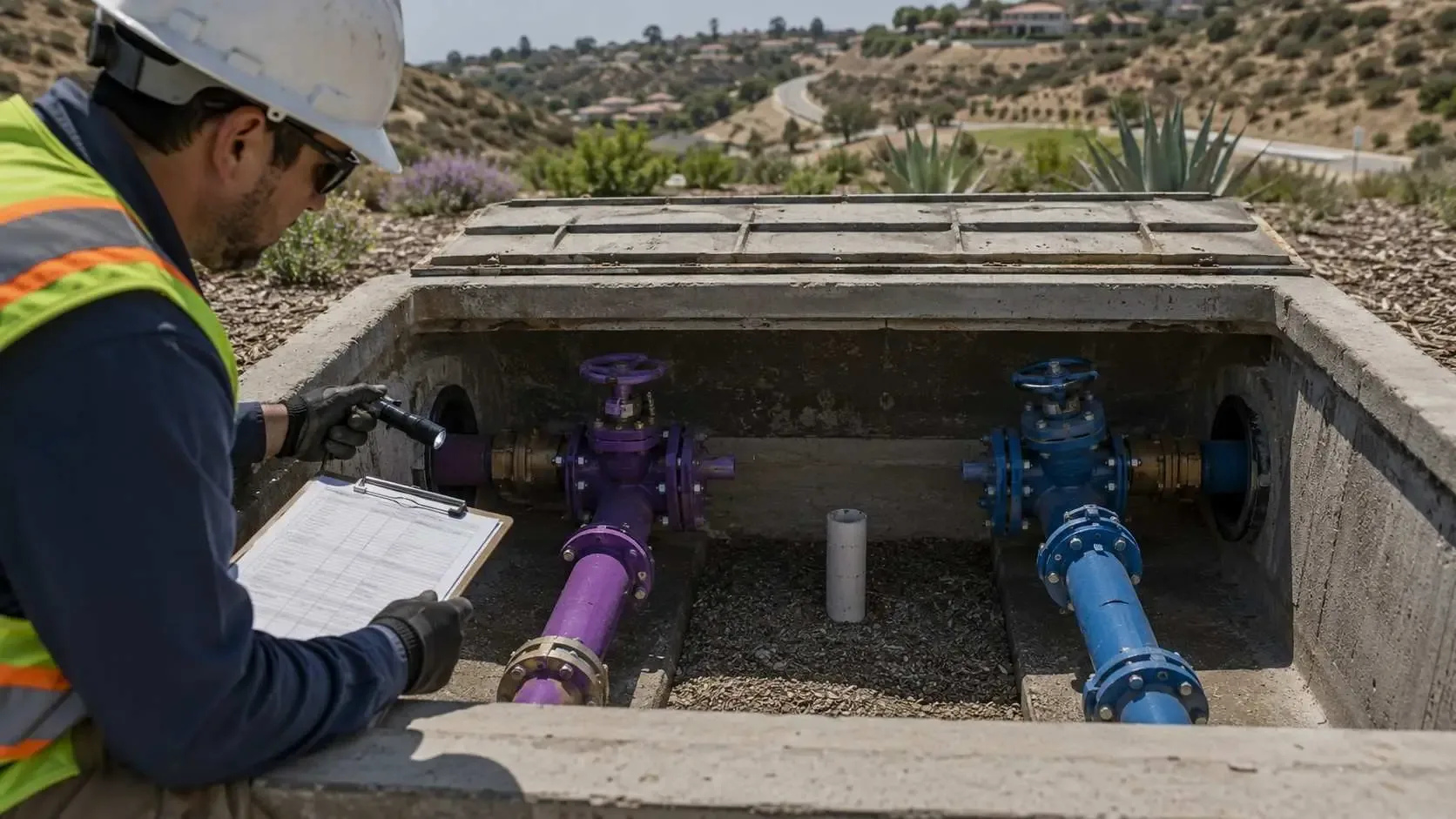
A recycled water distribution system requires dual plumbing, a physically separate piping system distinct from the potable water distribution system, using purple pipe, the industry standard color coding that visually distinguishes recycled water piping and reduces cross connection risk. The Title 22 Engineering Report needs to document this distribution system design clearly, including how it’s kept physically separate from potable water infrastructure throughout the project site, since this physical separation is foundational to the cross-connection control that the entire recycled water framework depends on.
Cross Connection Testing and Control
Cross connection control, preventing any inadvertent connection between the recycled water system and the potable water system, is one of the most heavily scrutinized elements of recycled water compliance, given the public health stakes involved if cross connection control fails. The engineering report needs to address how cross connection control will be achieved and verified, including testing protocols confirming the systems remain properly separated, and this isn’t a one time consideration addressed only during initial design, it requires an ongoing testing and verification program throughout the system’s operating life.
User Agreements
Where recycled water is supplied to specific end users, whether a homeowners association managing common area irrigation or an industrial user receiving recycled water for a specific process, user agreements establishing each user’s responsibilities for proper use, reporting, and compliance with applicable restrictions are typically part of a complete recycled water compliance package. The Title 22 Engineering Report should address how user responsibilities are established and communicated, since a well designed system can still face compliance problems if end users aren’t clearly informed of and committed to their own responsibilities.
Treatment Process Description
A core element of the Title 22 Engineering Report is a clear, accurate description of the treatment process producing the recycled water, demonstrating that this process is capable of reliably achieving the treatment quality appropriate for the project’s proposed uses. This description needs to be technically accurate and consistent with the actual treatment system being designed or already in place, since a mismatch between what the report describes and what the actual treatment system does is exactly the kind of inconsistency that can trigger agency questions and delay.
Monitoring Points, Maps, and As-Builts
The report needs to clearly document monitoring points throughout the treatment and distribution system, along with system maps showing the recycled water distribution network’s layout, and as built documentation confirming the system was actually constructed consistent with the approved design. These documentation elements matter both for initial approval and for ongoing compliance, since they establish the baseline against which future monitoring and any system modifications will be evaluated.
Storage and Setbacks
Recycled water storage facilities, and setback distances between recycled water infrastructure or use areas and sensitive features like potable water wells, occupied structures, or public access areas, need to be evaluated and documented in the engineering report, confirming the proposed system design maintains appropriate separation and protection consistent with applicable requirements for the specific use categories involved.
Reliability and Operator Responsibilities
A recycled water system needs adequate reliability provisions, similar in concept to the reliability planning discussed for wastewater treatment systems generally, ensuring the system can be operated safely and consistently, along with clearly defined operator responsibilities for ongoing monitoring, testing, and system maintenance. The engineering report should address how reliability and ongoing operational responsibility are planned for, since a system approved on paper but not genuinely set up for reliable long term operation and oversight creates real compliance risk once it’s operating.
Division of Drinking Water and Regional Water Board Review
Depending on the specific project, the Title 22 Engineering Report may be reviewed by the Division of Drinking Water, the applicable Regional Water Board, and potentially the local recycled water purveyor or agency managing recycled water service in that area, each potentially bringing its own specific questions and requirements to the review. Coordinating with all applicable reviewing agencies early, rather than assuming a single review pathway will address every applicable agency’s concerns, helps avoid a situation where a report approved by one agency still faces unresolved questions from another agency reviewing the same project.
Why Coordination Needs to Start Early, Not After Design Is Finalized
The most common way a Title 22 Engineering Report becomes a project bottleneck is when it’s prepared after design decisions have already been made independently, without the report’s requirements shaping those decisions from the start. A distribution system laid out without the engineering report’s cross-connection control and setback requirements in mind, or a treatment process selected without confirming it can support the report’s required treatment quality demonstration, can require significant rework once the report preparation process reveals a mismatch. Coordinating engineering report preparation alongside design from the earliest project stages, rather than treating it as a document to write once design is otherwise complete, is the single most effective way to avoid this kind of costly, time-consuming rework.
Frequently Asked Questions
Do we need a Title 22 Engineering Report for a small irrigation-only recycled water project, or only for larger systems?
The Division of Drinking Water and the applicable Regional Water Board evaluate recycled water projects based on their specific use and characteristics rather than size alone, so a developer should confirm applicable requirements for their specific project rather than assume a small project is automatically exempt.
How long does Title 22 Engineering Report review typically take?
Review timelines vary depending on the reviewing agencies involved, the completeness of the submitted report, and the project’s specific complexity, and a developer should confirm realistic timeline expectations directly with the applicable agencies for their specific project rather than assume a generic timeline.
Can we finalize our distribution system design before the Title 22 Engineering Report is prepared?
This approach carries real risk, since the report’s cross connection control, setback, and treatment quality documentation requirements should inform distribution system design decisions, and finalizing design first can result in a mismatch that requires costly rework once the report preparation process begins.
Who is responsible for cross connection testing after the system is approved and operating?
The entity operating the recycled water system is generally responsible for ongoing cross connection testing and verification, and this responsibility should be clearly established and understood before the system begins operating, not addressed for the first time after an issue arises.
Does every recycled water user on our site need their own user agreement?
This depends on the specific use and the applicable local recycled water agency’s requirements, and a developer should confirm this directly with that agency, since user agreement requirements can vary depending on the specific arrangement and use category involved.
Related Resources
- Land Application Permits in Texas: A Faster Path to Wastewater Approval for Developers
- Water Reuse in Florida: How the State’s Progressive Rules Are Shaping Infrastructure Design
- Texas Chapter 210 Reclaimed Water Permits: Type I vs Type II
- TCEQ’s Power Reliability Requirements: Generator vs Dual Feed Design
Don’t Let the Title 22 Engineering Report Become Your Project’s Bottleneck
MES helps California developers, municipalities, and recycled water users coordinate treatment design, distribution system planning, and Title 22 Engineering Report preparation from the earliest project stages, so the report reflects what’s actually being built rather than creating rework after the fact.
We specialize in:
- Title 22 Engineering Report preparation coordinated directly with treatment and distribution design
- Recycled water use area and approved application documentation for irrigation and industrial reuse
- Purple pipe distribution system design integrated with cross connection control planning
- Coordination with the Division of Drinking Water, Regional Water Board, and local recycled water agencies
- Storage, setback, and reliability evaluation for recycled water system approval
- Early stage design coordination to avoid rework once formal report review begins
Modern Engineering Solutions, San Jose, California. Contact: (214) 833-6748 or mod-eng.com
Keep reading
More to read.
Talk to an engineer
Tell us about your project.
An engineer reads it
Not a salesperson. Someone who can tell you whether the pathway is real.
You get a first answer
Your options, the agencies involved and the questions that decide cost and schedule.
You decide
No commitment to have the first call.
Prefer the phone? (214) 833-6748