
Blog
Texas Chapter 210 Reclaimed Water Permits: Type I vs. Type II and When You Need One
Type I vs. Type II reclaimed water under Texas Chapter 210: which uses fit each type, the quality limits, and when you need TCEQ written approval.
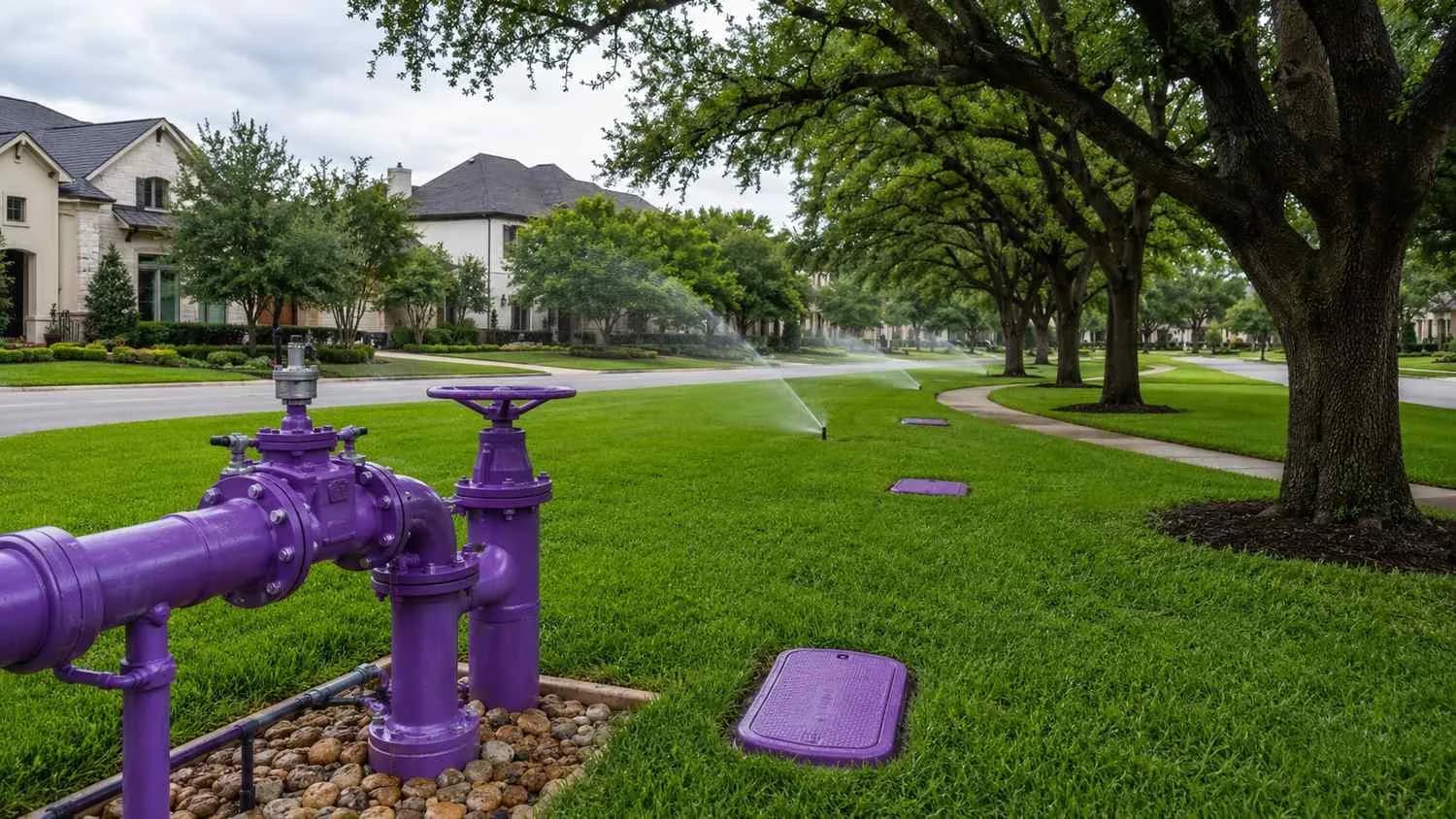
Type I vs. Type II reclaimed water comes down to one question under 30 TAC Chapter 210: is a person likely to touch it? Type I uses, such as home lawns, parks and toilet flushing, carry tighter quality limits than Type II uses such as sod farms. Either way, the provider needs TCEQ's written approval before delivering reclaimed water to anyone else.
What is the difference between Type I and Type II reclaimed water?
Who might touch it. The definitions in 30 TAC §210.3 make a Type I use one where human contact is likely and a Type II use one where it is unlikely. TCEQ's reclaimed water guidance adds that Type I water can serve either type of use, Type II water only Type II uses.
Which uses count as Type I?
Uses where the public may be present during irrigation or contact the water. 30 TAC §210.32 lists:
- Irrigation at homes, public parks, school yards, athletic fields and golf courses with unrestricted public access
- Fire protection, in sprinkler systems or hydrants
- Food crops where the water may touch the edible part, unless the crop is pasteurized
- Pastures for milking animals
- Water bodies where people are expected to wade or fish
- Toilet and urinal flushing
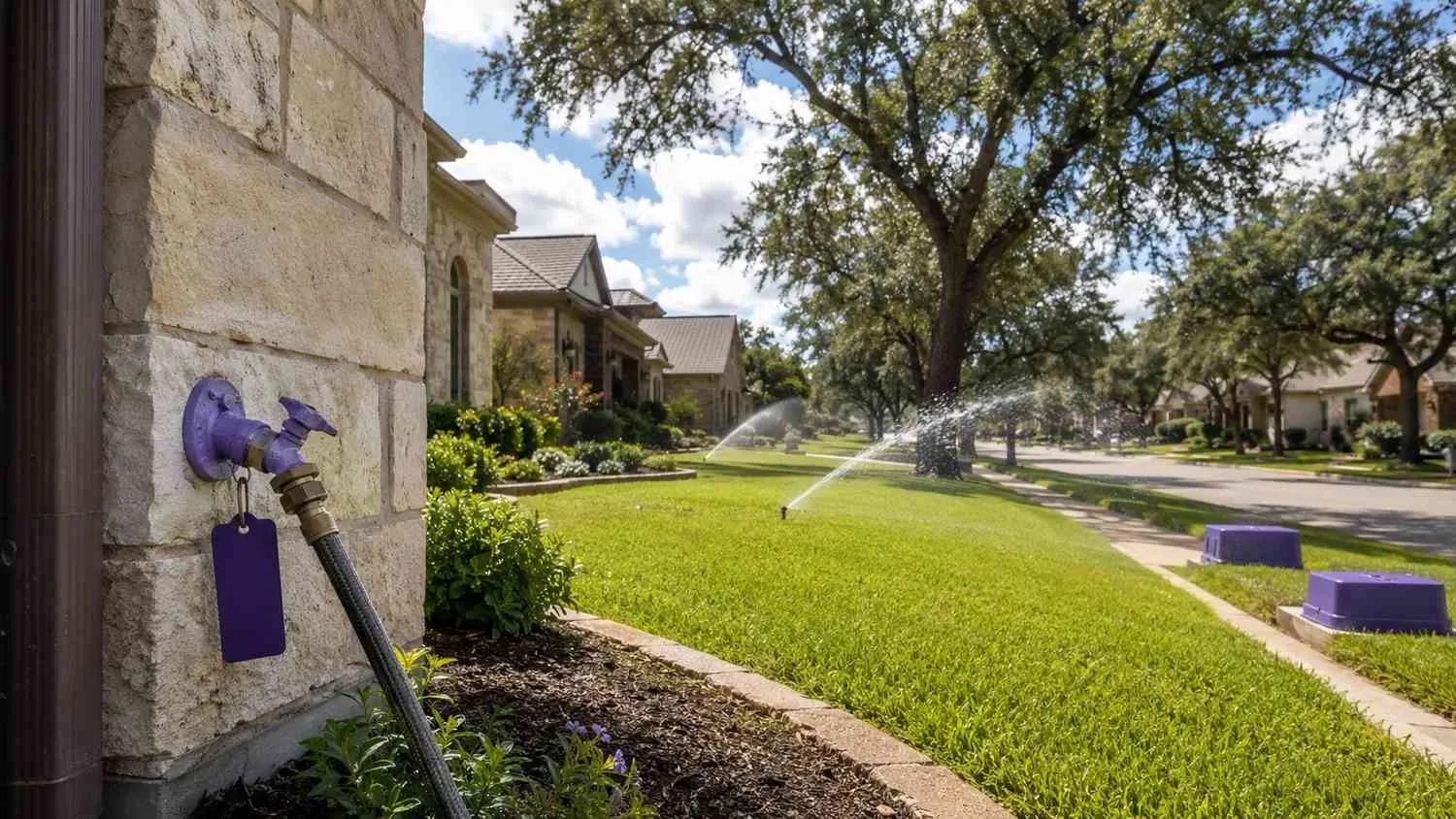
Even Type I water cannot fill swimming pools, hot tubs or wading pools, or touch crops eaten without peeling or cooking (§210.24).
Which uses count as Type II?
Uses where the public is not present during irrigation or would not contact the water. The §210.32 examples:
- Sod farms, silviculture, limited-access highway rights of way and other restricted areas
- Food crops the water is unlikely to touch, or that are pasteurized before distribution
- Animal feed crops other than pasture for milking animals
- Water bodies where direct contact is not likely
- Dust control and soil compaction on construction sites, with aerosol drift to public areas minimized
- Cooling tower makeup water
- Non-potable uses at a wastewater treatment facility
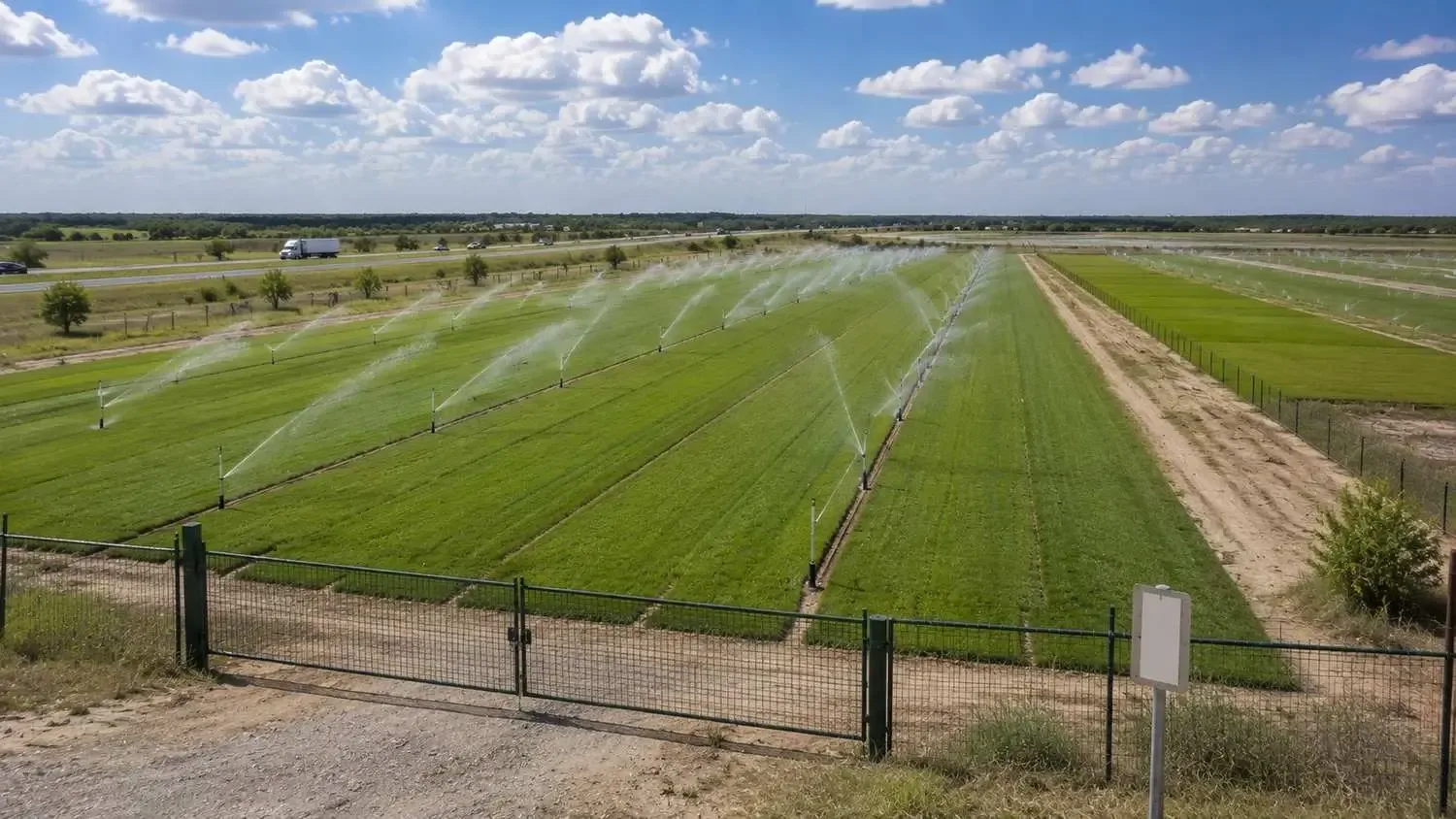
Restricted can mean remote, fenced with owner-controlled entry, unused by the public during irrigation, or closed by ordinance or law.
Is a golf course Type I or Type II?
It depends on whether golfers can be where the water lands. Section 210.32 puts courses with unrestricted public access in Type I and courses the public does not use during irrigation in Type II.
The public need not be kept out of areas not being watered: the rule's example is night fairway irrigation while the clubhouse, a sufficient distance away, stays open. Greens and tees may be syringed under Type II by hand-held hose, not automatic heads.
How clean does Type I and Type II water have to be?
Type I bacteria limits are about one tenth of Type II's, and only Type I has a turbidity limit. From 30 TAC §210.33:
| Parameter | Type I | Type II |
|---|---|---|
| BOD5 or CBOD5 | 5 mg/l | BOD5 20 or CBOD5 15 mg/l (pond systems: BOD5 30 mg/l) |
| Turbidity | 3 NTU | Not listed |
| Fecal coliform or E. coli | 20 / 75 | 200 / 800 |
| Enterococci | 4 / 9 | 35 / 89 |
BOD and turbidity are 30-day averages; bacteria are CFU per 100 ml as a 30-day geometric mean / maximum single grab sample. The limits apply before the water enters an initial holding pond or the distribution system. Minimum sampling is twice a week for Type I and once a week for Type II (§210.34), with monthly reports due by the 20th and five years of records kept on site (§210.36).
Who needs a Chapter 210 authorization?
The provider, before delivering reclaimed water to another party. 30 TAC §210.4 requires notice to TCEQ's executive director and written approval first. Related rules:
- A producer reusing water only within a permitted treatment plant's boundaries needs no notice, though the chapter's other rules still apply.
- Water used under a permit authorizing disposal by irrigation, such as a land application permit, is outside Chapter 210 (§210.1).
- Under 30 TAC §210.2(e), the plant itself needs a TPDES permit, a Texas Land Application Permit or a Chapter 321, Subchapter P authorization before construction.
- Discharging reclaimed water to water in the state takes a Chapter 305 permit under 30 TAC §210.5. TCEQ's guidance adds that water passing through a state watercourse on the way to the user needs a water right.
What goes into the application?
Form TCEQ-20427, a contract with each user and an operation and maintenance plan. The contract or other binding agreement must show the provider can terminate noncompliant use. Under §210.4 the plan covers cross-connection labeling and separation, access controls such as secured valves, monitoring of transfers, steps to limit human exposure, maintenance, staff training and a contingency plan. The form adds a Core Data Form, a service area map and a storage pond map. For utilities and districts, it names the producer as applicant, the provider if different, and each user. Delivery is on demand only (§210.7), and the reuse authorization is denied if the plant permit is not active, pending included.
What design rules come with reclaimed water?
Purple pipe, separation, signs and lined storage. 30 TAC §210.25 requires:
- Purple pipe or pipe painted purple; buried pipe may instead be taped or bagged in purple
- Nine feet horizontally from potable lines, or Chapter 290 separation where that cannot be met
- Three feet from a parallel sewer line, at or above it
- Purple hose bibs that will not take a standard hose, in locked below-grade vaults or special-tool boxes
- English and Spanish "Reclaimed Water, Do Not Drink" signs, or an area secured from the public
Under §210.23, storage stays out of the floodway apart from authorized on-channel ponds, and initial holding ponds are lined unless the water sits in leak-proof tanks, with stricter liners over the Edwards Aquifer recharge zone and, for Type II initial ponds, in areas rated 110 or more on the state's DRASTIC map. For volume, see how to size a storage reservoir for a Texas reuse project.
Is your reuse project ready to file?
If any answer is no, fix it before you file.
- Is every planned use classified under §210.32?
- Will the plant meet the §210.33 limits for the strictest use on the system?
- Does the producer hold an active TPDES, land application or Subchapter P authorization?
- Does each user contract let the provider shut off noncompliant use?
- Does the operation and maintenance plan cover every item §210.4 lists?
- Is there storage or another outlet for days with no demand?
- Have you checked the Edwards Aquifer recharge zone and the delivery route for state watercourses?
Then ask your engineer who signs as producer, provider and user, and where the water goes in a wet week. Settle both during site feasibility, before the land closes.
A note on limits: this is general education on 30 TAC Chapter 210 as read in October 2026, not a review of your project; TCEQ decides classifications, so check the current rule and form before filing.
Frequently asked questions
Is a Chapter 210 authorization a permit?
Not a discharge permit. It is a written reuse approval, and §210.2(d) says approved projects need no new or amended waste discharge permit except as §210.5 provides.
Can a Type II system serve Type I uses later?
Only with TCEQ approval: switching between Type I and Type II uses is a major change under §210.4(e). Upgrading Type II water to Type I takes added treatment authorized under §210.5(d). The form's certification says to notify TCEQ at least 45 days before a major change.
Does a 210E authorization replace a Type I or Type II approval?
No. 210E is the industrial path in Subchapter E, applied for on Form TCEQ-20094. If domestic wastewater is mixed in, §210.56(a)(1) applies Subchapters A through C, including the §210.33 limits.
How long does TCEQ take to approve a Chapter 210 authorization?
Neither §210.4 nor the form sets a review time for a Type I or Type II approval. The form describes administrative and technical review and gives 30 days to answer a notice of deficiency. Schedule first delivery after the written approval, not before.
I'm developing a master-planned community in Texas and want to irrigate front yards and parks with reclaimed water from our own plant. Which type do we need?
Type I: §210.32 makes residential and park irrigation Type I uses. The plant needs its own permit or authorization before construction, and the reuse needs written approval before first delivery. In the Edwards Aquifer recharge zone, §210.4(d) adds TCEQ approval of the disposal system plans before construction.
I manage a golf course in Central Texas and the city has offered us reclaimed water. Can we take Type II water if we only irrigate fairways at night?
You can, if no one is on the areas being watered while it runs; night fairway irrigation is the rule's own Type II example. The city's contract must show it can cut off noncompliant use, so put the irrigation hours and access controls in the operation and maintenance plan and keep to them.
Related resources
- Chapter 210 Reclaimed Water: What Texas Developers Need to Know About Water Reuse
- What Is a 210E Authorization and How Can It Save Your Texas Development Project?
- Your Three Wastewater Disposal Options in Texas: Discharge, Reuse, or Land Application
- Land Application Permits for Treated Wastewater: A Texas Developer's Guide
Not sure whether your reuse plan is Type I or Type II?
The answer sets your treatment target, your sampling and your contracts.
MES engineers can check your planned uses against Chapter 210 before you design the plant.
Contact Modern Engineering Solutions in McKinney, Texas, or call (214) 833-6748.
Keep reading
More to read.
Talk to an engineer
Tell us about your project.
An engineer reads it
Not a salesperson. Someone who can tell you whether the pathway is real.
You get a first answer
Your options, the agencies involved and the questions that decide cost and schedule.
You decide
No commitment to have the first call.
Prefer the phone? (214) 833-6748