Quick Answer
Hydrostatic test water is the water used to pressure test newly installed or rehabilitated pipelines, water mains, force mains, storage tanks, and other pressurized infrastructure before they are placed in service. In Texas, the discharge of hydrostatic test water to state waters or the land surface may require TCEQ permit coverage or must comply with specific conditions that allow discharge without a permit. The applicable pathway depends on what the test water contains, where it is being discharged, and whether the discharge meets the conditions of TCEQ’s applicable general permit or exemption. A contractor who assumes that draining test water into a ditch or a storm drain is just part of the job, and does not verify the discharge authorization in advance, is creating a compliance exposure for the project that was entirely preventable.
What Hydrostatic Test Water Is and What It Contains
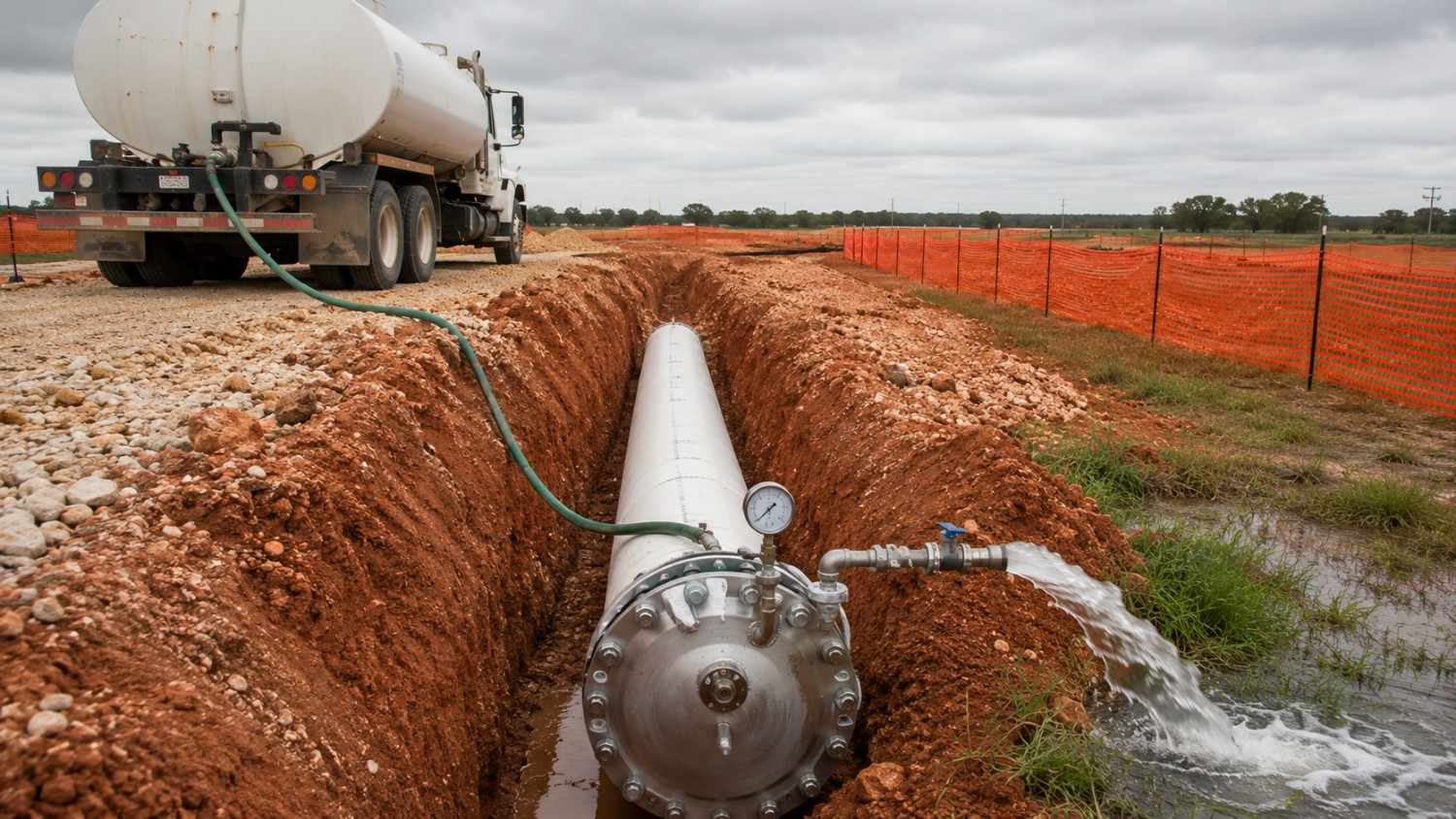
A hydrostatic pressure test verifies that a newly installed pipeline, storage tank, or other infrastructure can hold pressure without leaking. The system is filled with water (typically potable water from a municipal supply or from a water well), pressurized to a specified test pressure above the system’s operating pressure, and held at that pressure for a defined period. If pressure holds, the system passes. If pressure drops, the test crew locates and repairs the leak and retests.
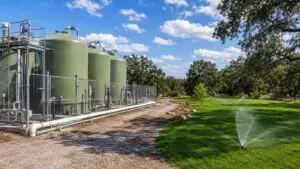
The volume of water required for a hydrostatic test varies significantly with the size and length of the system being tested. A 12-inch water main installed over a half-mile section holds approximately 185,000 gallons. A storage tank being tested before service can hold millions of gallons. Smaller force mains and gravity sewer lines require proportionally less, but even modest-sized pipeline installations generate thousands of gallons of test water that must be disposed of after the test is complete.
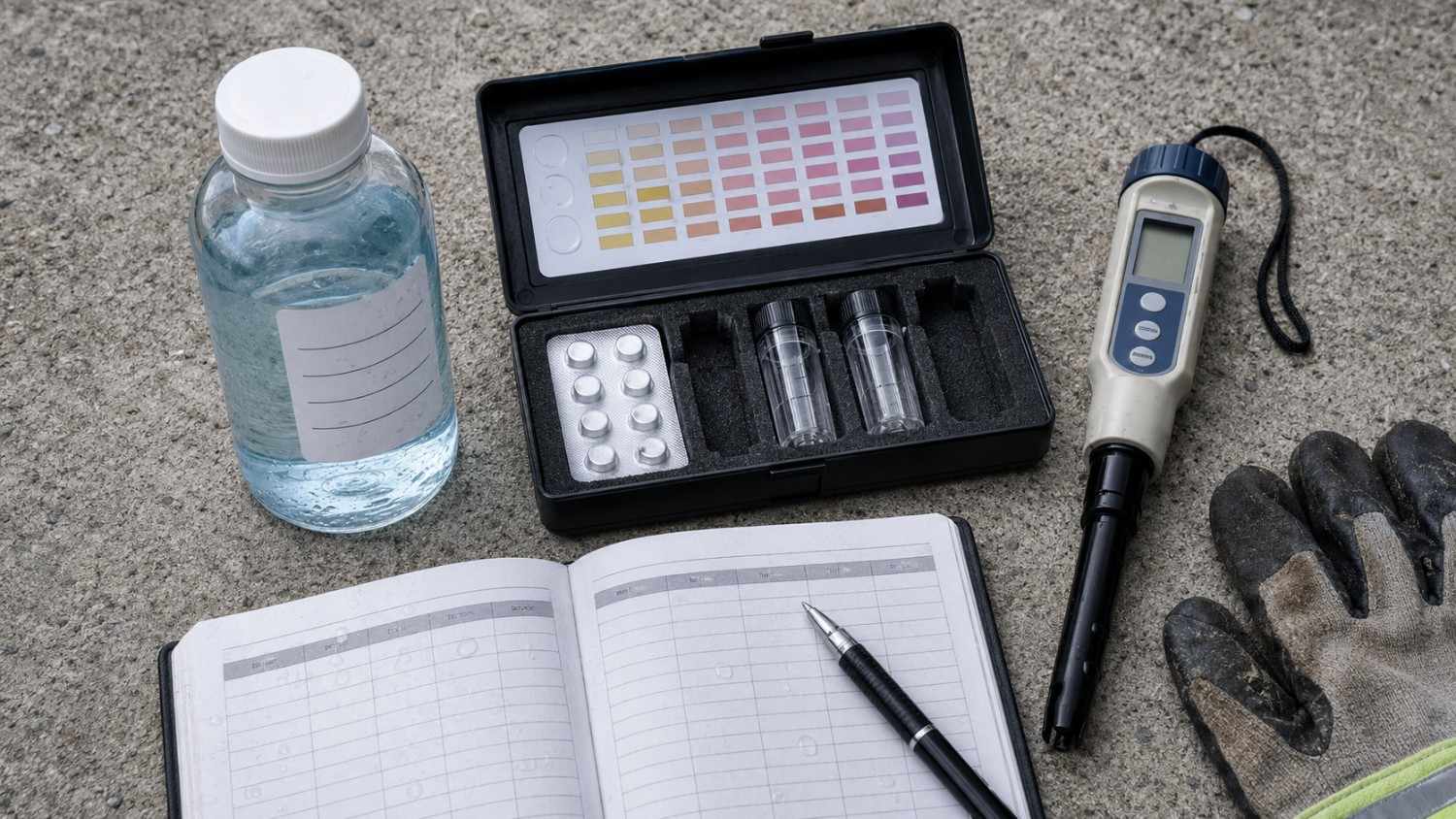
What does the water contain after testing? For a new potable water main tested with chlorinated municipal water, the test water may contain residual chlorine at concentrations appropriate for drinking water distribution but potentially harmful to aquatic life if discharged directly to a creek or drainage ditch. For a wastewater force main that had prior service history before rehabilitation, the test water may contain residual waste constituents or sediment. For storage tanks tested with potable water, the test water is similar in quality to the water that would eventually be in the tank. For industrial pipelines and storage vessels, the test water may have picked up residual coatings, solvents, or process residues from the vessel interior that change its discharge characteristics significantly.
The type of infrastructure being tested, the source of the test water, the interior condition of the system being tested, and the additives used during testing all affect what the test water contains and which discharge pathway is appropriate.
Why Discharge Is Not Always Straightforward
The assumption on many Texas construction projects is that test water is just water: potable quality, harmless, and freely dischargeable wherever it can drain. That assumption is not always wrong, but it is not always right, and the cases where it is wrong are the ones that produce compliance problems.
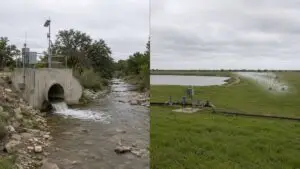
TCEQ regulates discharges to waters of the state under the TPDES program. A discharge of hydrostatic test water to a creek, river, drainage ditch that connects to a waterway, or any other water of the state may require authorization under a TCEQ general permit or an individual permit. TCEQ’s Construction General Permit TXR150000 covers stormwater discharges from construction sites, but hydrostatic test water is not stormwater: it is a process water discharge that requires separate evaluation.
TCEQ’s TPDES Multi-Sector General Permit TXR050000 provides coverage for certain industrial stormwater and non-stormwater discharges, including hydrostatic test water under specific conditions. The conditions that apply depend on the type of facility, the composition of the test water, and the discharge location. For construction projects that do not fall under an industrial permit, the applicable coverage for test water discharge to state waters requires either individual permit authorization or compliance with conditions that allow small, clean discharges to be made without a permit.
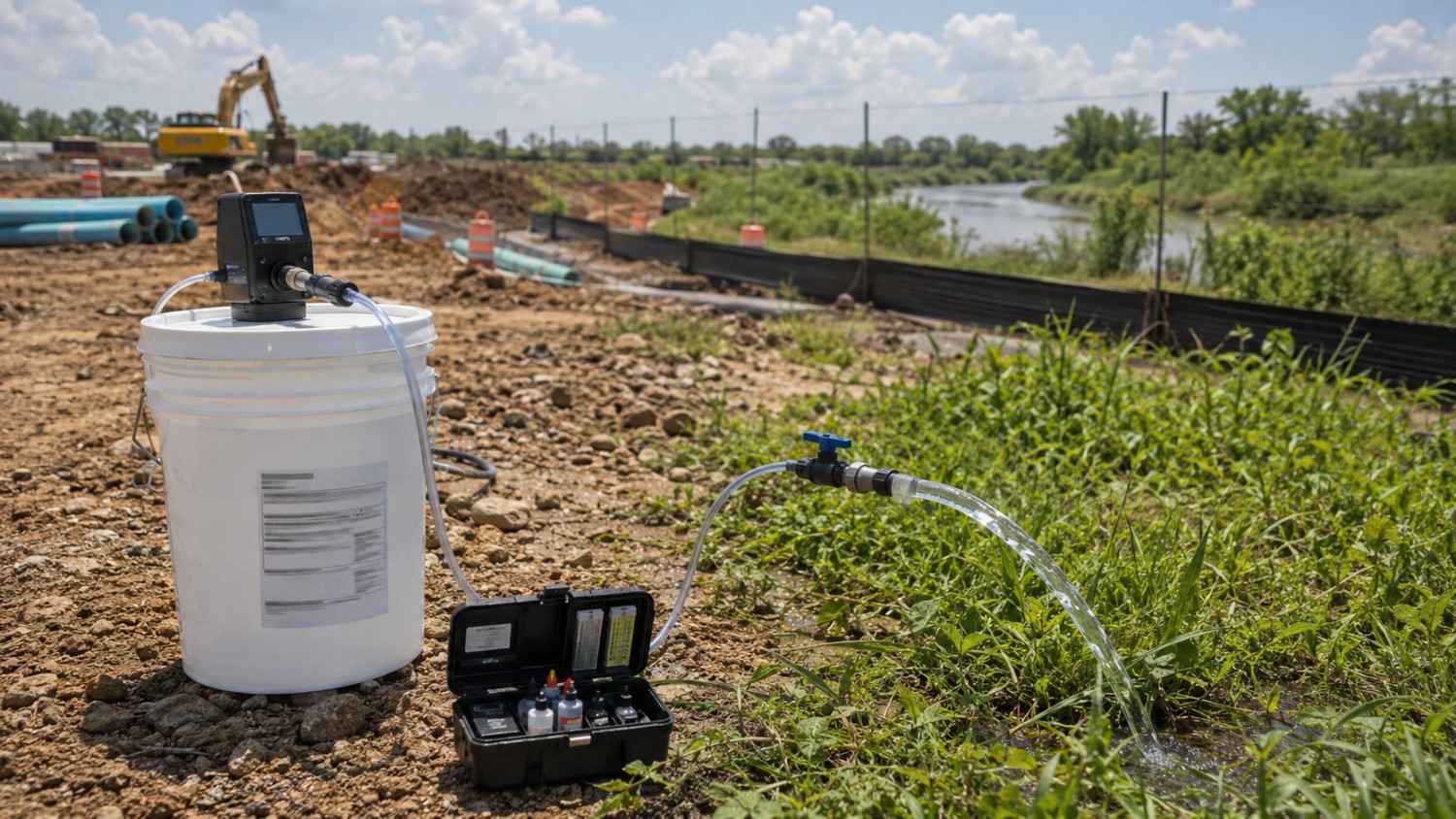
Discharging chlorinated water directly to a surface water body without dechlorination is a recognized aquatic toxicity concern. Residual chlorine at typical drinking water concentrations (0.5 to 2.0 mg/L) can be harmful to aquatic organisms in the receiving water at sufficient concentrations. Many discharge conditions and general permit requirements for test water discharge to state waters include a requirement that residual chlorine be reduced to a specified level before discharge, typically less than 0.1 mg/L total chlorine. Dechlorination using sodium thiosulfate or sodium bisulfite solution is a standard field practice that is inexpensive and straightforward when planned in advance. It is more complicated when the project team realizes the requirement at the moment of discharge.
Where Test Water Can Go
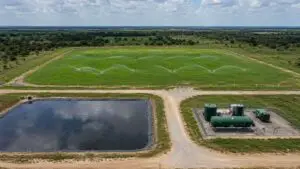
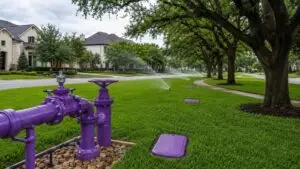
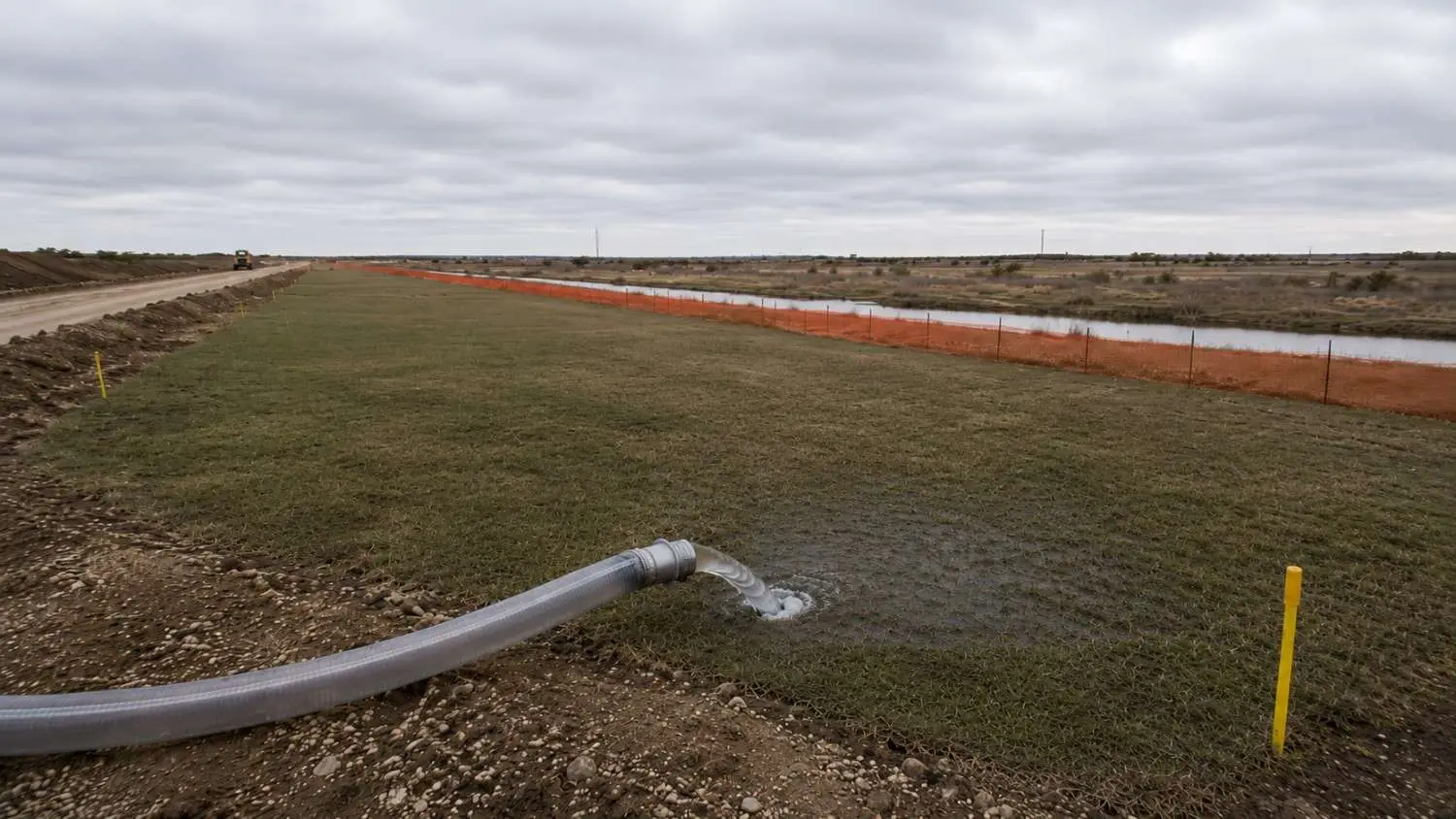
The most straightforward test water disposal option that avoids regulatory complexity is land application to an area that is not connected to a surface water body or a storm drain system. If the project site has available pervious area (a grassy field, a disturbed area, a landscaped zone where test water can be released slowly and allowed to infiltrate without reaching a waterway) this approach typically does not require TCEQ discharge authorization as long as the water is not creating a nuisance condition and is not reaching a water of the state.
For sites where land application is not practical (urban sites with minimal pervious area, sites adjacent to waterways, or large-volume tests where the water cannot be absorbed by the available land) the alternatives are discharge to a sanitary sewer system with the utility’s permission, discharge to a permitted receiving water with appropriate dechlorination and authorization, or hauling the water off site to a licensed disposal facility for large-volume industrial tests.
Discharge to a municipal sanitary sewer requires the sewer utility’s permission and may not be available if the test water volume would affect the capacity or treatment performance of the receiving system. For large-volume tests near a treatment plant with available capacity, this is often the most practical option. For remote construction sites far from a wastewater system, it is not viable.
How This Affects Construction Sequencing
The hydrostatic test water discharge question becomes a construction scheduling problem when it is not addressed during planning. A project that tests 10,000 linear feet of new water main on a Friday afternoon with test water that contains residual chlorine and a drainage path to an adjacent creek has a compliance problem and a field decision that no one is prepared to make. The crew stops work. The project manager gets a call. The engineer gets a call. Nobody has a permitted discharge plan because nobody asked the question during preconstruction.
That same project, planned in advance, has a dechlorination plan in the project specifications, a designated disposal area identified in the site grading plan, and a field protocol the contractor understands before the first test section is filled. The test runs, the water is managed, and the project moves to the next section.
What Industrial and Large Scale Projects Need
For industrial facilities testing large-diameter pipelines, pressurized storage vessels, or process systems where the test water may have contacted interior coatings, chemicals, or process residues, the discharge authorization question is more complex. Test water from a storage tank that previously held petroleum products, chemicals, or industrial materials must be characterized before disposal. The characterization determines whether the water can be land-applied, discharged to a permitted sewer system, or requires treatment and disposal as an industrial waste.
For new construction where the storage vessel has never been in service, the test water quality is primarily determined by the source water and any coatings or linings applied to the interior. Most new steel and concrete vessels use interior coatings that are cured before the vessel is placed in service, and the test water quality is similar to the source water with some potential for elevated metals or coating constituents depending on the specific materials used. The coating manufacturer’s documentation and any available test water sampling from similar projects inform the disposal plan.
For industrial facilities in Texas evaluating private wastewater treatment alternatives alongside the test water compliance question, see Industrial TPDES vs. TLAP: Which Wastewater Permit Path Fits Your Texas Facility.
Frequently Asked Questions
Does Texas require a permit to discharge hydrostatic test water to land?
Land application of test water to pervious areas that do not connect to a water of the state typically does not require a TCEQ discharge permit as long as the discharge does not create a nuisance, does not reach a waterway, and does not cause erosion or offsite impacts. The land application area must have sufficient capacity to absorb the test water volume at a rate that prevents surface runoff reaching a drainage channel or waterway. For more on land-based disposal strategies, see Land Application Permits in Texas.
What is the chlorine limit for hydrostatic test water discharged to a Texas waterway?
Requirements vary by permit type and receiving water conditions. Most TCEQ permit conditions and general permit requirements for test water discharge address residual chlorine, typically requiring reduction to below 0.1 mg/L total chlorine before discharge to a water of the state. Dechlorination should be planned for any test involving chlorinated source water when the discharge location is or could connect to a surface water body. For questions on how effluent quality limits are structured in TCEQ permits, see How to Read a TCEQ Effluent Limit Table.
Who is responsible for hydrostatic test water discharge compliance on a Texas construction project?
Typically the contractor performing the test is the responsible party for the discharge that occurs during their work. The owner and engineer of record share responsibility for ensuring the project specifications address discharge requirements and that the contractor has a compliant disposal plan before testing begins. Clear language in the project specifications identifying the required disposal method, any dechlorination requirements, and the documentation needed prevents last-minute field decisions with compliance consequences. For guidance on what complete TCEQ submittals require, see What Engineers Submit to TCEQ and Why Applications Get Rejected.
Related Resources
- Construction General Permit TXR150000: What Texas Developers Need to Know Before Moving Dirt
- Municipal TPDES Individual Permits: What Texas Cities and Utility Providers Need to Know
- 5 Common Wastewater Hydraulic Modeling Mistakes That Kill Project Budgets
- Lift Stations and Collection Systems: What the Plant Needs Upstream to Function Properly
Need Hydrostatic Test Water Discharge Planning for a Texas Construction Project?
Modern Engineering Solutions works with Texas developers, municipalities, and contractors to build hydrostatic test water discharge compliance into project specifications before testing begins, eliminating last-minute field decisions and compliance exposure on active construction projects.
We specialize in:
- Hydrostatic test water discharge planning and compliance documentation for Texas construction projects
- Project specification language for test water management, dechlorination, and disposal requirements
- Water and wastewater pipeline and infrastructure design with construction phase compliance planning
- TCEQ coordination for construction phase discharge authorization questions
- Civil, water, and wastewater engineering support for developers, contractors, and utility teams in Texas
Modern Engineering Solutions, McKinney, Texas and Golden, Colorado. Contact: (214) 833-6748 or mod-eng.com