
Blog
Municipal TPDES Individual Permits: What Texas Cities and Utility Providers Need to Know
What a municipal TPDES permit requires of a Texas city or utility district: effluent limits, NetDMR reporting, the 75% flow rule and the 180-day renewal.
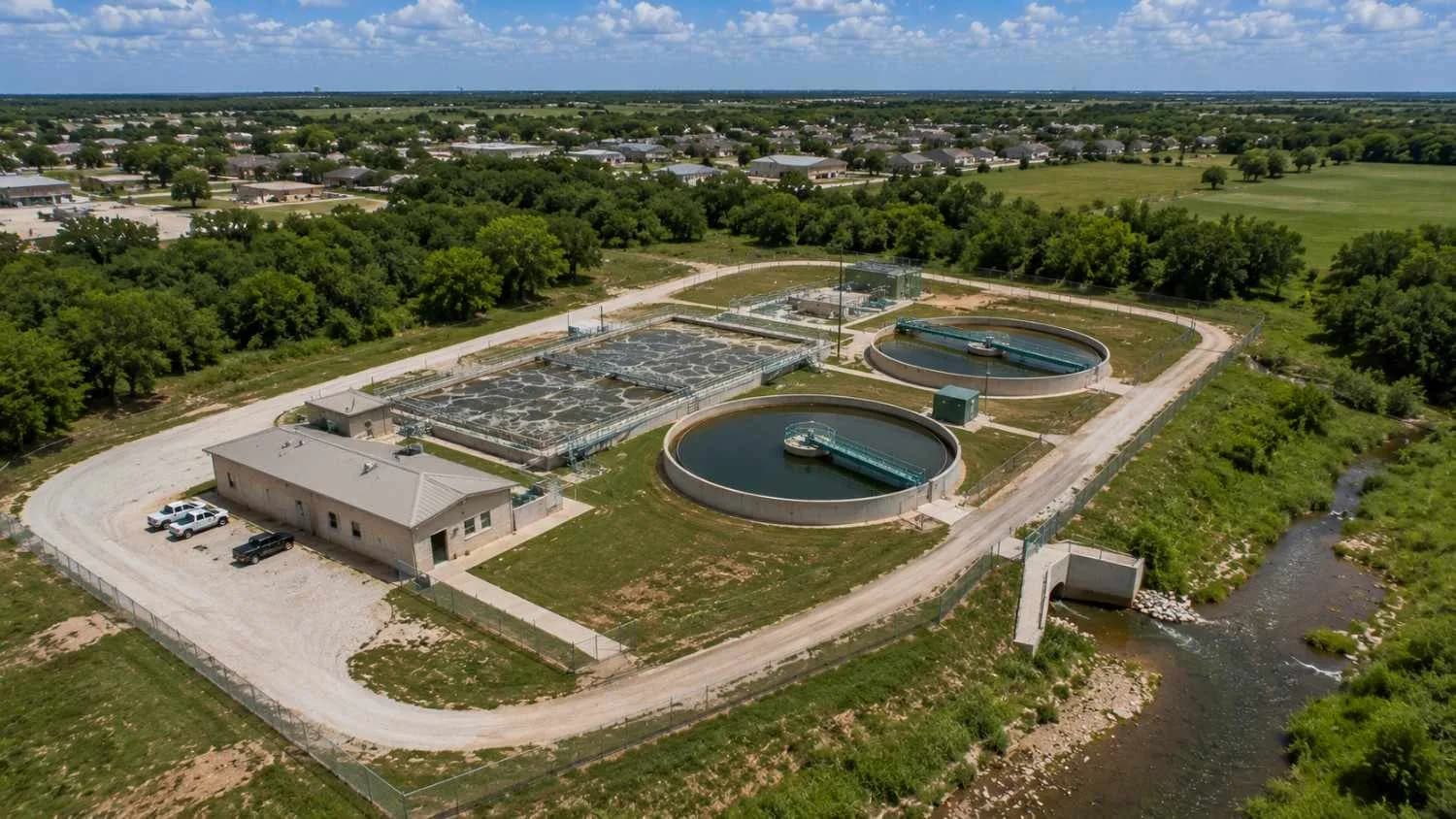
A municipal TPDES permit is the TCEQ individual permit that lets a Texas city or utility district discharge treated wastewater. It caps your flow, sets your effluent limits and reporting, and runs five years at most. Two milestones drive the work: the renewal filing, due at least 180 days before expiration, and the 75 percent flow trigger for expansion planning.
What does a municipal TPDES permit authorize?
A discharge from one named plant, at a capped flow, along a described route, under the conditions written in the permit.
A 2026 TCEQ renewal draft for a small city's 0.15 MGD lagoon plant shows the pattern. The cover page traces the discharge route to a classified river segment and says the permit expires at midnight five years from issuance. Under 30 TAC §305.127, a TPDES permit term cannot exceed five years.
The flow cap has two numbers. The daily average flow, in MGD, averages the daily flows over a calendar month. The 2-hour peak, in gallons per minute, is the highest flow sustained for two hours.
What effluent limits will your permit carry?
The Texas floor is basic secondary treatment: 20 mg/l BOD5 and 20 mg/l TSS as 30-day averages. Your receiving stream can push the numbers lower.
That floor is in 30 TAC §309.1, which allows exceptions for certain pond systems and also sets 7-day, daily maximum and single grab values, a dissolved oxygen minimum and a pH range of 6.0 to 9.0. A permit with an ammonia-nitrogen limit uses CBOD5 in place of BOD5.
The 0.15 MGD draft sits at that floor for BOD5 and TSS. It adds an E. coli limit of 126 per 100 ml, a 3.0 mg/l dissolved oxygen minimum and a chlorine residual range for disinfection.
Why are your limits tighter than the next town's?
Because TCEQ writes limits to protect your receiving stream, not just to meet the treatment floor.
The same draft's statement of basis says its limits rest on stream standards and wasteload allocations in the Texas Surface Water Quality Standards. Section 309.1 adds that some segments need limits stricter than secondary treatment.
A 2022 TCEQ draft for a new 0.08 MGD plant shows what that looks like: 10 mg/l CBOD5, 15 mg/l TSS and 3 mg/l ammonia-nitrogen. Its E. coli limit is 63, half the first draft's 126, because a bacteria total maximum daily load (TMDL) set the wasteload allocation at one-half the geometric mean criterion. Our post on how TCEQ sets effluent limits from receiving water standards walks through that analysis.
What do you have to sample and report?
Every parameter on the limits page, at its listed frequency, reported by the 20th of the following month, even in a month with no discharge.
The 0.15 MGD draft measures flow five times a week, BOD5 and TSS weekly, and E. coli monthly. Compliance lab results must meet 30 TAC Chapter 25, the lab accreditation rule. Reports go through TCEQ's NetDMR system, which needs an account in EPA's Central Data Exchange.
Under the draft's standard conditions, noncompliance that may endanger health or the environment, including unauthorized discharges, goes to the regional office within 24 hours, then in writing within five working days. An effluent violation more than 40 percent over a limit also needs a written report within five working days.
30 TAC §30.350 also requires licensed operators at the right level, on staff or under contract.
When does growth force a plant expansion?
At 75 percent of permitted flow for three consecutive months, you must start engineering and financial planning. At 90 percent for three months, you must get TCEQ's authorization to build.
That is 30 TAC §305.126(a), and the draft repeats it as a permit condition. If you reach 75 percent but expect the population served to stay within the plant's design, you submit an engineering report saying so. Any waiver must be in writing.
Building past the permitted flow needs TCEQ authorization before construction starts. TCEQ's municipal permitting steps ask for the application at least 330 days before an amended discharge begins. Plot monthly flow against both triggers.
How does inflow and infiltration put the permit at risk?
Rain and groundwater that leak into your sewers count as flow. They raise the numbers the triggers read, and they can overflow the collection system before reaching the plant.
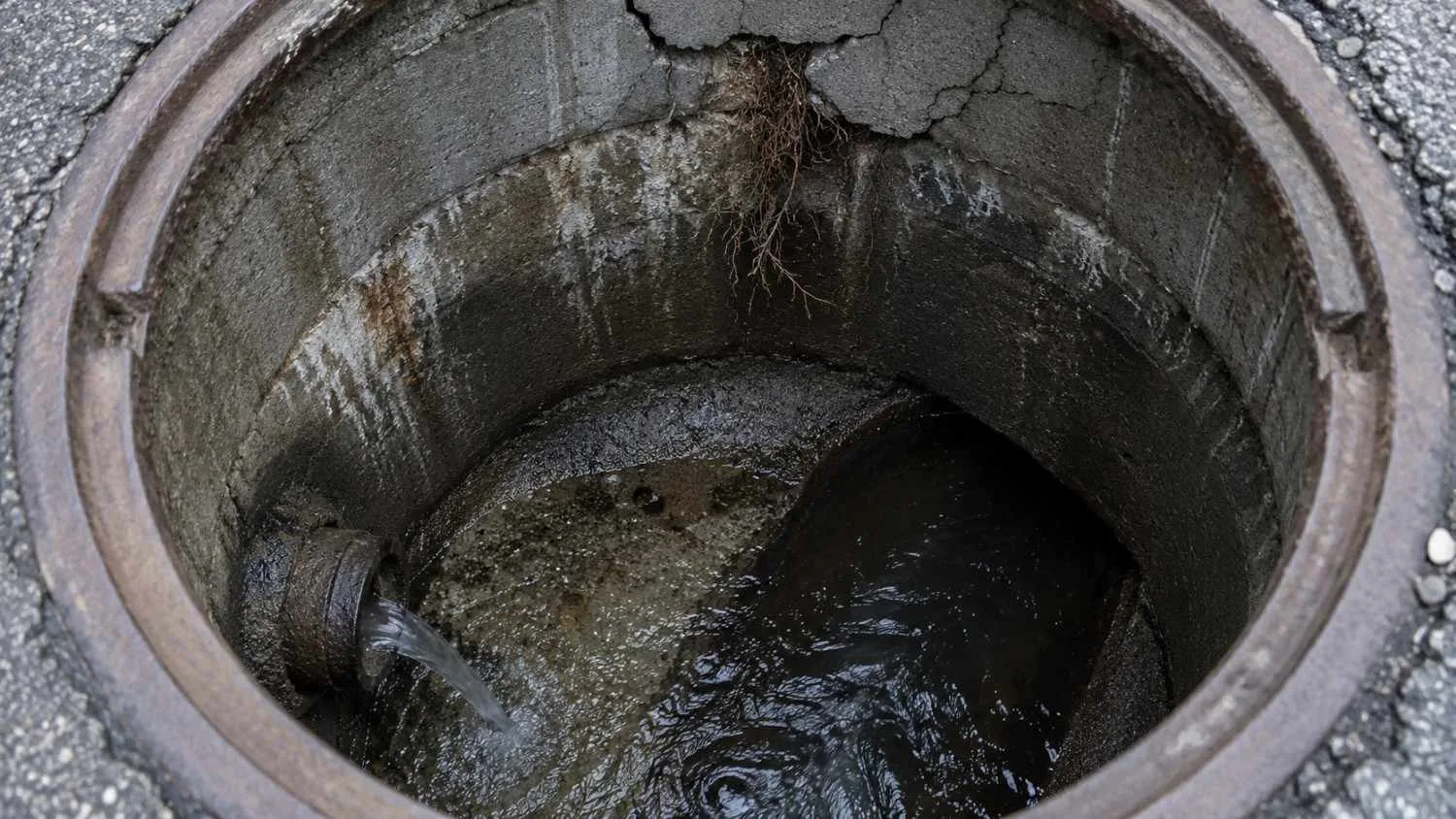
TCEQ's Sanitary Sewer Overflow Initiative page calls an overflow a type of unauthorized discharge and names significant inflow and infiltration as a cause. That makes it a 24-hour report, filed on form TCEQ-00501 until TCEQ's electronic tool is ready. Small spills are the exception: 30 TAC §305.132 lets a city or district report one of 1,000 gallons or less in a monthly summary if it never reaches water and endangers no one. Publicly owned systems not under formal enforcement for overflows can join the voluntary initiative, and participants avoid formal TCEQ enforcement for most continuing overflows their plan addresses.
EPA New England's 2014 guide to estimating infiltration and inflow says the extra water robs the system of capacity and that steady correction can help defer expansion. Before you size a bigger plant, find out how much of your flow is rain. Our post on finding and fixing your worst I&I sections covers the field methods.
When should you start the permit renewal?
File at least 180 days before the permit expires, and start assembling the application well before that.
30 TAC §305.65 sets the 180 days unless TCEQ allows a later date, never past expiration. File before expiration and your permit stays in force until the commission acts.
A renewal asks to keep the same conditions. If you need a change, such as more flow, file an amendment instead. TCEQ then reviews the application, you publish notices, and you get to comment on the draft permit before it goes to public comment.
What if the renewed permit tightens a limit?
Catch it in the draft. The statement of basis summarizes the changes from your existing permit.
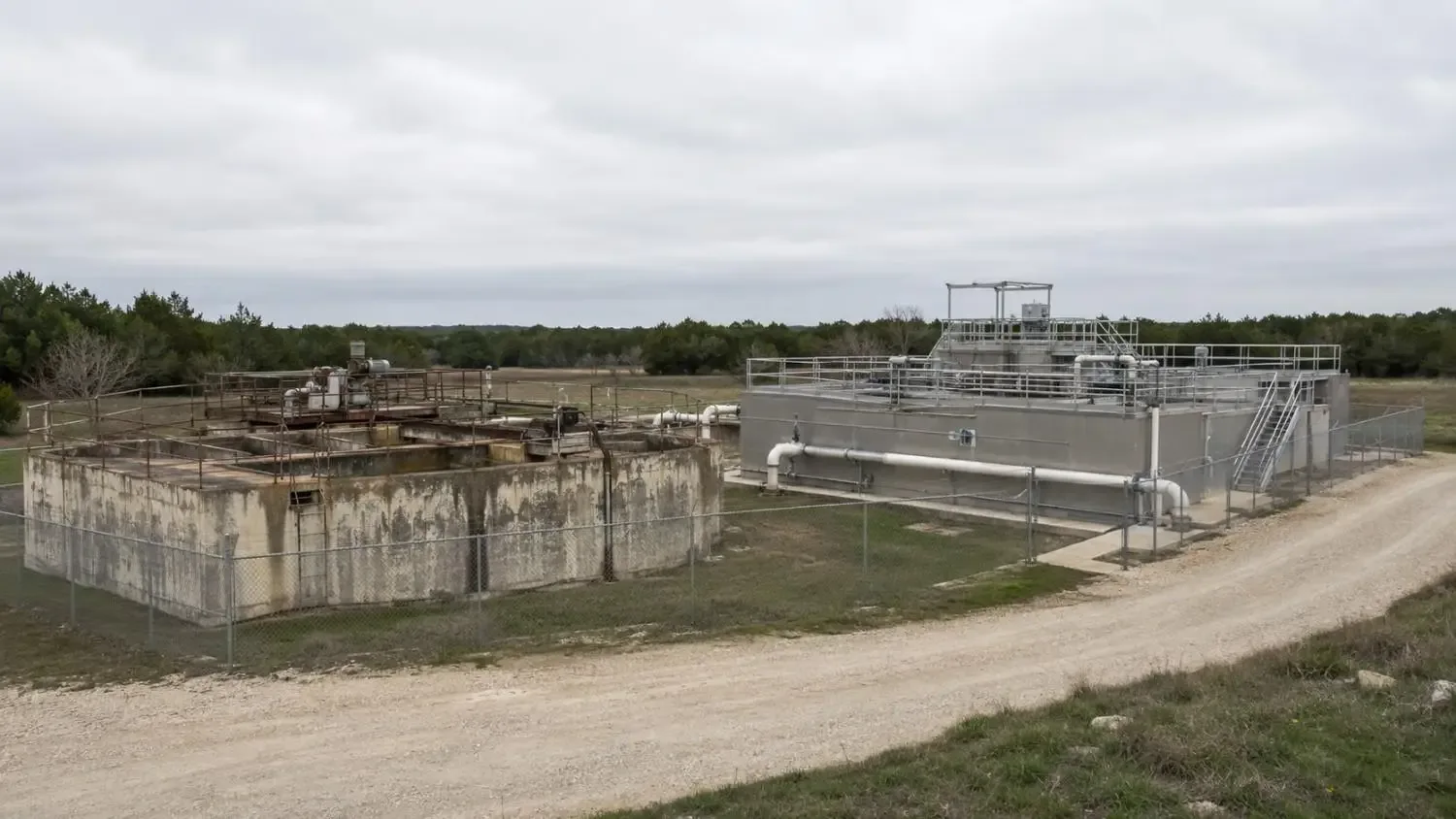
If a draft adds an ammonia limit to a plant never built to nitrify, that is a process change, not an operating tweak. Section 305.127 lets TCEQ put a schedule of compliance in the permit. It must require compliance as soon as possible, and a schedule longer than a year needs interim dates no more than a year apart. Do not assume you will get one. Raise it while the draft is open.
Is your system ready for its next permit milestone?
Only if you can answer yes to every question below.
- Do you know your expiration date and the date 180 days before it?
- Do you plot monthly flow against 75 and 90 percent of permitted flow?
- Have you compared storm-day flows with the 2-hour peak limit?
- Does every compliance lab result meet the Chapter 25 accreditation rule?
- Does your operator know which events need a 24-hour report?
- Do you know whether your receiving stream is impaired or under a TMDL?
Pass means every answer is yes. Any no is the next thing to fix.
Questions for your engineer: When do we cross 75 percent at our growth rate? How much of our peak flow is rain? What would an ammonia limit mean for this plant?
A note on limits: this is general education on TCEQ rules and example permits as checked in October 2026, not legal advice. Your own permit controls, and TCEQ decides every application.
Frequently asked questions
How long is a municipal TPDES permit good for?
No more than five years. The permit states its own expiration date.
What happens if we miss the TPDES renewal deadline?
TCEQ can allow a later filing date, but never past expiration. If nothing is filed before expiration, the permit expires and your authorization to discharge ends with it.
Does a small city need a pretreatment program?
Under 40 CFR 403.8(a), a plant over 5 MGD total design flow must have one if it receives industrial pollutants that pass through, interfere with treatment or fall under pretreatment standards. A smaller plant can be required to when its industrial flows, upsets or sludge warrant it.
I'm the city manager of a small Texas town, and our plant has run above 75 percent of its permitted flow for three months straight. What does TCEQ expect from us now?
Start engineering and financial planning for expanding or upgrading the plant, the collection system or both. If growth will stay within the plant's design, submit an engineering report saying so. Check how much of that flow is wet weather, too.
I run a Texas utility district, and our renewal draft adds an ammonia limit our plant was never designed to meet. Do we have to comply the day the permit issues?
Only the permit can answer that. A schedule of compliance is allowed but not automatic. Comment on the draft while it is open, with your engineer's assessment of what the plant can meet.
Related resources
- How to Read a TCEQ Effluent Limit Table: What the Numbers Actually Mean for Your Development
- Permit Modification vs. Renewal vs. Amendment: When You Need to Change Your Discharge Permit
- Self Reporting Violations and TCEQ Enforcement Discretion: How Voluntary Disclosure Changes the Outcome of a Permit Exceedance
- Capital Improvement Planning for Small Municipalities: Where to Start When You Don't Know Where to Start
Is your city's plant closing in on its permit?
MES works with Texas cities and utility districts on TPDES renewals and amendments, flow and I&I evaluations, and the plant improvements a permit calls for.
We specialize in TPDES permitting, wastewater treatment plant improvements, inflow and infiltration studies, collection systems and construction administration.
Modern Engineering Solutions, McKinney, Texas. Call (214) 833-6748 or contact our team.
Keep reading
More to read.
Talk to an engineer
Tell us about your project.
An engineer reads it
Not a salesperson. Someone who can tell you whether the pathway is real.
You get a first answer
Your options, the agencies involved and the questions that decide cost and schedule.
You decide
No commitment to have the first call.
Prefer the phone? (214) 833-6748